Ragusa and the Baroque southeast of Sicily form one of Italy's most architecturally coherent travel regions, where honey-colored churches rise from limestone ridges and entire town centers were rebuilt in late Baroque style after the catastrophic 1693 earthquake. The UNESCO-listed Val di Noto towns of Ragusa Ibla, Modica, Noto, and Scicli reward slow exploration on foot, with steep staircases, ornate facades, and a food culture unlike anywhere else on the island.
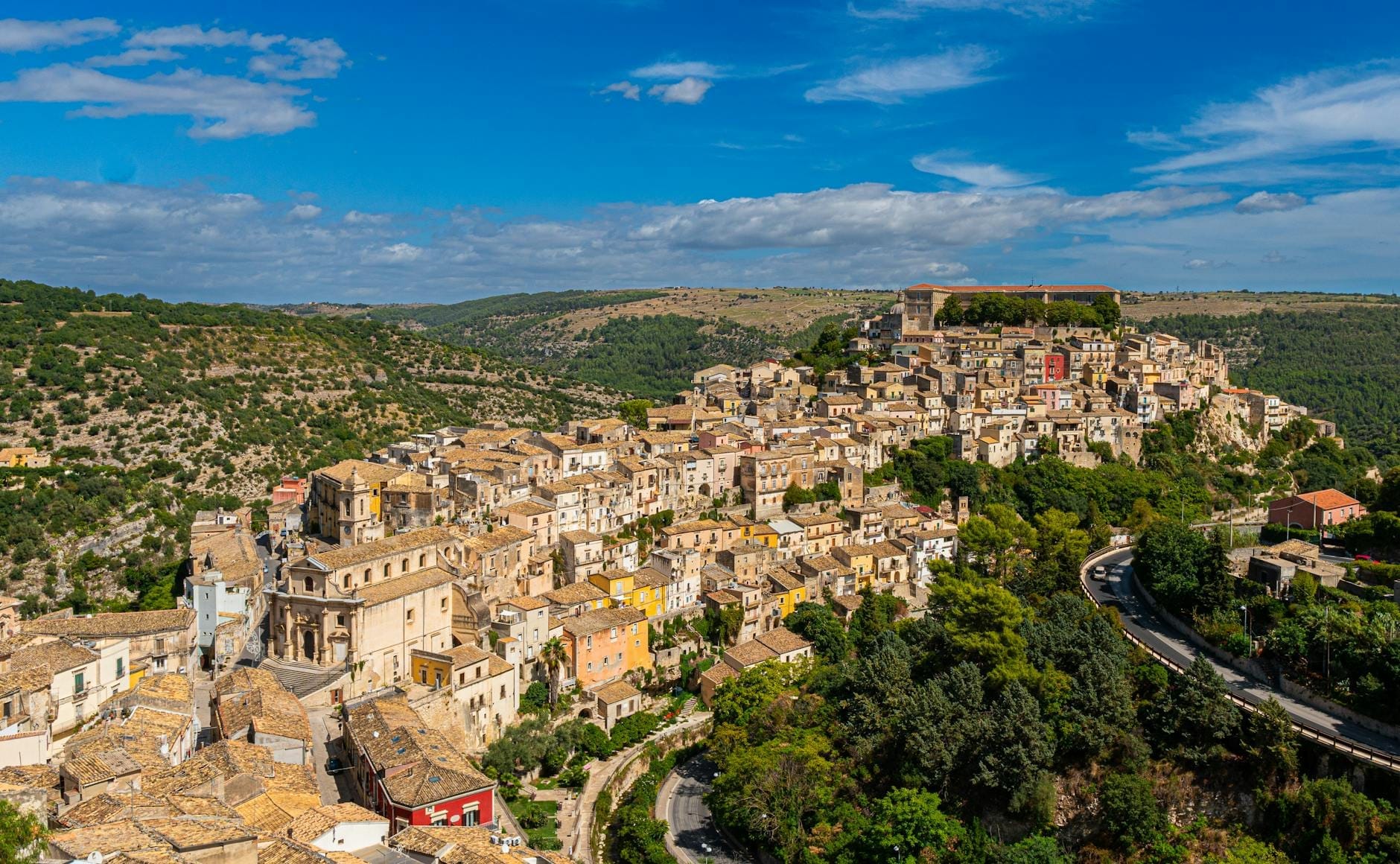
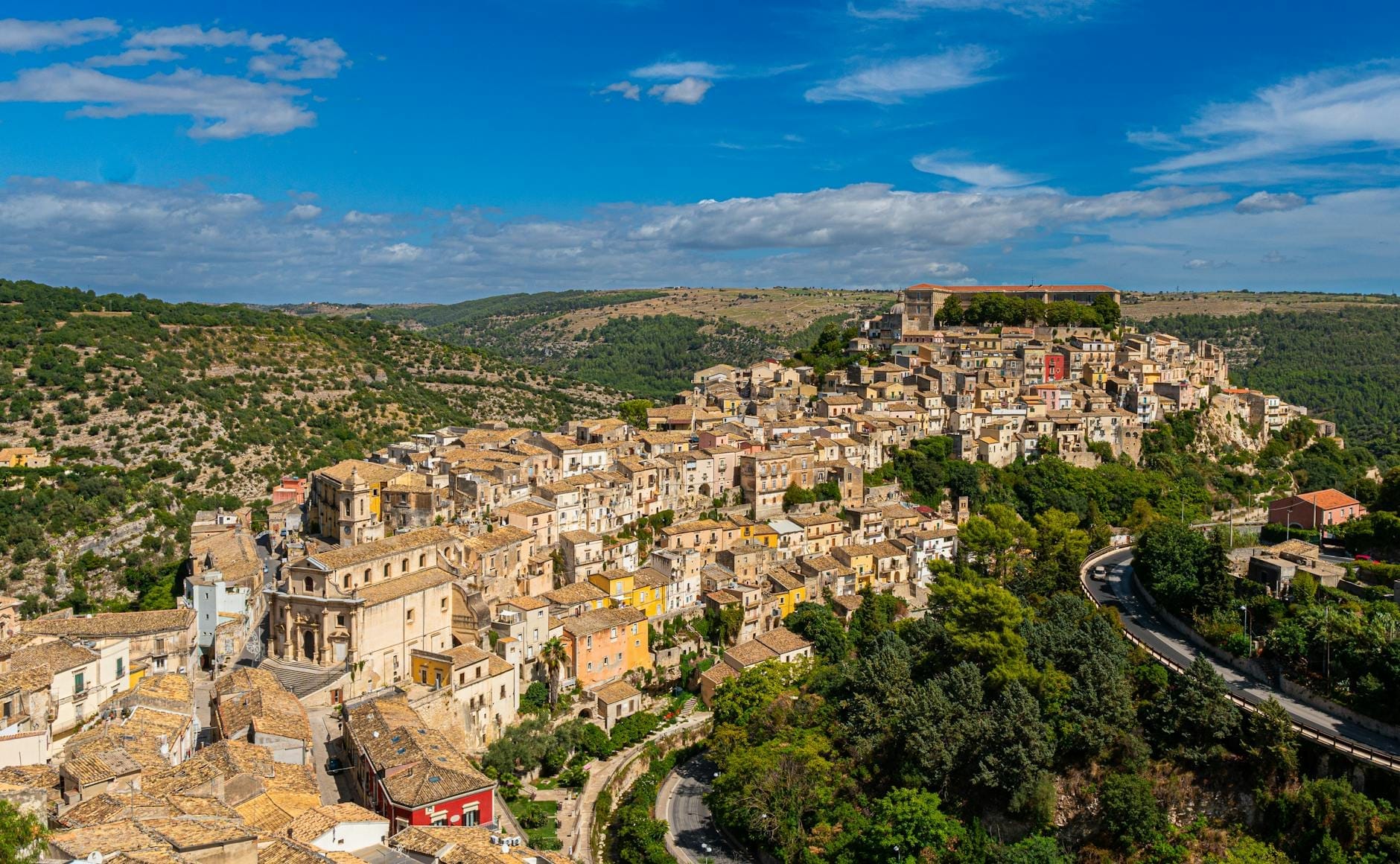
Ragusa Ibla is the kind of place that stops you mid-stride. The ancient lower town spills down a limestone ridge in the Hyblaean Hills, all domed churches and honey-gold palaces rebuilt in a single architectural burst after the 1693 earthquake leveled the region. Around it, the Val di Noto towns of Modica, Noto, and Scicli form a Baroque landscape so coherent that UNESCO inscribed the whole cluster in 2002 as one of the finest expressions of late Baroque urban planning in Europe.
Orientation: Where Ragusa Ibla Sits in Sicily
Ragusa sits in Sicily's southeastern interior, roughly 85 kilometers southwest of Siracusa and about 260 kilometers southeast of Palermo, in the Hyblaean Hills above the gorge of the Irminio River. It is not a coastal town. The landscape here is plateau country, carved by deep limestone gorges and covered with carob and olive groves, and it feels markedly different from the volcanic drama of eastern Sicily or the flat salt plains of the west.
The city itself divides sharply into two distinct parts. Ragusa Superiore is the upper, modern town built on the plateau after 1693, home to the train and bus stations, most of the hotels, and the Cathedral of San Giovanni Battista. Walk south and downhill, via the dramatic staircase of the Church of Santa Maria delle Scale, and you drop into Ragusa Ibla: the ancient lower town rebuilt on the same rocky spur where the settlement of Hybla Heraea once stood. Ibla is where most visitors spend their time, and with good reason.
Beyond Ragusa, the wider Baroque southeast is best understood as a circuit. Modica is 15 kilometers northeast of Ragusa. Scicli lies about 25 kilometers south. Noto is roughly 30 kilometers east of Ragusa toward the coast, near Siracusa. Together with Caltagirone, Militello, Palazzolo Acreide, and Catania, these eight towns form the UNESCO 'Late Baroque Towns of the Val di Noto,' all rebuilt in a single architectural campaign between roughly 1693 and 1750. Travelers who base themselves in Ragusa can reach most of these towns as day trips, ideally by car.
ℹ️ Good to know
Comiso Airport (CIY), about 20 kilometers from Ragusa, serves the southeast with seasonal European flights and is far more convenient for this region than Catania Airport, which is around 100 kilometers away by road. Check both airports when booking.
Character & Atmosphere
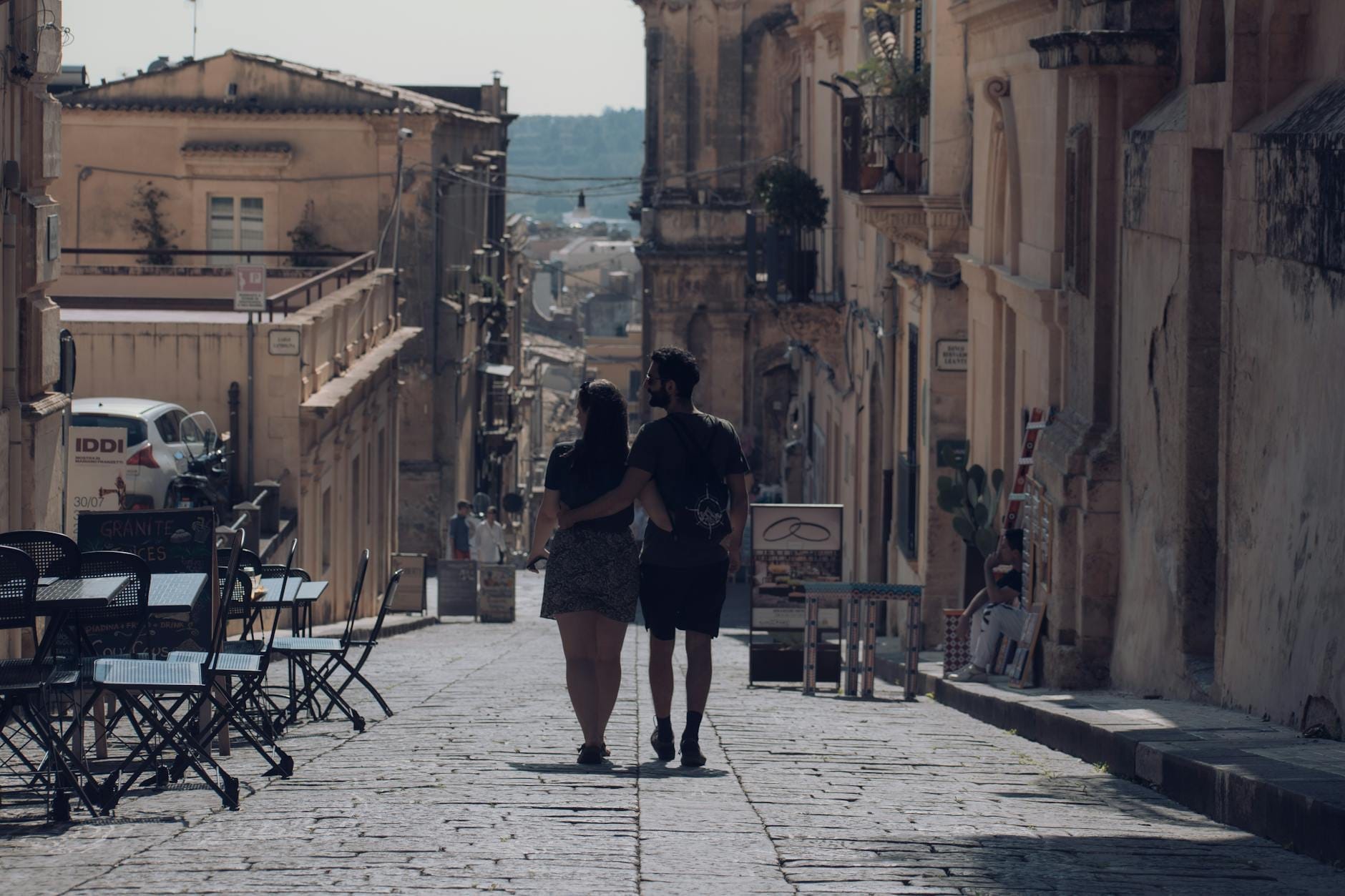
Ragusa Ibla has an architectural unity that is rare in Sicily and almost impossible to find elsewhere in southern Italy. Because the entire lower town was rebuilt over roughly fifty years after 1693 by the same generation of architects and craftsmen, working in the same regional Baroque idiom, the streets feel designed rather than accumulated. The proportions are confident: wide staircases between narrow lanes, church facades that arrive suddenly as you round a corner, doorways framed by carved stone corbels in the shape of animals, faces, and foliage.
Mornings in Ibla are quiet in a way that larger Sicilian cities rarely are. The light comes in low and warm from the east, catching the limestone facades and turning them amber before the cafes have finished putting out their chairs. By mid-morning the main artery, Corso XXV Aprile, is lightly trafficked by locals running errands, and the smell of pastry and espresso drifts from the bars. In summer the afternoon heat in the Hyblaean Hills is genuine, and the town quiets for several hours after lunch in a way that feels genuinely local rather than performed.
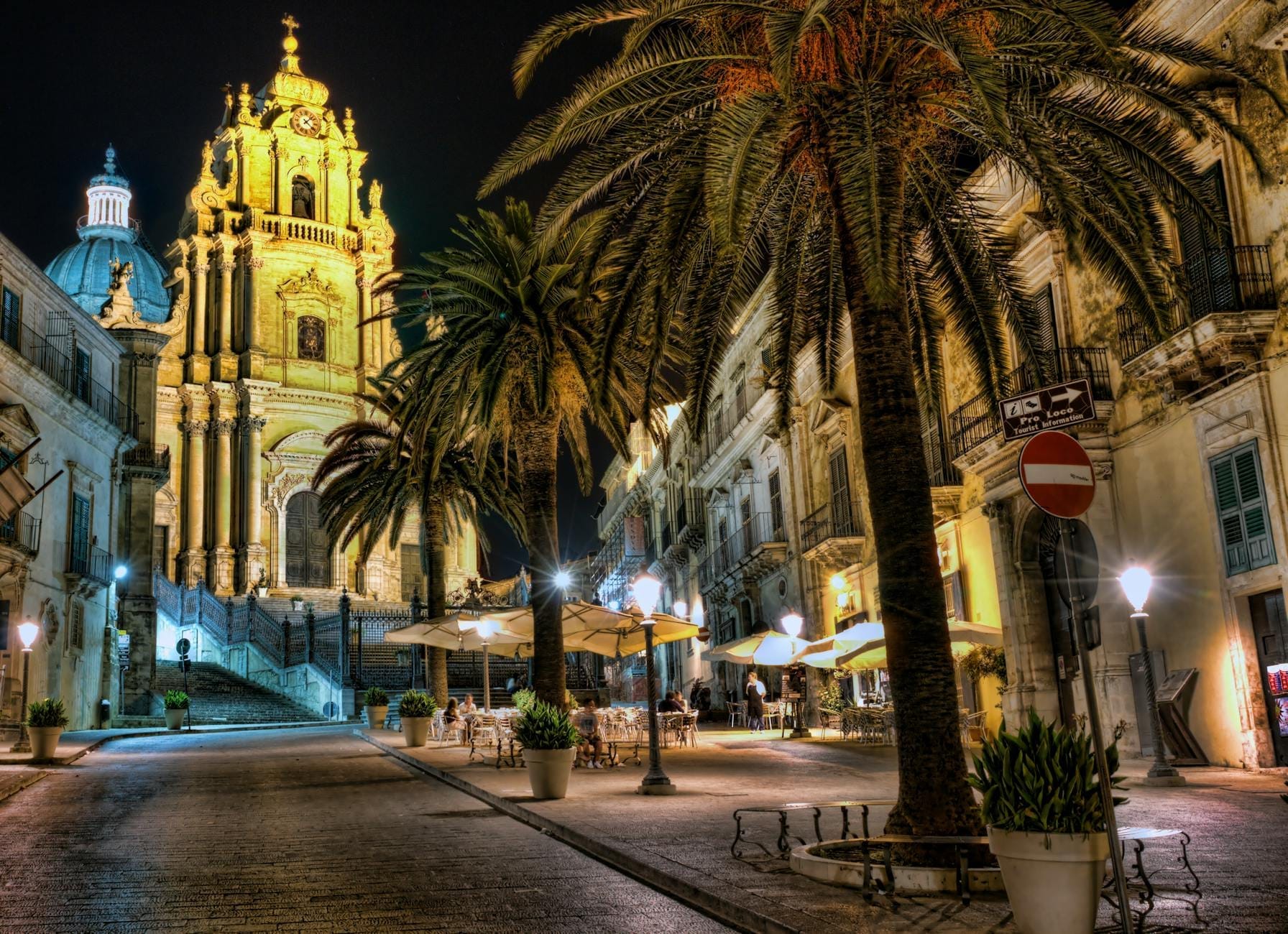
After dark, Ibla shifts again. In the evening the Piazza del Duomo, anchored by the extraordinary facade of the Basilica of San Giorgio, becomes a social space: residents occupy the outdoor tables of the bars around the square, and the illuminated church glows against the dark sky in a way that photographs cannot quite capture. It is worth arriving at the piazza after nightfall at least once, even if you spend most of your time exploring in daylight.
Tourism here is real but not overwhelming except in peak summer weeks. Ragusa Ibla receives visitors steadily, but it has not been as thoroughly packaged for mass tourism as Taormina or the resort beaches of the north coast. The restaurants around Piazza del Duomo trend upscale, and there are hotels in restored noble palaces, but a ten-minute walk from the main piazza and you are in the residential lanes of a working Sicilian town.
💡 Local tip
Visit the Basilica of San Giorgio in the early morning before tour groups arrive, or after 6pm when the light is better for photography and the square belongs to locals again. Midday visits in summer can feel crowded and the interior is poorly ventilated.
What to See & Do
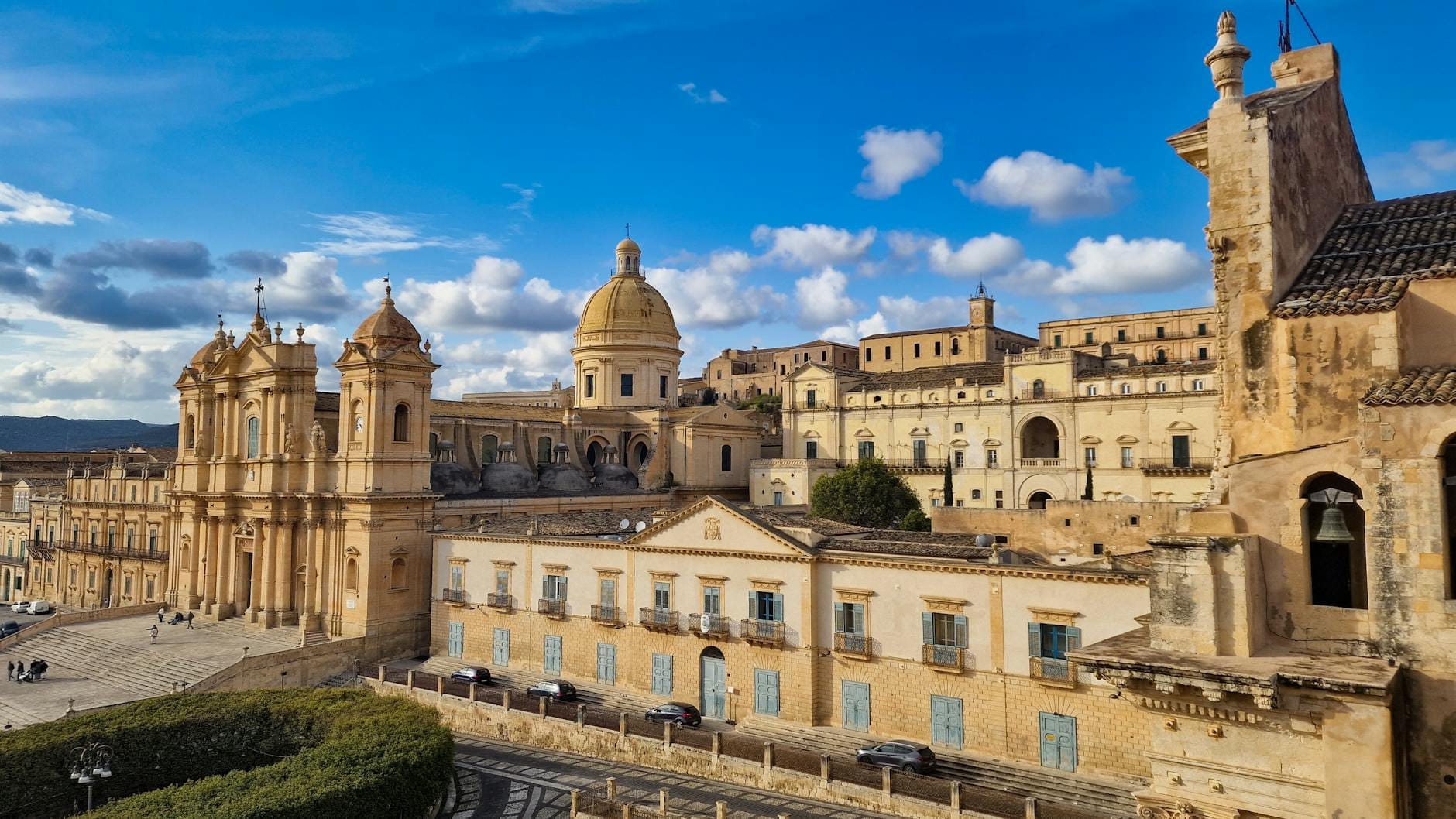
The anchor of Ragusa Ibla is the Cathedral of San Giorgio, a masterpiece of Sicilian Baroque completed between 1738 and 1775 by Rosario Gagliardi, the architect who also shaped much of Noto and Modica. The three-tiered facade rises from the Piazza del Duomo on a long flight of steps and works theatrically at every time of day. The interior is spacious and relatively cool in summer, with stained glass that filters afternoon light into the nave.
Beyond the cathedral, the town rewards walking without a fixed itinerary. The Giardino Ibleo, a public garden at the eastern tip of the Ibla ridge, offers panoramic views over the Irminio gorge and is where locals come to walk dogs and read the newspaper on Sunday mornings. Several smaller Baroque churches are scattered through the garden area, some still in use and some partially ruined. The Church of Santa Maria delle Scale, perched on the staircase connecting Ibla to Ragusa Superiore, retains some 15th-century Gothic elements within its largely Baroque reconstruction: a reminder that this site was inhabited long before 1693.
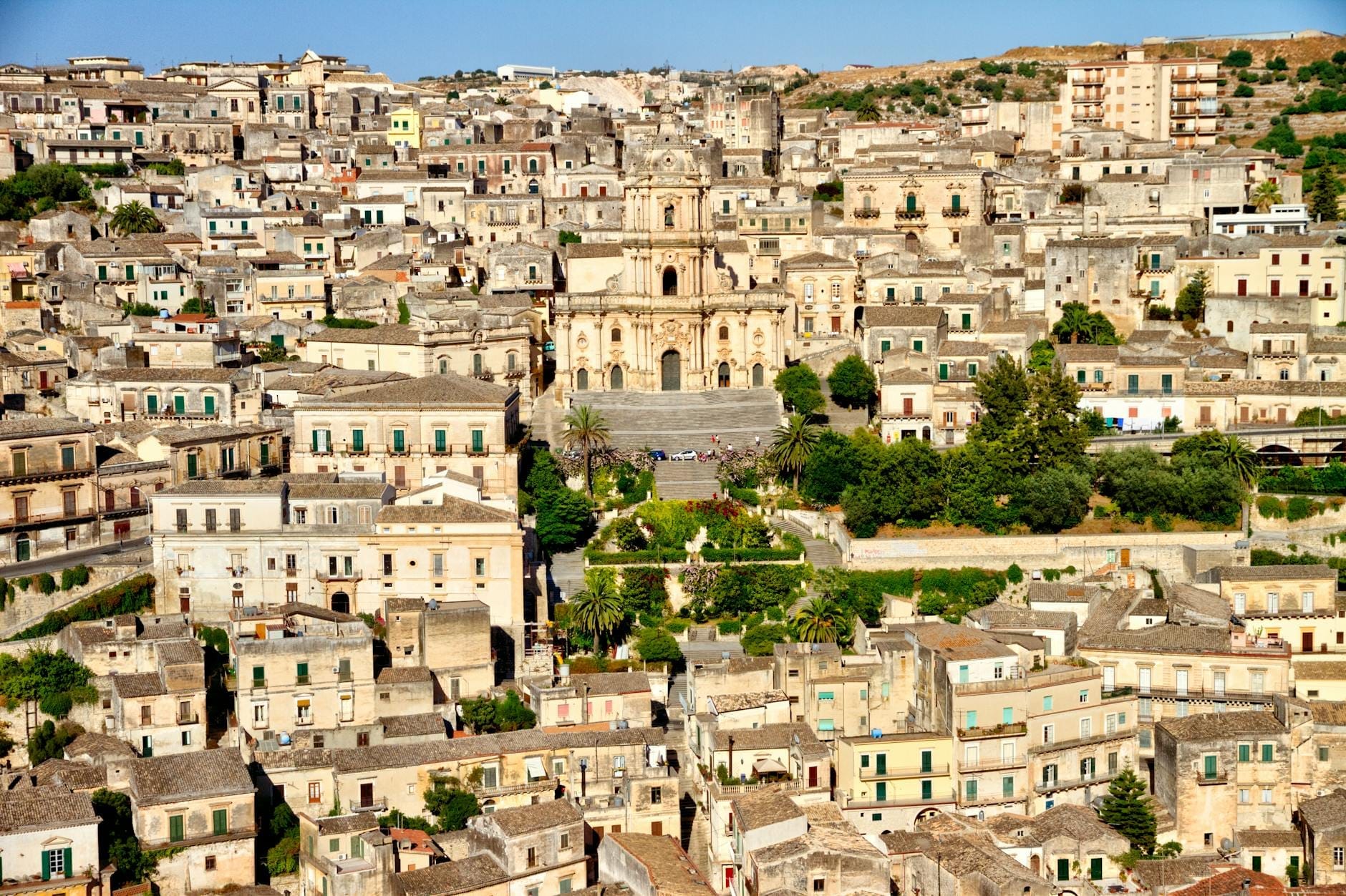
The wider Baroque circuit is worth planning carefully. Modica's chocolate tradition is the region's most famous food story: the city's chocolatiers still produce cold-processed chocolate using a technique derived from pre-colonial Mesoamerican methods, with no added fat or lecithin. The result is grainy, intensely flavored, and nothing like commercial chocolate. Modica is also architecturally impressive, particularly its own Cathedral of San Giorgio (a different building from Ragusa's) and the theatrical staircase of Corso Umberto I.
Basilica of San Giorgio, Ragusa Ibla: the defining Baroque church of the Val di Noto
Giardino Ibleo: public garden at the eastern tip of Ibla with gorge views and minor churches
Church of Santa Maria delle Scale: staircase linking the two towns, Gothic-Baroque hybrid interior
Cathedral of San Giovanni Battista, Ragusa Superiore: equally impressive Baroque facade in the upper town
Modica: 15 km southeast, renowned for cold-processed chocolate and the Cathedral of San Giorgio
Scicli: 25 km south, less visited than Noto or Modica, with ornate Baroque churches and palaces
Noto Cathedral and Corso Vittorio Emanuele: the most formally theatrical of the Val di Noto ensembles
For travelers interested in the broader context of Sicily's Baroque heritage, the Baroque Sicily guide covers the full arc of the Val di Noto towns and explains how the 1693 earthquake and the subsequent architectural rebuilding shaped the identity of the entire region.
Eating & Drinking
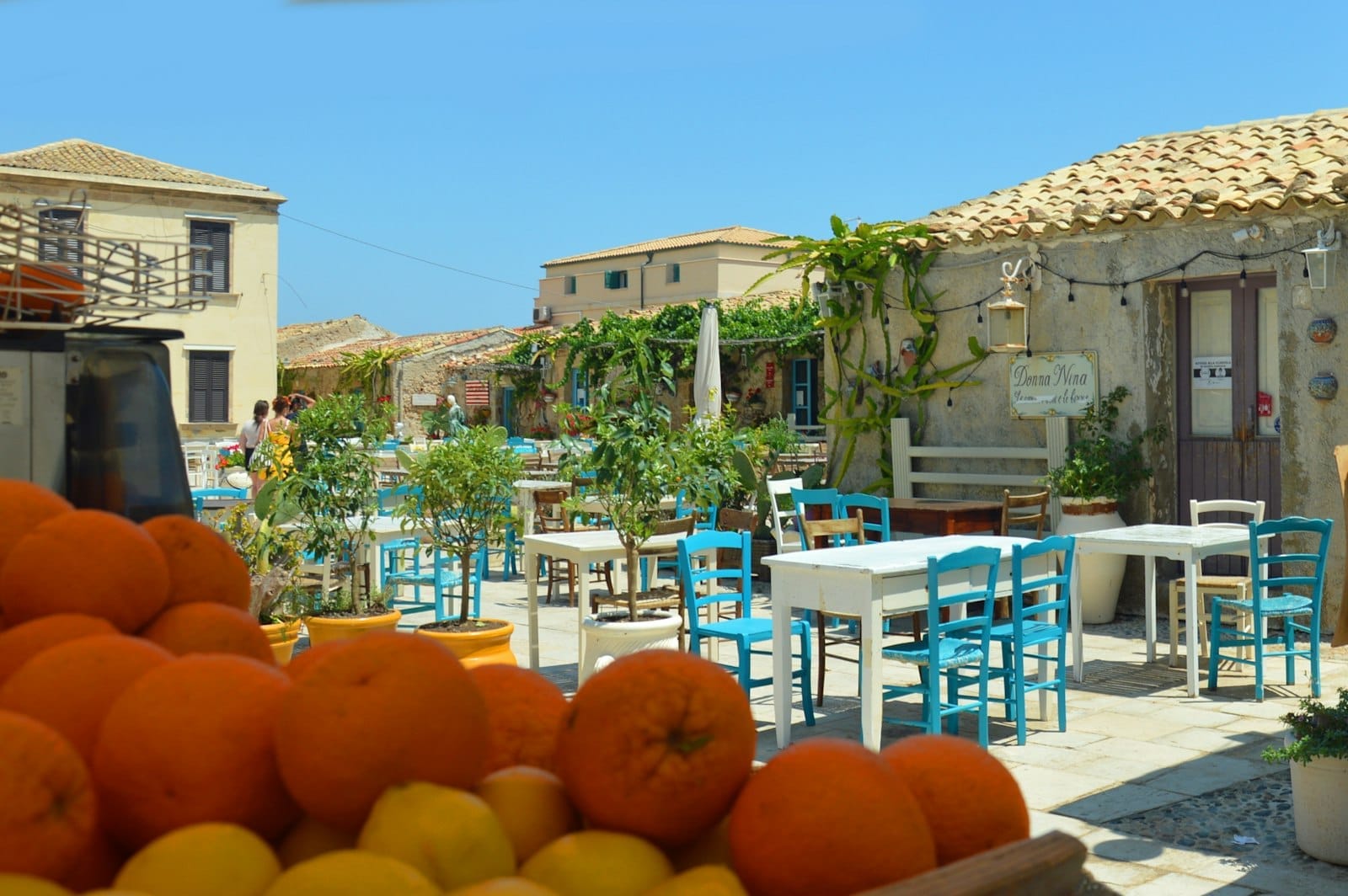
The food scene in Ragusa and the Baroque southeast is one of the most distinctive in Sicily, shaped by a landscape of carob, almonds, olive oil, and Ragusano cheese, a hard aged DOP cheese traditionally produced from the milk of Modicana cattle, one of the oldest Sicilian breeds. You will find it in the markets in large rectangular blocks and on restaurant menus sliced thin or melted over pasta.
Ragusa Ibla concentrates its more formal restaurants around Piazza del Duomo and the streets immediately below it. Prices here are higher than the Sicilian average, and some of the better-known places operate at a level that would be considered fine dining in most Italian cities. If you want to eat well without spending heavily, look for the bars and small trattorie a few streets back from the main tourist circuit, in the residential lanes toward the Giardino Ibleo end of town.
The street food culture of the southeast is less theatrical than Palermo's market scene but no less rewarding. Arancini, fried rice balls filled with meat ragu or butter and cheese, are available at most bars. Scacce, a regional flatbread folded with fillings of tomato, cheese, or greens and baked, are specific to this corner of Sicily and worth seeking out at a local bakery. The Sicily street food guide provides useful context for understanding what to look for across different parts of the island.
Coffee bars in Ibla open early and close late. The granita culture of eastern Sicily extends here: almond granita with a brioche col tuppo is the standard breakfast in summer, and the almond version made from Sicilian almonds is noticeably better than what you get in most of the island's tourist zones. Cerasuolo di Vittoria, produced in vineyards in the provinces of Ragusa and Caltanissetta and around Vittoria, is the only DOCG wine in Sicily and pairs well with the region's meat-based pasta dishes. Look for it on wine lists rather than the standard Nero d'Avola, which dominates everywhere else.
💡 Local tip
Cerasuolo di Vittoria DOCG is produced roughly 30–60 kilometers southwest of Ragusa in the Vittoria area and is genuinely worth trying here rather than elsewhere in Sicily. Ask specifically for it by name at restaurants rather than accepting a generic 'vino rosso locale.'
Getting There & Around
Getting to Ragusa without a car is possible but requires planning. The train station and main bus terminal are both in Ragusa Superiore, the upper town on the plateau. From there, a local bus runs down to Ragusa Ibla, stopping near the public park at the edge of the historic quarter. The walk from Superiore to Ibla is feasible but steep and typically takes about 15 to 20 minutes on foot via the staircase of Santa Maria delle Scale.
By train, Ragusa is connected to Siracusa on the coastal line, with journey times typically around 1.5 to 2 hours depending on the service. Direct trains to Catania and Palermo involve connections and take considerably longer. Intercity buses, operated by regional companies, connect Ragusa to Catania (approximately 2 hours), Modica (around 30 minutes), and other southeastern towns. Timetables are limited, particularly on Sundays and public holidays, so verify schedules before building your itinerary around public transport.
Comiso Airport (IATA: CIY) is the most convenient air gateway for the southeast, located about 20 kilometers from Ragusa. It receives seasonal flights from several European cities. Catania Airport (IATA: CTA) is the main alternative and offers more year-round connections, but it adds roughly 90 minutes of ground travel. Taxis and rental car pick-ups are available at both airports.
A rental car transforms the Baroque southeast from a series of complicated connections into a genuinely comfortable circuit. The roads between Ragusa, Modica, Scicli, and Noto are well-maintained and the distances are short. The landscape itself, with its gorges and limestone plateaus, is part of the experience. The guide to getting around Sicily explains the relative merits of car hire, trains, and buses across different parts of the island.
⚠️ What to skip
Parking within Ragusa Ibla itself is extremely limited. Most visitors park in the designated areas at the edge of the historic quarter or in Ragusa Superiore and walk or take the local bus down. Do not attempt to drive through the narrow lanes of Ibla expecting to find parking near the cathedral.
Where to Stay
Ragusa offers two distinct accommodation options depending on what kind of trip you want. Staying in Ragusa Ibla means waking up inside the UNESCO historic quarter, with the Baroque streetscape immediately outside your door. Several boutique hotels and restored palazzi operate in Ibla, some with terraces overlooking the gorge. These tend to be quiet at night, pricier than comparable rooms in Superiore, and best suited to travelers who want atmosphere over convenience.
Ragusa Superiore has a wider range of mid-range hotels and B&Bs, closer to the train and bus stations and more practical for travelers arriving by public transport or planning to move between towns frequently. The upper town has its own architectural interest, including the Cathedral of San Giovanni Battista and several Baroque palaces along the main streets, and it functions as a living city in a way that Ibla, more oriented toward tourism, sometimes does not.
Travelers considering whether to base themselves in Ragusa or distribute their nights between towns should note that Modica, Noto, and Scicli all have accommodation options of their own. Noto in particular has become a fashionable base for design-conscious travelers, with several restored noble houses operating as small hotels along and near Corso Vittorio Emanuele. For a broader view of where to base yourself across the island, the where to stay in Sicily guide covers the main options by region.
Practical Notes & Honest Assessment
The Baroque southeast is not the right choice for every traveler. If your priority is beaches, you are in the wrong area: the nearest good coastal swimming is at Punta Secca and Donnalucata, both around 20 to 35 kilometers south of Ragusa, and they require a car to reach comfortably. The landscape is beautiful but inland, and the towns are primarily about architecture, food, and the specific pleasure of walking through places that have been lived in continuously for centuries.
The region is also genuinely hot in July and August. The Hyblaean Hills provide some relief compared to the coast, but midday temperatures regularly exceed 30 degrees Celsius, and the stone streets of Ibla radiate heat. Spring and autumn are noticeably more comfortable for walking the town circuits. For guidance on timing a visit to Sicily more broadly, the best time to visit Sicily covers seasonal trade-offs across different parts of the island.
Safety in Ragusa and the surrounding towns follows the general pattern of provincial Sicilian cities: standard precautions around valuables and parked cars are sensible, but no specific hazards distinguish this area from other Italian destinations of similar size. The roads between towns are well-paved but can be narrow and winding in places; drive carefully, particularly at night.
For travelers wondering how this corner of Sicily fits into a wider island itinerary, the southeast pairs naturally with Siracusa and the Ortigia peninsula to the east, and with the archaeological sites of the south coast to the west. A one-week itinerary based in the southeast, combining Ragusa, Modica, Noto, Scicli, and Siracusa with a day at the Neapolis Archaeological Park in Siracusa, makes a coherent and deeply rewarding circuit without requiring long drives.
TL;DR
Ragusa Ibla is the historic lower town of Ragusa, rebuilt in late Baroque style after the 1693 earthquake and inscribed as a UNESCO World Heritage Site as part of the Val di Noto group of eight towns.
The Baroque southeast circuit, covering Ragusa, Modica, Noto, and Scicli, is best explored by rental car: distances are short but public transport between towns is limited, especially on weekends.
This region suits travelers interested in architecture, food culture, and slow travel through a genuinely inhabited historic landscape, not those primarily seeking beaches or resort-style facilities.
Comiso Airport (CIY), 15 km from Ragusa, is the most convenient air gateway for the southeast, though Catania Airport (CTA) offers more year-round flight options.
Spring (April to June) and autumn (September to October) offer the most comfortable conditions for exploring on foot; summer heat in the Hyblaean Hills is real and midday should be reserved for shade and long lunches.
Seven volcanic islands, one UNESCO designation, and more logistical decisions than most travelers expect. This guide covers every practical detail you need to plan a trip to the Aeolian Islands, from choosing which islands to visit to navigating seasonal ferry schedules.
The Arab-Norman UNESCO trail covers nine extraordinary monuments across Palermo, Monreale, and Cefalù, inscribed in 2015 for their remarkable fusion of Western, Arab, and Byzantine architecture. This guide covers every site, practical logistics, and the historical context that makes this one of the most intellectually rewarding itineraries in the Mediterranean.
Sicily's Val di Noto is one of Europe's most remarkable architectural achievements: eight towns rebuilt in coordinated Late Baroque style after a catastrophic 1693 earthquake, now a single UNESCO World Heritage Site. This guide covers all eight towns, how to get between them, what to prioritise, and when to go.
Sicily's coastline stretches over 1,000 km across the Tyrrhenian, Ionian, and Mediterranean seas, producing an extraordinary range of beaches. This guide covers the finest sandy bays, volcanic coves, nature reserves, and island escapes the island has to offer.
Sicily was once the heart of Magna Graecia, and the ruins left behind are among the finest ancient Greek monuments anywhere in the world. This guide covers the essential sites, from vast temple complexes to forgotten quarries, with practical advice on what to see and when to go.
Sicily rewards visitors year-round, but timing your trip correctly makes a significant difference. This guide breaks down every season by temperature, crowds, prices, and what's actually worth doing, so you can plan with confidence.
Catania sits at the centre of eastern Sicily, putting some of the island's greatest attractions within easy reach. This guide covers the best day trips from Catania, from the volcanic trails of Etna to the Baroque jewels of the southeast and the ancient ruins of Siracusa.
Palermo sits at the centre of western Sicily, putting an extraordinary range of landscapes, ancient sites, and coastal escapes within a few hours. This guide covers the best day trips from Palermo, from the world's greatest medieval mosaics at Monreale to the Greek temples of Agrigento and the untouched coves of the Zingaro Nature Reserve.
Sicily is large, geographically varied, and not always easy to navigate without the right plan. This guide covers every transport option available, from renting a car to catching intercity buses, so you can move around the island confidently and without wasted time.
Sicily rewards those who look beyond Taormina and Palermo's grand monuments. This guide covers 20 lesser-known attractions across the island, from prehistoric cliff tombs and abandoned earthquake towns to wild coastal reserves and ancient quarries frozen in time.
Sicily is Italy's largest island and the Mediterranean's most historically layered destination. This guide cuts through the hype to give you a clear-eyed look at what the island genuinely offers, what it costs, when to go, and what tends to disappoint — so you can make an informed decision.
Sicily rewards the discerning traveler with a depth that few Mediterranean islands can match. This guide covers the finest luxury hotels, bespoke experiences, and practical logistics for planning a high-end trip to the largest island in the Mediterranean.
Seven days in Sicily is enough to cover the island's greatest hits — Greek temples, baroque city centres, volcanic landscapes, and some of the best street food in Italy. This guide maps out a logical east-to-west route with realistic transport times, seasonal advice, and honest notes on what to skip.
Sicily has four main airports, and choosing the right one can save hours of overland travel. This guide covers Palermo (PMO), Catania (CTA), Trapani (TPS), and Comiso (CIY) in detail, including airport-to-city transfers, route availability, and which gateway suits each part of the island.
Sicily rewards self-drive travel more than almost any other Mediterranean destination. This guide covers everything you need to plan a confident road trip: the best routes, realistic driving times, car rental tips, ZTL zone warnings, seasonal advice, and the stops that genuinely justify the detour.
Sicilian food is not Italian food with a suntan. It is a centuries-old fusion of Greek, Arab, Spanish, and Norman influences, built around seafood, citrus, almonds, ricotta, and durum wheat. This guide covers every dish worth eating, where to find the best versions, and the food customs that will shape every meal you have on the island.
Francis Ford Coppola brought the Corleone saga to life across the hillside villages and historic streets of Sicily. This guide covers every key filming location from all three films, how to reach them, what to expect on the ground, and how to avoid the most common tourist mistakes.
Sicily rewards couples with baroque towns, volcanic landscapes, secluded beaches, and some of the most atmospheric historic centers in the Mediterranean. This guide cuts through the generic advice to tell you exactly where to go, when to go, and what actually makes Sicily special for two.
October is one of the smartest months to visit Sicily. Temperatures ease off from the summer heat, the tourist crush fades, and the island's food and festival calendar comes alive. Here's everything you need to plan your trip well.
Summer in Sicily runs from June through September and brings hot weather, packed beaches, vibrant festivals, and peak travel prices. This guide covers everything you need to know: when to go, what to expect from the heat and crowds, which beaches and islands are worth it, and how to plan smarter than most visitors do.
Sicily is far more than a single island. From the volcanic Aeolian archipelago in the Tyrrhenian Sea to the crystal-clear waters of the Egadi Islands off Trapani, this guide covers every ferry route, island, cost, and logistical detail you need to plan a serious island-hopping trip from Sicily.
Sicily is one of the most rewarding destinations in the Mediterranean, and it doesn't have to cost a fortune. This guide breaks down real daily costs, the cheapest times to visit, where to eat well for under €10, and how to see the island's best sights without draining your account.
The Opera dei Pupi is one of Sicily's most distinctive cultural exports — a UNESCO-recognised marionette tradition rooted in medieval chivalric epics, performed by family troupes across the island. This guide covers the history, the two rival schools, where to see performances in Palermo, Catania, and Siracusa, and how to get the most out of attending a show.
Sicily is one of southern Europe's most rewarding destinations, and it is genuinely safe for tourists. This guide cuts through the stereotypes, explains what the real risks are, identifies the scams that do happen, and gives you practical tools to visit with confidence.
Sicily produces some of Italy's most distinctive street food, rooted in centuries of Arab, Norman, and Spanish influence. This guide breaks down the essential dishes by city, the markets where locals actually eat them, what to pay, and what to skip.
Sicily sits on one of the most volcanically active zones in Europe. This guide breaks down what to expect from Etna, Stromboli, and Vulcano — three very different volcanic experiences — covering access, trails, safety, and the best time to visit each one.
Both Sicily and Sardinia are autonomous regions of Italy with distinct identities, landscapes, and travel experiences. This guide breaks down the real differences in culture, beaches, food, costs, and logistics so you can choose the right island for your trip.
Sicily is Italy's largest wine region by vineyard area, with 23 DOCs, one DOCG, and a lineup of native grapes that rival anywhere in Europe. This guide breaks down the key appellations, the grapes behind them, and exactly how to plan a tasting trip across the island.
Sicily delivers an extraordinary range of family experiences, from volcanic landscapes and ancient Greek ruins to puppet theatre and sweeping beaches. This guide breaks down the best kid-friendly activities, practical logistics, seasonal timing, and practical advice to help families plan a smooth, memorable trip.
Sicily rewards travelers with an extraordinary range of experiences: ancient Greek ruins, active volcanoes, UNESCO Baroque towns, Norman cathedrals, and coastline that stretches nearly 1,000 km. This guide covers the best things to do in Sicily across every corner of the island, with practical advice on timing, costs, and how to avoid the common pitfalls.
Sicily rewards travelers who give it time. This complete 14-day itinerary covers the island's east coast highlights, Baroque south, ancient Greek south, and the layered history of the west, with practical routing advice, seasonal tips, and practical guidance on trade-offs.
Sicily is the Mediterranean's largest island, and picking the right base makes or breaks your trip. This guide covers the best towns to stay in across every corner of the island, from the baroque southeast to the volcanic northeast, with practical advice on prices, transport, and seasonal trade-offs.