Getting Around Sicily: The Complete Transport Guide
Sicily is large, geographically varied, and not always easy to navigate without the right plan. This guide covers every transport option available, from renting a car to catching intercity buses, so you can move around the island confidently and without wasted time.
Plan and book this trip
Tools from our partner Travelpayouts help you compare flights and hotels. If you book through them, we may earn a commission at no extra cost to you.
Flights
Hotels map
TL;DR
- Renting a car is the most practical way to explore Sicily by car, especially for reaching smaller towns, archaeological sites, and coastal areas not served by rail.
- Trenitalia regional trains connect major cities like Palermo, Catania, and Siracusa, but journey times are slow and coverage is uneven.
- Intercity buses (primarily SAIS Autolinee) fill gaps where trains don't reach, but you'll often need to coordinate multiple operators and timetables.
- Sicily has four commercial airports: Palermo (PMO), Catania (CTA), Trapani (TPS), and Comiso (CIY). Choose your arrival airport based on your itinerary, not just your origin flight.
- For island-hopping to the Aeolian or Egadi Islands, ferries and hydrofoils are the only option. Check seasonal service schedules before booking. See our Sicily island hopping guide for full details.
Why Getting Around Sicily Requires a Plan

Sicily is the largest island in the Mediterranean at roughly 25,711 km², and it packs an enormous amount of variety into that space. The north coast, the volcanic east, the baroque southeast, and the ancient south are each distinct in character and separated by meaningful distances. Palermo to Agrigento is around 130 km; Palermo to Siracusa stretches beyond 250 km. These aren't hop-and-skip distances, and the roads, trains, and buses that connect Sicily's destinations don't always make them fast.
The common mistake first-time visitors make is underestimating journey times and overestimating public transport coverage. Rail lines hug the coasts and a few inland corridors, but large swaths of the interior and many of the island's best archaeological sites sit beyond easy train access. Buses plug many of those gaps, but coordinating multiple regional operators without local knowledge adds friction. Understanding the transport landscape before you arrive makes the difference between a smooth trip and a frustrating one.
ℹ️ Good to know
Sicily follows Italian and Schengen Area entry rules. EU nationals need only a valid ID; many non-EU visitors (US, UK, Canada, Australia) can stay visa-free for up to 90 days in any 180-day period. Always check current entry requirements with an official Italian consulate before travelling.
Renting a Car: The Best Option for Most Visitors
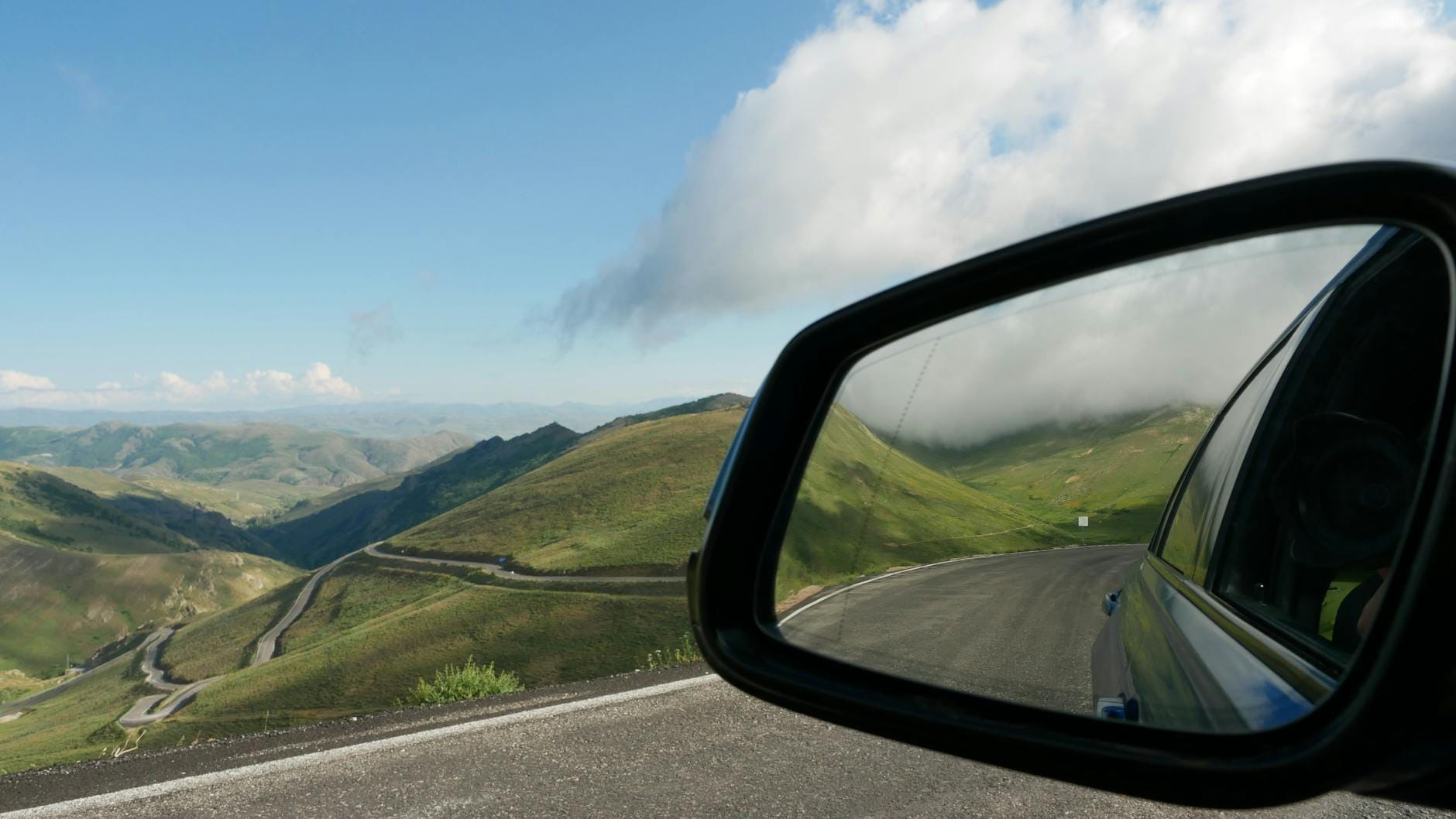
For most visitors, exploring Sicily by car is simply the most practical and rewarding way to travel. A rental unlocks the island's interior, coastal back roads, hilltop towns, and rural archaeological sites that buses and trains either don't reach or reach only once a day. It also gives you control over timing, which matters when you want to visit the Valley of the Temples at dawn before tour groups arrive, or catch a late-afternoon light at Taormina.
Sicily car rental is available at all four main airports and in most major cities. Booking in advance, especially for summer travel (June through August), typically secures better rates and guarantees vehicle availability. Rates vary considerably by season and provider, but a compact car booked ahead in shoulder season can cost as little as €20-30 per day from international operators, while peak summer or last-minute bookings can run two to three times that.
- Pick up at the airport Collecting a rental at Catania (CTA) or Palermo (PMO) on arrival removes the need for an airport transfer and lets you start driving immediately. Both airports have all major rental desks on site.
- Manual vs automatic Most European rental fleets are manual transmission. If you need an automatic, specify this at booking, especially outside peak season when automatics are in shorter supply.
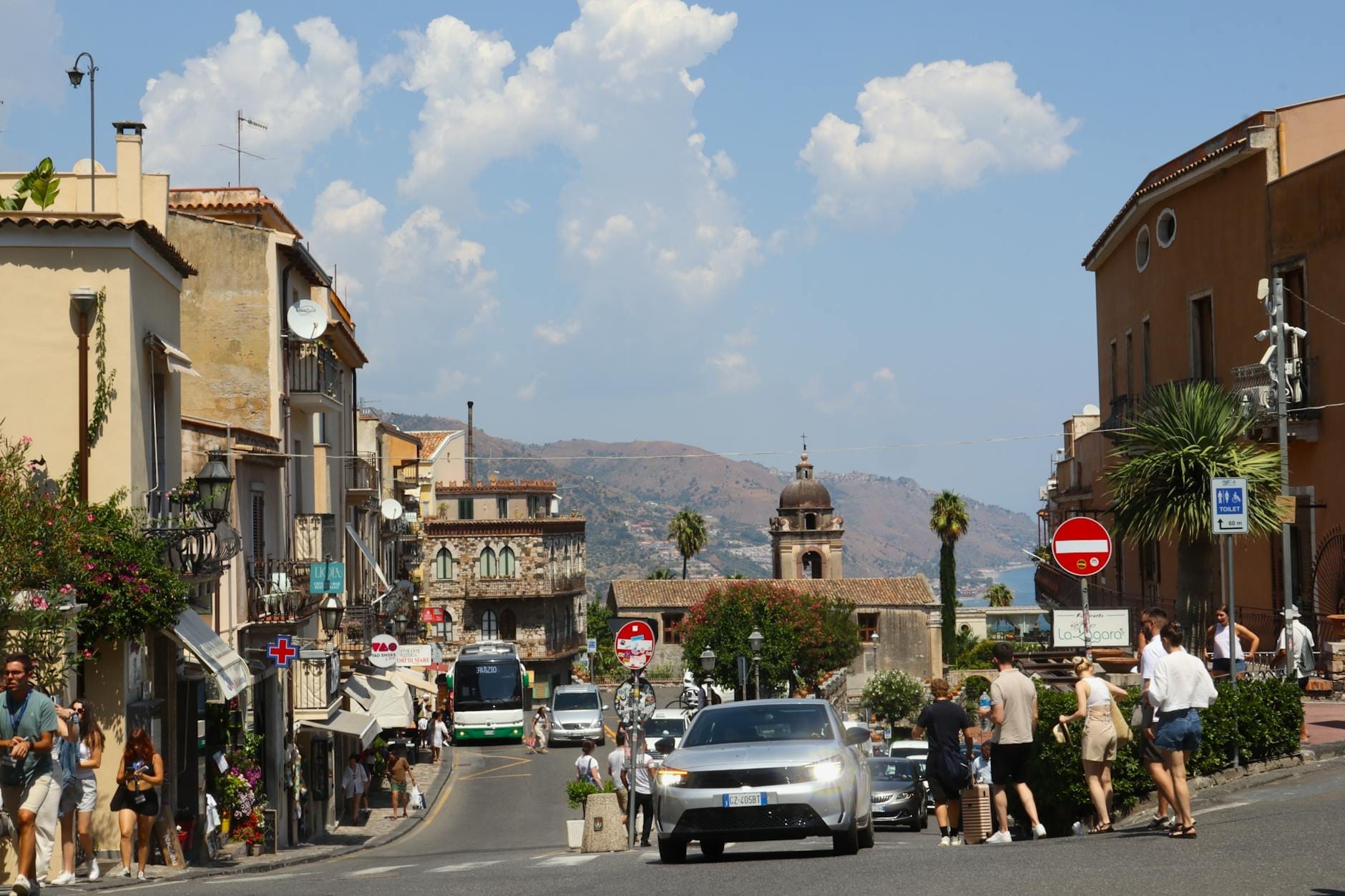
- Insurance and ZTL zones Check whether your credit card covers CDW (collision damage waiver). More importantly, be aware of ZTL (Zona a Traffico Limitato) restricted traffic zones in Taormina, Ortigia (Siracusa), Noto, and central Palermo. Driving into a ZTL without a permit generates automatic fines, often sent weeks after you return home.
- Fuel and motorways Sicily's A18, A19, and A20 motorways (autostrade) are toll-free, which is a genuine advantage over mainland Italy. Fuel stations are plentiful along major routes but can be sparse in the mountainous interior.
⚠️ What to skip
ZTL fines are the most common expensive surprise for self-driving visitors in Sicily. In Taormina in particular, access to the centro storico is restricted at most hours. Always check ZTL rules for each town you plan to drive into and use designated car parks outside the historic centre.
Trains: Reliable for Major Routes, Limited Everywhere Else
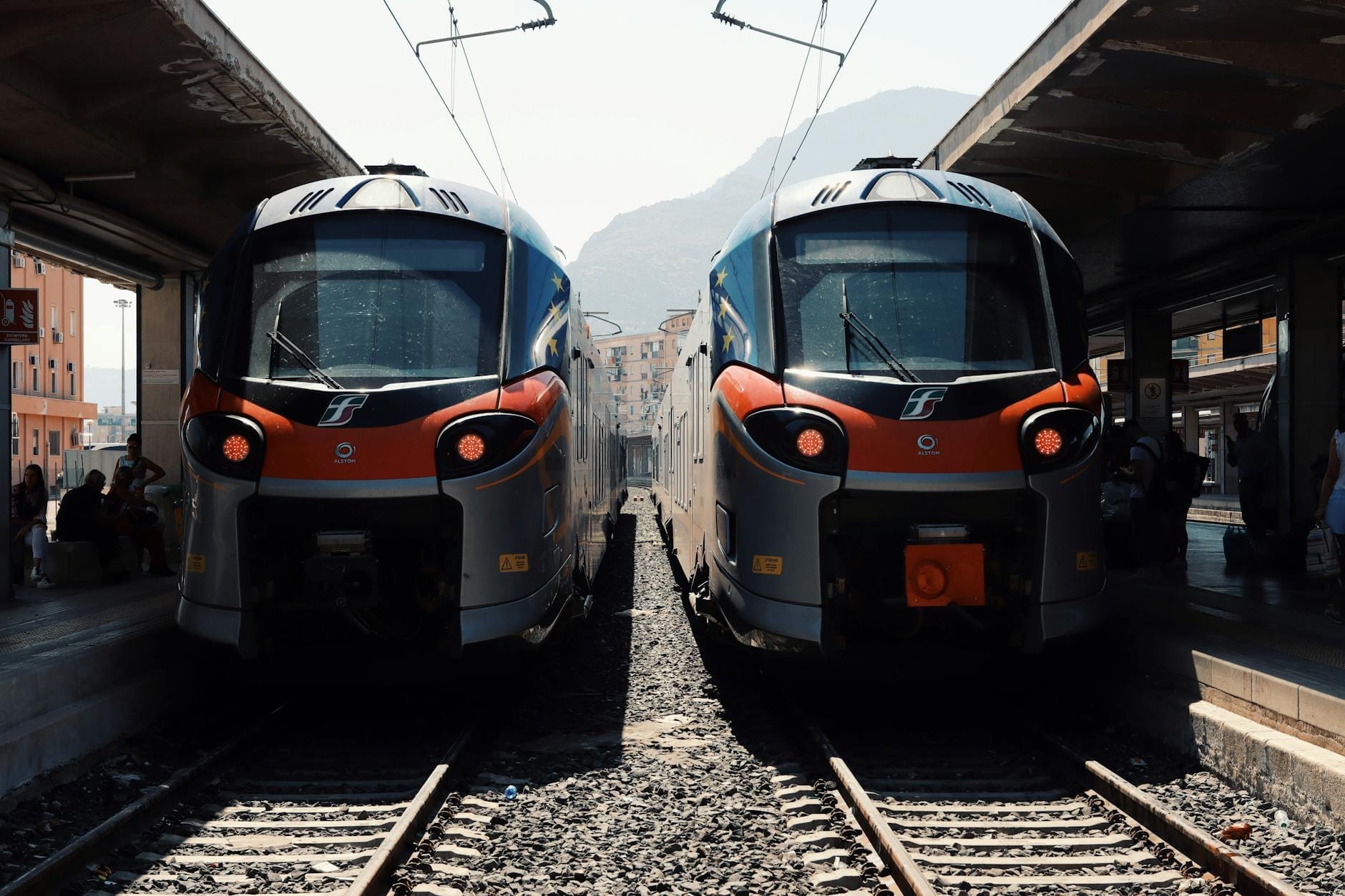
Trenitalia operates Sicily's regional rail network across approximately 1,378 km of track, connecting the island's nine provinces. The trains are comfortable and reasonably priced, but the network is oriented toward coastal routes and a few key inland links. The Palermo-Catania corridor via Enna takes around 2 hours 56 minutes; Messina to Siracusa runs about 3 hours 30 minutes. These are not high-speed services, and the infrastructure on older inland stretches can be slow.
For city-to-city travel between the main urban centres, trains are a solid choice. The airport rail link from Palermo Centrale to the Falcone Borsellino Airport (PMO) at Punta Raisi departs approximately every 30 minutes, takes around 56 minutes, and operates from roughly 04:00 to 22:00. Fares for airport connections are in the range of €5. Catania's airport is served by the ALIBUS shuttle rather than a direct rail connection, though the Catania Metro (operated by FCE, the Ferrovia Circumetnea) provides urban transport within the city.
The honest limitation of Sicilian rail is that it doesn't reach places like Agrigento efficiently from Catania, doesn't connect to Segesta or Cave di Cusa at all, and bypasses much of the baroque southeast. If your itinerary includes sites beyond the main coastal corridor, trains alone will leave you frustrated. Use them for intercity legs and supplement with buses or a rental car.
Buses: Essential but Complex
Intercity buses are the backbone of transport for destinations the rail network misses. SAIS Autolinee is a primary operator for many routes and sells tickets online from around €2, via its website, app, or authorized retailers. But Sicily's bus landscape is not a single coherent network. Multiple regional operators cover different corridors, and connecting between them requires checking timetables separately. What looks like a simple A-to-B journey can involve different providers, different booking channels, and careful timing.
Within cities, urban buses are the main option. Palermo's city network is run by AMAT Palermo; Catania's by AMTS. City bus tickets typically cost slightly over €1 and are valid for 90 to 120 minutes, with day passes also available. For Palermo's historic centre, many key sights like the Palatine Chapel and Ballarò Market are close enough to walk between, reducing bus dependency significantly.
✨ Pro tip
Buy bus tickets before boarding at tabacchi (tobacconists) or news kiosks rather than on the bus. Buying on board, where allowed, usually costs more and drivers often can't give change. Validate your ticket in the machine as you board, or risk an on-the-spot fine from inspectors.
Getting to and from Sicily's Airports
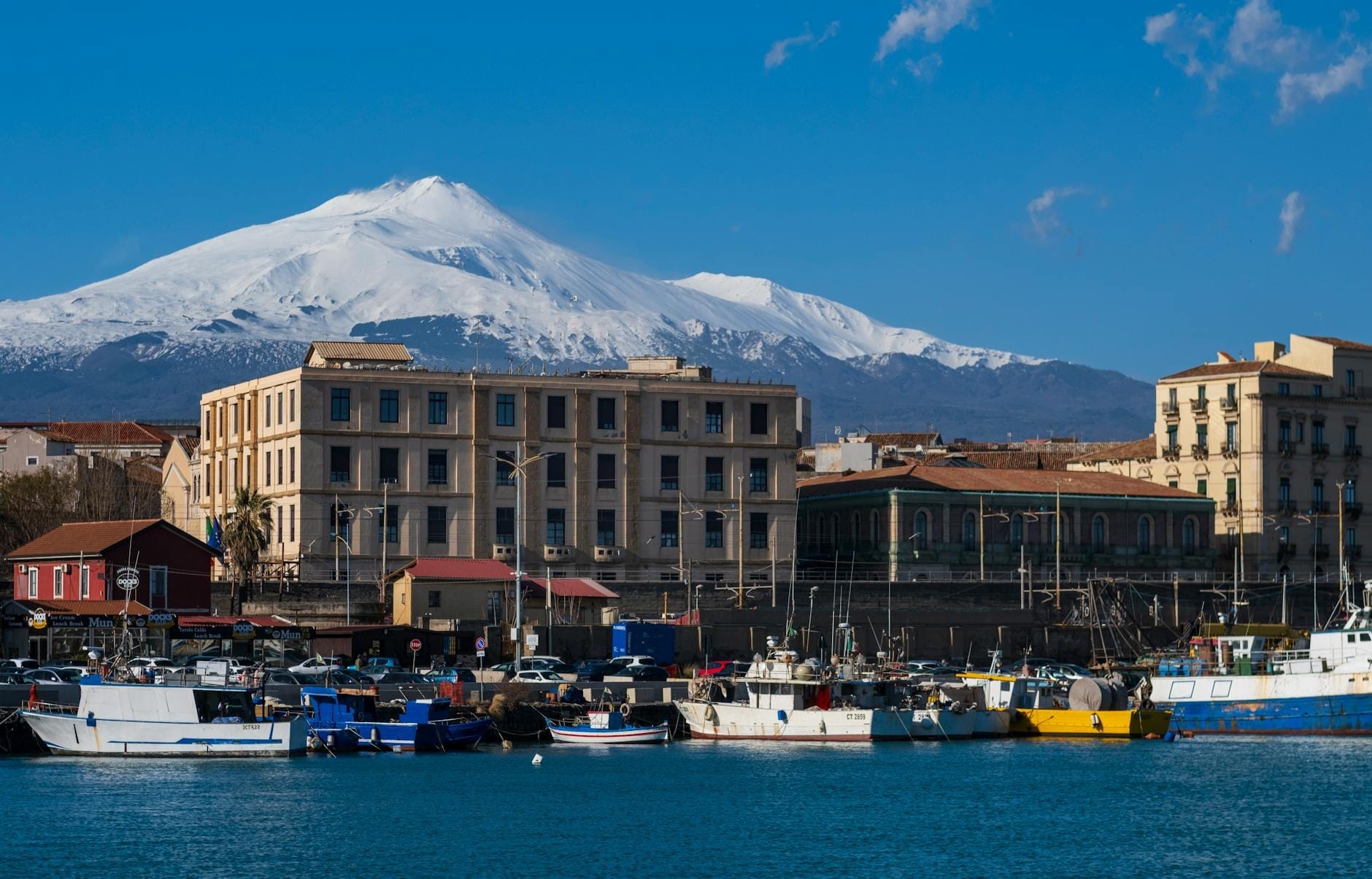
Sicily has four main commercial airports. Choosing the right arrival airport makes a real difference to your journey time. Catania Fontanarossa (CTA) sits just 5-6 km from Catania's city centre and is the better gateway for eastern Sicily, including Taormina, Siracusa, Ragusa, and Mount Etna. Palermo Falcone Borsellino (PMO) is 35 km northwest of the capital and serves the west: Palermo itself, Trapani, Agrigento, and Cefalù. Trapani Birgi (TPS), about 15-20 km south of Trapani, primarily serves budget carriers and is useful for the western coast and Egadi Islands. Comiso (CIY) serves the Ragusa area and is worth considering if southeastern Sicily is your main focus.
- Palermo Airport (PMO) to city centre Trinacria Express train runs every 30 minutes, taking about 56 minutes to Palermo Centrale. Fares around €5. Shuttle buses by Prestia e Comandè take roughly 50 minutes. Taxis operate on regulated fares.
- Catania Airport (CTA) to city centre The ALIBUS shuttle runs frequently between the airport and Catania Centrale station. Taxis operate on regulated tariffs for city destinations. Journey time is typically 20-30 minutes depending on traffic.
- Trapani Airport (TPS) to Trapani Buses and taxis connect the airport to Trapani city centre and Marsala. Check the airport's official transport page for current operators and fares.
- Comiso Airport (CIY) to Ragusa About 15 km from Ragusa. Buses and taxis serve the connection. Car rental from the airport is the most convenient option if you plan to explore the baroque southeast.
Ferries, Hydrofoils, and Getting to the Islands
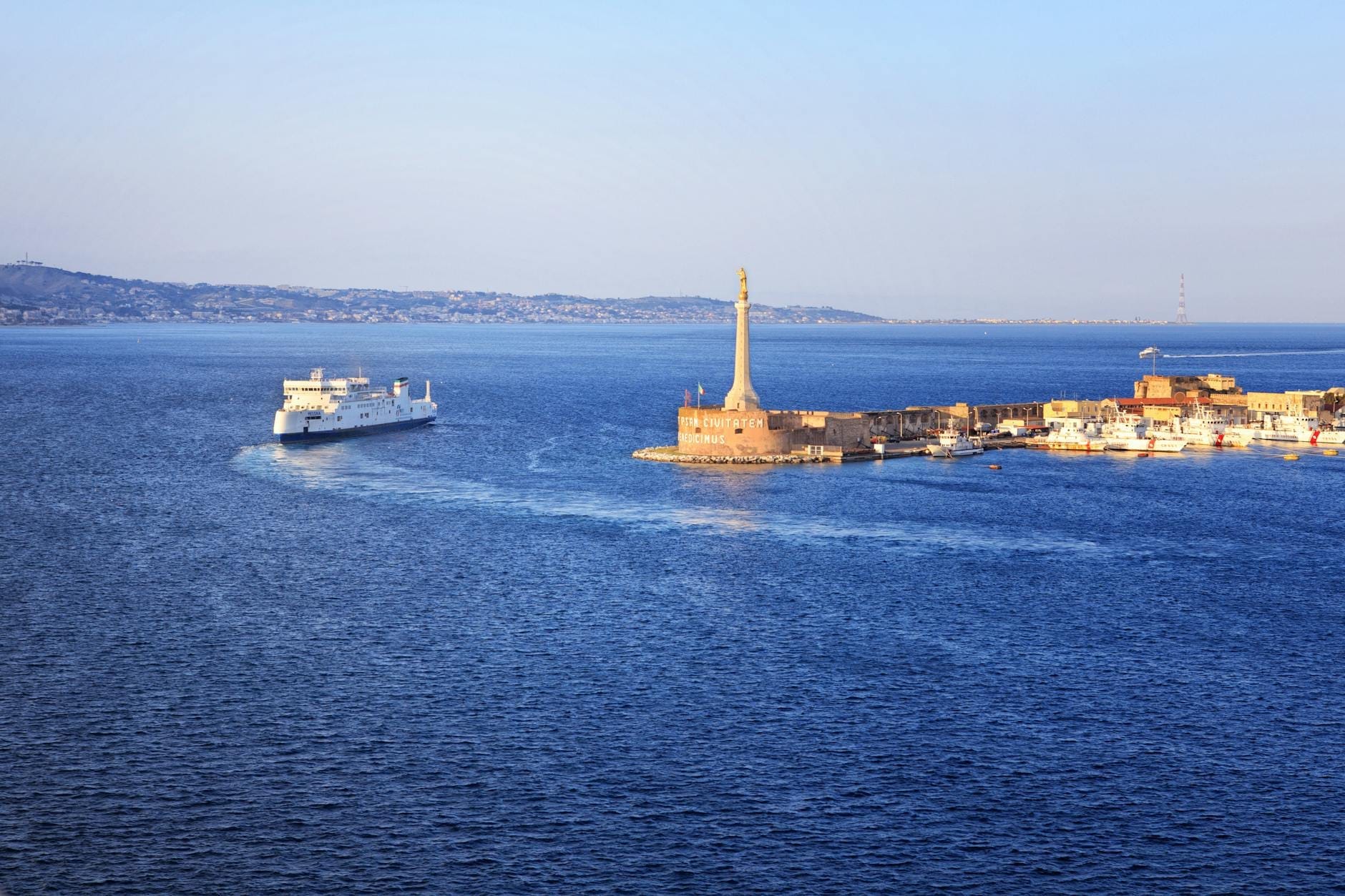
Sicily's administered territory includes several island groups: the Aeolian Islands to the north, the Egadi Islands (including Favignana and Marettimo) to the west, and the Pelagie Islands including Lampedusa to the south. Reaching any of them requires a ferry or hydrofoil from the mainland of Sicily. Milazzo is the main departure point for the Aeolian Islands; Trapani serves the Egadi Islands and Pantelleria.
Hydrofoils (aliscafi) are faster but more expensive and more susceptible to cancellation in rough seas. Ferries are slower and sturdier. Both are subject to seasonal timetabling: many faster services run only from spring through early autumn, with reduced frequency in winter. If your trip includes island-hopping, check seasonal schedules early and book ferry tickets in advance during July and August when demand peaks.
Getting from Messina to mainland Italy (or vice versa) is straightforward by ferry or hydrofoil across the Strait of Messina, which narrows to as little as 3 km. Trenitalia train carriages actually board the ferries at Villa San Giovanni and cross to Messina, so some through-train journeys between Rome or Naples and Sicily technically include a ferry crossing. For those focused on day trips or multi-day excursions from base cities, check our day trips from Catania and day trips from Palermo guides for specific route recommendations.
Taxis, Ride-Hailing, and Urban Options
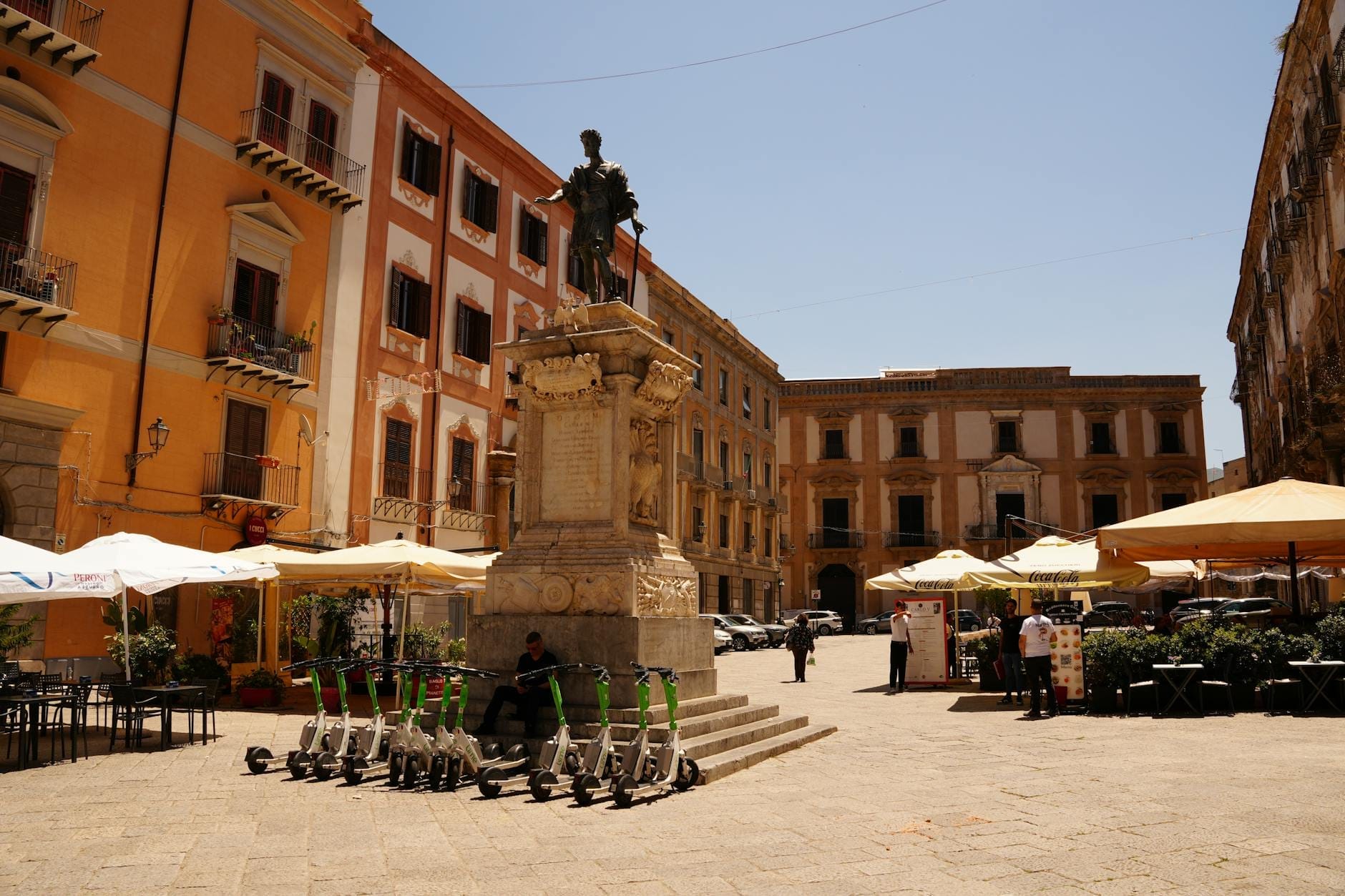
Official taxis (white cars with a meter) operate in all major Sicilian cities and at airports. Fares are regulated and meters are mandatory for urban journeys, though fixed tariffs may apply for airport runs. Always use licensed taxis from official ranks or booked through hotel reception. Unofficial taxis (abusivi) operate at some tourist pinch points and should be avoided.
Uber's presence in Sicily is limited. The app may show options in Palermo and Catania, but coverage is inconsistent compared to northern Italian cities. Free Now and similar taxi-dispatch apps are available in some cities and are worth downloading as a backup. In practice, flagging a cab or calling a local radio taxi service is often more reliable in mid-sized Sicilian towns. City buses in Catania are complemented by the FCE-operated metro line (Linea Borgo–Stesicoro, with planned extensions), which is genuinely useful for north-south movement within the city.
💡 Local tip
In Palermo's historic centre, walking is faster than any vehicle for getting between the Quattro Canti, the Palazzo dei Normanni, and the cathedral district. Traffic, ZTL zones, and one-way systems make driving the old town a poor choice. Park outside the centre and walk or take a local bus for the final stretch.
Choosing Your Transport Strategy by Itinerary Type
There is no single correct approach to getting around Sicily. The right strategy depends on your base cities, the sites you want to reach, and your tolerance for timetable coordination. For a one-week itinerary covering multiple regions, a rental car almost always makes more sense than public transport. For a city-focused trip based in Palermo or Catania, public transport is perfectly workable and often preferable given parking challenges.
- City-based trip (Palermo or Catania only): public transport and taxis are sufficient. No car needed.
- Coastal route (Palermo to Siracusa via Taormina): trains work for main legs; rent a car for side trips to Etna, Alcantara, or Pantalica.
- Archaeological circuit (Agrigento, Selinunte, Segesta): car rental is essentially mandatory. No direct rail to Selinunte or Segesta.
- Baroque southeast (Ragusa, Noto, Modica): poor rail connections make a car strongly recommended.
- Island hopping (Aeolians, Egadi): base in Milazzo or Trapani and take ferries. No car needed on the smaller islands, and bikes or scooters are better there anyway.
- Budget travellers: trains plus SAIS buses cover the major route corridor cheaply. Accept slower journeys and limited flexibility.
For more context on planning a full trip around these constraints, see our two-week Sicily itinerary and the Sicily on a budget guide, which covers how to minimize transport costs without sacrificing the best destinations.
FAQ
Do I need a car in Sicily?
Not always, but for most itineraries a rental car significantly expands what you can see. If you're staying in one city like Palermo or Catania, public transport is sufficient. If you want to reach archaeological sites like Selinunte, Segesta, or the baroque hill towns of the southeast, a car is the only practical option. Rail and buses cover major city-to-city routes but leave many of Sicily's best destinations inaccessible without your own transport.
What is the best way to get from Palermo to Catania?
The Trenitalia regional train is a comfortable option, typically taking just under 3 hours and costing roughly €13-15. Intercity buses (SAIS Autolinee) also connect the two cities and can be faster depending on the service. Driving via the A19 motorway takes around 2.5 hours in normal conditions. The motorway is toll-free, which is an unusual advantage for Italian autoroute driving.
How do I get from Catania Airport to the city centre?
The ALIBUS shuttle bus connects Catania Fontanarossa Airport (CTA) to the city centre and central railway station. Services run frequently during the day and the journey takes 20-30 minutes depending on traffic. Official taxis operate on regulated fares for airport runs. The airport is only 5-6 km from the centre, so taxi costs are reasonable.
Is public transport in Sicily reliable enough for a tourist?
For the major city-to-city routes, yes. Trenitalia trains between Palermo, Catania, Messina, and Siracusa run regularly and are reasonably dependable. Bus services can be less predictable, especially on rural routes with infrequent departures. The biggest challenge isn't reliability so much as complexity: multiple operators, separate timetables, and gaps in coverage mean you need to plan carefully. For remote archaeological sites or small hill towns, public transport is often impractical regardless of reliability.
When is the best time to visit Sicily to avoid transport headaches?
April to June and September to October are the most manageable periods. Summer (July-August) brings heavier tourist volumes, making car rentals more expensive, ferry bookings harder to secure, and parking in popular coastal towns genuinely difficult. Shoulder season gives you more transport flexibility and less competition for hire cars. For specific seasonal guidance, see the best time to visit Sicily overview.