Perched on the slopes of Monte Tauro between Messina and Catania, Taormina is Sicily's most dramatically positioned hilltop town. Its ancient Greek theatre, panoramic main corso, and cable car down to the sea have drawn travelers since the 19th century. The views alone justify the visit; the food, architecture, and evening atmosphere make it worth staying.
Taormina sits roughly 200–250 metres above the Ionian Sea on the steep flanks of Monte Tauro, looking out over a coastline that curves toward Catania with Mount Etna dominating the southwestern skyline. It is one of Sicily's most visited destinations and has been since Victorian-era Grand Tourists made it a compulsory stop, drawn by the same combination that pulls people today: a remarkably well-preserved Greco-Roman theatre, a single medieval main street with sea views at every gap between buildings, and a light that photographers spend entire careers chasing.
Orientation
Taormina is a comune in the Metropolitan City of Messina, on Sicily's east coast. It sits roughly 50 km north of Catania and about 45 km south of Messina, perched at around 200–250 metres elevation on Monte Tauro. Below the hill, the shoreline includes the seaside hamlet of Mazzarò, the beaches of Isola Bella, and the neighboring resort town of Giardini Naxos. The hill town and the coast below it function almost as two separate places, linked by a cable car and steep switchback roads.
The historic core is essentially one long east-west axis: Corso Umberto I, running approximately 800 metres between two medieval gates. Porta Messina at the eastern end is where most visitors enter from the bus terminal, while Porta Catania at the western end leads toward quieter residential streets. Everything that matters in the town center sits on or just off this corridor. Via Teatro Greco branches north from the corso toward the ancient theatre, while a series of narrow lanes drop steeply south toward balconies and belvederes overlooking the sea.
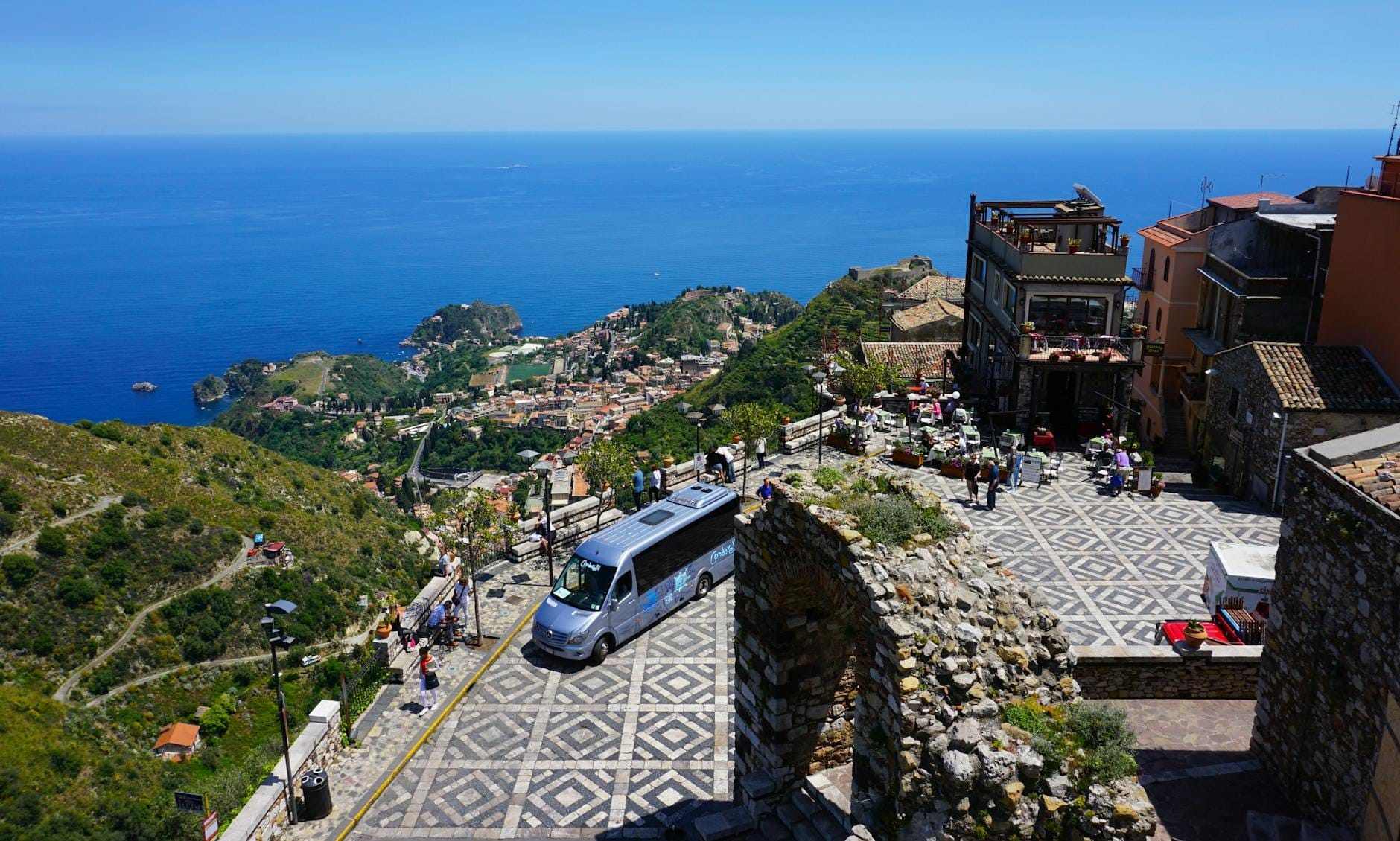
Beyond the walls, Taormina spreads up Monte Tauro toward the ruined Castello Saraceno at the summit and down toward Mazzarò on the coast. The castle area and the clifftop botanical gardens occupy the higher slopes. The suburb of Castelmola, a village perched even higher above Taormina, is reachable by road or footpath and offers a noticeably quieter perspective on the same extraordinary landscape.
ℹ️ Good to know
Taormina's railway station is not in the town. Taormina-Giardini station sits on the coast below the hill. From there, buses and taxis connect to the hilltop, or you can use the cable car from Mazzarò. Plan for this extra step when calculating journey times.
Character and Atmosphere
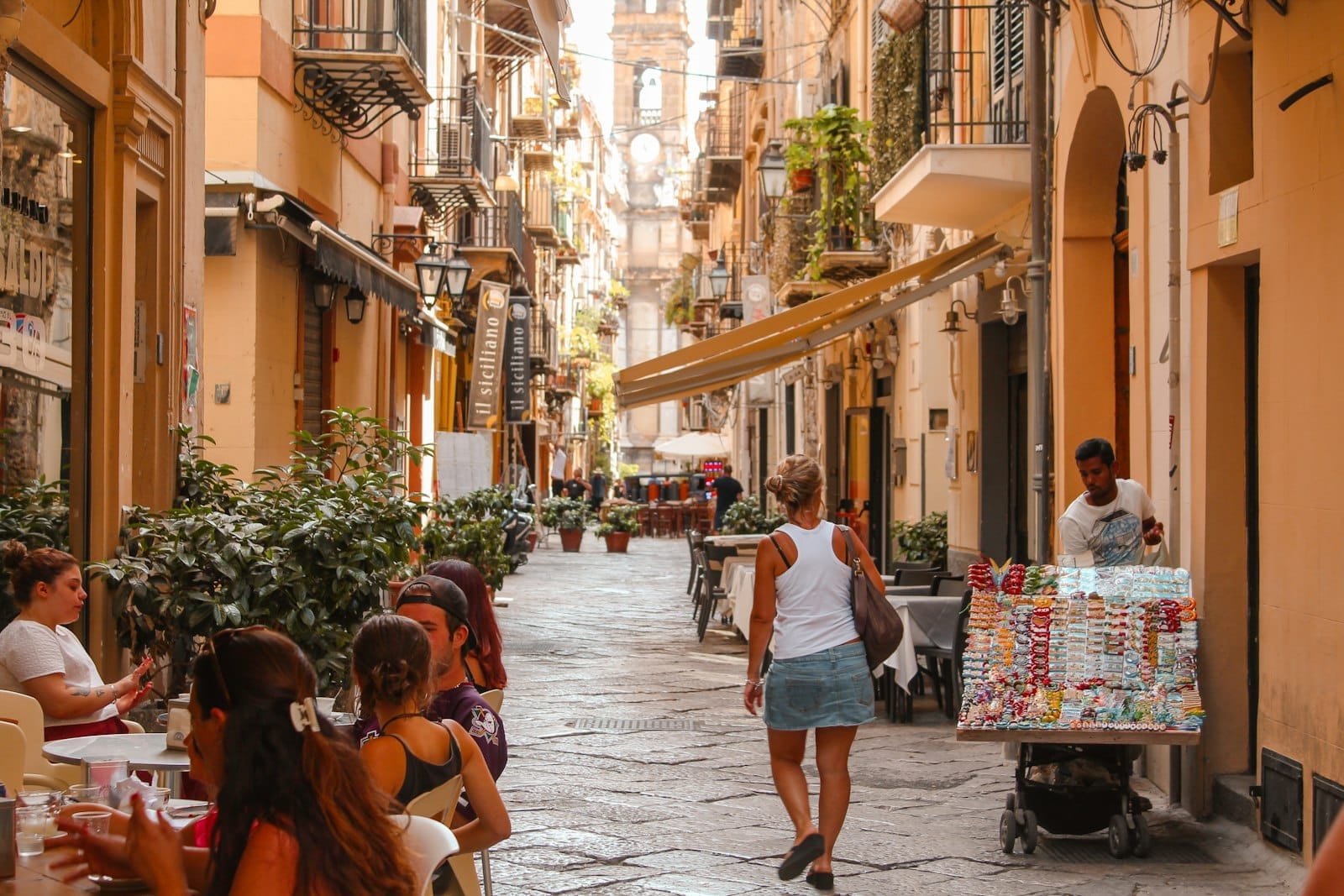
Taormina rewards early risers. In the hour before the tourist shops open, the Corso Umberto I belongs to residents: a fruit vendor arranging oranges outside a doorway, a barista setting out chairs at a cafe near Piazza IX Aprile, the smell of pastry from a laboratorio behind the cathedral square. The stone underfoot is worn smooth and almost luminous in the low morning light. Swallows cut between the medieval facades. At this hour, the piazzas feel genuinely Italian in a way they do not three hours later.
By mid-morning, the coach tours arrive and the corso fills quickly. This is the honest reality of Taormina: it is extremely popular, and from late June through August it can feel more like a theme park than a Sicilian town. Souvenir shops selling ceramic lemons and Godfather-themed merchandise dominate much of the corso frontage. The crowds peak in July and August. If you are visiting in high summer, arrive early, plan to be on the beach or at the theatre by midday, and return to the centro storico after 6pm when the day-trippers have gone and the light turns golden.
After dark, Taormina has a genuinely pleasant atmosphere. The corso narrows the sound of footsteps and conversation, the string lights come on above the restaurant terraces, and Piazza IX Aprile becomes one of the better places in Sicily to sit with a glass of wine and watch Mount Etna glow faintly against the night sky. In spring and autumn, when the crowds thin, this quality extends throughout the day. October in particular sees Taormina at its most balanced: warm enough for the beach, cool enough to walk comfortably, and populated by travelers rather than tour groups.
The town is also quite steep. Mobility matters here. The main corso is mostly flat, but access to the theatre, the gardens, the castle, and the coastal areas involves significant gradients, staircases, or reliance on the cable car. Visitors with mobility limitations should plan routes carefully in advance.
What to See and Do
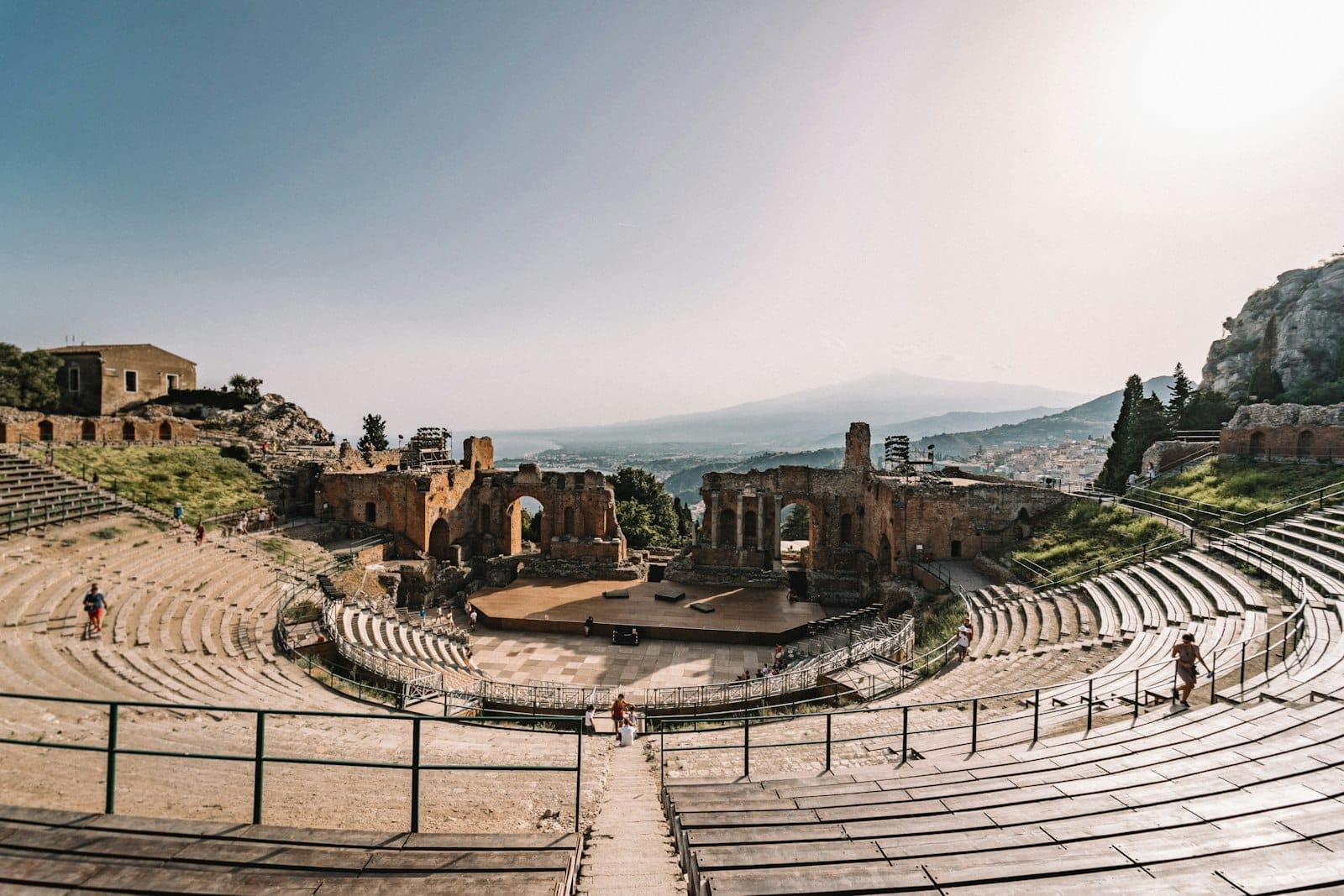
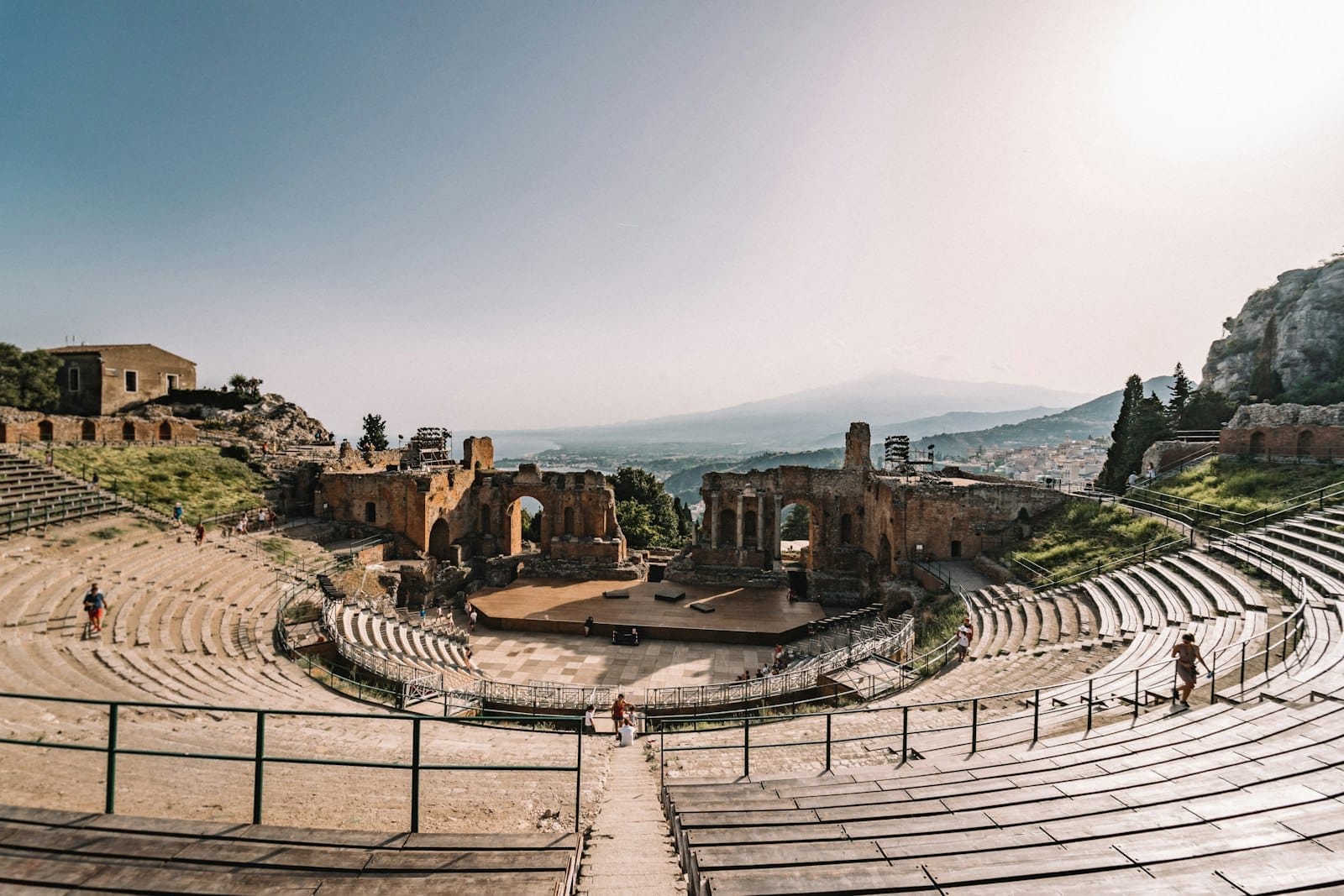
The ancient theatre is the non-negotiable starting point. The Greek Theatre of Taormina is one of the best-preserved Greco-Roman theatres in the world, and its setting is exceptional: the stage opens to a framed view of the Sicilian coastline and Mount Etna that has barely changed since antiquity. Originally built by the Greeks in the 3rd century BCE and extensively remodelled by the Romans, the theatre is still in active use as a concert and film festival venue. Book tickets in advance if you want to attend an evening performance during the Taormina Arte festival season.
Piazza IX Aprile is the social center of the town and the place to understand Taormina's appeal at a glance. Flanked by the church of Sant'Agostino and the Torre dell'Orologio, the square opens onto an uninterrupted panorama of the Ionian coast. Immediately to the west, the Duomo di Taormina, a fortified 13th-century cathedral dedicated to San Nicolò di Bari, anchors Piazza Duomo with its simple Norman facade and a Baroque fountain at its center. Near Porta Messina, the 15th-century Palazzo Corvaja is the finest medieval building in town and now houses the tourist office and the Museum of Taormina Arts and Traditions.
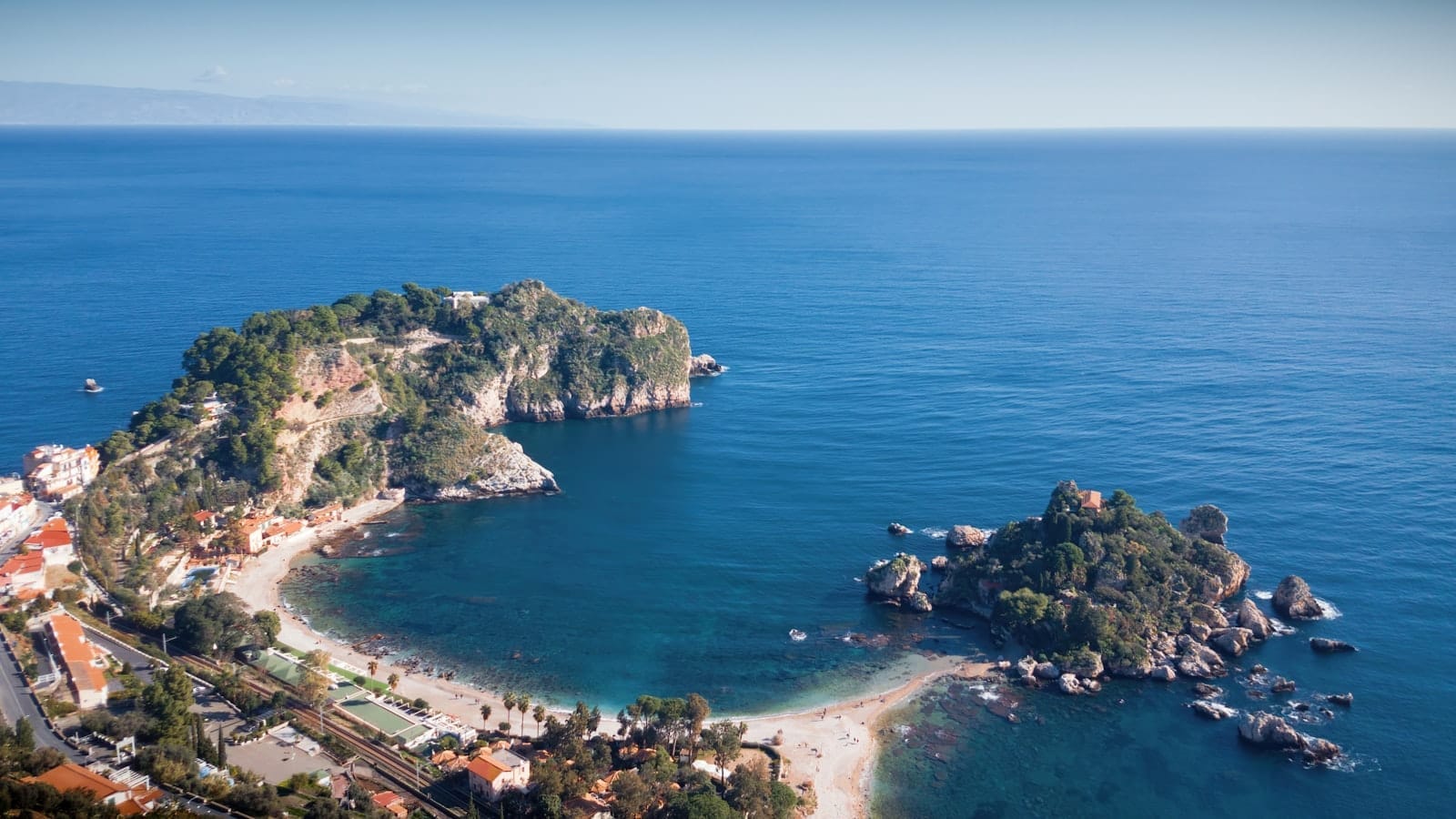
Below the town, Isola Bella is a small island connected to the shore by a narrow gravel sandbar that appears and disappears with the tide. It sits within a protected nature reserve and is arguably the most photographed spot on this stretch of coastline. Reach it via the cable car from near Porta Catania down to Mazzarò, then a short walk south. The beach here is popular and gets crowded in summer; aim for early morning if you want space.
The town's public gardens, Villa Comunale, offer a quieter form of the Taormina experience: winding paths through exotic plantings, clifftop terraces with coastal views, and the occasional eccentric folly built by a 19th-century English resident. For those wanting to go higher, the road and footpath up to Castelmola continues above the town to a village with even wider views over the strait toward Calabria. It is a steep 45-minute walk from the top of Taormina or a short taxi ride.
Greek Theatre of Taormina: allow at least 1.5 hours including the view
Piazza IX Aprile and the Torre dell'Orologio: best at golden hour
Palazzo Corvaja: 15th-century medieval palace near Porta Messina
Duomo di Taormina (Cathedral of San Nicola): fortified Norman-era church on Piazza Duomo
Villa Comunale (public gardens): clifftop botanical gardens with sea views
Isola Bella: small island and nature reserve, accessible via cable car and short walk
Castelmola: hilltop village above Taormina with panoramic views toward Messina Strait
💡 Local tip
The Greek Theatre hosts the Taormina Arte festival in summer, with film screenings and concerts in the ancient space. Watching a performance against a backdrop of Etna and the Ionian Sea at night is one of Sicily's singular experiences. Check schedules and book well ahead for July and August dates.
Eating and Drinking
The honest assessment: much of what lines the Corso Umberto I caters to tourists and charges accordingly. Restaurants with laminated picture menus and aggressive hosts standing outside are common. The food at many of these places is serviceable rather than exceptional. That said, Taormina has enough good kitchens to eat well if you know where to look, and the setting compensates for a lot.
Sicilian cuisine in general is worth understanding before you visit. The island's food traditions draw on Greek, Arab, Norman, and Spanish influences, and eastern Sicily in particular has a distinctive character. Around Taormina, look for fresh Ionian seafood, pasta alla Norma (pasta with fried aubergine, tomato, ricotta salata, and basil, a dish originating in nearby Catania), and arancini. For a fuller picture of what you should be eating, the Sicily food guide covers regional specialties in detail.
For better value and a more local atmosphere, move off the corso into the side streets or toward the western end of town near Porta Catania, which sees fewer day-trippers. Granita con brioche is the correct Sicilian breakfast: a half-frozen flavored ice served with a soft brioche roll for dipping. Almond and coffee granita are the classic flavors in this part of Sicily. Any cafe bar that makes it properly from fresh ingredients is worth the detour.
Aperitivo culture is strong in the evening. Piazza IX Aprile is the prime location for an early evening drink, though prices are high. Bars in the quieter streets south of the corso tend to be cheaper and less performative. Local wine from the slopes of Etna, produced just a short distance southwest, is worth seeking out: Etna Rosso and Etna Bianco are among Sicily's most interesting wines and pair naturally with the food of this area.
⚠️ What to skip
Restaurants on or immediately adjacent to Piazza IX Aprile charge a premium for the view. A meal for two with wine can easily reach 80-100 euros at these tables. There is nothing wrong with paying for the setting, but go in knowing that the food is rarely worth the price differential over restaurants a few streets away.
Getting There and Around
The nearest major airport is Catania Fontanarossa, approximately 55 km to the southwest. Direct shuttle buses connect the airport with Taormina's bus terminal near Porta Messina, with journey times typically around one hour depending on traffic. Interbus and other regional operators run this route; check current timetables and book in advance during peak season, as services fill quickly.
By train, Taormina is served by the Taormina-Giardini station on the Messina-Catania coastal line. Trenitalia runs regular services in both directions. The station sits at sea level below the hill, so factor in an additional transfer: buses run from the station up to the town, or taxis are available. Journey times are roughly 45–60 minutes to Catania and about an hour to Messina.
Once in Taormina, the cable car (funivia) connecting the town to the Mazzarò coastal area is both a practical transport link and a worthwhile experience. It runs frequently during the day and provides access to the beaches at Mazzarò and the path to Isola Bella. Note that it operates on a schedule and typically closes by late evening rather than running overnight. The steep road down to the sea is also served by local buses. For visiting Giardini Naxos just south of the headland, buses descend from Taormina or you can walk down the hillside road.
Taormina also works well as a base for day trips. The town sits within reach of several major attractions on Sicily's east coast. The slopes and trails of Mount Etna are less than an hour away by car or organized tour, and the archaeological site of Alcantara Gorge, carved by an ancient lava flow, is about 20 km inland. Catania is accessible in under an hour, making it feasible for a day in the city and back. For a broader view of what is reachable, the day trips from Catania guide covers the wider eastern Sicily network.
Within the town, the Corso Umberto I is largely pedestrianized in practice and everything in the centro storico is walkable. Parking in the upper town is extremely limited; drivers are generally directed to parking areas at the town periphery and walk or take a shuttle into the center. Do not attempt to drive directly to the central piazzas. In summer, traffic on the approach roads backs up severely on weekends.
Where to Stay
Taormina has a wide accommodation range, from luxury clifftop hotels with infinity pools to small B&Bs in converted medieval buildings on the side streets off the corso. The upper town, within or just outside the medieval walls, is the most convenient location for sightseeing and for experiencing the evening atmosphere after day-trippers leave. Most of the well-known luxury properties sit on the hillside just below the walls, with terraced gardens and sea views.
Staying on or immediately adjacent to the Corso Umberto I means noise, particularly in summer. The street is active late into the night during high season. Travelers who are light sleepers should look for accommodation on the quieter southern side of the hill, or on side streets several blocks from the main axis. Budget accommodation is less abundant inside the walls than in the lower coastal areas; Giardini Naxos below the hill offers significantly cheaper options with easy bus access up to Taormina.
For travelers choosing between Taormina and other Sicilian bases, consider that Taormina is better as a focused destination of two or three nights than as a hub for exploring the whole island. Its transport connections work well for eastern Sicily but are less practical for the west. If you are planning a full week or more, the where to stay in Sicily guide covers how the major bases compare.
💡 Local tip
If you want Taormina's atmosphere without its prices, stay in Giardini Naxos on the coast below. Buses run up to Taormina regularly and the ride takes around 15–20 minutes. The beach in Giardini Naxos is also considerably more accessible than the clifftop town's coastal options.
Practical Notes
Taormina sits in one of Sicily's most seismically and volcanically active areas. Mount Etna is visible from the town and periodically active; eruptions do not typically threaten Taormina directly but can produce ash fall across eastern Sicily and occasionally disrupt flights through Catania airport. Monitor Etna's status through official Italian civil protection channels if you are visiting during an active period.
The town is generally very safe. The main corso is well-lit and well-populated until late at night. Petty theft is a risk in crowded areas as in any popular tourist destination; keep bags closed and phones secured in the tightest sections of the corso during high season. The steep terrain means that uneven cobblestones and sudden steps are constant features of navigation, so appropriate footwear matters.
Churches in Taormina, including the Duomo, require standard Italian church etiquette: shoulders and knees covered for entry. The best general guidance on visiting Sicily as a whole, including safety, seasonal considerations, and logistics, is available in the Sicily safety guide and the best time to visit Sicily guide.
TL;DR
Taormina is Sicily's most dramatically positioned hilltop town, with a world-class Greek theatre, panoramic piazzas, and views of Mount Etna that are among the best in the Mediterranean.
The centro storico is compact and walkable along Corso Umberto I, but the town is steep and the coast is only accessible via cable car, bus, or a long walk down switchback roads.
High season (July-August) brings heavy crowds and tourist-facing pricing; spring (April-May) and autumn (September-October) offer a noticeably better experience for most travelers.
Best suited to travelers wanting a scenic base for eastern Sicily with easy access to Etna, Catania, and the Ionian coast, or for a focused two to three night stay rather than an island-wide hub.
Budget travelers should consider staying in Giardini Naxos below the hill and visiting Taormina on day trips to avoid the steep accommodation prices inside the walls.
Seven volcanic islands, one UNESCO designation, and more logistical decisions than most travelers expect. This guide covers every practical detail you need to plan a trip to the Aeolian Islands, from choosing which islands to visit to navigating seasonal ferry schedules.
The Arab-Norman UNESCO trail covers nine extraordinary monuments across Palermo, Monreale, and Cefalù, inscribed in 2015 for their remarkable fusion of Western, Arab, and Byzantine architecture. This guide covers every site, practical logistics, and the historical context that makes this one of the most intellectually rewarding itineraries in the Mediterranean.
Sicily's Val di Noto is one of Europe's most remarkable architectural achievements: eight towns rebuilt in coordinated Late Baroque style after a catastrophic 1693 earthquake, now a single UNESCO World Heritage Site. This guide covers all eight towns, how to get between them, what to prioritise, and when to go.
Sicily's coastline stretches over 1,000 km across the Tyrrhenian, Ionian, and Mediterranean seas, producing an extraordinary range of beaches. This guide covers the finest sandy bays, volcanic coves, nature reserves, and island escapes the island has to offer.
Sicily was once the heart of Magna Graecia, and the ruins left behind are among the finest ancient Greek monuments anywhere in the world. This guide covers the essential sites, from vast temple complexes to forgotten quarries, with practical advice on what to see and when to go.
Sicily rewards visitors year-round, but timing your trip correctly makes a significant difference. This guide breaks down every season by temperature, crowds, prices, and what's actually worth doing, so you can plan with confidence.
Catania sits at the centre of eastern Sicily, putting some of the island's greatest attractions within easy reach. This guide covers the best day trips from Catania, from the volcanic trails of Etna to the Baroque jewels of the southeast and the ancient ruins of Siracusa.
Palermo sits at the centre of western Sicily, putting an extraordinary range of landscapes, ancient sites, and coastal escapes within a few hours. This guide covers the best day trips from Palermo, from the world's greatest medieval mosaics at Monreale to the Greek temples of Agrigento and the untouched coves of the Zingaro Nature Reserve.
Sicily is large, geographically varied, and not always easy to navigate without the right plan. This guide covers every transport option available, from renting a car to catching intercity buses, so you can move around the island confidently and without wasted time.
Sicily rewards those who look beyond Taormina and Palermo's grand monuments. This guide covers 20 lesser-known attractions across the island, from prehistoric cliff tombs and abandoned earthquake towns to wild coastal reserves and ancient quarries frozen in time.
Sicily is Italy's largest island and the Mediterranean's most historically layered destination. This guide cuts through the hype to give you a clear-eyed look at what the island genuinely offers, what it costs, when to go, and what tends to disappoint — so you can make an informed decision.
Sicily rewards the discerning traveler with a depth that few Mediterranean islands can match. This guide covers the finest luxury hotels, bespoke experiences, and practical logistics for planning a high-end trip to the largest island in the Mediterranean.
Seven days in Sicily is enough to cover the island's greatest hits — Greek temples, baroque city centres, volcanic landscapes, and some of the best street food in Italy. This guide maps out a logical east-to-west route with realistic transport times, seasonal advice, and honest notes on what to skip.
Sicily has four main airports, and choosing the right one can save hours of overland travel. This guide covers Palermo (PMO), Catania (CTA), Trapani (TPS), and Comiso (CIY) in detail, including airport-to-city transfers, route availability, and which gateway suits each part of the island.
Sicily rewards self-drive travel more than almost any other Mediterranean destination. This guide covers everything you need to plan a confident road trip: the best routes, realistic driving times, car rental tips, ZTL zone warnings, seasonal advice, and the stops that genuinely justify the detour.
Sicilian food is not Italian food with a suntan. It is a centuries-old fusion of Greek, Arab, Spanish, and Norman influences, built around seafood, citrus, almonds, ricotta, and durum wheat. This guide covers every dish worth eating, where to find the best versions, and the food customs that will shape every meal you have on the island.
Francis Ford Coppola brought the Corleone saga to life across the hillside villages and historic streets of Sicily. This guide covers every key filming location from all three films, how to reach them, what to expect on the ground, and how to avoid the most common tourist mistakes.
Sicily rewards couples with baroque towns, volcanic landscapes, secluded beaches, and some of the most atmospheric historic centers in the Mediterranean. This guide cuts through the generic advice to tell you exactly where to go, when to go, and what actually makes Sicily special for two.
October is one of the smartest months to visit Sicily. Temperatures ease off from the summer heat, the tourist crush fades, and the island's food and festival calendar comes alive. Here's everything you need to plan your trip well.
Summer in Sicily runs from June through September and brings hot weather, packed beaches, vibrant festivals, and peak travel prices. This guide covers everything you need to know: when to go, what to expect from the heat and crowds, which beaches and islands are worth it, and how to plan smarter than most visitors do.
Sicily is far more than a single island. From the volcanic Aeolian archipelago in the Tyrrhenian Sea to the crystal-clear waters of the Egadi Islands off Trapani, this guide covers every ferry route, island, cost, and logistical detail you need to plan a serious island-hopping trip from Sicily.
Sicily is one of the most rewarding destinations in the Mediterranean, and it doesn't have to cost a fortune. This guide breaks down real daily costs, the cheapest times to visit, where to eat well for under €10, and how to see the island's best sights without draining your account.
The Opera dei Pupi is one of Sicily's most distinctive cultural exports — a UNESCO-recognised marionette tradition rooted in medieval chivalric epics, performed by family troupes across the island. This guide covers the history, the two rival schools, where to see performances in Palermo, Catania, and Siracusa, and how to get the most out of attending a show.
Sicily is one of southern Europe's most rewarding destinations, and it is genuinely safe for tourists. This guide cuts through the stereotypes, explains what the real risks are, identifies the scams that do happen, and gives you practical tools to visit with confidence.
Sicily produces some of Italy's most distinctive street food, rooted in centuries of Arab, Norman, and Spanish influence. This guide breaks down the essential dishes by city, the markets where locals actually eat them, what to pay, and what to skip.
Sicily sits on one of the most volcanically active zones in Europe. This guide breaks down what to expect from Etna, Stromboli, and Vulcano — three very different volcanic experiences — covering access, trails, safety, and the best time to visit each one.
Both Sicily and Sardinia are autonomous regions of Italy with distinct identities, landscapes, and travel experiences. This guide breaks down the real differences in culture, beaches, food, costs, and logistics so you can choose the right island for your trip.
Sicily is Italy's largest wine region by vineyard area, with 23 DOCs, one DOCG, and a lineup of native grapes that rival anywhere in Europe. This guide breaks down the key appellations, the grapes behind them, and exactly how to plan a tasting trip across the island.
Sicily delivers an extraordinary range of family experiences, from volcanic landscapes and ancient Greek ruins to puppet theatre and sweeping beaches. This guide breaks down the best kid-friendly activities, practical logistics, seasonal timing, and practical advice to help families plan a smooth, memorable trip.
Sicily rewards travelers with an extraordinary range of experiences: ancient Greek ruins, active volcanoes, UNESCO Baroque towns, Norman cathedrals, and coastline that stretches nearly 1,000 km. This guide covers the best things to do in Sicily across every corner of the island, with practical advice on timing, costs, and how to avoid the common pitfalls.
Sicily rewards travelers who give it time. This complete 14-day itinerary covers the island's east coast highlights, Baroque south, ancient Greek south, and the layered history of the west, with practical routing advice, seasonal tips, and practical guidance on trade-offs.
Sicily is the Mediterranean's largest island, and picking the right base makes or breaks your trip. This guide covers the best towns to stay in across every corner of the island, from the baroque southeast to the volcanic northeast, with practical advice on prices, transport, and seasonal trade-offs.