Isola Bella, Taormina: The Islet That Lives Up to Its Name
Isola Bella is a tiny protected islet just off the Mazzarò coast below Taormina, connected to the mainland by a narrow strip of land that can be submerged depending on tides. Once a private retreat, it is now a Regional Naturalistic Nature Reserve with a small museum inside a restored villa. The surrounding coves offer some of the clearest water on Sicily's Ionian coast.
Quick Facts
- Location
- Mazzarò bay, Taormina (ME), Sicily — a few metres off the Via Nazionale (SS114) coastline
- Getting There
- Cable car from Via Pirandello in Taormina centre to Mazzarò, then about a 200 m walk; or about a 40-minute walk downhill from town
- Time Needed
- 2–4 hours for beach, causeway walk, and museum; longer if you swim or snorkel
- Cost
- Beach and nature reserve exterior: free. Regional Naturalistic Museum: €4 full, €2 reduced
- Best for
- Swimmers, snorkellers, photographers, couples, and anyone wanting a break from Taormina's hilltop crowds
What Isola Bella Actually Is
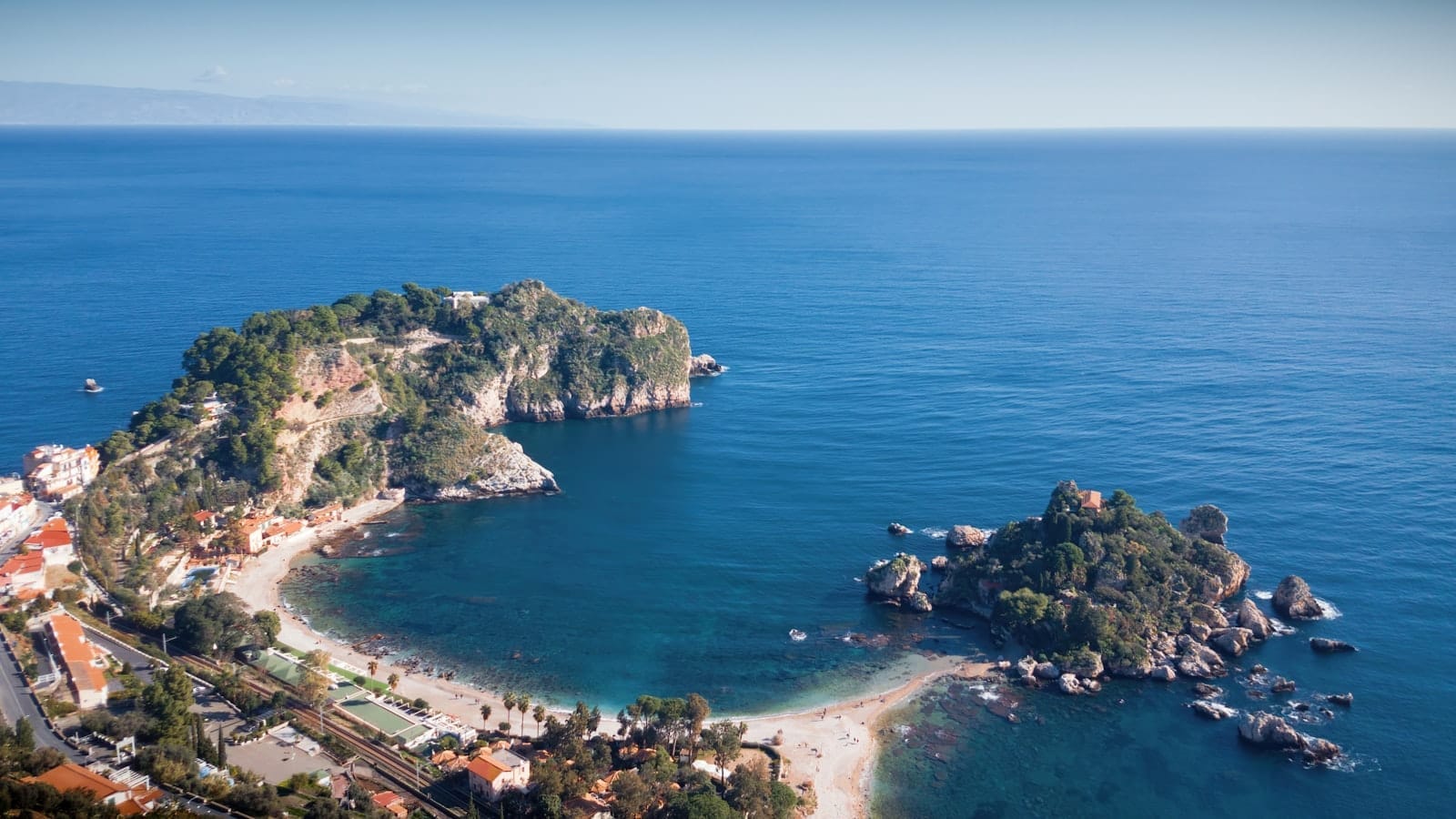
The Riserva Naturale Isola Bella is a small, rocky islet sitting just off the coast at Mazzarò, the seaside quarter directly below Taormina's clifftop centre. At most tides, a thin tongue of sand and pebbles connects the islet to the beach, and you can walk across in under a minute in dry shoes. At high tide or after rough weather, that causeway disappears under a few centimetres of water, making the crossing a wade rather than a walk. It is one of those places that looks composed and intentional from above, and slightly chaotic up close.
The museum on the islet is commonly referred to as the Regional Naturalistic Museum of Isola Bella, reflecting its dual identity as both a protected marine and terrestrial reserve and a small natural history museum housed inside the restored villa on the islet's summit. The Region of Sicily acquired the island in 1990, and it was designated a nature reserve in 1998. Before that, it passed through notable private hands: King Ferdinand I of Sicily gave it to the city of Taormina in 1806, and in the 19th century the eccentric British naturalist Lady Florence Trevelyan owned it, and the Victorian-era structure still crowns the island.
ℹ️ Good to know
The beach and outer nature reserve are freely accessible with no ticket required. You only need to pay (€4 (reduced €2)) to enter the museum and the interior of the islet. Prices vary slightly by source, so check at the ticket office on arrival.
Getting There: Cable Car vs. Walking
The cable car (funivia) descends from Via Pirandello in Taormina to Mazzarò in a few minutes, running frequently during the day. From the cable car station at the bottom, the walk to Isola Bella takes about 200 metres along a flat seafront path, partly shaded. This is by far the most practical option if you are arriving from the town centre, especially in summer when the heat on the descent road can be punishing.
If you prefer to walk down from Taormina, the descent via the road toward Mazzarò takes around 40 minutes and involves steep, narrow stretches shared with traffic. It is entirely manageable in the morning but uncomfortable and genuinely hot in the afternoon between June and August. By car, exit at Taormina from the A18 motorway and follow signs down to Mazzarò and Isola Bella along the SS114.
⚠️ What to skip
The causeway and island paths involve uneven pebbles, steep rock sections, and surfaces that become slippery when wet. Sandals with grip are fine for the beach; proper shoes are advisable if you plan to explore the islet's interior paths or visit the museum. The terrain is not suitable for visitors with significant mobility limitations.
Tickets & tours
Hand-picked options from our booking partner. Prices are indicative; availability and final rates are confirmed when you complete your booking.
Isola Bella boat tour and snorkeling
From 55 €Instant confirmationFree cancellationIsola Bella 2-Hour Cruise from Giardini-Naxos
From 40 €Instant confirmationFree cancellationEtna South Upper Craters Guided Excursion from Taormina
From 42 €Instant confirmationFree cancellationTaormina private tour with an expert guide
From 42 €Instant confirmationFree cancellation
The Beach and the Causeway: What to Expect
Isola Bella beach is a pebble-and-cobble cove framed by the cliffs of the Taormina headland on one side and the islet itself on the other. The water is exceptionally clear and photographs well. In the shoulder season, April through June and September through October, the beach feels calm and proportionate. In July and August, beach facilities can be busy, and the cove can become crowded by mid-morning.
Snorkelling around the base of the islet is one of the better free activities in the area. The rocky underwater perimeter shelters a range of small fish and invertebrates typical of the Ionian marine environment. Bring your own mask and fins; rental is available from beach operators but at a premium.
The cove sits just south of Mazzarò beach, and together the two bays form the coastal base for exploring Taormina's seafront. If you want to understand how this stretch of coast fits into a wider visit, the guide to Sicily's best beaches provides useful context on how Isola Bella compares to the island's other notable swimming spots.
The Museum and Islet Interior
The Regional Naturalistic Museum occupies the Victorian-era villa at the top of the islet. Inside, displays cover the ecology of the reserve: local flora, marine fauna, geological context, and the conservation history of the site. It is a modest but well-presented collection, appropriate for the scale of the space. Entry is limited to groups of up to 15 people at a time, which means the experience is rarely overwhelming, though you may wait briefly during peak hours.
The museum is generally open from 09:00 until approximately one hour before sunset, with reduced or variable hours in winter. Tuesday through Sunday is the typical schedule, though this has varied. The ticket office is at the entrance to the islet on the causeway side; confirm hours on the day, especially outside the April to October window.
The path up through the islet's vegetation is worth the small effort even for those uninterested in the museum. The mix of Mediterranean scrub, cacti, and flowering plants across the summit gives the islet an atmosphere quite distinct from the beach below. From the upper path, the views back toward the Taormina cliffs and across the bay are among the better free viewpoints on this stretch of coast.
Light, Crowds, and Timing Your Visit
The cove faces roughly east, which means morning light falls directly onto the causeway and the islet's southern face. This makes early morning the best time for photography: the water catches the low light, the crowds are minimal, and the causeway itself is often empty enough to frame a clean shot. By 10:30 on a July morning, the beach is already well-populated and the light has flattened.
Late afternoon brings softer light onto the western cliffs and a gradual thinning of the beach crowd as day-trippers return toward Taormina. If you time an afternoon visit before the museum closes, you may find the islet relatively quiet. The sea itself is often glassiest in the early morning and again in the evening, which affects snorkelling visibility significantly.
💡 Local tip
Visit on a weekday in May, June, or September. The cove is noticeably less crowded than on July and August weekends, when it can feel uncomfortably packed. The water temperature is often swimmable from late May through October.
Historical and Ecological Context
Isola Bella's ecological significance lies partly in its position within the Ionian marine environment and partly in the undisturbed terrestrial habitat that reserve status has maintained since 1998. The islet's vegetation represents a good example of Mediterranean macchia, the dense shrub-and-herb community typical of rocky coastal areas in southern Italy. The reserve also protects a stretch of seabed around the islet.
The Victorian connection gives the site a slightly unusual character for Sicily. Lady Florence Trevelyan, who settled in Taormina in the late 19th century after leaving Britain in the late 19th century, was a serious amateur naturalist and garden designer. Her influence on Isola Bella overlaps with her better-known creation of Taormina's Villa Comunale public gardens higher up the hill. Both reflect an era when British and Northern European aristocrats treated Taormina as a winter retreat and left substantial marks on its landscape.
Taormina's wider historic centre, including the Greek Theatre and the Corso Umberto, sits directly above the bay. The juxtaposition of ancient Greek ruins on the clifftop and a Victorian-era island nature reserve on the water below is one of the more characteristically layered experiences Sicily offers.
Honest Assessment: Is It Worth It?
For the beach and causeway walk, yes, without reservation. Isola Bella is one of the more visually compelling coastal spots in eastern Sicily, and access is free. The water quality is consistently good, the setting is dramatic, and the causeway crossing is genuinely enjoyable.
For the museum alone, the value proposition is weaker. The collection is small and the entrance fee, while modest, is not matched by an extensive exhibition. Visit it if you are curious about the reserve's ecology or want the upper-islet views included in the experience, but do not make it the main reason to come.
Who might skip it: visitors with significant mobility difficulties will find the pebble beach and rocky causeway uncomfortable or impassable. Families with very young children and pushchairs face the same challenge. Anyone expecting a sandy beach in the Mediterranean resort sense will be disappointed by the pebbles. In August, the cove can feel claustrophobically crowded, and those seeking a quieter swim should look at alternatives along the coast.
If the overall shape of your Sicily trip is still forming, the one-week Sicily itinerary covers how Taormina and Isola Bella fit alongside the island's other major draws.
Insider Tips
- Walk down rather than taking the cable car on your return if the evening is cool enough. The path gives you views of the bay that the cable car cabin obscures, and you pass small bars worth stopping at.
- The causeway crossing is shallowest and most reliably dry in the early morning on calm days. Check sea conditions before committing to keeping your shoes on for the crossing.
- The north-facing side of the islet, away from the main beach, is almost always quieter and the water tends to be slightly calmer. Swim or snorkel there if the main cove feels crowded.
- Museum entry is capped at 15 people at a time. If you arrive and there is a wait, use the time to walk the perimeter path around the islet rather than standing in a queue in the sun.
- The cable car queues build up between 10:00 and 12:00 as day-trippers descend. Going down to the beach before 09:30 or after 15:00 avoids the worst of it.
Who Is Isola Bella For?
- Swimmers and snorkellers looking for clear Ionian water without a long drive from Taormina
- Photographers who want the classic Isola Bella causeway shot in good morning light
- Couples wanting a scenic half-day away from Taormina's busy clifftop streets
- Nature and ecology enthusiasts interested in Mediterranean coastal reserves
- Travellers combining a beach break with a cultural visit to Taormina's hilltop sites
Nearby Attractions
Other things to see while in Taormina:
- Castelmola
Castelmola sits on a rocky peak above Taormina, offering panoramic views over the Ionian Sea, the smoking cone of Etna, and the coastline below. A small Norman-era village with castle ruins, medieval churches, and far fewer crowds than the resort town it overlooks, it rewards the effort of getting up here.
- Corso Umberto
Corso Umberto I is Taormina's main pedestrian street, stretching roughly one kilometre between Porta Messina and Porta Catania. It follows the line of an ancient Greco-Roman road and passes through layers of Arab, Norman, Gothic, and Baroque architecture. Access is free and the street is open at all hours, though the experience changes dramatically depending on when you arrive.
- Giardini Naxos
Giardini Naxos sits on a wide Ionian bay just below Taormina, combining some of Sicily's most accessible beach life with the remarkable backstory of Naxos, the island's first Greek colony, founded around 735 BC. The seafront promenade is free to walk, the water is reliably calm, and the archaeological park adds genuine historical weight to what might otherwise look like a straightforward resort town.
- Greek Theatre of Taormina
The Teatro Antico di Taormina is one of Sicily's most spectacular ancient sites, combining Greek and Roman architecture with an unmatched backdrop of Mount Etna and the Ionian Sea. Cut into the rock of Monte Tauro in the 3rd century BC, this theatre is still in active use today. Here is everything you need to plan a visit that lives up to the setting.