One Week in Sicily: The Perfect 7-Day Itinerary
Seven days in Sicily is enough to cover the island's greatest hits — Greek temples, baroque city centres, volcanic landscapes, and some of the best street food in Italy. This guide maps out a logical east-to-west route with realistic transport times, seasonal advice, and honest notes on what to skip.
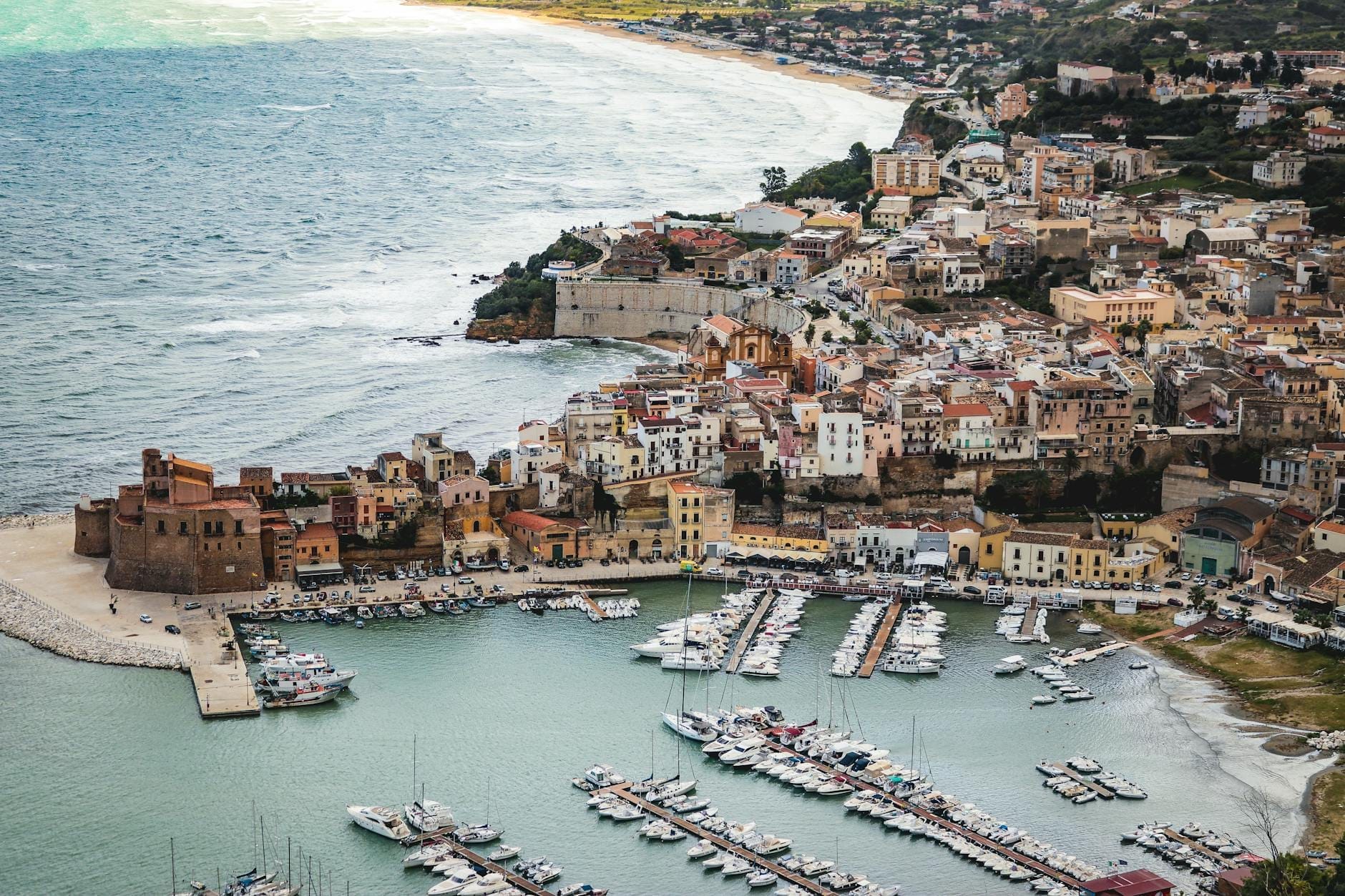
Plan and book this trip
Tools from our partner Travelpayouts help you compare flights and hotels. If you book through them, we may earn a commission at no extra cost to you.
Flights
Hotels map
TL;DR
- The classic one-week route runs Palermo to Taormina, flying into Palermo (PMO) and out of Catania (CTA) to avoid backtracking.
- A rental car gives you the most flexibility, especially for the Valley of the Temples and Villa Romana del Casale — see getting around Sicily for a full transport breakdown.
- Seven days covers the highlights well, but Sicily rewards at least two weeks — key areas like Trapani, the Aeolian Islands, and the baroque southeast are nearly impossible to add without cutting something else.
- Shoulder season (April to early June, late September to October) offers the best balance of weather, crowd levels, and site accessibility.
- Book the Valley of the Temples and Mount Etna excursions in advance — both sell out in peak season. Check the best time to visit Sicily for season-specific advice.
How to Structure Your 7 Days
The most logical one-week Sicily itinerary follows a southwest arc from Palermo down to Agrigento, cuts east through the interior to Siracusa, then tracks north along the coast to Catania and Taormina. Flying in and out of different airports — Palermo (PMO) on arrival, Catania (CTA) on departure — eliminates the need to double back and saves four or five hours of driving. If your flights don't allow this, Catania-in, Catania-out also works, just in reverse order.
A rough allocation: two nights in Palermo, one night near Agrigento or Piazza Armerina, two nights in Siracusa, and two nights in Taormina. This isn't the only way to do it, but it keeps driving distances manageable and gives each area enough time to breathe. Catania works as a base instead of Taormina if you prefer a working city to a resort town.
⚠️ What to skip
Do not plan to 'see all of Sicily' in a week. Western Sicily (Trapani, Marsala, the Egadi Islands), the Madonie mountains, and the full baroque triangle (Ragusa, Modica, Noto) each deserve multiple days. Trying to squeeze them into a 7-day itinerary results in four-hour driving days and no time to actually experience anywhere. If you have 10 days in Sicily, you can add one or two of these areas; anything less, and you'll need to choose.
Days 1 and 2: Palermo
Palermo rewards slow exploration more than most Sicilian cities. On your first morning, start with the Palatine Chapel inside the Norman Palace — the Byzantine-Arab-Norman mosaics here are genuinely extraordinary and justify arriving early (opening time is typically 8:15 or 9:00 depending on the day; check the official Fondazione Federico II site before visiting). Book tickets in advance during spring and summer.
Spend the afternoon on foot through the historic centre: the Quattro Canti intersection, Piazza Pretoria, and the Chiesa della Martorana are all within a ten-minute walk of each other. The Martorana has some of the oldest Norman mosaics in the city and is often overlooked in favour of the Palatine Chapel — which means it's less crowded and usually free to enter, though donations are expected.
On day two, devote the morning to Ballarò market, Palermo's oldest street market, which runs through the Albergheria quarter. This is the best place in the city for street food: arancina, panelle (chickpea fritters), and sfincione (thick Sicilian pizza). Go before noon when produce stalls are at full activity. If you want to understand Palermo's food culture more deeply, the Sicily street food guide covers the full picture.
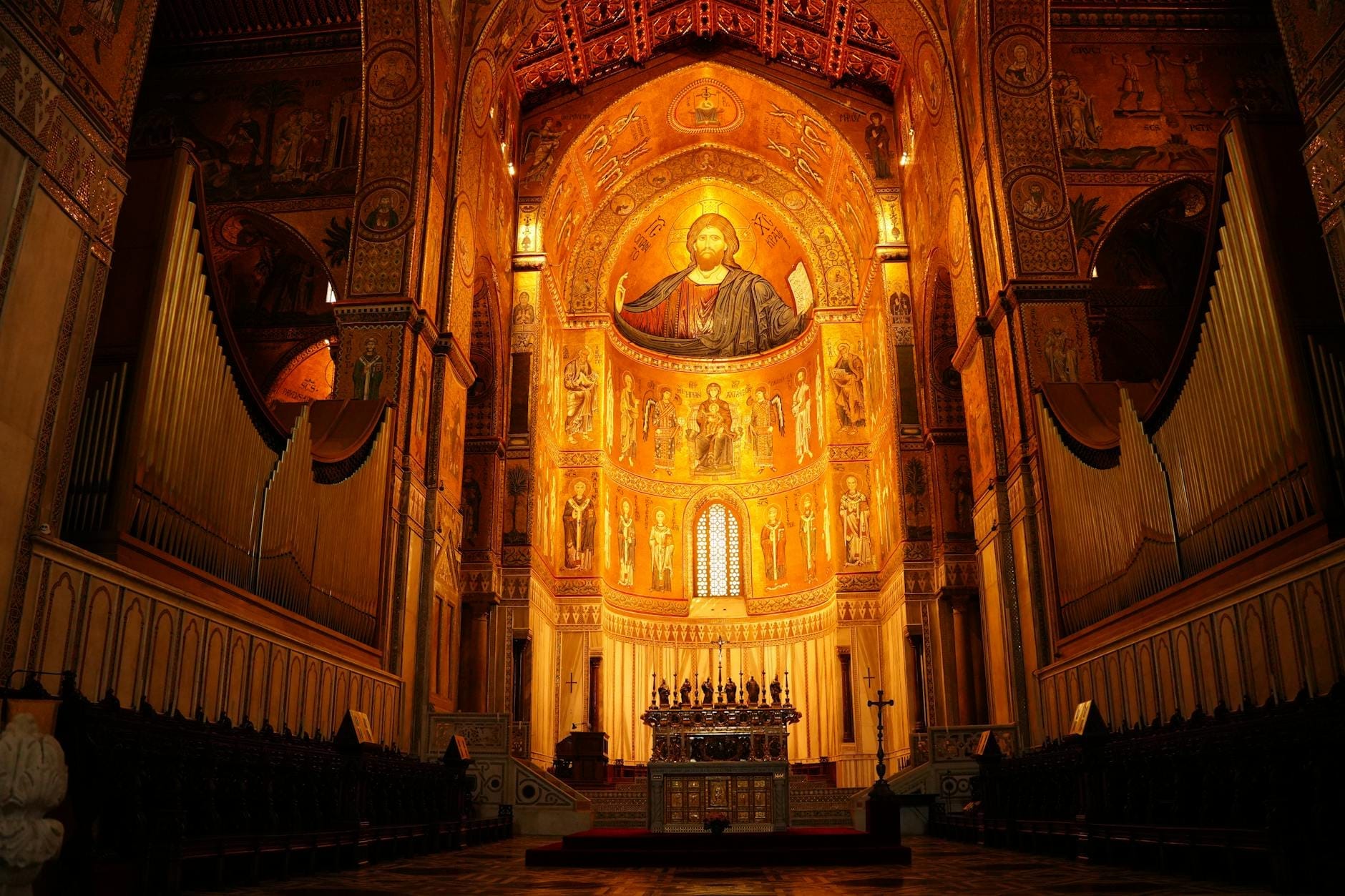
Afternoon on day two: Monreale Cathedral is 8 km southwest of Palermo and reachable by bus (line 389 from Piazza Indipendenza, around 30-40 minutes). The cathedral's interior mosaic cycle covers 6,340 square metres and is one of the great medieval art ensembles in the Mediterranean. Budget at least 90 minutes. Combine it with a walk through the Monreale cloister next door, which is a separate ticket but worth it for the carved twin columns alone.
💡 Local tip
Palermo's historic centre is best explored on foot, but the streets around Ballarò and La Kalsa can feel disorientating. Download an offline map before you go. Taxis and ride apps are useful for getting back to your hotel late at night — official taxi ranks are at Piazza Castelnuovo and Piazza Giulio Cesare.
Day 3: Agrigento and the Valley of the Temples
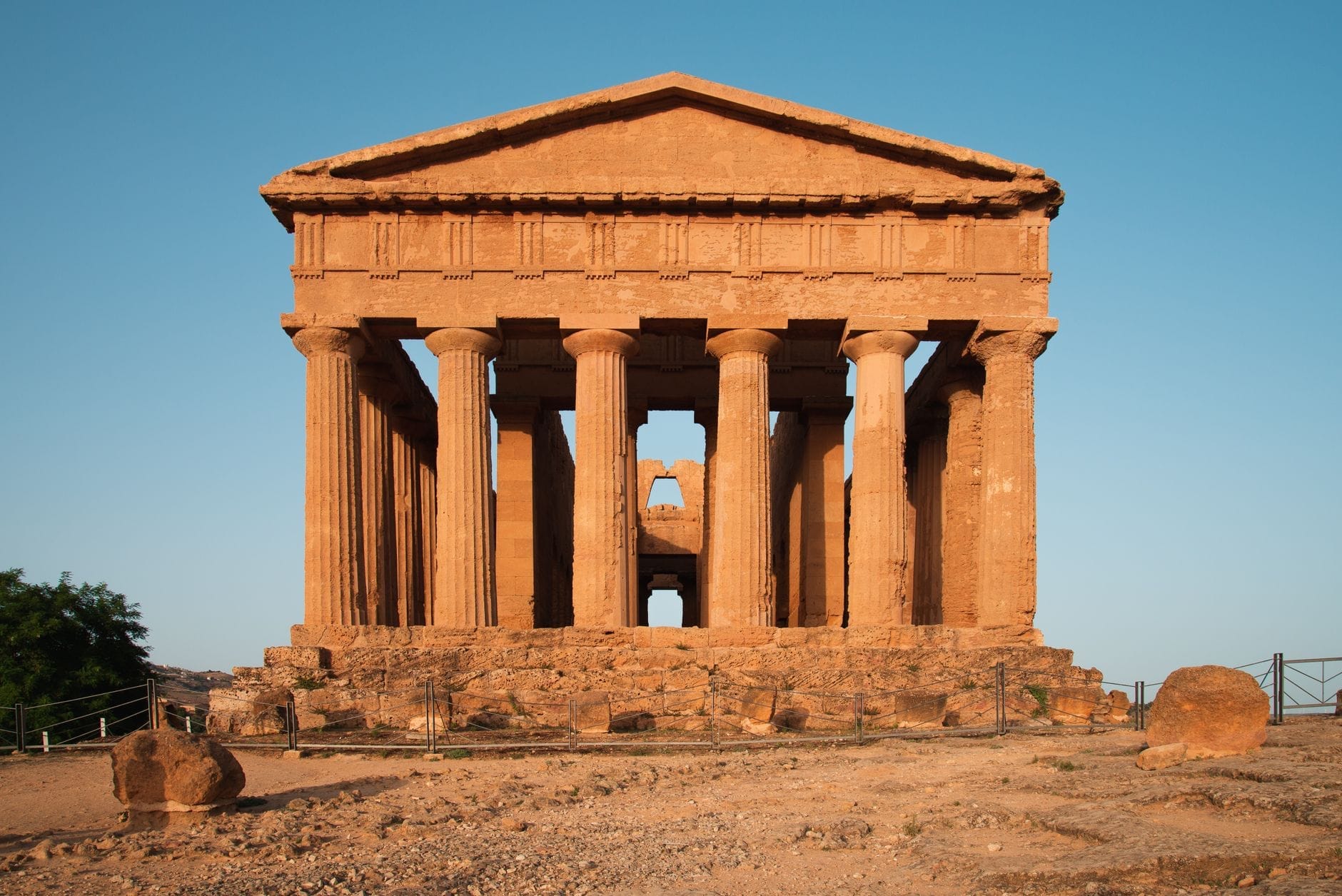
Agrigento is roughly 130 km south of Palermo: about 2 hours by train or 2 hours by car via the A19 and SS189. The train is practical if you're not renting a car; the route is scenic if slow. The main reason to come is the Valley of the Temples, a UNESCO-listed archaeological park containing some of the best-preserved Greek temples outside Greece itself. The Temple of Concordia dates from around 440 BCE and is structurally almost complete — standing at the site at dusk, with the columns lit against the sky, is one of those experiences Sicily genuinely delivers.
The park covers a large area; allow at least 3 hours to walk the main ridge and see the temples of Concordia, Juno, and Hercules. The on-site Museo Archeologico (separate entrance, a short drive or bus ride away) holds the finds excavated from the site and is worth the extra time if you have it. In July and August, arrive early (the park opens around 8:30 or 8:00 depending on the season) to avoid walking in 35°C heat with no shade.
If you're travelling by car, the villa at Piazza Armerina is 90 km northeast of Agrigento and makes a logical addition, either on the same afternoon or en route to Siracusa the next morning. The UNESCO-listed Villa Romana del Casale contains the most complete set of Roman floor mosaics in existence, covering around 3,500 square metres across 50 rooms. It's genuinely one of the most impressive sites in Sicily and often underrated compared to the temples and Greek theatres.
Days 4 and 5: Siracusa
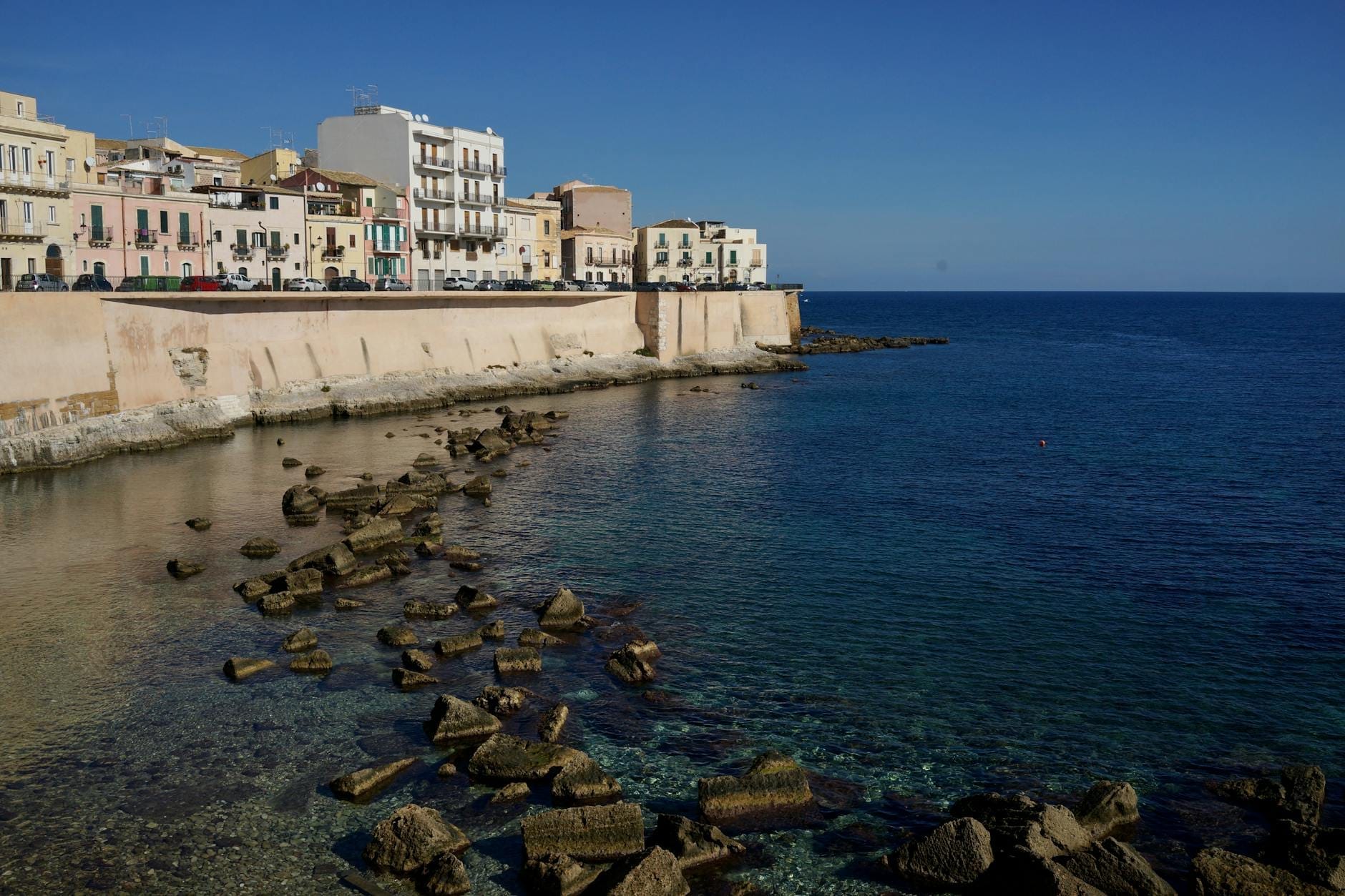
Siracusa (Syracuse) is one of the most historically significant cities in the Mediterranean — at its peak in the 5th century BCE it was larger than Athens. The old city sits on the island of Ortigia, connected to the mainland by two short bridges, and is where you'll want to stay. The Ortigia quarter is compact enough to cover on foot and has the kind of layered architecture — Greek temple incorporated into a baroque cathedral, Norman tower next to an Arab-influenced courtyard — that makes Sicilian cities unlike anywhere else.
The mainland side holds the Neapolis Archaeological Park, which contains a 15,000-seat Greek theatre (still used for performances in spring and early summer), a Roman amphitheatre, and the Ear of Dionysius — a 23-metre-high artificial grotto carved into the limestone cliffs. The acoustic properties of the grotto are genuinely remarkable: a whisper at one end can be heard clearly at the other. The park opens around 8:30 or 9:00 depending on the season and needs 2 to 3 hours.
For a half-day trip from Siracusa, the Vendicari Nature Reserve (about 30 km south, accessible by car) is a coastal wetland with flamingos, a ruined tonnara, and some of the best swimming on the southeast coast. It's quiet even in summer relative to Sicily's more famous beaches, and the drive down through the farming interior offers a completely different face of the island.
✨ Pro tip
If you're visiting the Greek Theatre at Neapolis between May and July, check whether the INDA (Istituto Nazionale del Dramma Antico) festival is running. Watching a Greek tragedy performed in a 2,400-year-old theatre as the sun sets behind the limestone cliffs is worth building your itinerary around. Tickets sell well in advance.
Days 6 and 7: Catania, Mount Etna, and Taormina
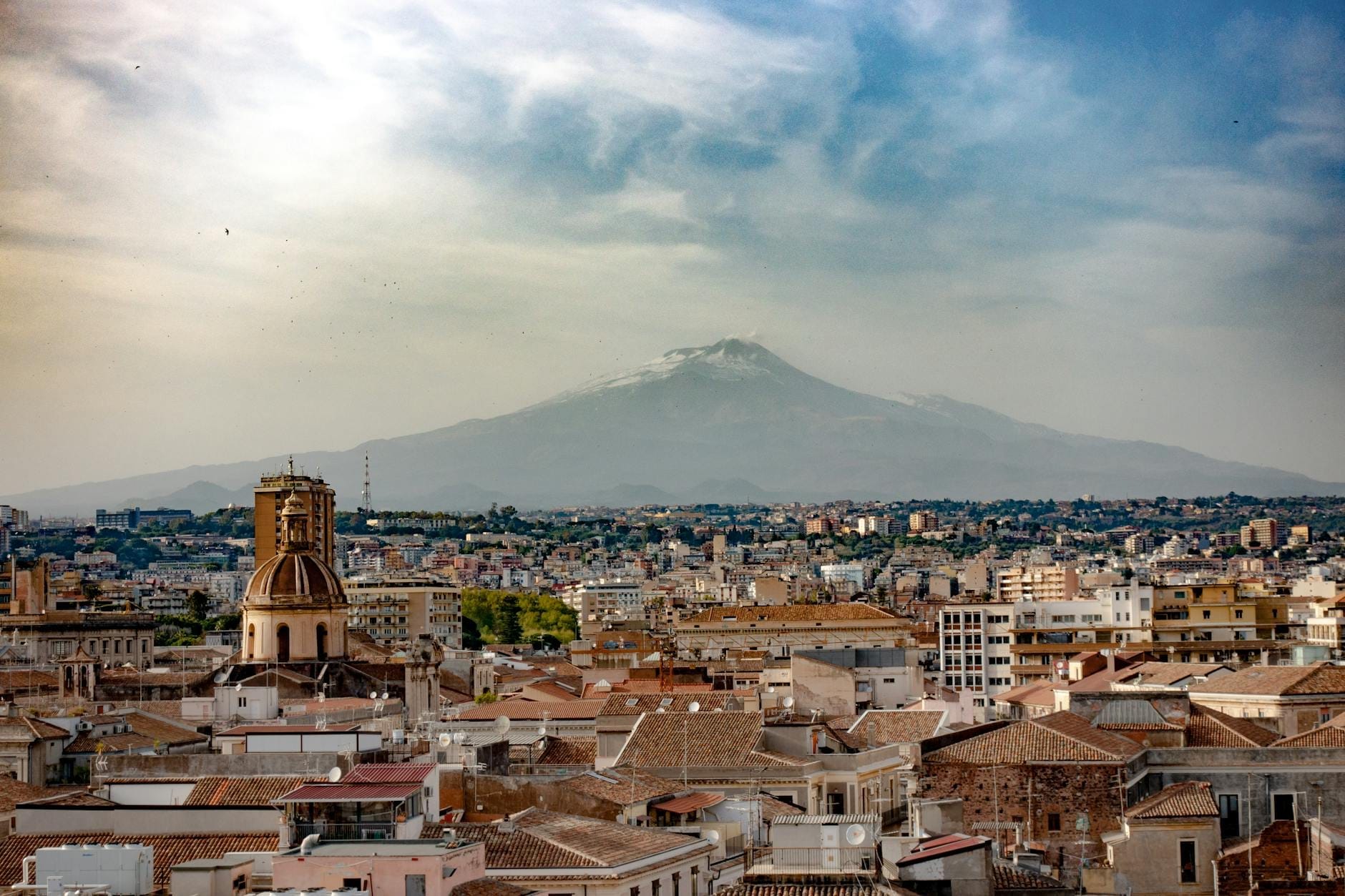
Catania sits at the foot of Mount Etna and is typically underestimated as a travel destination. The city was almost entirely destroyed by the 1693 earthquake and rebuilt in a unified baroque style using Etna's black lava stone — the result is a city centre unlike anything else in Europe. Spend a morning at the Catania fish market (La Pescheria, behind Piazza del Duomo, open until around 13:00 on weekdays), then walk Via Etnea, the main axis of the baroque city, which runs arrow-straight towards the volcano.
A half-day excursion up Mount Etna should be on every one-week Sicily itinerary. The cable car from Rifugio Sapienza (south side, accessible from Catania) takes you to around 2,500 metres, and from there 4x4 vehicles run to the upper authorised area at about 2,800–2,900 metres. Independent walkers can reach the summit crater area on foot, though guided tours with a certified mountain guide are required above 2,500 metres. Operators in Catania and Taormina run combined transport and guide packages; book in advance during summer. For a broader look at Sicily's volcanic geography, the Sicily volcano guide covers Etna and Stromboli in detail.
Taormina, 50 km north of Catania, is the most visited town in Sicily and the most overtly touristic. The Greek Theatre of Taormina has a view of Etna framed through its columns that has been photographed millions of times — and remains genuinely impressive regardless. The town itself is small, beautiful, and extremely crowded from June to August. If you have a couple days to end your trip here, the quiet is best found before 9:00 in the morning or in the evening after the day-trippers leave. Consider using Giardini-Naxos on the coast below as a cheaper, less congested base.
- Day 1-2: Palermo Palatine Chapel, Ballarò market, Quattro Canti, Martorana church, afternoon day trip to Monreale Cathedral and cloister.
- Day 3: Agrigento Valley of the Temples (arrive early), optional afternoon at Villa Romana del Casale near Piazza Armerina.
- Day 4-5: Siracusa Ortigia island, Neapolis Archaeological Park, Ear of Dionysius, optional half-day to Vendicari Nature Reserve.
- Day 6: Catania Fish market, Piazza del Duomo, Via Etnea, afternoon transfer to Taormina.
- Day 7: Mount Etna and Taormina Morning Etna excursion, afternoon in Taormina, Greek Theatre at golden hour before departure.
Transport: Getting Between Cities
The honest answer on transport for a one-week Sicily itinerary is that a rental car makes it significantly easier, especially for the middle section (Agrigento, Piazza Armerina) where public connections are slow or infrequent. That said, the itinerary above is achievable without a car if you're comfortable with buses and trains.
- Palermo to Agrigento: around 2 hours by regional train (Trenitalia); services roughly every 2 hours.
- Agrigento to Siracusa: no direct train; fastest public option is bus via Catania, around 3.5 to 4 hours total. By car via the SS115/A19, around 2.5 hours.
- Siracusa to Catania: around 1 hour by regional train (with some services up to 1 hour 20 minutes), or about 1 hour by car on the A18.
- Catania to Taormina: around 50–60 minutes by train, or about 45 minutes by car on the A18.
- Palermo to Cefalù: 1 hour by regional train — an easy addition if you have a half-day spare on arrival or departure day.
For longer intercity routes, SAIS Autolinee and AST run buses connecting Palermo, Agrigento, Catania, and Siracusa. Buses are often faster than trains on some routes and serve smaller towns that trains skip. Trenitalia schedules and tickets are bookable on the Trenitalia website or app. If you're renting a car, the Sicily by car road trip guide covers toll roads, parking, and driving norms in detail.
Practical Notes: Timing, Booking, and Budgeting
The best timing for a one-week Sicily itinerary is April to early June or late September to October. In these windows, temperatures are comfortable for full days at outdoor sites (typically 18 to 26°C), the sea is warm enough to swim from late May onward, and major attractions are open without the July-August crowds. The Neapolis Greek Theatre festival and several spring religious festivals also fall in this window.
July and August are perfectly manageable but require more planning: start archaeological site visits before 9:00 to beat the heat, book accommodation 2 to 3 months in advance, and expect Taormina and Cefalù to be extremely busy. Prices for accommodation rise significantly in peak summer, particularly in Taormina and on the coast.
- Valley of the Temples: book tickets online via the official Parco Valle dei Templi site — queues at the gate in summer are long.
- Mount Etna guided excursions: book at least a week ahead in July-August via licensed local operators or platforms like GetYourGuide and Viator.
- Palatine Chapel, Palermo: pre-book through the Fondazione Federico II website; morning slots fill quickly.
- Neapolis Archaeological Park, Siracusa: walk-in is usually fine, but check if INDA performances are scheduled — the park closes earlier on performance days.
- Monreale Cathedral: free entry to the main cathedral; separate ticket for the cloister (around €8-10, verify on-site).
Budget travellers can manage Sicily on €80 to €100 per day including accommodation, food, and entry fees, using a mix of trains and buses and staying in B&Bs or agriturismi. Mid-range travellers spending €150 to €200 per day will have comfortable boutique hotels, restaurant meals, and organised tours. Taormina specifically skews expensive — good hotels in the centre cost €150 to €300+ per night in summer. Staying in Giardini-Naxos, 4 km below, and commuting up saves money without sacrificing access.
ℹ️ Good to know
Sicily follows Italian and Schengen Area entry rules. EU/EEA nationals enter without a visa; citizens of the US, UK, Canada, and Australia can enter visa-free for stays up to 90 days. Italy uses the Euro (EUR), operates on Central European Time (UTC+1, or UTC+2 in summer), and runs on 230V electricity with Type F/L plugs. The emergency number throughout Italy is 112.
FAQ
Is one week enough time for Sicily?
One week is enough to cover Sicily's main highlights — Palermo, Agrigento, Siracusa, Catania, Etna, and Taormina — if you follow a logical route and don't backtrack. What it doesn't allow is western Sicily (Trapani, Marsala, the Egadi Islands), the Madonie or Nebrodi mountains, or a thorough exploration of the baroque southeast. For a fuller picture of the island, 10 to 14 days is more realistic.
Do I need a car for a 7-day Sicily itinerary?
Not strictly, but a car makes the middle of the itinerary (Agrigento and Piazza Armerina) much easier. Palermo, Siracusa, Catania, and Taormina are all well-served by trains and intercity buses. Agrigento is reachable by train from Palermo (around 2 hours), but getting from Agrigento to Villa Romana del Casale and then onwards to Siracusa by public transport requires careful timing and usually takes most of a day. Renting a car for 3 to 4 days in the middle of the trip is a practical compromise.
What is the best time of year for a week in Sicily?
April to early June and late September to October offer the best balance: comfortable temperatures for sightseeing (18 to 26°C), warm enough sea from late May, fewer crowds than July-August, and lower accommodation prices. July and August are the most popular months but also the hottest (coastal temperatures commonly reach 30 to 35°C) and the most crowded, especially in Taormina and beach areas.
Which airports should I use for a one-week Sicily itinerary?
The most efficient combination is flying into Palermo (PMO) and out of Catania (CTA), which matches the natural direction of the itinerary from west to east and avoids doubling back. Both airports have connections to major European hubs. Trapani (TPS) is a third option that works well for a west-focused trip, and Comiso (CIY) serves the Ragusa area of the southeast.
How far in advance should I book for a Sicily trip?
For travel in July and August, book accommodation 2 to 3 months ahead, especially in Taormina and Ortigia (Siracusa), where good mid-range options sell out early. For shoulder season (April-June, September-October), 4 to 6 weeks is usually sufficient for accommodation. Pre-book the Palatine Chapel in Palermo, Valley of the Temples, and any Mount Etna guided excursions regardless of season — these sell out faster than most sites in Sicily.