Temple of Concordia: Agrigento's 2,500-Year-Old Greek Marvel
The Temple of Concordia in Agrigento is one of the most complete ancient Greek temples surviving anywhere in the world. Built around 430 BC in the Doric order and later converted into a Christian church, it stands above the Valley of the Temples with views stretching to the Mediterranean. This guide covers what to expect, when to go, and how to get the most from your visit.
Quick Facts
- Location
- Valley of the Temples Archaeological Park, Via Panoramica dei Templi, Agrigento (AG), Sicily, Italy
- Getting There
- Local buses from Agrigento central station (Piazza Rosselli) serve the Valle dei Templi area. Taxis and organized tours also available. No direct train stop.
- Time Needed
- 1.5–2 hours for the temple alone; 3–5 hours if exploring the full Valley of the Temples park
- Cost
- Included in Valley of the Temples park ticket (standard admission €14; reduced €7 for EU 18–25). Book via CoopCulture — fees are updated periodically
- Best for
- History enthusiasts, architecture lovers, photographers, families with older children, solo travellers
- Official website
- www.parcovalledeitempli.it/en
What Is the Temple of Concordia?
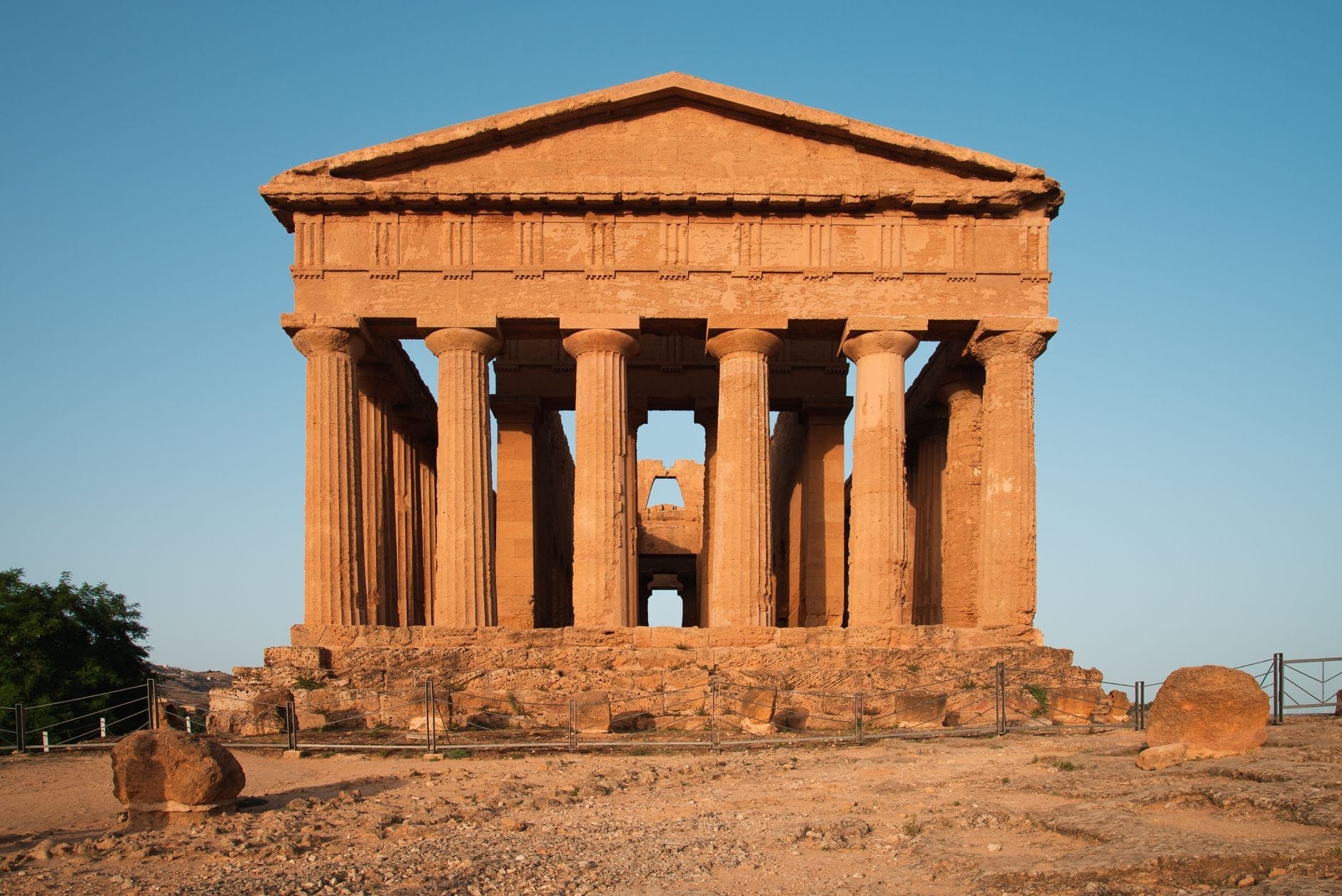
The Temple of Concordia is a Doric Greek temple constructed around 440 to 430 BC on a ridge above the ancient city of Akragas — modern Agrigento — on Sicily's southern coast. It is widely considered one of the best-preserved ancient Greek temples in the world, rivalling even those on the Greek mainland. Its near-complete state is not luck alone: in the 6th century AD, a local bishop converted the structure into a Christian basilica, which preserved the shell of the building through the medieval period when so many other ancient sites were quarried for stone.
The name 'Concordia' is a Latin attribution added by later historians, likely drawing on an ancient inscription found nearby. There is no confirmed evidence that the Greeks who built it dedicated it to this particular deity — the original dedication remains unknown. That small uncertainty does not diminish the experience; standing in front of 34 Doric columns that have been standing for over 2,400 years tends to make historical naming debates feel secondary.
ℹ️ Good to know
The temple measures approximately 40 metres long by 17 metres wide, with 6 columns across the façades and 13 along each side, each column standing about 6.75 metres tall. These proportions made it a textbook example of classical Doric design — and they still read as precisely balanced to the eye today.
The Experience: What You'll Actually See
Approaching the Temple of Concordia along the Sacred Way — the long ridge path that connects the park's main temples — the structure reveals itself gradually. From a distance, the honey-coloured limestone catches the sun and stands out sharply against the sky. In summer, the surrounding hillside is dry scrub and almond trees; in spring, wildflowers fill the lower ground between the ancient tombs cut into the ridge. The contrast between the living landscape and the standing columns creates an effect that photographs rarely capture fully.
Up close, the texture of the stone becomes part of the experience. The columns are not smooth: centuries of erosion have roughened their surfaces so that they almost look carved from compressed sand, warm to the touch in the afternoon sun. Look carefully at the cella walls — the interior chamber — and you can see where doorways were cut through to transform the pagan temple into a Christian church. Arch-shaped openings between the colonnade and the old cella are unmistakably medieval, a visible record of the building's reinvention.
The elevated position on the ridge means the views south toward the Mediterranean are unobstructed on clear days. The sea appears as a pale stripe along the horizon, roughly 3 kilometres away. This orientation was deliberate: Greek cities in Sicily often positioned their temples to be visible from the sea, functioning as markers of civic wealth and divine protection for sailors approaching the coast.
Tickets & tours
Hand-picked options from our booking partner. Prices are indicative; availability and final rates are confirmed when you complete your booking.
Etna South Upper Craters Guided Excursion from Taormina
From 42 €Instant confirmationFree cancellationTaormina private tour with an expert guide
From 42 €Instant confirmationFree cancellationIsola Bella boat tour and snorkeling
From 55 €Instant confirmationFree cancellationSyracuse and Ortygia Island guided tour from Taormina
From 65 €Instant confirmationFree cancellation
How the Experience Changes by Time of Day
Early morning, around opening time, is the most rewarding window for a visit. The tour groups that arrive in late morning by the coachload have not yet appeared, the light is soft and raking across the columns from the east, and the air still carries some cool from the night before. In July and August, this is not just a preference — it is practical. By midday, the exposed ridge path offers no shade, temperatures regularly exceed 35°C, and walking the site becomes genuinely uncomfortable.
Midday visits are the least rewarding in summer: the light goes flat, crowds are at their peak, and the heat radiates back from the stone paths. If you arrive at this hour, the Archaeological Museum adjacent to the park entrance offers air-conditioned refuge and important context for what you are seeing — including the famous figure of the 'Telamon', a colossal stone warrior from the nearby Temple of Olympian Zeus.
In late afternoon, the light shifts again. The sun moves to the southwest and catches the western face of the columns in warm gold tones — this is the most photogenic window for the temple's façade. The park sometimes operates extended evening hours during peak season, occasionally with illumination of the temples at night. These evening visits are genuinely spectacular: the lit columns against a dark sky, with the smell of wild herbs drifting across the hillside, create an atmosphere unlike anything you experience during a standard daytime tour. Verify current evening opening hours directly with the park before planning around this.
💡 Local tip
Visit in late April or October for the best combination of comfortable temperatures, manageable crowds, and good light. Spring also brings wildflowers across the ridge, which add colour and scale to photographs of the site.
Historical and Cultural Context
Akragas was founded in 582 BC by Greek colonists from Gela, itself a colony of Rhodes and Crete, and it grew rapidly into one of the wealthiest cities in the ancient Mediterranean world. By the 5th century BC, the philosopher Empedocles — who was born here — allegedly described the city as one where the inhabitants 'built as if they were to live forever, but ate as if they had only a day.' The ridge of temples was constructed during this era of peak prosperity, a deliberate architectural statement of civic ambition.
The Temple of Concordia's survival into the modern era stems directly from the decision of Bishop Gregory of Agrigento, who in the 6th century AD had the interior reconfigured for Christian worship. The cella was divided into a nave and aisles. Arched openings were cut through the colonnade walls. The elevated platform became an altar. This act of religious repurposing, common across the former Roman world, was the temple's unlikely salvation. When the Norman rulers of Sicily later built churches of their own in the area, they left this converted structure alone — and its bones remained intact.
The entire Valley of the Temples archaeological area is a UNESCO World Heritage Site, inscribed in 1997 as "Archaeological Area of Agrigento", which includes the Temple of Concordia along with several other ancient structures on the same ridge. If you want broader context for how this site fits into Sicily's ancient Greek heritage, the guide to the best Greek ruins in Sicily covers the major sites across the island, from Segesta to Syracuse.
Practical Walkthrough: Navigating the Site
The Temple of Concordia sits within the Parco Archeologico e Paesaggistico della Valle dei Templi, a large open-air archaeological park that also includes the Temple of Juno (Hera Lacinia), the Temple of Hercules, and several other ruins. The main park entrance is on Via Panoramica dei Templi. Ticket prices and opening hours are set by the park authority and updated periodically — always confirm current details at parcovalledeitempli.it before your visit, as hours and fees can change seasonally.
From the ticket gate, the Temple of Concordia is about a 10-15 minute walk along the Sacred Way ridge path. The path is mostly flat but paved with rough stone and uneven in places, which can challenge visitors with limited mobility. The park website provides information on accessible routes and any shuttle services available — contact the park directly if you have specific needs. The Valley of the Temples is large enough that comfortable shoes are non-negotiable regardless of mobility considerations.
The Temple of Juno stands at the eastern end of the ridge and is typically visited on the same walk. Starting from Juno and walking west toward Concordia gives you a logical left-to-right orientation and ends closer to the park's western entrance, which is convenient if you are visiting the Archaeological Museum afterward. The museum (Museo Archeologico Regionale Pietro Griffo, just outside the park) holds artefacts from the site and provides useful context, though it requires a separate ticket.
⚠️ What to skip
There is almost no shade along the ridge path. In summer, bring a hat, sunscreen, and at least 1.5 litres of water per person. The park has some water points, but carry your own supply. Sandals are not appropriate for the uneven stone paths.
Photography Tips
The Temple of Concordia faces roughly east-west, which means morning light illuminates the eastern colonnade and afternoon light catches the western face. For the classic front-on shot with warm side lighting, arrive within the first hour of opening or revisit in the 90 minutes before the park closes. A wide-angle lens allows you to fit the full length of the colonnade in a single frame from close range; a longer lens from further down the ridge compresses the columns against the sky or the distant sea.
Including a person in the foreground dramatically illustrates the scale of the columns — 6.75 metres is tall enough that a standing adult reaches roughly the lower third. The grass and scrub between the path and the temple platform can be used to frame the base of the structure. If the park operates evening illumination during your visit, a tripod and a 5-10 second exposure produces striking results with the lit stone against a deep blue or black sky.
Getting to Agrigento and the Temple
Agrigento is served by regular Trenitalia trains from Palermo (journey time roughly 2 hours). From Agrigento Centrale station, local buses run to the Valley of the Temples area along Via Panoramica dei Templi — check current routes and schedules with local operators as these can change. Taxis are available from the station. If you are driving, the park has parking areas near the main entrance. Getting around Sicily by car is often the most flexible option for combining Agrigento with other southern sites in a single day.
The closest major airports are Palermo (PMO, about 130 km northwest) and Catania (CTA, about 160 km northeast). Both are accessible by public transport to Agrigento, though the journey times and connections make a car or an organized tour the more practical choice for most visitors. From Palermo, the Valley of the Temples is a manageable day trip; see the day trips from Palermo guide for route options and timing advice.
Insider Tips
- The eastern end of the ridge, near the Temple of Juno, is consistently less crowded than the area immediately around the Temple of Concordia. Start at Juno when you arrive and walk toward Concordia — you will have the quieter half of the ridge to yourself before the crowds concentrate at the main attraction.
- Check whether the park is operating evening 'lights on' sessions during your visit. These are not always advertised prominently but are genuinely one of the better experiences the site offers. The official park website and the local tourist office in Agrigento are the most reliable sources for current schedules.
- The stretch of ridge between the two temples includes a series of rock-cut tombs from the early Christian period, carved into the slope below the path. Most visitors walk straight past them, but they add an important layer to the site's long history — worth pausing at for a few minutes.
- Combine a temple visit with the Museo Archeologico Regionale Pietro Griffo, which sits just outside the park near the church of San Nicola. The museum holds the reconstructed figure of the Telamon from the Temple of Olympian Zeus and is essential context for understanding the scale of Akragas at its peak. Check for combined ticket options at the park entrance.
- Book online tickets in advance during July, August, and Easter week. The park does sell out or experience significant queues at peak times, and online booking typically allows you to choose an entry time window.
Who Is Temple of Concordia For?
- History and archaeology enthusiasts who want one of the most intact ancient Greek temples in the world
- Photographers seeking dramatic ancient architecture with open landscape backgrounds and sea views
- Families with older children who can handle a 1-2 hour walk on uneven terrain in the sun
- Travellers on a Sicily road trip connecting southern sites including Agrigento, Selinunte, and Syracuse
- Architecture students and those interested in classical Doric design at a scale rarely seen outside Greece itself
Nearby Attractions
Other things to see while in Agrigento:
- Eraclea Minoa
Eraclea Minoa is an ancient Greek archaeological site perched above the chalk-white cliffs of Capo Bianco on Sicily's southern coast. Founded in the mid-6th century BCE, it offers a remarkably peaceful alternative to the crowded Valley of the Temples, with a small Roman theatre, excavated residential quarters, and sweeping views over the Mediterranean.
- Porto Empedocle
Porto Empedocle is a working port town 8 km from Agrigento, serving as the main departure point for ferries to Lampedusa and Linosa. Beyond its practical role, it carries a layered history and a literary legacy that rewards a few hours of curious exploration.
- Scala dei Turchi
Scala dei Turchi is a natural marl cliff on Sicily's southern coast, carved by wind and waves into broad white terraces that cascade toward a clear Mediterranean sea. Located between Realmonte and Porto Empedocle in the province of Agrigento, it is one of the most visually striking geological formations in Italy. Direct access to the cliff has been restricted for safety and conservation reasons, and current regulations and access conditions should be checked in advance.
- Temple of Juno
Built around 450–440 BCE and still standing on its rocky ridge above the Sicilian coastline, the Temple of Juno is one of the best-preserved Greek temples in the ancient world. Part of the UNESCO-listed Valley of the Temples complex near Agrigento, it rewards visitors who time their arrival for late afternoon, when the honey-colored limestone turns gold against a darkening Mediterranean sky.