Eraclea Minoa: Sicily's Forgotten Greek City on the White Cliffs
Eraclea Minoa is an ancient Greek archaeological site perched above the chalk-white cliffs of Capo Bianco on Sicily's southern coast. Founded in the mid-6th century BCE, it offers a remarkably peaceful alternative to the crowded Valley of the Temples, with a small Roman theatre, excavated residential quarters, and sweeping views over the Mediterranean.
Quick Facts
- Location
- Contrada Minoa, Cattolica Eraclea, Agrigento Province, Sicily
- Getting There
- Car strongly recommended. Nearest bus route (Sciacca–Agrigento on SS115) passes several km away. No direct public transit to the site.
- Time Needed
- 1.5 to 2.5 hours
- Cost
- Approx. €4 (verify locally before visiting)
- Best for
- Archaeology enthusiasts, coastal scenery, travellers seeking uncrowded ruins
What Is Eraclea Minoa?
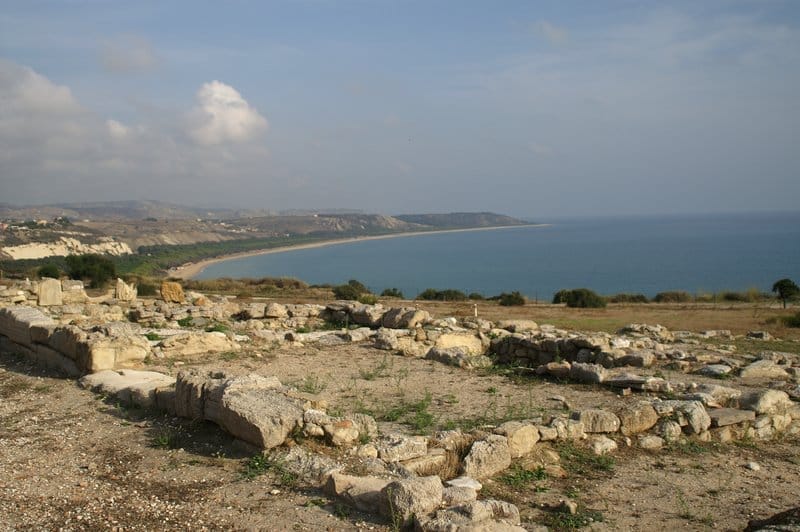
Eraclea Minoa is one of Sicily's least-visited but most atmospheric ancient sites. Formally known as the Area Archeologica e Antiquarium Eraclea Minoa, it occupies a headland called Capo Bianco on the island's southern coast, roughly 25 km west of Agrigento. The site preserves the ruins of a Greek city founded around the mid-6th century BCE by colonists from Selinunte, and later absorbed into the shifting spheres of Greek, Carthaginian, and Roman control before being abandoned around the beginning of the 1st century AD.
What makes the location physically striking is the geology. The headland is composed of bright white clay and limestone, so pale it almost reads as chalk. These cliffs — called Capo Bianco for obvious reasons — drop steeply to a pine-fringed beach below, and the contrast between the bone-white rock, the dark green scrub, and the deep blue Mediterranean is unlike anything you will see at better-known Sicilian ruins.
For travellers who have already visited the Valley of the Temples and want to explore a quieter, less commercially packaged side of Agrigento province, Eraclea Minoa offers exactly that. It receives a fraction of the visitors of its famous neighbour, which means you can walk through the excavated streets in something close to silence.
The Ruins: What You Will Actually See
The centrepiece of the site is a small Greek theatre, later modified during the Roman period, built into the natural slope of the hillside in the typical fashion of ancient theatre construction. It is not large by the standards of Syracuse or Taormina, but the setting gives it a particular intimacy. The tiered seating faces outward over the valley, and on clear days the view from the upper rows extends far along the coast.
⚠️ What to skip
The theatre seating is currently protected by a weathered plastic covering to slow erosion of the soft stone. This is visually jarring and worth knowing before you arrive. The cover has been in place for years and remains a practical rather than aesthetic choice.
Beyond the theatre, the site includes excavated sections of the ancient residential quarters. You can trace the footprints of Greek houses, follow the line of the city walls, and identify the remains of public structures, including sections that archaeologists have identified as belonging to multiple construction phases spanning several centuries. Interpretive signage exists but is limited and primarily in Italian.
The antiquarium, a small on-site museum building, displays ceramic fragments, coins, grave goods, and sculpted pieces recovered during excavations. While modest in scale, the collection provides useful context, particularly around the site's shifting political identity: Eraclea Minoa changed hands between Greek, Carthaginian, and Roman powers more than once, and the material culture reflects that layered history.
Tickets & tours
Hand-picked options from our booking partner. Prices are indicative; availability and final rates are confirmed when you complete your booking.
Etna South Upper Craters Guided Excursion from Taormina
From 42 €Instant confirmationFree cancellationTaormina private tour with an expert guide
From 42 €Instant confirmationFree cancellationIsola Bella boat tour and snorkeling
From 55 €Instant confirmationFree cancellationSyracuse and Ortygia Island guided tour from Taormina
From 65 €Instant confirmationFree cancellation
The Landscape and Why It Matters
The physical setting is arguably the most memorable part of a visit. Capo Bianco is a geologically active headland where the white clay cliffs are visibly eroding into the sea. The landscape looks sculpted rather than worn, with ridges and channels carved by seasonal rain. Walking along the perimeter of the site toward the cliff edge, you get wide views southward across open water toward the African coast, though that shore remains well below the horizon.
Below the site, accessible by a separate path down the slope, there is a beach backed by a pine forest. This is a legitimate and pleasant extension to a visit in warmer months. The water is clean, the crowd is local rather than touristy, and the presence of the ancient site on the clifftop above gives the whole area an unusual quality. In peak summer, the beach draws Sicilian families from nearby towns, but it never reaches the density of places like Mondello.
The surrounding landscape also frames the site's broader regional context. Eraclea Minoa sits in terrain that has seen continuous human habitation for millennia, in a province that also contains the extraordinary ruins of Selinunte Archaeological Park, around 50 km to the west. Visitors with a serious interest in Greek Sicily should consider pairing the two sites in a single itinerary.
History in Brief: From Greek Colony to Roman Abandonment
The city was founded by colonists from Selinunte in the mid-6th century BCE, though the name Herakleia Minoa suggests older mythological connections: ancient tradition linked the headland to both Heracles and the Cretan king Minos. It occupied a strategically useful position on the southern coast, controlling river access inland via the Platani river valley.
The city's history was defined by its location on the contested frontier between Greek and Carthaginian spheres of influence. It switched political control multiple times, serving at various points as a Carthaginian base, a prize disputed between Agrigento and Selinunte, and eventually a Roman possession after the First Punic War. The Romans continued using it into the early Imperial period, after which the population appears to have migrated away, possibly due to a landslide or coastal erosion undermining the site's viability.
For wider context on Greek colonisation in Sicily, the best Greek ruins in Sicily guide covers how Eraclea Minoa fits into the broader picture of ancient settlement across the island.
When to Go and How the Experience Changes
Early morning visits in spring or autumn deliver the most rewarding experience. Between April and June, the surrounding scrubland is green and occasionally flowering, temperatures are comfortable for walking, and the low morning light picks out texture in the white cliffs in a way that afternoon sun bleaches out. By late morning in summer, the exposed headland becomes very hot and almost featureless under direct overhead light.
In July and August, the site is functional to visit but you will want to finish by 10:00 or 10:30 before heat becomes a problem on the exposed plateau. Bring water, since there is no reliable refreshment on site. A hat and sunscreen are essential from May onward.
💡 Local tip
The reported opening hours are 09:00 to 19:00 in summer and 09:00 to 16:30 from November through February. The site may close on Sundays and Mondays, and hours can change without notice. Call ahead or check with your accommodation before making a special trip.
Winter visits are viable and often very atmospheric. The cliffs look their most dramatic under overcast skies, and the pine forest below retains its colour year-round. However, reduced winter hours and potential closure days mean planning matters more. The site is never crowded, so there is no seasonal advantage in that sense.
Getting There: The Practical Reality
Eraclea Minoa is located along SP30, off the main SS115 coastal road between Agrigento and Sciacca. The site entrance is near the village of Cattolica Eraclea, signposted from the main road. By car from Agrigento, the drive takes roughly 40 minutes depending on traffic and route.
Public transport is a genuine obstacle. Some bus services connect Agrigento and the SS115 corridor, but they do not stop directly at the site, leaving a walk from the nearest stop. For most visitors arriving without a car, renting one in Agrigento is the practical solution. Agrigento itself is accessible by train from Palermo and Catania. For detailed guidance on moving between Sicilian destinations, the getting around Sicily guide covers options including car rental, trains, and intercity buses.
The approach road from the SS115 passes through agricultural countryside before descending toward the coast. There is a small parking area near the site entrance. The terrain within the site involves uneven ground and some inclines, particularly toward the cliff edge viewpoints. Visitors with mobility limitations should be aware that formal accessibility provision is minimal.
Photography and Practical Tips
The white cliffs photograph best in early morning or late afternoon light, when the angle creates shadow and depth in the eroded surfaces. The theatre, while covered by the protective structure, still frames well from above if you position yourself on the hillside rather than directly in front of the covering. The view from the cliff edge looking back toward the ruins with the sea in the background is the single best composition on site.
Wear sturdy shoes. The paths within the archaeological zone are unpaved and can be loose or slippery after rain. The cliff edges are not always fenced and require common sense. There is no formal gift shop, though the antiquarium entrance area may have basic materials available.
ℹ️ Good to know
The admission fee is reported at about €4. This is low by any standard and reflects the site's status as a minor but legitimate archaeological park within the Sicilian regional heritage system. Verify the current price at the entrance as fees are subject to change.
Insider Tips
- Combine Eraclea Minoa with Selinunte on the same day if you have a car. Both sites are on the southern coast and the drive between them takes under an hour. Selinunte offers more monumental scale; Eraclea Minoa offers atmosphere and solitude.
- The beach below the cliffs is reachable on foot from the site area. It is genuinely pleasant and largely used by Sicilians rather than tourists. In June or September, the water is warm enough to swim and the beach is not crowded.
- Bring your own food and water. There are no cafes or reliable snack options at the site. The nearest town with services is Cattolica Eraclea or the coastal resort area slightly further along the SS115.
- The protective covering over the theatre seats is easy to mistake for renovation or closure. The site is open regardless, and the theatre interior is accessible. Do not let the industrial appearance of the covering put you off.
- If you are visiting Agrigento on a multi-day stay, save Eraclea Minoa for your second day after the Valley of the Temples. The contrast between the two sites, one enormous and heavily visited, the other intimate and nearly empty, is itself instructive about how differently ancient sites can be preserved and presented.
Who Is Eraclea Minoa For?
- Archaeology enthusiasts who want context beyond the major UNESCO sites
- Photographers drawn to unusual geological landscapes
- Travellers with a car who want to combine ruins with a coastal swim
- Visitors to Agrigento looking for a second day of exploring beyond the Valley of the Temples
- Anyone who finds overcrowded ancient sites frustrating and values quiet over spectacle
Nearby Attractions
Other things to see while in Agrigento:
- Porto Empedocle
Porto Empedocle is a working port town 8 km from Agrigento, serving as the main departure point for ferries to Lampedusa and Linosa. Beyond its practical role, it carries a layered history and a literary legacy that rewards a few hours of curious exploration.
- Scala dei Turchi
Scala dei Turchi is a natural marl cliff on Sicily's southern coast, carved by wind and waves into broad white terraces that cascade toward a clear Mediterranean sea. Located between Realmonte and Porto Empedocle in the province of Agrigento, it is one of the most visually striking geological formations in Italy. Direct access to the cliff has been restricted for safety and conservation reasons, and current regulations and access conditions should be checked in advance.
- Temple of Concordia
The Temple of Concordia in Agrigento is one of the most complete ancient Greek temples surviving anywhere in the world. Built around 430 BC in the Doric order and later converted into a Christian church, it stands above the Valley of the Temples with views stretching to the Mediterranean. This guide covers what to expect, when to go, and how to get the most from your visit.
- Temple of Juno
Built around 450–440 BCE and still standing on its rocky ridge above the Sicilian coastline, the Temple of Juno is one of the best-preserved Greek temples in the ancient world. Part of the UNESCO-listed Valley of the Temples complex near Agrigento, it rewards visitors who time their arrival for late afternoon, when the honey-colored limestone turns gold against a darkening Mediterranean sky.