Selinunte Archaeological Park: Sicily's Vast Greek Ruin on the Sea
Selinunte Archaeological Park preserves the remains of one of ancient Greece's most ambitious western colonies, spread across 270 hectares of southwestern Sicily. With nine temples, a fortified acropolis, and sweeping views over the Mediterranean, it rewards visitors who come prepared to walk, explore, and let the scale of the place sink in slowly.
Quick Facts
- Location
- Piazzale Iole Bovio Marconi, 1, Marinella di Selinunte, Castelvetrano (TP), Sicily, Italy
- Getting There
- By car is the most practical option: ~13 km from Castelvetrano, exit A29 motorway at Castelvetrano from Palermo or Trapani direction. No direct rail service to the site.
- Time Needed
- 3 to 5 hours minimum; a full day to do it justice
- Cost
- Basic entry reportedly around €6. Verify current prices at CoopCulture before visiting.
- Best for
- History enthusiasts, architecture lovers, slow travelers, photographers
What Selinunte Actually Is (And Why the Scale Surprises Everyone)
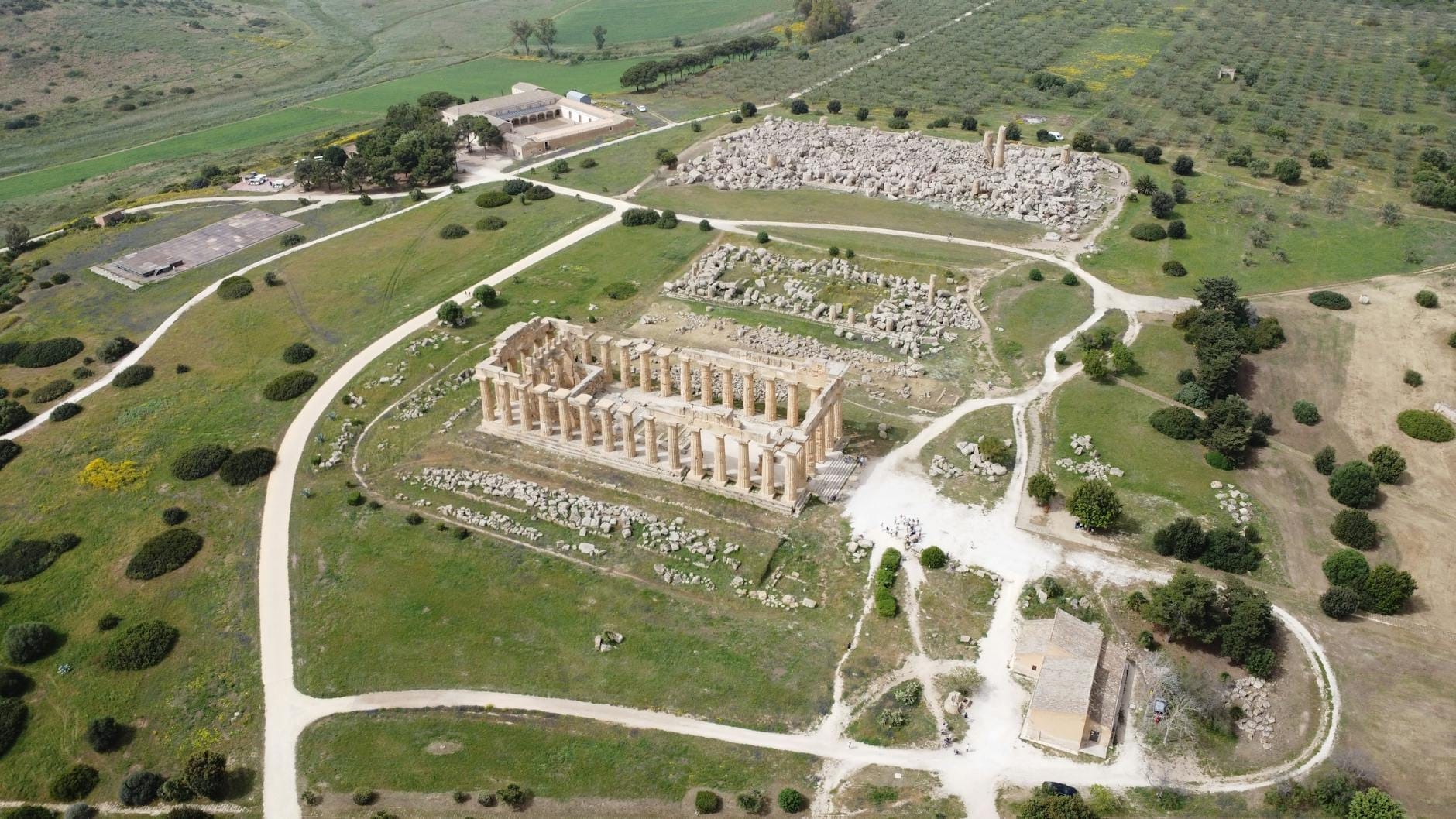
The Parco Archeologico di Selinunte, Cave di Cusa e Pantelleria is the official name for what most visitors simply call Selinunte Archaeological Park, and that long official title hints at how much it contains. This is not a single ruined temple behind a fence. It is a 270-hectare archaeological landscape encompassing an acropolis with temples, an eastern hill with three major temples, a northern residential quarter, necropolises, and the remains of ancient city areas, all sitting on a promontory where the southern Sicilian coast meets open sea.
Ancient Selinunte was a Greek colony founded around 650 BC, traditionally associated with settlers from Megara Hyblaea on Sicily's east coast. At its height, it was one of the wealthiest and most architecturally ambitious Greek cities in the western Mediterranean. The city was violently sacked by Carthaginian forces in 409 BC, and and later occupation continued into the 3rd century BC before the site was abandoned. What remained were collapsed temples and buried streets, left largely undisturbed for over two millennia, which is exactly why what survives today is so significant.
The temples are conventionally identified by letters rather than their ancient names, which were lost. The Eastern Hill temples (E, F, and G) are the ones visible from the road and tend to dominate photographs. Temple E, partially re-erected, is the most photogenic and gives the clearest sense of what a complete Doric temple looked like. Temple G, had it been completed, would have been among the largest Greek temples ever built It was not completed, and its enormous collapsed drums still lie scattered like a geological event, not a ruin. For context on how Selinunte fits into Sicily's broader Greek heritage, see our guide to the best Greek ruins in Sicily.
ℹ️ Good to know
The park covers a vast area. Visitors who underestimate the distances often run out of time or energy before reaching the acropolis. The shuttle service included in some ticket packages is worth considering if you want to cover all major areas comfortably.
How the Experience Changes by Time of Day
Arriving at opening on a weekday gives you the Eastern Hill almost entirely to yourself. The morning light comes in from the east, raking across the stonework of Temple E at a low angle that sharpens every flute and capital. The air at that hour still carries overnight coolness and a faint smell of wild fennel, which grows in dense thickets throughout the site. Cicadas begin slowly. It feels genuinely quiet in a way that a site of this significance rarely does.
By mid-morning, organized coach groups arrive, mainly at the entrance, and the atmosphere shifts. The paths between Temple E and the ticket office become crowded with guided tours. This is the moment to move toward the acropolis, which requires a longer walk or shuttle ride and sees fewer casual visitors. The acropolis sits on a separate headland, separated from the Eastern Hill by a valley. From its southern edge, you look directly over the sea. The wind is almost constant up there and the sound of waves is audible below. Stray cats inhabit the ruins here, particularly around the ruins, sunning themselves on broken column drums with complete indifference.
Afternoon visits in summer should be approached with caution. During summer, midday temperatures on the exposed site can exceed 35°C. There is almost no shade outside the small areas near the entrance facilities. The combination of heat, pale limestone, and no tree cover makes the 12:00 to 15:00 window genuinely uncomfortable and potentially risky if you are not carrying substantial water. Late afternoon, when shadows lengthen across the acropolis and the light turns amber over the sea, is arguably the most beautiful time to be on site, though it requires timing your arrival to allow enough hours.
⚠️ What to skip
In summer, bring at least 1.5 liters of water per person. Sun hat and sunscreen are essential. The site has limited shade and no drinking fountains in the outer areas. The snack bar near the entrance may have limited hours.
Tickets & tours
Hand-picked options from our booking partner. Prices are indicative; availability and final rates are confirmed when you complete your booking.
Boat tour of Selinunte with swim stop and optional lunch
From 65 €Instant confirmationFree cancellationEtna South Upper Craters Guided Excursion from Taormina
From 42 €Instant confirmationFree cancellationTaormina private tour with an expert guide
From 42 €Instant confirmationFree cancellationIsola Bella boat tour and snorkeling
From 55 €Instant confirmationFree cancellation
Walking the Site: A Practical Route
Most visitors enter from the main car park at Marinella di Selinunte and reach the Eastern Hill first. This is the logical starting point. Allow 45 to 60 minutes to walk around Temples E, F, and G properly, including time to circle the base of the enormous Temple G collapse. The stone drums from its columns are taller than a person standing upright; the scale communicates what no reconstruction drawing quite manages.
From the Eastern Hill, the path descends through a valley planted with olive trees and continues west to the Acropolis. On foot this takes around 20 to 25 minutes at a comfortable pace. The shuttle, where available with certain ticket types, covers this stretch. The acropolis contains Temples A, B, C, D, O, and R, as well as the remains of city streets and house foundations. Temple C is the oldest visible structure on the hill, dating to the early 6th century BC, and a portion of its frieze, including carved metopes, has survived (the originals are in Palermo's archaeological museum, with casts in situ). The northern residential quarter, beyond the acropolis, is where you can trace the actual street grid of the ancient city, which is a different and arguably more intimate experience than temple-gazing.
A separate excursion from Selinunte connects to the Cave di Cusa quarry site, located about 17 km away, where you can see column drums still half-extracted from the rock face and abandoned when the Carthaginian attack of 409 BC ended construction abruptly. It is a strange and affecting place. The Cave di Cusa is included in the combined park ticket and strongly recommended for anyone with a serious interest in ancient construction techniques.
Historical and Cultural Context
Selinunte's history is one of rapid expansion followed by violent destruction. In the century after its founding, the city grew fast enough to sustain an ambitious building program of monumental Doric temples, a level of civic spending that implies significant agricultural wealth drawn from the surrounding Sicilian hinterland. The city sat at a cultural frontier, neighboring Elymian and Phoenician territories to its west and competing Greek cities to its east. That frontier position ultimately proved fatal: Carthaginian forces from North Africa, allied with Segesta following a long-running border dispute, razed the city in 409 BC with a brutality that ancient sources describe in detail.
The contrast with Selinunte's great rival and neighbor to the east is instructive. At the Valley of the Temples in Agrigento, several temples survived in relatively intact condition because the site was continuously occupied and some structures were converted to Christian use. At Selinunte, no such repurposing happened. The ruins were buried, the columns fell in seismic events, and the city was forgotten until 18th-century scholars began identifying and mapping the site. The collapse is in some ways the point: Selinunte feels genuinely ancient because it was genuinely abandoned.
Getting There and Opening Hours
Selinunte is most practically reached by car. The site is about 13 km from Castelvetrano. From Palermo, the drive takes approximately 90 minutes in light traffic. From Trapani, allow around 70 to 80 minutes. The car park at Marinella di Selinunte is large. There is no rail station at the site; the nearest station is Castelvetrano, from which you would need a taxi or bus connection to reach the park.
Opening hours vary seasonally. The park typically opens at 09:00 daily throughout the year. Closing times range from 17:00 in winter to 20:00 in summer, with the ticket office closing earlier. Seasonal schedules vary, so confirm current hours directly before your visit. Always confirm current hours directly with CoopCulture or the regional parks authority before your visit, as seasonal schedules are updated.
Selinunte works well as a day trip from Palermo or as a stop on a western Sicily road circuit. Combining it with a visit to the temple at Segesta makes for an excellent full-day itinerary covering two of Sicily's most significant Greek sites. Segesta is around 60 km away and takes roughly an hour to drive. For a broader itinerary, our day trips from Palermo guide covers both sites in context.
Photography, Accessibility, and What to Bring
Photography at Selinunte rewards patience more than equipment. The most distinctive images come from low angles near the column drums of Temple G, using the collapsed stones as foreground elements, or from the southern edge of the acropolis where the sea forms a backdrop behind the remaining temple structures. The golden hour before closing, when light comes in at a flat angle from the west, is particularly good. In spring, wildflowers grow between the stones and around the bases of columns, adding color that summer visits won't offer.
Wear sturdy, closed shoes. The paths vary between packed earth, gravel, and large uneven ancient paving stones, particularly on the acropolis. Sandals are inadvisable for the full circuit. The terrain is largely flat but the sheer distances mean comfortable footwear matters. Visitors with limited mobility should note that the park's unpaved paths and the gap between the Eastern Hill and Acropolis present real challenges. The shuttle service, available with certain ticket types, reduces walking but does not eliminate it entirely. Anyone with specific mobility requirements should contact CoopCulture directly before booking to understand what is currently accessible.
💡 Local tip
Spring (April to early June) is the best overall time to visit: moderate temperatures, wildflowers in bloom, and manageable crowds. October is a strong second choice with excellent light and cooler conditions.
Honest Assessment: Who Will Love This, Who Might Not
Selinunte is one of Sicily's most genuinely impressive archaeological sites and is undervisited relative to its significance, partly because it is harder to reach than Agrigento or Syracuse. For travelers with a real interest in ancient Greek civilization, this is a higher-value destination than its relative obscurity might suggest. The scale, the coastal setting, and the sense that much of the site is still unexcavated all contribute to an experience that feels exploratory rather than packaged.
That said, Selinunte will disappoint visitors who need polished presentation to engage with a site. The interpretive signage is sparse and inconsistent. There is no on-site museum, meaning that the most significant carved metopes from Temple C are in Palermo's Museo Archeologico Salinas. Without prior reading or a knowledgeable guide, the temple letters can feel abstract. Children will often enjoy the space and the scale more than the history, but the distances and summer heat make it a challenging half-day with young children. Visitors on a very tight schedule will find three hours the absolute minimum for the Eastern Hill and Acropolis combined, and that leaves almost no time for reflection.
To see the metopes that were removed from Selinunte's temples, visit the Museo Archeologico Salinas in Palermo before or after your visit. The carved figures there transform what the temple bases at Selinunte communicate.
Insider Tips
- Buy tickets online through CoopCulture before arriving, especially in spring and early autumn. The ticket office queue can be slow, and the shuttle tickets sell out for popular time slots.
- The acropolis area is almost always quieter than the Eastern Hill. If you arrive when the Eastern Hill is crowded, head straight to the acropolis first and double back later.
- The wild fennel growing throughout the site is the same plant ancient Selinunte was named for: selinos is Greek for wild celery or fennel. Noticing it growing between the ruins adds a small but genuine connection to the name itself.
- If you are visiting in spring, take the short path from the acropolis's southern edge down toward the beach below. It is usually deserted and the view back up at the temple remains from sea level is striking.
- Combine Selinunte with Cave di Cusa (included on the combined ticket, about 5 km away) to understand where the stone came from. The half-finished column drums still lying in the quarry are one of the most eloquent artifacts at any ancient Greek site in Sicily.
Who Is Selinunte Archaeological Park For?
- Travelers with a serious interest in ancient Greek history and architecture
- Photographers looking for dramatic ruins with sea backdrops and minimal crowds
- Road-trippers on a western Sicily circuit who want a major site off the main tourist trail
- Slow travelers who enjoy spending a full day at a single significant place
- Anyone who found Agrigento's Valley of the Temples too polished and wants something rawer
Nearby Attractions
Other things to see while in Trapani & the West:
- Cave di Cusa
Cave di Cusa is a 2-km stretch of open-air ancient quarry in western Sicily where Greek stonemasons abandoned their work mid-cut in 409 BC, leaving colossal column drums embedded in calcarenite rock. Part of the Selinunte Archaeological Park, it is one of the most atmospheric and least crowded ancient sites in Italy.
- Cretto di Burri
The Grande Cretto di Gibellina is one of the largest land art works on Earth: 85,000 square metres of white concrete encasing the ruins of a town destroyed by the 1968 Belice earthquake. Created by Alberto Burri, it is simultaneously a tomb, a monument, and a walk through absence. Entry is free and the site is open-air, but reaching it requires a car.
- Favignana
Favignana, the largest of the Aegadian Islands off western Sicily, is a compact limestone island with crystalline coves, a dramatic tuna-fishing heritage, and terrain flat enough to circle by bicycle in a day. Getting there takes around 30–40 minutes from Trapani by hydrofoil, and there is no entrance fee to the island itself.
- Marettimo
The westernmost of Sicily's Egadi Islands, Marettimo is a car-free island of limestone peaks, sea caves, and water so clear it borders on unreal. Reached only by hydrofoil or ferry from Trapani, it rewards travelers willing to swap convenience for one of Italy's most genuinely uncommercialised island experiences.