Museo Archeologico Regionale Antonino Salinas: Palermo's Ancient World in One Building
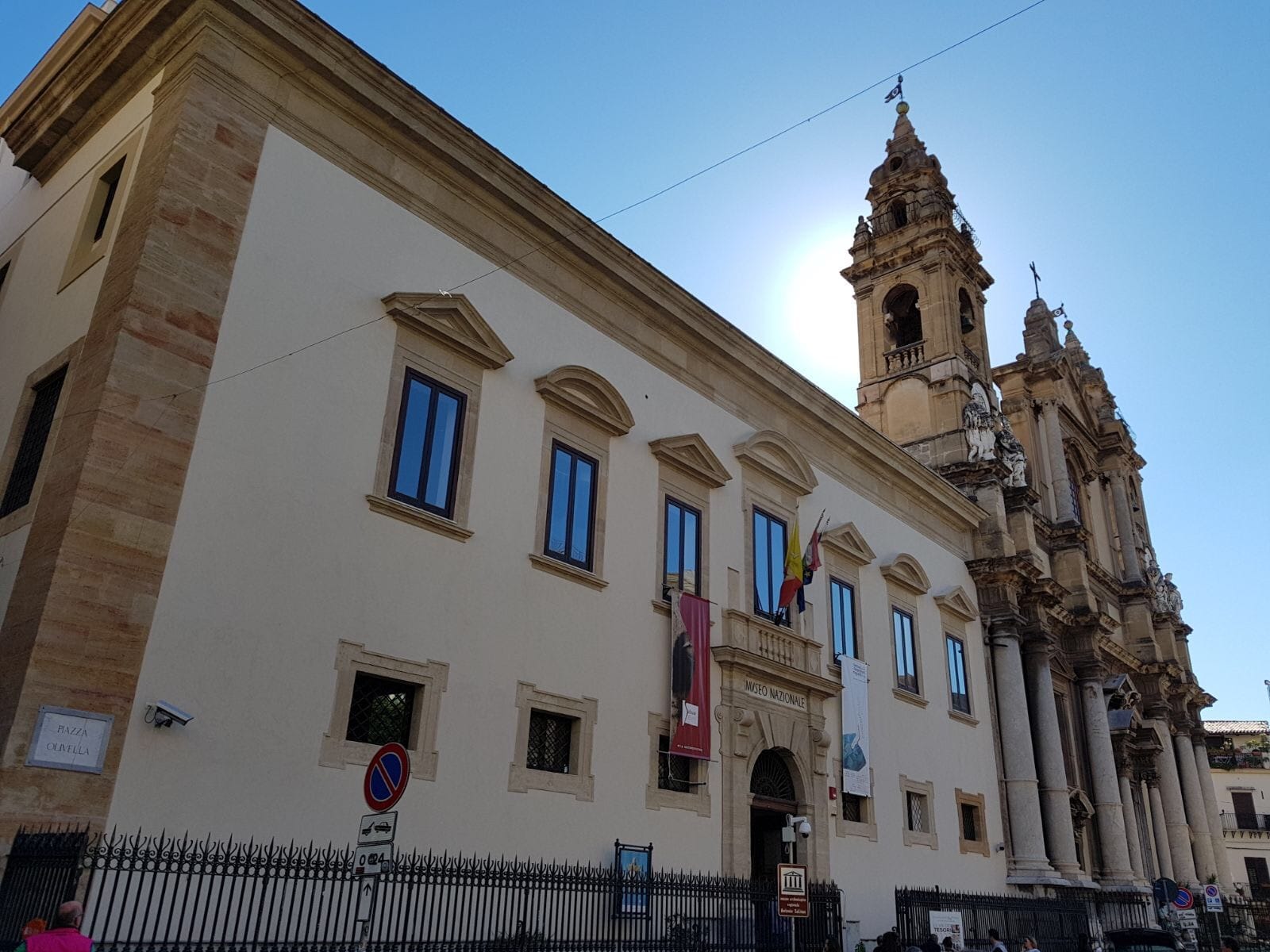
Housed in a 17th-century monastery on Piazza Olivella, the Museo Archeologico Regionale Antonino Salinas is Sicily's most important archaeological museum. From Selinunte's carved metopes to Phoenician sarcophagi and Roman bronzes, it distills three thousand years of Mediterranean civilization into a single afternoon.
Quick Facts
- Location
- Piazza Olivella 24, 90123 Palermo, Sicily, Italy
- Getting There
- Metro to Stazione Orleans (about 15–20 min walk); AMAT buses to Via Roma or Piazza Indipendenza
- Time Needed
- 2 to 3 hours for a thorough visit
- Cost
- Approx. €8 full / €4 reduced (verify current rates before visiting)
- Best for
- Ancient history lovers, archaeology students, rainy-day culture seekers
- Official website
- www2.regione.sicilia.it/bbccaa/salinas/
What the Salinas Museum Actually Is
The Museo Archeologico Regionale Antonino Salinas is the oldest museum in Sicily, tracing its origins to a university collection created in 1814. It became the National Museum of Palermo in 1860, moved into its current home, the 17th-century Olivella complex of the Padri Filippini, in 1866, and was reorganized as a regional institution in 1977. The building includes extensive exhibition space spread across two principal floors and a cloister courtyard.
The name honours Antonino Salinas, the 19th-century Sicilian archaeologist and numismatist who directed the museum for decades and built much of its foundational collection. His legacy is visible not just in the name but in the breadth of what he accumulated: Greek sculpture, Etruscan bronzes, Phoenician stelae, Egyptian pieces, Roman mosaics, and one of the most significant coin collections in southern Italy.
For anyone already exploring Palermo's layered history, this museum provides the deep archaeological backstory that the city's Norman and Baroque monuments cannot. The Salinas does not compete with the Palatine Chapel or the Norman Palace. It goes further back, to the civilizations those later rulers built on top of.
The Collection: What You Will Actually See
The undisputed stars of the collection are the carved stone metopes from the temples at Selinunte, recovered from one of Sicily's great Greek colonial cities on the southwestern coast. These relief panels, dating from the 6th and 5th centuries BCE, depict mythological scenes including Perseus beheading Medusa and the rape of Europa with a confidence of line that seems improbable for their age. They are displayed in a dedicated ground-floor hall, and the scale surprises most visitors: these are not cabinet pieces but monumental architectural reliefs, some nearly a metre tall.
The Selinunte metopes alone justify the visit for anyone who has also walked the Selinunte archaeological park. Seeing the sculptural fragments in their museum context, after standing among the ruined temples, produces a clarity that neither experience gives on its own.
Beyond Selinunte, the museum covers Phoenician Palermo with unusual depth. The collection includes carved limestone sarcophagi from the necropolis at Pizzo Cannita, votive stelae, and everyday objects that shift the narrative away from Greek dominance toward the Semitic cultures that shaped western Sicily for centuries. There is also a substantial Egyptian section, an inheritance of Palermo's position as a Mediterranean trading hub, with genuine antiquities rather than Roman-era copies.
The bronze collection deserves particular attention. The Ram of Syracuse, a Hellenistic bronze sculpture of exceptional quality originally from Syracuse, is one of only two surviving examples from what was likely a pair. The casting work, the surface texture, the controlled tension in the animal's posture, it reads as freshly made even after two millennia. Give it more time than the crowds usually do.
💡 Local tip
Pick up the printed room guide at the ticket desk. The signage inside is better than it used to be following recent restoration works, but the printed map helps you orient across the two floors and the cloister without backtracking.
Tickets & tours
Hand-picked options from our booking partner. Prices are indicative; availability and final rates are confirmed when you complete your booking.
Lipari and Salina boat tour with stops
From 47 €Instant confirmationFree cancellationCoral Museum Guided Tour in Sciacca
From 9 €Instant confirmationFree cancellationCoral Workshop Experience with a Visit to the Museum in Sciacca
From 146 €Instant confirmationFree cancellationEtna South Upper Craters Guided Excursion from Taormina
From 42 €Instant confirmationFree cancellation
The Building Itself: A Monastery Repurposed
The former Olivella monastery provides a setting that works in the museum's favour. The two-storey cloister at the heart of the building functions as a breathing space between galleries, its stone arcades framing sky and a central garden. On warm mornings, the light falls at an angle across the carved capitals in a way that rewards slow looking. The cloister also holds large architectural fragments that would overwhelm an interior gallery, Roman anchors, inscribed blocks, and column sections arranged with minimal intervention.
The building underwent extensive restoration over many years, with sections closed at various points. As of recent reopening phases, the main galleries are accessible, though visitors should check current room availability before planning a very specific itinerary. Not every wing may be open on every visit.
⚠️ What to skip
Check the museum's official site or call ahead before visiting if you have a specific section in mind. Restoration works have affected room availability in recent years, and the situation can change without much advance notice online.
When to Visit and What to Expect by Time of Day
The museum opens Tuesday through Saturday from 09:00 to 19:00, with last admission 30 minutes before closing; on Sundays and public holidays it opens from 09:00 to 13:30. It is closed on Mondays. The Sunday half-day schedule is worth noting if your Palermo itinerary is tight: you should aim to arrive by around 11:00 to see the main collections without rushing before the 13:30 closing.
Tuesday and Wednesday mornings are the quietest periods. By 10:00, the school groups that often arrive mid-morning have not yet assembled, and the galleries feel appropriately still. The acoustics of the monastery halls amplify sound considerably, so a room full of excited students turns the Selinunte hall into a difficult experience. Midday on Saturdays tends to be the busiest window, particularly in spring and autumn when Palermo draws significant tourist traffic.
Summer heat is relevant planning information. The building is stone and benefits from thermal mass, keeping interior temperatures noticeably cooler than the street outside, which matters in July and August when Palermo regularly exceeds 32 degrees Celsius. The museum therefore becomes a logical midday refuge even for visitors whose primary interest is architectural rather than archaeological.
If you are timing a broader Palermo day, the Salinas pairs naturally with the nearby Ballarò market for a morning that moves from ancient trade routes to the living version. The market is at its most active early; the museum rewards a slightly slower pace from mid-morning onward.
Getting There and Practical Logistics
The museum sits on Piazza Olivella, which can also be accessed from Via Bara all'Olivella 24. It is within walking distance of the historic centre: about 10 minutes on foot from the Quattro Canti intersection, and only a few minutes from the Teatro Massimo opera house. By public transport, Palermo metro's Stazione Orleans stop is one option, from which the walk is approximately 15–20 minutes for most visitors. AMAT city buses serving Piazza Indipendenza also bring you within a short walk.
Admission is approximately €8 for a full ticket and €4 for reduced (students, EU citizens aged 18 to 25, and other qualifying categories), though these figures should be confirmed at the ticket desk or via the official website before your visit, as pricing is subject to change. The ticket office is inside the main entrance. Credit cards are generally accepted at Italian state museums, but carrying some cash as backup is sensible in Palermo.
The museum has a bag check near the entrance for larger items. Photography without flash is permitted in most galleries, though this policy should be confirmed on arrival. Accessibility information specific to this building, including lift availability and step-free routes through the cloister, is published in summary form online, but visitors with mobility requirements are still advised to contact the museum directly before visiting.
Cultural Context: Why This Collection Matters
Sicily's archaeological record is unusually rich because the island sat at the intersection of every major Mediterranean civilization. The Salinas collection reflects that complexity without flattening it into a single narrative. Greek, Phoenician, Roman, Egyptian, and indigenous Sicanian and Elymian cultures all appear, and the curatorial arrangement, while not always perfect, does attempt to show these cultures as contemporaries and competitors rather than a simple historical sequence. For anyone reading the broader story of Agrigento's Valley of the Temples or the Greek theatre at Syracuse, the Salinas provides the material backstory.
The museum also holds one of the most important numismatic collections in southern Italy, spanning Greek coinage from the Sicilian city-states through to Arab-Norman period coins. This section is specialist territory but provides a striking physical record of how often Sicily changed hands. Sicily's position under Norman rule later produced the extraordinary Arab-Norman architectural legacy visible elsewhere in Palermo; the Salinas pushes that story back another fifteen centuries.
The museum has received international scholarly attention in part because of the Selinunte metopes, which remain among the best-preserved examples of Archaic Greek architectural sculpture anywhere in the world. They are not reproductions or restorations: what you see is substantially original stone, carved on the Sicilian coast in the 6th century BCE and recovered from temple rubble.
Honest Assessment: Strengths and Limitations
The Salinas is an authoritative collection housed in a building with genuine character. It is not a slickly produced visitor experience in the manner of a recently built national museum. Some galleries feel dense and the labelling, though improved after restoration, can be inconsistent in English. Visitors expecting the production values of, say, the British Museum or the Louvre will find the presentation more utilitarian. That is part of its identity, and arguably part of its appeal for serious travellers.
The collection's sheer breadth means that two hours is enough to see the highlights but not enough to do the numismatic and Egyptian sections justice. If your archaeology interest is specifically Greek, focus your time on the ground floor Selinunte hall and the bronze gallery. If you want the full sweep, allow three hours and plan to sit in the cloister midway through.
Visitors primarily interested in Norman Palermo, Baroque architecture, or street food culture may find the Salinas a lower priority. The museum rewards intellectual curiosity about the ancient world specifically. It is not the kind of place that converts the indifferent.
Insider Tips
- The Selinunte metope hall is the room most school groups head to first. If you arrive at opening time, go there immediately, spend 20 minutes before the crowds arrive, then circle back to the Roman and Phoenician sections while those galleries fill.
- The cloister garden is a legitimate rest stop, not just a passage. The stone benches along the arcade are often empty even when the galleries are busy, and the architectural fragments displayed there include pieces most visitors walk past without reading.
- Sunday opening ends at 13:30 with last admission at 13:00. This is easy to underestimate. If you arrive at noon thinking you have plenty of time, you will be asked to leave before finishing the upper floor.
- The museum shop near the exit stocks a modest but useful selection of archaeological catalogues and Sicilian history titles in Italian and sometimes English. The Selinunte catalogue in particular is worth buying if you are heading to the site afterward.
- There is no dedicated cafe inside the museum. Bring water, especially in summer. Piazza Olivella just outside has a couple of bars where you can get a coffee or cold drink before or after your visit.
Who Is Museo Archeologico Regionale Antonino Salinas For?
- Travellers with a specific interest in ancient Greek, Phoenician, or Roman Sicily who want primary objects rather than reconstructions
- Architecture and art history students looking for context behind Sicily's ancient temple sites
- Visitors seeking a cool, quiet indoor option during peak summer heat
- Anyone combining the Salinas with a day trip to Selinunte, where the metopes' original temples can be visited in the same trip
- Serious museum-goers who prefer depth and authenticity over polished visitor experience design
Nearby Attractions
Other things to see while in Palermo:
- Ballarò Market
Stretching through the Albergheria district from Piazza Ballarò to Corso Tukory, the Mercato di Ballarò is Palermo's oldest continuously operating street market, with roots tracing back over a thousand years to Arab rule. It is free to enter, open daily, and unlike anything else in Sicily for raw atmosphere, local produce, and street food.
- Catacombs of the Capuchins
Below a quiet convent on the western edge of Palermo's historic centre, the Catacombs of the Capuchins hold one of the most extraordinary collections of preserved human remains anywhere in the world. Around 2,000 mummified bodies and skeletons line stone corridors carved from tuff rock, dressed in period clothing and arranged by profession, gender, and social status. It is an intimate, unsettling, and genuinely thought-provoking encounter with how a Mediterranean culture once confronted death.
- Church of the Martorana
Built in 1143 by a Norman admiral and decorated by craftsmen from Constantinople, the Church of the Martorana contains some of the most important Byzantine mosaics in the western Mediterranean. It sits on Piazza Bellini in Palermo's historic center, part of a UNESCO World Heritage site, and rewards visitors who arrive early and look up.
- La Kalsa
La Kalsa is Palermo's oldest neighborhood, founded by Arab rulers in the 9th century as the city's administrative heart. Today it is a layered district of crumbling palazzi, Baroque churches, art-filled piazzas, and some of Palermo's most atmospheric street life. Free to explore and walkable in half a day, it rewards those who slow down.