Arab-Norman Sicily: A Complete Guide to the UNESCO Trail
The Arab-Norman UNESCO trail covers nine extraordinary monuments across Palermo, Monreale, and Cefalù, inscribed in 2015 for their remarkable fusion of Western, Arab, and Byzantine architecture. This guide covers every site, practical logistics, and the historical context that makes this one of the most intellectually rewarding itineraries in the Mediterranean.
Plan and book this trip
Tools from our partner Travelpayouts help you compare flights and hotels. If you book through them, we may earn a commission at no extra cost to you.
Flights
Hotels map
TL;DR
- The Arab-Norman trail is a UNESCO World Heritage Site (inscribed 2015) comprising nine monuments across Palermo, Monreale, and Cefalù.
- This is a dispersed urban itinerary, not a single enclosed complex. Each monument is managed independently with its own hours and ticket prices.
- Allow at least two full days to do the trail justice: one day for central Palermo, one day split between Monreale Cathedral and Cefalù Cathedral.
- The architectural style is genuinely syncretic: Norman structure, Arab geometric ornament, and Byzantine gold mosaics coexist in the same rooms.
- Always verify current opening hours and ticket prices directly with each monument before visiting, as they change seasonally.
What Is the Arab-Norman UNESCO Site, Exactly?
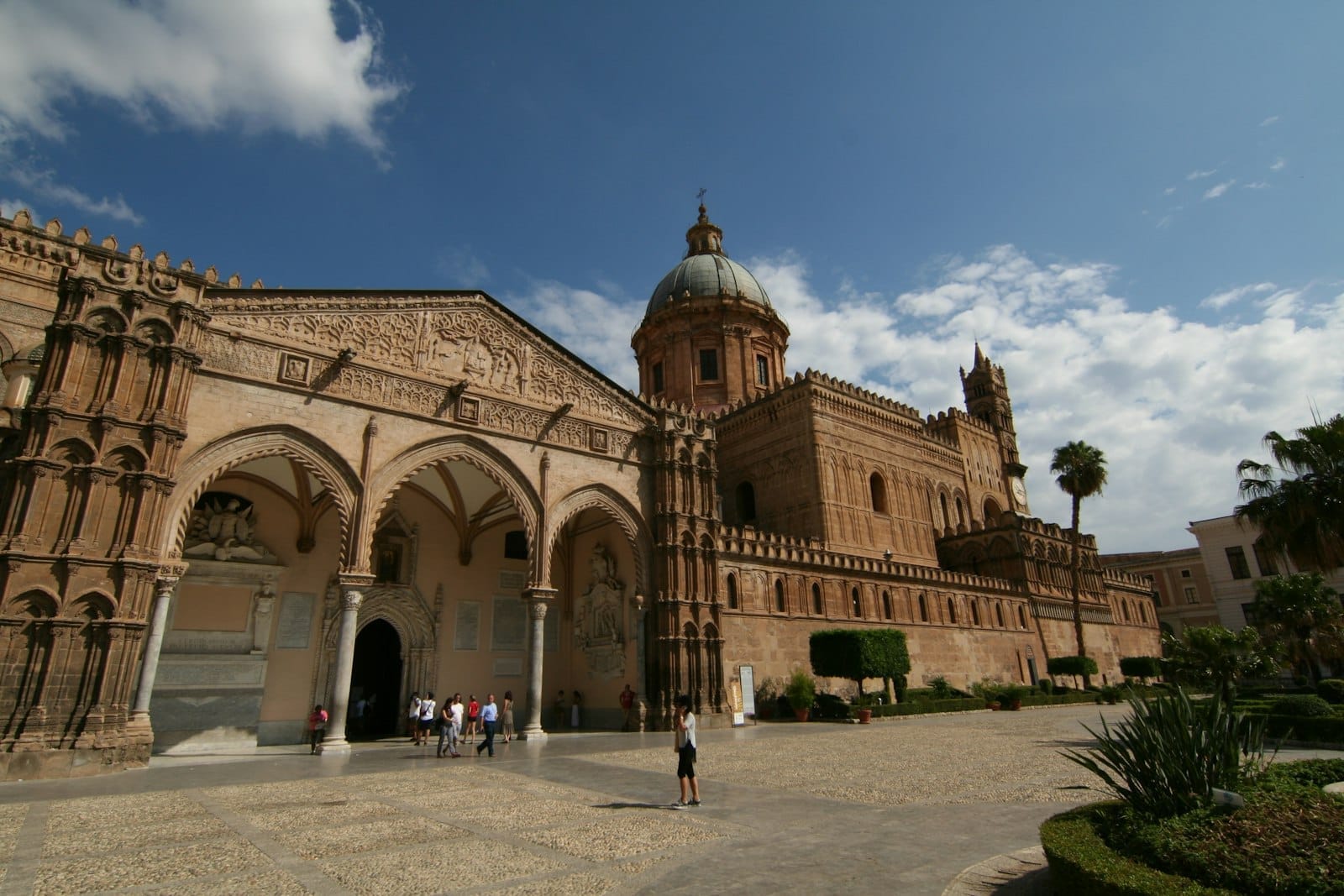
The official UNESCO designation is 'Arab-Norman Palermo and the Cathedral Churches of Cefalù and Monreale,' inscribed in 2015 as list entry number 1487. It covers nine civil and religious monuments built during the Norman Kingdom of Sicily, which lasted from 1130 to 1194 under rulers such as Roger II and William II. That kingdom was one of the most culturally tolerant in medieval Europe, drawing Arab Muslim administrators, Byzantine Greek craftsmen, and Latin Norman clergy into a single court, and the buildings they created together are the physical record of that experiment.
The nine sites break down as follows: in Palermo, the Palazzo dei Normanni (Norman Palace) with the Cappella Palatina, Palermo Cathedral, the churches of San Giovanni degli Eremiti, Santa Maria dell'Ammiraglio (La Martorana), San Cataldo, the Zisa palace, and the Ponte dell'Ammiraglio. Outside Palermo: the Cathedral of Monreale (about 8 km southwest of Palermo city centre) and the Cathedral of Cefalù (about 70 km east along the northern coast); the Monreale complex also includes its Benedictine cloister as part of the UNESCO property. Understanding this geography before you go is essential. You cannot walk between all nine sites in an afternoon — the route crosses three separate municipalities.
ℹ️ Good to know
The Arab-Norman trail is not a single museum or complex. Each of the nine sites is managed by a different authority — diocese, regional government, or municipality — and operates its own ticketing, hours, and dress code rules. There is no single combined ticket that covers all nine at the time of writing, so budget time for separate admissions.
The History Behind the Architecture
To appreciate what you are looking at, it helps to understand the historical sequence. Arab forces conquered Sicily from the Byzantine Empire in 902 CE, making Palermo — then called Bal'harm — one of the largest and most sophisticated cities in the Mediterranean world. They ruled for about 150 years, during which Palermo developed a dense urban fabric of mosques, gardens, and palaces. The Normans arrived in 1072 under Robert Guiscard and his brother Roger I, completing the conquest of the island by 1091. Rather than erasing what they found, the Norman rulers absorbed it.
Roger II, crowned King of Sicily in 1130, employed Arab geographers, poets, and engineers alongside Byzantine mosaic artists and Latin architects. The buildings from his reign and that of his successors are not 'Arab' buildings or 'Norman' buildings with exotic decoration bolted on — they are genuinely hybrid structures where the spatial logic, the ornamental language, and the theological symbolism come from different traditions simultaneously. UNESCO uses the term 'intercultural dialogue' in its inscription; a more accurate description is architectural syncretism at the highest level of craftsmanship ever achieved in medieval Europe.
The Palermo Sites: What to Prioritise
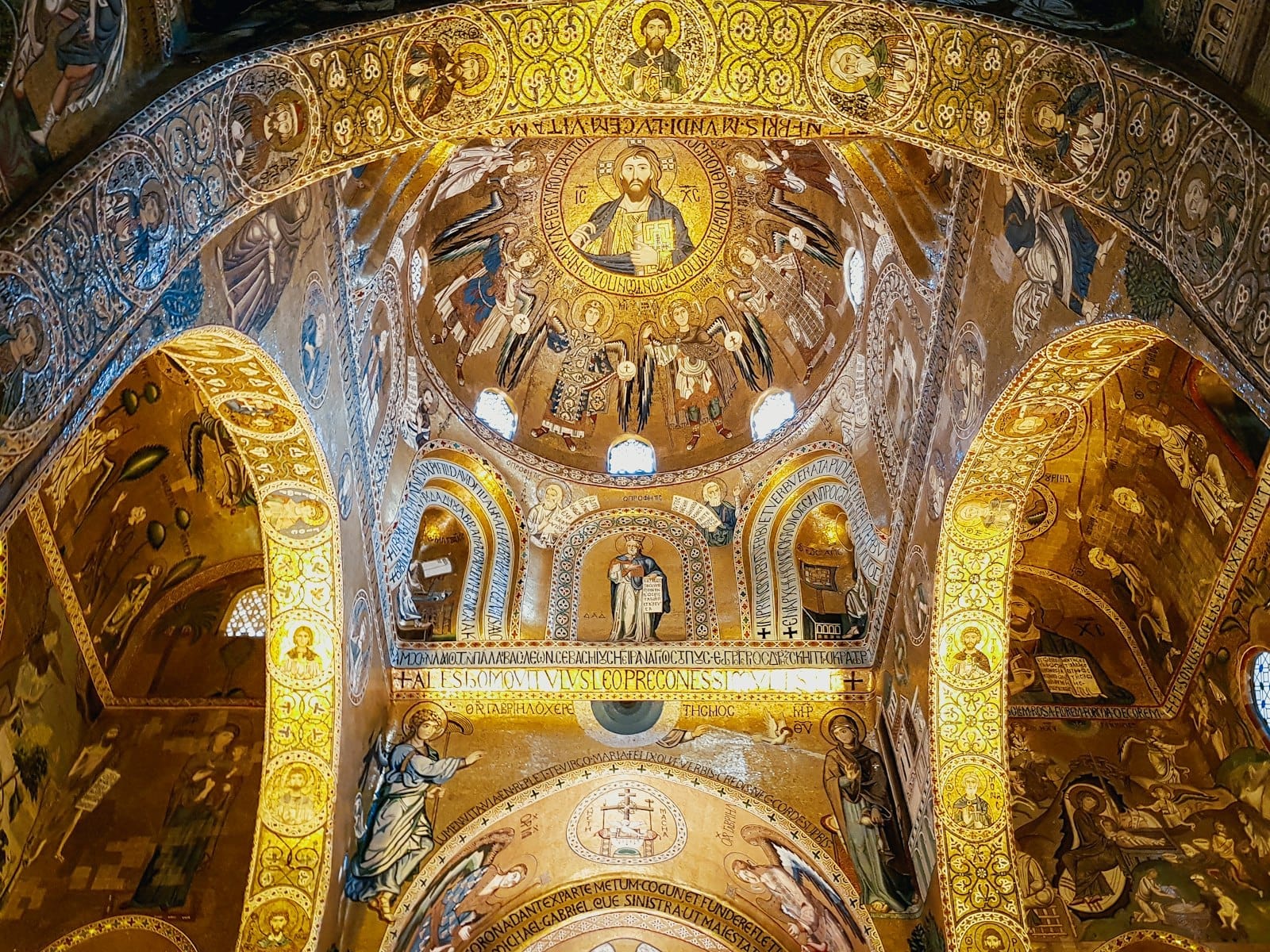
The Cappella Palatina inside the Palazzo dei Normanni is the single most important monument on the trail. Built under Roger II between 1132 and 1143, it combines a Latin basilica plan with a muqarnas ceiling (a honeycomb vaulting technique of Arab origin) and floor-to-ceiling Byzantine gold mosaics depicting Christ Pantocrator and scenes from the Old and New Testaments. Nowhere else in the world will you find these three traditions in such concentrated harmony. The palace itself now serves as the seat of the Sicilian Regional Assembly, which means access to some sections can be restricted on parliamentary sitting days — check the official website before visiting.
A short walk away in the historic centre, La Martorana (Santa Maria dell'Ammiraglio) contains the oldest Byzantine mosaics in Sicily, commissioned by George of Antioch, the admiral of Roger II's fleet, in the 1140s. A mosaic portrait of Roger II himself — shown being crowned by Christ — survives here and is one of the most significant images of Norman rule. Adjacent to La Martorana is San Cataldo, recognisable by its three Arabic-style red domes. San Cataldo's interior is austere by comparison — stripped of its original decoration — but the exterior geometry is striking and makes for an excellent photograph from Piazza Bellini.
- Cappella Palatina / Palazzo dei Normanni The trail's centrepiece. Allow 90 minutes minimum. Book tickets in advance in high season to avoid queues. The palace may be closed to visitors on certain weekdays when the Sicilian parliament is in session.
- San Giovanni degli Eremiti Famous for its five Arab-Norman domes and the peaceful Norman cloister garden alongside. Smaller than the Cappella Palatina but worth 45 minutes, particularly in spring when the garden is lush.
- La Martorana (Santa Maria dell'Ammiraglio) The mosaic portrait of Roger II alone justifies the detour. Closes around midday and reopens in the afternoon — check current hours. Entry is typically free or low cost.
- San Cataldo Visit primarily for the exterior and the architectural contrast with La Martorana next door. The interior is atmospheric but largely undecorated.
- The Zisa A Norman royal pleasure palace on the western edge of the historic centre, about 20 minutes on foot from Piazza Bellini. The name derives from the Arabic 'al-Aziza' (the magnificent). The central fountain hall with its muqarnas apse is exceptional. Houses a small Museum of Islamic Art.
- Ponte dell'Ammiraglio A twelve-arch bridge built in 1113, now surrounded by urban streets rather than the river it originally crossed (the Oreto was diverted). It is the only secular infrastructure monument on the trail and takes ten minutes to see. Worth combining with a walk through the nearby Kalsa neighbourhood.
⚠️ What to skip
The Palazzo dei Normanni closes to tourists on Monday mornings and during official Regional Assembly sittings. Dates are not always predictable. Check the Fondazione Federico II website (the official booking platform) a day or two before your visit to confirm access.
Monreale: The Cathedral That Rewrites Your Sense of Scale
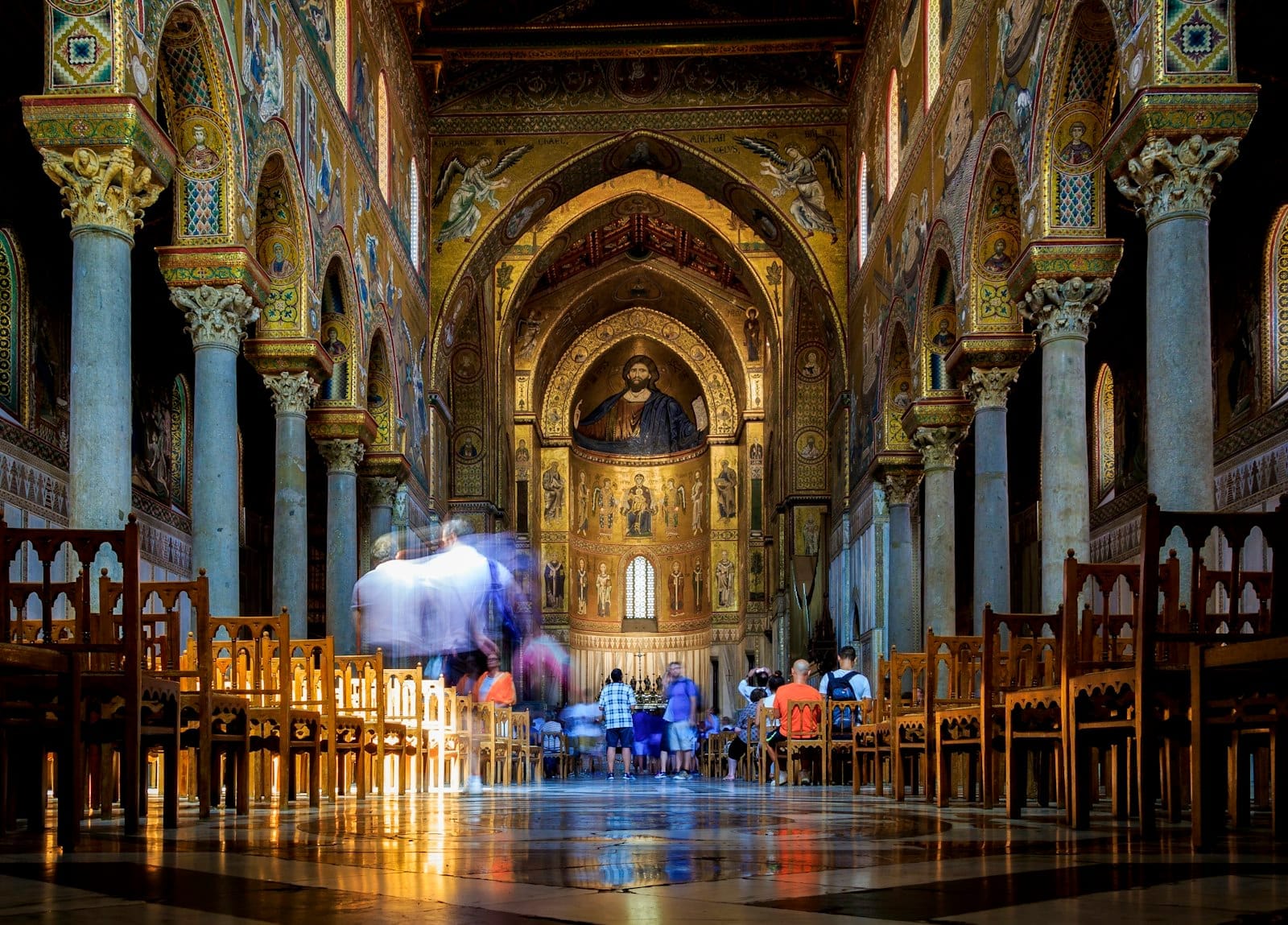
The Cathedral of Monreale, built under William II between 1172 and 1189, contains the largest unified cycle of Byzantine mosaics in the world outside Constantinople. The figures cover roughly 6,340 square metres of surface area across the nave, transepts, and apse, according to local and ecclesiastical sources. The central apse holds a Christ Pantocrator mosaic approximately 13 metres tall. It is an overwhelming interior, even by the standards of the other Arab-Norman monuments, and most visitors need more time here than they budget for.
Monreale is about 8 km southwest of Palermo city centre and easily reached by the number 389 bus from Piazza Indipendenza (adjacent to the Palazzo dei Normanni). The journey takes roughly 40 minutes. The town of Monreale itself is pleasant and considerably quieter than central Palermo. The cathedral cloister — 228 twin columns with intricately carved capitals, each different — is a separate ticketed entrance and deserves at least 30 additional minutes. Go early: the cathedral fills with tour groups by mid-morning in summer.
💡 Local tip
Combine Monreale with the Palazzo dei Normanni on the same day. Leave the palace by 12:30, take the 389 bus to Monreale, have lunch in the town, then visit the cathedral and cloister from around 2pm when groups have thinned. You will be back in Palermo by early evening.
Cefalù: The Cathedral at the Edge of the Rock
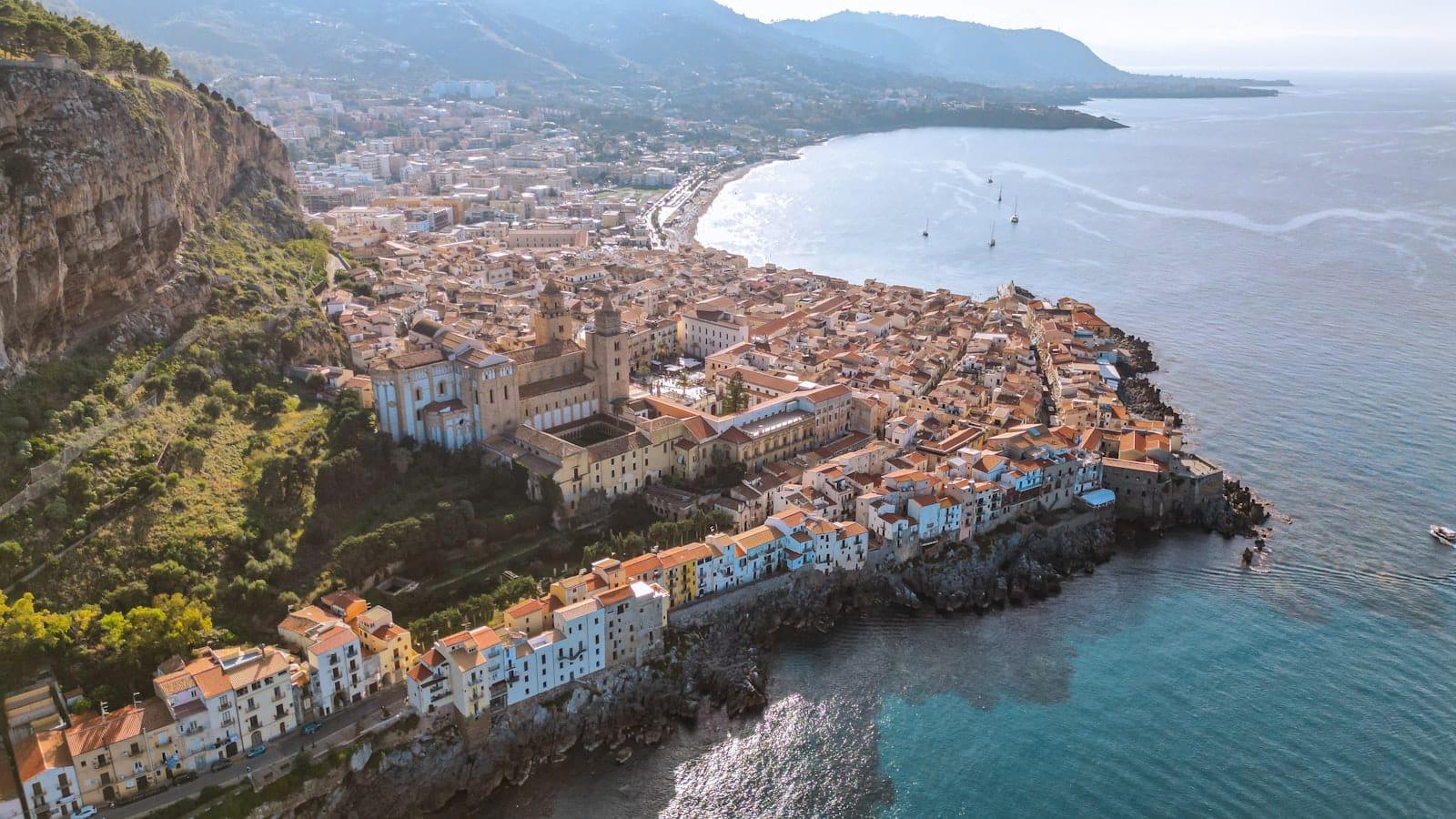
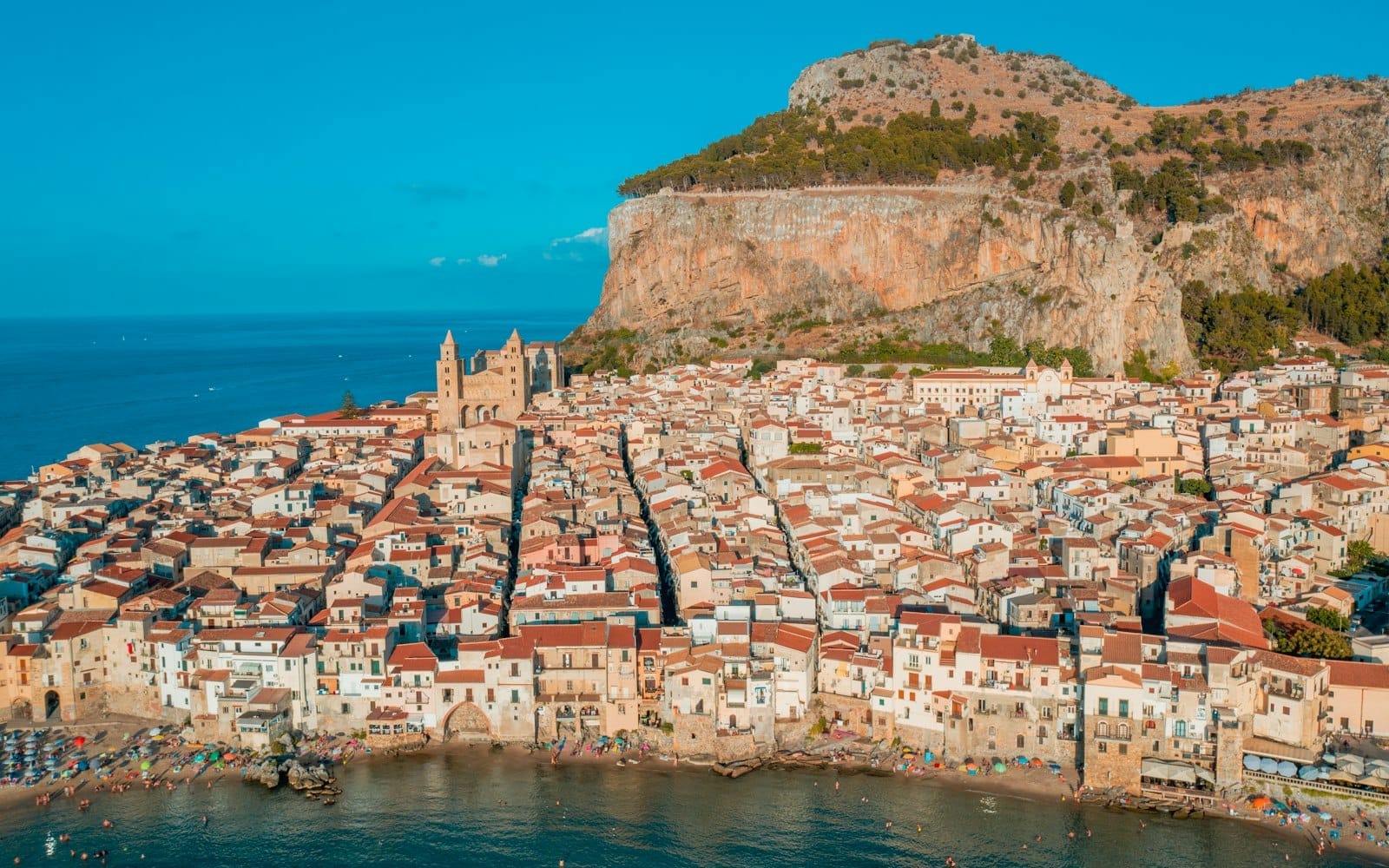
The Cathedral of Cefalù was founded by Roger II around 1131, supposedly in fulfilment of a vow made after surviving a storm at sea. Its twin Norman towers face the sea, and the apse contains a Christ Pantocrator mosaic — smaller than Monreale's but widely considered even finer in its detail and colour, dating from the 1140s and therefore among the oldest in Sicily. The cathedral sits at the base of La Rocca, a dramatic limestone headland, in one of the most photographed townscapes in Sicily.
Cefalù is about 70 km east of Palermo and served by regular Trenitalia trains from Palermo Centrale (roughly 45-75 minutes depending on the service). As a day trip from Palermo it works well, particularly outside peak summer when the town's narrow streets become congested with beach tourists. If you are planning broader travel across northern Sicily, the best day trips from Palermo guide covers logistics for Cefalù and other routes in detail.
Planning the Route: Realistic Logistics
The most common mistake visitors make is trying to complete the entire UNESCO trail in a single day. Technically possible, barely, if you start before 9am and use a car — but you will rush through the Cappella Palatina in 30 minutes, skip the Zisa entirely, and arrive at Cefalù after the cathedral has closed. A more sensible plan uses two full days, or three if you want any room to breathe.
- Day 1: Central Palermo Cappella Palatina and Palazzo dei Normanni (morning, book in advance), San Giovanni degli Eremiti, La Martorana and San Cataldo in Piazza Bellini, the Zisa in the afternoon, Ponte dell'Ammiraglio on the way back.
- Day 2: Monreale + Cefalù Start at Monreale Cathedral and cloister early (open from around 9am), return to Palermo by midday, take the afternoon train to Cefalù. The cathedral typically stays open until early evening in summer, later afternoon in winter — verify before going.
- Alternative: Base yourself in Cefalù If you are staying in Cefalù rather than Palermo, visit the cathedral on arrival day, then take the train to Palermo for a full day covering the main city sites, with Monreale as a half-day side trip.
Getting around Palermo between the sites is practical on foot for the central cluster (Cappella Palatina to La Martorana is about 10 minutes walking), but the Zisa is 1.5 km west and the Ponte dell'Ammiraglio is 1 km south of the historic centre — both manageable on foot or by taxi. Palermo's urban bus network (AMAT) covers most routes but can be slow in traffic. For the broader context of moving around the island, the getting around Sicily guide covers all transport options including trains, buses, and car hire.
Practical Details: Tickets, Dress Codes, and Timing
Each monument on the trail operates independently. The Cappella Palatina requires a ticket that covers the palace and chapel; booking online in advance is strongly recommended from April through October. La Martorana charges a small entry fee and has restricted hours — it typically closes around noon and reopens in the afternoon, but also closes on certain religious feast days. San Cataldo has a separate ticket. San Giovanni degli Eremiti is managed by the regional authorities and has its own pricing. The Zisa operates as a museum with a standard admission fee. The Ponte dell'Ammiraglio is a public monument with free access.
Dress code: all the religious monuments require shoulders and knees to be covered. Several sites provide paper shawls or will turn visitors away who are not appropriately dressed. In summer, carry a light scarf or layer specifically for this purpose. Photography rules vary by site — the Cappella Palatina typically prohibits flash photography inside, and tripods are generally not permitted.
The best months for visiting the trail are April through June and September through October, when temperatures in Palermo are comfortable for walking (typically 18-26°C) and summer crowds have not yet peaked or have subsided. July and August are manageable but the city heat — regularly above 30°C — makes extended urban walking genuinely uncomfortable by mid-morning. For a fuller breakdown of seasonal trade-offs across Sicily, the best time to visit Sicily guide covers climate, crowds, and festival calendars in detail.
✨ Pro tip
The Cappella Palatina is notably dim inside. Your eyes will adjust after a few minutes, and the gold mosaics become more legible as they do. Resist the urge to photograph immediately on entry — wait, let your vision adapt, and you will see details in the ceiling and upper walls that are invisible in rushed snapshots.
Beyond the Nine Sites: Context and Connections
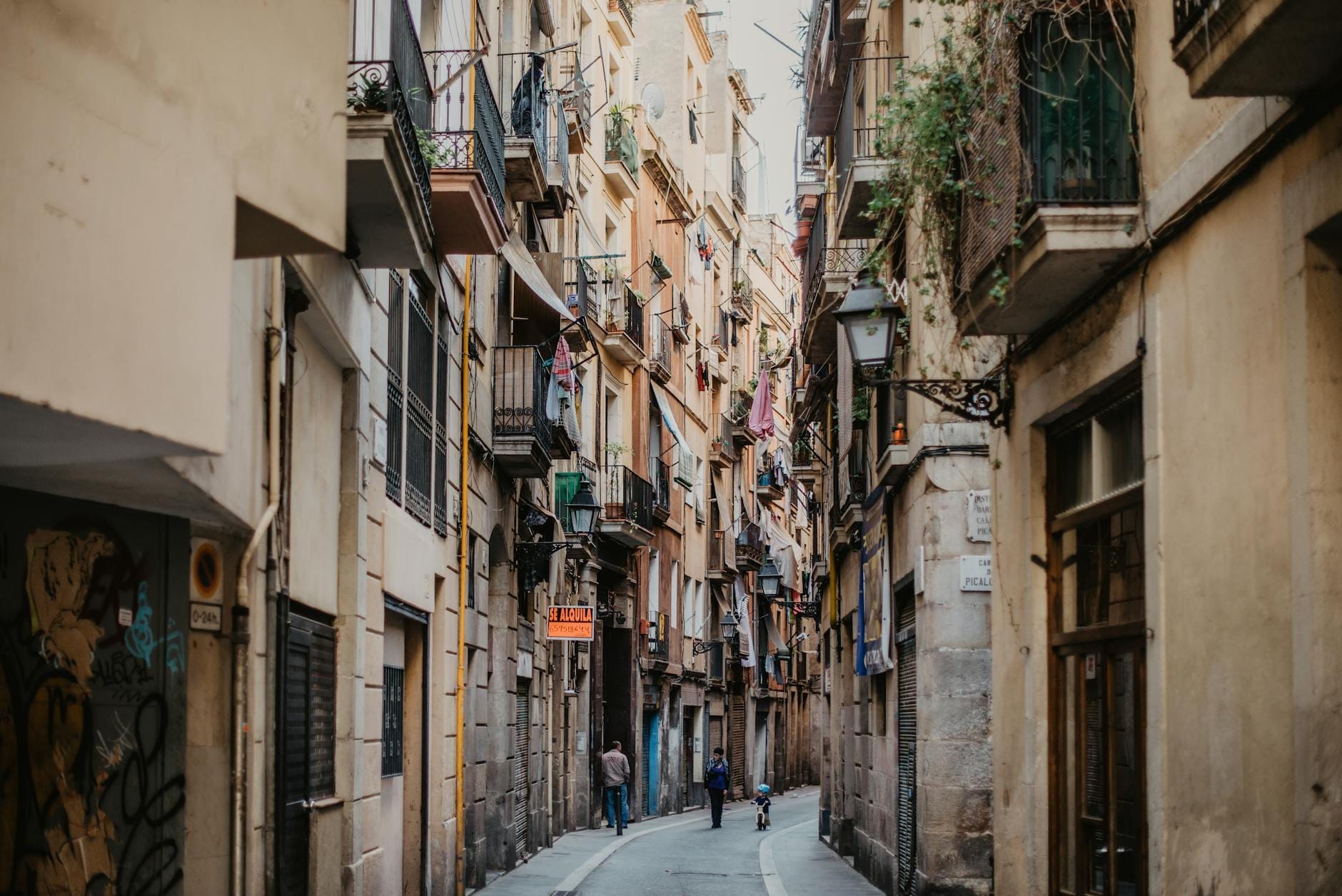
The Arab-Norman trail sits within a broader landscape of Palermo's historic architecture. The La Kalsa neighbourhood — the name itself derives from the Arabic 'al-Khalisa' (the pure) — preserves the street pattern of the Arab city, even if most of the medieval buildings are gone. The Zisa palace and the now-destroyed Cuba (another Norman pleasure palace, visible from outside as a ruin in a courtyard) were once part of a royal hunting park called the Genoardo, from the Arabic 'jannat al-ard' (paradise on earth). Understanding this geography makes the trail more than a list of monuments: it becomes a map of a vanished city.
If the architectural history of Sicily interests you beyond the Norman period, baroque Sicily covers the later UNESCO-listed baroque towns of the southeast, including Noto, Ragusa, and Modica — a very different aesthetic but equally significant in European architectural history. Sicily's layered history also extends back much further: the best Greek ruins in Sicily guide covers Agrigento, Selinunte, and Segesta for those wanting to extend their exploration across the full arc of the island's past.
FAQ
How many days do I need for the Arab-Norman UNESCO trail?
Two full days is the realistic minimum: one day for the central Palermo sites (Cappella Palatina, San Giovanni degli Eremiti, La Martorana, San Cataldo, Zisa, Ponte dell'Ammiraglio), and one day for Monreale and Cefalù. Trying to fit all nine sites into a single day means rushing through the most important monuments.
Do I need to book tickets in advance for the Cappella Palatina?
Advance booking is strongly recommended from April through October, when queues can be significant. The Palazzo dei Normanni is also closed to tourists on some weekdays due to the Sicilian Regional Assembly being in session — check the Fondazione Federico II website before your visit to confirm availability on your planned date.
Is there a single combined ticket for all nine Arab-Norman sites?
No. At the time of writing, there is no unified ticket covering all nine monuments. Each site charges its own admission (or is free, in the case of the Ponte dell'Ammiraglio). Budget accordingly and check individual site websites for current pricing.
What is the best way to get from Palermo to Monreale?
The number 389 bus from Piazza Indipendenza (directly outside the Palazzo dei Normanni) runs to Monreale town regularly and takes about 40 minutes. Taxis and hire cars are also options. The road is too steep and long to walk comfortably, especially in summer.
How does the Arab-Norman architecture differ from other Norman buildings in Europe?
Norman architecture in northern Europe (England, Normandy) relies on Romanesque mass and relatively plain stone interiors. In Sicily, the same Norman structural vocabulary was overlaid with Arab muqarnas ceilings and geometric stonework, and Byzantine gold-glass mosaics covering entire interior walls. The result is unique in the world: there is nothing comparable to the Cappella Palatina in France, England, or anywhere else the Normans settled.