Cefalù Cathedral: Sicily's Most Breathtaking Norman Church
Founded by King Roger II in 1131, the Duomo di Cefalù is a UNESCO World Heritage Site combining Norman architecture, Islamic-influenced woodwork, and one of the finest Byzantine mosaics in the Mediterranean. Free to enter the nave, with paid itineraries to the towers, rooftops, and treasury.
Quick Facts
- Location
- Piazza Duomo, Cefalù (PA), Sicily, Italy — in the historic centre off Corso Ruggero
- Getting There
- 10-minute walk from Cefalù train station (Palermo–Messina line). The piazza is pedestrian-only; arrive on foot from the station or central parking areas.
- Time Needed
- 45–60 min for the nave and mosaics; 2–2.5 hrs for a full paid itinerary including towers, rooftops, and treasury
- Cost
- Nave: free. Paid itineraries from €10 (Blue/Green) to €13 (Red, full access). Children under 5 and EU Disability Card holders: free.
- Best for
- History lovers, architecture enthusiasts, Byzantine art admirers, UNESCO site collectors
- Official website
- duomocefalu.it/en/faq
What Is the Duomo di Cefalù?
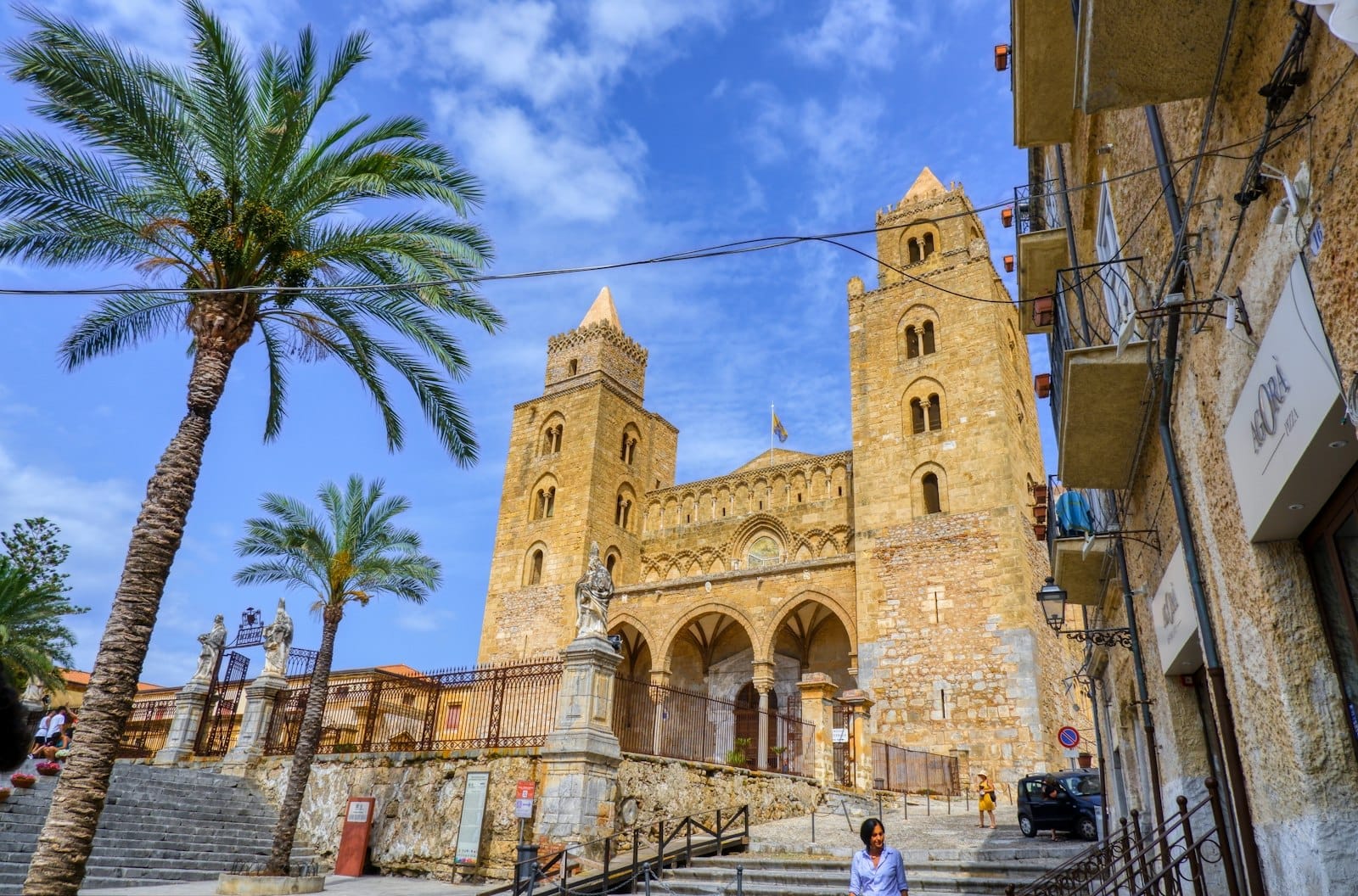
The Cefalù Cathedral — officially the Basilica della Trasfigurazione del Signore, or Duomo di Cefalù — is one of the most architecturally significant churches in Sicily and, arguably, in the entire Mediterranean. Built on the orders of the Norman king Roger II starting around 1130–1131, it anchors the small seaside town of Cefalù with a presence that feels genuinely outsized. Two square towers rise from its Romanesque facade, framing a view of the narrow alleyways below and the sheer limestone cliff of La Rocca directly above.
In 2015, the cathedral was inscribed as part of the UNESCO World Heritage Site known as 'Arab-Norman Palermo and the Cathedral Churches of Cefalù and Monreale.' That designation reflects not just architectural beauty but cultural layering: the building fuses Norman structural vocabulary with Byzantine mosaic traditions and carved wooden ceiling panels that carry unmistakable Islamic geometric patterns. This cross-cultural synthesis was not accidental — it was a deliberate expression of Roger II's cosmopolitan kingdom, where Latin, Greek, Arabic, and Norman traditions coexisted under a single crown.
ℹ️ Good to know
The cathedral nave is free to enter. Access to the towers, south rooftops, cloister, treasury, and sacristy requires a ticket — choose from three paid itineraries (Red €13, Blue €10, Green €10). The mosaic area is closed during religious services and reopens afterward.
The Mosaics: The Reason Most Visitors Come
Walk into the nave and your eyes are immediately pulled toward the apse. The Cristo Pantocratore — Christ as ruler of all — gazes down from a gold mosaic background in the conch of the apse, flanked by the Virgin and archangels. Completed in the 12th century, this is one of the oldest and best-preserved Byzantine apse mosaics in western Europe. The scale is arresting: Christ's face alone is several meters tall, and the golden tessera work picks up whatever light is coming through the high windows.
Unlike the more overwhelming mosaic programmes at Monreale, which cover virtually every surface, Cefalù's mosaic scheme is concentrated in the apse and presbytery. This restraint makes the Pantocrator feel more confrontational — there is nothing else competing for your attention. Visitors who arrive expecting something comparable in scale to Monreale sometimes find Cefalù's interior more spare than anticipated, but those who sit quietly in the nave for a few minutes tend to find the focus more powerful, not less.
If the mosaics are your primary reason for visiting Sicily, consider pairing Cefalù with both the Monreale Cathedral and the Palatine Chapel in Palermo — together they form the core of Sicily's Arab-Norman mosaic tradition. All three belong to the same UNESCO inscription.
Tickets & tours
Hand-picked options from our booking partner. Prices are indicative; availability and final rates are confirmed when you complete your booking.
Palermo and Cefalu guided tour from Taormina
From 75 €Instant confirmationFree cancellationMount Etna to 1900 mt and Taormina Full-Day Tour from Cefalu
From 65 €Instant confirmationFree cancellationAgrigento and Scala dei Turchi Tour from Cefalu
From 65 €Instant confirmationFree cancellationWine Tasting and Castelbuono Tour from Cefalu
From 55 €Instant confirmationFree cancellation
Architecture and the Painted Ceiling
The exterior facade, facing Piazza Duomo, is constructed in golden limestone that shifts from pale honey in the morning sun to a deeper amber in the afternoon. The two Norman towers are the town's most recognisable silhouette — visible from the beach, from fishing boats offshore, and from the switchback paths up La Rocca. The overall shape is Romanesque in discipline: thick walls, round-headed arches, and a basilica plan that predates the Gothic verticality that would follow elsewhere in Europe.
Inside, the muqarnas-influenced painted wooden ceiling above the nave is easy to overlook if you arrive focused on the apse. Look up before you walk forward. The geometric painted panels are decorated with Islamic motifs — a direct reflection of the Muslim craftsmen working under Norman patronage in 12th-century Sicily. This kind of object exists almost nowhere else in Christian Europe: a cathedral ceiling drawing on the visual language of Islamic art, installed without apparent contradiction.
The Paid Itineraries: Towers, Rooftops, and the Treasury
Three ticketed itineraries allow access beyond the nave. The Red Itinerary (€13 full price) is the most comprehensive, covering the towers, the south rooftop terraces, the area directly beneath the mosaics, the sacristy, the museum and treasury, the Sansoni Hall, the Bishop's Chapel, the canonical cloister, and the Osterio Magno. The Blue Itinerary (€10) focuses on the towers, rooftops, and the view from beneath the mosaics. The Green Itinerary (€10) covers the cultural and religious interior spaces without the tower climb.
The rooftop sections are worth the extra cost on a clear day. From the south terraces you look directly down over Piazza Duomo — the rows of café tables are tiny below — and across the terracotta rooftops of the old town to the Tyrrhenian Sea. The towers require climbing narrow stone stairs and involve some ducking through low medieval doorways. They are not suitable for visitors with significant mobility limitations, and EU Disability Card holders receive free admission to the paid itineraries.
💡 Local tip
The Red Itinerary gives you access to the cloister and museum, which most visitors skip by taking only the tower route. The canonical cloister is quieter than the main nave and worth seeing on its own terms. Budget at least 30 extra minutes if you book the full itinerary.
When to Visit and How the Experience Changes by Time of Day
The cathedral typically opens at 09:00, though times may vary slightly by season. Arriving in the first hour — before 10:00 — means you often have the nave almost to yourself. The Pantocrator mosaic in the apse is lit by morning light coming through the east-facing windows, which gives the gold tessera an intensity that changes noticeably as the day progresses. By late morning, tour groups from Palermo and organised day-trippers begin arriving, and the piazza fills up. Inside, the sound level rises quickly because the stone interior reflects noise efficiently.
The midday closure (13:00–15:00) is firm. Visitors who arrive just before 13:00 may be asked to leave before they have finished. The afternoon session reopens at 15:00, and the late afternoon (around 16:30–18:00) is another relatively quiet window, particularly on weekdays outside July and August. The light through the windows in late afternoon hits the apse from a lower angle, creating a different reading of the gold mosaic work — less intense, but more golden in tone.
Cefalù itself is a beach town, and in summer the streets around the cathedral are packed by midday. If you are visiting during peak season, check the best time to visit Sicily to calibrate your expectations — shoulder season visits in May or September give you the cathedral at reasonable temperatures and the town at manageable volumes.
Practical Walkthrough: Getting There and Getting In
Cefalù is on the main Palermo–Messina coastal rail line. From Palermo Centrale, regional trains reach Cefalù in roughly 45–60 minutes; from Messina, expect around 2 hours. The station is a short walk from the historic centre. The cathedral sits on Piazza Duomo, which you reach by walking along Corso Ruggero — the main pedestrian spine of the old town — for about 5–8 minutes from the station. There is no parking on the piazza itself; drivers should use the parking areas on the western edge of the historic centre.
Dress code is enforced. Shoulders and knees must be covered to enter. If you arrive from the beach in a swimsuit and a cover-up, you will be turned away unless the cover-up meets the requirement. The cathedral does not lend shawls, so plan accordingly. Photography is generally permitted inside the nave without flash, but check current signage — restrictions in specific areas can change.
The cathedral shares a UNESCO inscription with Monreale Cathedral and the Palatine Chapel. Visitors with more than a day in the area might consider exploring Cefalù's old town as a full day, combining the cathedral with a climb up to La Rocca for views over the town and a day at the beach. The combination makes Cefalù one of the more complete single-day stops in northern Sicily.
Who Should Reconsider
Visitors primarily interested in sprawling interior spectacle may find the nave feels spare compared to Monreale. If the mosaics at Monreale left you wanting more, Cefalù will satisfy; if you found Monreale excessive, Cefalù's more focused programme will likely appeal. Travellers with significant mobility impairments can enjoy the nave and piazza comfortably, but the paid itineraries involving towers and roof terraces involve steep medieval stairs and are not accessible. In July and August, the piazza and surrounding lanes are extremely crowded by midday; visitors sensitive to crowds and heat will have a better experience in shoulder months.
Cefalù is easily reachable as a day trip from Palermo. See our guide to day trips from Palermo for logistics and how to fit the cathedral into a broader itinerary.
Insider Tips
- Book the Red Itinerary if you want access to the canonical cloister — it is rarely busy and gives you the best sense of the cathedral's medieval scale away from the main tourist flow inside the nave.
- The mosaic area is closed during Mass, which typically takes place in the morning. Check the daily schedule posted at the entrance when you arrive, or consult the official site before your visit, to avoid a wasted trip if timing is tight.
- The view from the south rooftop terraces looks directly down onto Piazza Duomo's café tables. For a photograph without tourists in the frame, aim for the opening minutes of the morning session before the square fills.
- The painted wooden ceiling is easy to miss if you walk straight toward the apse. Pause just inside the main door and look up before moving forward — the Islamic geometric patterns above the nave are one of the most unusual objects in any Christian church in Europe.
- If you are visiting in summer, the cathedral interior stays noticeably cooler than the streets outside. A mid-morning visit makes practical sense beyond the artistic — it is one of the more comfortable places in town between 10:00 and noon.
Who Is Cefalù Cathedral For?
- Travellers interested in medieval art and Byzantine mosaic traditions
- Architecture enthusiasts tracking Norman heritage across Sicily
- UNESCO World Heritage collectors linking Cefalù with Monreale and the Palatine Chapel
- Day-trippers from Palermo wanting a single high-impact cultural stop
- Photographers working the early-morning light on the golden limestone facade
Nearby Attractions
Other things to see while in Cefalù:
- La Rocca di Cefalù
Rising roughly 270 metres directly above Cefalù's historic rooftops, La Rocca di Cefalù is a limestone promontory layered with nearly three millennia of history. The trail climbs past a megalithic Greek temple and medieval castle ruins to deliver some of the most complete coastal panoramas in northern Sicily.