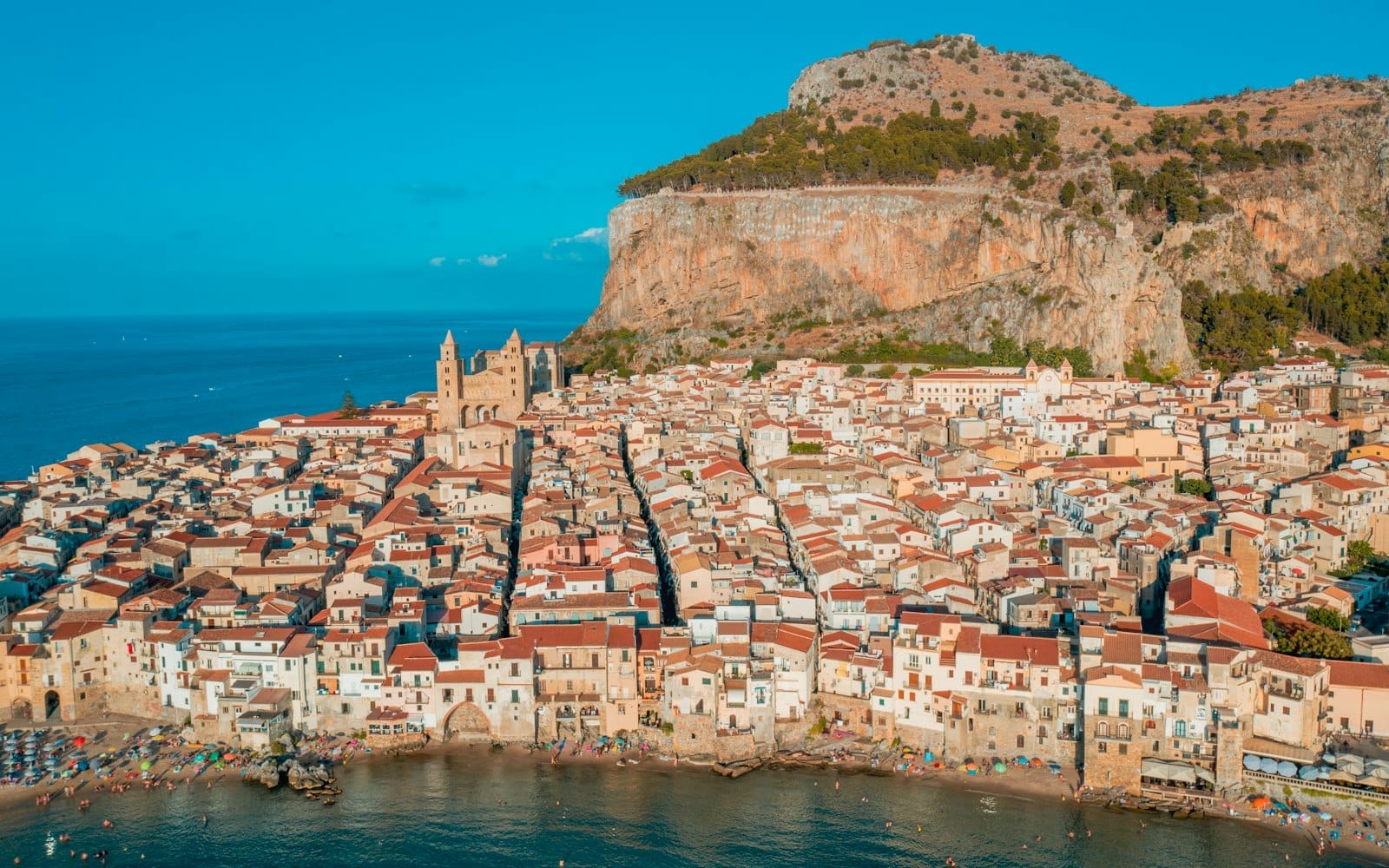
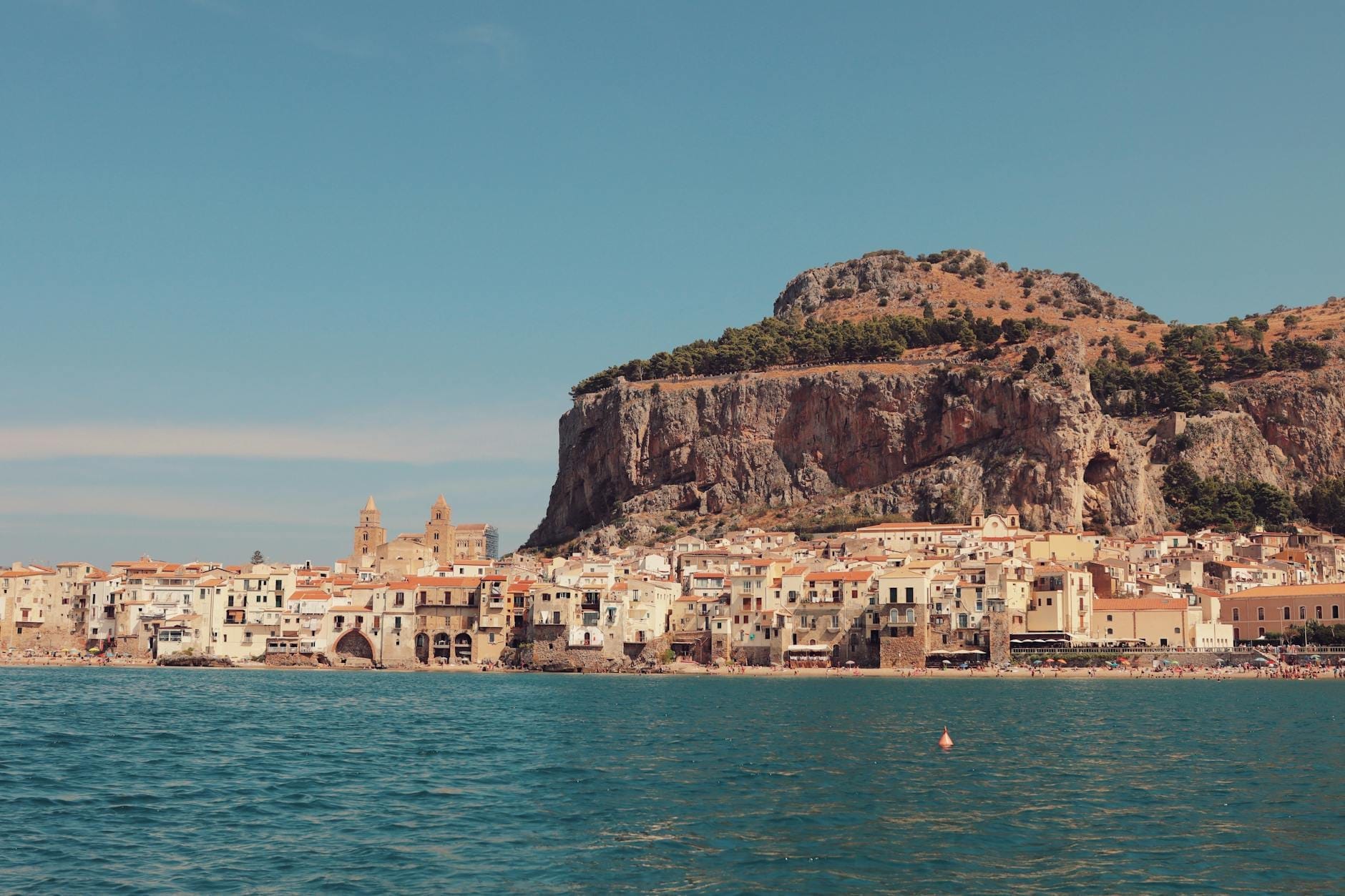
Cefalù is a compact medieval town on Sicily's north coast, where a UNESCO-listed Norman cathedral faces a wide sandy beach and limestone cliffs rise sharply behind honey-coloured rooftops. It sits roughly halfway between Palermo and Messina, making it easy to reach by train and hard to leave once you've arrived.
Cefalù is the kind of Sicilian town that earns its reputation honestly: a Norman cathedral of genuine architectural importance, a broad sandy beach within walking distance of medieval lanes, and a rocky headland that puts the whole place in dramatic perspective. It draws crowds, especially in summer, but its bones are old enough and its streets narrow enough that the historic centre still feels like a real town rather than a stage set.
Orientation
Cefalù sits on the Tyrrhenian coast of northern Sicily, about 70 kilometres east of Palermo in the Metropolitan City of Palermo. The town occupies a narrow strip of flat land between the sea to the north and La Rocca, a 376-metre limestone promontory, to the south. That geography is everything here: the historic centre has nowhere to spread, which is why the medieval street grid has survived more or less intact.
The historic centre is compact enough to walk end to end in about fifteen minutes. Its main spine is Corso Ruggero, which runs roughly east to west through the old town from Piazza Garibaldi toward the cathedral and the sea. Via Vittorio Emanuele runs parallel to the north, closer to the seafront, and is where you'll find the medieval wash house (Lavatoio Medievale) fed by the Cefalino river. To the northeast, the Lungomare Giuseppe Giardina fronts the main sandy beach. To the west, past Porta Pescara, is the old harbor, where fishing boats still tie up in the early mornings.
The railway station (Stazione di Cefalù) sits on Via Aldo Moro, just south of the seafront, and is the town's main arrival point for visitors coming from Palermo or Messina. The modern town spreads south and east of the historic centre along the coastal road, but almost everything visitors come for is within the old walls.
ℹ️ Good to know
The historic centre is a ZTL (zona a traffico limitato), meaning private vehicles face restricted access through monitored gates at Corso Ruggero/Piazza Garibaldi and Via Porta Giudecca. If you're arriving by car, use the Parking Lungomare Giardina near the seafront or the Cortile Belvedere/Via Aldo Moro area near the station and walk in.
Character & Atmosphere
Cefalù has a dual personality that shifts depending on the season and the time of day. In July and August, the Lungomare and the lanes leading to the cathedral fill with international visitors, beach umbrellas line every metre of the sandy shore, and the restaurants along Corso Ruggero keep tables out until well after midnight. In April, October, or a quiet November morning, the same streets belong almost entirely to locals, and the town's medieval character is much easier to read.
Mornings have a particular quality here. The fishing harbour on the western side of the promontory is active from first light, and the smell of salt water and diesel carries into the narrow streets. By eight o'clock, the bars on Piazza Duomo are serving espresso and cornetti to workers on their way through, and the facade of the cathedral catches the early sun at an angle that makes the stone look almost amber. By ten, the tour groups begin arriving. The gap between those two moments is worth setting an alarm for.
In the afternoon, when the heat builds in July and August, much of the town retreats. Shops close between one and four, the lanes empty out, and the beach absorbs everyone who remains. The light in late afternoon is excellent for the cathedral's Norman towers and for the view back across the rooftops from the lower slopes of La Rocca. After dark, the pace picks up again: the Lungomare and Corso Ruggero are where the passeggiata happens, with a mix of tourists and locals that feels more integrated than in some of Sicily's larger cities.
One honest note: Cefalù in peak summer is genuinely crowded. The beach, while wide by Sicilian standards, is fully occupied by July, and the lanes around Piazza Duomo can feel congested between ten in the morning and eight at night. If you're sensitive to crowds, the shoulder months of May, June, and September offer the same scenery with far more breathing room.
What to See & Do
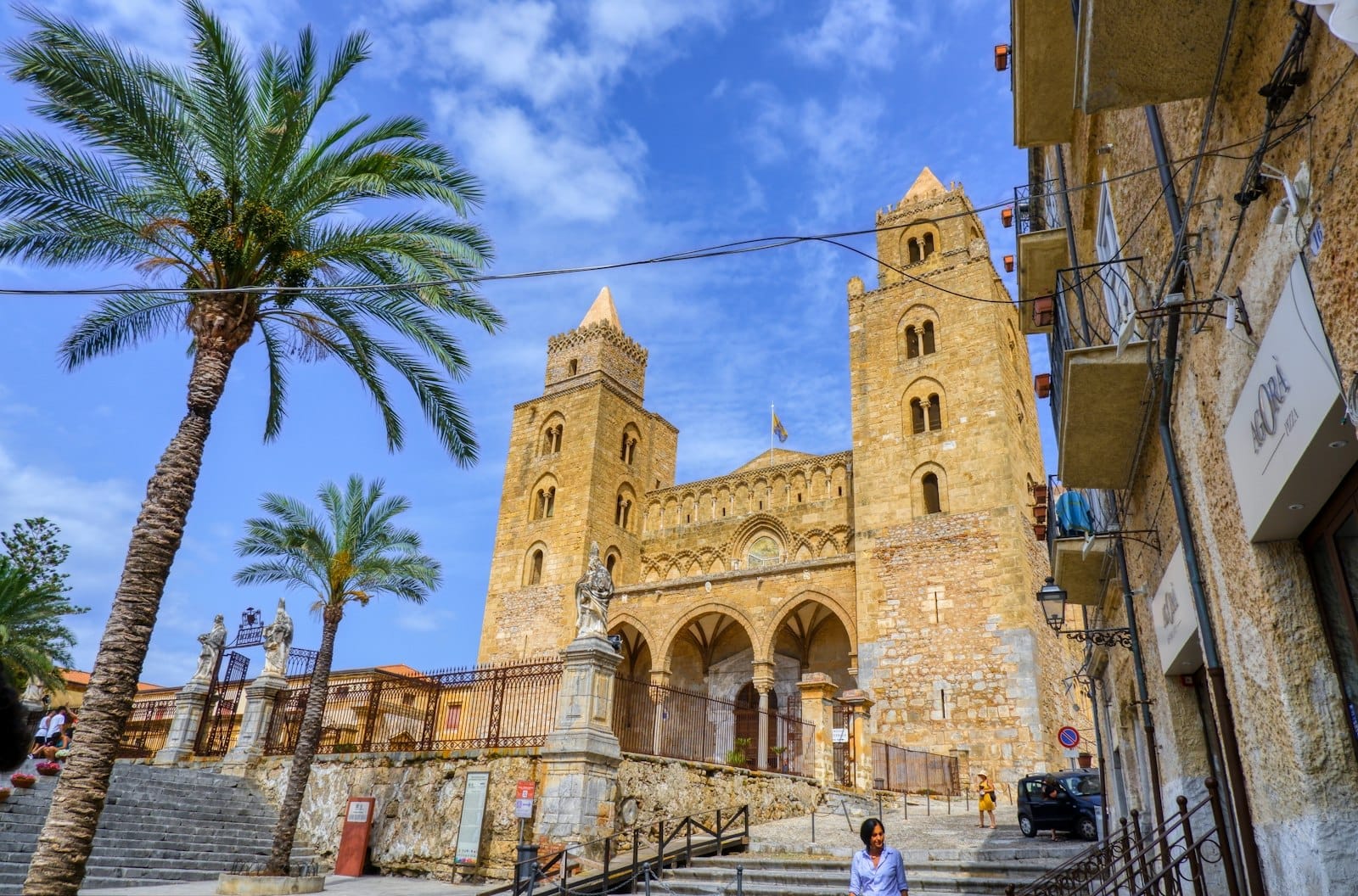
The Cefalù Cathedral is the centrepiece of the town and, by any measure, one of the most important Norman buildings in Sicily. Roger II commissioned it in 1131, ostensibly in fulfilment of a vow made after surviving a storm at sea. The facade, with its twin towers and interlaced blind arcading, dominates Piazza Duomo completely. Inside, the apse mosaic of Christ Pantocrator, dating from the 1140s, is among the finest examples of Byzantine-Norman craftsmanship anywhere in Europe. It predates the more famous mosaics at Monreale and Palermo by several decades. Plan at least an hour inside.
Behind the town, La Rocca is the most physically demanding and most rewarding experience Cefalù offers. The path up begins near the Osterio Magno on Corso Ruggero and climbs steeply through prickly pear and wild fennel. At the top are the ruins of a medieval castle and, considerably older, the so-called Tempio di Diana, a sanctuary with megalithic stonework thought to date back to around the ninth century BC. The views from the summit take in the full arc of the Tyrrhenian coastline. Allow ninety minutes for the round trip, and go early in summer before the heat sets in.
Down at street level, the medieval wash house on Via Vittorio Emanuele is easy to miss and worth finding. A set of stone steps descends below street level to a channel of clear spring water running through stone basins. The water from the Cefalino river has been channelled here since at least the medieval period, and the site has a particular quiet about it that the busier parts of town don't. It costs nothing to visit and takes about ten minutes.
The beach itself, the Lungomare Giuseppe Giardina, is a genuine sandy beach by Sicilian standards, not a strip of grey pebbles. The water is clear and the setting, with La Rocca rising behind the town, is genuinely dramatic. The western end near the old harbor tends to be slightly less congested than the central sections in front of the hotels. For a longer walk, the seafront promenade extends east of the town toward the modern resort area.
Cefalù Cathedral and Piazza Duomo: the Norman architecture and Byzantine mosaics
La Rocca: hilltop fortress, Tempio di Diana, and panoramic coastal views
Lavatoio Medievale (medieval wash house) on Via Vittorio Emanuele
Old harbor and Porta Pescara on the western seafront
Lungomare Giuseppe Giardina: the main town beach
Museo Mandralisca on Via Mandralisca: a small collection including Antonello da Messina's Portrait of an Unknown Man
💡 Local tip
The cathedral requires modest dress (shoulders and knees covered). Check current hours before planning your visit.
Eating & Drinking
Cefalù's food scene is anchored in the Sicilian coastal kitchen: fresh fish, pasta with sardines, couscous in the western Sicilian tradition, and the kind of simple grilled seafood that benefits from proximity to a working harbor. For a broader overview of what to expect across the island, the Sicily food guide covers the regional specialties worth knowing before you sit down anywhere.
The streets immediately adjacent to Piazza Duomo, particularly along Corso Ruggero and the lanes running north toward the seafront, have the highest density of restaurants and the highest proportion of tourist-oriented menus. This isn't necessarily a problem: some of the seafood here is genuinely good because the raw material is excellent. But portions are generous, prices trend higher than elsewhere in Sicily, and the menus are often multilingual in a way that should prompt a moment of pause. Walk one or two streets back from the cathedral before committing.
For street food, the options are more modest than in Palermo or Catania, but arancini, sfincione, and granita are all present. Granita in particular is worth seeking out: the almond and coffee versions are good, and the mulberry granita (when in season in early summer) is exceptional. The bars on the piazza do a reliable breakfast, and the pastry counters typically include cannoli filled to order, which is the only version worth eating.
Cefalù also sits within the Sicilian wine-producing orbit, and local restaurants carry wines from the Nerello Mascalese and Catarratto grapes produced in the broader province. The Aperol spritz and negroni culture that dominates Italian beach towns in summer is fully present here, but there are bars, particularly in the lanes west of the cathedral, where a local wine or a digestivo grappa is the better order.
⚠️ What to skip
Restaurants on Piazza Duomo with a direct view of the cathedral facade almost always charge a premium for that view. The food is sometimes worth it, but compare menus before sitting down. A cover charge (coperto) is standard across Sicily and will be added to your bill.
Getting There & Around
The most practical way to reach Cefalù from Palermo is by train. Regional and intercity Trenitalia services run along the Palermo-Messina coastal line and stop at Cefalù station on Via Aldo Moro. Journey time from Palermo Centrale is roughly 40 to 60 minutes depending on the service. The station is a short walk from both the beach and the entrance to the historic centre, which makes this one of the more convenient rail connections in Sicily. See the getting around Sicily guide for broader transport context across the island.
Intercity and regional bus services also connect Cefalù with Palermo and other coastal towns, with stops near the railway station along Via Roma and Via Aldo Moro. Check current timetables before travelling, as frequency varies significantly by season and day of week.
By car from Palermo, Cefalù is about 70 kilometres east along the A20 autostrada, with a journey time of roughly one hour depending on traffic. The critical thing to know is that the historic centre is a ZTL zone: cameras monitor the access points at Corso Ruggero and Via Porta Giudecca, and fines for unauthorized entry are issued automatically. Use the designated parking areas at Lungomare Giardina near the seafront or at Cortile Belvedere near the station, and walk into the centre from there. Parking in July and August fills up early in the morning.
Within Cefalù itself, everything in the historic centre is walkable. The furthest points, from the old harbor at Porta Pescara to the base of La Rocca's path, take about fifteen minutes on foot. The streets are old and uneven in places, and parts of the Via Vittorio Emanuele section can be slippery when wet. No particular navigation aid is needed; the cathedral towers are visible from most streets and serve as a constant landmark.
Cefalù also makes a workable base for a day trip to Palermo: the rail connection is fast enough that you can be at the Quattro Canti by mid-morning. Equally, it works in reverse as a day trip from Palermo, though staying overnight changes the experience significantly, because the town settles into a different rhythm after the day trippers leave on the late afternoon trains.
Where to Stay
Cefalù has a well-developed accommodation infrastructure by Sicilian coastal town standards, covering everything from small B&Bs in converted medieval buildings within the historic centre to larger beach-facing hotels along the Lungomare. The choice between them involves a real tradeoff: staying inside the old town means character, walking distance to everything, and the chance to be there when the streets quiet down at night; it also means noise from nearby bars and restaurants until late in summer, and the fact that any car access requires navigating the ZTL rules.
Hotels along the Lungomare Giuseppe Giardina and the seafront road offer direct beach access and easier parking, but put you slightly outside the tight medieval grid. This suits families and beach-focused travellers well. There is also accommodation in the modern town south of the station, which tends to be quieter and less expensive but requires more walking to the main sights.
For a broader look at how Cefalù fits into Sicily's accommodation landscape and how it compares with other bases on the north coast, the where to stay in Sicily guide provides useful context. If you are combining Cefalù with the wider Arab-Norman heritage trail, it's worth reading the Arab-Norman Sicily guide to understand how the cathedral fits into the broader UNESCO-listed architectural legacy of the region.
💡 Local tip
If you're visiting in July or August, book accommodation several months in advance. Cefalù is one of Sicily's most popular beach destinations, and the best rooms in the historic centre sell out early. Shoulder season (May, June, September) offers more flexibility and often significantly lower rates.
Practical Notes
Cefalù's best season for most travellers is May to June or September to early October. The sea is warm enough to swim in from June, and by September the beach is still very swimmable but the high-season crowds have thinned. The best time to visit Sicily guide covers the island-wide picture, but Cefalù specifically benefits from shoulder season more than many other Sicilian destinations because its main draws (the cathedral, La Rocca, the beach) all work well outside summer heat.
The town is compact and generally safe by standard urban travel precautions. There are no specific security concerns unique to Cefalù noted in official sources; the main practical hazards are parking fines from the ZTL cameras, sunburn on La Rocca's exposed path, and the near-universal tendency to underestimate how much time the cathedral interior will take.
Italian is the official language of Sicily. In Cefalù's tourist-facing businesses (hotels, restaurants, the cathedral ticket desk), English is widely spoken during the main season. Away from the seafront and Piazza Duomo, a few words of Italian go a long way. The emergency number for all services across Italy, including Sicily, is 112.
TL;DR
Cefalù is a medieval coastal town on Sicily's north coast, about 70 kilometres east of Palermo, combining a UNESCO-recognised Norman cathedral with a genuine sandy beach and a walkable historic centre.
Best for: travellers who want beach access alongside genuine historical architecture, couples looking for an atmospheric Sicilian base, and anyone doing the Arab-Norman heritage circuit.
Not ideal for: visitors who dislike tourist-heavy atmospheres in peak season, travellers seeking nightlife beyond a relaxed evening passeggiata, or those arriving by car without a plan for the ZTL parking restrictions.
The train from Palermo takes 45 to 60 minutes and is the easiest way to arrive; the historic centre is fully walkable once you're there.
Visit in May, June, or September if possible: the architecture and the beach are the same, and the crowds are not.
Seven volcanic islands, one UNESCO designation, and more logistical decisions than most travelers expect. This guide covers every practical detail you need to plan a trip to the Aeolian Islands, from choosing which islands to visit to navigating seasonal ferry schedules.
The Arab-Norman UNESCO trail covers nine extraordinary monuments across Palermo, Monreale, and Cefalù, inscribed in 2015 for their remarkable fusion of Western, Arab, and Byzantine architecture. This guide covers every site, practical logistics, and the historical context that makes this one of the most intellectually rewarding itineraries in the Mediterranean.
Sicily's Val di Noto is one of Europe's most remarkable architectural achievements: eight towns rebuilt in coordinated Late Baroque style after a catastrophic 1693 earthquake, now a single UNESCO World Heritage Site. This guide covers all eight towns, how to get between them, what to prioritise, and when to go.
Sicily's coastline stretches over 1,000 km across the Tyrrhenian, Ionian, and Mediterranean seas, producing an extraordinary range of beaches. This guide covers the finest sandy bays, volcanic coves, nature reserves, and island escapes the island has to offer.
Sicily was once the heart of Magna Graecia, and the ruins left behind are among the finest ancient Greek monuments anywhere in the world. This guide covers the essential sites, from vast temple complexes to forgotten quarries, with practical advice on what to see and when to go.
Sicily rewards visitors year-round, but timing your trip correctly makes a significant difference. This guide breaks down every season by temperature, crowds, prices, and what's actually worth doing, so you can plan with confidence.
Catania sits at the centre of eastern Sicily, putting some of the island's greatest attractions within easy reach. This guide covers the best day trips from Catania, from the volcanic trails of Etna to the Baroque jewels of the southeast and the ancient ruins of Siracusa.
Palermo sits at the centre of western Sicily, putting an extraordinary range of landscapes, ancient sites, and coastal escapes within a few hours. This guide covers the best day trips from Palermo, from the world's greatest medieval mosaics at Monreale to the Greek temples of Agrigento and the untouched coves of the Zingaro Nature Reserve.
Sicily is large, geographically varied, and not always easy to navigate without the right plan. This guide covers every transport option available, from renting a car to catching intercity buses, so you can move around the island confidently and without wasted time.
Sicily rewards those who look beyond Taormina and Palermo's grand monuments. This guide covers 20 lesser-known attractions across the island, from prehistoric cliff tombs and abandoned earthquake towns to wild coastal reserves and ancient quarries frozen in time.
Sicily is Italy's largest island and the Mediterranean's most historically layered destination. This guide cuts through the hype to give you a clear-eyed look at what the island genuinely offers, what it costs, when to go, and what tends to disappoint — so you can make an informed decision.
Sicily rewards the discerning traveler with a depth that few Mediterranean islands can match. This guide covers the finest luxury hotels, bespoke experiences, and practical logistics for planning a high-end trip to the largest island in the Mediterranean.
Seven days in Sicily is enough to cover the island's greatest hits — Greek temples, baroque city centres, volcanic landscapes, and some of the best street food in Italy. This guide maps out a logical east-to-west route with realistic transport times, seasonal advice, and honest notes on what to skip.
Sicily has four main airports, and choosing the right one can save hours of overland travel. This guide covers Palermo (PMO), Catania (CTA), Trapani (TPS), and Comiso (CIY) in detail, including airport-to-city transfers, route availability, and which gateway suits each part of the island.
Sicily rewards self-drive travel more than almost any other Mediterranean destination. This guide covers everything you need to plan a confident road trip: the best routes, realistic driving times, car rental tips, ZTL zone warnings, seasonal advice, and the stops that genuinely justify the detour.
Sicilian food is not Italian food with a suntan. It is a centuries-old fusion of Greek, Arab, Spanish, and Norman influences, built around seafood, citrus, almonds, ricotta, and durum wheat. This guide covers every dish worth eating, where to find the best versions, and the food customs that will shape every meal you have on the island.
Francis Ford Coppola brought the Corleone saga to life across the hillside villages and historic streets of Sicily. This guide covers every key filming location from all three films, how to reach them, what to expect on the ground, and how to avoid the most common tourist mistakes.
Sicily rewards couples with baroque towns, volcanic landscapes, secluded beaches, and some of the most atmospheric historic centers in the Mediterranean. This guide cuts through the generic advice to tell you exactly where to go, when to go, and what actually makes Sicily special for two.
October is one of the smartest months to visit Sicily. Temperatures ease off from the summer heat, the tourist crush fades, and the island's food and festival calendar comes alive. Here's everything you need to plan your trip well.
Summer in Sicily runs from June through September and brings hot weather, packed beaches, vibrant festivals, and peak travel prices. This guide covers everything you need to know: when to go, what to expect from the heat and crowds, which beaches and islands are worth it, and how to plan smarter than most visitors do.
Sicily is far more than a single island. From the volcanic Aeolian archipelago in the Tyrrhenian Sea to the crystal-clear waters of the Egadi Islands off Trapani, this guide covers every ferry route, island, cost, and logistical detail you need to plan a serious island-hopping trip from Sicily.
Sicily is one of the most rewarding destinations in the Mediterranean, and it doesn't have to cost a fortune. This guide breaks down real daily costs, the cheapest times to visit, where to eat well for under €10, and how to see the island's best sights without draining your account.
The Opera dei Pupi is one of Sicily's most distinctive cultural exports — a UNESCO-recognised marionette tradition rooted in medieval chivalric epics, performed by family troupes across the island. This guide covers the history, the two rival schools, where to see performances in Palermo, Catania, and Siracusa, and how to get the most out of attending a show.
Sicily is one of southern Europe's most rewarding destinations, and it is genuinely safe for tourists. This guide cuts through the stereotypes, explains what the real risks are, identifies the scams that do happen, and gives you practical tools to visit with confidence.
Sicily produces some of Italy's most distinctive street food, rooted in centuries of Arab, Norman, and Spanish influence. This guide breaks down the essential dishes by city, the markets where locals actually eat them, what to pay, and what to skip.
Sicily sits on one of the most volcanically active zones in Europe. This guide breaks down what to expect from Etna, Stromboli, and Vulcano — three very different volcanic experiences — covering access, trails, safety, and the best time to visit each one.
Both Sicily and Sardinia are autonomous regions of Italy with distinct identities, landscapes, and travel experiences. This guide breaks down the real differences in culture, beaches, food, costs, and logistics so you can choose the right island for your trip.
Sicily is Italy's largest wine region by vineyard area, with 23 DOCs, one DOCG, and a lineup of native grapes that rival anywhere in Europe. This guide breaks down the key appellations, the grapes behind them, and exactly how to plan a tasting trip across the island.
Sicily delivers an extraordinary range of family experiences, from volcanic landscapes and ancient Greek ruins to puppet theatre and sweeping beaches. This guide breaks down the best kid-friendly activities, practical logistics, seasonal timing, and practical advice to help families plan a smooth, memorable trip.
Sicily rewards travelers with an extraordinary range of experiences: ancient Greek ruins, active volcanoes, UNESCO Baroque towns, Norman cathedrals, and coastline that stretches nearly 1,000 km. This guide covers the best things to do in Sicily across every corner of the island, with practical advice on timing, costs, and how to avoid the common pitfalls.
Sicily rewards travelers who give it time. This complete 14-day itinerary covers the island's east coast highlights, Baroque south, ancient Greek south, and the layered history of the west, with practical routing advice, seasonal tips, and practical guidance on trade-offs.
Sicily is the Mediterranean's largest island, and picking the right base makes or breaks your trip. This guide covers the best towns to stay in across every corner of the island, from the baroque southeast to the volcanic northeast, with practical advice on prices, transport, and seasonal trade-offs.