Sicily Street Food Guide: What to Eat & Where
Sicily produces some of Italy's most distinctive street food, rooted in centuries of Arab, Norman, and Spanish influence. This guide breaks down the essential dishes by city, the markets where locals actually eat them, what to pay, and what to skip.
Plan and book this trip
Tools from our partner Travelpayouts help you compare flights and hotels. If you book through them, we may earn a commission at no extra cost to you.
Flights
Hotels map
TL;DR
- Palermo is the street food capital of Sicily: head to the Ballarò, Vucciria, and Capo markets for arancine, pane e panelle, and pane con la milza at €2–3 each.
- Catania has its own distinct street food culture, best explored around the La Pescheria fish market, with arancini, cipolline, and fried seafood cones.
- Sweet street food is just as important as savory: cannoli and granita con brioche are non-negotiable stops.
- Offal dishes like pane con la milza (spleen sandwich) and stigghiola (grilled intestines) are traditional Palermo specialties, not for everyone, but worth understanding before you arrive.
- For full context on Sicilian flavors and ingredients, see the Sicily food guide.
Why Sicily's Street Food Is Different From the Rest of Italy
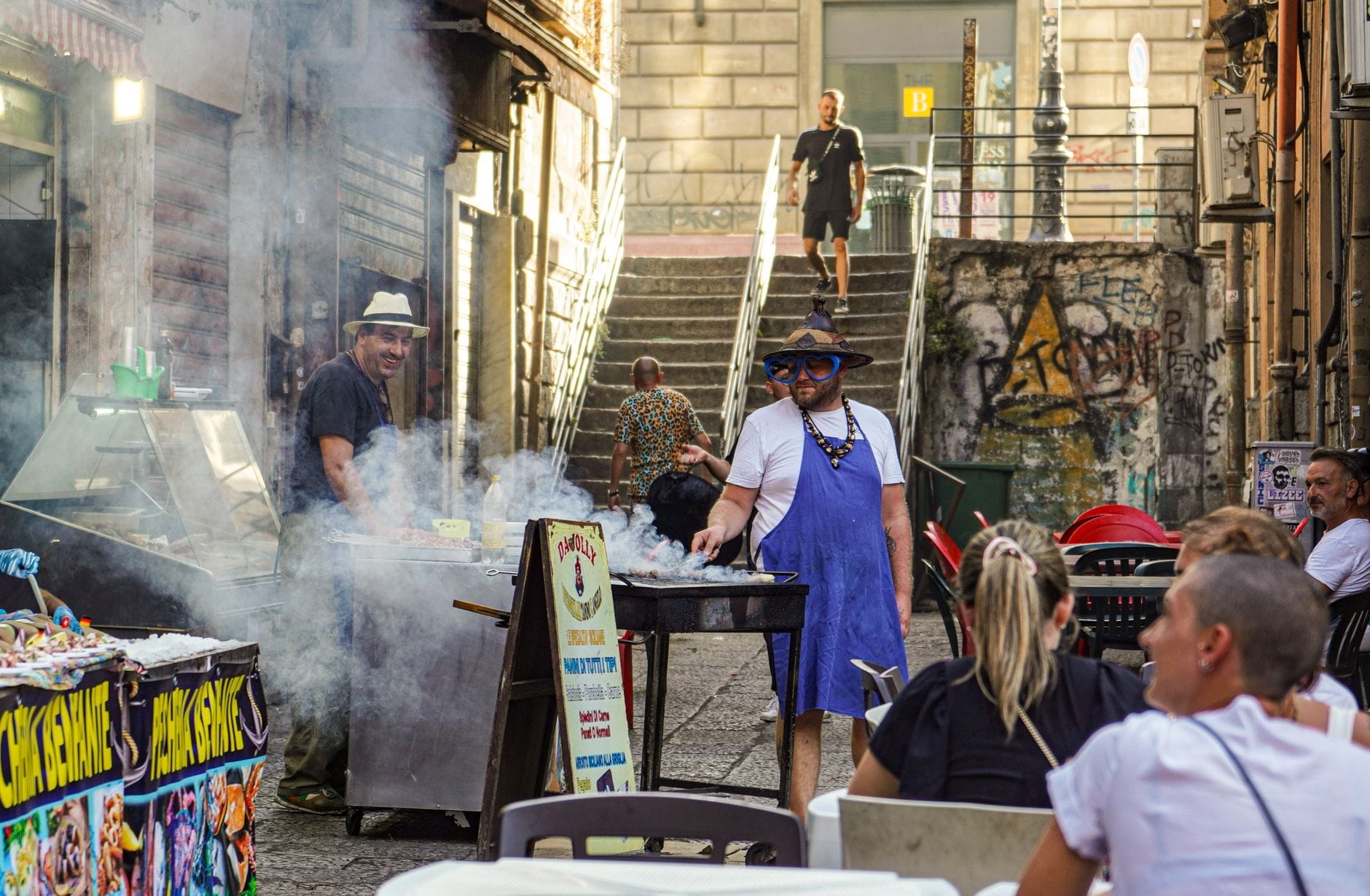
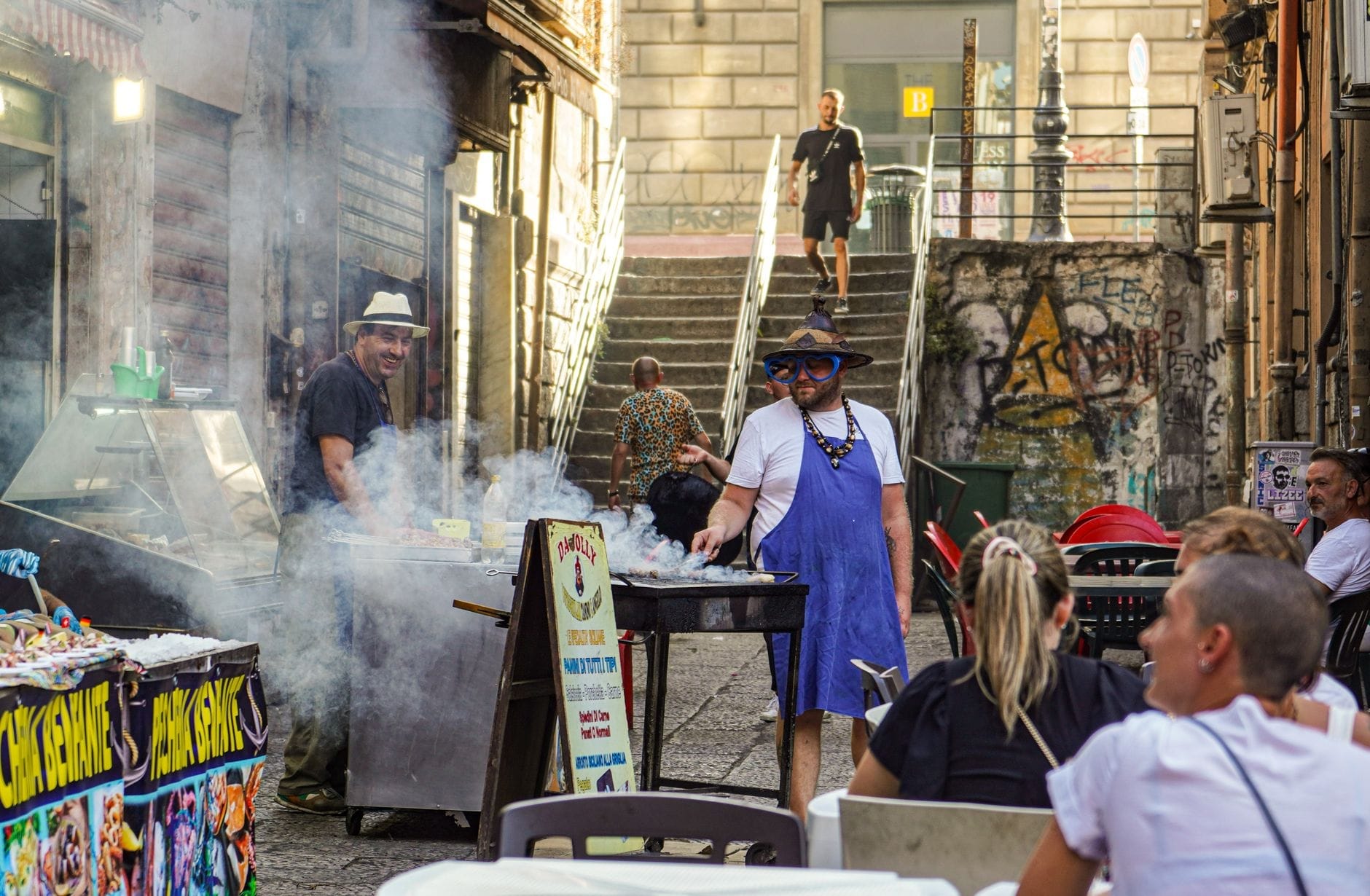
Sicily is an autonomous region of Italy and the largest island in the Mediterranean, with a food culture shaped by more than 2,500 years of successive rulers: Greeks, Romans, Arabs, Normans, Spaniards, and more. Each left a fingerprint on the cuisine, and nowhere is that layering more visible than in street food. Arab traders introduced rice, saffron, and citrus. Spanish rule entrenched a tradition of rich, fried foods. Norman influence brought offal cookery that persists in Palermo's markets to this day.
The result is a street food tradition that is markedly different from the pizza-slice and suppli culture of Rome, or the panino counters of Florence. Sicilian street food is grittier, more varied, and in many cases more historically complex. It is also extremely affordable by European standards: a full lunch from a market stall in Palermo's historic center can cost under €5.
ℹ️ Good to know
In Palermo and western Sicily, the fried rice ball is called arancina (feminine). In Catania and the east, it is arancino (masculine). This is not a trivial distinction: getting it wrong in the wrong city will raise eyebrows. Both are correct in their own territory.
Palermo Street Food: The Essential Dishes
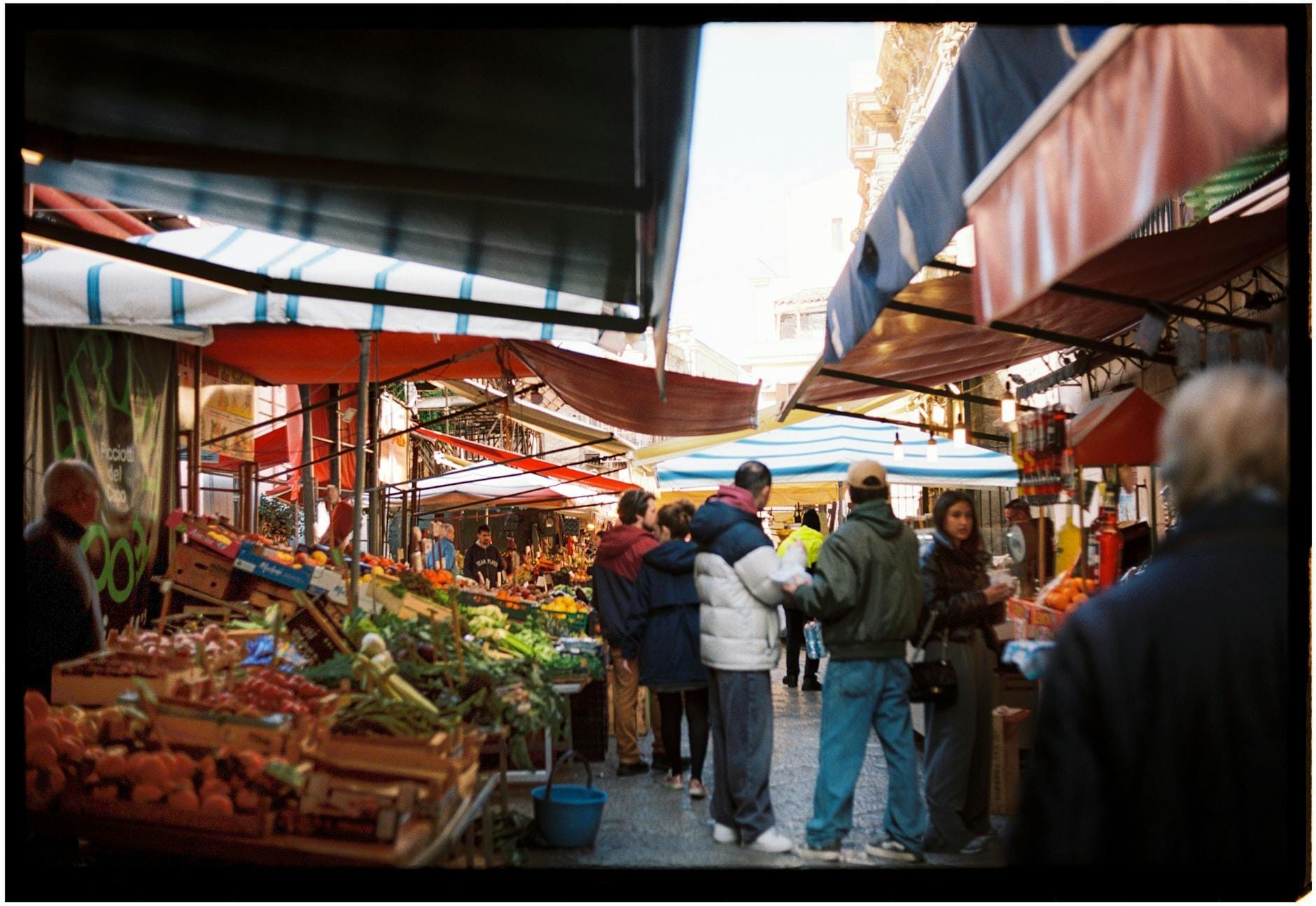
Palermo has a strong claim to being Italy's top street food city, and the three main markets: Ballarò, Vucciria, and Capo, are where that reputation is earned. Each operates from morning through late evening, though individual vendors keep their own hours. Come hungry, carry cash, and eat standing up.
- Arancina A fried rice ball filled with ragù (meat sauce) or prosciutto and cheese, coated in breadcrumbs. Expect to pay €2–3. Iconic and filling, this is the most practical introduction to Palermo street food.
- Pane e panelle A sesame roll stuffed with chickpea fritters, sometimes combined with potato croquettes called crocchè or cazzilli. Typically €2–2.50. Technically vegetarian and extremely satisfying.
- Pane con la milza (pani câ meusa) The most divisive dish in Palermo: thinly sliced veal spleen and lung, fried in lard, piled into a sesame roll with a squeeze of lemon. The 'maritata' version adds caciocavallo cheese or ricotta. Around €2.50–3. If you eat one adventurous thing in Sicily, this is it.
- Sfincione A thick, spongy pizza base topped with tomato, onion, anchovies, and caciocavallo cheese. Sold by the slice for €2–3. Softer and more bread-like than Neapolitan pizza, and often underrated by visitors who expect a crispy crust.
- Stigghiola Grilled lamb or kid intestines, sometimes wrapped around spring onions and cooked on a charcoal grill. €2.50–3. The smoke from the stigghiola grill is one of the defining smells of Vucciria on a weekend evening.
⚠️ What to skip
Pane con la milza and stigghiola contain offal and are cooked in animal fat. They are not suitable for vegetarians or those with certain dietary restrictions. However, every market also has vendors selling pane e panelle and arancine, so there are always alternatives nearby.
Catania Street Food: A Different Eastern Tradition
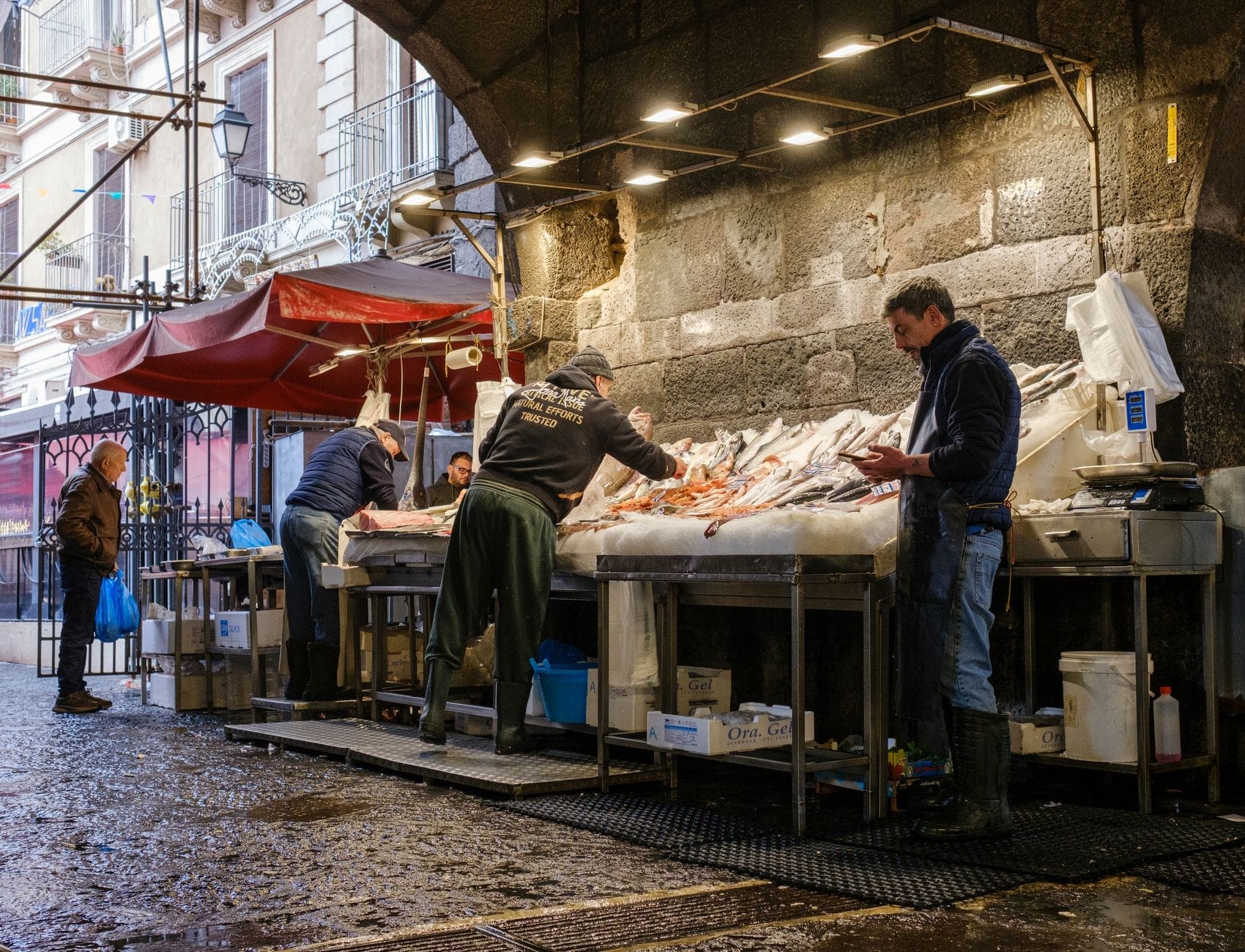
Catania is Sicily's second city and the gateway to Mount Etna. Its street food culture is shaped by proximity to the sea and a distinct Baroque urban identity. La Pescheria, the famous fish market just off Piazza del Duomo, is most active in the early morning and is the right place to start any food tour of the city.
- Arancino (ragù, peas, and cheese) Catania's version tends to be conical rather than round, and locals are passionate about this distinction. Find them at bars and fry shops throughout the city from early morning.
- Cipollina A puff pastry pocket filled with tomato, onion, ham, and melted cheese. A Catania specialty found at bars and pastry shops, particularly good warm from the oven in the morning.
- Pane con carne di cavallo Horse-meat sandwich, typically grilled or stewed, served in a roll. Not universally popular with international visitors, but a deeply traditional Catanese dish with roots in the city's working-class food history.
- Cartoccio di pesce A paper cone of mixed fried seafood, usually including small fish, squid rings, and shrimp. Best eaten near the port or the fish market. Expect to pay around €4–5 for a generous portion.
If you are combining a food tour with sightseeing, the area around Piazza del Duomo and Via Etnea offers a dense concentration of bars, pastry shops, and street vendors within easy walking distance.
Sweet Street Food: Cannoli, Granita, and More
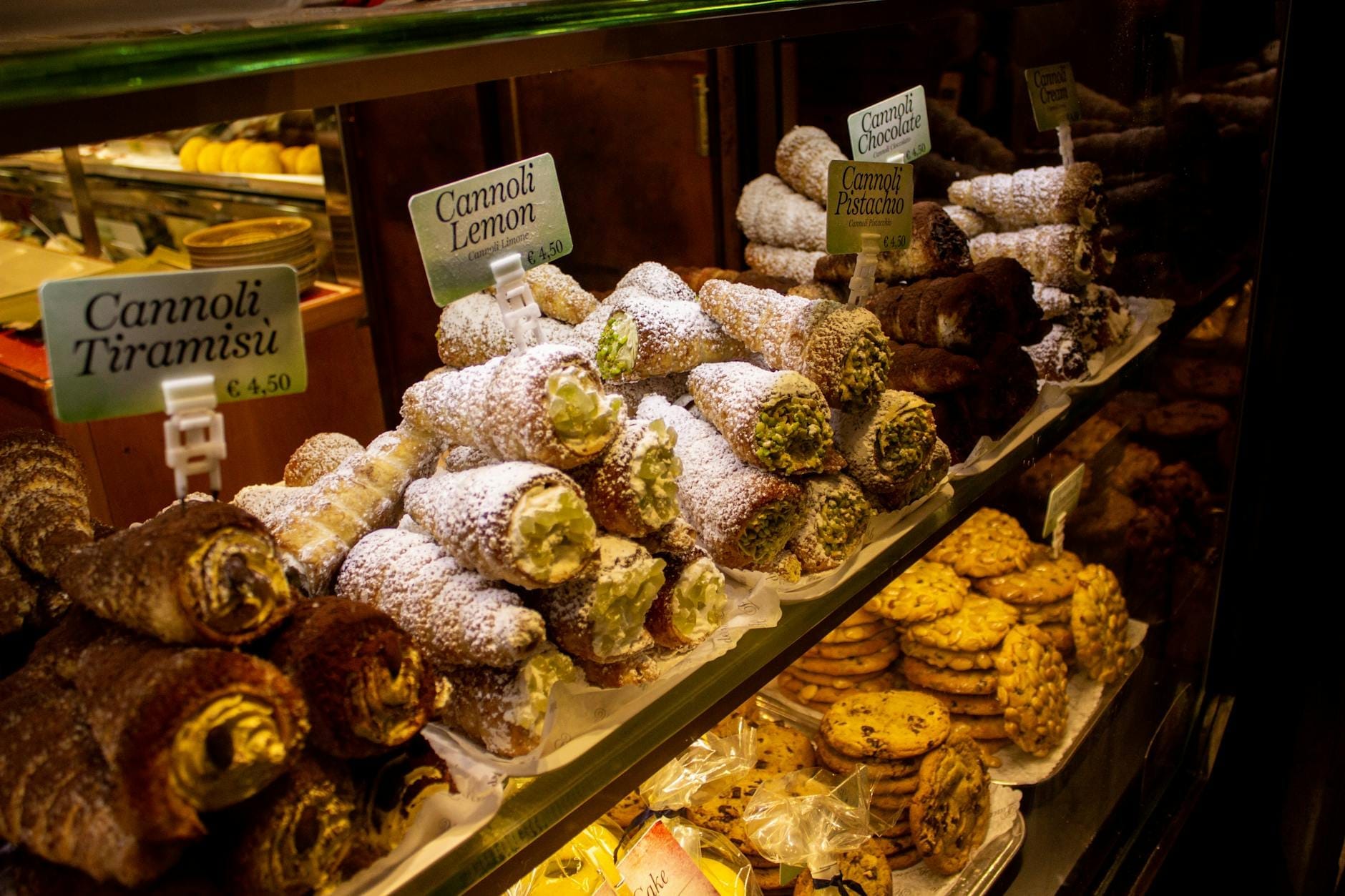
Sicilian sweet street food deserves its own section because it is genuinely world-class and often eaten at times that confuse visitors: granita with brioche for breakfast, cannoli at 10am, cassata in the middle of the afternoon. This is how locals do it, and there is no reason to fight it.
- Cannolo siciliano A fried pastry shell filled with sweetened sheep's milk ricotta, often studded with candied orange peel or dark chocolate chips. Eat it immediately after it is filled, not pre-filled from a display case. Price: €2.50–3 at good pastry shops.
- Granita con brioche Semi-frozen flavored ice served in a glass, paired with a soft, slightly sweet brioche bun for dunking. Common flavors include almond (mandorla), pistachio, lemon, mulberry (gelsi), and coffee. This is a full breakfast in eastern Sicily, particularly around Catania and Taormina, and it is magnificent.
- Iris A fried dough ball filled with sweetened ricotta, especially popular in Palermo. Less famous than cannoli but beloved locally.
- Frutta martorana Marzipan sculpted and painted to look exactly like fruit and vegetables. More of a confection than a street food, but sold at market stalls and pastry shops across the island. The craftsmanship can be extraordinary.
✨ Pro tip
For cannoli: always ask for it to be filled to order (riempilo adesso). Pre-filled cannoli left in a display case become soggy within minutes. Any good pastry shop will fill it fresh without hesitation.
When and Where: Markets, Timing, and Seasonal Notes
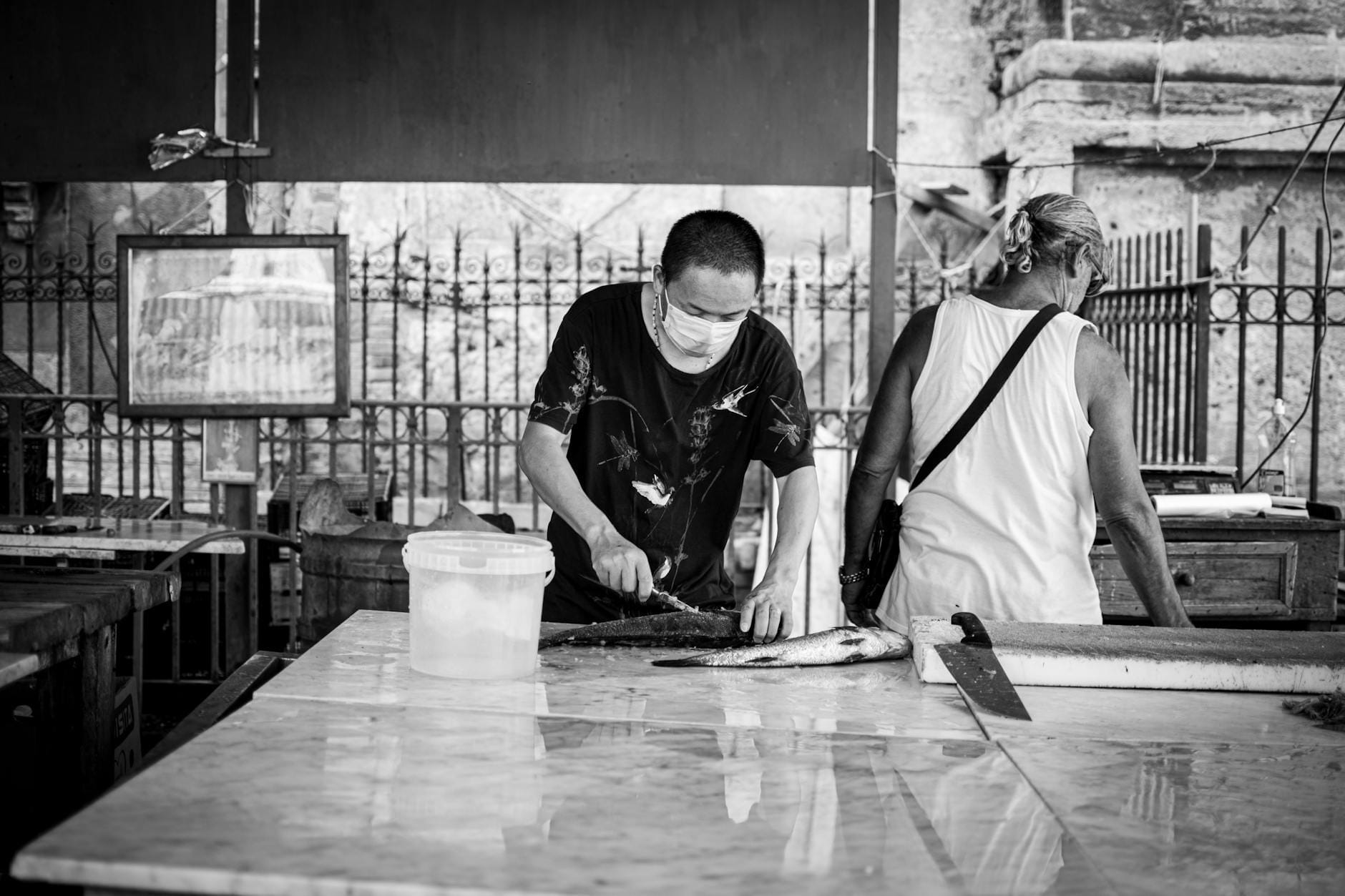
Street food in Sicily is available year-round, but the experience changes significantly by season and location. Summer brings the largest crowds and the best fried seafood. Spring and early summer are the best time for fresh tuna preparations, tied to the traditional mattanza fishing season. Granita is available all year at most bars, but it feels most right as a breakfast between May and October when the heat makes it genuinely necessary.
In Palermo, the Ballarò market in the Albergheria district is the most atmospheric and the most local-feeling of the three main markets. Vucciria, while historically important, has shifted somewhat toward a nightlife scene, especially on weekends. Capo market, running along Via Beati Paoli, tends to attract a mix of locals shopping for produce and visitors looking for street food. All three are best visited on weekday mornings when the produce stalls are fullest and the crowds thinnest.
In Catania, La Pescheria wraps up by late morning, so arrive before 11am to see it at full activity. The surrounding streets around the fish market have a cluster of bars and fry shops that stay open into the afternoon. If you are coming from Taormina or Siracusa for a day trip, day trips from Catania can be structured to include a morning market visit before heading out.
Practical Advice: Prices, Etiquette, and What to Avoid
Street food in Sicily's historic city centers is cheap by any standard: a full and satisfying street-food meal in Palermo's markets should cost €5–8 if you are selective. The prices listed here are for typical local stalls in Palermo's historic center and should be treated as a baseline, not a guarantee. Stalls in tourist-heavy areas around Taormina or at airport-adjacent restaurants charge significantly more.
- Arancina: €2.00–3.00
- Pane con la milza: €2.50–3.00
- Pane e panelle: €2.00–2.50
- Sfincione (per slice): €2.00–3.00
- Stigghiola: €2.50–3.00
- Cartoccio di pesce (fried seafood cone): €4.00–5.00
- Cannolo: €2.50–3.00
- Granita con brioche: €3.00–4.50
Cash is strongly preferred at market stalls, though many fixed shops now accept cards. Eating while walking is normal and expected. Asking to taste before buying is accepted at granita bars. For a broader look at what and how Sicilians eat beyond street food, the Sicily food guide covers restaurants, regional specialties, and wine pairings.
💡 Local tip
If you are unsure what to order at a market stall and do not speak Italian, pointing works perfectly. Most vendors are accustomed to curious visitors and will often offer a small taste unprompted. Do not let the language barrier stop you from engaging with vendors directly.
Street Food Beyond Palermo and Catania
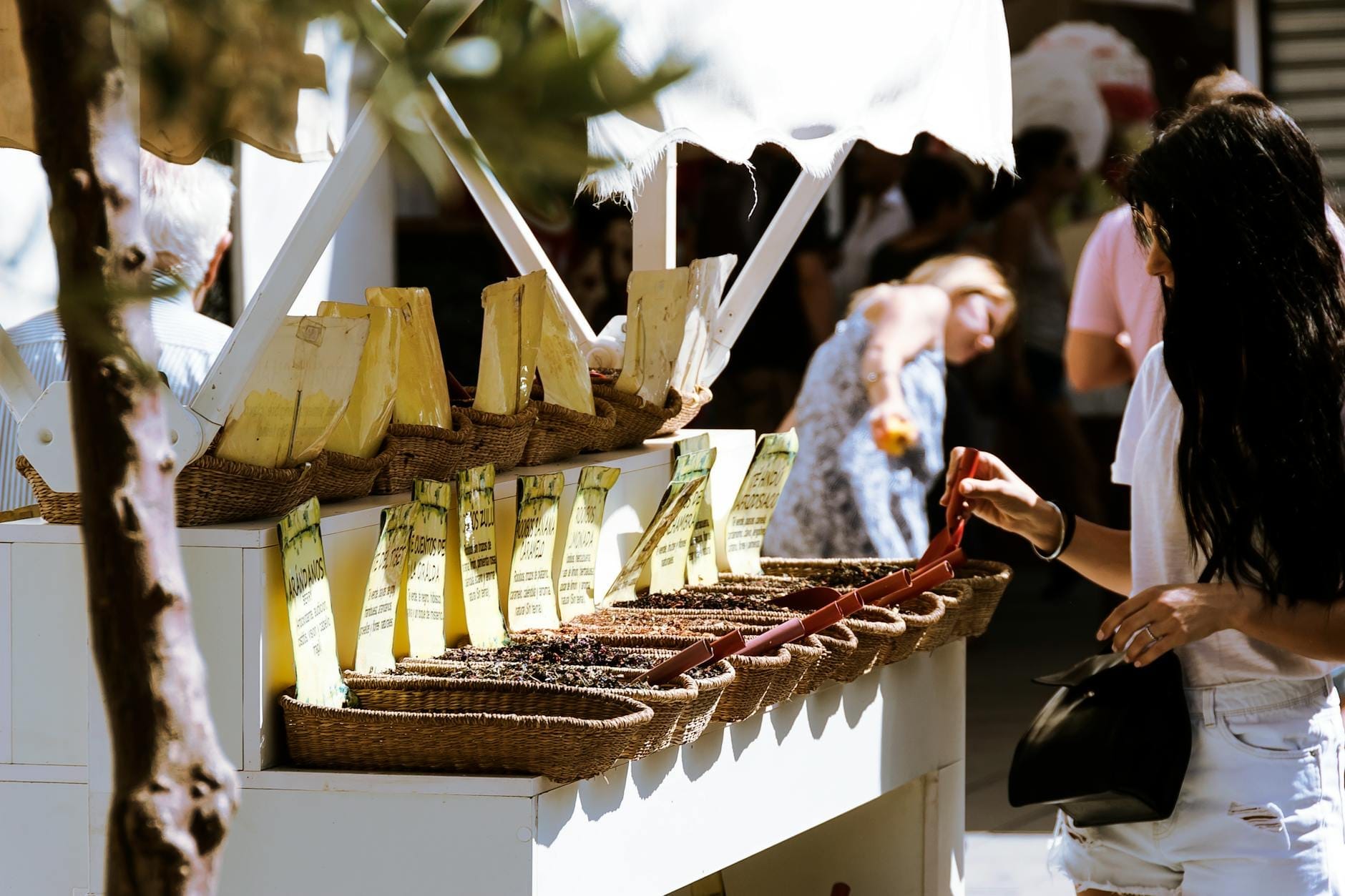
While Palermo and Catania dominate the conversation, street food traditions exist across the island. In Siracusa, the Ortigia market on Via Trento is a compact but excellent spot for local produce and quick bites, including fresh arancini and panini with local cheese. In the southeast, Ragusa Ibla and the surrounding Baroque towns are better known for pastry culture than savory street food, with chocolate from nearby Modica earning international attention.
In the west, Trapani and the surrounding salt flats area has its own food identity: couscous (a direct legacy of North African proximity), fresh-caught fish, and local pastries flavored with almonds and jasmine. The town of San Vito Lo Capo, about 40km north of Trapani, hosts an annual international couscous festival in September. For western Sicily's full food landscape, combined with beach and nature visits, see the guide to San Vito Lo Capo and the Trapani salt pans area.
FAQ
What is the most famous street food in Sicily?
In Palermo, pane con la milza (spleen sandwich) and arancine (fried rice balls) are the most iconic. In Catania, arancini and cartoccio di pesce (fried seafood cone) are equally well-known. Island-wide, the cannolo siciliano is the most recognized Sicilian food export, though it is as much a pastry-shop item as a street food.
Is Sicilian street food suitable for vegetarians?
Yes, with some navigation. Pane e panelle (chickpea fritters), crocchè (potato croquettes), arancine filled with butter and cheese, and most sweet street foods are vegetarian. Offal dishes like pane con la milza and stigghiola are not. Market vendors selling panelle are found at every major Palermo market and are easy to identify.
What is the difference between arancina and arancino?
They are the same dish: a fried rice ball filled with ragù or other fillings. In Palermo and western Sicily, the feminine form 'arancina' is correct. In Catania and eastern Sicily, the masculine 'arancino' is standard. The shape also differs: Palermo versions are rounder, while Catania versions are often conical.
Where is the best place to eat street food in Palermo?
The Ballarò market in the Albergheria district is the most local-feeling and comprehensive. Vucciria is excellent in the evening for stigghiola and a lively atmosphere. Capo market along Via Beati Paoli is a good middle ground. All three are walkable from central Palermo.
How much does street food cost in Sicily?
Most savory street food in Palermo's markets costs €2–3 per item. A fried seafood cone in Catania runs €4–5. Cannoli and granita with brioche are typically €2.50–4.50 depending on the shop. Expect to pay more at tourist-oriented restaurants or in resort towns like Taormina. Prices listed here are indicative for local market stalls and should be verified at time of visit.