San Vito Lo Capo Beach: Sicily's Most Spectacular Stretch of Sand
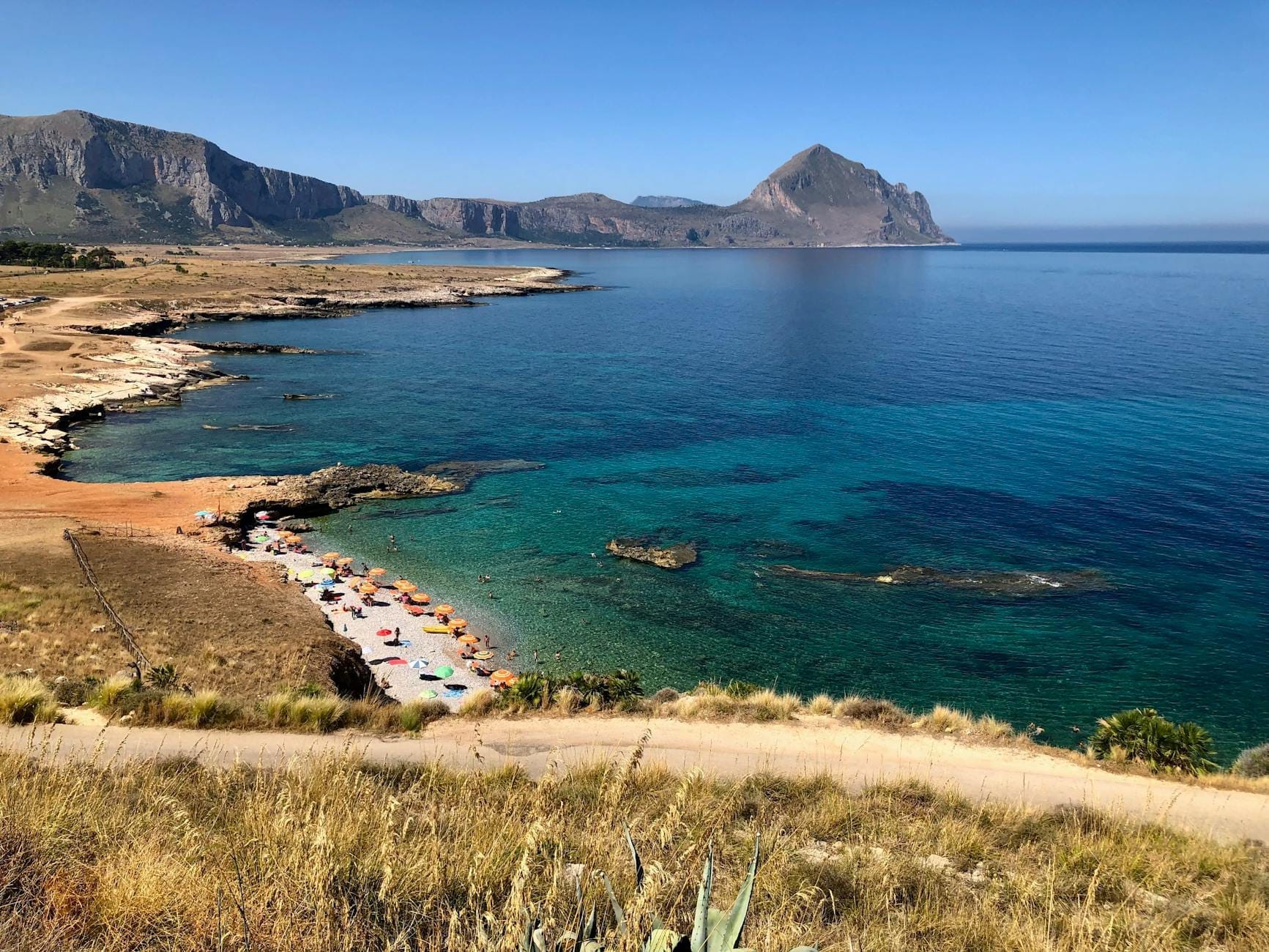
San Vito Lo Capo Beach in the Province of Trapani is a nearly 3-kilometer arc of fine white sand backed by the dramatic cliffs of Monte Monaco. The water is shallow, calm, and a shade of turquoise that feels almost implausible this close to the European mainland. It draws crowds for good reason, but knowing when and how to visit makes all the difference.
Quick Facts
- Location
- San Vito Lo Capo, Province of Trapani, northwestern Sicily, Italy
- Getting There
- By car via SS187 from Castellammare del Golfo; buses run from Trapani and Palermo (check current schedules locally)
- Time Needed
- Half day minimum; most visitors stay a full day
- Cost
- Free to access; private lido rentals (two sunbeds and umbrella) reported around €30 per day — verify on arrival
- Best for
- Families, swimmers, landscape photographers, and anyone who takes beach quality seriously
- Official website
- www.sanvitoweb.com/en/sanvitolocapo-village
What Makes This Beach Different
Sicily has no shortage of coastline — roughly 1,484 kilometers of it — but San Vito Lo Capo Beach occupies a different category. The sand here is fine and almost white, the result of crushed coral and limestone rather than typical Mediterranean gravel or volcanic material. It stays cool underfoot even in the height of summer, which is a small but real comfort when you're walking from your towel to the water at midday in August.
The beach runs for nearly 3 kilometers along the northwestern tip of Sicily, framed on one side by the sea and on the other by the vertical limestone face of Monte Monaco, which rises sharply from the coastal plain and gives the whole scene an almost theatrical quality. The water is shallow far out from shore, which keeps currents gentle and the color consistently striking: a gradient from pale turquoise at the edges deepening to a richer blue-green further out.
ℹ️ Good to know
The beach is a public natural site with no entrance fee. Private lido operators rent sunbeds and umbrellas for a fee; free public sections are distributed along the beach, with significant stretches toward both ends of the arc. Arrive early to secure a good spot in either zone during July and August.
The Beach at Different Times of Day
Early morning, roughly before 8:30am, is when San Vito Lo Capo Beach reveals its best character. The light comes in low from the east, catching the water at an angle that intensifies the color contrast between the pale sand and the deep blue of the Tyrrhenian. The town behind the beach is quiet, the smell of salt and seaweed is strong and clean, and you can walk the full length of the arc without stepping around another towel. Local residents often swim at this hour, and the atmosphere is unhurried.
By mid-morning the lido operators are fully set up and the beach begins filling steadily. By noon in July and August it is genuinely crowded — not unpleasantly so, but densely enough that finding a free patch of sand in the central section takes patience. The noise level rises: children, music from a few beach bars, the slap of paddle bats. For families with young children who need shade structures and facilities close at hand, this rhythm works well.
Late afternoon, from around 5pm onward, the crowd thins noticeably as families head back to their accommodation. The light turns golden, Monte Monaco begins to cast a long shadow across the northern section of the beach, and the water temperature — which typically reaches the mid‑20s °C in August — feels most pleasant for an unhurried swim. This is also when the beach is most photogenic without needing to work hard to exclude other people from the frame.
Tickets & tours
Hand-picked options from our booking partner. Prices are indicative; availability and final rates are confirmed when you complete your booking.
Etna South Upper Craters Guided Excursion from Taormina
From 42 €Instant confirmationFree cancellationTaormina private tour with an expert guide
From 42 €Instant confirmationFree cancellationIsola Bella boat tour and snorkeling
From 55 €Instant confirmationFree cancellationSyracuse and Ortygia Island guided tour from Taormina
From 65 €Instant confirmationFree cancellation
Getting to San Vito Lo Capo
San Vito Lo Capo sits at the end of a cape in the northwestern corner of Sicily, which means there is essentially one road in and one road out. The most straightforward approach by car is to take the A29 motorway toward Castellammare del Golfo and then follow the provincial roads (including the SP16/SS187 corridor) northward to the town. The drive from Trapani takes roughly 50 minutes to an hour depending on traffic; from Palermo plan for around 90–100 minutes.
Bus connections run from both Trapani and Palermo, operated mainly by regional carriers such as AST and Russo Autoservizi. Schedules vary seasonally and should be confirmed before travel — check locally or via the regional transport operators. If you are already based in western Sicily and considering day trip options, the beach pairs naturally with a visit to the Zingaro Nature Reserve, which lies along the coastal road between Castellammare del Golfo and San Vito Lo Capo and can be visited on the same day.
⚠️ What to skip
Parking in San Vito Lo Capo is limited and fills quickly during peak summer weeks. The town operates paid parking areas on the outskirts — budget extra time in July and August and expect to walk 10-15 minutes from your car to the beach.
The nearest major airports are Trapani-Birgi (IATA: TPS), about 60 kilometers away, and Palermo Falcone Borsellino (IATA: PMO), roughly 90 kilometers distant. For a broader sense of how to approach western Sicily, see the guide to getting around Sicily.
Swimming, Safety, and Accessibility
The water at San Vito Lo Capo is consistently praised for its clarity and gentleness. The seabed shelves gradually from the shoreline, making the water knee-deep a surprising distance out. This is one of the few Sicilian beaches where young children can wade freely without parents needing to stay within arm's reach at every moment. There are no significant undertow risks in calm conditions, though as with any open beach, conditions can change with weather.
The beach has active accessibility provisions. The 'ZERO BARRIERS' project (Progetto ZERO BARRIERE) enables people with reduced mobility to access the water, with dedicated equipment and assistance available through participating lido operators. If this is relevant for your group, contact the local tourism office or specific lidos in advance to confirm current availability and booking requirements.
Lifeguard coverage operates during the main summer season on the supervised sections near private lidos. The free public sections of the beach are generally unsupervised, so swimmers should exercise standard sea awareness, particularly with children.
The Town Behind the Beach
San Vito Lo Capo itself is a small, low-rise resort town with a pedestrianized main street, Via Savoia, running parallel to the beach. It functions almost entirely around the summer season, with most restaurants, shops, and accommodation operating from late spring through September and reduced services outside those months. The town has a straightforward charm without being particularly historic: the main landmark is a 15th‑century‑origin fortified sanctuary, the Santuario di San Vito, which sits close to the seafront.
Food options along the front range from casual beach bars to sit-down restaurants focused on fresh fish and seafood. Couscous is a notable local speciality here — San Vito Lo Capo hosts the annual Cous Cous Fest every September, a food and world music event that reflects the town's cultural proximity to North Africa across the Strait of Sicily. For more on what to eat across the region, the Sicily food guide covers the broader culinary landscape.
Outside the beach strip, the landscape around the cape is worth exploring on foot or by bicycle. The rocky headland itself, with Monte Monaco rising behind it, offers trail walking with views back across the beach arc and out toward the Egadi Islands on clear days. This is not a town for evening nightlife or cultural tourism — it is entirely a beach destination, and visitors who want anything else from Sicily will need to travel to Trapani or further.
When to Go: Seasons and Crowds
June and early July offer the best balance of warm sea temperatures, long daylight hours, and manageable crowds. By late July and especially August, San Vito Lo Capo is extremely popular with Italian holidaymakers, particularly families from Palermo and Trapani who know the beach well. The central sections can feel genuinely congested. September is often cited as the sweet spot: the sea remains warm, the crowds thin after the Italian school year resumes, and the light is softer. For a broader seasonal view of the region, see the best time to visit Sicily.
Outside the May-to-October window, San Vito Lo Capo is very quiet. Some accommodation and most restaurants close entirely between November and March. The beach itself is still accessible and can be genuinely beautiful in winter light, but there are almost no services and little reason to make it a primary destination during those months.
💡 Local tip
For photography, the best natural light falls on the beach in late afternoon, when Monte Monaco's limestone glows warm and the water color deepens. Early morning gives the clearest reflections. Avoid shooting at midday in summer — the overhead sun washes out the color contrast that makes the beach so visually striking.
Who This Beach Is Not For
If you are looking for solitude, wild coastline, or dramatic rocky swimming spots, San Vito Lo Capo in summer will probably disappoint. The beach is genuinely beautiful, but it is not a secret — it is consistently ranked among the most popular beaches in Sicily and attracts corresponding crowds from June through August. Travelers who prefer emptier settings or more rugged coastal landscapes should consider the Zingaro reserve or some of the more remote beaches along the Sicilian coastline.
Visitors who are primarily interested in history and archaeology will also find limited content in the town itself. San Vito Lo Capo is a pure beach destination. The nearest significant cultural sites are in Trapani, including the salt pans and the historic centre, and both are worth combining with a beach visit if you are spending multiple days in the area.
Insider Tips
- The free public sections of the beach are best at the far northern end of the arc, near the cape headland itself. This section is quieter, slightly coarser in sand texture, and has cleaner sightlines toward Monte Monaco for photography.
- If you are visiting in September, book accommodation at least two weeks ahead because the Cous Cous Fest draws international visitors and fills the town's limited rooms quickly.
- The parasol pines along the access paths behind the beach provide genuine shade for a midday break without paying lido prices — useful if you are traveling on a budget.
- The road between Castellammare del Golfo and San Vito Lo Capo along the SS187 is one of the more scenic coastal drives in western Sicily. Leave extra time to stop and take it in rather than rushing straight to the beach.
- Water shoes are worth bringing. While the central beach has fine sand, the shallows near the northern end have some flat rock shelves that are slippery when wet.
Who Is San Vito Lo Capo Beach For?
- Families with young children who need shallow, calm water and accessible facilities
- Beach photographers seeking dramatic natural backdrops without hiking to remote locations
- Couples looking for a comfortable base in western Sicily with easy access to the Zingaro reserve and Trapani
- Swimmers who prioritize water clarity and temperature above everything else
- Visitors planning a late-season September trip when the weather is still warm but the crowds have thinned
Nearby Attractions
Other things to see while in Trapani & the West:
- Cave di Cusa
Cave di Cusa is a 2-km stretch of open-air ancient quarry in western Sicily where Greek stonemasons abandoned their work mid-cut in 409 BC, leaving colossal column drums embedded in calcarenite rock. Part of the Selinunte Archaeological Park, it is one of the most atmospheric and least crowded ancient sites in Italy.
- Cretto di Burri
The Grande Cretto di Gibellina is one of the largest land art works on Earth: 85,000 square metres of white concrete encasing the ruins of a town destroyed by the 1968 Belice earthquake. Created by Alberto Burri, it is simultaneously a tomb, a monument, and a walk through absence. Entry is free and the site is open-air, but reaching it requires a car.
- Favignana
Favignana, the largest of the Aegadian Islands off western Sicily, is a compact limestone island with crystalline coves, a dramatic tuna-fishing heritage, and terrain flat enough to circle by bicycle in a day. Getting there takes around 30–40 minutes from Trapani by hydrofoil, and there is no entrance fee to the island itself.
- Marettimo
The westernmost of Sicily's Egadi Islands, Marettimo is a car-free island of limestone peaks, sea caves, and water so clear it borders on unreal. Reached only by hydrofoil or ferry from Trapani, it rewards travelers willing to swap convenience for one of Italy's most genuinely uncommercialised island experiences.