Zingaro Nature Reserve: Sicily's Wild Coastal Sanctuary
Stretching 7 km of undeveloped coastline between San Vito Lo Capo and Scopello, the Zingaro Nature Reserve is Sicily's oldest protected area and one of its most rewarding outdoor experiences. No roads, no development — just limestone cliffs, hidden coves, and trails through Mediterranean scrub.
Quick Facts
- Location
- Between San Vito Lo Capo and Castellammare del Golfo, Province of Trapani, Sicily
- Getting There
- By car to the north entrance (San Vito Lo Capo) or south entrance (Scopello/Castellammare del Golfo); no public road access inside the reserve
- Time Needed
- 2–6 hours depending on route; full 7 km coastal trail takes a full day
- Cost
- Approx. €5 adults, €3 children (11–14), free under 11 (verify current rates at riservazingaro.it)
- Best for
- Hikers, swimmers, nature lovers, photography, escaping summer crowds
- Official website
- www.riservazingaro.it/en/home
What the Zingaro Nature Reserve Actually Is
The Riserva Naturale Orientata dello Zingaro, known in English as the Zingaro Nature Reserve, holds a specific distinction in Sicilian environmental history: it was the first nature reserve established in Sicily, created on 6 May 1981. That date matters because it was not a government-led initiative. Local residents and activists physically blocked the construction of a coastal road through the area, forcing authorities to protect it instead. The reserve exists because people fought for it.
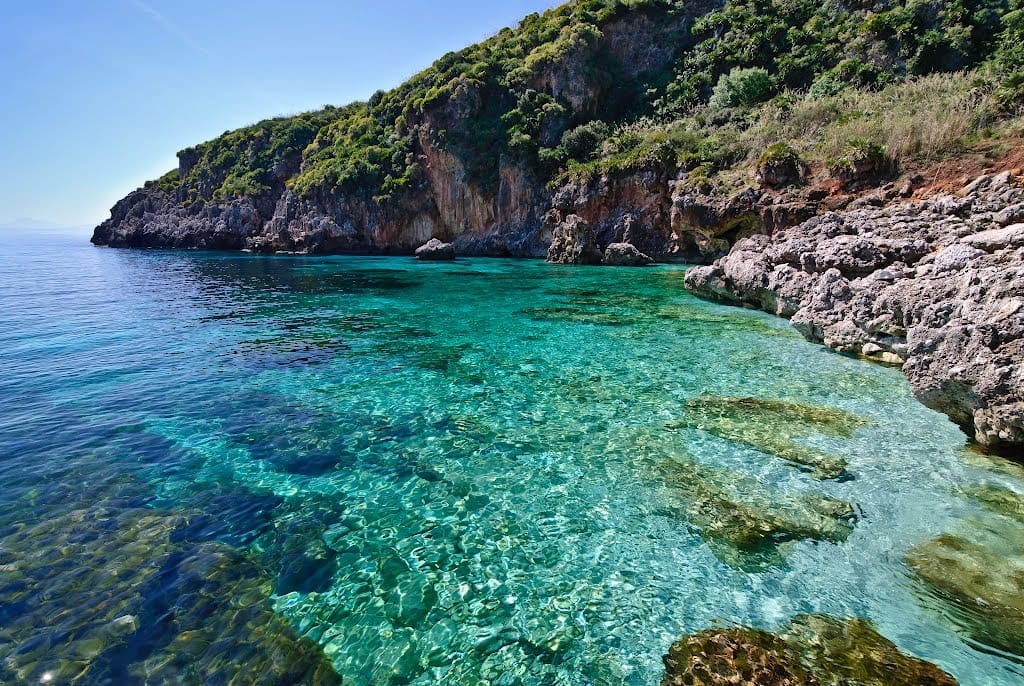
What they protected is a 7 km stretch of largely untouched coastline covering roughly 1,600 hectares, wedged between the resort town of San Vito Lo Capo to the north and the hamlet of Scopello to the south. There are no roads inside. No hotels, no bars, no car parks within the reserve boundary. What you do find: limestone cliffs dropping into clear water, five small coves with pebble-and-sand beaches, footpaths through maquis scrub, and a silence that feels genuinely rare on a Sicilian summer coast.
⚠️ What to skip
Important: The reserve was temporarily closed following a fire on 29 August 2020. Check the official website (riservazingaro.it) for current access status before planning your visit.
The Lay of the Land: Entrances, Trails, and Coves
The reserve has two entry points. The northern entrance sits just outside San Vito Lo Capo, reachable by car along the SP63 road. The southern entrance is near Scopello, a small fishing hamlet that has become one of western Sicily's most photographed spots. Most day visitors enter from the south because Scopello is easier to reach from Palermo and Trapani, and because the first coves appear within a short walk of the gate.
The main coastal trail runs the full 7 km length of the reserve, connecting both entrances. It is not a technically demanding route, but it is not flat either: the path climbs and descends repeatedly over rocky terrain, and the total elevation change across the full traverse adds up. Allow a full day if you plan to walk end-to-end and swim at multiple coves. If you have only a few hours, the southern entrance gives quickest access to the closest beaches.
The five main coves along the trail each have a different character. Some sit directly below the path, requiring a short scramble down. The water in all of them runs from pale turquoise in the shallows to deep blue further out, and the clarity is exceptional on calm days. There are also several smaller museums and interpretation shelters along the route, which provide context on the reserve's flora, fauna, and fishing heritage.
💡 Local tip
If you enter from the south (Scopello), the first cove appears within about 20 minutes of walking. For a half-day visit, go as far as the second or third cove, swim, and return the same way. You will not need to complete the full traverse to have a worthwhile experience.
Tickets & tours
Hand-picked options from our booking partner. Prices are indicative; availability and final rates are confirmed when you complete your booking.
Boat trip to Ortigia Island, Sea Caves, and Plemmirio Nature Reserve
From 40 €Instant confirmationFree cancellationTour of the Pantalica Nature Reserve
From 250 €Instant confirmationFree cancellationWalking tour through Corleone's history and nature
From 49 €Instant confirmationFree cancellationEtna South Upper Craters Guided Excursion from Taormina
From 42 €Instant confirmationFree cancellation
How the Experience Changes Through the Day
Early morning inside the reserve, before 9am, is a different world from midday. The light hits the cliffs at a low angle, the sea is glassy, and the only sounds are cicadas and the occasional splash of a fish. The maquis scrub — a dense mix of lentisk, euphorbia, wild fennel, and rosemary — releases its oils in the morning warmth, and the combined smell is strong and resinous, one of the most distinctive sensory details of the reserve.
By 10:30am in peak summer, the first coves from the southern entrance begin to fill. By noon, the most accessible beaches are crowded, and the shade on the trail itself becomes genuinely important. The rock absorbs heat through the afternoon, and unshaded stretches between coves can feel punishing in July and August. Bring substantially more water than you think you will need: there are water taps at intervals along the trail, but they are not at every rest point, and the heat is deceptive.
Late afternoon, after 4pm, offers the best light for photography and noticeably thinner crowds as day-trippers begin leaving. The coves facing west catch the sun until early evening, and the colour of the water deepens as the angle changes. If you have the option to stay into the evening, the reserve empties considerably after 5pm.
Flora, Fauna, and Ecological Significance
The reserve protects a surprisingly rich cross-section of Mediterranean coastal ecology. The limestone terrain and the relative absence of human disturbance since 1981 have allowed plant communities to develop that have been degraded elsewhere across Sicily's coast. Over 700 plant species have been recorded within the reserve boundaries, including several endemic to the Sicilian coast.
The bird life is the ecological highlight for serious naturalists. Bonelli's eagle and the peregrine falcon nest on the higher cliffs. The reserve is also one of the few remaining Sicilian habitats for the Sicilian wall lizard, and the underwater environment within the coves supports sea grass meadows and significant fish populations. The clarity of the water is not incidental: it is partly a product of the protected status, which limits boat traffic and anchoring damage.
For those interested in Sicily's broader protected landscapes and wildlife, the Vendicari Nature Reserve on the southeast coast offers a contrasting experience, with wetland habitat and migratory bird populations rather than the Zingaro's rocky coastal drama.
Getting There and Practical Logistics
A car is by far the most practical way to reach either entrance. From Palermo, the southern entrance via Scopello takes roughly 75–90 minutes along the A29 autostrada toward Trapani, exiting at Castellammare del Golfo. From Trapani, the drive is around 40 minutes. The northern entrance, approached through San Vito Lo Capo, adds another 20 minutes from the same exit. Parking is available outside both entrances, and the admission fee reportedly covers all-day parking as well as entry.
If you are combining the reserve with other western Sicily sites, Scopello's historic tuna fishery sits just minutes from the southern entrance and is worth the short detour before or after your hike. The combination of the old tonnara and the reserve trail makes for a full and varied day.
Those without a car face a genuine challenge. San Vito Lo Capo is served by seasonal buses from Trapani, and in peak summer some organised day tours depart from Palermo, but independent access by public transport is complicated and slow. If getting around Sicily without a car is your situation, this is one attraction where the logistics genuinely matter.
ℹ️ Good to know
What to bring: at least 2 litres of water per person in summer, sun protection, footwear with grip (the trail surface is loose rock and pebble in places), a towel and swimwear, and some food. The reserve has no commercial facilities inside. Cash for the entrance fee is advisable.
Best Time to Visit and Seasonal Honesty
May and June are the ideal months. The trails are navigable without punishing heat, the wildflowers are at their peak, the sea is warm enough to swim comfortably, and the crowds are a fraction of July and August. September and early October are also excellent for swimming and hiking as the summer heat softens.
July and August are the most popular months, and the most demanding. The heat on exposed sections of the coastal trail is serious, the parking areas fill early, and the closest coves become genuinely packed by late morning. If you are visiting in summer, aim to be at the entrance gate before 8:30am. For broader context on planning a Sicilian trip around the seasons, the best time to visit Sicily guide covers the trade-offs in more detail.
The official site notes that camping shelters within the reserve are granted only between October and May, suggesting the reserve has a quieter off-season character worth considering for those who prefer solitude over beach swimming. Winter visits are possible on mild days and the trail can be walked with very few other people present, though some facilities may be limited.
Accessibility and Who Should Think Twice
The reserve is not wheelchair accessible. The coastal trail crosses rocky, uneven terrain with significant gradients in several sections, and reaching most of the swimming coves requires stepping down over loose rock or pebble. Visitors with limited mobility will find the experience difficult and potentially unsafe beyond the reserve entrances. The reserve's own infrastructure, including path surfaces and beach access, is not designed for universal accessibility.
Visitors expecting a groomed beach experience will also be disappointed. The coves are beautiful but the swimming surfaces are pebble and rock, not sand. There are no sunbeds, umbrellas for hire, or beach bars. This is a working nature reserve, not a beach resort. If that distinction matters to you, factor it into your decision.
Families with young children can visit successfully, but the walk to the coves requires children who are comfortable on uneven paths. For a more relaxed family beach day in the Trapani area, San Vito Lo Capo — just north of the reserve's entrance — offers a long sandy beach with all facilities and is one of the best family beaches on Sicily's west coast.
Insider Tips
- The southern entrance near Scopello is more popular and its first coves fill fastest. If you want a quieter experience, enter from the north at San Vito Lo Capo and walk south: you will encounter the more remote sections of the trail first and reach the busier coves only on your return, by which time the afternoon crowd has begun thinning.
- The water taps inside the reserve are positioned at shelter and museum points, not at every cove. Mark their locations on a map before entering so you know how far each tap is from your planned stopping points. Running out of water on exposed sections of the trail is a real risk in summer.
- Snorkelling in the coves closest to both entrances is good, but the clearest water and least disturbed marine life tend to be in the central coves, furthest from either entrance. The extra walking distance keeps most visitors away.
- The admission fee is collected at the entrance gates, which are staffed. If you arrive very early (before gates open officially), some visitors walk in and pay on the way back; confirm current gate hours at the official website before relying on this.
- Combining a morning at the Zingaro with an afternoon at Scopello's tonnara works well logistically if you park at the southern entrance. The tonnara is a five-minute drive from the car park, and the light on the old tuna fishery building is best in late afternoon.
Who Is Zingaro Nature Reserve For?
- Hikers who want a full-day coastal trail with regular swimming stops
- Photographers looking for dramatic limestone cliff and clear-water compositions away from resort crowds
- Nature enthusiasts interested in Mediterranean plant communities and cliff-nesting raptors
- Travellers using Trapani or western Sicily as a base who want a full day out of the city
- Swimmers prioritising water clarity over sandy beaches
Nearby Attractions
Other things to see while in Trapani & the West:
- Cave di Cusa
Cave di Cusa is a 2-km stretch of open-air ancient quarry in western Sicily where Greek stonemasons abandoned their work mid-cut in 409 BC, leaving colossal column drums embedded in calcarenite rock. Part of the Selinunte Archaeological Park, it is one of the most atmospheric and least crowded ancient sites in Italy.
- Cretto di Burri
The Grande Cretto di Gibellina is one of the largest land art works on Earth: 85,000 square metres of white concrete encasing the ruins of a town destroyed by the 1968 Belice earthquake. Created by Alberto Burri, it is simultaneously a tomb, a monument, and a walk through absence. Entry is free and the site is open-air, but reaching it requires a car.
- Favignana
Favignana, the largest of the Aegadian Islands off western Sicily, is a compact limestone island with crystalline coves, a dramatic tuna-fishing heritage, and terrain flat enough to circle by bicycle in a day. Getting there takes around 30–40 minutes from Trapani by hydrofoil, and there is no entrance fee to the island itself.
- Marettimo
The westernmost of Sicily's Egadi Islands, Marettimo is a car-free island of limestone peaks, sea caves, and water so clear it borders on unreal. Reached only by hydrofoil or ferry from Trapani, it rewards travelers willing to swap convenience for one of Italy's most genuinely uncommercialised island experiences.