Vendicari Nature Reserve: Sicily's Wildest Coastal Sanctuary
Stretched along the Ionian coast between Noto and Portopalo di Capo Passero, Vendicari Nature Reserve is 1,500 hectares of wetland, sandy beaches, and Byzantine ruins largely untouched by mass tourism. It is one of the most rewarding natural experiences in southeastern Sicily, whether you come for the birdlife, the solitude, or the sea.
Quick Facts
- Location
- Contrada Vendicari, 96017 Noto (SR), Syracuse Province, Sicily — on the Ionian coast between Noto and Portopalo di Capo Passero
- Getting There
- Car is the most practical option: exit at Noto from the A18, then follow SS115 and SP19 toward Torre Vendicari. Also reachable by bike from Noto. Five entrances with parking.
- Time Needed
- Half day minimum; a full day allows you to walk the full trail network, visit the ruins, and swim
- Cost
- Small entrance fee per person (around €3.50–4.00, varies by season and concessions — confirm on site or via local tourist offices). Parking is available at all entrances.
- Best for
- Birdwatchers, nature walkers, photographers, families seeking uncrowded beaches, and anyone wanting coastal Sicily without the resort crowds
- Official website
- www.italia.it/en/sicily/siracusa/vendicari-nature-reserve
What Vendicari Actually Is
The Riserva Naturale Orientata Oasi Faunistica di Vendicari, to use its full Italian name, is a protected coastal reserve established by regional law in 1984 and opened to the public in 1989. It covers approximately 1,300–1,500 hectares of coastline, shallow lagoons, Mediterranean scrubland, and sandy beaches along Sicily's southeastern Ionian shore. The reserve is managed by the Sicilian region and sits within the Syracuse Province, roughly equidistant between the Baroque city of Noto and the far southern cape of Portopalo di Capo Passero.
Unlike many Italian nature reserves that exist mainly on paper, Vendicari functions as a genuinely protected habitat. The wetlands attract migratory birds from three continents, the beaches see almost no development, and the trails are maintained and signed. There is a small entrance fee at each of the five official access points, all of which have parking. The paths along the coastline are described as easy and interconnected, with only moderate elevation change, though some access roads to the entrances are in poor condition, so a car with reasonable clearance helps.
💡 Local tip
The reserve generally opens at 07:30 and closes at 19:30, though exact hours can vary by season and local regulations. Arrive early in summer: the parking areas closest to the sea fill quickly by mid-morning in July and August, and the beaches, though far larger than at resort towns, are most peaceful before 9am.
The Landscape: Lagoons, Dunes, and Open Sea
Walking into Vendicari for the first time, the variety of terrain is immediately striking. Within a short distance you move from macchia mediterranea, the dense, aromatic scrubland of wild rosemary, lentisk, and euphorbia, to open salt flats that shimmer in midday heat, then to broad sandy beaches where the Ionian Sea arrives in pale turquoise gradients. The contrast is sharper than you expect from a coastal park.
The reserve contains three main lagoons: Pantano Grande, Pantano Piccolo, and Pantano del Roveto. These shallow brackish basins are the ecological core of the reserve. In autumn and spring the water levels rise and the reed beds fill with sound. In summer the northern lagoon can dry partially, concentrating wading birds along the muddy margins. The smell of salt and damp earth near the lagoons is particular to this kind of wetland and unlike anything in Sicily's interior.
The beaches themselves are wide, backed by dunes and low coastal scrub rather than beach bars or sun lounger rentals. The sand is fine and pale, the water clarity exceptional by European standards. There are no umbrellas for hire, no bar service, no changing facilities beyond basic portable toilets at some entrances. You bring what you need.
Tickets & tours
Hand-picked options from our booking partner. Prices are indicative; availability and final rates are confirmed when you complete your booking.
Boat trip to Ortigia Island, Sea Caves, and Plemmirio Nature Reserve
From 40 €Instant confirmationFree cancellationTour of the Pantalica Nature Reserve
From 250 €Instant confirmationFree cancellationWalking tour through Corleone's history and nature
From 49 €Instant confirmationFree cancellationEtna South Upper Craters Guided Excursion from Taormina
From 42 €Instant confirmationFree cancellation
Birdlife: When and What to Expect
Vendicari is one of the most important bird migration stopovers in Sicily, positioned on a key flyway between Africa and Europe. Greater flamingos, herons, spoonbills, and a rotating cast of waders use the lagoons as a feeding and resting ground, particularly during the spring migration from March through May and the autumn return from August through October. Outside these windows, the reserve is quieter but never empty of birds: cormorants dry their wings on old posts above the lagoon, and reed warblers rasp from the margins year-round.
The flamingos are not guaranteed, but sightings are reported frequently between late summer and spring. Early morning is the best time to observe them without disturbance: the light is softer, the wind is usually calm, and the lagoon surface reflects the birds clearly. By late morning in summer, heat haze makes photography more difficult and many birds have moved to shadier shallow areas.
For serious birdwatchers, Vendicari fits naturally into a broader southeastern Sicily itinerary alongside Pantalica and the wetlands near Syracuse. The reserve is also covered in detail in most specialist birding Italy resources, and a visit pairs well with exploring the coastal area around Siracusa to the north.
The Byzantine Ruins and Human History
Vendicari is not only about wildlife. The reserve contains the remains of a Byzantine village known as Cittadella Maccari, dating to the 6th century AD, along with its associated necropolis. The ruins sit on a low promontory above the sea, and the walls, though fragmentary, are substantial enough to give a real sense of the settlement's scale. The site is integrated into the walking trail rather than fenced off, which means you encounter it as part of the landscape rather than as a detour.
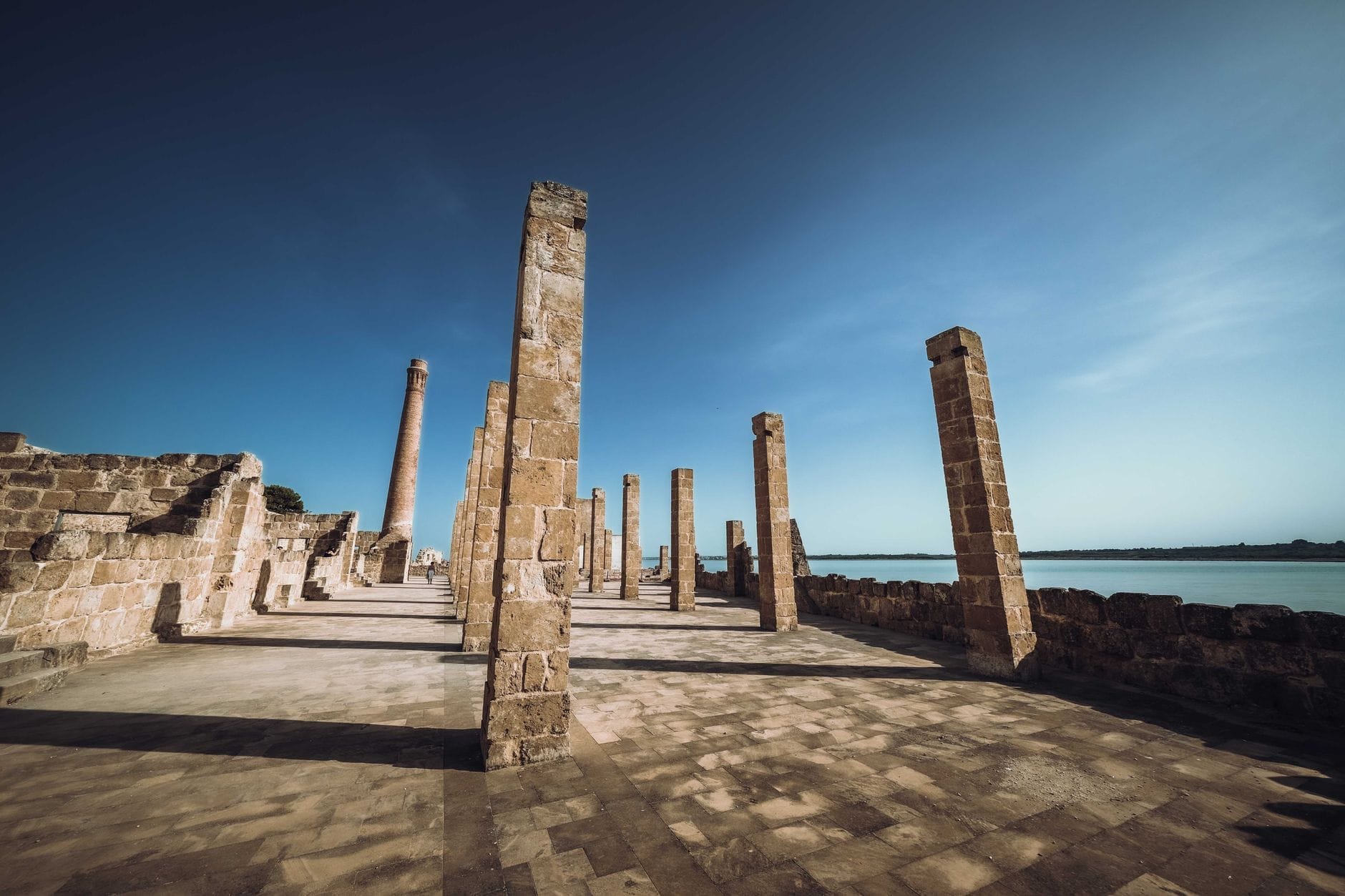
There is also a 19th-century tonnara, a former tuna-processing plant, near Torre Vendicari. The ruined stone building sits directly above the sea, its arched openings now framing views across the Ionian rather than workers processing bluefin. These industrial ruins, common to Sicily's coast, carry a melancholy weight here because the tuna is largely gone from these waters and the building is preserved as archaeology rather than industry.
For context on how Sicily's coastline was shaped by the tuna industry, the Tonnara di Scopello in western Sicily offers a more complete example of a preserved tuna-processing facility, useful for comparison.
How the Experience Changes Through the Day
The early morning walk from the car park to the first lagoon is one of those experiences that justifies setting an alarm. Before 8am in spring or autumn, the light falls at a low angle across the water, the air smells of wild herbs warming up, and there is almost nobody else around. The birdsong from the reed beds can be loud enough to be disorienting. By 10am in peak summer, the atmosphere shifts: the heat becomes serious, the light turns flat and harsh, and the trails to the beach begin to fill.
Midday in July and August is the most difficult time to visit. The lack of shade along most of the coastal path means the walk from one entrance to the beach can feel punishing. Those who arrive at this hour tend to head directly to the water and stay there, which is a reasonable strategy: the sea is cool and the beach is deep enough to find space even on a crowded weekend.
Late afternoon, from about 4pm onward, has its own rewards. The lagoon light softens, the day-trip crowds thin out, and the temperature drops enough to make the scrubland walk genuinely pleasant. Sunset from near the tonnara, with the ruins in silhouette and the Ionian turning orange, is the kind of view that photographs poorly because the scale requires being there.
⚠️ What to skip
There is very little shade on the main coastal trail. In July and August, bring significantly more water than you think you will need, wear sun protection from head to toe, and consider splitting your visit between an early morning walk and a late afternoon swim rather than spending the full midday period on the path.
Practical Walkthrough: Entrances, Trails, and Beaches
The reserve has five official entrances, each with parking. The most commonly used are the northern entrance near Torre Vendicari and the central entrance closer to Pantano Grande. The main walking trail runs roughly north to south along the coast, connecting the entrances and passing through all the key habitats. The full trail is not long by hiking standards but the soft sand and absence of shade make it more demanding than the distance suggests.
From the northern entrance you reach the tonnara ruins and Tower of Vendicari quickly, then descend to the beach. Following the coastal path south takes you past the lagoons and eventually to the wider, more exposed beaches near the southern entrances. Most visitors do not complete the full route; they enter at one point, walk to a beach or the lagoon, and return the same way. For a complete traverse, a car drop at one end and a pickup at the other saves backtracking.
The trails described as coastal paths are generally flat and firm enough for walkers of moderate fitness, though some sections cross soft sand. There is no official information confirming full wheelchair accessibility on all trails, and some access roads to the entrances are reportedly in poor condition. Those with mobility considerations should contact the local tourist office in Noto before visiting to get current trail status.
Vendicari makes an excellent half-day excursion from the Baroque towns of the southeast. It pairs particularly well with a morning in Ragusa Ibla or a visit to Noto Cathedral, both within comfortable driving distance. See also the broader Baroque Sicily guide for itinerary ideas that combine the interior towns with this coastal reserve.
Weather, Seasons, and When to Visit
Spring, specifically April and May, and autumn, from September through October, are the best periods to visit Vendicari by almost every measure. Bird activity is at its peak, temperatures are comfortable for walking, the sea is warm enough for swimming in late September, and the beaches are not overcrowded. The wildflowers in the macchia are at their best in April and early May, adding color to a landscape that can look dry and brown in summer.
Summer brings the largest crowds and the harshest conditions for walking, but it remains worth visiting if you manage the heat correctly. The beaches are legitimately good, the water temperature is ideal, and the reserve does not become as overwhelmed as the more famous beaches elsewhere in Sicily. Winter is quiet and occasionally wet, but birding can be productive and the solitude is genuine. Snow is extremely unlikely at this low elevation and latitude.
For a fuller picture of when each part of Sicily rewards different types of travel, the best time to visit Sicily guide breaks down seasonal considerations across the whole island.
ℹ️ Good to know
Photography note: The lagoon birds are best photographed from early morning until about 9am, when the light is low and soft and the water surface is calm. A telephoto lens of at least 300mm is useful for flamingos and herons; the birds are not approachable on foot without disturbing them, and the paths maintain a respectful distance from the main feeding areas.
Honest Assessment: Worth the Detour?
Vendicari earns its reputation without being the kind of attraction that suits everyone. If you want facilities, it will disappoint: there is no café, no restaurant, no equipment rental, and no shelter beyond the ruins. You are responsible for your own food, water, and shade. The trails, while easy, are not well-suited to strollers, and the car dependency limits access for those without private transport.
But for anyone with an interest in nature, open coastline, or simply the experience of a Sicilian beach that has not been carved up by concessions, Vendicari is one of the most rewarding places in southeastern Sicily. It is not a dramatic landscape in the volcanic sense. It is quiet, horizontal, and slow, and that is precisely what makes it valuable in a region where coastal development has consumed so much of what was once wild.
Insider Tips
- Enter from the northern Torre Vendicari entrance if you want to combine the tonnara ruins, the watchtower, and a beach walk in one logical loop. The southern entrances give faster access to the wider beaches but miss the most historically interesting section.
- The reserve has no food or drink on sale inside. Pack more water than you think you need, particularly in summer. Two litres per person is a realistic minimum for a full-day visit in July or August.
- If you are visiting primarily for birdwatching, contact the local birding community or check recent sighting reports before your visit. Flamingo presence is not guaranteed and varies significantly by season and water levels in the lagoons.
- Some of the access roads to the reserve entrances are in poor condition and are not well-marked by standard GPS navigation apps. Download offline maps beforehand and follow physical signs for 'Torre Vendicari' and 'Riserva di Vendicari' once you leave the main road.
- The reserve's eco-museum materials include adaptations for the visually impaired, an initiative worth noting if you are visiting with someone who has visual impairments. Contact local tourist services in Noto for current details on this provision.
Who Is Vendicari Nature Reserve For?
- Birdwatchers and wildlife photographers, especially during spring and autumn migration periods
- Families looking for uncrowded, facility-free beaches without a resort atmosphere
- Walkers combining natural and historical interest: Byzantine ruins, a ruined tonnara, coastal wetlands, and open sea in a single half-day circuit
- Photographers seeking dramatic early-morning light over flamingo lagoons
- Travellers exploring the southeastern Baroque towns who want a natural counterpoint to the architecture of Noto and Ragusa
Nearby Attractions
Other things to see while in Ragusa & the Baroque Southeast:
- Cathedral of San Giorgio, Ragusa
Rising above Piazza Duomo at the heart of Ragusa Ibla, the Cathedral of San Giorgio is the defining landmark of Sicily's UNESCO-listed baroque southeast. Designed by Rosario Gagliardi and consecrated in 1775, its three-tiered façade and dome are as striking in afternoon light as they are at dusk. This guide covers what to expect, when to go, and how to get the most from a visit.
- Marzamemi
Marzamemi is a hamlet of a few hundred residents on Sicily's southeastern tip, built around a thousand-year-old tuna fishery. Its 18th-century baroque square, clear Ionian waters, and unhurried pace make it one of the most rewarding small stops in the province of Syracuse.
- Modica & Its Chocolate
Modica, a steep baroque hill town in southeastern Sicily, is the undisputed home of Cioccolato di Modica IGP, a cold-processed chocolate with roots in Aztec tradition, brought to Sicily by the Spanish in the 16th century. Exploring this town means walking ancient stairways lined with chocolatiers, breathing in cocoa-scented air, and tasting something that genuinely has no modern equivalent.
- Noto Cathedral
Standing at the top of a broad ceremonial staircase above Piazza Municipio, Noto Cathedral is the architectural centerpiece of one of Sicily's most beautifully preserved baroque towns. Built after the catastrophic 1693 earthquake, restored after a dramatic dome collapse in 1996, it is a UNESCO World Heritage landmark and a functioning place of worship that rewards both the devout and the architecturally curious.