Cathedral of San Giorgio, Ragusa Ibla: Sicily's Baroque Masterpiece
Rising above Piazza Duomo at the heart of Ragusa Ibla, the Cathedral of San Giorgio is the defining landmark of Sicily's UNESCO-listed baroque southeast. Designed by Rosario Gagliardi and consecrated in 1775, its three-tiered façade and dome are as striking in afternoon light as they are at dusk. This guide covers what to expect, when to go, and how to get the most from a visit.
Quick Facts
- Location
- Piazza Duomo, Ragusa Ibla (lower historic town), 97100 Ragusa RG, Sicily, Italy
- Getting There
- Local bus from upper Ragusa to Ragusa Ibla, then a short walk up Salita Duomo. Also reachable on foot via stairways from the upper town.
- Time Needed
- 30–60 minutes for the cathedral; allow 2–3 hours to explore the surrounding Ibla district
- Cost
- Free entry (donations welcome).
- Best for
- Architecture lovers, history travellers, photography, quiet cultural exploration
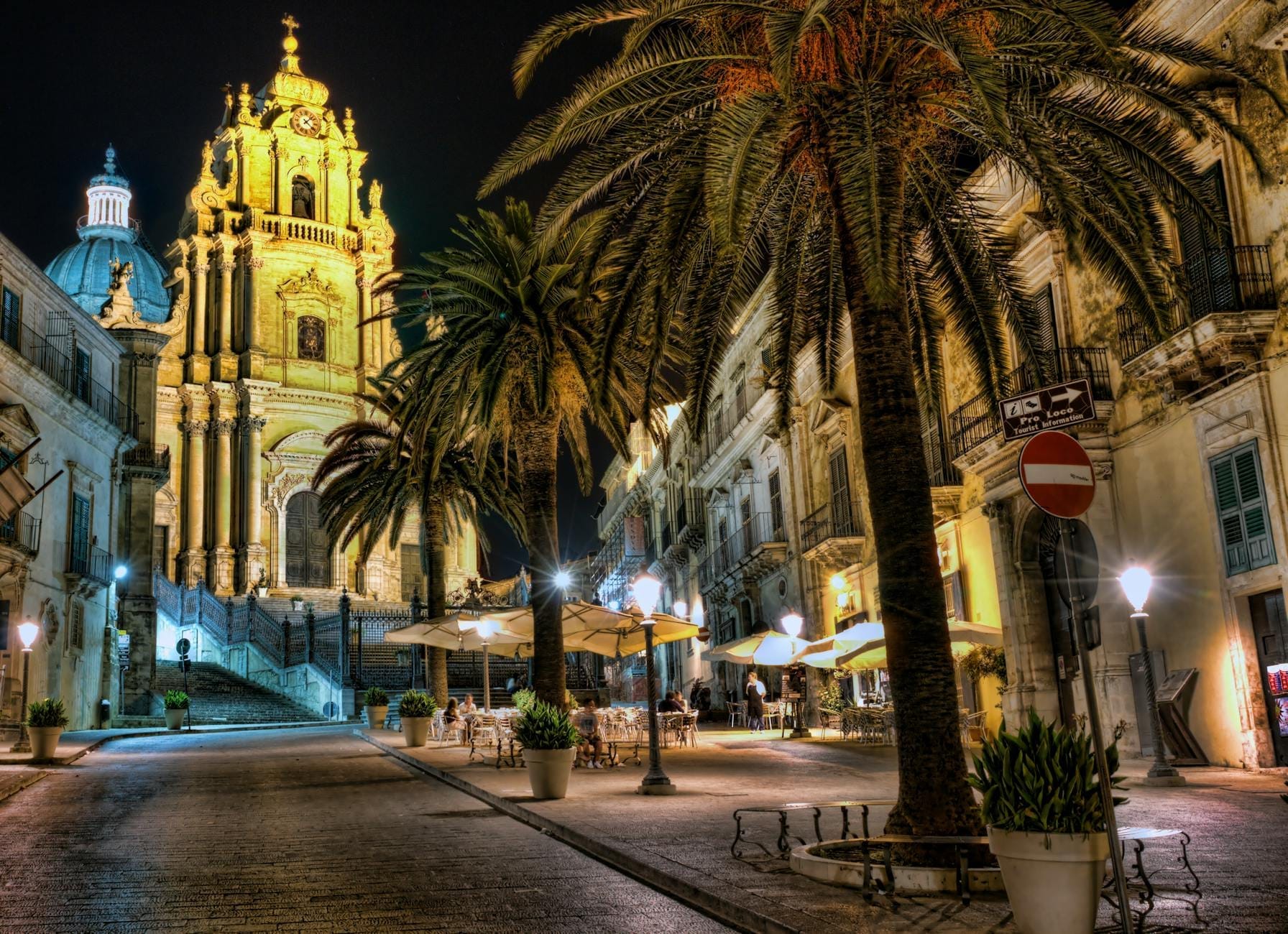
What Is the Cathedral of San Giorgio?
The Cathedral of San Giorgio, known locally as the Duomo di San Giorgio, is the spiritual and visual anchor of Ragusa Ibla, the ancient lower quarter of Ragusa in southeastern Sicily. It stands on Piazza Duomo at the top of a short, cobbled incline called Salita Duomo, and its three-tiered façade dominates the square so completely that the rest of the piazza seems arranged around it like a stage set.
The cathedral is one of the outstanding examples of Sicilian Baroque architecture in Italy, a style that flourished across the southeastern corner of Sicily after the catastrophic earthquake of 1693 levelled entire towns and forced a wholesale rebuilding. The churches and civic buildings that rose from the rubble defined a distinctive regional character: elaborate curved façades, animated sculptural detail, and confident, theatrical scale. San Giorgio is the pinnacle of that tradition.
Ragusa Ibla and the cluster of baroque towns surrounding it, including Noto, Modica, and Scicli, were inscribed as a UNESCO World Heritage Site in 2002 under the collective designation 'Late Baroque Towns of the Val di Noto.' San Giorgio sits at the heart of that designation.
History and Architectural Context
A church dedicated to San Giorgio stood on this site before 1693, but the earthquake left little standing. The task of designing its replacement fell to Rosario Gagliardi, a native of Syracuse who became the defining architect of the Val di Noto baroque. He also designed the Cathedral of San Giorgio in Modica, a fact that creates an interesting comparison for anyone making a day circuit through the region.
Gagliardi drew up the plans in 1738, and construction began that same year. The façade was completed and the cathedral finished in 1775, meaning the building took the better part of four decades to realize, which was not unusual for a project of this ambition. The dome, completed in the nineteenth century, rises to a point visible from across the valley separating Ibla from upper Ragusa.
What Gagliardi achieved at San Giorgio is a façade that reads as a series of ascending rhythms: five bays at the base, three in the middle tier, and a single crowning element at the top. Columns, pilasters, and niches layer over each other, creating shadow and depth that change appearance as the sun moves. The portal is ornate without tipping into excess, framed by twisted columns and detailed stone carvings. It is a confident, even bold piece of design for its era.
ℹ️ Good to know
Dress code: Shoulders and knees must be covered to enter the cathedral, as it is an active place of worship. Carry a light scarf or layer if visiting in summer.
Tickets & tours
Hand-picked options from our booking partner. Prices are indicative; availability and final rates are confirmed when you complete your booking.
Monreale day trip from Palermo
From 20 €Instant confirmationFree cancellationPalermo Cathedral rooftop ticket with audio guide
From 15 €Instant confirmationFree cancellationTour of Ragusa, Modica and Noto from Syracuse with private driver
From 770 €Instant confirmationFree cancellationPrivate Tour to Noto, Modica and Ragusa from Syracuse with Lunch
From 1.165 €Instant confirmationFree cancellation
The Experience at Different Times of Day
Morning is quiet on Piazza Duomo. The square faces roughly east, so the early sun catches the façade directly, illuminating the warm honey-coloured limestone and picking out the carved details with sharp shadows. At this hour, the piazza belongs mostly to locals: a few older residents sitting on the curved benches beneath the palms, the occasional delivery vehicle threading through the lane below. The air carries the faint smell of coffee drifting from the bars at the square's edges.
Midday brings the tour groups, and the cathedral's split opening hours mean that the interior closes around noon for several hours. If your priority is seeing inside, arrive before 12:00. The façade, of course, is always visible, but the midday light is flat and the square fills with people and noise. It is the least atmospheric window.
Late afternoon is the most rewarding time to be on the piazza. The sun drops behind the ridge above Ibla and the façade moves into even, diffused light that reveals its full geometry without harsh shadows. Around 16:00, when the interior reopens, the temperature softens, the tour groups have thinned, and the piazza recovers its composure. This window, between 16:00 and 18:00, is the clearest case for visiting. Stay into early evening and you will catch the street lights coming on against a darkening sky, which turns the pale stone a warm amber.
💡 Local tip
Photography tip: Position yourself at the bottom of Salita Duomo, the sloping approach street, for the most dramatic straight-on composition of the full façade. A wide-angle lens is not essential, but helps capture all three tiers. Late afternoon light between 16:30 and 18:00 is optimal.
Inside the Cathedral
The interior follows a Latin-cross plan with three naves and lateral chapels, large enough to feel genuinely imposing but not so vast that the decoration loses its effect. The dome above the crossing is the central spectacle: painted in the eighteenth century and lit by windows around the drum, it fills the space with a soft, directional light that is distinct from the flat brightness outside. Allow time to let your eyes adjust when you walk in.
The lateral chapels contain devotional art and sculptural altarpieces that reward slow looking, though the lighting is dim in places. The wooden confessionals and choir stalls are period pieces. The overall atmosphere is one of a building that has remained continuously in use, which it has, and that sense of lived-in religious life gives it a different quality from a deconsecrated monument.
Note that the interior may be partially inaccessible during masses and religious services. San Giorgio is a parish cathedral, not a museum, and schedules during Holy Week or feast days can differ significantly from the regular pattern. If your visit coincides with a Sunday or a major feast, call ahead or check locally.
Getting There and Practical Walkthrough
Ragusa Ibla occupies the lower part of what is technically a single municipality. The upper town, sometimes called Ragusa Superiore, is the commercial and administrative centre. Most visitors arrive in the upper town first, whether by car, regional bus, or from Comiso Airport approximately 15 kilometres away. From there, a local bus runs down into Ibla, or you can descend on foot via the long stairways that connect the two levels, a descent of roughly 150–200 metres in elevation over a rewarding but steep walk.
Once in Ibla, the cathedral is easy to navigate to: follow the main Corso XXV Aprile toward Piazza Duomo. The short Salita Duomo rise is signposted. If you are arriving from the direction of the Giardino Ibleo, the public gardens at the eastern tip of the promontory, allow about ten minutes on foot. The Ragusa Ibla old town is compact enough to cover on foot, and San Giorgio sits roughly in its geographic and social centre.
The approach up Salita Duomo involves a moderate gradient over uneven stone paving. For visitors with significant mobility limitations, this short slope may be challenging, and no verified accessibility infrastructure such as ramps or lifts has been confirmed at the cathedral itself. The piazza at the top is flat once you arrive. Contact the parish directly if detailed accessibility information is needed before planning a visit.
⚠️ What to skip
Opening hours are not consistently published online and are typically split across morning and late afternoon sessions (around 10:00–12:30 and 16:00–19:00). These times are reported by visitors but are not guaranteed. Verify locally on arrival or contact the parish in advance, especially if travelling specifically to see the interior.
Honest Assessment: Is It Worth the Visit?
The Cathedral of San Giorgio is genuinely one of the most accomplished pieces of baroque architecture in southern Italy. That is not promotional language; architectural historians have made the same assessment in print for decades, and the UNESCO designation reflects it. If you are interested in eighteenth-century architecture, religious art, or the particular story of how Sicily rebuilt itself after 1693, this is not an attraction to skip.
That said, if you are arriving with expectations shaped by major Italian art cities, the interior may feel modest by comparison. There is no single transcendent painting or sculpture. The value here is in the architecture itself, and specifically in the relationship between the façade and the square in front of it. Visitors who spend ten minutes photographing the outside and then leave without sitting on the piazza or exploring the surrounding streets are missing the point. Pair the cathedral with a walk through Ragusa Ibla's old town and a stop at one of the bars on the square for a proper understanding of why this place earned its reputation.
Travellers with very limited time in Sicily who are already planning to visit Noto Cathedral may find the two churches slightly overlap in what they offer. Both are Sicilian Baroque, both are on grand pedestrianised squares. Ragusa Ibla has a rougher, more lived-in quality compared to Noto's polished main street; whether that is a point in its favour depends on your preference.
Travellers primarily interested in beaches, outdoor activities, or the volcanic landscape around Etna may find this a detour that does not fit their priorities. The baroque southeast requires a certain pace. If you are on a tight itinerary focused on the western or northern coast, it is honest to say that a special trip solely to Ragusa for the cathedral is a significant time commitment given Sicily's road distances. But if you are already in the southeast, visiting Modica for its chocolate, or heading toward Syracuse, the cathedral belongs on every itinerary.
Insider Tips
- The curved stone benches on Piazza Duomo are a local gathering point in the evening. Sit there after 18:00 and the piazza comes alive with residents rather than tourists. It is one of the more honest portraits of Ibla daily life you will find.
- The feast of San Giorgio is celebrated on the last Sunday of May (with some events sometimes moved to the following weekend). The cathedral and piazza are the centre of the procession, which draws large crowds from across the province. If your visit overlaps with this date, expect restricted access to the interior but a genuinely atmospheric street event.
- Look at the façade from multiple angles, not just straight on. From the lower lanes to the east and west, the dome and upper tiers appear above the roofline in compositions that are often more interesting photographically than the frontal view.
- The Giardino Ibleo, Ragusa Ibla's public garden at the far eastern end of the promontory, is a ten-minute walk from San Giorgio and offers a shaded bench with views over the valley. It is an ideal place to decompress after the cathedral visit, especially in summer heat.
- If you are driving, parking in Ragusa Ibla itself is very limited. Use the car parks on the eastern edge of the upper town and either walk down or take the local bus into Ibla. Attempting to drive into the narrow lanes around Piazza Duomo is not recommended.
Who Is Cathedral of San Giorgio, Ragusa For?
- Architecture and art history enthusiasts seeking the best of Sicilian Baroque in context
- Slow travellers who want to explore a largely untouristy historic quarter without crowds
- Photographers, particularly those interested in street light and stone architecture in the late afternoon
- Couples and cultural travellers combining the baroque southeast: Noto, Modica, Ragusa in a single route
- Visitors with an interest in how communities rebuild after disaster, given the 1693 earthquake's role in creating the town's current form
Nearby Attractions
Other things to see while in Ragusa & the Baroque Southeast:
- Marzamemi
Marzamemi is a hamlet of a few hundred residents on Sicily's southeastern tip, built around a thousand-year-old tuna fishery. Its 18th-century baroque square, clear Ionian waters, and unhurried pace make it one of the most rewarding small stops in the province of Syracuse.
- Modica & Its Chocolate
Modica, a steep baroque hill town in southeastern Sicily, is the undisputed home of Cioccolato di Modica IGP, a cold-processed chocolate with roots in Aztec tradition, brought to Sicily by the Spanish in the 16th century. Exploring this town means walking ancient stairways lined with chocolatiers, breathing in cocoa-scented air, and tasting something that genuinely has no modern equivalent.
- Noto Cathedral
Standing at the top of a broad ceremonial staircase above Piazza Municipio, Noto Cathedral is the architectural centerpiece of one of Sicily's most beautifully preserved baroque towns. Built after the catastrophic 1693 earthquake, restored after a dramatic dome collapse in 1996, it is a UNESCO World Heritage landmark and a functioning place of worship that rewards both the devout and the architecturally curious.
- Ragusa Ibla
Ragusa Ibla is the ancient lower town of Ragusa, rebuilt in sweeping Baroque style after the catastrophic 1693 earthquake and now a UNESCO World Heritage Site. Its maze of honey-colored churches, palazzi, and stone stairways descends into the Hyblaean Hills with no admission fee and no fixed closing time. It rewards slow walkers who arrive early or linger past sunset.