Modica and Its Chocolate: A UNESCO Baroque Town Built on Cocoa History
Modica, a steep baroque hill town in southeastern Sicily, is the undisputed home of Cioccolato di Modica IGP, a cold-processed chocolate with roots in Aztec tradition, brought to Sicily by the Spanish in the 16th century. Exploring this town means walking ancient stairways lined with chocolatiers, breathing in cocoa-scented air, and tasting something that genuinely has no modern equivalent.
Quick Facts
- Location
- Modica, Province of Ragusa, southeastern Sicily, Italy
- Getting There
- Regional train from Ragusa (approx. 20 min) or Syracuse; intercity buses also connect Modica to nearby towns. Many visitors arrive by car.
- Time Needed
- Half day minimum; full day recommended to explore both the upper and lower towns and visit multiple chocolatiers
- Cost
- Walking the historic center is free. Individual chocolate bars typically cost a few euros each; guided tours and workshops vary by provider.
- Best for
- Food lovers, history enthusiasts, baroque architecture admirers, and anyone curious about pre-industrial chocolate
- Official website
- www.visitsicily.info/en/sapore/modica-chocolate
What Modica Actually Is
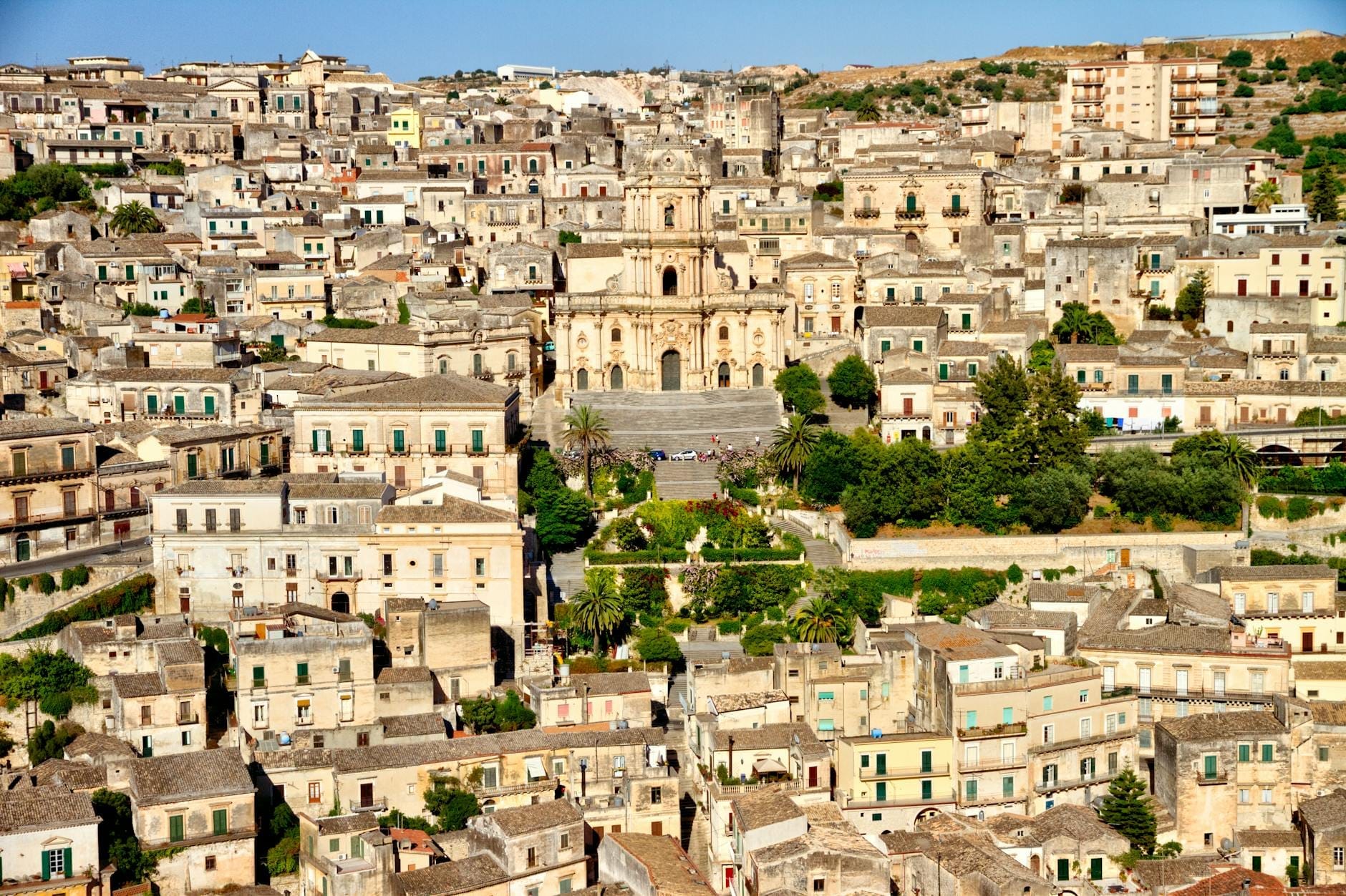
Modica is a UNESCO World Heritage Site, recognized alongside eight other Late Baroque Towns of the Val di Noto for its extraordinary 17th and 18th-century rebuilding after the catastrophic 1693 earthquake. But for most visitors, the town has a second identity that rivals its architectural legacy: it is the self-declared, and widely accepted, capital of Sicilian chocolate.
The connection between this steep hill town in the Province of Ragusa and chocolate is not a recent marketing invention. It traces back to the Spanish colonial period of the 1500s, when Mesoamerican chocolate-making techniques arrived in Sicily via Spain. The cold-processed method that the Aztecs used, grinding cacao with spices at low temperatures, was preserved here long after the rest of Europe moved on to the smoother, fat-enriched chocolates we associate with Swiss and Belgian tradition.
The result is Cioccolato di Modica IGP, which received Protected Geographical Indication status from the European Union in 2018. If you are already exploring the baroque southeast, Modica sits naturally alongside Ragusa Ibla and Noto's baroque streetscapes as one of the region's most rewarding stops.
The Chocolate Itself: What Makes It Different
Authentic Cioccolato di Modica is processed at around 40 degrees Celsius, which is cool enough to keep the cocoa butter from fully integrating with the sugar. The sugar crystals remain intact rather than dissolving into the mass. The result is a bar that is grainy, crumbly, and deliberately dry in a way that surprises almost everyone who bites into it for the first time.
There is no added milk and no added fats beyond the cocoa butter naturally present in the cacao. The minimum cocoa content is 45%, and traditional versions are often flavored with cinnamon, vanilla, or chili, spices associated with early Mesoamerican chocolate traditions. The texture dissolves on the tongue differently from any modern chocolate bar, releasing flavor in waves rather than all at once. It is more intense and less sweet than you expect.
💡 Local tip
Buy from shops that display the IGP certification mark to ensure you are getting authentic Cioccolato di Modica. Several shops on Corso Umberto I and the surrounding streets sell bars; tasting before buying is widely offered and expected.
The flavor range has expanded over centuries of local experimentation. Alongside cinnamon and vanilla, you will now find bars made with carob, orange peel, salt, almond, and even local wines. Some of these are traditional, others are modern innovations. The base technique, however, remains legally defined under the IGP specification.
Tickets & tours
Hand-picked options from our booking partner. Prices are indicative; availability and final rates are confirmed when you complete your booking.
Noto and the chocolate of Modica private tour from Syracuse
From 540 €Instant confirmationFree cancellationTour of Ragusa, Modica and Noto from Syracuse with private driver
From 770 €Instant confirmationFree cancellationPrivate Tour to Noto, Modica and Ragusa from Syracuse with Lunch
From 1.165 €Instant confirmationFree cancellationEtna South Upper Craters Guided Excursion from Taormina
From 42 €Instant confirmationFree cancellation
Walking the Town: What You See and Smell
Modica divides into two main sections: the lower town (Modica Bassa), centered around Corso Umberto I and its baroque churches and chocolate shops, and the upper town (Modica Alta), which extends up the hillside above. Most visitors spend the majority of their time in the lower town, where the concentration of chocolatiers, cafes, and the monumental Cathedral of San Giorgio create a natural circuit.
Walking Corso Umberto I in the morning, when shops are opening and the street has not yet filled with tour groups, is a specific pleasure. The smell of cacao drifts from doorways alongside the sharper note of fresh espresso. Chocolatiers leave their doors open. Some have glass counters displaying dozens of bar varieties in labeled rows, while others run small production areas visible from the street, where workers in white coats scrape molds and wrap bars by hand.
The Cathedral of San Giorgio, Modica's most famous baroque monument, rises above the lower town on a grand staircase of about 250 steps. It shares the same architectural lineage as San Giorgio in Ragusa Ibla, designed by Rosario Gagliardi and built between 1702 and 1738. Even if baroque churches are not your primary interest, the climb offers a good vantage point over the rooflines of the lower town and rewards you with a quiet plateau above the main pedestrian traffic.
The upper town is quieter and less visited. The streets narrow, the tourist infrastructure thins out, and you get a stronger sense of an ordinary Sicilian town going about its day. Laundry hangs between windows. Older residents sit on stone steps. There are fewer chocolate shops and more views.
Time of Day and Seasonal Considerations
Modica receives significant day-trip traffic from Ragusa, Syracuse, and even Catania, particularly in summer. The main street fills noticeably between 11am and 2pm, when tour buses arrive and the good gelato and granita spots have queues. If you arrive before 10am or after 4pm, the atmosphere shifts considerably. The light in late afternoon is also better for photographing the baroque facades, which face roughly west.
⚠️ What to skip
In July and August, midday heat in Modica is intense. The stone steps and open plazas offer little shade. Plan the outdoor walking portions of your visit for morning or early evening, and use the midday hours for indoor chocolate shop visits and lunch.
Spring and autumn are the most comfortable seasons for walking the town's steep terrain. October in particular offers warm days, manageable crowds, and the added appeal of seasonal festival events in the surrounding Ragusa province. Winter sees the town much quieter, most shops remain open, and the baroque churches are easier to access without queuing.
For context on seasonal planning across the island, the best time to visit Sicily guide covers month-by-month conditions for the south and southeast.
How to Structure a Visit
A half-day visit covers the essentials: walk Corso Umberto I, visit two or three chocolatiers, climb to San Giorgio, and eat lunch at one of the restaurants in the lower town before leaving. A full day allows you to explore the upper town, visit the Museo del Cioccolato di Modica (check current opening hours directly with the venue before visiting), and make your way on foot through the connecting stairways between the two levels of the city.
Guided chocolate tours are offered by multiple operators, some including transport from Ragusa or Syracuse, some on foot within the town. These typically run 90 minutes to three hours and include tastings of multiple varieties alongside historical context about the IGP production process. They are worth considering if you are visiting alone or want structured background, but they are not necessary to appreciate the town.
Workshops where you make your own chocolate bar under the guidance of a local producer are available at several dolcerie. These need advance booking and are popular with families and groups.
ℹ️ Good to know
Modica is a UNESCO-listed baroque town, and the historic center involves steep climbs, narrow stepped streets, and uneven stone surfaces. Visitors with limited mobility should focus on the flatter sections of Corso Umberto I and check accessibility directly with any specific chocolate shop or museum they wish to enter.
Combining Modica With the Surrounding Area
Modica pairs naturally with Ragusa Ibla, which sits roughly 15 kilometers northwest and is accessible by regional bus or car. The two towns share the same baroque heritage and the same southeastern Sicilian landscape of limestone plateaus and deep ravines. Many visitors do both in a single day, though doing justice to each really benefits from two separate half-days.
The broader baroque Sicily circuit connects Modica with Noto, Scicli, Ispica, and Palazzolo Acreide, all UNESCO-listed and all accessible by car within a day's loop from a base in Ragusa or Syracuse. If you are traveling the southeast without a car, check Trenitalia's regional schedules for Modica, which is served by the Ragusa-Syracuse line.
Photography in Modica rewards patience. The staircase leading up to San Giorgio is the most-photographed element, particularly at golden hour when the warm stone catches late afternoon light. The narrow streets of Modica Alta, lined with balconies and wrought-iron railings, offer quieter compositional opportunities away from the tour group traffic on the main corso.
Who Should Reconsider This Stop
Modica is not for everyone. If you do not enjoy urban hill towns with significant walking, or if mobility is a concern, the staircase terrain will frustrate rather than delight. The chocolate, while genuinely distinctive, is an acquired texture for some: the graininess and dryness can feel wrong to palates accustomed to smooth modern chocolate. If you are expecting a Swiss-style melt, you will be surprised.
Travelers on very tight itineraries who are already visiting Ragusa Ibla may find Modica slightly redundant architecturally. The two towns share a visual language, and seeing both in a single rushed afternoon risks them blurring together. If you must choose only one for architectural impact, Ragusa Ibla is more immediately dramatic. If you are there for food history and the chocolate specifically, Modica is irreplaceable.
Insider Tips
- Ask chocolatiers for a bar made with carob rather than cacao, which is a local variation specific to this corner of Sicily and difficult to find elsewhere. Not all shops stock it, but those that do regard it as a regional specialty.
- The morning granita and brioche scene in Modica is strong. Several bars on and around Corso Umberto I serve granita al cioccolato di Modica, which uses the local cold-process chocolate base. It tastes markedly different from standard chocolate granita and is worth seeking out before starting your walking tour.
- If you are buying bars to take home, keep in mind that authentic Cioccolato di Modica has a relatively long shelf life because of its low fat content and absence of milk, but it is sensitive to heat. Ask the shop to wrap bars in insulating paper or buy a small cool bag from a nearby supermarket if you are traveling in summer.
- The Museo del Cioccolato di Modica offers historical context that deepens the experience of visiting the town's chocolatiers. Confirm opening hours directly before arriving, as smaller cultural venues in Sicilian towns can keep irregular schedules outside peak season.
- Corso Umberto I is the obvious spine of the lower town, but stepping one street back in either direction reveals quieter caruggi (alleyways) with less-visited churches, local alimentari selling packaged chocolate at lower prices than tourist-facing shops, and a quieter pace that the main street loses by mid-morning.
Who Is Modica & Its Chocolate For?
- Food travelers with a specific interest in food history and pre-industrial production techniques
- Baroque architecture enthusiasts combining Modica with the UNESCO Val di Noto circuit
- Families looking for a half-day excursion with an engaging tasting and workshop component
- Photographers seeking baroque townscapes with fewer crowds than Noto
- Anyone doing a broader southeastern Sicily road trip who wants a town that justifies a full stop rather than a drive-through
Nearby Attractions
Other things to see while in Ragusa & the Baroque Southeast:
- Cathedral of San Giorgio, Ragusa
Rising above Piazza Duomo at the heart of Ragusa Ibla, the Cathedral of San Giorgio is the defining landmark of Sicily's UNESCO-listed baroque southeast. Designed by Rosario Gagliardi and consecrated in 1775, its three-tiered façade and dome are as striking in afternoon light as they are at dusk. This guide covers what to expect, when to go, and how to get the most from a visit.
- Marzamemi
Marzamemi is a hamlet of a few hundred residents on Sicily's southeastern tip, built around a thousand-year-old tuna fishery. Its 18th-century baroque square, clear Ionian waters, and unhurried pace make it one of the most rewarding small stops in the province of Syracuse.
- Noto Cathedral
Standing at the top of a broad ceremonial staircase above Piazza Municipio, Noto Cathedral is the architectural centerpiece of one of Sicily's most beautifully preserved baroque towns. Built after the catastrophic 1693 earthquake, restored after a dramatic dome collapse in 1996, it is a UNESCO World Heritage landmark and a functioning place of worship that rewards both the devout and the architecturally curious.
- Ragusa Ibla
Ragusa Ibla is the ancient lower town of Ragusa, rebuilt in sweeping Baroque style after the catastrophic 1693 earthquake and now a UNESCO World Heritage Site. Its maze of honey-colored churches, palazzi, and stone stairways descends into the Hyblaean Hills with no admission fee and no fixed closing time. It rewards slow walkers who arrive early or linger past sunset.