Via Corrado Nicolaci, Noto: The Street That Makes Sicily's Baroque Make Sense
Via Corrado Nicolaci is the architectural spine of Noto's Baroque old town, lined with 18th-century noble palazzi and crowned by the Chiesa di Montevergine. Once a year in May, the entire street is carpeted in flowers for the Infiorata festival. The rest of the year, it rewards anyone willing to walk slowly and look up.
Quick Facts
- Location
- Via Corrado Nicolaci, 96017 Noto (SR), Sicily, Italy — off Corso Vittorio Emanuele in the Baroque historic centre
- Getting There
- Walk from Noto railway station (approx. 10–15 min uphill) following signs to the centro storico, then turn off Corso Vittorio Emanuele
- Time Needed
- 30–60 minutes for the street itself; 2–3 hours if you visit Palazzo Nicolaci and surrounding churches
- Cost
- Free to walk. Palazzo Nicolaci entry approx. €4 (full price); verify current rates before visiting
- Best for
- Architecture enthusiasts, photography, the Infiorata festival in May, Baroque history
What Via Corrado Nicolaci Actually Is
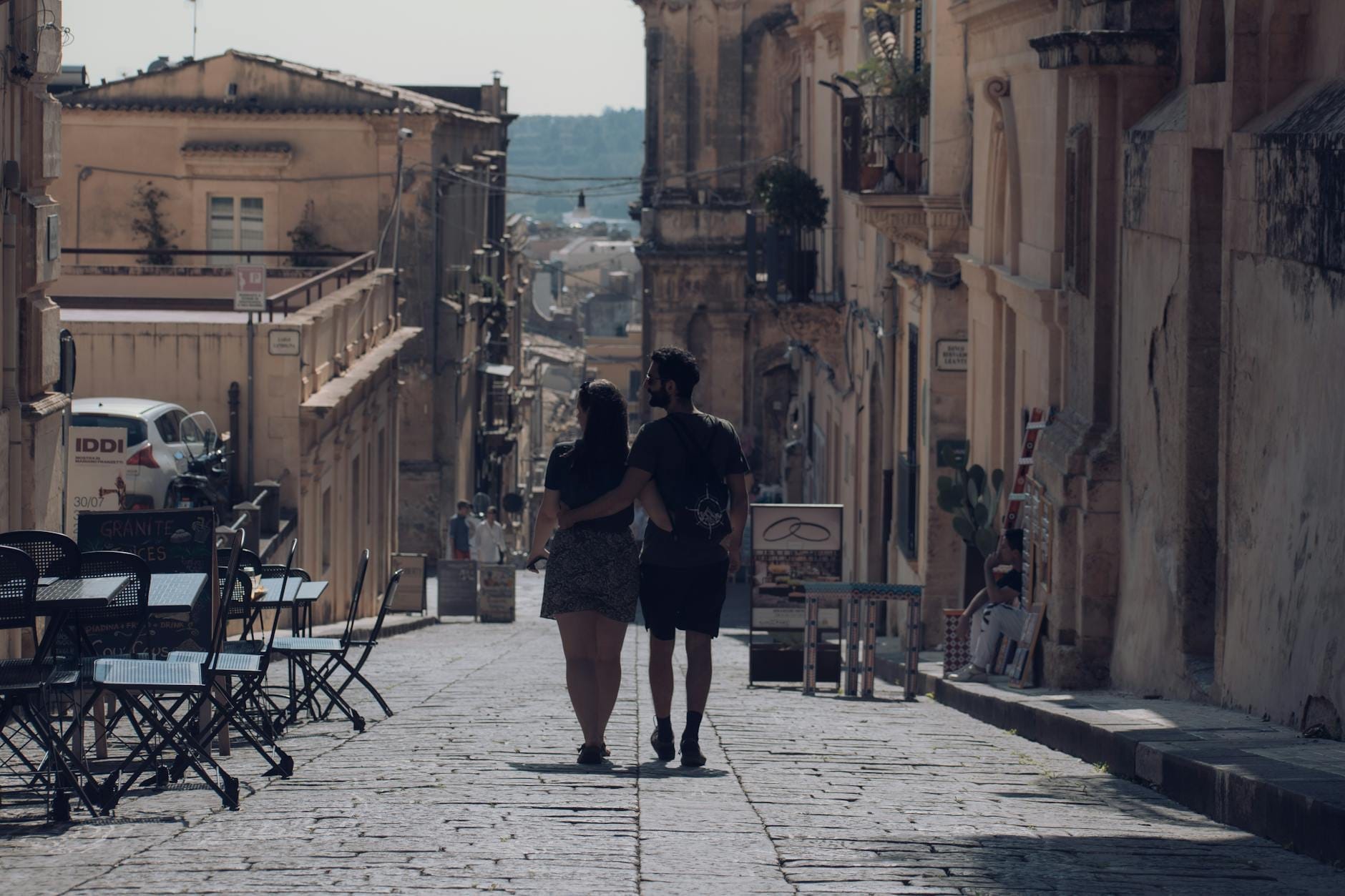
Via Corrado Nicolaci is a short, steeply inclined street in the heart of Noto, in southeastern Sicily, cutting perpendicular to the main Corso Vittorio Emanuele and climbing toward the Chiesa di Montevergine at its upper end. It is named after the Nicolaci family, the noble dynasty responsible for its most important building, Palazzo Nicolaci di Villadorata, whose construction began in 1720 and was completed around 1765.
The street is publicly accessible at all hours and costs nothing to walk. What makes it worth understanding before you arrive is this: the pleasure is entirely visual and architectural, and it rewards the visitor who knows where to stand. The most famous view is from the foot of the street, looking upward toward the church facade framed by symmetrical palace fronts on either side. It is one of the most composed urban vistas in Sicily, and it was not accidental — the 18th-century planners who rebuilt Noto after the catastrophic 1693 earthquake designed the street as a deliberate scenic axis.
💡 Local tip
Stand at the bottom of Via Corrado Nicolaci where it meets Corso Vittorio Emanuele and look straight up the incline. The Chiesa di Montevergine closes the perspective at the top. This is the photograph you came for, and it works best in the soft light of morning or late afternoon.
The Architecture: What You're Looking At
Noto was entirely rebuilt after the 1693 Val di Noto earthquake, one of the most destructive seismic events in recorded Sicilian history. The city that rose from the rubble over the following decades became a showcase for Sicilian Baroque, and Via Corrado Nicolaci sits at the center of that story. The street's palazzi were built by noble families competing to display wealth and lineage through carved stone, and the result is a continuous run of golden limestone facades dense with decorative detail.
Palazzo Nicolaci di Villadorata dominates the left side of the street as you ascend. Its balconies are the detail most visitors come specifically to photograph: each one is supported by carved corbels depicting mythological figures, lions, horses, cherubs, and grotesque faces, no two identical. The ironwork railings above them are late Baroque metalwork at its most theatrical. The overall facade runs for several bays and has the organized grandeur of a building whose architect understood how it would be read from the street below.
At the top of the street, the Chiesa di Montevergine provides the visual full stop. Its twin-towered facade in the same warm limestone closes the axis and gives the street its spatial logic. The church and the palazzi together form one of the most coherent Baroque urban sequences in Italy, which is part of why Noto's historic centre is a UNESCO World Heritage Site, recognized as part of the Late Baroque Towns of the Val di Noto group.
Tickets & tours
Hand-picked options from our booking partner. Prices are indicative; availability and final rates are confirmed when you complete your booking.
Syracuse, Ortygia and Noto tour from Catania
From 109 €Instant confirmationFree cancellationTour of Ragusa, Modica and Noto from Syracuse with private driver
From 770 €Instant confirmationFree cancellationPrivate tour of Noto and Marzamemi in a vintage car
From 465 €Instant confirmationFree cancellationPrivate Tour to Noto, Modica and Ragusa from Syracuse with Lunch
From 1.165 €Instant confirmationFree cancellation
How the Street Changes Through the Day
Morning light hits the west-facing Palazzo Nicolaci facade from an angle that brings out the carved detail in sharp relief. By mid-morning, if you arrive after 10:00, you will share the street with tour groups, and the steep incline means people move slowly and cluster near the balconies. In high summer, the sun is overhead by late morning and the narrow street offers little shade, so the golden hour from about 08:00 to 09:30 is genuinely worth targeting.
Late afternoon from around 17:00 onward is the second good window. The light becomes warmer and more directional, the tour groups have thinned, and the atmosphere is closer to what the street would have felt like on a quiet evening in its 18th-century prime. The smell of warm stone is most noticeable then, mixed with the coffee and almond pastry scent drifting from nearby cafes on Corso Vittorio Emanuele. In spring and early autumn, lingering at the top near the church steps at this hour is a particular pleasure.
At midday in July and August, the street is simultaneously at peak visitor density and peak heat. The experience is manageable but not relaxing. Visitors who find crowded narrow streets in direct sunlight uncomfortable will get more from an early visit.
⚠️ What to skip
The street climbs steeply on historic stone paving. For visitors with mobility difficulties or those using wheelchairs, the gradient and uneven surface present real challenges. No step-free alternative route through this specific axis is published; check with local tourist information for current accessibility options.
The Infiorata: One Week When Everything Changes
Each year in May, Via Corrado Nicolaci becomes the stage for Noto's Infiorata, a festival in which the entire length of the street is covered with a carpet of flower petals arranged into elaborate pictorial designs. Preparations begin days before the public display, and teams of local artists work through the night to lay the patterns before the street opens to visitors. The scale is considerable: the carpet runs the full length of the street and is composed of hundreds of thousands of flower petals, leaves, and natural materials organized into images that change each year.
The Infiorata typically falls on the third Sunday of May, though the festival spans several days around it. On the main day, the street is closed to through traffic and fills with visitors from across Sicily and beyond. Photography from the upper end near the church looking back down the flower carpet is the signature image, and the crowds reflect that. If you plan to visit during the Infiorata, arrive early on the main display day and check the current year's dates through official Noto tourism channels, as exact timing varies annually.
Outside of festival week, Via Corrado Nicolaci is a quiet street by normal Baroque-town standards. The Infiorata is a genuine event worth building a trip around, but the architecture stands entirely on its own merits the other fifty weeks of the year.
Visiting Palazzo Nicolaci di Villadorata
The interior of Palazzo Nicolaci di Villadorata is open to visitors and warrants the small admission fee. The piano nobile contains frescoed rooms, period furniture, and decorative plasterwork that illustrate the life of a prosperous 18th-century Sicilian noble family. The frescoes are in variable condition, which adds a particular quality of faded grandeur to the experience rather than detracting from it. The scale of the principal salon is larger than the exterior prepares you for.
Opening hours are typically 10:00 to 13:00 and 15:00 to 19:00, though these are subject to change and seasonal adjustment. Admission has been reported at approximately €4 for a full-price ticket and €2 for groups of more than 25, but these figures should be verified directly with the palazzo or through the current Noto tourism office before your visit. The palace can close on short notice for private events.
ℹ️ Good to know
Palazzo Nicolaci di Villadorata is listed on the Italia.it national tourism portal. For the most current hours and prices, check visitvaldinoto.com or contact the Noto tourist office directly before visiting.
Placing Via Nicolaci in the Context of a Noto Visit
Via Corrado Nicolaci is best understood as one section of a longer walk through Noto's Baroque centre rather than a standalone destination. The logical route pairs it with Corso Vittorio Emanuele, the main pedestrian axis running east to west through the old town, and with the Noto Cathedral a few minutes' walk away. The cathedral, rebuilt after its dome collapsed in 1996, represents the same Baroque tradition in its fully restored form, which makes the combination with the more authentic, less restored texture of Via Nicolaci genuinely instructive.
Noto sits in the Val di Noto, a cluster of Baroque towns in southeastern Sicily that includes Ragusa, Modica, and Scicli. If your itinerary allows more than a day in the area, the old town of Ragusa Ibla and the Cathedral of San Giorgio in Ragusa provide a useful architectural comparison — the same Baroque idiom expressed by different builders on a very different topography.
Noto is also within comfortable day-trip range of Siracusa, and the archaeological sites at Ortigia and the wider Syracuse area make a natural pairing with a town as devoted to built heritage as Noto. The wider context of Sicily's Baroque and ancient layers is covered in the Baroque Sicily guide.
Photography on Via Nicolaci
The street is relatively narrow, which means a wide-angle lens or phone in portrait orientation is useful for the full-facade shot of Palazzo Nicolaci. For the corbel carvings, a short telephoto or zoom lets you isolate individual figures from street level without climbing. The light reading at midday flattens the carved relief, which is why morning or late-afternoon visits consistently produce more interesting results.
The view from the top of the street, standing near the church and looking down, is less commonly photographed than the upward view but often more interesting compositionally: the descending perspective, the pale facades converging on Corso Vittorio Emanuele, and the wider Noto roofscape in the background. It also avoids the problem of photographing into the sun in the morning.
Insider Tips
- The carved balcony corbels on Palazzo Nicolaci are individually sculpted — spend a few minutes moving along the facade counting and identifying the figures rather than settling for a single wide shot. Local guides point out that the grotesque and mythological faces were a deliberate reference to the family's learning and status.
- If you visit in May outside of the Infiorata weekend itself, you may find rehearsal days or installation days when the flower-carpet teams are at work — the preparation process is visually interesting and draws far smaller crowds than the finished display.
- The bar at the corner of Via Corrado Nicolaci and Corso Vittorio Emanuele is a practical stop for the almond granita that southeastern Sicily does better than almost anywhere else. Standing at the corner with a granita and looking up the street is a good way to understand the street's proportions before committing to the climb.
- Palazzo Nicolaci di Villadorata occasionally hosts cultural events and small exhibitions in addition to its regular visiting hours. Checking the current programme before your visit can add an unexpected dimension to the standard palazzo tour.
- For the cleanest photographs of the street with no other visitors in frame, arrive before 08:30 in summer. The stone is cool at that hour, the light is lateral and warm, and you will almost certainly have the street to yourself.
Who Is Via Nicolaci, Noto For?
- Architecture and history enthusiasts who want to understand how Sicilian Baroque urbanism actually worked in practice
- Photographers looking for one of Sicily's most compositionally resolved street views
- Travellers visiting in May who want to time a trip around the Infiorata flower festival
- Visitors doing a Val di Noto Baroque circuit combining Noto, Ragusa, and Modica over two or three days
- Anyone who wants to pair a visual street experience with an interior palazzo visit for a fuller picture of 18th-century Sicilian noble life
Nearby Attractions
Other things to see while in Ragusa & the Baroque Southeast:
- Cathedral of San Giorgio, Ragusa
Rising above Piazza Duomo at the heart of Ragusa Ibla, the Cathedral of San Giorgio is the defining landmark of Sicily's UNESCO-listed baroque southeast. Designed by Rosario Gagliardi and consecrated in 1775, its three-tiered façade and dome are as striking in afternoon light as they are at dusk. This guide covers what to expect, when to go, and how to get the most from a visit.
- Marzamemi
Marzamemi is a hamlet of a few hundred residents on Sicily's southeastern tip, built around a thousand-year-old tuna fishery. Its 18th-century baroque square, clear Ionian waters, and unhurried pace make it one of the most rewarding small stops in the province of Syracuse.
- Modica & Its Chocolate
Modica, a steep baroque hill town in southeastern Sicily, is the undisputed home of Cioccolato di Modica IGP, a cold-processed chocolate with roots in Aztec tradition, brought to Sicily by the Spanish in the 16th century. Exploring this town means walking ancient stairways lined with chocolatiers, breathing in cocoa-scented air, and tasting something that genuinely has no modern equivalent.
- Noto Cathedral
Standing at the top of a broad ceremonial staircase above Piazza Municipio, Noto Cathedral is the architectural centerpiece of one of Sicily's most beautifully preserved baroque towns. Built after the catastrophic 1693 earthquake, restored after a dramatic dome collapse in 1996, it is a UNESCO World Heritage landmark and a functioning place of worship that rewards both the devout and the architecturally curious.