Ragusa Ibla: Inside Sicily's Most Perfectly Preserved Baroque Quarter
Ragusa Ibla is the ancient lower town of Ragusa, rebuilt in sweeping Baroque style after the catastrophic 1693 earthquake and now a UNESCO World Heritage Site. Its maze of honey-colored churches, palazzi, and stone stairways descends into the Hyblaean Hills with no admission fee and no fixed closing time. It rewards slow walkers who arrive early or linger past sunset.
Quick Facts
- Location
- Ragusa Ibla, Province of Ragusa, southeastern Sicily, Italy
- Getting There
- By car via SP45 or SP25 from Ragusa Superiore; on foot via connecting stairways from the upper town. Comiso Airport (CIY) is roughly 25 km away.
- Time Needed
- Half day minimum; a full day if you visit churches, gardens, and pause for lunch
- Cost
- Free to enter the quarter; individual churches and museums charge separately
- Best for
- Architecture lovers, slow travelers, photography, Baroque history, couples
- Official website
- www.visitsicily.info/en/localita/ragusa
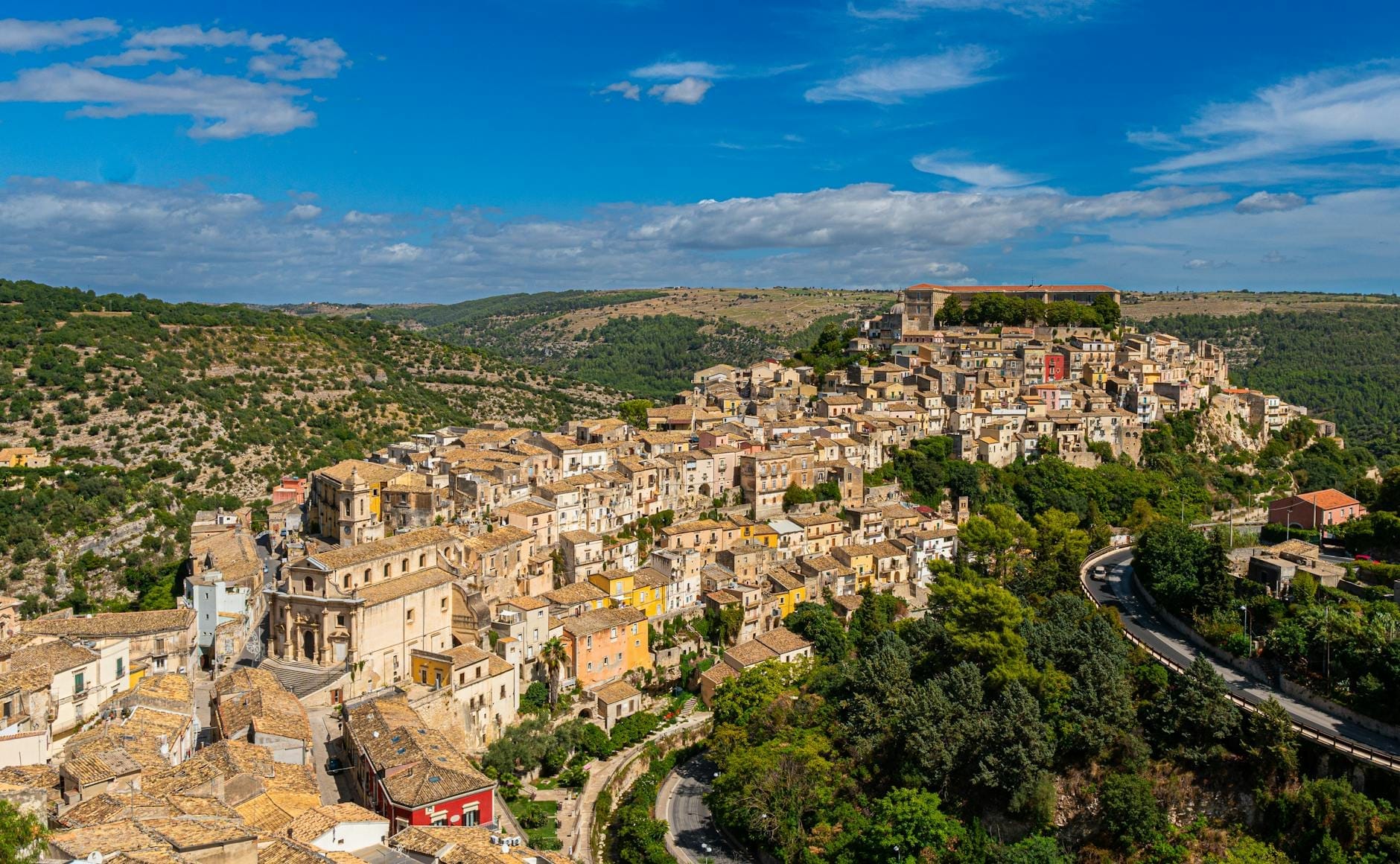
What Ragusa Ibla Actually Is
Ragusa Ibla is the historic lower town of Ragusa, a city divided by geology and history into two distinct halves. The upper town, Ragusa Superiore, is the modern administrative center. Ibla is what came before: a settlement with roots tracing back to the ancient Sicel and Greek-era town of Hybla Heraea, perched on a limestone ridge above the gorge of the Irminio River in the Hyblaean Hills.
The quarter as it stands today is largely a product of catastrophe. The earthquake of January 1693, one of the most destructive seismic events in Italian history, leveled much of southeastern Sicily. Where some towns were rebuilt on new sites, Ragusa Ibla was reconstructed in place, and its architects and patrons seized the moment. The result is a remarkably coherent ensemble of late-Baroque churches, aristocratic palazzi, and intimate piazzas, all built from the local golden limestone that turns amber in afternoon light.
In 2002, Ragusa Ibla became part of the UNESCO World Heritage Site known as the Late Baroque Towns of the Val di Noto, a cluster of eight southeastern Sicilian towns recognized for their outstanding post-earthquake reconstruction. Of all eight, Ibla is arguably the most atmospheric and the most intact.
Arriving: First Impressions and Orientation
Most visitors arrive from Ragusa Superiore, the upper town. You can drive down via the connecting road, but the most rewarding approach is on foot through the stairways and ramps that link the two levels. The descent takes around 15 minutes and offers your first real sense of Ibla's scale: rooftops and bell towers stacked below you, the valley floor cutting away to the south, the ridge curving under the weight of centuries of stone.
The quarter has no gates or ticketed entry. You simply walk in. Streets are narrow, paved in uneven basalt and limestone, and frequently stepped. The central spine runs roughly from Piazza della Repubblica at the upper entrance through to the Giardino Ibleo at the eastern tip. Most of the major churches, palazzi, and cafes cluster along or just off this route.
💡 Local tip
Wear proper walking shoes with grip. The streets look picturesque in photographs but are genuinely uneven underfoot, and some slopes are steep enough to be tiring in heat or after rain.
Parking in and around Ibla is limited and the central streets fall under ZTL (zona a traffico limitato) restrictions at various hours. If you arrive by car, look for designated parking areas on the approach roads and plan to walk from there. Visitors with mobility difficulties will find Ibla genuinely challenging: stairways are unavoidable on many routes, and the terrain is uneven throughout.
Tickets & tours
Hand-picked options from our booking partner. Prices are indicative; availability and final rates are confirmed when you complete your booking.
Tour of Ragusa, Modica and Noto from Syracuse with private driver
From 770 €Instant confirmationFree cancellationPrivate Tour to Noto, Modica and Ragusa from Syracuse with Lunch
From 1.165 €Instant confirmationFree cancellationEtna South Upper Craters Guided Excursion from Taormina
From 42 €Instant confirmationFree cancellationTaormina private tour with an expert guide
From 42 €Instant confirmationFree cancellation
The Architecture: What You Are Looking At
The dominant feature of Ragusa Ibla is the Cathedral of San Giorgio, which stands at the top of a broad staircase on the main piazza bearing its name. Designed by Rosario Gagliardi and completed in 1775, its tiered facade rises in three receding orders of pilasters and columns, topped by a dome added in the 19th century. It is one of the finest examples of Sicilian Baroque in existence. The interior is worth entering for its scale and the quality of light through the side windows in the late morning.
Gagliardi was also responsible for the Church of San Giuseppe in Piazza Pola, another landmark worth seeking out. The Cathedral of San Giorgio draws the most visitors, but the surrounding streets hold dozens of smaller churches, many still active, and several aristocratic palaces whose carved portals and balconies adorned with grotesque corbels are a signature feature of the local Baroque style.
The balcony corbels are particularly worth studying up close. They are carved in forms that range from mythological figures to horses to expressive human faces, each palazzo competing with its neighbors in baroque extravagance. Corso XXV Aprile, the main pedestrian street, offers a concentrated display of these details.
ℹ️ Good to know
Ragusa Ibla is said to contain around 50 Baroque churches within its compact boundaries. You will not visit them all, but the sheer density means you round almost every corner to find another facade or campanile.
How the Experience Changes Through the Day
Ibla is at its quietest and most rewarding before 9 am. The streets are cool, the light is soft and directional, and the only sounds are church bells, pigeons on the rooftops, and the occasional delivery vehicle navigating the narrow lanes. The smell of fresh bread and coffee drifts from bars that open early. At this hour, the quarter genuinely feels like a living neighborhood rather than a tourist destination.
From mid-morning, tour groups begin to arrive, concentrating around Piazza del Duomo and the Cathedral of San Giorgio. The piazza itself is long and sloped, lined with outdoor cafe tables, and becomes the social center of the day. This is the moment Ibla resembles the television version of itself: the one familiar from the Inspector Montalbano crime series, which used Ragusa Ibla extensively as a filming location and brought it to international attention well before most travel publications caught up.
By early afternoon, particularly in summer, the heat settles into the stone streets and most visitors retreat. This is actually a good moment to walk the quieter western and northern edges of the quarter, where streets narrow further and there are fewer tourists and more locals going about ordinary routines. The Giardino Ibleo at the eastern tip is reliably shaded and offers a place to sit before the late afternoon brings a second wave of visitors and golden hour photographers.
At dusk, the honey-colored stone takes on a deep amber glow that is genuinely difficult to overstate. The piazza empties of day-trippers, restaurants and bars fill, and the quarter settles into an evening rhythm that feels much more local. If you have the option to stay overnight in or near Ibla rather than making it a day trip, the difference between morning quiet and midday crowds makes a strong case for doing so.
The Giardino Ibleo and the Eastern Viewpoints
At the far eastern end of Ragusa Ibla, the Giardino Ibleo is a 19th-century public garden that sits at the very tip of the ridge. Entry is free. The garden contains several small churches on its perimeter, mature trees providing genuine shade, and benches where residents of the quarter sit in the late afternoon. It is unhurried and unpretentious, and it offers some of the best views across the valley and down toward the gorge below.
From various points along the garden's edge and the adjacent streets, you can look out over the Hyblaean landscape: scrubby limestone hills, terraced olive groves, the distant gleam of greenhouses on the plain below. On clear days the light is extraordinary. The garden also marks the practical end of Ibla's main walking route, and most visitors turn back from here toward the upper town.
💡 Local tip
For the best elevated view of Ragusa Ibla from the outside, the road between Ragusa Superiore and the valley floor offers several natural vantage points. Driving or walking this route at golden hour gives you the panoramic shots you have seen on travel sites.
Eating, Drinking, and Practical Logistics
The cafe and restaurant scene in Ibla is concentrated around Piazza del Duomo and Corso XXV Aprile. Quality varies significantly: the tables directly on the main piazza carry a premium for location, while the better-value and often better-quality food tends to be found one or two streets back. Local specialties in the Ragusa area include a distinctive aged cheese called Ragusano DOP, a hard cow's milk cheese with a sharp, savory flavor worth seeking out in a wine bar or deli.
Ragusa Ibla is not an isolated stop. It sits at the center of a cluster of extraordinary baroque towns. Ragusa makes a natural base for day trips to Modica, known for its ancient chocolate-making tradition, and to Scicli and Noto. If you are planning a wider circuit of southeastern Sicily, Ibla is the logical starting point.
There is no single tourist information office covering all of Ibla's attractions, and signage for individual churches is inconsistent. Some churches are locked outside of Mass times and are only reliably open for a narrow window in the morning and again in the late afternoon or early evening. If visiting specific interiors is a priority, arriving around 10 am or 5 pm gives the best chance of finding them open. Always verify current hours locally.
⚠️ What to skip
Modest dress is required inside churches: shoulders and knees should be covered. Many churches in Ibla are still active places of worship, not museums, and this is taken seriously.
Who Should Adjust Their Expectations
Ragusa Ibla is a real neighborhood as much as it is a tourist attraction. It is not an open-air museum with curated paths and comprehensive interpretive signage. If you arrive expecting an easy, well-signed circuit with comfortable access to all major churches and a clear narrative arc, you will find the reality more chaotic and more rewarding than that. The best visits tend to be the ones where the itinerary is loose and the pace is slow.
Visitors who struggle with uneven terrain or steep slopes will find Ibla genuinely difficult. The quarter is not wheelchair accessible in any practical sense across most of its area, and even fit walkers find some stretches tiring in summer heat. Those who prefer flat, fully accessible urban sightseeing should factor this in honestly before planning their visit.
Similarly, if your primary interest is beaches or coastal scenery, Ibla is an inland Baroque hill town and offers none of that. The Vendicari Nature Reserve and the coast around Marzamemi are within reach if you want to combine cultural and coastal stops in southeastern Sicily.
Insider Tips
- The view of Ragusa Ibla from the SS194 road as you approach from Modica is one of the most dramatic panoramas in Sicily. Pull over safely before you enter the urban area to photograph the quarter from a distance across the valley.
- The Inspector Montalbano television series was filmed extensively in Ragusa Ibla. The commissioner's police station scenes were shot at a building near Piazza del Duomo. Fans of the series will recognize the piazza instantly, but even non-fans benefit from the show's effect: Ibla has been immaculately maintained partly because of the international attention it brought.
- Many of Ibla's smaller churches are only open during morning and late-afternoon Mass hours. The window from around 5 pm to 7 pm on weekdays is often the most reliable for finding the widest selection of interiors accessible without interrupting a service.
- The Giardino Ibleo is almost always quieter than the main piazza even during peak season. If you want somewhere to sit with a view and no tour group commentary in the background, walk to the end of the garden.
- Local parking enforcement around Ibla's ZTL zones is active. If you arrive by car, look for the blue-line parking areas on the approach roads and do not assume that a quiet street means unrestricted parking. Fines are issued and rental companies pass them on.
Who Is Ragusa Ibla For?
- Architecture and art history enthusiasts who will genuinely engage with Baroque church facades and palazzo details
- Photographers, particularly those who can visit at dawn or dusk for the quality of light on the stone
- Couples and slow travelers who want a Sicilian town experience without a heavy tourist-industry overlay
- Fans of the Inspector Montalbano series looking to recognize filming locations in context
- Travelers building a broader baroque Sicily itinerary that includes Noto, Modica, and Scicli
Nearby Attractions
Other things to see while in Ragusa & the Baroque Southeast:
- Cathedral of San Giorgio, Ragusa
Rising above Piazza Duomo at the heart of Ragusa Ibla, the Cathedral of San Giorgio is the defining landmark of Sicily's UNESCO-listed baroque southeast. Designed by Rosario Gagliardi and consecrated in 1775, its three-tiered façade and dome are as striking in afternoon light as they are at dusk. This guide covers what to expect, when to go, and how to get the most from a visit.
- Marzamemi
Marzamemi is a hamlet of a few hundred residents on Sicily's southeastern tip, built around a thousand-year-old tuna fishery. Its 18th-century baroque square, clear Ionian waters, and unhurried pace make it one of the most rewarding small stops in the province of Syracuse.
- Modica & Its Chocolate
Modica, a steep baroque hill town in southeastern Sicily, is the undisputed home of Cioccolato di Modica IGP, a cold-processed chocolate with roots in Aztec tradition, brought to Sicily by the Spanish in the 16th century. Exploring this town means walking ancient stairways lined with chocolatiers, breathing in cocoa-scented air, and tasting something that genuinely has no modern equivalent.
- Noto Cathedral
Standing at the top of a broad ceremonial staircase above Piazza Municipio, Noto Cathedral is the architectural centerpiece of one of Sicily's most beautifully preserved baroque towns. Built after the catastrophic 1693 earthquake, restored after a dramatic dome collapse in 1996, it is a UNESCO World Heritage landmark and a functioning place of worship that rewards both the devout and the architecturally curious.