Baroque Sicily: The Definitive Guide to the Val di Noto Towns
Sicily's Val di Noto is one of Europe's most remarkable architectural achievements: eight towns rebuilt in coordinated Late Baroque style after a catastrophic 1693 earthquake, now a single UNESCO World Heritage Site. This guide covers all eight towns, how to get between them, what to prioritise, and when to go.
Plan and book this trip
Tools from our partner Travelpayouts help you compare flights and hotels. If you book through them, we may earn a commission at no extra cost to you.
Flights
Hotels map
TL;DR
- The Val di Noto is a UNESCO World Heritage Site comprising eight Baroque towns in south-eastern Sicily: Noto, Ragusa, Modica, Scicli, Catania, Caltagirone, Militello Val di Catania, and Palazzolo Acreide.
- All eight were rebuilt after the devastating 1693 earthquake in a deliberate Late Baroque urban style. The Ragusa Ibla, Noto, and Syracuse corridor is the most visited stretch.
- The core circuit — Noto, Ragusa Ibla, Modica, and Scicli — is doable in 3-4 days by car; public transport is possible but slower.
- Spring (April-May) and early autumn (September-October) offer the best conditions: warm weather, manageable crowds, and longer opening hours.
- "Val di Noto" does not mean just Noto. It refers to an Arab-era administrative district, not a valley, and covers a wide area of south-eastern Sicily.
What Is the Val di Noto and Why Does It Matter?
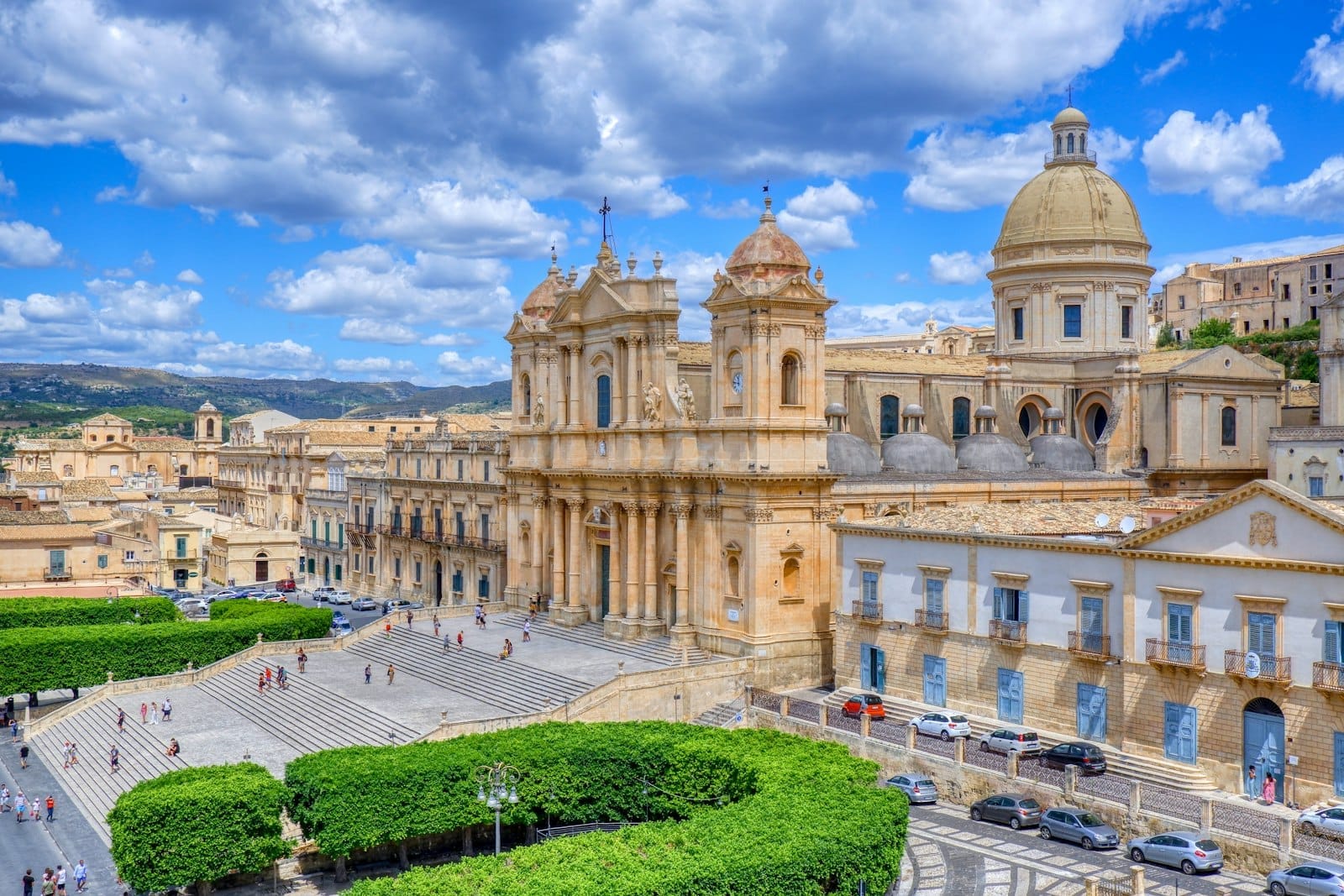
On 11 January 1693, an earthquake measuring around 7.4 on the Richter scale struck south-eastern Sicily, killing an estimated 60,000 people and levelling entire cities. What followed was one of the most ambitious urban rebuilding projects in European history. Within decades, the destroyed towns were reconstructed almost entirely in the Late Baroque style then sweeping Europe, with local architects adding a distinctly Sicilian character: exuberant carved balconies, convex church facades, ceremonial staircases, and stone that shifts colour from volcanic black to warm amber depending on where you are.
UNESCO inscribed these eight towns as a serial World Heritage Site in 2002, recognising them as "the culmination and final flowering of Baroque art in Europe." The designation is broad by design: some towns (Caltagirone, Noto, Ragusa) earned inscription for their entire historic centres, while others are represented in the inscription by selected historic areas and key monuments rather than their entire contemporary urban fabric.
ℹ️ Good to know
The name 'Val di Noto' is commonly misunderstood. 'Val' here does not mean valley in the geographic sense. It derives from the Arabic 'Vallo', an administrative district used during Arab rule in medieval Sicily. The Val di Noto was one of three administrative divisions of the island. Today the term refers specifically to this UNESCO cluster of south-eastern Baroque towns.
The Eight Towns: What Each One Offers
Not all eight towns deserve equal time. Here is an honest breakdown of what each offers and who should prioritise them.
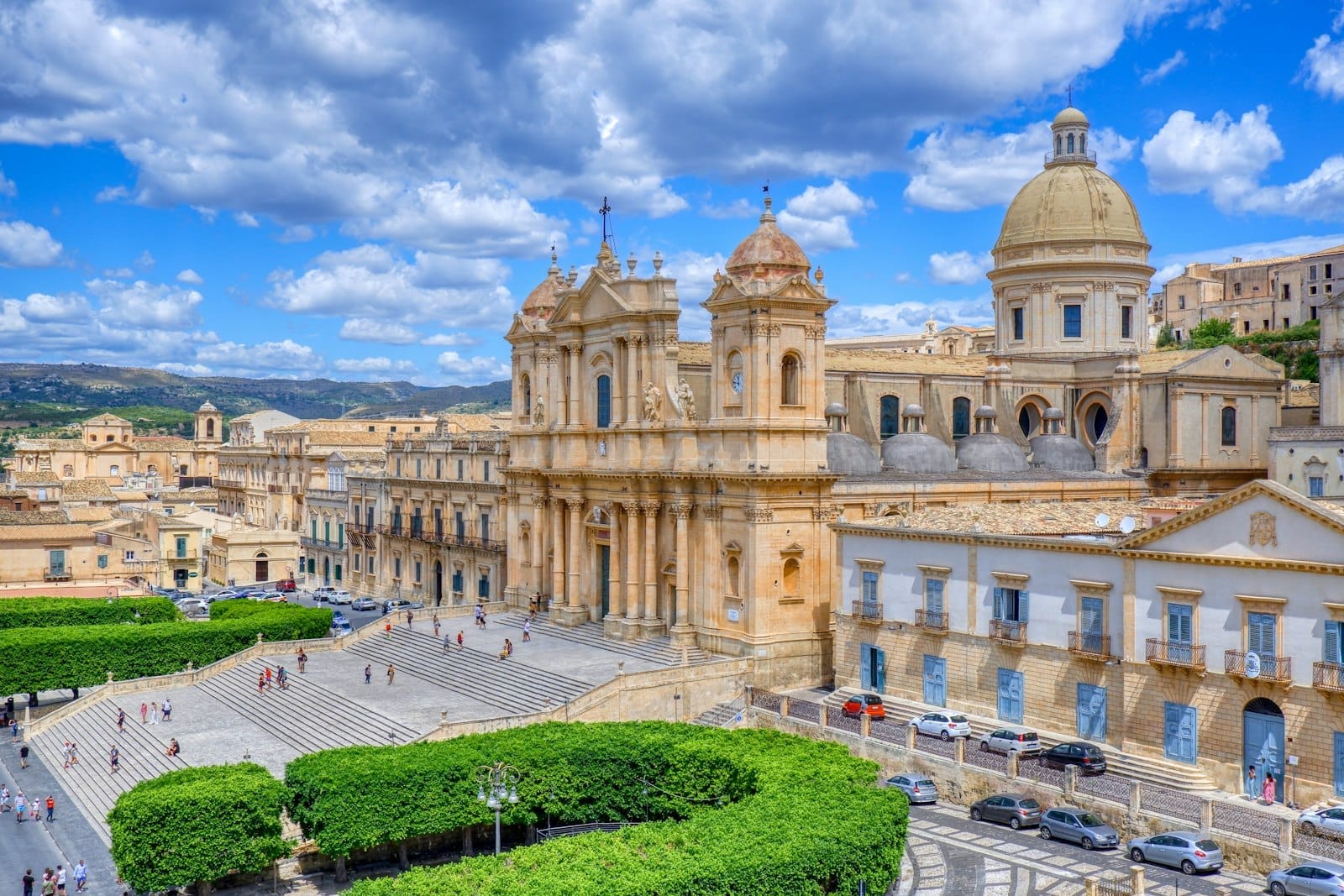
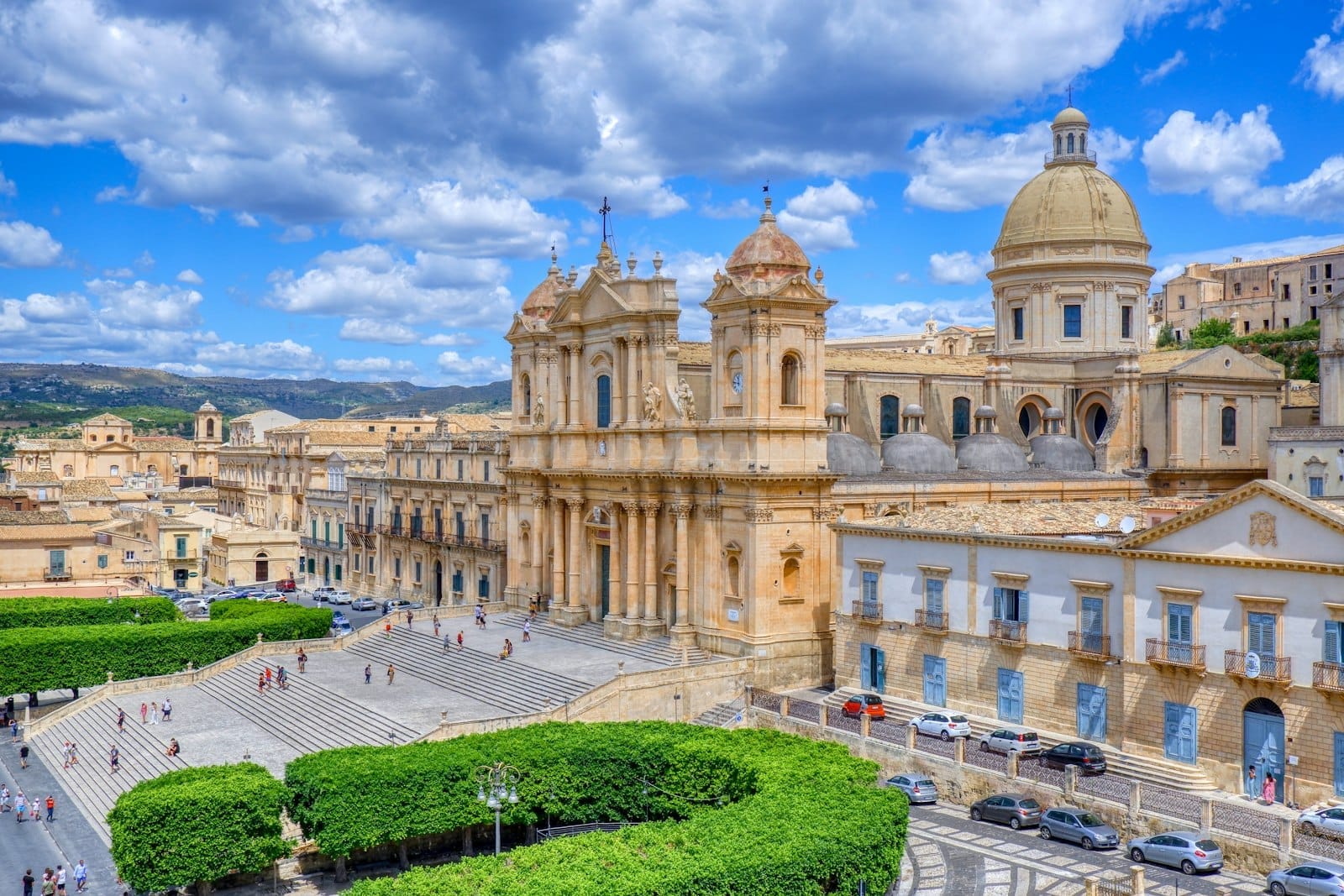
- Noto The showpiece of the group and the easiest to cover on foot. The Corso Vittorio Emanuele runs as a theatrical stage through a sequence of honey-coloured sandstone palazzi and churches. The cathedral facade, restored after its dome collapsed in 1996, is one of the most photographed in Sicily. Allow at least half a day; a full day if you want to explore the side streets and the monastery church of San Domenico.
- Ragusa (with Ragusa Ibla) Ragusa is effectively two towns joined by a ridge. The lower, older Ibla district is the one worth your time: a labyrinth of stepped alleys culminating at the Cathedral of San Giorgio, widely considered the finest Baroque church in Sicily. The upper town (Ragusa Superiore) is less spectacular but has good restaurants and accommodation. Budget a full day minimum.
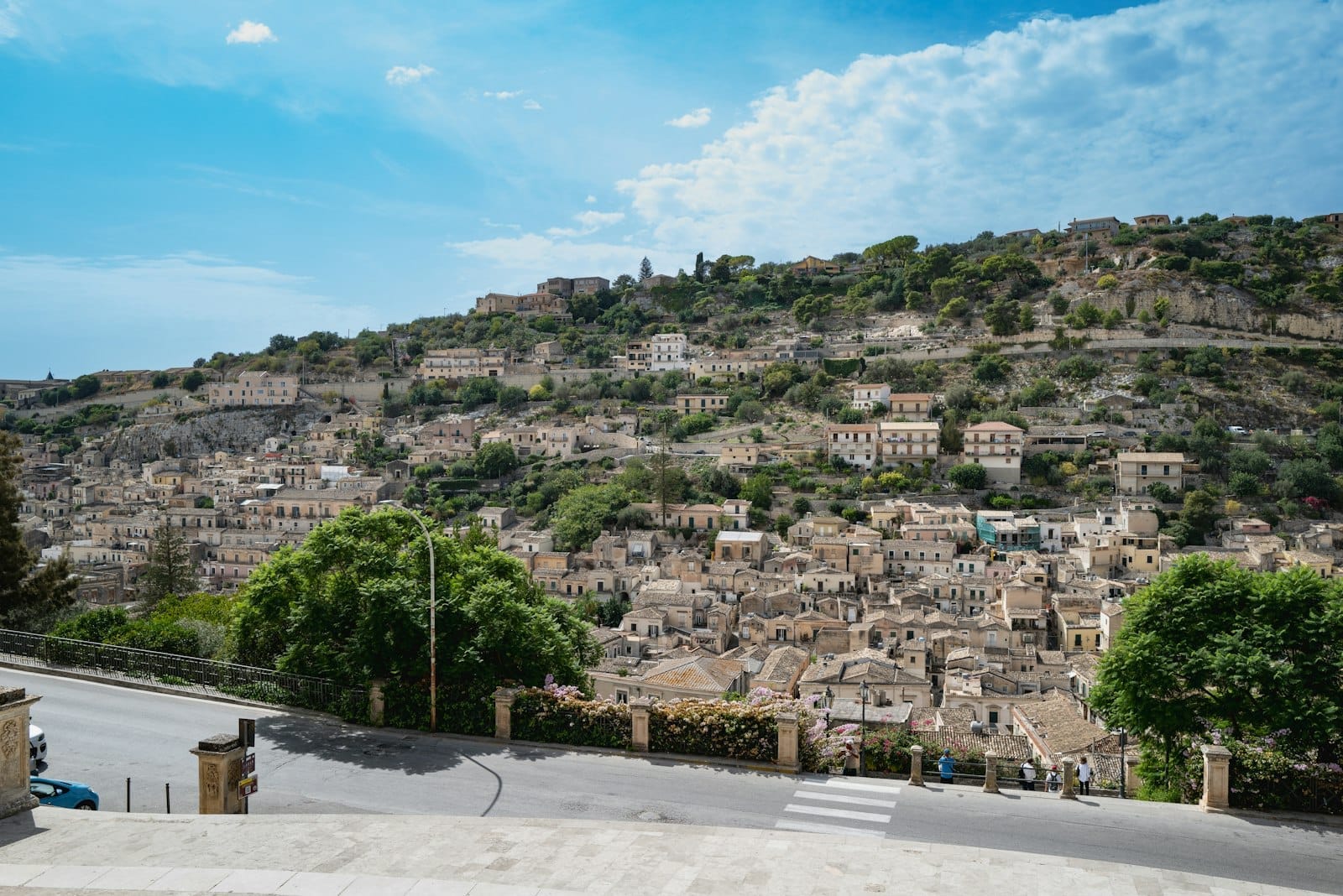
- Modica Modica sits in a steep gorge with two churches — San Giorgio and San Pietro — anchoring a dramatic skyline. It is also famous for its grainy, spiced chocolate made to a pre-industrial Aztec-derived recipe. The combination of architecture and food culture makes it one of the most satisfying towns in the group. Half a day suffices for the sights; more if you linger over chocolate shops.
- Scicli The least touristed of the core four and, for that reason, often the most atmospheric. Scicli gained wider recognition as a filming location for Inspector Montalbano (the municipal offices double as Montalbano's police station). Its Baroque churches and almost unchanged street life make it worth a few hours, particularly on a weekday.
- Catania The only major city in the group. Catania was rebuilt in dark lava stone after 1693, giving it a dramatically different palette from the honey-coloured towns to the south. The Piazza del Duomo, the cathedral, and the fish market are the architectural highlights. Catania also functions as the main transport hub for the region, with Sicily's second-busiest airport (CTA, about 5-6 km from the centre).
- Caltagirone Known for its ceramic tradition, which predates and outlasted the Baroque rebuilding. The Scala di Santa Maria del Monte — a monumental staircase of 142 steps decorated with hand-painted majolica tiles — is the defining image of the town. The ceramic aesthetic is woven through the architecture in a way you will not find elsewhere in the group. Worth a half-day, especially in combination with a drive through the interior.
- Palazzolo Acreide A smaller, quieter town inscribed primarily for individual Baroque monuments, most notably the church of San Sebastiano and the Palazzo Judica. It sits close to the Greek ruins of Akrai, making it a good pairing for those interested in Sicily's deeper archaeological layers.
- Militello Val di Catania The least visited of the eight and inscribed only for selected buildings rather than its entire centre. Unless you are completing the full UNESCO circuit, it is easily skipped. If you do go, the church of Santa Maria della Stella contains a notable Baroque altarpiece.
How the Architecture Actually Differs Across the Towns
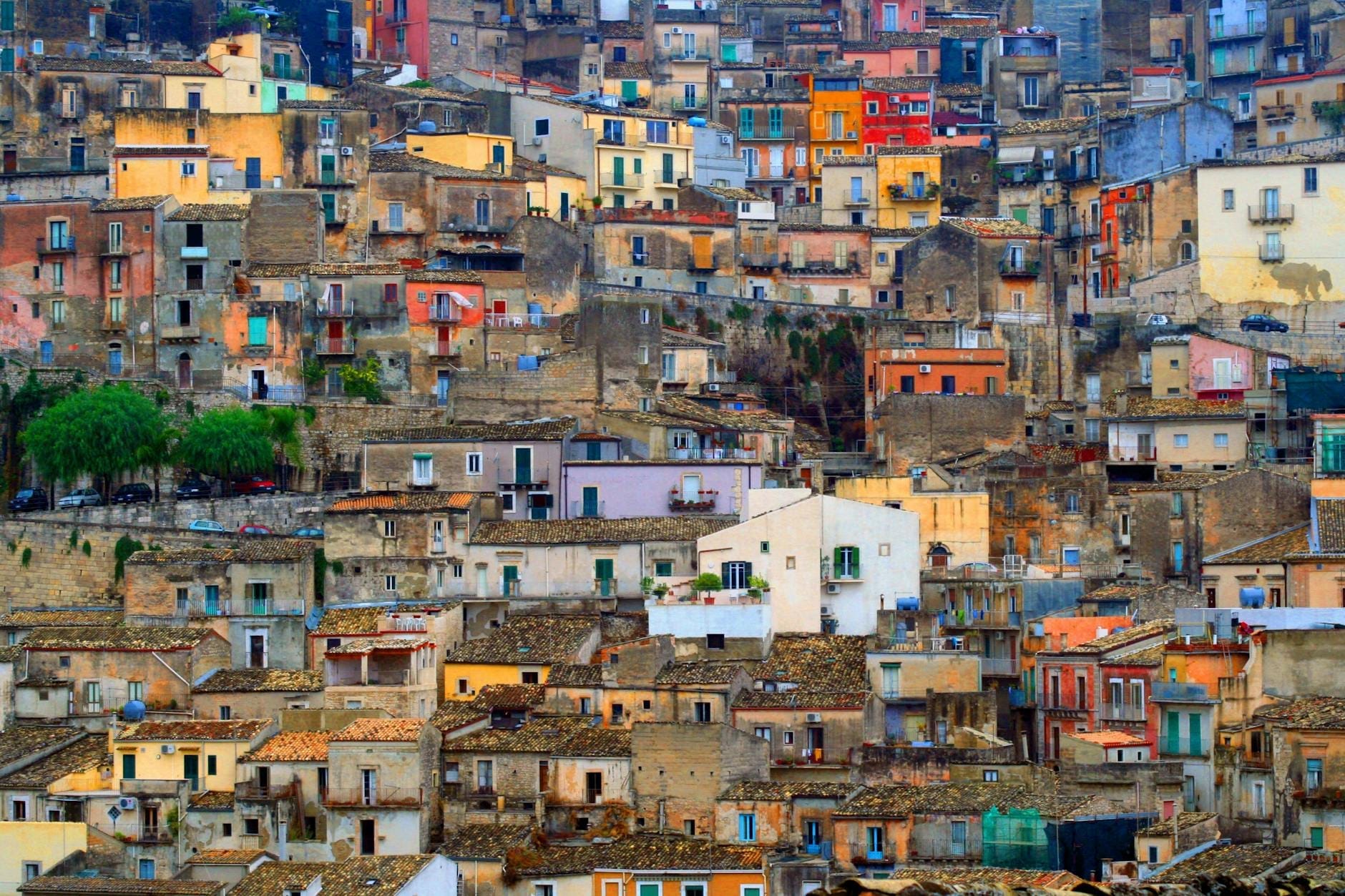
One of the most common mistakes visitors make is assuming the Val di Noto towns are interchangeable Baroque copies of each other. They are not. The architecture varies significantly in material, scale, and character, largely because local stone determined what builders could do.
In Catania, the dominant material is dark basaltic lava from Mount Etna, creating facades that look almost monumental and sombre compared to the south. In Noto, the local tufa limestone is soft, warm, and almost golden in late-afternoon light — the effect photographers chase. Modica and Ragusa use a slightly cooler grey limestone, giving their streets a harder, more austere character despite the ornate carving. Caltagirone introduces colour through its ceramic tradition, embedding tiles into stair risers and church facades in a way that is genuinely unlike anywhere else in the group.
The architects who oversaw the rebuilding drew on mainland Italian and Spanish Baroque conventions but interpreted them through a local lens. Rosario Gagliardi, responsible for key buildings in Noto, Ragusa Ibla, and Modica, is the most significant figure: his approach to convex facades, layered ornamentation, and the placement of churches at the end of axial streets is what gives several of these towns their theatrical quality. His Cathedral of San Giorgio in Ragusa Ibla is considered his masterwork.
✨ Pro tip
The best light in Noto is in the two hours before sunset, when the western facades of the Corso Vittorio Emanuele turn the colour of amber. Most tour groups arrive mid-morning and leave by early afternoon. If you can stay overnight, the streets after 9pm in summer are genuinely quiet and the cathedral is often lit.
Planning Your Route: Getting Around the Val di Noto
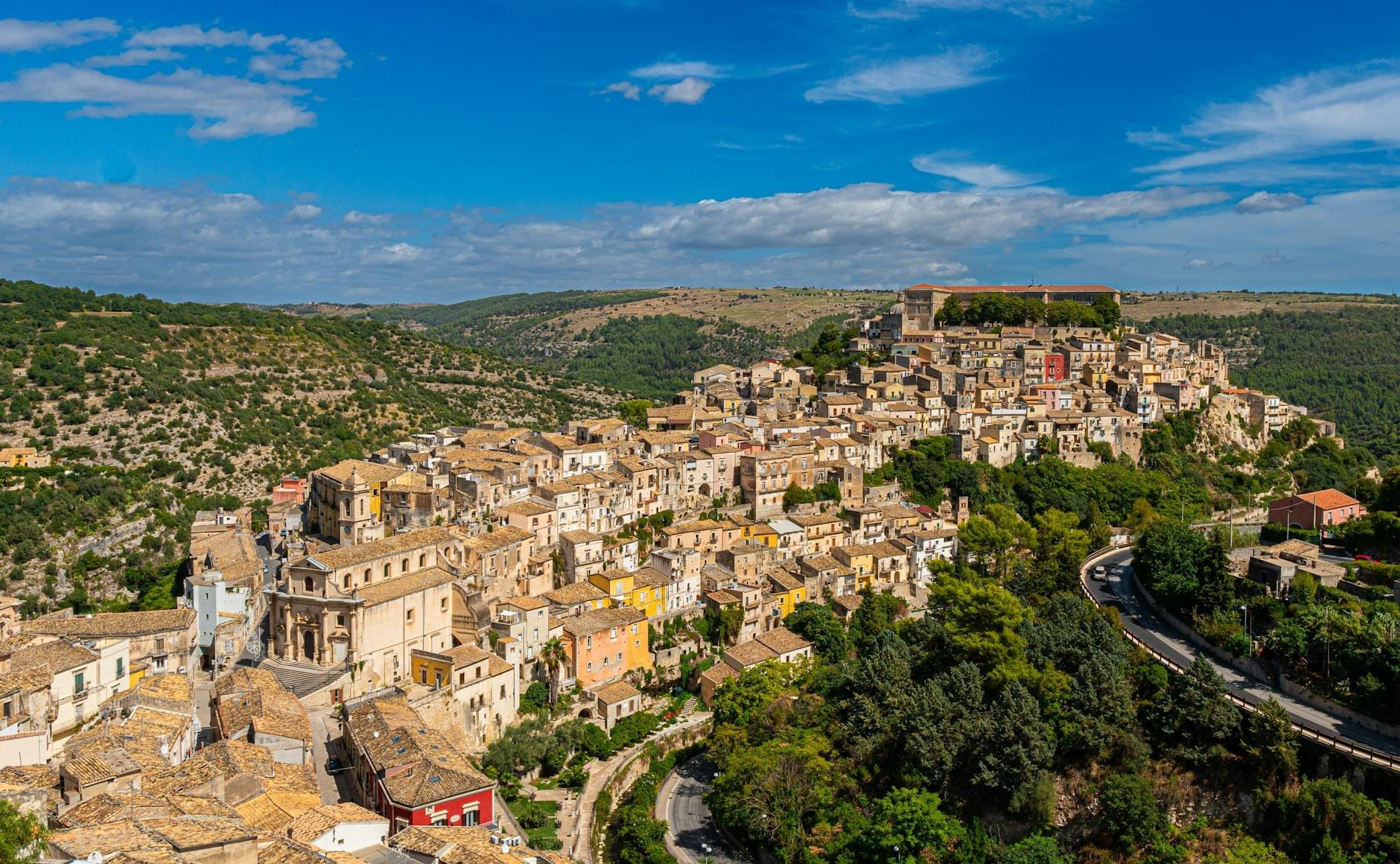
The Val di Noto lies in south-eastern Sicily, roughly between the Monti Iblei and the Erei Mountains. The most practical base towns for exploring the circuit are Noto, Ragusa, or Modica. If you want coast access alongside Baroque architecture, Syracuse (Siracusa) is 32 km north of Noto and works well as an additional overnight stop, particularly for the Ortigia historic island and the Greek archaeological park.
A rental car is the most efficient way to cover the circuit. Distances between towns are manageable — Noto to Modica is about 40 km, Modica to Ragusa about 15 km, Ragusa to Scicli about 25 km — and the roads through the Iblean plateau are scenic rather than stressful. Parking in most of the smaller towns is available on the periphery of the historic centres, though Ragusa Ibla has limited space and a walk down from the upper town is usually required.
Public transport is possible but requires patience. Trains connect Catania, Syracuse, and Noto (the Catania-Syracuse-Noto-Ragusa line via Trenitalia). Ragusa has a station but it sits well below Ragusa Ibla, requiring a bus or taxi up. Modica's station is also at some distance from the historic centre. Regional buses (AST and Interbus operate the main routes) fill some of the gaps, but timetables are designed around school and work schedules, not tourist itineraries. Always check current timetables directly with operators before relying on any route.
⚠️ What to skip
Catania's Fontanarossa Airport (CTA) is the most convenient gateway for the Val di Noto circuit, located about 70-80 km from Noto. Comiso Airport (CIY), which serves the Ragusa area and sits roughly 20 km from Ragusa, handles fewer routes but is worth checking if you are flying from within Europe. Do not assume Comiso has connections from your departure city — verify before booking.
When to Visit: Seasonal Realities
South-eastern Sicily has a classic Mediterranean climate: hot, dry summers and mild, wet winters. For the Val di Noto towns specifically, the best windows are April to early June and September to October. This is when typical daytime temperatures often sit in the roughly 20-26°C range, the surrounding countryside is green or golden rather than scorched, and the towns are busy but not overwhelmed. If you are combining the Baroque circuit with beach time at spots like Vendicari Nature Reserve or the coast near Marzamemi, September works particularly well: the sea is still warm from summer, crowds have thinned, and the light is softer.
July and August bring genuine heat — inland temperatures regularly exceed 35°C and can spike higher. The towns themselves are not unpleasant in the early morning or evening, but the midday hours are brutal for walking. Summer also brings festival crowds, particularly around Ferragosto (15 August), when Italians travel domestically in large numbers. Accommodation books out weeks in advance in the smaller towns. If you must go in high summer, book early and plan to do all serious sightseeing before 10am and after 6pm.
Winter (December to February) is quiet and cheap, but some smaller churches and monuments reduce their hours significantly or close for restoration. The upside is that you can have Ragusa Ibla almost to yourself on a weekday morning, which is a genuinely different experience from the summer crush. The Infiorata festival in Noto, when the Corso is carpeted in floral designs, usually takes place in May and is one of Sicily's most visually striking annual events — worth planning around if the timing works.
- April-May: Best overall balance of weather, light, and crowd levels. Infiorata festival in Noto (typically in May, often around the third weekend).
- June: Warm but manageable. Extended opening hours begin at many monuments. Sea temperatures rising.
- July-August: Hottest and busiest. Early mornings and evenings only for walking. Book accommodation months ahead.
- September-October: Excellent. Harvest season, lower crowds, warm sea. Strong value on accommodation.
- November-March: Quiet, cheaper, some closures. Good for those who prioritise atmosphere over certainty of access.
Key Sights You Should Not Miss (and One to Skip)
The Cathedral of San Giorgio in Ragusa Ibla is the non-negotiable highlight of the entire circuit. Designed by Rosario Gagliardi and completed in the mid-18th century, its three-tiered facade rising above a broad ceremonial staircase is everything Sicilian Baroque promises and rarely fully delivers. Visit in the late afternoon when the light hits the facade directly.
In Noto, the Noto Cathedral and the Via Nicolaci are the two essential stops. The Via Nicolaci is a short street lined with Baroque palaces whose iron balconies are carved with extraordinary detail — grotesque figures, horses, angels, and mermaids — representing one of the densest concentrations of decorative stonework in Europe. Take time to look up.
In Caltagirone, the Scala di Santa Maria del Monte is far more impressive in person than photographs suggest. Each of the 142 steps is faced with individually designed hand-painted ceramic tiles. The staircase is illuminated with oil lamps on specific dates in July and August (the Luminaria di San Giacomo) — a spectacular effect, though the crowds on those evenings are considerable.
The one sight that is sometimes over-sold: the Modica chocolate experience. Modica chocolate is genuinely interesting historically — a cold-processed chocolate using a technique descended from Aztec preparation methods, without added cocoa butter, producing a grainy texture unlike anything in mainstream chocolate. It is worth trying. However, the town's historic centre and church of San Giorgio are the real reasons to come; do not make the journey purely for the chocolate shops.
FAQ
How many days do I need to see the Val di Noto Baroque towns?
Three to four days covers the core circuit of Noto, Ragusa Ibla, Modica, and Scicli comfortably, with time to actually absorb each place rather than just tick boxes. Add a day or two if you want to include Catania or a side trip to Syracuse. Covering all eight UNESCO towns in a single trip requires at least five to six days and a car.
Is a car necessary to visit the Val di Noto?
It is the most practical option by far. Trains connect Catania, Syracuse, and Noto, and there are regional buses between the larger towns, but timetables are infrequent and not designed for tourists. Without a car, you will spend significant time waiting and will find it difficult to combine multiple towns in a day. Renting from Catania Airport (CTA) gives you the most flexibility.
What is the best base town for exploring the Val di Noto?
Noto, Ragusa, and Modica all work well. Noto is the most scenic and has the widest range of accommodation, from boutique hotels to agriturismi in the surrounding countryside. Ragusa (specifically the Ibla district) offers the most atmospheric overnight experience but has limited accommodation options that book up fast in summer. Modica sits centrally between the southern towns and is a good choice for those combining the circuit with visits further south.
Are the Val di Noto towns worth visiting outside summer?
Yes, particularly September-October and April-May. Winter visits (December-February) are possible and impressively crowd-free, but you should check opening hours for smaller churches in advance, as some reduce significantly or close for restoration. The main cathedrals and key monuments generally stay open year-round.
Can I visit the Val di Noto as a day trip from Catania or Syracuse?
You can do a single town as a day trip from either city. Noto is about 55 km from Syracuse and is the most common day-trip destination. Catania is further (around 90 km from Noto by road) but manageable. Trying to cover multiple towns in a single day trip from Catania or Syracuse is possible by car but exhausting and does not do justice to the towns.