Catania is Sicily's second city, built in black lava stone after the catastrophic 1693 earthquake and rebuilt in grand baroque style. Its center concentrates an extraordinary amount of history, street food, and urban energy within easy walking distance, all against the backdrop of Mount Etna's constant, brooding presence.
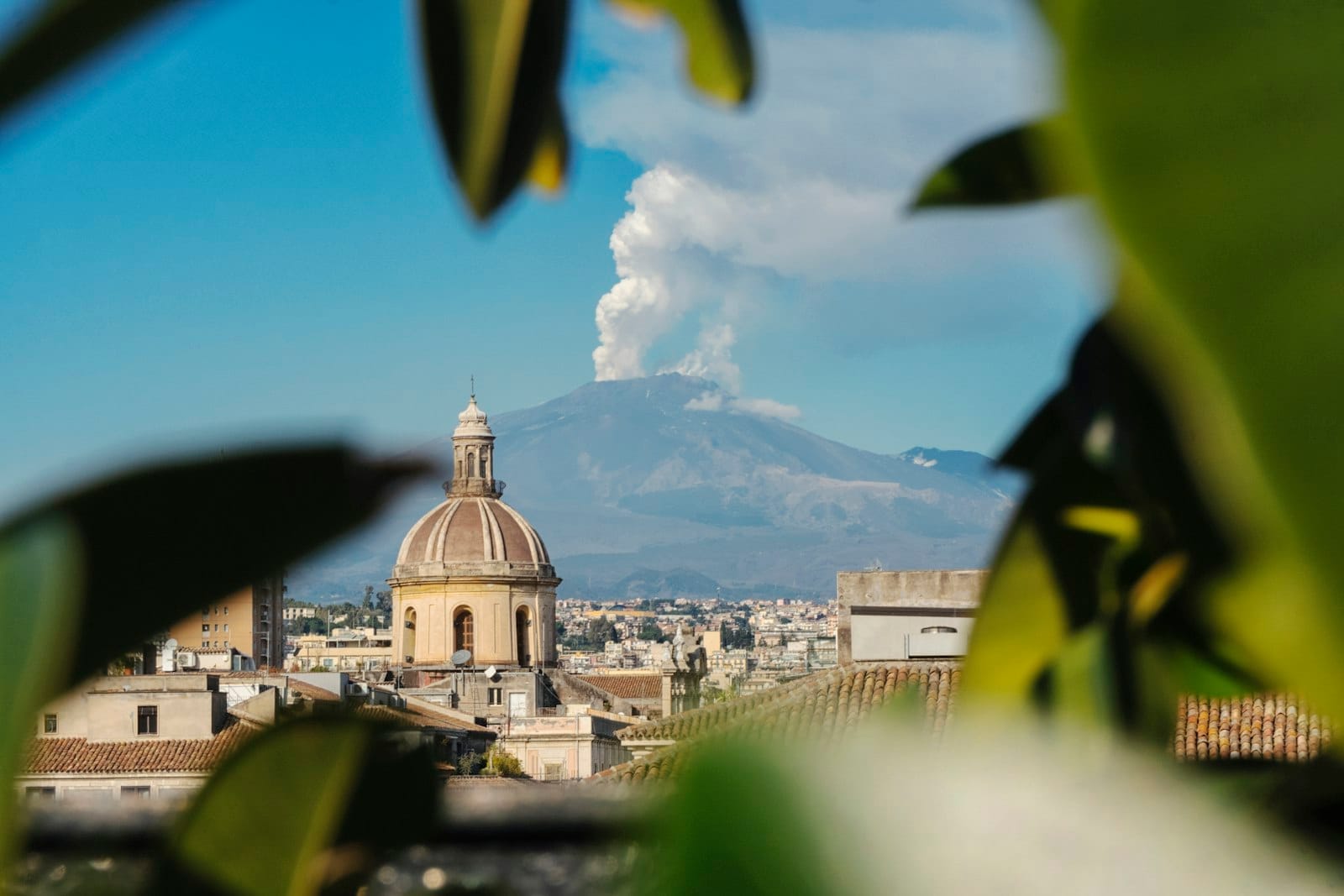
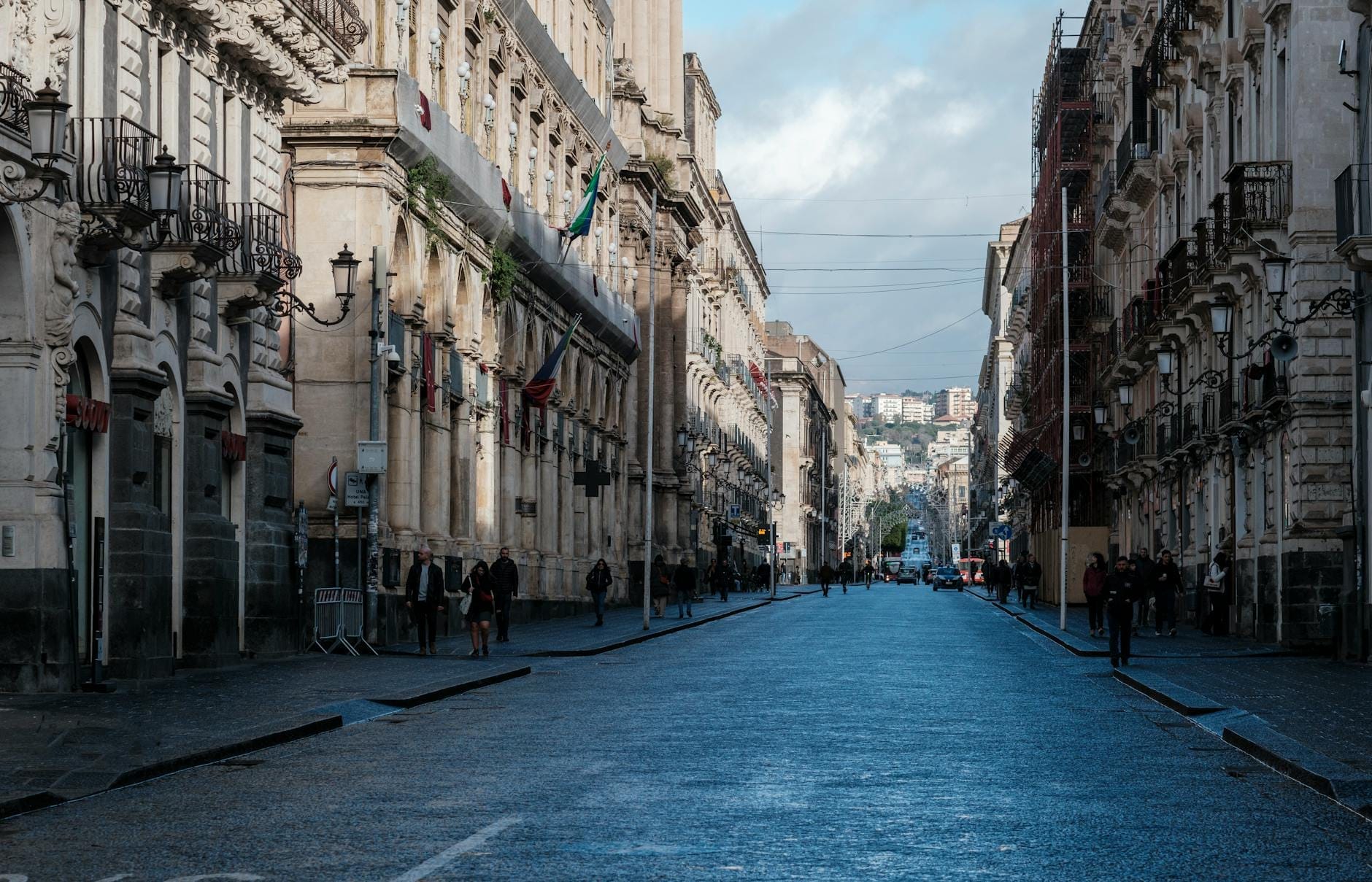
Catania is a city that earns its reputation on its own terms, distinct from the more tourist-polished towns of eastern Sicily. Built almost entirely from dark volcanic basalt and cream-colored limestone, its baroque centro storico radiates out from Piazza del Duomo along the long spine of Via Etnea, with Europe's most active volcano visible at the top of every northward-facing street.
Orientation
Catania sits on the eastern coast of Sicily, roughly halfway between Messina to the north and Siracusa to the south. The city faces the Ionian Sea and has Mount Etna rising directly behind it to the north-northwest, a geological reality that has shaped everything from the building materials underfoot to the city's repeated cycles of destruction and reconstruction. Catania-Fontanarossa Airport (IATA: CTA) is just 5 to 6 kilometers south of the city center, making Catania one of the easiest Sicilian cities to arrive in.
The historic center is compact and walkable. Its backbone is Via Etnea, a long, straight boulevard that cuts north from Piazza del Duomo all the way toward the volcano's slopes. Everything essential to understanding the city is within a 20-minute walk of Piazza del Duomo. Moving westward from that square brings you to the fish market district and Castello Ursino. Moving east takes you toward the port. Walking north along Via Etnea passes through successive piazzas, including Piazza Stesicoro, where the ruins of the Roman Amphitheatre surface unexpectedly from beneath the street-level city.
Catania's surroundings are equally important for any traveler using it as a base. The Aci Trezza coastline is about 10 kilometers north. The slopes of Etna are accessible within an hour. Siracusa is about 70 kilometers south by road. This central position on the east coast makes Catania one of Sicily's most practical bases for exploring the island's southeastern and volcanic landscapes.
ℹ️ Good to know
Catania's Fontanarossa Airport is connected to the city center by the ALIBUS shuttle, which runs frequently to the central train station and Arancini-Piazza Borsellino stop on Via Colombo. The ride takes around 20 minutes depending on traffic. Taxis operate on regulated fares from the official rank outside Arrivals.
Character & Atmosphere
Catania operates at a register that feels different from Sicily's more polished tourist destinations. It is a working city of just under 300,000 people, and the historic center reflects that: delivery vans navigate baroque piazzas, students fill the bars around the university buildings, and the fish market runs with the kind of organized chaos that suggests it has been doing this for centuries. The tourism layer exists, but it does not dominate.
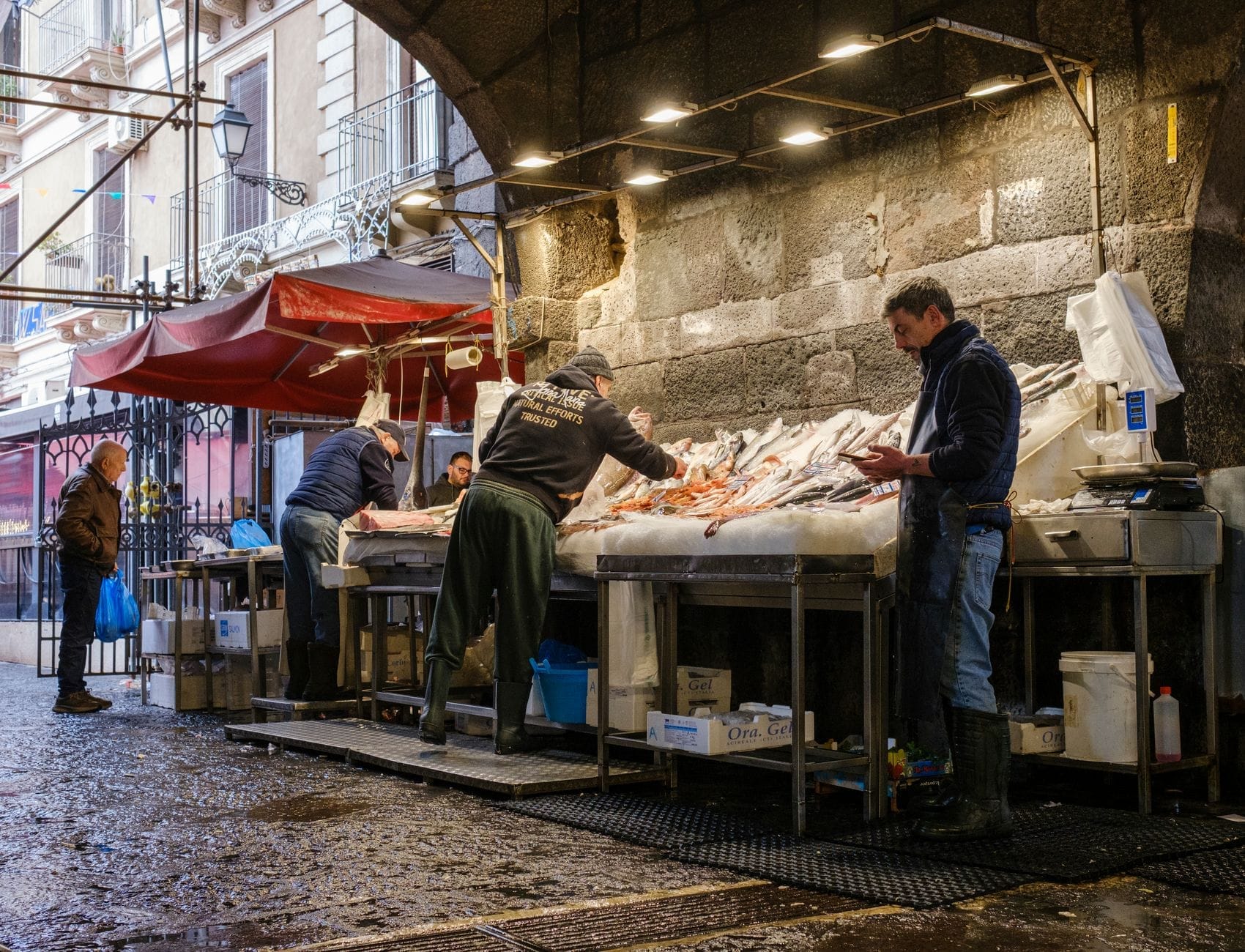
Early mornings in the center are defined by the fish market, La Pescheria, which opens just behind Piazza del Duomo. By 7am the stalls are at full pitch: swordfish heads propped upright on ice, vendors shouting prices in a mix of Italian and Sicilian dialect, the smell of salt water and fresh catch mixing with coffee from nearby bars. The noise is specific and unfiltered. By midmorning, the market winds down and the piazza reasserts itself as a meeting point, its baroque Cathedral of Sant'Agata and the famous elephant fountain catching the full force of the Sicilian sun.
Afternoons slow considerably. The streets narrow in the old town, and in July and August the heat radiating from black basalt paving stones is intense. Most shops pull their shutters down from around 1:30pm until 4 or 5pm. Via Etnea itself stays relatively active, but the smaller lanes behind the cathedral and around Piazza San Francesco d'Assisi are quiet enough to feel almost deserted. This is when the city's texture becomes most visible: the layering of Greek foundations, Roman structures, Norman stonework, and baroque facades compressed into a few city blocks.
By early evening, Catania transforms again. The university population drives an aperitivo culture concentrated around Via Teatro Massimo and the streets north of Piazza dell'Università. By 9pm, the pace of outdoor dining reaches a full pitch that continues well past midnight, particularly on weekends. The city's nightlife is genuine and local in character; it does not rely on tourist foot traffic to sustain itself.
What to See & Do
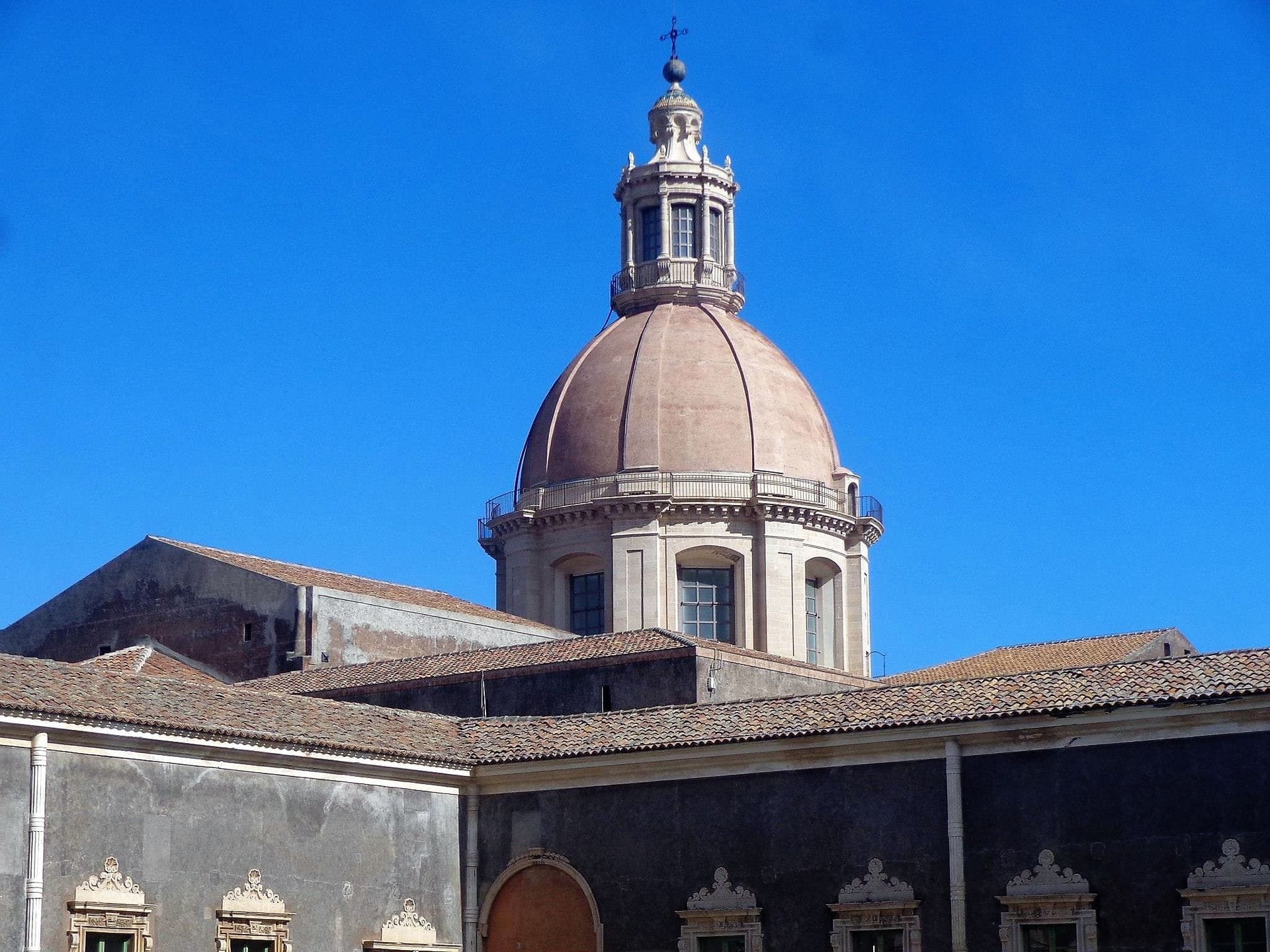
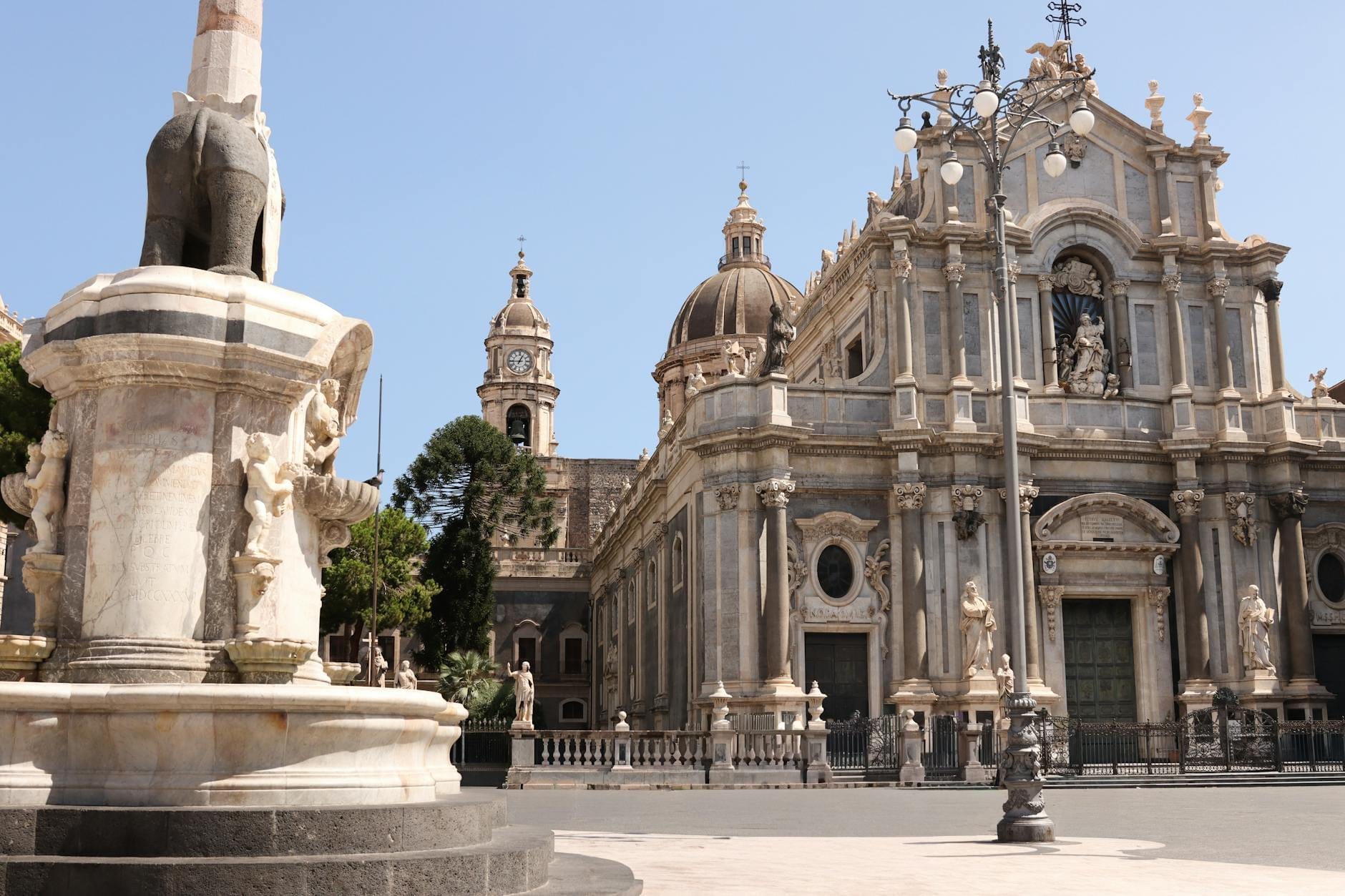
The anchor of the city center is Piazza del Duomo, one of Sicily's great baroque set pieces. The elephant fountain at its center, made of lava stone and dated to the 18th century, has become Catania's symbol. The Cathedral of Sant'Agata dominates the eastern side of the square, built over earlier Norman and Byzantine structures and dedicated to the city's patron saint, whose festival in early February is one of Sicily's largest religious events.
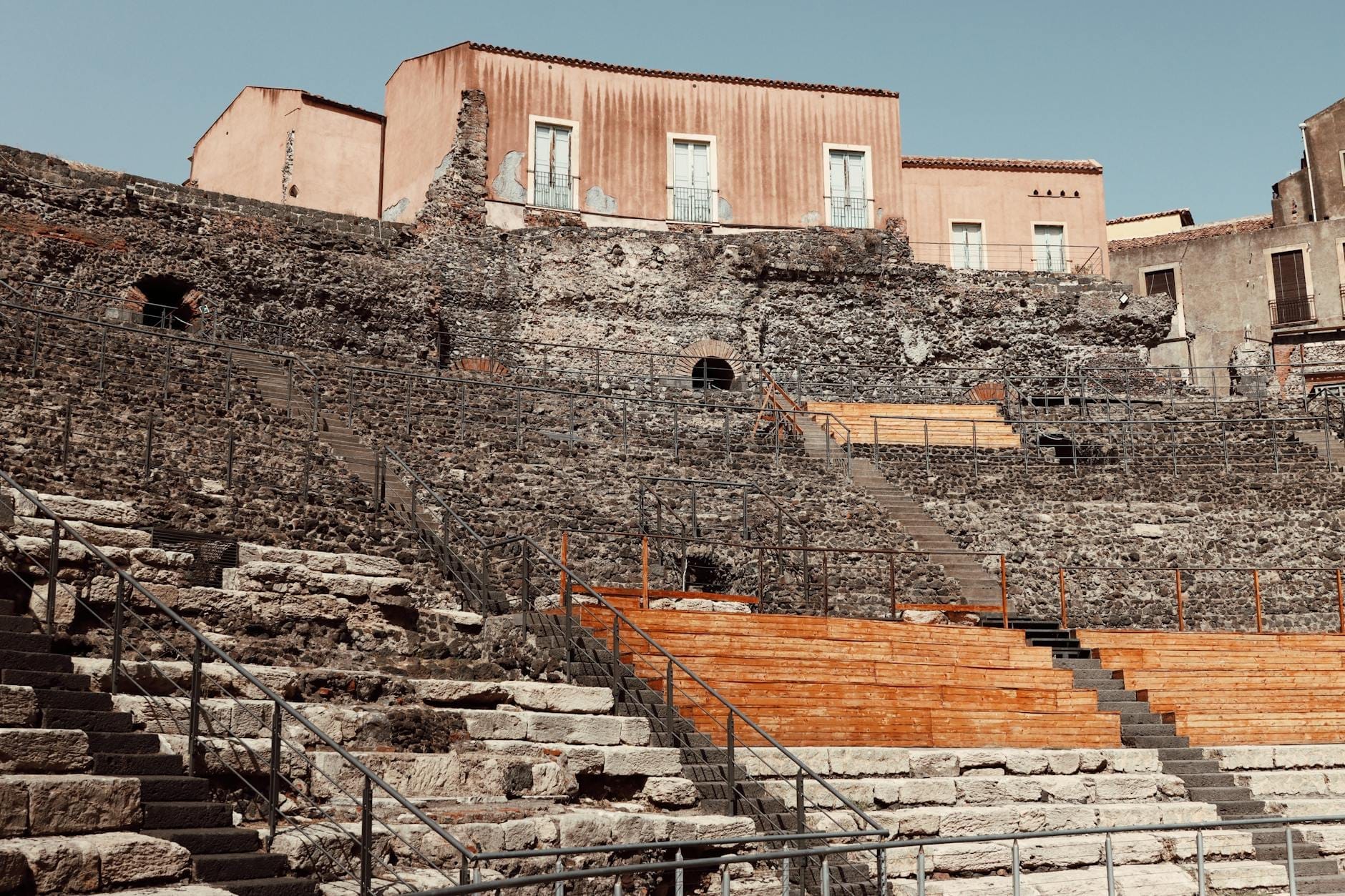
A short walk northwest of Piazza del Duomo, the Roman Amphitheatre emerges from beneath Piazza Stesicoro. It is one of the largest amphitheatres in the Roman world, estimated to have held around 15,000 spectators, though only a portion is currently excavated and visible. Nearby, the lava stone streets around Via dei Crociferi form one of the most intact baroque streetscapes in Sicily, lined with churches and monastery facades that were all rebuilt after the 1693 earthquake.
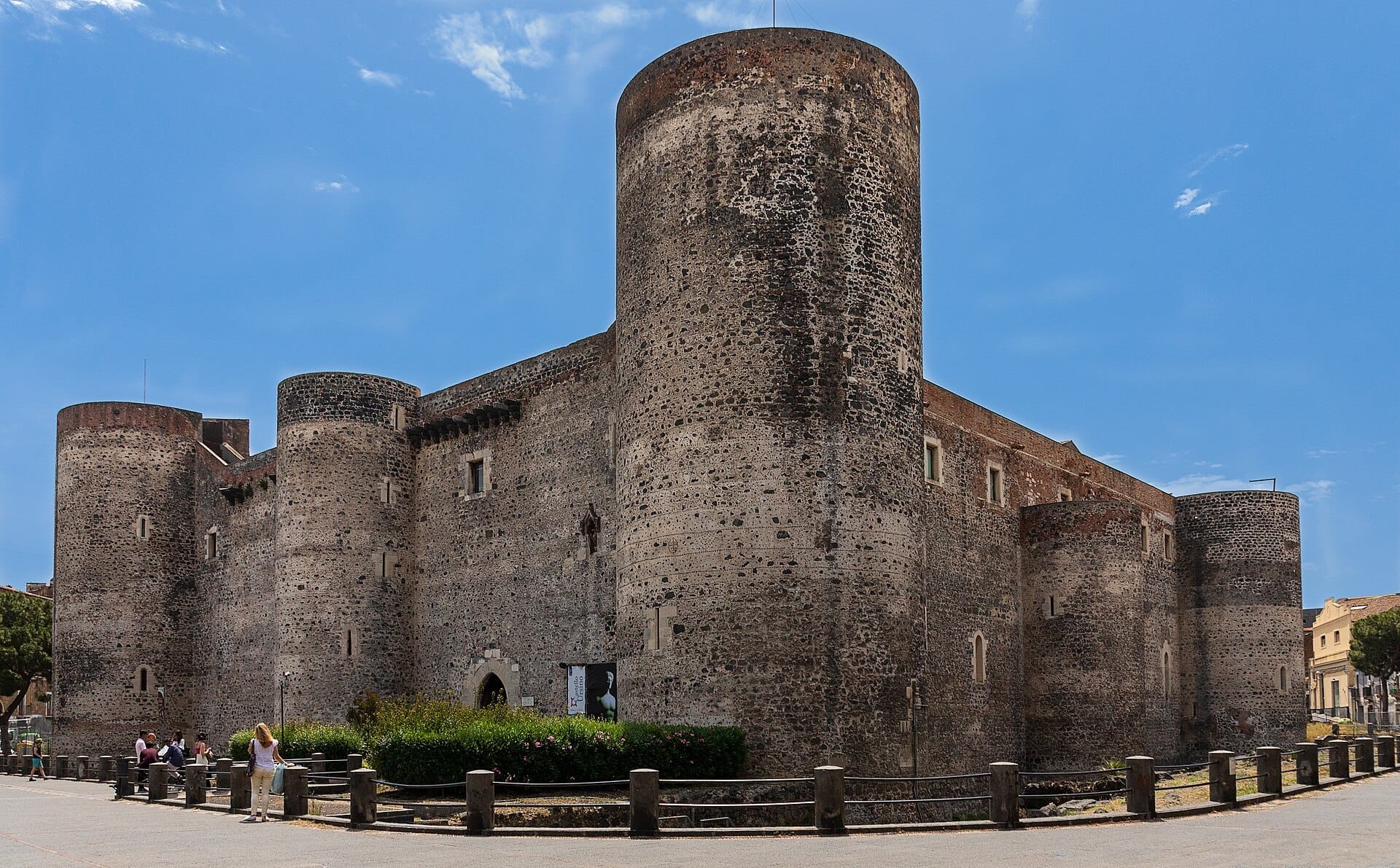
To the west of Piazza del Duomo, Castello Ursino is a 13th-century Norman-Swabian castle that once stood at the water's edge before lava flows from Etna extended the coastline. It now houses the Civic Museum of Catania and sits in a slightly scruffy but characterful quarter that is one of the least tourist-heavy corners of the center.
The main axis for strolling and shopping is Via Etnea, a pedestrianized stretch that becomes progressively more residential and less commercial as it climbs northward. Walking its full length toward the Villa Bellini public gardens, you get the clearest sense of how the city is organized and why the view of Etna above the rooftops has such a hold on the Catanese imagination.
Piazza del Duomo and the Cathedral of Sant'Agata: the civic and religious heart of the city
La Pescheria fish market: open Monday through Saturday mornings, behind the Piazza del Duomo fountain
Roman Amphitheatre at Piazza Stesicoro: partially excavated but free to view from street level
Castello Ursino: Norman castle and civic museum, open most days of the week
Via dei Crociferi: the most photogenic stretch of baroque architecture in the center
Villa Bellini: a 19th-century public garden at the northern end of Via Etnea, good for shade in summer
Benedictine Monastery of San Nicolò l'Arena: one of the largest baroque monasteries in Europe, now part of the University of Catania
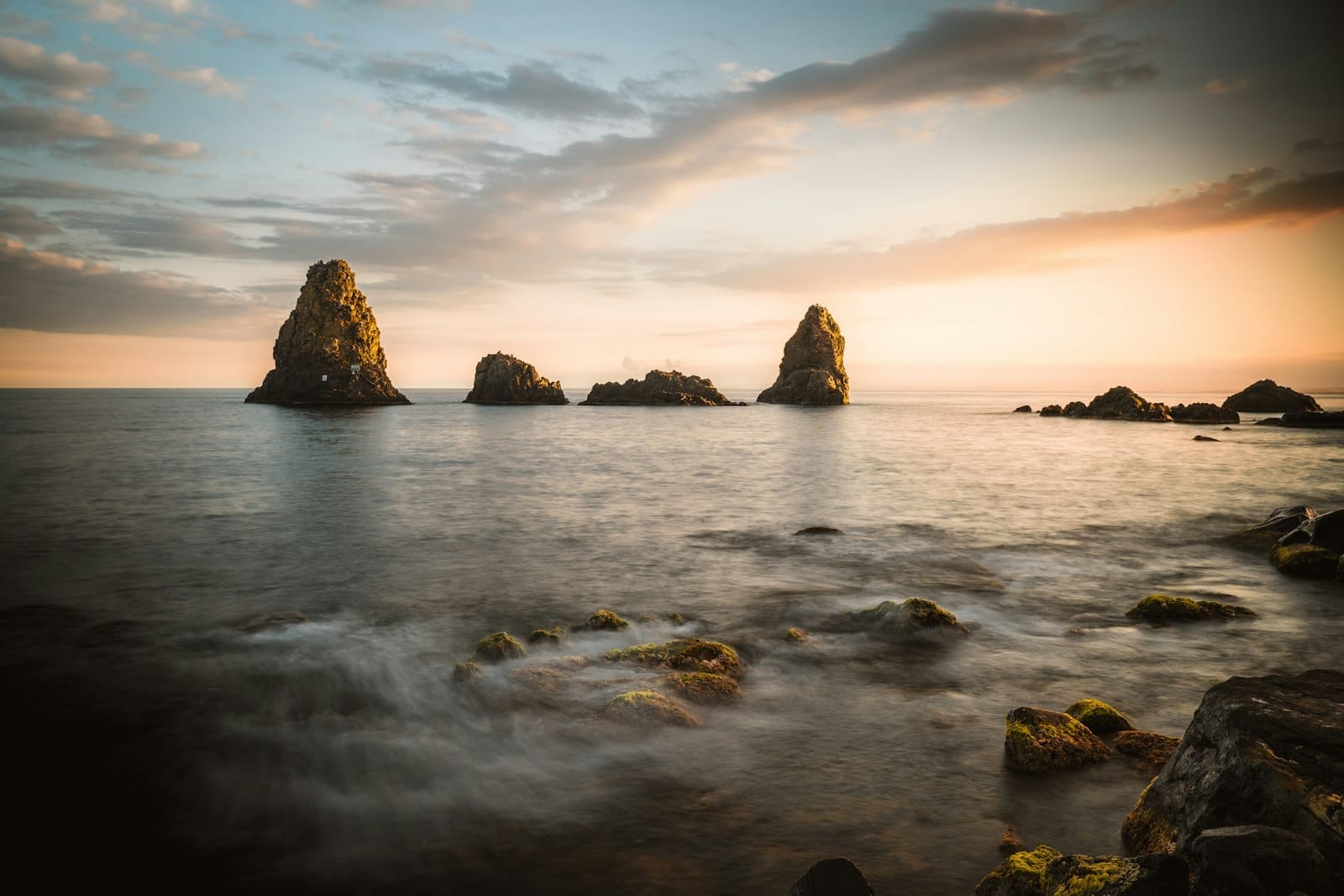
For day trips from Catania, the options are unusually strong. The trails on Mount Etna are accessible via the Circumetnea railway or by car, with guided summit tours departing from Rifugio Sapienza on the southern slope. The coastal fishing village of Aci Trezza, with its dramatic offshore rock stacks, is 15 kilometers north. See the full range of options in our guide to day trips from Catania.
Eating & Drinking
Catania's food culture is one of the strongest in Sicily and arguably underrated relative to the island's more-photographed destinations. The city has a distinct culinary identity built around its fish market produce, the agricultural output of the Etna slopes, and a street food tradition that operates at high volume and low cost.
Street food in Catania centers on arancini (fried rice balls, here often larger and more varied in filling than elsewhere in Sicily), horse meat sandwiches, and various fried or grilled seafood preparations. For a broader overview of what to eat and where to find it, the Sicily street food guide covers the regional context, but Catania's fish market area is one of the best starting points for eating well without spending much.
The area around Piazza del Duomo and the streets immediately south and west of the fish market have the highest concentration of restaurants. These range from simple lunch-only trattorie to more formal fish restaurants with printed menus and proper tablecloths. Price ranges vary considerably: a full fish lunch at a tourist-facing restaurant near the Piazza can cost 35 to 50 euros per person, while a workers' lunch in the lanes behind Castello Ursino might be 10 euros including wine.
The university district, particularly the streets around Via Teatro Massimo and Piazza dell'Università, is where the city's aperitivo and bar culture concentrates. Bars here open early for coffee and pastry, operate through lunch, and pivot to spritz and wine service from around 6pm. The student population keeps prices honest. Granita with brioche, the Sicilian breakfast of choice, is available across the center but the quality varies significantly: look for places making it fresh rather than from concentrate.
💡 Local tip
The fish market (La Pescheria) is at its fullest between 7am and 11am, Monday through Saturday. Arrive before 9am for the best atmosphere and the widest selection. The market typically winds down by midday and is completely closed on Sundays.
Catania also sits at the edge of the Etna wine zone, one of Sicily's most exciting appellations, producing wines from indigenous grapes at altitude. Several wine bars in the center stock bottles from the volcanic slopes. For context on what to drink and why the Etna DOC has attracted international attention, the Sicily wine guide provides useful background.
Getting There & Around
Catania is one of Sicily's most accessible cities by both air and ground. Catania–Fontanarossa Airport (CTA) handles a high volume of direct European flights, including budget carriers, and its proximity to the center makes it far more convenient than Palermo's airport for travelers focused on the east coast of the island.
From the airport, the ALIBUS shuttle runs to the central train station (Catania Centrale) and Piazza Borsellino in the historic center. Buses run frequently throughout the day. The journey takes approximately 20 minutes in normal traffic conditions. Official taxis operate on regulated fares from the airport taxi rank; verify current rates at the airport information desk on arrival.
Within the city, the historic center is navigable on foot. From Piazza del Duomo to Piazza Stesicoro is roughly a 10-minute walk north along Via Etnea. Castello Ursino is about 10 minutes west of the Duomo on foot. The Catania Metro, operated by FCE (Ferrovia Circumetnea), has stations at Porto, Stesicoro, and several other points useful for getting to the outer neighborhoods without navigating bus routes. The urban bus network, run by AMTS Catania, covers the wider city.
For traveling beyond Catania, Trenitalia regional trains connect the city to Siracusa (roughly 1 hour), Messina (1.5 to 2 hours), and with a change, to Palermo (3 or more hours). The Circumetnea narrow-gauge railway loops around the base of Etna and provides access to towns on the volcano's slopes. For anyone planning to travel extensively across the island, the getting around Sicily guide covers transport options in detail.
⚠️ What to skip
Driving in central Catania is not recommended for first-time visitors. The ZTL (Zona a Traffico Limitato) in the historic center means that unauthorized vehicles can receive automatic fines captured by cameras. If you rent a car, confirm ZTL restrictions with your accommodation and use the park-and-ride options at the city's edge.
Where to Stay
The historic center is the obvious base for most travelers, placing you within walking distance of all the major sights and the food market. Hotels and B&Bs are concentrated around Via Etnea, Piazza del Duomo, and the streets between the cathedral and Castello Ursino. This is also where the noise is most concentrated: bars and restaurants around Piazza del Duomo and the fish market area operate late, and weekends in summer can be very loud until 2am or later.
For travelers who prioritize sleep over walking convenience, staying slightly north of the center, in the blocks around Villa Bellini or the university district, offers a quieter environment while remaining a manageable 10 to 15-minute walk from the main sights. This area also has better access to everyday amenities and slightly more realistic restaurant prices.
Catania works well as a base for the wider region. Its airport connectivity and central position on the east coast mean you can day-trip to Etna, Siracusa, the Alcantara Gorge, or the Aeolian Islands (via Milazzo by ferry). If you are spending a week or more in Sicily, it is worth comparing Catania against other bases. Our where to stay in Sicily guide provides a full comparison of the island's main bases.
💡 Local tip
Rooms facing interior courtyards or rear-facing in the center will be significantly quieter than those with street-facing balconies. Specifically ask about noise levels when booking in the Piazza del Duomo or fish market area, particularly if you are visiting between May and September.
Honest Assessment: Who Catania Is For
Catania rewards travelers who are willing to engage with a city that has not been smoothed out for tourist consumption. The streets around the fish market are unvarnished and sometimes chaotic. Parts of the historic center away from the main piazzas can feel rough at the edges, particularly in the western section toward the port. Standard precautions apply: keep an eye on bags in crowded market areas, and avoid quiet side streets late at night in unfamiliar parts of the city.
For travelers focused primarily on beaches and resorts, Catania itself may feel like too much city. But as a base for the eastern half of Sicily, combining the volcanic landscape of Mount Etna with the Greek and Roman heritage of Siracusa, it has few equals. The city's own baroque architecture, its food market, and its street-level energy make it one of the most genuinely Sicilian urban experiences on the island.
TL;DR
Catania is Sicily's second city, built in dark volcanic stone after the 1693 earthquake, with a compact baroque centro storico organized around Via Etnea and Piazza del Duomo.
The city's fish market (La Pescheria) is one of the most atmospheric in the Mediterranean; street food and local restaurants are excellent value compared to more tourist-heavy Sicilian towns.
Fontanarossa Airport is just 5-6 km from the center, making Catania the most convenient arrival point for exploring eastern Sicily, including Etna, Siracusa, and the Aeolian Islands.
The center is walkable and well-served by the Catania Metro (FCE), but driving in the historic ZTL zone risks automatic fines and is best avoided.
Best suited to travelers who want authentic urban Sicilian life alongside easy access to the island's eastern highlights; not ideal for those seeking a quiet, resort-oriented stay.
Seven volcanic islands, one UNESCO designation, and more logistical decisions than most travelers expect. This guide covers every practical detail you need to plan a trip to the Aeolian Islands, from choosing which islands to visit to navigating seasonal ferry schedules.
The Arab-Norman UNESCO trail covers nine extraordinary monuments across Palermo, Monreale, and Cefalù, inscribed in 2015 for their remarkable fusion of Western, Arab, and Byzantine architecture. This guide covers every site, practical logistics, and the historical context that makes this one of the most intellectually rewarding itineraries in the Mediterranean.
Sicily's Val di Noto is one of Europe's most remarkable architectural achievements: eight towns rebuilt in coordinated Late Baroque style after a catastrophic 1693 earthquake, now a single UNESCO World Heritage Site. This guide covers all eight towns, how to get between them, what to prioritise, and when to go.
Sicily's coastline stretches over 1,000 km across the Tyrrhenian, Ionian, and Mediterranean seas, producing an extraordinary range of beaches. This guide covers the finest sandy bays, volcanic coves, nature reserves, and island escapes the island has to offer.
Sicily was once the heart of Magna Graecia, and the ruins left behind are among the finest ancient Greek monuments anywhere in the world. This guide covers the essential sites, from vast temple complexes to forgotten quarries, with practical advice on what to see and when to go.
Sicily rewards visitors year-round, but timing your trip correctly makes a significant difference. This guide breaks down every season by temperature, crowds, prices, and what's actually worth doing, so you can plan with confidence.
Catania sits at the centre of eastern Sicily, putting some of the island's greatest attractions within easy reach. This guide covers the best day trips from Catania, from the volcanic trails of Etna to the Baroque jewels of the southeast and the ancient ruins of Siracusa.
Palermo sits at the centre of western Sicily, putting an extraordinary range of landscapes, ancient sites, and coastal escapes within a few hours. This guide covers the best day trips from Palermo, from the world's greatest medieval mosaics at Monreale to the Greek temples of Agrigento and the untouched coves of the Zingaro Nature Reserve.
Sicily is large, geographically varied, and not always easy to navigate without the right plan. This guide covers every transport option available, from renting a car to catching intercity buses, so you can move around the island confidently and without wasted time.
Sicily rewards those who look beyond Taormina and Palermo's grand monuments. This guide covers 20 lesser-known attractions across the island, from prehistoric cliff tombs and abandoned earthquake towns to wild coastal reserves and ancient quarries frozen in time.
Sicily is Italy's largest island and the Mediterranean's most historically layered destination. This guide cuts through the hype to give you a clear-eyed look at what the island genuinely offers, what it costs, when to go, and what tends to disappoint — so you can make an informed decision.
Sicily rewards the discerning traveler with a depth that few Mediterranean islands can match. This guide covers the finest luxury hotels, bespoke experiences, and practical logistics for planning a high-end trip to the largest island in the Mediterranean.
Seven days in Sicily is enough to cover the island's greatest hits — Greek temples, baroque city centres, volcanic landscapes, and some of the best street food in Italy. This guide maps out a logical east-to-west route with realistic transport times, seasonal advice, and honest notes on what to skip.
Sicily has four main airports, and choosing the right one can save hours of overland travel. This guide covers Palermo (PMO), Catania (CTA), Trapani (TPS), and Comiso (CIY) in detail, including airport-to-city transfers, route availability, and which gateway suits each part of the island.
Sicily rewards self-drive travel more than almost any other Mediterranean destination. This guide covers everything you need to plan a confident road trip: the best routes, realistic driving times, car rental tips, ZTL zone warnings, seasonal advice, and the stops that genuinely justify the detour.
Sicilian food is not Italian food with a suntan. It is a centuries-old fusion of Greek, Arab, Spanish, and Norman influences, built around seafood, citrus, almonds, ricotta, and durum wheat. This guide covers every dish worth eating, where to find the best versions, and the food customs that will shape every meal you have on the island.
Francis Ford Coppola brought the Corleone saga to life across the hillside villages and historic streets of Sicily. This guide covers every key filming location from all three films, how to reach them, what to expect on the ground, and how to avoid the most common tourist mistakes.
Sicily rewards couples with baroque towns, volcanic landscapes, secluded beaches, and some of the most atmospheric historic centers in the Mediterranean. This guide cuts through the generic advice to tell you exactly where to go, when to go, and what actually makes Sicily special for two.
October is one of the smartest months to visit Sicily. Temperatures ease off from the summer heat, the tourist crush fades, and the island's food and festival calendar comes alive. Here's everything you need to plan your trip well.
Summer in Sicily runs from June through September and brings hot weather, packed beaches, vibrant festivals, and peak travel prices. This guide covers everything you need to know: when to go, what to expect from the heat and crowds, which beaches and islands are worth it, and how to plan smarter than most visitors do.
Sicily is far more than a single island. From the volcanic Aeolian archipelago in the Tyrrhenian Sea to the crystal-clear waters of the Egadi Islands off Trapani, this guide covers every ferry route, island, cost, and logistical detail you need to plan a serious island-hopping trip from Sicily.
Sicily is one of the most rewarding destinations in the Mediterranean, and it doesn't have to cost a fortune. This guide breaks down real daily costs, the cheapest times to visit, where to eat well for under €10, and how to see the island's best sights without draining your account.
The Opera dei Pupi is one of Sicily's most distinctive cultural exports — a UNESCO-recognised marionette tradition rooted in medieval chivalric epics, performed by family troupes across the island. This guide covers the history, the two rival schools, where to see performances in Palermo, Catania, and Siracusa, and how to get the most out of attending a show.
Sicily is one of southern Europe's most rewarding destinations, and it is genuinely safe for tourists. This guide cuts through the stereotypes, explains what the real risks are, identifies the scams that do happen, and gives you practical tools to visit with confidence.
Sicily produces some of Italy's most distinctive street food, rooted in centuries of Arab, Norman, and Spanish influence. This guide breaks down the essential dishes by city, the markets where locals actually eat them, what to pay, and what to skip.
Sicily sits on one of the most volcanically active zones in Europe. This guide breaks down what to expect from Etna, Stromboli, and Vulcano — three very different volcanic experiences — covering access, trails, safety, and the best time to visit each one.
Both Sicily and Sardinia are autonomous regions of Italy with distinct identities, landscapes, and travel experiences. This guide breaks down the real differences in culture, beaches, food, costs, and logistics so you can choose the right island for your trip.
Sicily is Italy's largest wine region by vineyard area, with 23 DOCs, one DOCG, and a lineup of native grapes that rival anywhere in Europe. This guide breaks down the key appellations, the grapes behind them, and exactly how to plan a tasting trip across the island.
Sicily delivers an extraordinary range of family experiences, from volcanic landscapes and ancient Greek ruins to puppet theatre and sweeping beaches. This guide breaks down the best kid-friendly activities, practical logistics, seasonal timing, and practical advice to help families plan a smooth, memorable trip.
Sicily rewards travelers with an extraordinary range of experiences: ancient Greek ruins, active volcanoes, UNESCO Baroque towns, Norman cathedrals, and coastline that stretches nearly 1,000 km. This guide covers the best things to do in Sicily across every corner of the island, with practical advice on timing, costs, and how to avoid the common pitfalls.
Sicily rewards travelers who give it time. This complete 14-day itinerary covers the island's east coast highlights, Baroque south, ancient Greek south, and the layered history of the west, with practical routing advice, seasonal tips, and practical guidance on trade-offs.
Sicily is the Mediterranean's largest island, and picking the right base makes or breaks your trip. This guide covers the best towns to stay in across every corner of the island, from the baroque southeast to the volcanic northeast, with practical advice on prices, transport, and seasonal trade-offs.