The Godfather in Sicily: A Complete Filming Locations Guide
Francis Ford Coppola brought the Corleone saga to life across the hillside villages and historic streets of Sicily. This guide covers every key filming location from all three films, how to reach them, what to expect on the ground, and how to avoid the most common tourist mistakes.
Plan and book this trip
Tools from our partner Travelpayouts help you compare flights and hotels. If you book through them, we may earn a commission at no extra cost to you.
Flights
Hotels map
TL;DR
- The real filming locations are Savoca and Forza d'Agrò, not the actual town of Corleone, which looked too modern for 1940s-era scenes.
- All three Godfather films used Sicilian locations: Part I and II relied heavily on hilltop villages near Taormina, while Part III used several Palermo locations including Teatro Massimo for its finale.
- Savoca is about 21 km from Taormina and makes a natural base. Check our guide to Taormina if you're planning a longer stay in the area.
- Castello degli Schiavi (Don Tommasino's villa) requires advance reservation and is typically only accessible via private tour.
- Shoulder season visits in April, May, or October make the steep village streets far more manageable than the peak summer heat.
Why Sicily, and Why These Villages?
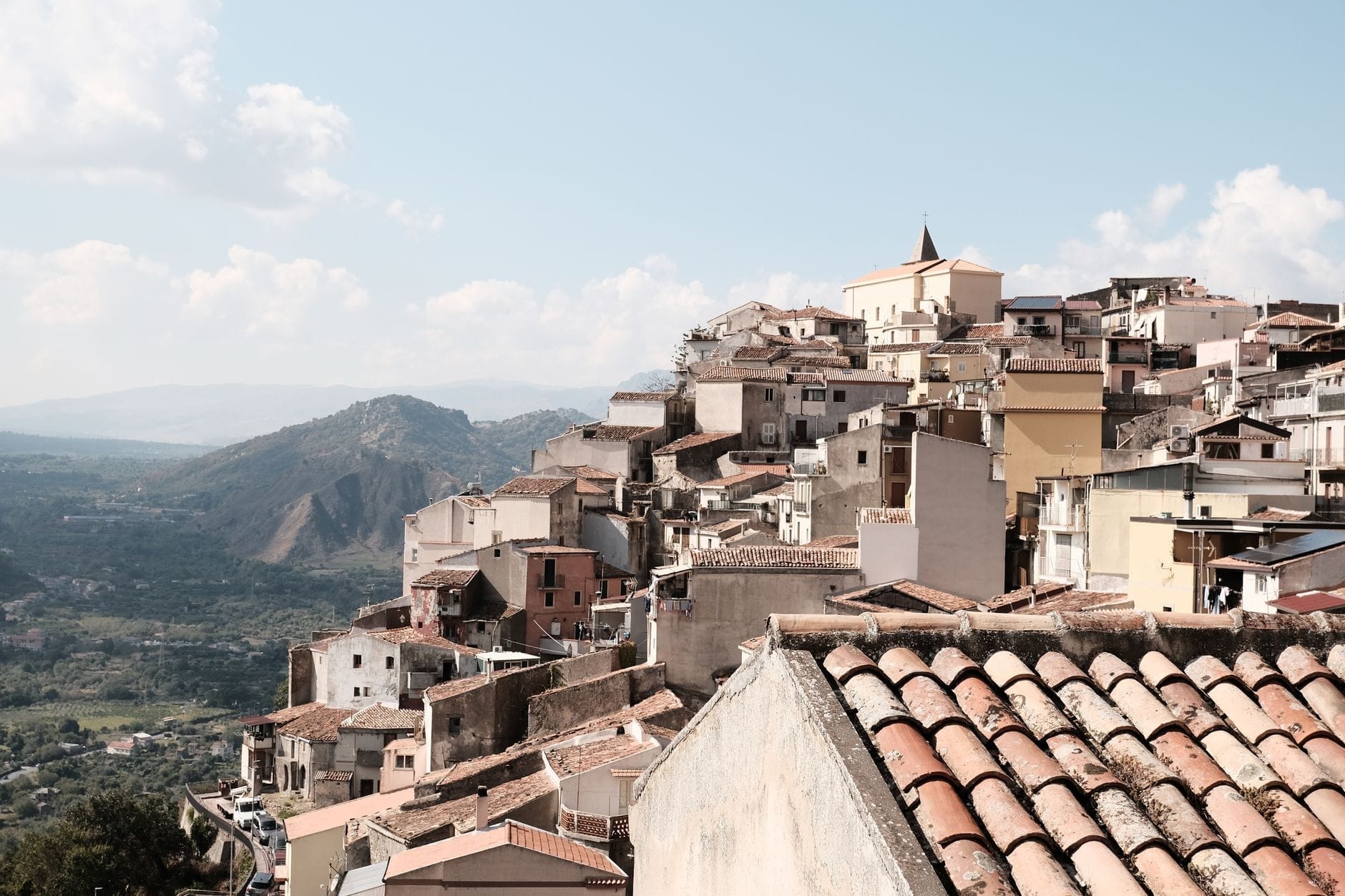
When Francis Ford Coppola needed Sicilian locations for The Godfather in 1971, the actual town of Corleone was rejected almost immediately. It had modernized too much to pass for a rural 1940s Sicilian village. Production scouts instead found what they needed in two small, time-frozen hilltop communes in the Messina province: Savoca and Forza d'Agrò. Their medieval stone streets, crumbling churches, and terracotta-roofed houses required almost no set dressing to evoke the era. What resulted was a cinematic portrait of Sicily that has shaped how millions of people imagine the island, for better or worse.
It's worth understanding the geography before you plan your trip. Both villages sit in the Peloritani Mountains above the Ionian coast, roughly midway between Messina and Taormina. Savoca is about 21 km north of Taormina and 30 km south of Messina, which makes Taormina the most practical overnight base for visiting both locations. The roads are narrow and steep, and the villages are not well served by public transport, so most visitors arrive by rental car or organized tour.
ℹ️ Good to know
The Godfather trilogy spans all three films in Sicily. Part I covers Michael's exile in the countryside near Taormina. Part II revisits the same area for young Vito's escape scenes. Part III moves to Palermo's Teatro Massimo for its operatic finale. Don't limit your visit to just one film's locations.
Savoca: The Heart of Godfather Country
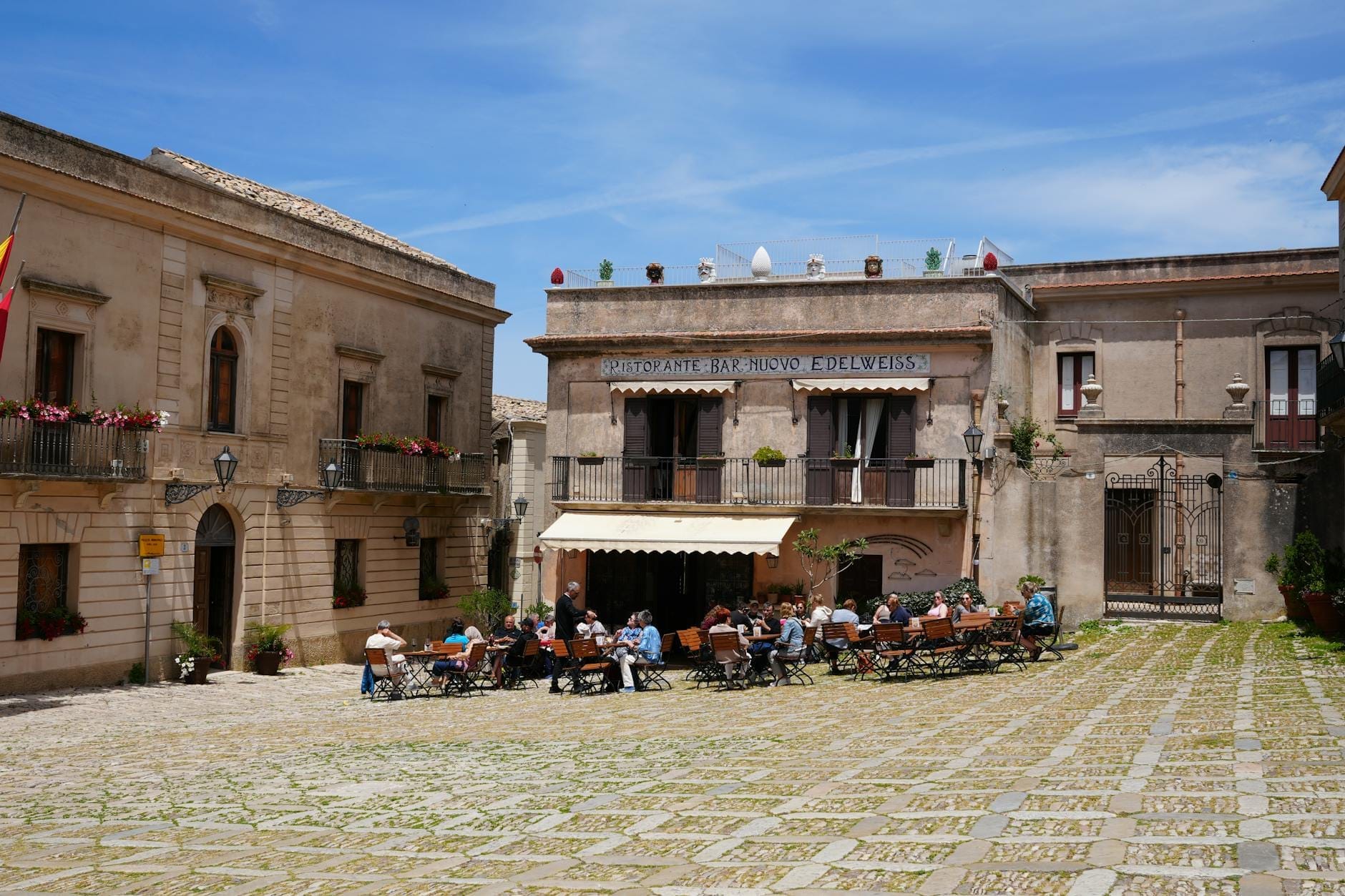
Savoca is the location most travelers recognize immediately. This is where Michael Corleone asks for Apollonia's hand in marriage at Bar Vitelli, and where the two are married in the small church on the hillside. The village looks almost exactly as it did during filming. Bar Vitelli still operates, still has the same faded awning and terrace, and still serves granita and almond wine to pilgrims who arrive clutching photographs from the film. The owner has curated a modest collection of Godfather memorabilia inside, including signed photos and production stills.
The church used for Michael and Apollonia's wedding is the Chiesa di San Nicolò, a small Norman-era church that sits above the village. Some guides refer to it as Santa Lucia, which creates confusion: the correct name is San Nicolò. The interior is modest but atmospheric, and the view from the terrace outside is genuinely striking, looking out over the Ionian coastline and the hills toward Taormina. The church is typically open to visitors but hours are irregular, especially outside summer. Arriving before noon gives you the best chance of finding it open.
- Bar Vitelli The filming location for Michael's courtship scenes. Still a functioning bar. Visit early morning or late afternoon to avoid tour group congestion.
- Chiesa di San Nicolò Wedding church from Part I. Norman origins, hilltop position, irregular opening hours. Not to be confused with Santa Lucia.
- The village streets Much of Savoca's warren of medieval lanes remains unchanged. Walking up from the parking area toward Bar Vitelli takes roughly 10-15 minutes on an uphill path.
⚠️ What to skip
Savoca has extremely limited parking, especially in summer. The small lots near the village entrance fill by mid-morning on weekends from June through August. Arrive before 9:30 am or after 4:00 pm to avoid the worst of the congestion. The walk up from lower parking areas to the bar and church takes 15-20 minutes and is steep.
Forza d'Agrò: Michael's Arrival and Young Vito's Escape
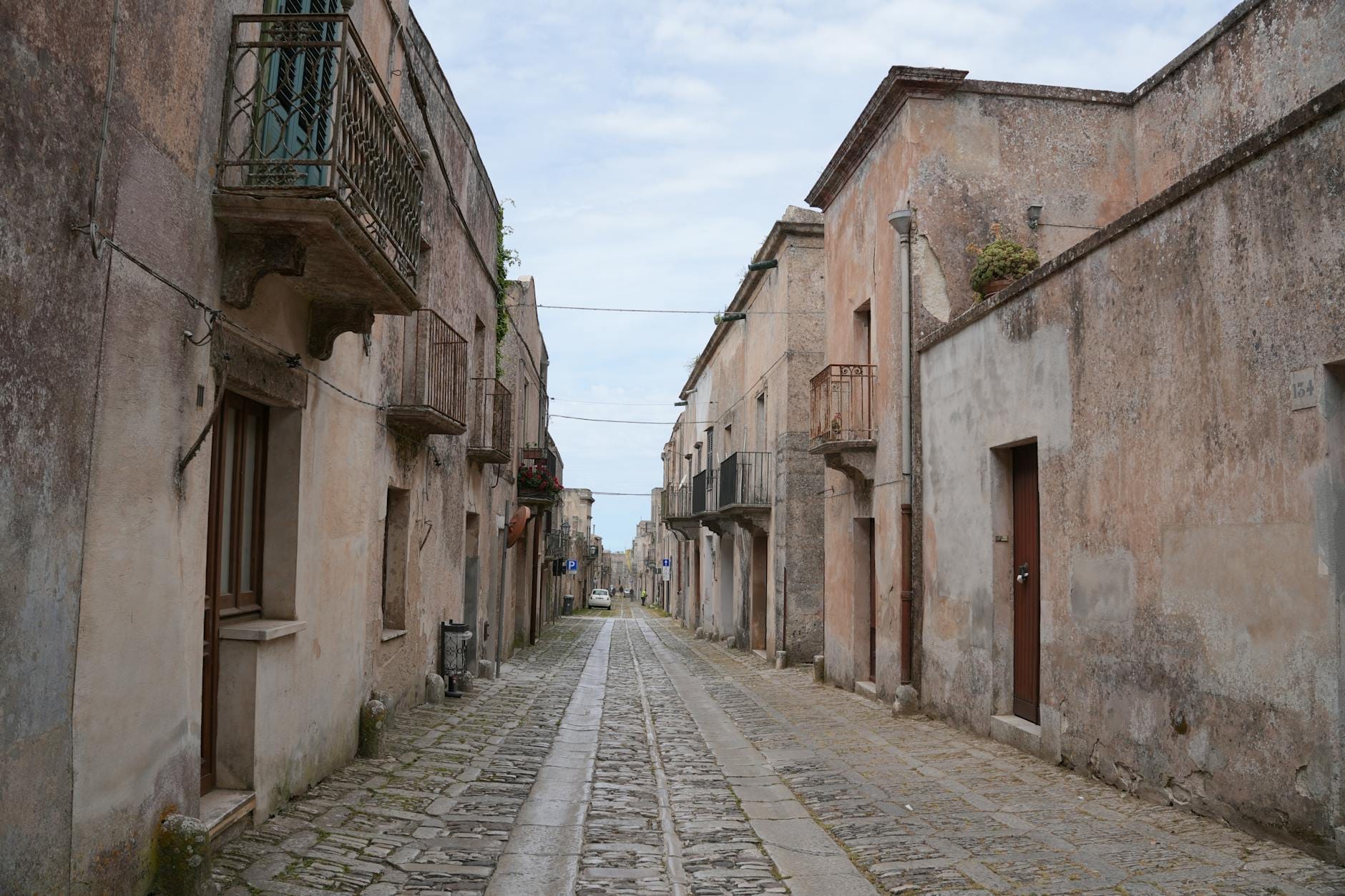
Forza d'Agrò sits about 8 km south of Savoca and is slightly less visited, which means it retains more of its day-to-day character. In The Godfather Part I, these are the streets where Michael first arrives in Sicily, flanked by his two bodyguards, and in Part II, the same location doubles for early 20th-century Sicily when young Vito flees to America. The production used the same area for multiple scenes across both films, which is worth knowing: what looks like different settings often shares the same streets.
The most recognizable site is the Chiesa di Sant'Agostino and its adjacent ruined convent, which appears prominently in several scenes. The church's austere facade and the crumbling arches of the former convent create a photogenic composition that doesn't require any film knowledge to appreciate. The village also has a surviving section of its medieval defensive walls and a small historic centre that can be covered on foot in under an hour.
✨ Pro tip
Combine Savoca and Forza d'Agrò into a single half-day circuit. From Taormina, drive north along the SS114, then turn inland to Savoca first (it is slightly closer), then continue south to Forza d'Agrò. The round trip, including 90 minutes of walking time at each village, fits comfortably in four to five hours.
Castello degli Schiavi: Michael and Apollonia's Hideout
This is the location that requires the most planning and is the most frequently overlooked by casual visitors. Castello degli Schiavi, a Baroque country estate near Fiumefreddo di Sicilia in the Catania province, served as the Corleone family’s country hideout in multiple films. The property appears in Michael's exile sequences in Part I, including the scenes at his Sicilian hideout and Apollonia's car explosion, and it is revisited in later films as a recurring Sicilian base for the Corleone family. The estate is private property and does not accept walk-up visitors.
Access is typically arranged through private guided tours or specialized Godfather excursion operators. Pricing is generally bundled into tour packages rather than offered as a standalone entry fee, with most full-day Godfather tours from Taormina or Catania running between €50 and €90 per person depending on group size and what's included. Always confirm in advance whether Castello degli Schiavi is specifically on the itinerary, as some operators list it but substitute it depending on access arrangements.
Teatro Massimo, Palermo: The Part III Finale
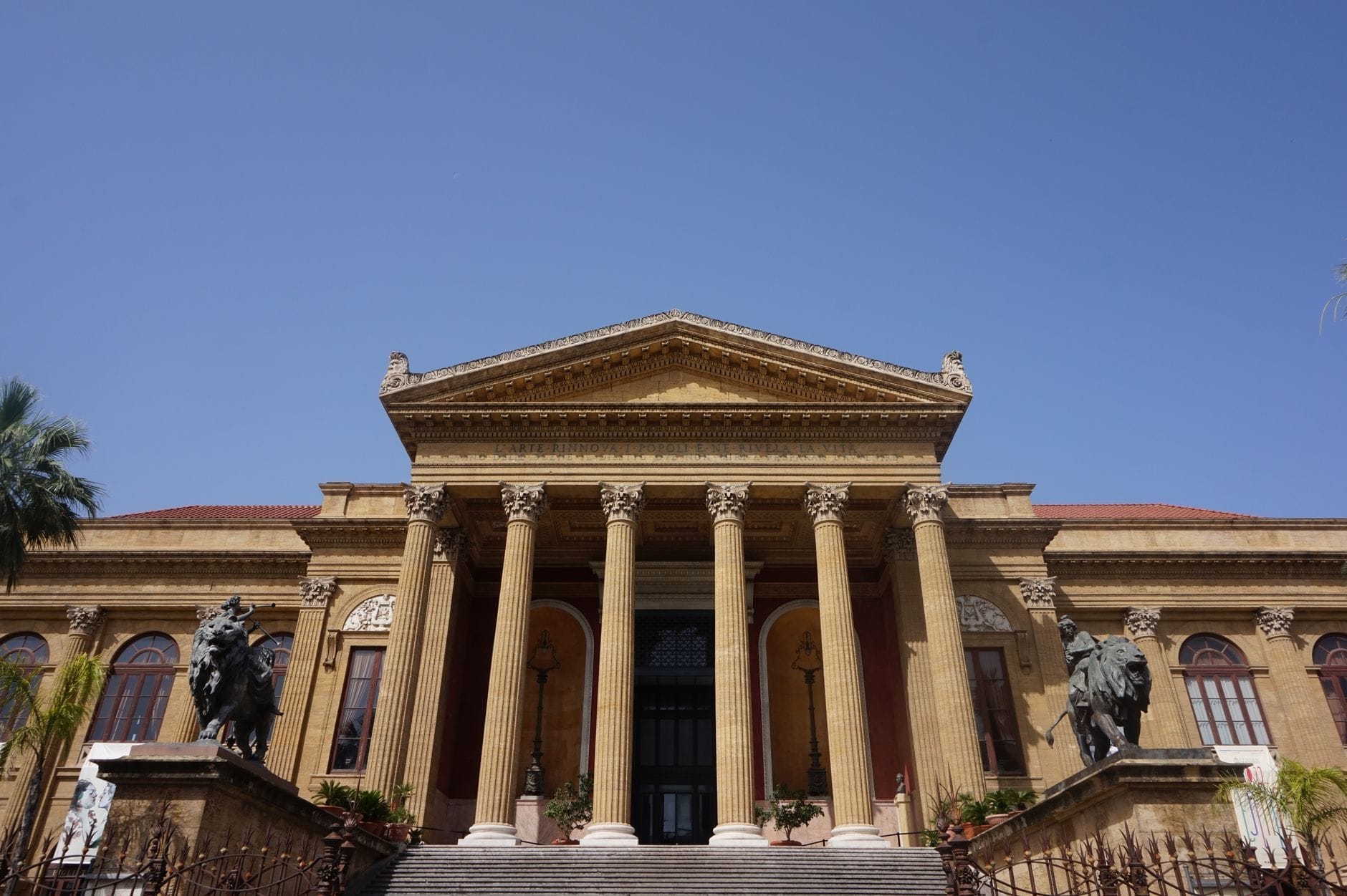
The third film is the most controversial of the trilogy, but its final sequence at Teatro Massimo in Palermo is genuinely cinematic. Italy's largest opera house by auditorium size, and one of the largest in Europe, it serves as the setting for the tragic final act of The Godfather Part III, where Michael's daughter is shot on the steps outside. The building's neoclassical exterior and its grand staircase are exactly as seen in the film.
Teatro Massimo is open for guided tours multiple times daily. Adult tickets run approximately €12-15, with reduced rates for students and seniors. Tours last around 30-40 minutes and cover the main auditorium, the royal box, and the backstage areas. The exterior steps are freely accessible at any time, and most visitors spend a few minutes recreating the famous shot from the film's final minutes. If you're visiting Palermo for more than a day, it's worth checking the performance calendar: watching an opera or a concert here adds context to the cinematic history of the space.
Teatro Massimo sits in the Piazza Verdi in central Palermo, easily reached on foot from most of the city's major sights. While you're in the area, the wider Palermo historic centre offers a full day of exploration, including the Arab-Norman monuments of the Norman Palace and the Palatine Chapel, which are a short walk away.
How to Visit: Routes, Transport, and Practical Logistics
The majority of Godfather filming locations cluster in two areas: the hilltop villages near Taormina (Savoca and Forza d'Agrò, plus Castello degli Schiavi in the Catania province) and Palermo in the west. These are roughly 260 km apart by road, so most travelers split them across separate days or base themselves in different parts of the island.
- By rental car (recommended) Gives you full flexibility for the hilltop villages, which have no direct public transport from Taormina. The SS114 coastal road connects Taormina, Forza d'Agrò, and the Savoca turn-off in under 30 minutes.
- Organized Godfather tours Multiple operators run half-day and full-day tours from Taormina and Catania covering Savoca, Forza d'Agrò, and sometimes Castello degli Schiavi. Prices typically range from €50-90 per person. These are the only practical option for Castello degli Schiavi without a private car and prior arrangements.
- Public transport Limited but possible with patience. AST buses run between Taormina and Sant'Alessio Siculo, from where Savoca is a steep 3 km walk uphill. Forza d'Agrò has even less regular service. Not recommended if time is tight.
- Teatro Massimo (Palermo) Fully accessible on foot from central Palermo. No special transport needed. Guided tours run throughout the day; check the official Teatro Massimo website for current schedules and book in advance during peak season.
If you're planning a broader road trip that combines the Godfather locations with other eastern Sicily highlights, the Sicily by car road trip guide covers the practical details of driving between Catania, Taormina, and the Messina coast, including road conditions and parking realities in small hilltop villages.
When to Go and What to Expect
Summer brings a significant number of Godfather tour groups to Savoca in particular. From late June through August, Bar Vitelli can fill with multiple tour groups at once during mid-morning and early afternoon hours, which are the most popular arrival windows. The heat compounds this: Savoca and Forza d'Agrò sit inland and elevated, but the approach roads and walking paths are exposed. Temperatures in July and August frequently reach 32-35°C, and the uphill walk from parking to Bar Vitelli is not trivial in that heat.
April, May, and October are the practical sweet spots. Temperatures in those months sit between 18-25°C along the coast and slightly cooler at elevation, the tour group presence is lighter, and the light is better for photography. The best time to visit Sicily guide breaks down seasonality across the whole island if you're trying to align multiple destinations into a single itinerary.
💡 Local tip
Church opening hours in Savoca and Forza d'Agrò are not reliably posted online and can vary week to week. If visiting the Chiesa di San Nicolò matters to you, contact the local comune or a tour operator who has current ground-level information before making a dedicated trip.
FAQ
Was The Godfather actually filmed in Corleone, Sicily?
No. Very little of the trilogy was filmed in the real town of Corleone. Coppola's production team found that Corleone had modernized too much to convincingly represent a rural 1940s Sicilian village. Savoca and Forza d'Agrò, both in the Messina province, were chosen instead for their preserved medieval character.
Is Bar Vitelli in Savoca still open?
Yes. Bar Vitelli continues to operate as a working bar and has become a Godfather pilgrimage site in its own right. It serves granita, almond wine, and light refreshments, and displays a collection of memorabilia from the film. It can get crowded during summer mornings when multiple tour groups arrive simultaneously.
Can you visit Castello degli Schiavi independently?
Not on a walk-up basis. The estate is private property and access is managed through advance arrangements, typically via specialized Godfather tour operators. When booking a tour that advertises this location, confirm explicitly that access to the property itself is included and not just a drive-by view.
How long does a Godfather filming locations tour take?
A half-day tour covering Savoca and Forza d'Agrò from Taormina typically takes four to five hours including transport. Full-day tours that include Castello degli Schiavi and potentially Teatro Massimo in Palermo are uncommon given the distances involved; most travelers split the eastern locations and Palermo across separate days.
Are Godfather tours worth the price compared to visiting independently?
For Savoca and Forza d'Agrò, a rental car gives you equivalent flexibility at potentially lower cost if you're already renting a vehicle. Tours add value if you want commentary, if you're traveling alone and prefer company, or if Castello degli Schiavi is a priority, as that location is not independently accessible. Guided tours for Teatro Massimo in Palermo are straightforward and bookable on-site.