Sicily vs Sardinia: Which Italian Island Should You Visit?
Both Sicily and Sardinia are autonomous regions of Italy with distinct identities, landscapes, and travel experiences. This guide breaks down the real differences in culture, beaches, food, costs, and logistics so you can choose the right island for your trip.
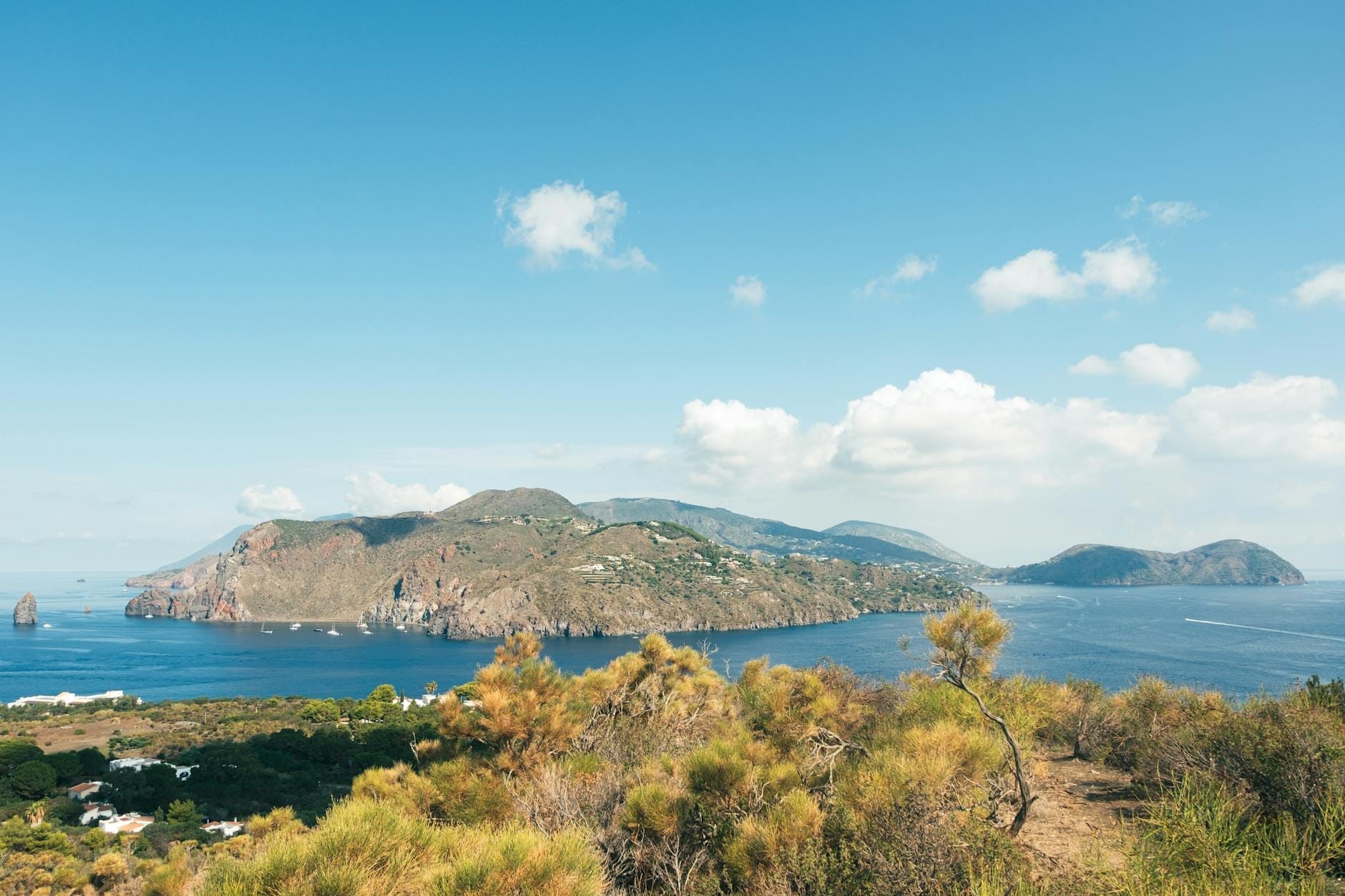
Plan and book this trip
Tools from our partner Travelpayouts help you compare flights and hotels. If you book through them, we may earn a commission at no extra cost to you.
Flights
Hotels map
TL;DR
- Sicily is Italy's largest island, with active volcanoes, 3,000 years of layered history, exceptional street food, and far more to do for culture-focused travellers.
- Sardinia wins on raw beach quality, especially the Costa Smeralda, but that reputation comes with steep summer prices.
- Both islands share the same climate pattern: April to June and September to October are the sweet spots. See the best time to visit Sicily for a detailed seasonal breakdown.
- Getting between the two islands is genuinely inconvenient. There is no direct ferry linking them; you need to fly or route via the Italian mainland.
- If your priority is one great week with maximum variety, Sicily delivers more per day. If you want two weeks of sea, silence, and wilderness, split your time or lean Sardinian.
The Core Difference: Culture vs Coast
The Sicily vs Sardinia debate usually comes down to what kind of trip you actually want. Sicily is the Mediterranean's most historically layered island: Greek temples, Arab-Norman cathedrals, baroque hill towns, active volcanoes, and one of Italy's most distinctive food cultures. Sardinia offers something more elemental: enormous stretches of turquoise water, pink granite coastline, and an interior that most visitors never bother to explore.
Neither island is just one thing. Sicily has world-class beaches from Scala dei Turchi to the waters around San Vito lo Capo. Sardinia has important Nuragic archaeological sites and medieval towns like Alghero. But the balance is very different. In Sicily, beaches are part of a broader itinerary. In Sardinia, for most visitors, the coast is the itinerary.
ℹ️ Good to know
Sicily is an autonomous region of the Italian Republic, covering about 25,711 km² including its satellite island groups: the Aeolian Islands, the Egadi Islands, the Pelagie Islands, and Pantelleria. Sardinia is a separate autonomous region with its own distinct history and culture. Neither is a country, and neither is simply 'more Italian' than the other.
Landscape and Geography: Volcanoes vs Coastline
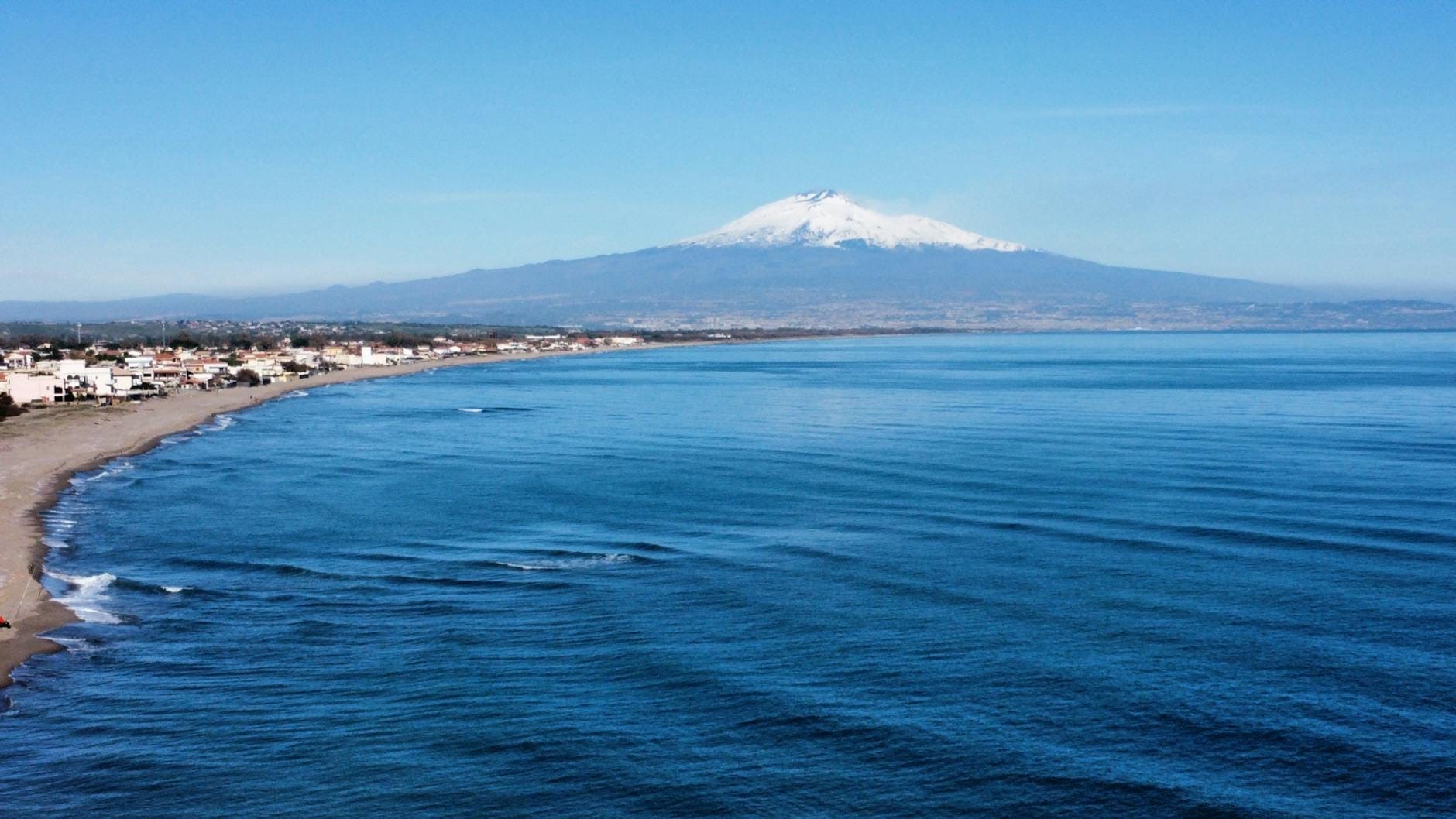
Sicily's geography is defined by contrast. The east coast sits in the shadow of Mount Etna, Europe's highest active volcano at around 3,326 metres. The south coast sweeps past ancient Greek temples and wide sandy beaches. The west has salt pans, medieval ports, and offshore islands. The interior is a largely undiscovered landscape of rolling wheat fields and hill towns.
Sardinia's signature is its coastline: the Costa Smeralda in the northeast has some of Europe's clearest water, and the beaches around Villasimius and the Sulcis in the south are genuinely spectacular. The island's interior is wilder and less visited than Sicily's, with gorges, forests, and the Barbagia highlands. But Sardinia lacks volcanic drama; it is a more ancient, geologically stable landmass, which shapes a very different mood. Sicily, by contrast, has the active volcanoes Etna and Stromboli that simply have no equivalent anywhere else in the Mediterranean.
- Sicily highlights Mount Etna, Valley of the Temples, Baroque southeast, Palermo's Arab-Norman architecture, Aeolian Islands, Taormina
- Sardinia highlights Costa Smeralda, Cala Goloritze, Nuragic bronze-age towers, Alghero's Catalan old town, Su Nuraxi di Barumini
- What Sicily does better Archaeological depth, city culture, street food, volcanic landscapes, island variety within one region
- What Sardinia does better Sheer beach quality, off-grid coastal wilderness, crystal-clear water in summer
Food and Culture: Sicily's Unmatched Edge
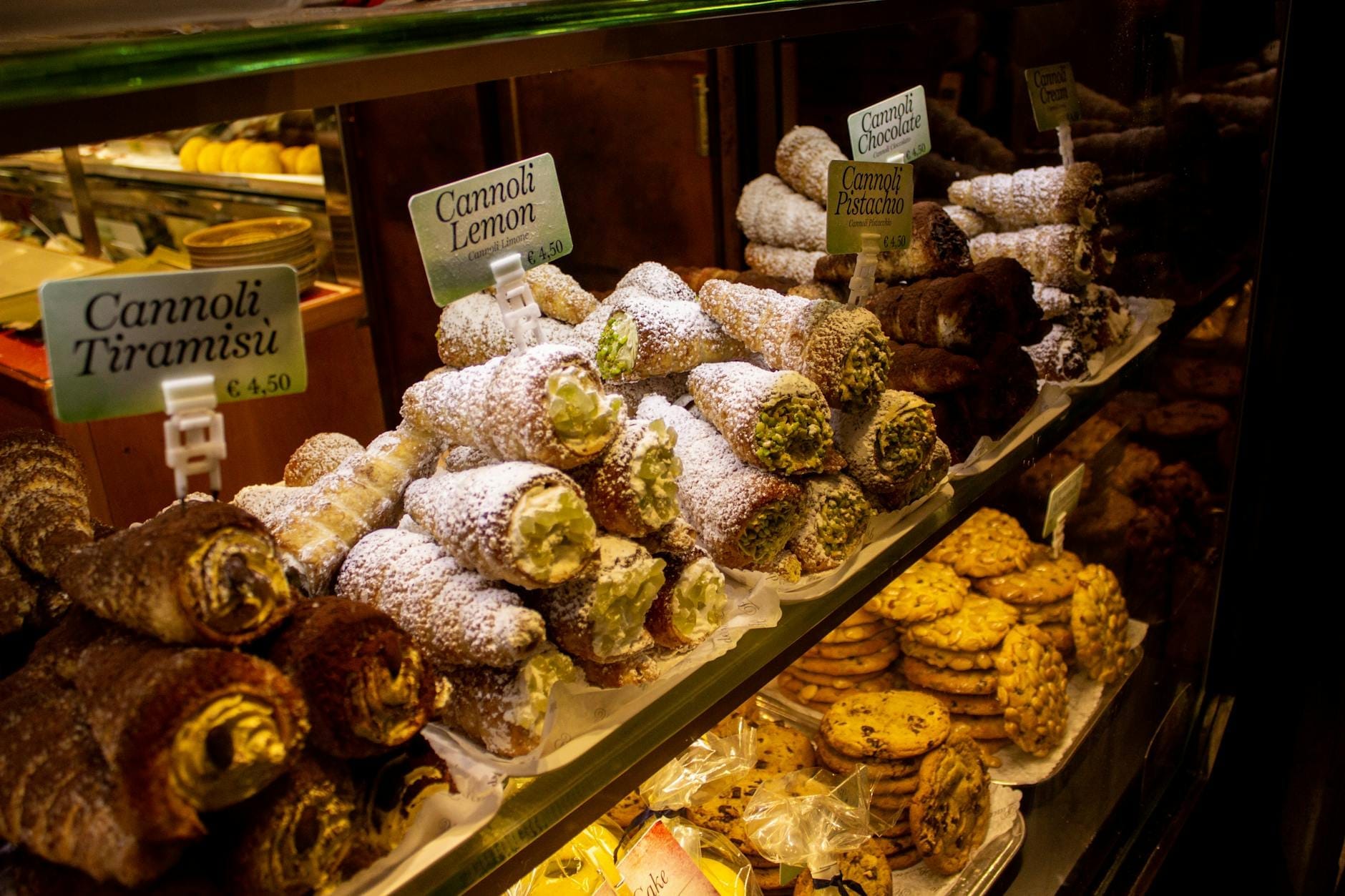
On food, Sicily wins without much contest. Sicilian cuisine carries centuries of culinary influence: Greek, Arab, Norman, Spanish, and Italian have all left marks on what ends up on the plate. The Arab influence is clearest in the sweet-sour agrodolce flavour profile, the use of saffron and pine nuts in savoury dishes, and the tradition of granita and cannoli. Sardinia has excellent food too, including su porceddu (spit-roasted suckling pig), pane carasau flatbread, and Pecorino Sardo, but it lacks the density and diversity of Sicilian cooking.
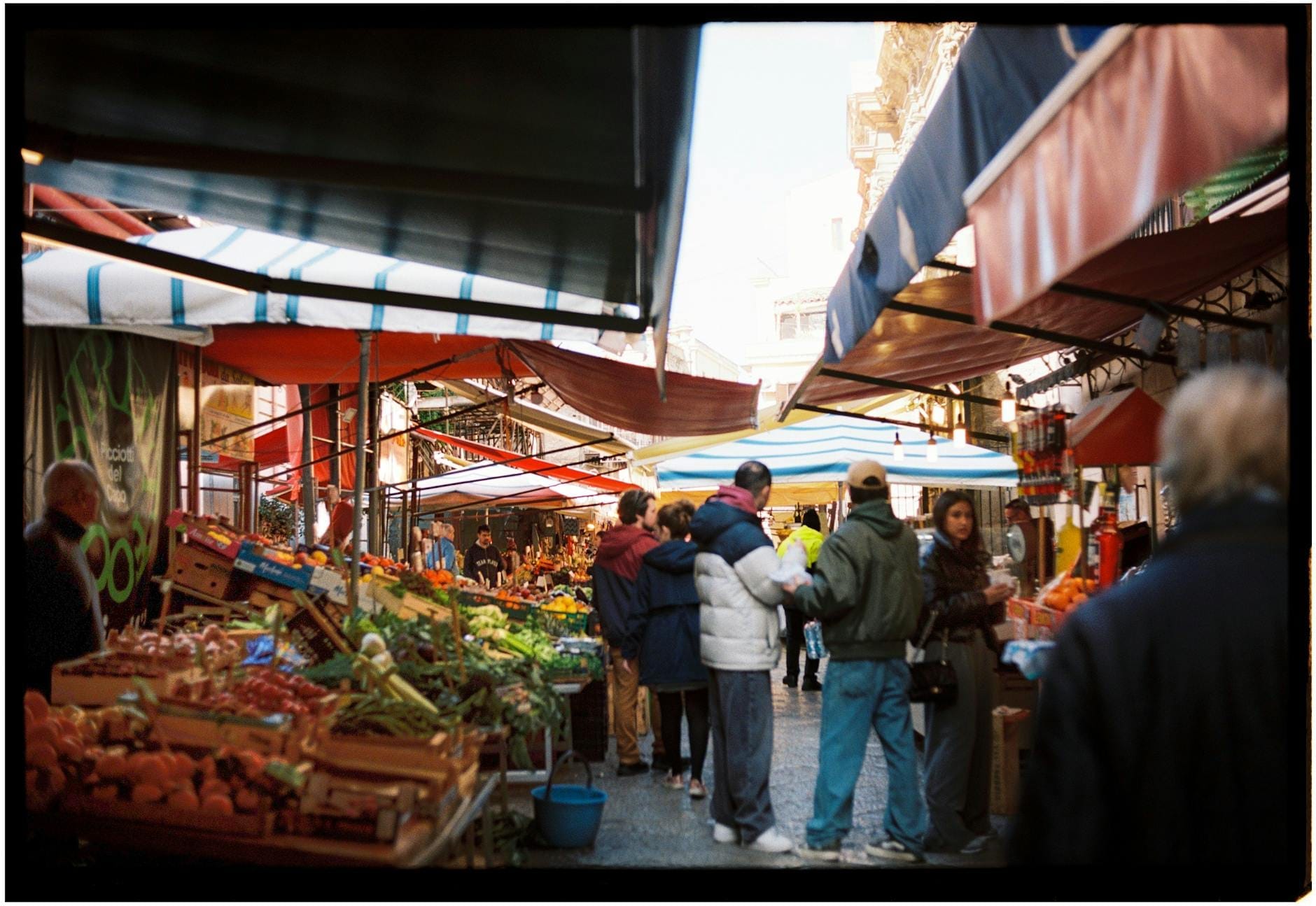
Palermo's street food scene is one of the best in Europe. Markets like Ballarò and the Vucciria sell everything from arancini to stigghiola for a couple of euros. The Sicilian street food culture is also one of the island's most accessible pleasures for budget travellers.
Culturally, Sicily's cities reward slow exploration. Palermo has the density of Rome compressed into a walkable Arab-Norman quarter. Siracusa's Ortigia island is one of Italy's most beautiful historic centres. Catania's baroque Piazza del Duomo could hold its own against any city square in Europe. Sardinia's towns are quieter, more homogeneous, and less architecturally dramatic, though Cagliari and Alghero are genuinely worth your time.
✨ Pro tip
If you're travelling primarily for food and culture, Sicily is the stronger choice by a significant margin. Sardinia is not a food destination in the way that Sicily is, and visitors who arrive expecting the same culinary density often leave underwhelmed outside of resort areas.
Beaches: Honest Comparison
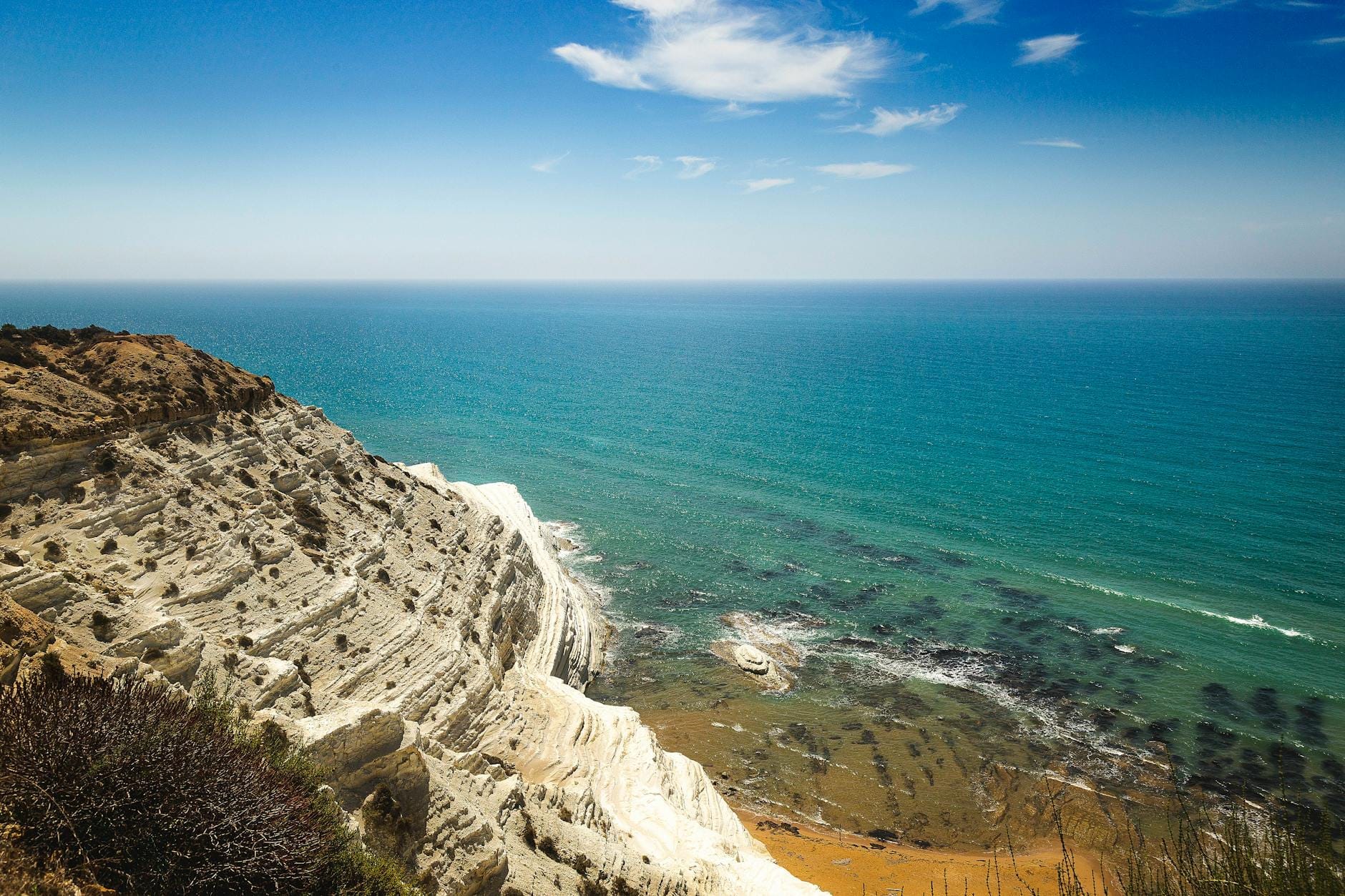
Sardinia's beaches are genuinely among the best in Europe. The Costa Smeralda's water colour is hard to describe accurately without sounding like a travel brochure, but the granite-backed coves near Porto Cervo and Palau really are that clear. The beach at Cala Goloritze, reachable only by boat or a long hike, is frequently cited among Europe's top ten. The beach quality on Sardinia's best stretches exceeds anything Sicily offers on a like-for-like basis.
That said, Sicily's best beaches are excellent. San Vito lo Capo in the northwest has Caribbean-quality white sand and turquoise water. The Spiaggia dei Conigli on Lampedusa routinely ranks among Europe's top beaches. The Zingaro Nature Reserve offers a string of undeveloped coves with limited access. And the Aeolian Islands, particularly Salina and Marettimo, have clear water and far fewer visitors than comparable Sardinian spots in July and August.
⚠️ What to skip
Sardinia's Costa Smeralda in July and August is one of Europe's most expensive resort areas. Sunbed hire, restaurant bills, and marina hotels are priced at a level that shocks most first-time visitors. If you're expecting affordable Italy, the Costa Smeralda is not it. Shoulder season prices (May, June, September) are dramatically more reasonable.
Costs, Transport, and Getting Around
Sicily is generally more affordable than Sardinia's resort areas. Accommodation, restaurant meals, and transport costs in Sicily's cities and even beach towns tend to be lower than equivalent options in the Costa Smeralda or around Palau. Budget travellers will find Sicily far easier to navigate economically: arancini for €2, a three-course lunch for under €15, and reliable intercity bus connections that keep transport affordable.
Getting around Sicily without a car is feasible but requires planning. Trenitalia's regional rail connects Palermo, Catania, Messina, and Siracusa, but coverage of the interior and south coast is thin. For places like Agrigento's Valley of the Temples or the Villa Romana del Casale at Piazza Armerina, a car makes a substantial difference. The same is largely true of Sardinia, where public transport outside Cagliari is even more limited. Both islands reward road trips significantly more than bus-only travel.
- Sicily airports: Palermo (PMO) and Catania (CTA) are the main hubs; Trapani (TPS) serves budget routes; Comiso (CIY) covers the southeast
- Sardinia airports: Cagliari (CAG) for the south, Olbia (OLB) for the Costa Smeralda, Alghero (AHO) for the northwest
- Ferries to Sicily from mainland Italy depart from Naples and Civitavecchia to Palermo; economy foot-passenger fares typically start around €40-70 depending on season and operator
- Ferries to Sardinia from Genoa, Livorno, Civitavecchia, and Naples; low-season economy fares from around €35-60 per person
- There is no direct ferry between Sicily and Sardinia; combining both islands requires flying or routing via the Italian mainland
If you want to island-hop within a single region, Sicily has a significant advantage: its satellite islands, including the Aeolian Islands (Stromboli, Salina, Lipari), the Egadi Islands (Favignana, Marettimo), and Pantelleria, are all part of the Sicilian region and reachable by ferry from Milazzo or Trapani. The Sicily island hopping circuit is one of the most rewarding ways to spend a week or two.
Which Island Should You Choose?
The honest answer is that most travellers choosing between these two islands are making a false dilemma: they are very different places suited to different trips. Asking which is better is like asking whether you should go to Rome or the Amalfi Coast. The right answer depends entirely on what you want.
- Choose Sicily if: You want history, food, architecture, and volcanic landscapes alongside good beaches. One week in Sicily can reasonably cover Greek ruins, a baroque city, Mount Etna, and a few days of swimming.
- Choose Sardinia if: Your trip is primarily about swimming in extraordinary water, minimal sightseeing, and a slower pace. The best Sardinian beaches are at a level that rewards a dedicated beach holiday rather than a culture-heavy itinerary.
- Choose Sicily on a budget: Sicily is substantially more affordable for food, accommodation outside of peak beach season, and transport. Sardinia's Costa Smeralda inflates perceptions of the whole island.
- Choose Sardinia for exclusivity: If you're travelling in a style where price is secondary, Sardinia's luxury yacht scene, high-end beach clubs, and boutique inland agriturismo options are genuinely world-class.
- Don't try to combine both on a short trip: There is no convenient direct link between the two islands. Flying or ferrying via the mainland adds a full travel day each way. A week is too short to do both properly.
For first-time visitors to the Italian islands, Sicily tends to deliver the more complete experience precisely because it offers so much variety within a single trip. A one week Sicily itinerary can credibly combine Palermo, the southeast baroque towns, Etna, and Taormina, with time left for beaches. Sardinia is harder to do justice in seven days without a car and a specific beach destination in mind.
💡 Local tip
April to early June and September to October are the best months on both islands. You get warm enough sea temperatures for swimming (from late May in Sicily, typically), far lower accommodation prices, and far thinner crowds. July and August on either island means full prices, full beaches, and temperatures that make long sightseeing days uncomfortable. Sicily in October specifically offers warm weather, harvest season food, and almost no tourist congestion.
FAQ
Is Sicily or Sardinia better for beaches?
Sardinia edges ahead on raw beach quality, particularly the Costa Smeralda and the southeast around Villasimius. However, Sicily's best beaches, especially San Vito lo Capo, Lampedusa's Spiaggia dei Conigli, and the Zingaro Nature Reserve, are world-class. If beaches are your sole focus, Sardinia wins. If beaches are one part of a broader trip, Sicily's variety is hard to beat.
Is Sicily cheaper than Sardinia?
Generally yes, though the gap is more nuanced than the reputation suggests. Sardinia's Costa Smeralda is extremely expensive in high season. But away from resort areas, Sardinia is not dramatically more costly. Sicily tends to be more affordable for food, city accommodation, and transport across the board, making it the stronger choice for budget-conscious travellers.
Can I visit both Sicily and Sardinia in one trip?
Technically yes, but logistically awkward. There is no direct ferry between the two islands. You need to fly (routes are seasonal and limited) or ferry via the Italian mainland, which adds significant travel time. For a trip of two weeks or more, combining them is viable. For a week or less, pick one and commit.
How do I get from Sicily to Sardinia?
The most practical option is to fly, typically via Rome (FCO) or Milan. Direct seasonal routes do exist but are not guaranteed year-round. Alternatively, you can take a ferry from Sicily to mainland Italy and then a separate ferry to Sardinia, but this adds two overnight crossings and a full day of travel each way.
Which island has better food, Sicily or Sardinia?
Sicily is widely considered one of Italy's strongest food regions, drawing on Greek, Arab, Norman, and Spanish culinary traditions. Sardinia has excellent regional specialities but nothing approaching Sicily's breadth and complexity. If food is a priority, Sicily is the clear choice.