Villa Romana del Casale: The Largest Roman Mosaic Floor in the World
Hidden in the Sicilian interior near Piazza Armerina, the Villa Romana del Casale preserves roughly 3,500 square metres of 4th-century Roman floor mosaics in extraordinary condition. A UNESCO World Heritage Site since 1997, it ranks among the most significant Roman remains anywhere in the Mediterranean.
Quick Facts
- Location
- Villa Romana del Casale, 94015 Piazza Armerina (EN), Sicily, Italy — approx. 10 min drive from Piazza Armerina town centre via SP15
- Getting There
- Local buses run several times daily from Piazza Falcone Borsellino and Piazza Alcide De Gasperi in Piazza Armerina. By car is the most flexible option from Catania (approx. 90 min) or Agrigento (approx. 80 min).
- Time Needed
- 2–3 hours for the full circuit; allow extra time in summer heat
- Cost
- Paid admission (verify current EUR price on the official site before visiting)
- Best for
- Roman history, archaeology, art history, family visits with older children
What Is the Villa Romana del Casale?
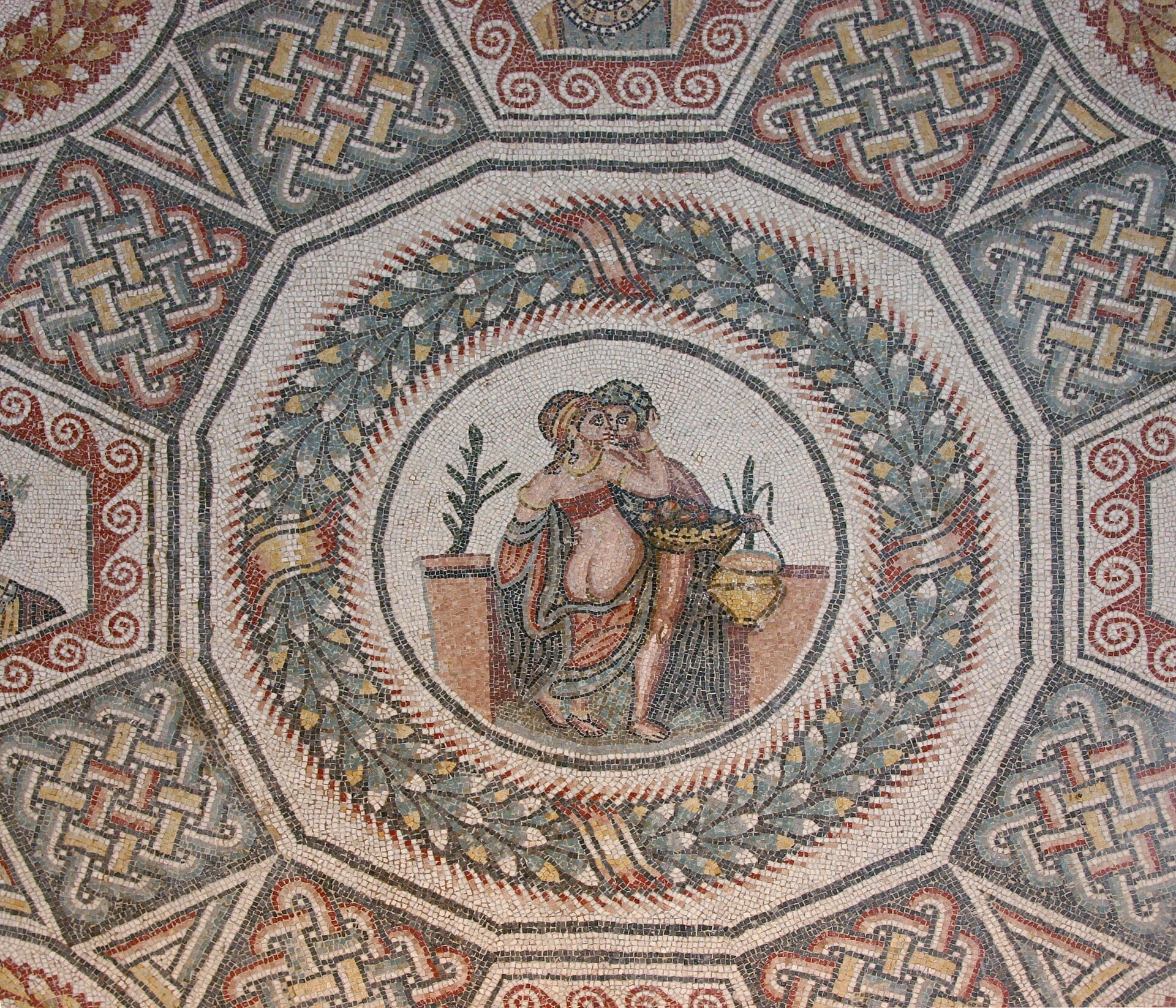
The Villa Romana del Casale is a late Roman palatial complex built in the 4th century AD on the slopes of Mount Mangone, in the valley of the River Gela, at the gates of Piazza Armerina. At its height it functioned as the administrative hub of a vast latifundium, one of the large agricultural estates that characterised Roman Sicily. It is not a ruin in the conventional sense. The structure was buried under a mudslide, likely in the 12th century, which sealed and protected its floors. What survives today is the most complete and extensive collection of Roman mosaic floors known anywhere in the world, covering roughly 3,500 square metres across a built area of about 4,000 square metres.
UNESCO inscribed the site on its World Heritage List in 1997, citing its extraordinary historical, artistic and cultural value. The mosaics are not decorative filler. They are a primary historical document: depicting hunting expeditions, athletic competitions, mythological scenes, domestic life, and a famous series showing female athletes in garments resembling modern bikinis. If you have any interest in late antiquity, Roman daily life, or ancient art, this site will take your full attention.
💡 Local tip
Opening hours change seasonally. During summer (daylight saving period) the site is open 09:00–19:00 daily. In winter months it closes at 17:00. Always check the official park website or call ahead before your visit, especially around Italian public holidays.
The Mosaics Up Close: What You Actually See
The site is covered by a protective structure — a system of walkways and transparent roofing installed over the ruins — so you move through the villa on elevated timber and metal platforms suspended above the original floors. This means you are often looking down onto the mosaics from one to two metres above them, sometimes at angles. It is not the same as crouching beside them in a gallery, and it is worth understanding this before you arrive. The effect is occasionally frustrating for detail photography, but for taking in entire room compositions — and some rooms are very large — the elevated perspective works well.
The Great Hunt corridor is the centrepiece of the complex and one of the longest surviving Roman mosaic sequences in existence, running approximately 60 metres along a covered ambulatory. It depicts the capture and transport of wild animals — lions, elephants, rhinos, ostriches, antelopes — from Africa and the Near East to Rome for use in arena spectacles. The detail in individual animal portraits is meticulous, and the sheer compositional ambition of the piece, integrating dozens of human figures into a continuous narrative, makes it unlike anything else from the ancient world.
The Room of the Ten Girls, sometimes called the Bikini Girls room, is usually the most talked-about chamber in modern visitor guides. It shows young women engaged in weight training, discus throwing, ball games, and what appears to be a prize-giving ceremony. The garments they wear are anatomically specific and functionally plausible as athletic wear. Whether these represent actual sports, dance, or mythological subjects is still debated among archaeologists, which makes the room more interesting, not less.
Beyond these headline rooms, the villa contains dozens of other spaces: a triclinium (formal dining hall) with mythological scenes from the Labours of Hercules, private apartments with geometric and floral designs, and a peristyle courtyard from which the room sequence radiates. Each area has interpretive panels in Italian and English, though the quality of translation varies.
Tickets & tours
Hand-picked options from our booking partner. Prices are indicative; availability and final rates are confirmed when you complete your booking.
Skip-the-line guided tour of Villa Romana del Casale
From 0 €Instant confirmationPrivate Cooking Class with Le Mamme del Borgo with Transfer from Taormina
From 1.025 €Instant confirmationFree cancellationMondello and Sanctuary in Monte Pellegrino Tour
From 25 €Instant confirmationFree cancellationTenuta Valle delle Ferle Wine and Food Tasting in Caltagirone
From 75 €Instant confirmationFree cancellation
Historical Context: Who Built This, and Why Here?
The identity of the owner remains unconfirmed. The most widely cited hypothesis names Maximianus Herculius, co-emperor under Diocletian's tetrarchy and a major figure in late 3rd and early 4th-century Rome, as the likely patron. The scale of the villa, the political imagery in certain mosaics, and the quality of execution are consistent with imperial or near-imperial patronage. However, no inscription or document conclusively proves this attribution, and scholars continue to debate the question.
What the archaeological evidence does confirm is that the complex was built over an earlier Roman structure, was expanded substantially in the first half of the 4th century, and remained in use and in habitation through the Norman period in Sicily. Remains of Norman-era construction are visible in parts of the site, a reminder that this was not simply a ruin for 1,000 years but an occupied building whose floors happened to be covered and preserved when the structure finally collapsed.
This level of Roman material culture in the Sicilian interior is part of what makes the island's archaeological landscape so layered. The Villa sits within a broader regional picture that also includes the Greek ruins at Agrigento and the ancient sites at Morgantina. If you are building a wider itinerary, our guide to the best Greek ruins in Sicily gives useful context for how these different periods relate to one another across the island.
Visiting in Practice: Time of Day and Crowds
The villa draws significant visitor numbers from June through September, partly because it sits within day-trip range of both Catania and Agrigento. Coach groups tend to arrive between 10:00 and 11:30, and the narrow walkways inside the protective structure can become uncomfortably congested during this window. The Great Hunt corridor in particular, being long and thin, creates bottlenecks when tour groups stop for guided commentary.
Arriving at opening time, around 09:00, makes a noticeable difference. The light inside the protective structure is cooler and more even in the morning, the air is fresher before midday heat builds up inside the covered sections, and you can move through the rooms at your own pace. Late afternoon entry, roughly 16:00 onwards, also thins out considerably once day-trippers have left, though in summer the site closes at 19:00 so this gives you roughly three hours.
⚠️ What to skip
The interior of the protective structure can become very warm in July and August, particularly between 12:00 and 15:00. Bring water, wear light clothing, and consider visiting outside peak summer if heat is a concern. There is limited shade in the outdoor sections of the complex.
Spring and autumn are the most comfortable seasons for this visit. April, May, September, and October offer mild temperatures, good natural light, and smaller crowds. The surrounding landscape of the Sicilian interior, all rolling wheat fields and oak-covered hills, is also at its most photogenic in spring.
Getting There: Your Realistic Options
The villa is not on a main transport artery, and this is probably the single biggest practical consideration for most visitors. Piazza Armerina is a mid-sized inland town with limited rail connections. The most realistic option for the majority of visitors is a rental car. From Catania the drive takes approximately 90 minutes on the SS417 and SP15. From Agrigento, it is roughly 80 minutes. Both routes pass through inland Sicilian scenery that is considerably different from the coastal tourist circuit.
If you do not have a car, local buses run from Piazza Armerina town (departing from Piazza Falcone Borsellino and from Piazza Alcide De Gasperi) to the site several times per day. Schedules are limited and change seasonally, so confirm timings locally. Some visitors combine this site with Piazza Armerina town itself, which has a notable Baroque cathedral and a compact historic centre worth an hour or two. Our guide to getting around Sicily covers the broader transport picture for the island.
Guided day tours from Catania, Agrigento, and occasionally Palermo do include the Villa Romana del Casale, and these can be a practical solution if you want commentary alongside transport. They do, however, commit you to the same mid-morning arrival window as most other groups.
Photography, Accessibility, and Practical Details
Photography is permitted without flash for personal use. The overhead walkways and glass or polycarbonate roofing mean lighting is a consistent challenge: you are often photographing through protective panels, dealing with reflections, and working at unfavourable angles. A polarising filter helps with glare. For capturing the full width of larger rooms like the Great Hunt corridor, a wide-angle lens is more useful than a zoom. The most photographed subjects — the Bikini Girls room and the animal hunt panels — are also the most crowded, so patience is required if you want a clean shot.
The site involves moving along raised walkways throughout, with some sections requiring negotiating ramps and steps. Visitors with significant mobility limitations should contact the archaeological park directly before visiting, as detailed accessibility information is not clearly set out on the park's online pages. The outdoor sections between structures are on uneven ground.
The Villa Romana del Casale fits naturally into a broader southern Sicily itinerary that includes the Valley of the Temples at Agrigento and the Neapolis Archaeological Park in Syracuse. Together these three sites form one of the most concentrated collections of ancient remains in the Mediterranean world. A one-week Sicily itinerary can reasonably include all three.
Is It Worth the Detour?
The honest answer is yes, with one qualification: the site rewards people who engage with what they are looking at. If you arrive expecting a visually dramatic ruin — columns, arches, open skies — this is not quite that. The protective structure gives the complex the atmosphere of a large indoor archaeological exhibition, which it essentially is. The mosaics themselves, however, are in a category of their own. Nothing else in the Roman world, and very little in any ancient culture, gives you this level of figurative complexity and narrative ambition preserved at this scale. The Great Hunt alone justifies the trip.
Visitors who find ancient history abstract or who struggle to engage without narrative context may find the experience less compelling. Very young children can find the long walking route on elevated platforms tiring. But for anyone with a genuine interest in Roman civilisation, this is one of the most important sites in Sicily and one of the most important in Italy.
Insider Tips
- Buy tickets online in advance during peak season (July–August) to avoid queuing at the entrance booth, where waits can extend to 30–45 minutes mid-morning.
- The audio guide available at the site adds significant depth, particularly for the Great Hunt corridor and the mythological scenes in the triclinium. It is worth the extra cost if you are visiting without a specialist guide.
- Wear shoes with grip. The walkway surfaces can become slippery in humid or wet conditions, and some ramps are steeper than they look.
- The small town of Piazza Armerina, just 10 minutes up the road, has good lunch options and is notably quieter and cheaper than tourist-facing restaurants nearer the villa entrance. It also has a fine Baroque cathedral that most day-trippers miss entirely.
- If you want to photograph the mosaics with the least reflection and glare, overcast days — common in spring and autumn — actually produce better results than direct summer sunshine through the polycarbonate roof panels.
Who Is Villa Romana del Casale For?
- Roman history and archaeology enthusiasts who want to see ancient mosaics of world-class quality in situ
- Art history travellers with an interest in late antique figurative art and iconography
- Families with older children (roughly 10 and up) who can sustain attention on a 2–3 hour guided walk
- Visitors already planning a southern Sicily loop through Agrigento, Syracuse, or Ragusa
- Travellers who want to move beyond the coastal tourist circuit into Sicily's quieter, less-visited interior
Nearby Attractions
Combine your visit with:
- Spiaggia dei Conigli, Lampedusa
Spiaggia dei Conigli on the island of Lampedusa is widely regarded as one of the finest beaches in the Mediterranean, with shallow turquoise water, white quartz sand, and a protected islet just offshore. Access is tightly controlled in summer to protect nesting loggerhead sea turtles, so planning ahead is not optional — it is essential.
- Madonie Regional Natural Park
Covering about 39,700 hectares in north-central Sicily, the Madonie Regional Natural Park is a UNESCO Global Geopark combining some of the island's highest mountains outside Etna, rare endemic flora, and a string of remarkably preserved medieval hilltowns. Access is free, terrain is varied, and the rewards are proportional to how far you go.
- Piazza Armerina
Located about 3–4 km outside the town of Piazza Armerina in central Sicily, Villa Romana del Casale is a UNESCO World Heritage Site sheltering over 3,500 square metres of remarkably preserved Roman mosaic floors. Dating to the early 4th century AD, it is widely regarded as the largest and most varied collection of Roman mosaics in existence.
- Savoca
Perched roughly 300–350 metres above the Ionian coast near Messina, Savoca is a medieval hilltop village that doubled as Corleone in Francis Ford Coppola's The Godfather. Beyond the film fame, it delivers genuine Norman-era architecture, Capuchin catacombs, and some of the most commanding views of the Sicilian coastline.