Madonie Regional Natural Park: Sicily's Wild Interior
Covering about 39,700 hectares in north-central Sicily, the Madonie Regional Natural Park is a UNESCO Global Geopark combining some of the island's highest mountains outside Etna, rare endemic flora, and a string of remarkably preserved medieval hilltowns. Access is free, terrain is varied, and the rewards are proportional to how far you go.
Quick Facts
- Location
- North-central Sicily, Province of Palermo; between Palermo and Cefalù. Park headquarters: Corso Paolo Agliata 16, 90027 Petralia Sottana (PA).
- Getting There
- Car is strongly recommended. Gateway towns Castelbuono and Petralia Sottana are roughly 90–100 km east of Palermo and around 25–30 km south of Cefalù. Limited bus services connect from Palermo and Cefalù; check SAIS Autolinee for current timetables.
- Time Needed
- Half-day for a single village; 2–3 days to cover a meaningful range of terrain and towns. Dedicated hikers often spend a full week.
- Cost
- Free to enter the park and use marked trails. Fees apply for guided excursions, ski lifts at Piano Battaglia (seasonal), and some museums within park villages.
- Best for
- Hikers, road-trippers, botanical enthusiasts, photographers, travellers wanting to experience non-coastal Sicily.
- Official website
- www.visitsicily.info/en/geopark-madonie
What the Madonie Actually Is
The Madonie Regional Natural Park, officially the Parco Naturale Regionale delle Madonie, was established on 9 November 1989 by the Sicily Region. It covers approximately 39,679 hectares across 15 municipalities in the Province of Palermo, making it one of the larger regional protected areas in Sicily. Since 2015 it has also carried UNESCO Global Geopark status, recognising the geological significance of a landscape that holds some of the most complex rock formations in the central Mediterranean.
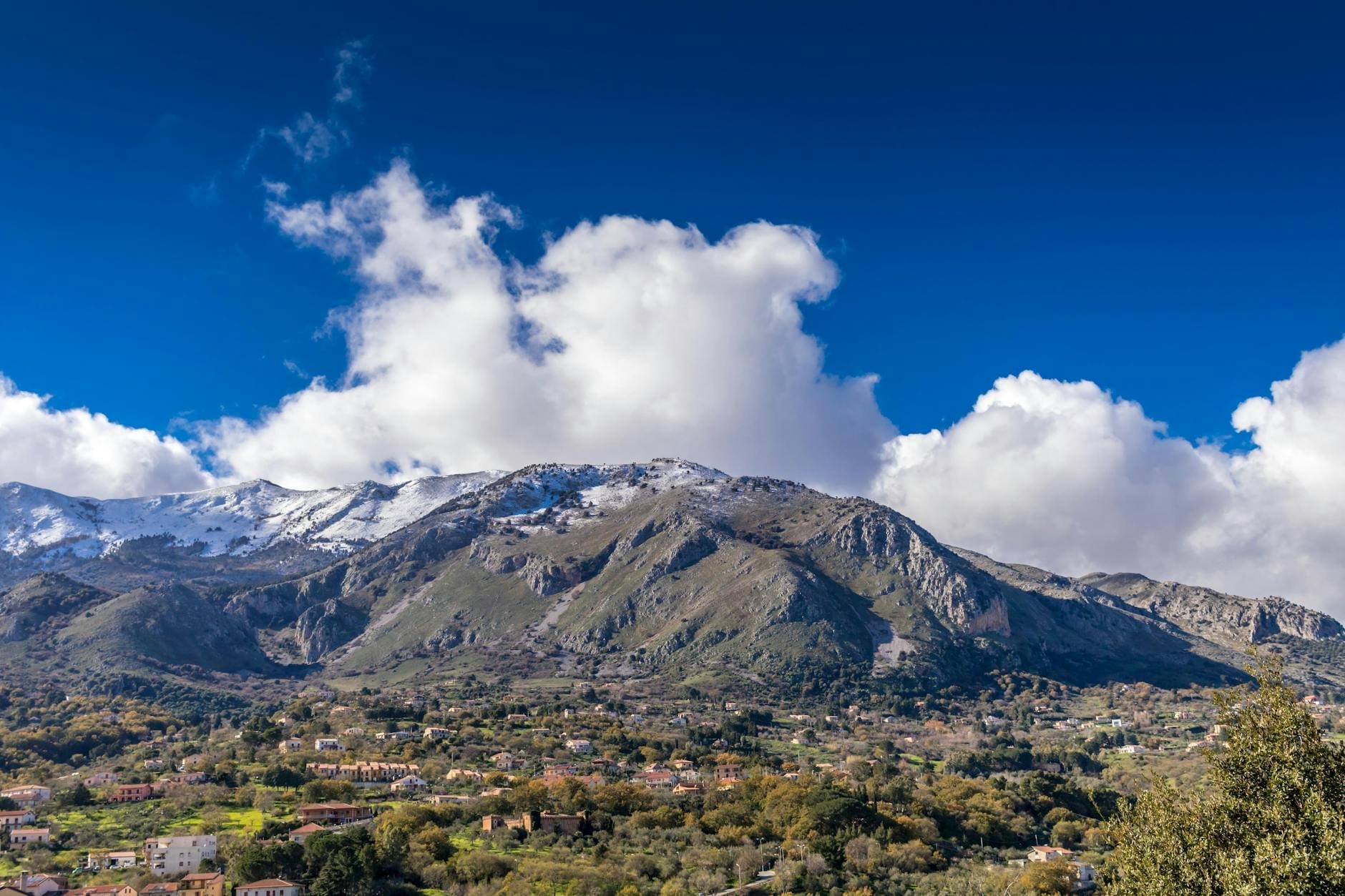
The park's centrepiece is Pizzo Carbonara, which at 1,979 metres is the second-highest peak in Sicily after Mount Etna. The terrain drops sharply from these summits through beech and oak forest, gorges, river valleys, and terraced farmland before approaching the coastal plain near Cefalù. This compression of habitats into a relatively compact area is what makes the Madonie genuinely interesting rather than just scenically pleasant.
For context on how the Madonie fits into a broader Sicilian trip, the one-week Sicily itinerary positions it as a natural counterweight to the island's coastal and archaeological highlights.
ℹ️ Good to know
The park has no single gated entrance and no central ticket booth. You simply drive or walk in. The park headquarters in Petralia Sottana can provide maps and trail information; arriving there first is worth the fifteen minutes.
The Landscape: What You Actually See
Approach from Cefalù on the SS286 and the change is abrupt. The coastal tourist infrastructure disappears within a few kilometres and you are climbing through limestone hillsides planted with olives and carob, then into denser forest. By the time you reach Castelbuono the air temperature has already dropped several degrees, and if you push higher toward Piano Battaglia the drop can be 10°C or more compared to the coast even in July.
The upper elevations shelter the Abies nebrodensis, a critically endangered fir species found nowhere else on Earth. Fewer than 30 mature specimens remain in the wild, clinging to slopes in the Vallone Madonna degli Angeli area near the village of Polizzi Generosa. Most visitors walk within metres of them without knowing what they are looking at, which is part of why the park participates in the European LIFE conservation programme.
At lower altitudes the forest gives way to maquis scrub, the aromatic mix of rosemary, lentisk, and wild thyme that you can smell through a car window before you see it. In spring, from March through May, the meadows above the treeline carry wild orchids, peonies, and the deep violet of Viola nebrodensis. By late June those same meadows are dry and golden. The landscape is not static, and the season you choose changes everything.
Tickets & tours
Hand-picked options from our booking partner. Prices are indicative; availability and final rates are confirmed when you complete your booking.
Dinner in the Madonie Mountains from Cefalu
From 60 €Instant confirmationFree cancellationE-bike tour through Madonie Park with olive oil tasting
From 310 €Instant confirmationFree cancellation5 or 4 Wines and Food Tasting in Etna Regional Park with Winery Tour
From 39 €Instant confirmationFree cancellationEtna South Upper Craters Guided Excursion from Taormina
From 42 €Instant confirmationFree cancellation
The Hilltowns: Stone Villages in the Clouds
Fourteen of the park's fifteen municipalities are small hilltowns, most of them genuinely medieval in origin, with populations that have contracted significantly over the past century as people moved to coastal cities. That demographic pressure has left them architecturally intact in a way that more successful towns rarely are. There was no money for modernisation, and the result is a consistency of local sandstone and terracotta tile that feels organic rather than curated.
Castelbuono is the most visitor-ready of the lot, with its Ventimiglia Castle, several good restaurants serving park-sourced mushrooms and ricotta, and a patisserie tradition built around manna, the dried sap of the flowering ash tree harvested from the surrounding hillsides each August. It is a good base if you want to sleep inside the park without camping.
Petralia Sottana and its higher twin, Petralia Soprana, sit on a ridge above 1,000 metres. Petralia Soprana in particular is frequently cited as one of the most beautifully sited villages in Sicily, and the claim is not inflated. On clear mornings, the view north extends all the way to the Tyrrhenian coast, with Cefalù's rock visible in the distance. The piazza in front of the Chiesa Madre catches the morning light in a way that rewards an early arrival.
If you are approaching from the north coast, the town of Cefalù makes a natural staging point before heading into the Madonie interior, with a manageable 25-30 km drive up into the hills.
Hiking in the Madonie: More Than 30 Marked Trails
The park offers a network of more than 30 trails ranging from short interpretive walks near village perimeters to full-day ridge traverses. Trail difficulty is marked using the CAI (Club Alpino Italiano) grading system: T (tourist), E (excursionist), and EE (experienced excursionist). The upper mountain routes toward Pizzo Carbonara fall into the EE category and require solid footwear, a map, and an honest assessment of your fitness.
For a first visit, the circuit around Piano Battaglia at roughly 1,600 metres provides an accessible introduction to the high-altitude environment. The plateau is also where you will find the ski lifts that operate in winter, usually from December through March depending on snowfall. Seeing this landscape under snow, something coastal Sicily visitors rarely imagine, is one of the Madonie's most disorienting pleasures.
💡 Local tip
Download offline maps before you leave signal range. Mobile coverage is patchy above 1,200 metres and drops out entirely on some northern slopes. The park authority's free trail map, available at the headquarters in Petralia Sottana, is more reliable than many apps in this terrain.
Weather shifts quickly at elevation. Summer mornings are typically clear but afternoon thunderstorms can develop from June through August, often building faster than they would in flatter terrain. Start summit approaches by 7am and aim to be below the treeline by early afternoon. In shoulder seasons, carry a waterproof regardless of the forecast.
Time of Day and Season: When the Park Performs Best
Mornings in the Madonie have a quality that is difficult to describe without sounding excessive. Mist sits in the valleys between villages from roughly 6am until 9am for most of the year, burning off as the sun clears the eastern ridges. The light at this hour is cold and flat, good for photography, and the villages have not yet begun their day. You can walk through Petralia Soprana's lanes at 7am and meet no one except an elderly man with a dog and, in season, the occasional shepherd moving flocks along the verges.
Midday in summer is the least rewarding time. Temperatures on the trails peak, restaurants in the villages follow a strict 1pm–3pm closure, and the car parks near Piano Battaglia fill with Palermo day-trippers seeking cooler air. If you arrive mid-afternoon, the crowds have thinned, the villages have re-opened, and the quality of the late light on limestone is worth the wait.
April through June and September through October are the most productive months for anyone combining hiking with wildlife observation or photography. For a broader view of how seasonal timing affects Sicily as a whole, the best time to visit Sicily guide provides useful context.
Getting Around the Park
A car is close to essential. The park covers 400 square kilometres across multiple municipalities connected by provincial roads that are well-maintained on primary routes and rougher on minor ones. Without your own transport, you are limited to whichever village the bus drops you in and the trails that radiate from it. That can still be a worthwhile day, but you lose the park's main appeal, which is the ability to move between different altitudinal zones and village characters.
From Palermo, Castelbuono is roughly 90 kilometres via the A20 motorway to Cefalù followed by the SS286 inland. Allow 90 minutes and add time for the final approach, which involves hairpin bends regardless of which valley you enter from. From Catania, the park is accessible via the A19 toward Palermo with an exit toward Petralia Sottana; the drive takes around two hours.
The Madonie pairs logically with a Sicily road trip that connects the north coast, the interior, and the south. The distances are not large but the roads demand attention.
⚠️ What to skip
Winter road conditions above 1,200 metres can include snow and ice between November and March. Snow chains are legally required in some mountain zones and conditions can change overnight. Check local road conditions before driving to Piano Battaglia in winter, and carry chains if your vehicle does not have winter tyres.
Food, Producers, and the Manna Harvest
The Madonie has a legitimate food culture that predates any tourism interest in it. Ricotta fresca made from sheep's milk is produced in small operations throughout the park and tastes materially different from supermarket versions, closer to cream than cheese. Mushrooms, particularly porcini and ovoli, come from the forest floors in autumn and feature on almost every local menu from September onward.
Manna is the product that is specific to this area. Collected from deliberate incisions in the bark of Fraxinus ornus trees each August, it dries into irregular stalactites of pale, slightly sweet sap with a mild laxative quality. It has been produced in the Madonie for centuries and is now one of Italy's Slow Food Presidia products. Castelbuono's patisseries use it in biscuits, nougat, and as a flavouring in liqueurs. Buying a small amount directly from a producer in Castelbuono is worth the detour.
For a broader picture of Sicilian food culture before or after your visit, the Sicily food guide covers regional specialities with the kind of specificity that helps you order well.
Insider Tips
- The park headquarters in Petralia Sottana is understaffed but genuinely helpful. Arrive early in the morning when staff are most available, ask specifically for the printed trail map with difficulty ratings, and mention which villages you plan to base yourself in; they can point you to unpublished short-cuts between trails.
- Castelbuono's weekly market (typically Thursday mornings in the main piazza) carries local ricotta, honey, and foraged mushrooms sold by producers who have no other retail presence. It is less a tourist event than a functional food market.
- For the Pizzo Carbonara summit, the approach from Portella Colla to the northeast is shorter than most guide descriptions suggest; it can be done in around 3 hours return from the car park, which means a feasible morning outing if you start by 7am.
- Polizzi Generosa is the least visited of the major park towns and has the most intact medieval street layout. Its small archaeological museum also houses Roman finds from the surrounding area that receive almost no attention in standard Sicily guides.
- If you visit in late July or August, book accommodation in Castelbuono well in advance. The town fills with returning Sicilian emigrants and Italian tourists during the Ferragosto period (around August 15), and finding a room the same day is unlikely.
Who Is Madonie Regional Natural Park For?
- Hikers and trail runners who want a genuine mountain environment without the crowds or infrastructure of more famous Alpine parks
- Road-trippers covering north-central Sicily who want interior depth to complement coastal highlights
- Photographers drawn to morning mist, medieval stone architecture, and the specific quality of high-altitude Mediterranean light
- Food travellers interested in Slow Food products, particularly manna, artisanal ricotta, and autumn fungi
- Travellers who find purely archaeological or beach-focused Sicily itineraries repetitive and want landscape and village life
Nearby Attractions
Combine your visit with:
- Spiaggia dei Conigli, Lampedusa
Spiaggia dei Conigli on the island of Lampedusa is widely regarded as one of the finest beaches in the Mediterranean, with shallow turquoise water, white quartz sand, and a protected islet just offshore. Access is tightly controlled in summer to protect nesting loggerhead sea turtles, so planning ahead is not optional — it is essential.
- Piazza Armerina
Located about 3–4 km outside the town of Piazza Armerina in central Sicily, Villa Romana del Casale is a UNESCO World Heritage Site sheltering over 3,500 square metres of remarkably preserved Roman mosaic floors. Dating to the early 4th century AD, it is widely regarded as the largest and most varied collection of Roman mosaics in existence.
- Savoca
Perched roughly 300–350 metres above the Ionian coast near Messina, Savoca is a medieval hilltop village that doubled as Corleone in Francis Ford Coppola's The Godfather. Beyond the film fame, it delivers genuine Norman-era architecture, Capuchin catacombs, and some of the most commanding views of the Sicilian coastline.
- Scala di Santa Maria del Monte, Caltagirone
The Scalinata di Santa Maria del Monte is a monumental 142-step staircase in the heart of Caltagirone, Sicily, where every riser is clad in hand-painted ceramic tiles drawn from ten centuries of local craft tradition. Free to visit at any hour, it connects the lower town to an 18th-century church at the hilltop and serves as the living symbol of one of Italy's most celebrated ceramic-making cities.