Villa Romana del Casale: The Roman Mosaic Masterpiece Near Piazza Armerina
Located about 3–4 km outside the town of Piazza Armerina in central Sicily, Villa Romana del Casale is a UNESCO World Heritage Site sheltering over 3,500 square metres of remarkably preserved Roman mosaic floors. Dating to the early 4th century AD, it is widely regarded as the largest and most varied collection of Roman mosaics in existence.
Quick Facts
- Location
- about 3–4 km southwest of Piazza Armerina, Province of Enna, central Sicily
- Getting There
- By car from Piazza Armerina (approx. 10–15 min drive); local bus line B from Piazza Falcone Borsellino in Piazza Armerina also serves the site
- Time Needed
- 2–3 hours for a thorough visit; allow extra time for the town of Piazza Armerina itself
- Cost
- Approx. €16 for an all-inclusive ticket covering Villa Romana del Casale, the Archaeological Museum of Aidone, and Morgantina; standard villa admission is around €17 including the current exhibition (verify current prices before visiting)
- Best for
- History enthusiasts, archaeology lovers, photography, families with older children
- Official website
- www.visitsicily.info/en/villa-romana-del-casale
What You're Actually Visiting
The attraction most visitors associate with Piazza Armerina is not the medieval hilltop town itself, but Villa Romana del Casale, the extraordinary late-Roman country residence sitting in a shallow valley 3 km to its southwest. This is not a ruin in the conventional sense. The villa's walls have crumbled, but its floors have survived in astonishing condition: more than 3,500 square metres of polychrome mosaic and opus sectile tile work, dating to the early 4th century AD, now sheltered beneath a purpose-built protective structure that keeps weather and light at bay.
Inscribed as a UNESCO World Heritage Site in 1997, Villa Romana del Casale is routinely described by archaeologists as the richest surviving collection of Roman mosaics in the world, in terms of both scale and thematic variety. That is not hyperbole. What makes this place exceptional is not just the quantity but the narrative ambition of the images: vivid hunting scenes, mythological tableaux, athletic competitions, portraits of domestic life, and one famous frieze showing women in garments remarkably similar to modern bikinis, engaged in sporting activities.
ℹ️ Good to know
Ticket structure: An all-inclusive ticket of approximately €16 covers entry to Villa Romana del Casale plus the Archaeological Museum of Aidone and the site of Morgantina. If you only plan to visit the villa itself, ask at the ticket office about single-entry options. Always verify current prices on the official site before your visit, as fees are updated periodically.
A Walk Through the Villa: What to Expect Room by Room
Visitors follow a raised walkway system that routes you through the villa's principal spaces without ever setting foot on the ancient floor. The path is mostly linear and clearly signed in Italian and English, though the sheer size of the complex can feel disorienting on first entry. Pick up the site map at the ticket office; it is genuinely useful.
The entrance vestibule and thermal baths come first, and they set the tone immediately: geometric border patterns give way to figurative scenes, the tesserae so fine and so densely packed that the images read almost like paintings. From the baths, the route opens into the great peristyle courtyard, where you begin to grasp the villa's scale. The owner, believed to have been an enormously wealthy Roman aristocrat or possibly an imperial official, commissioned artisans who were almost certainly imported from North Africa, explaining certain stylistic affinities with Tunisian mosaic traditions.
The corridor of the Great Hunt is the centrepiece and one of the longest single Roman mosaic corridors in the world at roughly 60 metres. It depicts the capture and transportation of wild animals, including elephants, rhinos, big cats, and ostriches, from Africa and the Near East to Rome, presumably for arena games. The detail is cinematic: you can read individual figures' expressions, the strain of ropes, the terror of caged animals. Allow at least fifteen minutes here alone.
The Room of the Ten Maidens, often called the Bikini Girls room, tends to draw the largest cluster of visitors. The women are depicted in two-piece garments, lifting weights, throwing discus, and receiving palm branches as prizes. Whether this is athletic training, entertainment, or something else entirely remains debated among scholars, which only adds to its fascination.
Tickets & tours
Hand-picked options from our booking partner. Prices are indicative; availability and final rates are confirmed when you complete your booking.
Agrigento and Piazza Armerina guided tour from Taormina
From 70 €Instant confirmationFree cancellationDay-trip to Agrigento and Piazza Armerina from Palermo
From 122 €Instant confirmationFree cancellationWine and arancini tasting experience in Piazza Armerina
From 50 €Instant confirmationFree cancellationWine tasting and lunch at a restaurant in Piazza Armerina
From 70 €Instant confirmationFree cancellation
How the Experience Changes by Time of Day
Mornings from opening (09:00) through mid-morning tend to be the quietest window. Tour groups begin arriving in earnest from around 10:30 onward, particularly in spring and autumn when Sicily's shoulder season brings significant coach traffic. The protective roof structure keeps the interior at a relatively stable temperature, but by midday in summer the surrounding paths and outdoor sections can become uncomfortable in the heat.
In summer, the site sometimes offers extended evening opening hours beyond the usual closing time. This is genuinely worth considering: the artificial lighting used during evening visits creates a completely different atmosphere, with the mosaics lit from specific angles that emphasize depth and colour in ways that flat daylight does not. The crowds are also thinner after dinner. Confirm current evening hours directly with the site before planning around them, as schedules shift seasonally.
💡 Local tip
Best photography conditions: The interior is lit with warm artificial light, which renders mosaic colours beautifully but requires a steady hand or a camera with good low-light performance. A small tripod or monopod helps significantly. Wide-angle lenses are useful for the Great Hunt corridor. Flash is generally prohibited.
Historical Context: Who Built This, and Why Here?
The villa dates to the early 4th century AD, a period when the Roman Empire was reorganizing under the Tetrarchy and wealthy landowners were consolidating vast agricultural estates across Sicily. The island was among the most productive grain-producing regions in the empire, and fortunes were made here. Villa Romana del Casale was almost certainly a private hunting lodge and administrative centre for a major estate rather than a permanent urban residence.
The identity of the owner remains uncertain. Competing theories have proposed Maximianus Herculius, co-emperor under Diocletian, or a prominent senatorial family. The hunting imagery throughout the villa, particularly the Great Hunt, suggests someone with imperial connections and access to exotic animals from the furthest reaches of the empire. Whatever the truth, the patron's ambition is evident in every square metre of floor: this was a statement of power, culture, and cosmopolitan reach.
The villa fell into gradual disuse in the Byzantine and Arab periods, was partially damaged by a landslide in the 12th century, and was then buried under silt and debris for centuries. That burial, which would have seemed catastrophic at the time, is precisely what preserved the mosaics so well. Serious archaeological excavations began in the 1950s and continued through subsequent decades. For broader context on Sicily's layered ancient past, the guide to Sicily's best Greek ruins helps situate Villa Romana del Casale within the island's long archaeological continuum.
Getting There from Major Sicilian Cities
Villa Romana del Casale sits in the interior of Sicily, in the Province of Enna, which means it is not on any major coastal route. This is both its limitation and part of its appeal: the drive through central Sicilian countryside, with rolling wheat fields, hilltop villages, and relatively little traffic, is genuinely rewarding.
By car from Catania, the journey takes roughly 1.5 to 2 hours depending on the route via the A19 autostrada and then provincial roads. From Palermo, allow approximately 2 hours. The site has a car park. If you are travelling without a private vehicle, the most practical approach is to reach Piazza Armerina town first, by intercity bus from Enna or Catania, then take the local bus line B to the villa from Piazza Falcone Borsellino in the town centre. For advice on navigating Sicily's interior without a car, the getting around Sicily guide covers your options in detail.
The villa pairs naturally with a day trip that also includes Aidone's Archaeological Museum, which houses the Morgantina Venus and artefacts from the Greek city of Morgantina nearby. If you are based in Catania, this entire loop is feasible as a long day out. See the day trips from Catania guide for itinerary ideas.
Practical Notes Before You Go
Wear comfortable, closed shoes. The raised walkways are solid but narrow in places, and the approach paths outside can be uneven. In summer, sunscreen and a hat are essential for the outdoor sections between the protective structures. There is a small cafe and gift shop on site, but food options are limited; bringing water is advisable.
Accessibility for visitors with reduced mobility is complicated by the site's ancient topography and the walkway system, which includes steps in several sections. Anyone with specific access requirements should contact the site directly in advance to understand which areas are reachable and whether adapted routes are available.
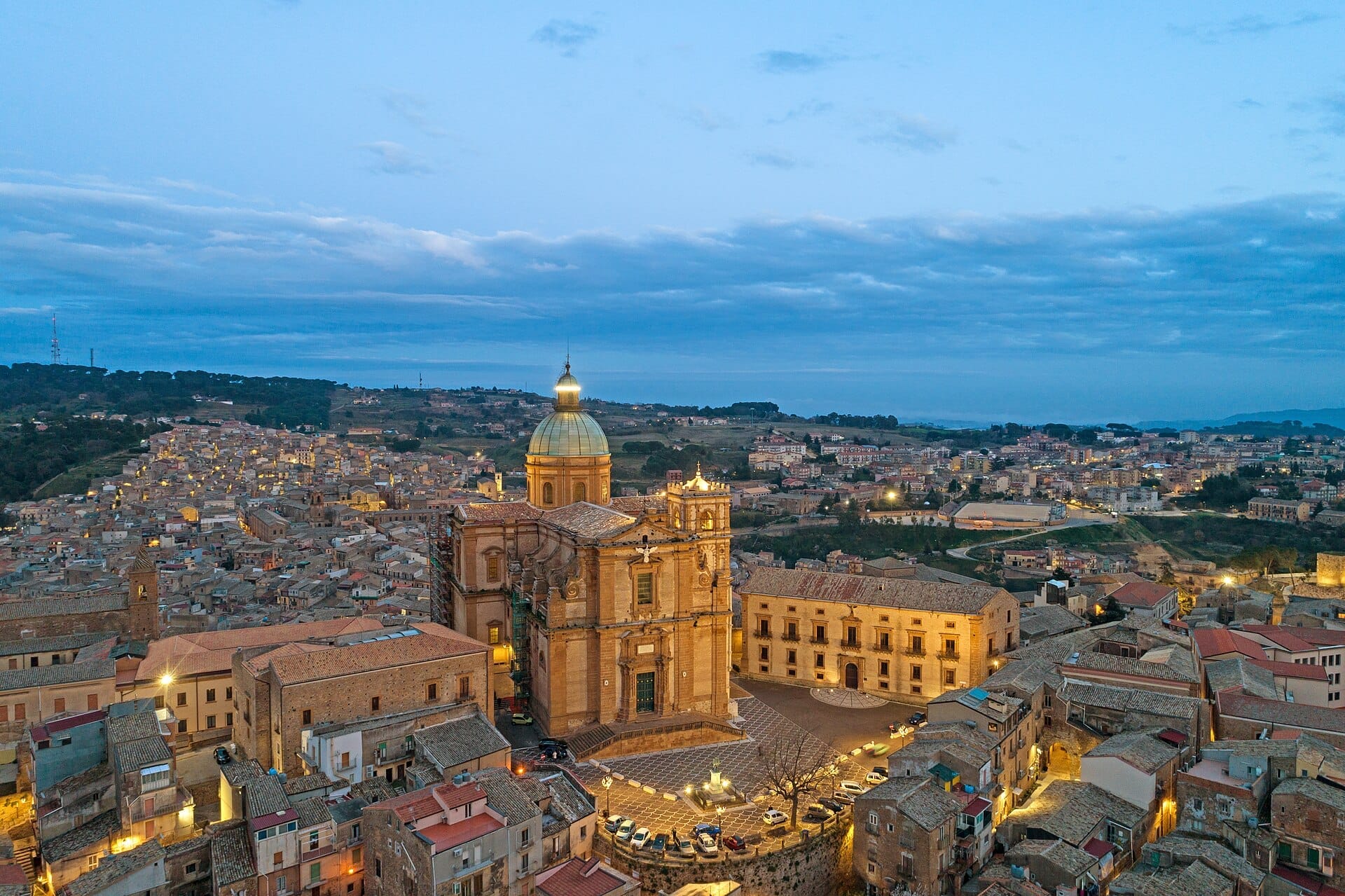
For those planning a broader itinerary around central and southern Sicily, the nearby town of Piazza Armerina itself is worth an hour or two: its Baroque cathedral, medieval quarter, and relatively tourist-free streets offer a grounded contrast to the villa's grandeur. Further afield, the Valley of the Temples at Agrigento is roughly 90 minutes by car and makes an excellent second day.
⚠️ What to skip
Opening hours and ticket prices change seasonally and without much advance notice online. Always verify the current schedule directly on the official Visit Sicily page or by contacting the site before building your itinerary around a specific time slot, particularly for evening openings in summer.
Honest Assessment: Is It Worth the Journey?
Villa Romana del Casale is legitimately one of the most impressive single archaeological sites in Europe. The mosaics are not merely decorative artefacts; they are narrative documents of Roman imperial culture at its most confident and expansive. For anyone with genuine interest in classical history, ancient art, or archaeology, this site rewards serious attention and the effort of reaching it.
That said, the interior protective structure, while necessary, gives the visit an occasionally museum-like quality. You are always behind barriers, always on a walkway, always observing from a distance. Visitors who prefer immersive, open archaeological sites, like the open-air drama of Selinunte or the cliff-edge atmosphere of Segesta, may find the villa experience slightly controlled. It is also genuinely remote, and getting there without a car requires planning.
Visitors primarily interested in beaches, food, or street life will find the detour to central Sicily less compelling. But if Roman history is anywhere on your list, this is the site in Sicily that earns the longest journey.
Insider Tips
- Arrive at opening time (around 09:00) on weekdays. Weekend mornings attract more domestic visitors and school groups; a Tuesday or Wednesday in April or October is the quietest combination.
- The all-inclusive ticket that bundles the Archaeological Museum of Aidone is worth taking seriously. The Morgantina Venus, long held by the Metropolitan Museum of Art and repatriated to Sicily in 2010, is displayed there and is an extraordinary object in its own right.
- If you are visiting in summer and evening openings are available, book or check online in advance. The mosaics under artificial lighting at dusk look markedly different from their daytime appearance, and the cooler temperature makes the visit far more comfortable.
- The site sells a detailed bilingual guidebook at the ticket office that goes room by room with high-quality photographs. At roughly the price of a coffee, it is far more useful than the standard site map and will help you make sense of iconography that is not fully explained on the panel labels.
- Combine the visit with lunch in Piazza Armerina town rather than relying on the site cafe. The town has several small trattorias serving central Sicilian cooking, including hearty pasta dishes and local ricotta-based sweets, that are significantly better and more affordable than tourist-facing options near the archaeological park entrance.
Who Is Piazza Armerina For?
- History and archaeology enthusiasts who want to engage seriously with Roman imperial culture
- Photographers seeking dramatic figurative mosaics in controlled lighting conditions
- Families with older children (10+) who can sustain concentration across a two-hour guided walk
- Travellers on a broader central Sicily circuit combining Agrigento, Enna, and the baroque southeast
- Anyone who has already covered Sicily's coastal highlights and is looking for the interior's rewards
Nearby Attractions
Combine your visit with:
- Spiaggia dei Conigli, Lampedusa
Spiaggia dei Conigli on the island of Lampedusa is widely regarded as one of the finest beaches in the Mediterranean, with shallow turquoise water, white quartz sand, and a protected islet just offshore. Access is tightly controlled in summer to protect nesting loggerhead sea turtles, so planning ahead is not optional — it is essential.
- Madonie Regional Natural Park
Covering about 39,700 hectares in north-central Sicily, the Madonie Regional Natural Park is a UNESCO Global Geopark combining some of the island's highest mountains outside Etna, rare endemic flora, and a string of remarkably preserved medieval hilltowns. Access is free, terrain is varied, and the rewards are proportional to how far you go.
- Savoca
Perched roughly 300–350 metres above the Ionian coast near Messina, Savoca is a medieval hilltop village that doubled as Corleone in Francis Ford Coppola's The Godfather. Beyond the film fame, it delivers genuine Norman-era architecture, Capuchin catacombs, and some of the most commanding views of the Sicilian coastline.
- Scala di Santa Maria del Monte, Caltagirone
The Scalinata di Santa Maria del Monte is a monumental 142-step staircase in the heart of Caltagirone, Sicily, where every riser is clad in hand-painted ceramic tiles drawn from ten centuries of local craft tradition. Free to visit at any hour, it connects the lower town to an 18th-century church at the hilltop and serves as the living symbol of one of Italy's most celebrated ceramic-making cities.