Spiaggia dei Conigli (Rabbit Beach), Lampedusa: What You Need to Know Before You Go
Spiaggia dei Conigli on the island of Lampedusa is widely regarded as one of the finest beaches in the Mediterranean, with shallow turquoise water, white quartz sand, and a protected islet just offshore. Access is tightly controlled in summer to protect nesting loggerhead sea turtles, so planning ahead is not optional — it is essential.
Quick Facts
- Location
- Southwest coast of Lampedusa, Pelagie Islands, Sicily, Italy — approx. 5 km from Lampedusa town toward Capo Ponente
- Getting There
- Car, scooter, or local bus from Lampedusa town to Capo Ponente road; park near the kiosk and walk a dirt trail down to the bay
- Time Needed
- Half-day minimum; when the shift system is in force each timed shift is typically up to 5 hours (08:30–13:30 or 14:30–19:30)
- Cost
- Beach access is free; advance online booking required in peak season (dates vary by year — check the official booking site before visiting)
- Best for
- Snorkeling, wildlife watching, families seeking calm clear water, photographers
- Official website
- www.isoladeiconigli.it
What Spiaggia dei Conigli Actually Is
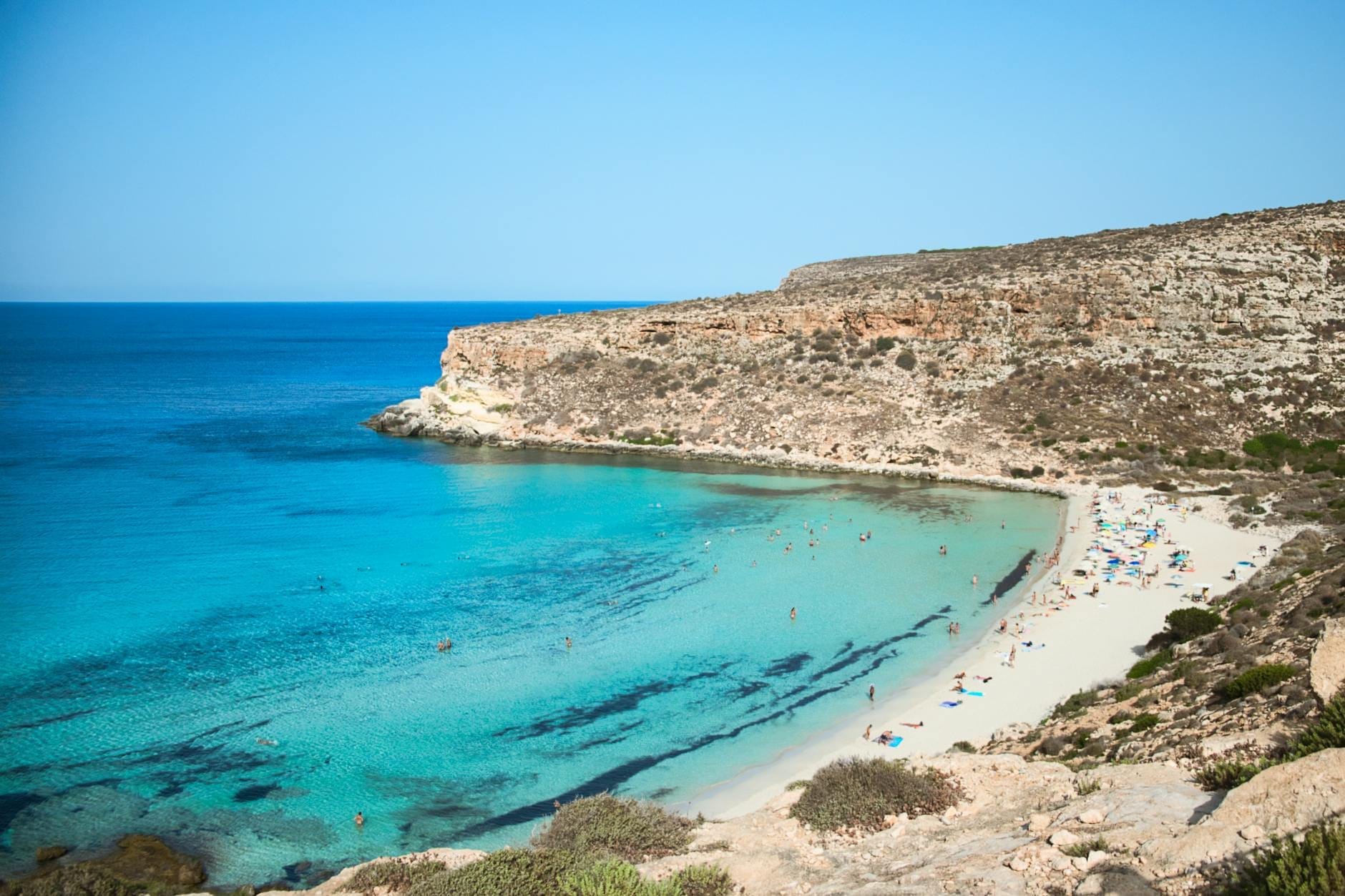
Spiaggia dei Conigli — officially the bay of the Isola dei Conigli (Rabbit Island), on the southwest coast of Lampedusa — is a protected beach inside the Riserva naturale orientata Isola di Lampedusa, a nature reserve that has been part of the Riserva naturale orientata di Lampedusa since 1995. The name comes from the small islet of about 4.4 hectares that sits just offshore, separated from the beach by a shallow lagoon you can wade across at low water. The sand is white, fine, and genuinely powder-soft in texture; the water runs from pale turquoise at the shoreline to deep sapphire in the channel, with visibility that can reach several metres on calm days.
What sets this beach apart from comparable spots elsewhere in Sicily is its ecological importance. The bay is one of a very small number of regular nesting sites in Italy for the loggerhead sea turtle, Caretta caretta. Between late spring and autumn, females haul ashore at night to lay eggs, and the reserve manages the beach specifically around this cycle. That management is what makes access controls necessary — and what keeps the place from being loved to ruin.
ℹ️ Good to know
Lampedusa is part of the Pelagie Islands, administratively part of Sicily. It sits closer to the coast of Tunisia (about 113 km) than to mainland Italy, which shapes both its climate and the remarkably clear, warm quality of the surrounding sea.
Access Rules and Booking: The Most Important Practical Information
In the main summer season, access to Spiaggia dei Conigli is divided into two daily shifts: morning (08:30–13:30) and afternoon (14:30–19:30). A maximum of 550 people per shift are permitted on the beach, with most spots allocated through advance online booking via the official portal at prenotazionespiaggiaconigli.it and a smaller quota held for on‑site queuing, but relying on walk-up availability in peak weeks is a significant risk.
Beach access itself is free. The booking system does not charge a ticket price. What you are reserving is a slot, not a service. Minors aged six and under, and visitors with disabilities using the Marine Protected Area's accompaniment-by-sea service, are exempt from the online booking requirement, though the reserve's general rules still apply to them.
⚠️ What to skip
Do not assume you can simply show up and walk down to the beach in July or August. The shift system is enforced, and popular morning slots book out days or even weeks in advance during high summer. Book as early as possible at the official portal prenotazionespiaggiaconigli.it, which is also linked from isoladeiconigli.it.
During turtle nesting season, sections of the beach may be cordoned off entirely, regardless of whether you have a booking. This is not arbitrary — it is the entire reason the reserve exists. If a nesting area is closed on the day you visit, the restriction will stand. Some mornings, depending on recent turtle activity, the accessible beach area can be noticeably smaller than the full bay.
Tickets & tours
Hand-picked options from our booking partner. Prices are indicative; availability and final rates are confirmed when you complete your booking.
Agrigento and Scala dei Turchi Tour from Cefalu
From 65 €Instant confirmationFree cancellationPalazzo dei Normanni and Cappella Palatina guided tour
From 79 €Instant confirmationFree cancellationHalf-day Dinghy Tour to Scala Dei Turchi from San Leone
From 50 €Instant confirmationFree cancellationEtna South Upper Craters Guided Excursion from Taormina
From 42 €Instant confirmationFree cancellation
Getting to the Beach: The Route from Lampedusa Town
From the main port area of Lampedusa town, the beach is about 5 kilometres southwest along the road toward Capo Ponente. The road is paved and manageable on a scooter or small car, both of which can be rented locally. There is a small parking area near a kiosk at the trailhead; from there, a dirt path descends to the bay. The path is uneven and involves a moderate downhill slope, then the same uphill on the return. It is not long — roughly 15 to 20 minutes each way at a relaxed pace — but it is not suitable for pushchairs or wheelchair users without assistance.
Local buses from Lampedusa town also run along the Capo Ponente route in summer, which is useful if you prefer not to rent a vehicle. Confirm current timetables locally when you arrive, as schedules adjust seasonally. By boat is another option: several operators run trips from the harbour to anchor offshore near the islet, which provides a different entry to the bay altogether — though you still need to factor in the regulated access rules.
💡 Local tip
If you book the morning shift (08:30), arrive at the trailhead by 08:15. The walk down takes time, and the early light on the water — before midday haze sets in — is the best light of the day for both swimming visibility and photography.
How the Beach Changes Through the Day
Early morning is unambiguously the better shift. The sand is cooler underfoot, the sun is lower and less brutal, and the water — already warm by late June — is at its clearest before midday chop or afternoon wind disturbs the surface. The light at this hour gives the water an almost jade quality in the shallows near the islet. The crowd is present but contained, and the atmosphere is quieter than the afternoon session tends to be.
By the afternoon shift (14:30), the sun is high and intense. Lampedusa's summer heat is significant — temperatures regularly exceed 30°C in July and August, and there is little natural shade on the beach itself. If you take the afternoon slot, bring a parasol if you can carry one down the trail, and pack more water than you think you need. The upside of the afternoon shift is that the light from the west makes the water glow in a way that morning does not replicate, and late afternoon approaching 19:00 is genuinely beautiful as the angle drops.
In shoulder season — particularly September and October — the access controls remain in place but the overall intensity eases. The sea stays warm well into October, crowds thin noticeably, and the turtle nesting activity shifts toward hatching rather than laying, which can mean slightly more of the beach is freely accessible. May and early June, before the controlled-access period begins, offer a different experience again: fewer restrictions, cooler mornings, and a beach that feels less managed.
Snorkeling, Swimming, and Wildlife
The shallow lagoon between the beach and the islet is the most rewarding area for snorkeling. Posidonia seagrass meadows grow along parts of the seafloor — an indicator of good water quality — and the fish life around the rocky edges of the islet includes grouper, sea bream, and wrasse. Bring your own mask and fins; there is no rental equipment at the beach itself, and anything you want in the water needs to come with you down that trail.
Swimming conditions depend on wind direction. When the sea is calm, the water inside the bay is shallow and safe for children. When a libeccio (southwest wind) picks up, the bay can develop a noticeable swell and the water turns choppy quickly. Check the forecast before you go, particularly in September when conditions are more variable. The reserve prohibits motorised watercraft from approaching the beach area, which keeps the water clean and safe for swimmers.
On the question of turtle sightings: while the beach is a documented nesting site, seeing a Caretta caretta in the water during your visit is not guaranteed. The nesting itself happens at night, after beach access has ended. What you may see are hatchlings emerging toward the sea if timing aligns, or the protected nesting zones cordoned off on the sand. The reserve's management team monitors the nests carefully throughout the season.
For broader context on Sicily's beaches and how Lampedusa compares to other coastal options, the guide to the best beaches in Sicily covers the range from the island's main coastlines to the outer Pelagie and Egadi archipelagos.
What to Bring and How to Prepare
The beach has no facilities within the protected zone itself. There is a kiosk near the parking area at the trailhead, but nothing on the sand. Bring everything you need: water (at least 1.5 litres per person in summer), food, sunscreen, a towel, and any shade structure you can reasonably carry. The path down is manageable with a daypack but awkward with large bags or excessive gear. Reef-safe sunscreen is strongly advisable given the ecological sensitivity of the water.
Footwear matters on the trail — sandals with a grip are fine, but bare feet on the rough dirt path are uncomfortable, particularly on the uphill return in heat. Water shoes are useful in the rocky sections near the islet. Photography is possible with any camera that handles bright light well; the contrast between white sand and deep blue water is extreme at midday, so morning or late afternoon gives more balanced exposures.
💡 Local tip
Pack out everything you bring in. The reserve has no waste collection on the beach. Leaving litter is not only prohibited — it directly threatens the nesting environment the entire access system is designed to protect.
Honest Assessment: Is It Worth the Effort?
Lampedusa itself requires genuine commitment to reach. From mainland Sicily, the most practical route is a direct flight — Lampedusa Airport (LMP) receives flights from Palermo and Catania, among other Italian cities. There is also a ferry from Porto Empedocle, the port near Agrigento, though the crossing is long. This is not a day trip from Palermo; it is a destination in its own right.
Once you are on the island, Spiaggia dei Conigli delivers on its reputation — but with a caveat: it rewards visitors who engage with it on its own terms. The access controls are not bureaucratic inconvenience; they are what has kept the beach in this condition while similar unprotected beaches across the Mediterranean have degraded. If you expect a free, spontaneous beach day, this is the wrong place. If you are willing to plan ahead and respect the reserve's rules, what you get in return is one of the genuinely remarkable natural beaches left in the central Mediterranean. The water quality, the setting, and the ecological rarity of the place justify the journey. For context on timing your overall Sicily trip, including when the Pelagie Islands are most accessible, the seasonal planning guide for Sicily covers the key tradeoffs across the year.
Who should skip it: travellers who dislike booking ahead, those who need accessible beach infrastructure (wheelchair access, equipment rental, on-site catering), and anyone whose beach preference runs toward sociable, service-heavy lidos. The lack of shade and facilities is real, not romanticised. In peak July heat, the afternoon shift without a parasol and sufficient water is genuinely uncomfortable.
Insider Tips
- Book your morning shift slot as soon as the booking window opens for your travel dates — popular weekends in July and August fill weeks in advance. The official booking portal is prenotazionespiaggiaconigli.it.
- The shallow channel between the beach and the islet can be waded at low water — knee to waist deep depending on conditions. Walking across to the islet (when the zone is open) gives a different view back toward the bay that most visitors miss.
- If your primary goal is snorkeling rather than sunbathing, the morning shift offers calmer surface conditions before any afternoon breeze picks up. The clearest visibility is typically in the first hour after arrival.
- September is objectively the most comfortable month to visit: the controlled-access rules are still in place, but air temperatures drop a few degrees from the August peak, the sea remains warm, and the beach is noticeably less crowded. Prices for accommodation on Lampedusa also ease after mid-August.
- There is no ATM or shop near the beach trailhead beyond the kiosk. Sort out cash, supplies, and any equipment rentals in Lampedusa town before you head out, and assume the kiosk may not have everything you need.
Who Is Spiaggia dei Conigli, Lampedusa For?
- Snorkelers and underwater photographers seeking exceptionally clear Mediterranean water
- Wildlife-conscious travellers interested in loggerhead sea turtle conservation
- Families with older children comfortable on a moderate trail and open beach without facilities
- Travellers who plan ahead and want a beach experience that has been actively protected rather than commercially developed
- Photographers looking for one of the most visually striking beach settings in southern Italy
Nearby Attractions
Combine your visit with:
- Madonie Regional Natural Park
Covering about 39,700 hectares in north-central Sicily, the Madonie Regional Natural Park is a UNESCO Global Geopark combining some of the island's highest mountains outside Etna, rare endemic flora, and a string of remarkably preserved medieval hilltowns. Access is free, terrain is varied, and the rewards are proportional to how far you go.
- Piazza Armerina
Located about 3–4 km outside the town of Piazza Armerina in central Sicily, Villa Romana del Casale is a UNESCO World Heritage Site sheltering over 3,500 square metres of remarkably preserved Roman mosaic floors. Dating to the early 4th century AD, it is widely regarded as the largest and most varied collection of Roman mosaics in existence.
- Savoca
Perched roughly 300–350 metres above the Ionian coast near Messina, Savoca is a medieval hilltop village that doubled as Corleone in Francis Ford Coppola's The Godfather. Beyond the film fame, it delivers genuine Norman-era architecture, Capuchin catacombs, and some of the most commanding views of the Sicilian coastline.
- Scala di Santa Maria del Monte, Caltagirone
The Scalinata di Santa Maria del Monte is a monumental 142-step staircase in the heart of Caltagirone, Sicily, where every riser is clad in hand-painted ceramic tiles drawn from ten centuries of local craft tradition. Free to visit at any hour, it connects the lower town to an 18th-century church at the hilltop and serves as the living symbol of one of Italy's most celebrated ceramic-making cities.