Alghero is a medieval walled city on Sardinia's northwest coast with a unique Catalan identity, seafront bastions, and easy access to dramatic natural landscapes. It balances genuine local life with a well-developed tourist infrastructure, making it one of the island's most rewarding bases.
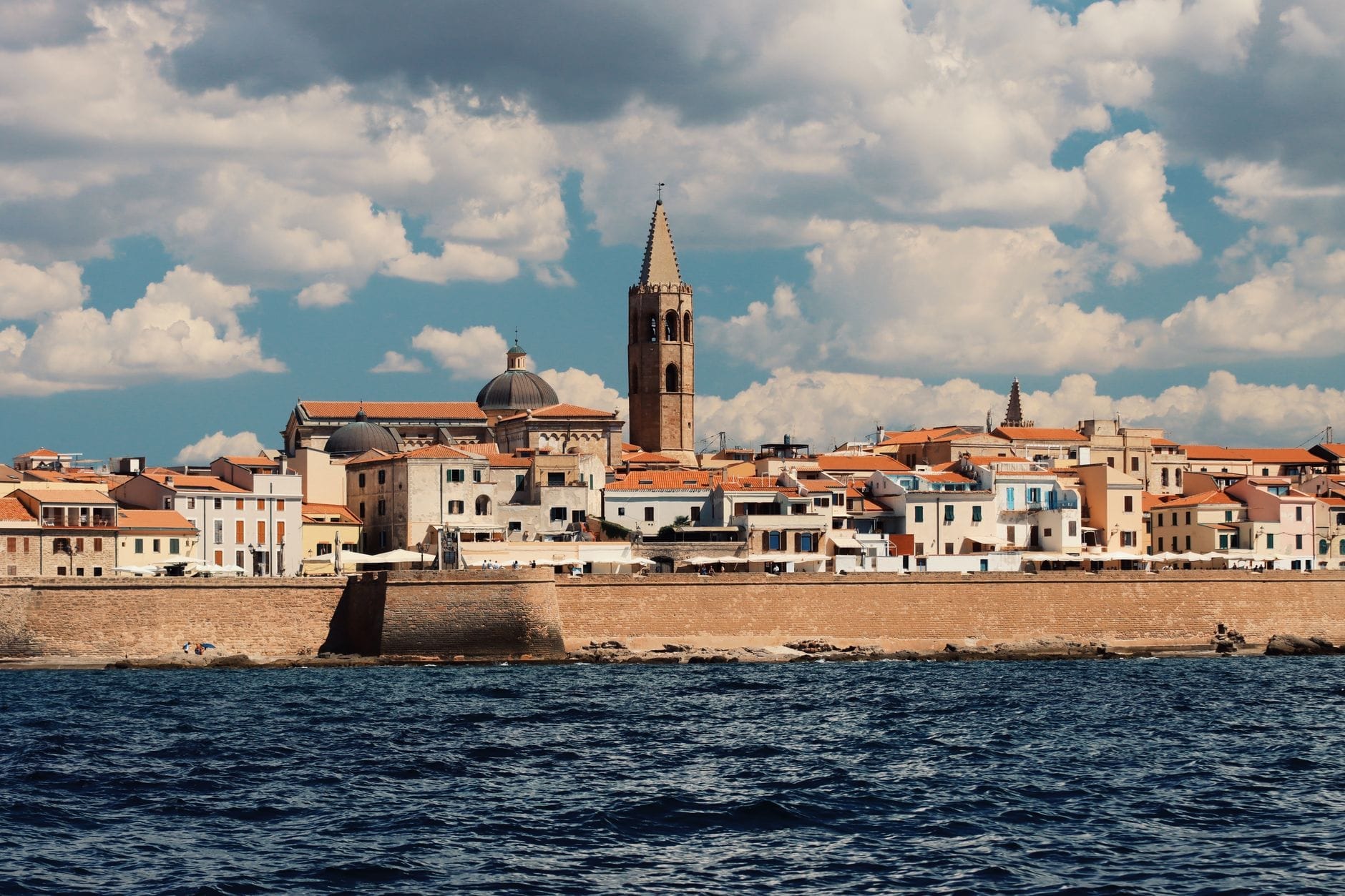
Alghero, known in Catalan as L'Alguer, is the only city in Sardinia where Algherese Catalan still appears in street signs, civic life, and everyday conversation alongside Italian and Sardinian. Its medieval old town sits on a small promontory encircled by honey-colored stone bastions, with the deep blue of the Mediterranean on three sides and a lively harbor on the fourth. Few Sardinian cities pack this much history, character, and coastal scenery into such a walkable area.
Orientation
Alghero sits on the northwestern coast of Sardinia, roughly 30–35 kilometers southwest of Sassari and about 135 kilometers north of Oristano. The municipality covers around 225 square kilometers, but for visitors, nearly everything of interest is concentrated in a compact zone around the historic promontory and the immediately surrounding seafront.
The old town occupies a small peninsula jutting into the sea at approximately 40.56°N, 8.32°E. It is bounded on the seaward sides by the bastions and city walls, and on the landward side by the more modern grid of streets that developed in the 19th and 20th centuries. Just north of the old town, the harbor runs along the Banchina Garibaldi, where fishing boats moor alongside tourist ferries and pleasure craft. The main beach, Spiaggia di San Giovanni, begins just south of the promontory and stretches for several kilometers toward the newer residential and hotel districts.
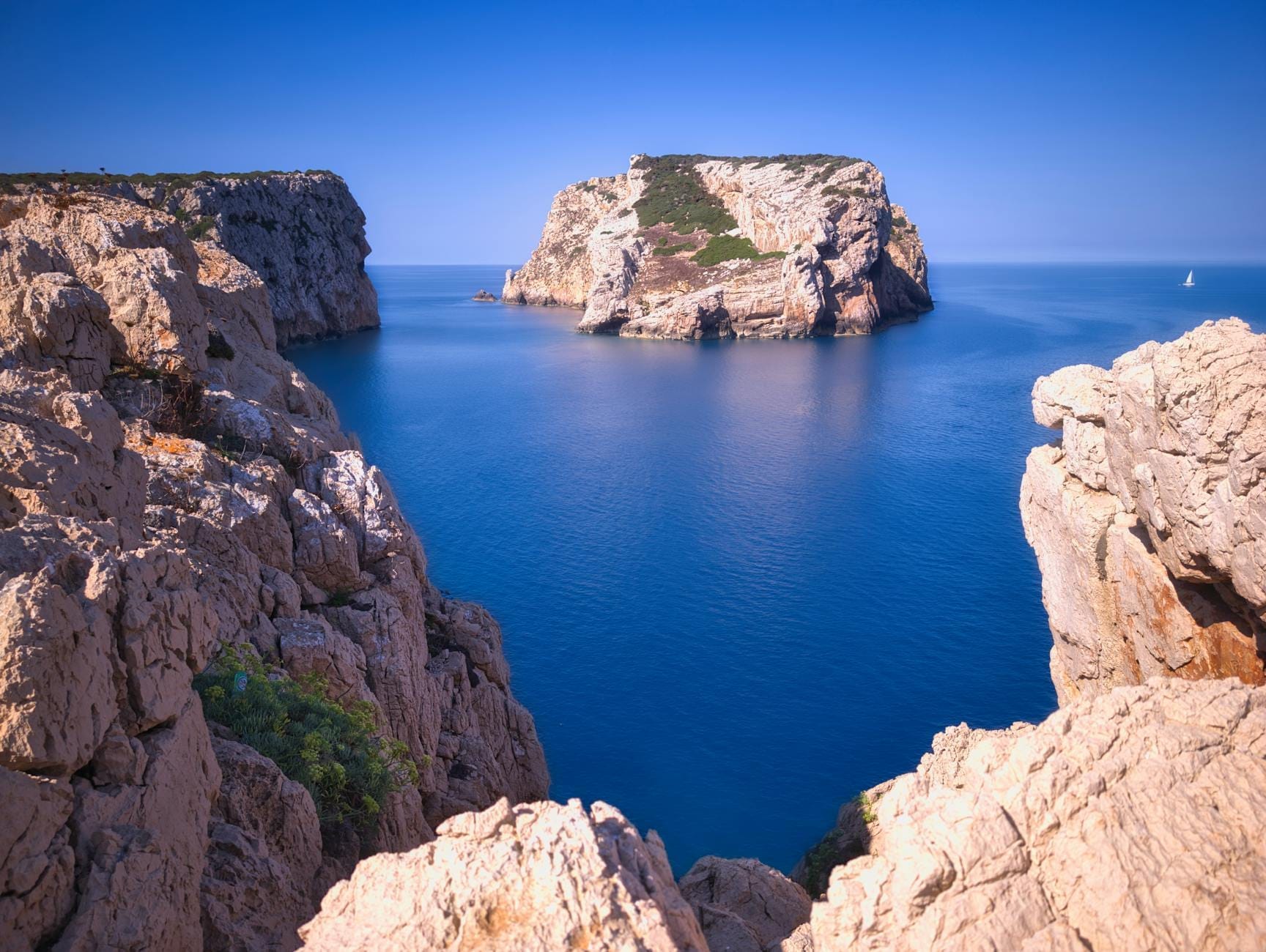
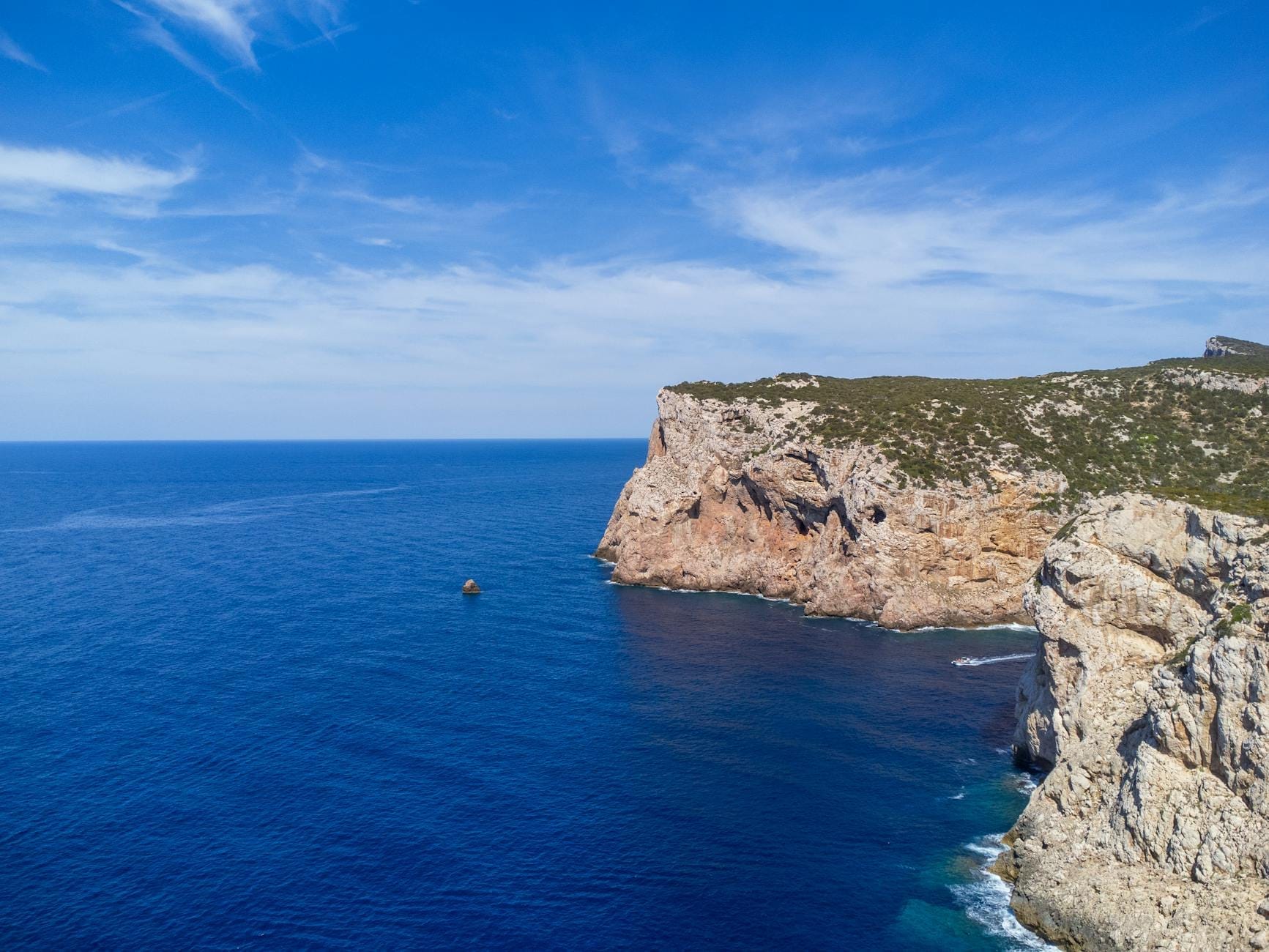
The wider municipal territory extends north toward the Fertilia plain, a grid-planned settlement built during the Fascist-era land reclamation projects of the 1930s, and northwest toward Capo Caccia, the dramatic limestone headland that terminates in the sea cliffs above the Neptune's Grotto caves. Alghero is administratively part of the Metropolitan City of Sassari, which covers the entire northwestern corner of the island.
ℹ️ Good to know
Alghero-Fertilia Airport (IATA: AHO) sits about 8 kilometers northwest of the city center. ARST buses connect the airport to the city, and taxis are available outside the terminal. Verify current fares and timetables with ARST or the airport before travel, as schedules change seasonally.
Character and Atmosphere
The defining feature of Alghero is its Catalan identity, which is not just historical branding. The city was conquered by the Crown of Aragon in 1354, the local Sardinian population was expelled, and the town was resettled with Catalan colonists. The result is a city whose medieval street plan, architectural vocabulary, and linguistic character still carry the imprint of that history. Street signs are bilingual in Italian and Catalan, and while fluent speakers of Algherese Catalan are now a small minority, the language remains present in civic life, signage, and cultural events.
Walk through the old town in the morning and you get the city at its most genuine. The narrow lanes of the centro storico, built from local limestone that warms to amber in early light, fill with delivery vans, locals heading to the market, and the smell of coffee from the bars along Piazza Civica. The Cattedrale di Santa Maria, a church with a distinctive octagonal bell tower whose construction began in the late 16th century and was completed in the 18th century, anchors the heart of the old town. In summer, tour groups pass through by mid-morning, but even then the side streets remain quiet enough to feel like a working town rather than a stage set.
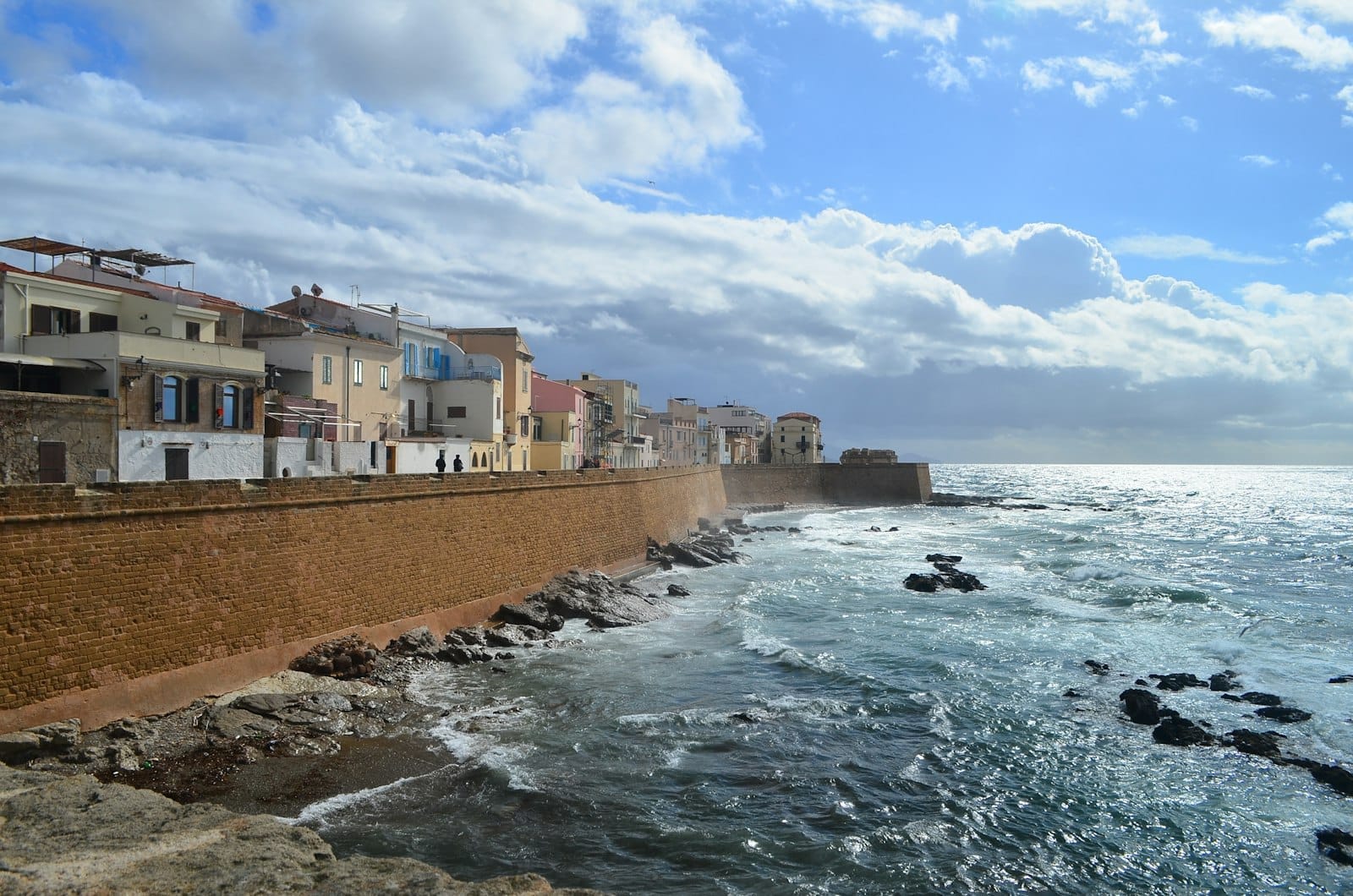
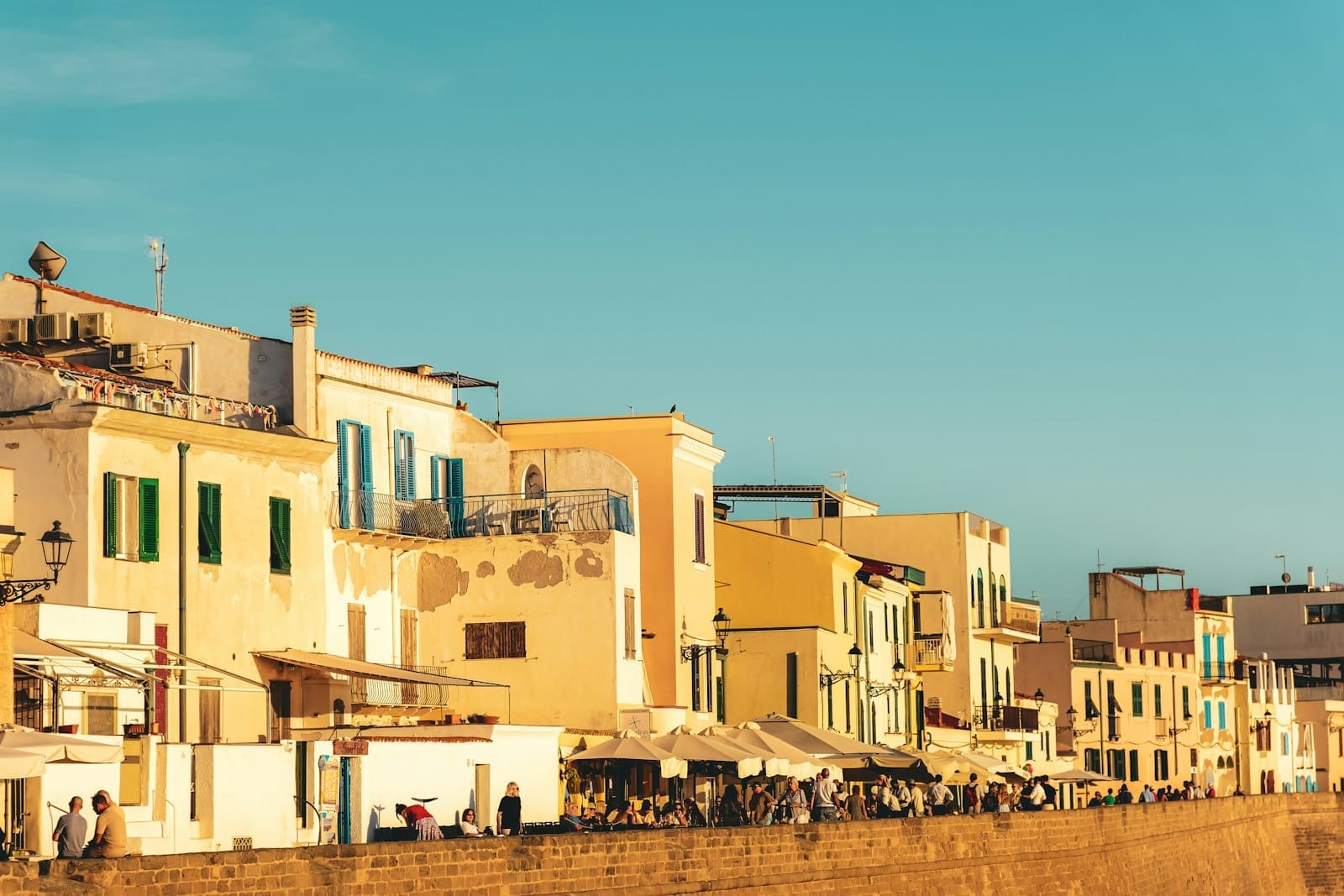
By afternoon, the bastions become the social artery of the city. The seafront walls, particularly the stretch from Baluardo della Maddalena to Torre di Sulis, function as an elevated promenade where locals walk, sit, and watch the sea. The light in the late afternoon falls across the water at a low angle, turning the limestone orange and the sea a deep turquoise. This is when Alghero earns its reputation as one of Sardinia's most photogenic cities.
After dark, the old town concentrates its energy along Via Carlo Alberto and the streets leading down to the harbor. In high summer, this area is crowded, with outdoor restaurant seating spilling across the lanes and a slow procession of pedestrians. Outside of July and August, the same streets feel more like a town going about its evening than a resort on show. Alghero has a student population, hosting University of Sassari departments and architecture courses, which gives even the shoulder season an undertone of local life that purely resort towns lack.
What to See and Do
The old town itself is the primary attraction, and it rewards slow walking more than any checklist approach. The centro storico of Alghero is one of the best-preserved medieval ensembles in Sardinia, with its sequence of towers, bastions, and lanes intact enough to communicate the original scale of the Aragonese settlement. The seafront bastions of Alghero are best walked at dusk, when the light is low and the cruise ships in the harbor are lit against the darkening sea.
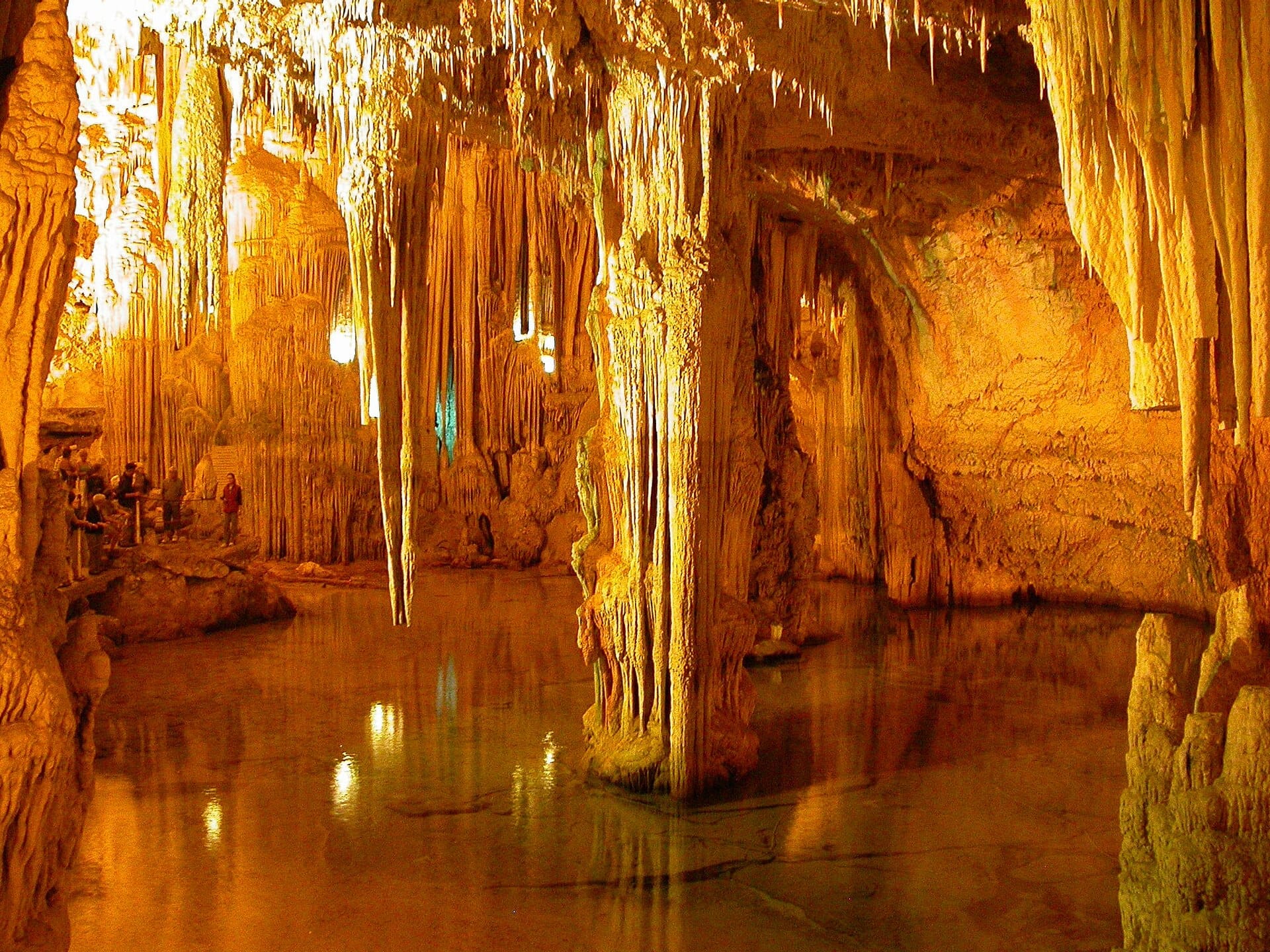
The single most dramatic excursion from Alghero is to the Grotte di Nettuno at Capo Caccia, about 25 kilometers from the city. The sea caves are accessible either by boat from the harbor (the standard route in calm weather, roughly 45 minutes each way) or by descending the Escala del Cabirol, a staircase of about 654 steps carved into the cliff face. The cave system itself is one of the most impressive in the Mediterranean, with stalactite formations inside a vast lake chamber. Boat services typically run from spring through early autumn; verify current schedules at the harbor before planning around them.
The headland road to Capo Caccia also passes through the Parco Naturale Regionale di Porto Conte, a protected area of Mediterranean scrub, wetlands, and rocky coastline with good walking trails and a small horse reserve. The park is one of the least visited in Sardinia relative to its quality, and the roads through it are quiet outside August.
Cattedrale di Santa Maria: Catalan Gothic interior with a distinctive 16th-century bell tower, free to enter outside service times
Bastioni and city walls: the full circuit takes about 30 minutes at a stroll, longer if you stop at the viewpoints
Torre di Portaterra and Torre di San Giovanni: the best-preserved of the medieval towers punctuating the walls
Grotte di Nettuno at Capo Caccia: the flagship day trip, accessible by boat from the harbor or by road and staircase
Parco Naturale di Porto Conte: hiking, birdwatching, and coastal scenery northwest of the city
Spiaggia del Lazzaretto and beaches north of Fertilia: quieter alternatives to the main town beach
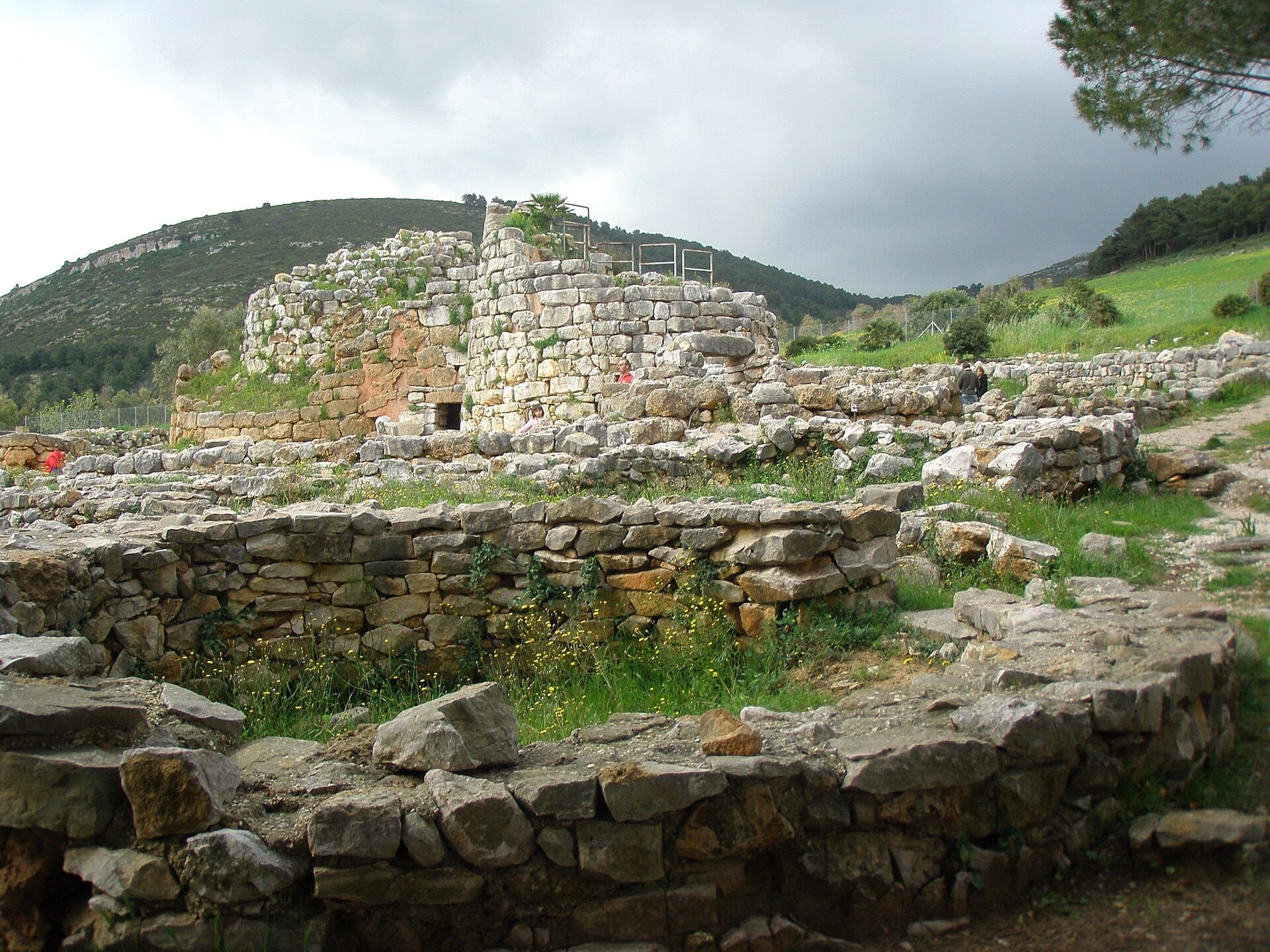
Nuraghe Palmavera: a Nuragic complex just 10 kilometers from Alghero, one of the most accessible Bronze Age sites in the region
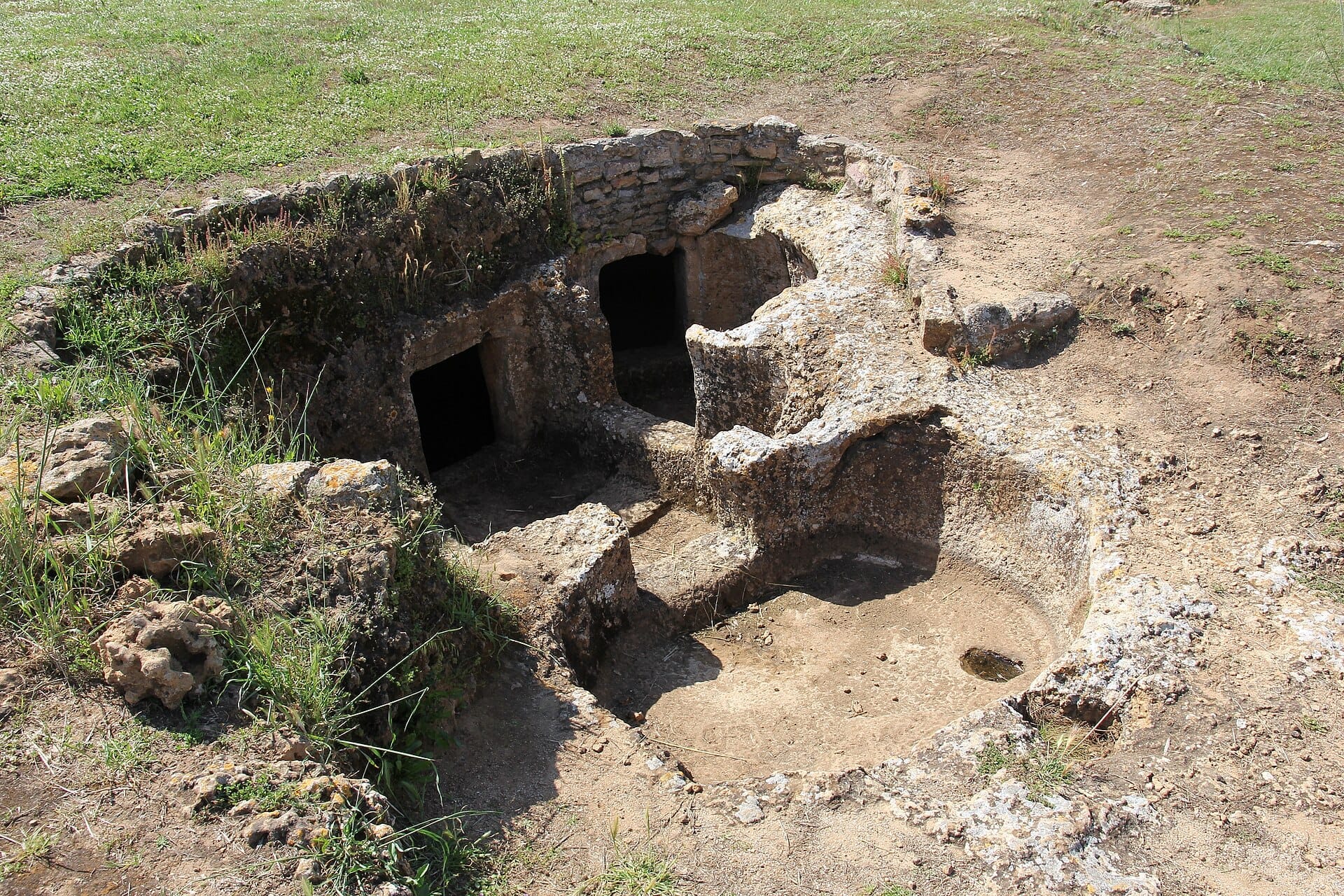
For those interested in Sardinia's prehistoric past, Nuraghe Palmavera is an easy detour on the road toward Capo Caccia, and the Domus de Janas at Anghelu Ruju is a Neolithic rock-cut tomb necropolis a few kilometers north of the airport, with dozens of burial chambers cut into the sandstone. Together they make Alghero an unusually good base for archaeological day trips.
Eating and Drinking
The food scene in Alghero is anchored by seafood, particularly the local red lobster (aragosta), which has been the signature dish of the Algherese coast for centuries. In late spring and summer, you will find it on almost every restaurant menu in some form: grilled, alla catalana (with tomatoes and onions), or in pasta. It is not cheap, and the versions in the tourist-facing restaurants along the harbor and the main bastions tend to be more expensive than equivalent quality inland. That said, the fish is good, and the proximity of an active fishing harbor means the supply chain is short.
For everyday eating, the streets just inside the old town walls away from the main tourist corridors have a higher ratio of places serving local clientele. Look for trattorie serving fregola (a Sardinian toasted semolina pasta) with clams, or culurgiones (Sardinian stuffed pasta) in meat sauce. Pane carasau, the thin, crisp flatbread, appears as a table accompaniment in most restaurants. Prices across the old town are broadly medium range by Italian standards, with the harbor-front restaurants at the top of the local scale.
Alghero sits within one of Sardinia's important wine zones. The Vermentino di Sardegna produced in this part of the island is the standard white to drink with the local seafood, and the wines of Sardinia include the richer Cannonau red, which pairs better with inland meat dishes. Most restaurants have both on the list. The local wine culture also means that good bottles are available at the enoteca shops in the old town at much lower prices than restaurant markups.
The bar scene in the old town concentrates around Piazza Civica in the evenings, with several bars spilling onto the square. The aperitivo hour, roughly 6 to 8pm, is the social hinge of the evening, when locals and visitors occupy the outdoor tables with a Campari or a local digestif and a spread of small snacks. After dinner, the pedestrianized lanes around Via Roma and Via Principe Umberto have gelato shops, bars, and occasional live music in summer.
💡 Local tip
If you want to eat well without paying harbor-front prices, walk two or three streets inland from the bastions. The quality often matches the seafront restaurants at noticeably lower cost, and you are more likely to be seated next to local families than other tourists.
Getting There and Around
Alghero-Fertilia Airport (AHO) makes the city one of the more accessible destinations in Sardinia. It handles direct flights from several European cities, particularly in summer, and serves as an entry point for the entire northwestern part of the island. ARST buses run between the airport and the city center, and the journey takes roughly 20 minutes. Taxis are available at the terminal; fares should be confirmed with the driver before departure, as official tariffs are set locally and may vary.
From Sassari, ARST buses run regularly throughout the day and are the standard connection for the roughly 30–35-kilometer journey. The journey takes about an hour by bus, depending on the route. Alghero also has a railway station, with trains connecting to Sassari; the line is a narrow-gauge branch managed by ARST. From Sassari, connections to Cagliari, Olbia, and other main Sardinian cities are available on the Trenitalia main line network.
Getting around Sardinia more broadly requires some planning. The island has no motorway network, and driving on the secondary roads between cities takes longer than distances suggest. For reaching beaches beyond the immediate city area, renting a car or scooter gives the most flexibility. The guide to getting around Sardinia covers transport options in detail, including ferry connections and the quirks of regional bus schedules.
Within Alghero, the old town is fully walkable and largely pedestrianized in the core streets. The harbor and main beach are both reachable on foot from the centro storico in under ten minutes. For day trips to Capo Caccia and the Neptune's Grotto, the most comfortable option is the boat from the harbor, though driving to the cliff staircase is also possible with a car. Municipal buses run to Fertilia and some of the northern beaches.
⚠️ What to skip
In July and August, parking near the old town becomes extremely difficult. If you are driving, arriving early in the morning or using one of the marked paid car parks further from the center and walking in will save significant time and frustration.
Where to Stay
Alghero is a strong base for exploring the northwest of Sardinia, and the accommodation range reflects its status as one of the island's main tourist cities. For guidance on choosing between Sardinia's main areas, the guide to where to stay in Sardinia is a useful starting point. Within Alghero itself, location within or immediately adjacent to the old town is the premium choice for atmosphere and convenience.
The centro storico has a mix of boutique hotels and small bed-and-breakfast style accommodation in converted historic buildings. These tend to fill quickly in high season and are the most expensive options in the city, though still moderate by broader European resort standards. The streets immediately outside the old town walls, particularly along and behind the Lungomare Valencia, have more standard three and four-star hotels with easier parking access.
The beach district to the south, along Viale della Resistenza and the seafront toward Fertilia, has larger resort hotels with direct beach access. These are better suited to travelers who want a beach-focused stay and do not mind being a 15-20 minute walk or short bus ride from the old town. Self-catering apartments are widely available across all zones and represent good value for groups or families staying for a week or more.
Alghero also works well as a base for longer Sardinian itineraries. Day trips to the archaeological sites of the northwest, drives along the coast toward Bosa to the south, and excursions toward Sassari are all feasible. The Sardinia road trip guide outlines how to connect the northwest with the rest of the island if you are planning to move around.
Practical Notes and Honest Drawbacks
Alghero in high summer is crowded. The old town in July and August sees significant tourist traffic, and the harbor-front restaurants can feel more like a theme park than a working city. Prices for accommodation rise sharply in this period, and the beaches fill early. If your priority is peace and authenticity, May, June, and September offer the same city with a fraction of the crowds and still reliable sunshine and warm water.
Sardinia's shoulder season is arguably its best period overall. The guide to visiting Sardinia in September explains why the combination of warm temperatures, calmer seas, and reduced tourist pressure makes autumn a compelling time to visit, and Alghero benefits particularly from this because its cultural life continues independently of the summer beach season.
Safety in Alghero follows the same pattern as other Italian tourist cities: petty theft around crowded tourist areas is the main concern, and normal precautions with bags and valuables are sufficient. There are no specific elevated risks identified for the city. The emergency number across Italy is 112.
One genuine limitation of Alghero as a base is its relative isolation from eastern and southern Sardinia. The drive to the Golfo di Orosei coastline, for example, takes well over two hours, and reaching Cagliari takes around three. If your itinerary prioritizes the east coast or the south, a base further down the island will serve you better. Alghero works best for travelers focusing on the northwest quadrant: the coast around Porto Conte, Bosa, the Sinis Peninsula with some effort, and the inland Sassari area.
ℹ️ Good to know
Tap water in Italy is generally safe to drink and subject to EU quality standards, though you may see 'acqua non potabile' signs at some outdoor fountains. In Alghero, as in most Italian cities, tap water in hotels and restaurants is fine unless otherwise indicated.
Summary
TL;DR
Alghero is the most historically distinctive city in northwest Sardinia, with a unique Catalan identity expressed in its architecture, street signs, and cultural institutions, all contained within a compact, walkable medieval old town.
The seafront bastions, the Grotte di Nettuno at Capo Caccia, and the nearby Nuragic sites make it one of the island's most varied bases for day trips combining sea, history, and landscape.
High season (July-August) brings real crowds and elevated prices to the harbor area; May, June, and September offer a significantly better experience for most travelers.
Getting around the northwest from Alghero is straightforward with a rental car, but the city is poorly positioned as a base for Sardinia's eastern and southern coasts.
Best suited to travelers who want a characterful historic city center combined with beach access, and who are using the northwest as their primary focus rather than trying to cover the whole island.
Fourteen days is the right amount of time to properly explore Sardinia's four coastlines, mountainous interior, and ancient ruins. This itinerary covers the full circuit by car, from Cagliari in the south to Alghero in the northwest, with practical advice on timing, logistics, and where to skip the tourist traps.
Sardinia has about 1,850 kilometres of coastline and some of the clearest water in the Mediterranean. This guide covers the best beaches across the island, from the famous to the hard-to-reach, with practical advice on access, crowds, and when to go.
Sardinia rewards visitors differently depending on when they arrive. This guide cuts through the vague advice to explain exactly what each season delivers, from peak-summer beach conditions to spring wildflower hikes and quiet winter city breaks, so you can match your trip to your priorities.
Cagliari sits at the southern tip of Sardinia, placing you within striking distance of some of the island's finest beaches, archaeological sites, and natural landscapes. These 20 day trips range from quick 30-minute drives to full-day adventures into the island's wild interior.
Sardinia covers 24,090 km² of mountains, coastline, and rural roads with no motorways. This guide breaks down every realistic transport option, from renting a car to catching the right ferry, so you can plan a trip that actually works.
Sardinia is far more than a beach destination. Its limestone canyons, granite peaks, and ancient shepherd paths offer some of the most dramatic hiking in the Mediterranean. This guide covers the best trails from day walks to multi-day epics.
Sardinia is Italy's second-largest island and one of the Mediterranean's most remarkable destinations — but it rewards those who plan well and punishes those who assume it's just another beach holiday. This guide cuts through the marketing to give you a clear-eyed picture of what Sardinia offers, who it suits best, and what to expect.
Sardinia delivers some of Europe's most coveted luxury travel experiences, from the yacht-lined marina at Porto Cervo to secluded villas with private pools above crystalline coves. This guide breaks down where to stay, when to go, and how to build a high-end Sardinian itinerary that goes beyond the obvious.
Olbia is where most visitors to northeast Sardinia first set foot, then immediately drive away toward Costa Smeralda. That's a mistake. This guide covers what the city actually offers, from its Nuragic roots and early Christian basilica to boat trips around Tavolara, the best nearby beaches, and everything you need to arrive, orient yourself, and explore the Gallura region properly.
Seven days in Sardinia is enough time to experience the island's best beaches, ancient sites, and coastal scenery — but only if you plan carefully. This day-by-day itinerary covers the most rewarding route, with practical logistics, timing advice, and the practical details most guides leave out.
Agriturismo is one of the most rewarding ways to experience Sardinia beyond the coast. This guide covers what a real agriturismo is, where to find the best ones, what food to expect, prices to budget for, and how to avoid countryside guesthouses masquerading as working farms.
Sardinia is home to the world's first identified Blue Zone, a cluster of inland villages in the Ogliastra region where living past 100 is far from unusual. This guide breaks down the research, the lifestyle factors, the villages worth visiting, and how to experience the culture behind the longevity — without the tourist traps.
Sardinia's most spectacular landscapes are only reachable by water. This guide covers the best boat trips across the island, from the pink-sand coves of La Maddalena to the towering limestone cliffs of the Gulf of Orosei, with tips on what to expect, when to go, and how to book.
Sardinia has some of the most spectacular camping terrain in the Mediterranean, from cliff-backed coves to pine-shaded coastal pitches. But the rules around wild camping are strict and widely misunderstood. This guide covers the legal framework, regional campsite highlights, realistic costs, and seasonal booking strategy.
Two islands, 11 km apart, yet remarkably different in culture, cost, and character. This guide breaks down the real differences between Sardinia and Corsica so you can choose the one that actually matches your trip.
Sardinia's festival calendar runs nearly year-round, from winter carnival traditions to autumn food fairs. This guide covers the major events by season, what to expect at each, and how to plan your trip around them without getting caught off-guard.
Sardinian food is not Italian food with a regional accent — it is a cuisine shaped by centuries of pastoral life, coastal abundance, and fierce cultural independence. This guide covers the dishes you need to try, the wines worth seeking out, and how to eat well without getting steered toward the tourist menu.
Sardinia rewards those who look beyond the famous beaches. This guide uncovers the island's lesser-known archaeological wonders, dramatic inland landscapes, and coastal stretches that see a fraction of the summer crowds, from Bronze Age cities to wild dune deserts.
Sardinia delivers some of the Mediterranean's most striking coastal scenery, and it rewards couples who look beyond the obvious. This guide covers the best romantic beaches, the right season to visit, where to base yourself, and the experiences that actually make a trip feel special rather than simply scenic.
May and June are arguably the best months to visit Sardinia. Temperatures sit in the low-to-mid 20s°C, rainfall is minimal, beaches are largely empty, and prices are a fraction of August rates. This guide covers everything you need to plan a trip during Sardinia's sweet spot.
September and October are arguably the smartest months to visit Sardinia. The sea is still warm, the beaches clear out, prices drop by up to 50% compared to August, and the island's food and culture festivals hit their stride. This guide covers everything: what the weather is really like, which beaches and attractions to prioritize, what closes early, and how to plan a trip that beats the summer crowds without missing out on anything.
July and August in Sardinia mean scorching heat, crystal-clear water, and the most crowded beaches in the Mediterranean. This guide breaks down exactly what to expect: temperatures, sea conditions, crowd patterns, transport logistics, and the honest trade-offs of visiting during peak season.
Sardinia's drink culture runs much deeper than Cannonau and Vermentino. From bitter chinotto and blood orange spremuta to coffee granita and herbal aperitivi, the island offers a full range of non-alcoholic options rooted in Italian tradition. This guide covers what to order, when to order it, and what to expect to pay.
Sardinia holds more than 7,000 surviving nuraghe, making it the richest Bronze Age landscape in the Mediterranean. This guide covers the essential Nuragic sites across the island, from towering fortress complexes and sacred wells to rock-cut tombs, colossal stone statues, and hidden village ruins inside mountain sinkholes.
Sardinia has a reputation as a playground for superyachts and celebrity holidays. That reputation is earned in places like Costa Smeralda — but it doesn't apply to the rest of the island. With the right timing, transport choices, and a few local habits, visiting Sardinia on a budget is entirely realistic. This guide breaks down exactly how.
Sardinia rewards self-drivers more than almost anywhere in the Mediterranean. This guide covers everything you need: which airport to fly into, how long routes actually take, when to go, what to rent, and the coastal and inland drives worth building your itinerary around.
Sardinia has some of the clearest water in the Mediterranean, protected by a network of marine reserves that have allowed groupers, barracuda, and Posidonia seagrass meadows to thrive. This guide covers the best snorkelling and diving destinations across the island, from the sheltered coves of the Golfo di Orosei to the offshore shoals of Capo Caccia and the archipelago waters of La Maddalena.
Sardinia has one of the most reliable Mediterranean climates in Europe, but the difference between a perfect trip and a sweaty, overpriced one often comes down to timing. This guide breaks down Sardinia's weather month by month, covers regional climate differences, and tells you exactly when to visit based on what you want to do.
Sardinia is one of Europe's premier destinations for windsurfing and kitesurfing, with reliable Mistral winds, warm water, and spots suited to everyone from first-timers to competition riders. This guide covers the island's top locations, from the world-famous flats of Porto Pollo to the wave-lashed beaches of the south.
Sardinia produces some of Italy's most distinctive wines, from the rich, age-worthy Cannonau of the Barbagia highlands to the mineral Vermentino di Gallura DOCG on the granite soils of the northeast. This guide covers every major grape, appellation, regional style, and where to taste them on the island.
Sardinia is one of the Mediterranean's top destinations for families, with shallow turquoise bays, a long swimming season, and a wealth of activities beyond the beach. This guide covers the best family-friendly beaches by region, when to go, how to get around, and what to do when the kids have had enough sun.
Sardinia rewards travelers who look beyond its famous beaches. This guide covers the island's top experiences — prehistoric ruins, sea caves, coastal hikes, boat trips, and cultural towns — with practical advice on timing, costs, and what to skip.
Sardinia is bigger than most visitors expect, and picking the right base makes or breaks a trip. This guide breaks down every major area, from the glamour of Porto Cervo to the cultural depth of Cagliari, with practical advice on prices, seasonal timing, and how many bases you actually need.