Porto Conte Regional Natural Park: Alghero's Wild Coast Preserved
Stretching west of Alghero along one of Sardinia's most dramatic stretches of coastline, Porto Conte Regional Natural Park protects a rugged landscape of limestone cliffs, ancient sea caves, macchia scrubland, and rare wildlife. It is the kind of place where griffon vultures circle overhead and the sea shifts from turquoise to deep green within a single cove.
Quick Facts
- Location
- Loc. Tramariglio, SP 55 n. 4 — approx. 20 km northwest of Alghero, Sardinia
- Getting There
- Car recommended; follow SS 127-bis from Alghero toward Fertilia, then signs to Tramariglio. Seasonal bus services from Alghero exist — confirm with ARST before visiting.
- Time Needed
- Half day for a single trail; full day to combine the cape, beach stops, and the Grotta di Nettuno boat trip
- Cost
- Park entry appears free; individual activities (boat trips, guided tours) carry separate fees — verify current rates before visiting
- Best for
- Hikers, nature lovers, birdwatchers, and families wanting more than a beach day
- Official website
- www.algheroparks.it
What Porto Conte Regional Natural Park Actually Is
Parco Naturale Regionale di Porto Conte was established in 1999 under a law of the Autonomous Region of Sardinia, making it one of the island's more recent formal conservation designations. The park wraps around the headland of Capo Caccia and the bay of Porto Conte, covering a significant expanse of coast and hinterland. Figures vary across sources: the park's own site references more than 5,000 hectares of protected land, while regional tourism authorities cite a broader territory of around 50,000 hectares when the marine and buffer zones are included. Regardless of the precise number, what you encounter on the ground is a continuous belt of protected nature that effectively shields this corner of northwestern Sardinia from development.
The park is administered from the former penal colony buildings at Tramariglio — a detail that quietly illustrates how the landscape was shaped by layers of human history before its current protected status. Those same buildings now house the park's visitor infrastructure. The setting feels appropriately austere: a low-slung complex surrounded by maquis scrub, with the limestone bulk of Capo Caccia rising in the distance.
💡 Local tip
The park does not charge a general entrance fee for accessing trails or the coastline. Individual activities like guided nature tours or boat excursions to the Grotta di Nettuno carry their own costs. Always verify current arrangements at www.algheroparks.it before you go, as seasonal services can change.
The Landscape: Cliffs, Caves, and Macchia
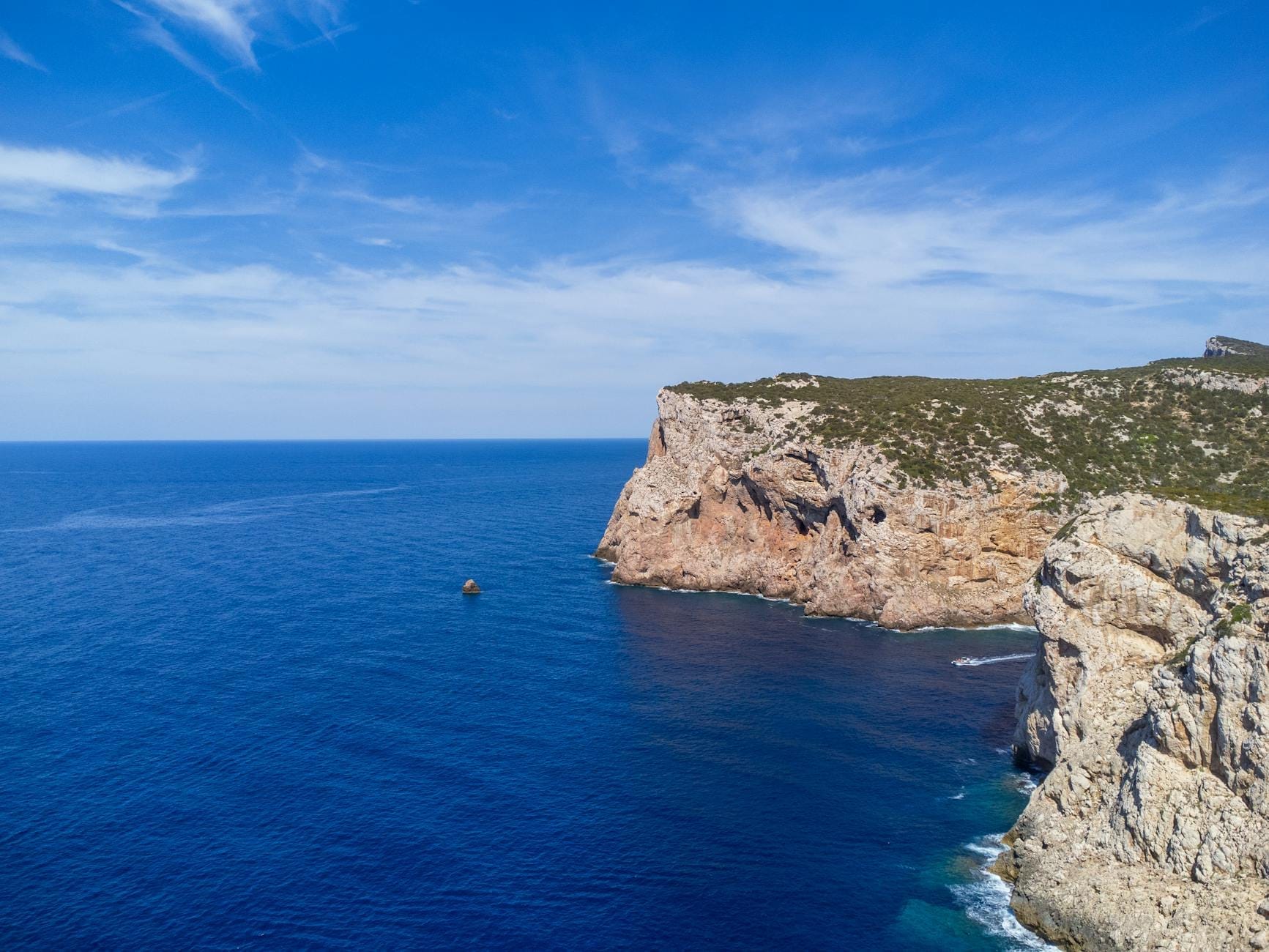
The dominant visual feature of Porto Conte park is the white limestone cliff face of Capo Caccia, which drops almost vertically into the sea at heights reaching about 186 metres. From the water, approached by boat, the effect is imposing in a way that photographs struggle to convey: the stone bleaches to near-white in afternoon light, and the sea below cycles through shades of emerald, cobalt, and pale turquoise depending on depth and time of day.
Inland from the cliffs, the park is covered by dense Mediterranean macchia: wild rosemary, cistus, lentisk, and juniper, interspersed with stands of cork oak. In late spring the scrubland blooms in waves of white and pink, and the air carries a dry herbal scent that is distinctly Sardinian. By July and August, the same vegetation turns brittle and pale under the summer heat. For a fuller picture of what hiking in this kind of terrain involves across the island, the Sardinia hiking guide covers conditions, trail types, and what to bring.
Below the surface, the park's limestone geology has produced an exceptional cave system. The Grotta di Nettuno, accessible at the base of Capo Caccia either by boat from Alghero or via the Escala del Cabirol staircase (which descends 654 steps down the cliff face), is the most visited feature in the entire park. The cave extends for roughly 4 kilometres of galleries, with stalactites and stalagmites reflected in a subterranean lake.
The Grotta di Nettuno operates on a ticketed, guided-tour basis with seasonal hours. Timed entry is strictly limited, which means turning up without planning on a summer afternoon will likely result in disappointment. Book or arrive early.
Tickets & tours
Hand-picked options from our booking partner. Prices are indicative; availability and final rates are confirmed when you complete your booking.
Boat excursion and snorkeling in Porto Conte marine area in Alghero
From 90 €Instant confirmationFree cancellationAlghero Porto Conte Park Eco-Museum Tickets
From 15 €Instant confirmationFree cancellationBalai Bay snorkeling experience from Porto Torres
From 42 €Instant confirmationFree cancellationAsinara island e-bike rental from Porto Torres
From 48 €Instant confirmationFree cancellation
Wildlife: What You Can Realistically Expect to See
Porto Conte is one of the few places in Sardinia where griffon vultures can be spotted without a long mountain hike. A small population nests on the cliff ledges around Capo Caccia, and in the morning hours they can be seen riding the thermals above the headland. Early visitors, particularly between March and June when nesting activity peaks, have the best chance of extended sightings. By midday, when tourist boat traffic increases, the birds tend to retreat.
The park's terrestrial fauna includes Sardinian deer (cervo sardo), wild boar, and a range of reptiles including the Hermann's tortoise. In the waters of Porto Conte bay, which is partially sheltered and relatively calm, Posidonia oceanica meadows support significant fish populations. Snorkellers willing to explore the fringes of the bay away from the main beach access points will find sea bream, wrasse, and occasional octopus in surprisingly clear water.
Birdwatchers should note that the wetland margins around the bay also attract wading birds and herons, especially in autumn. The park is quieter in September and October than during the summer peak, and the light is better for observation at those times of year.
Trails and How to Navigate the Park
The park maintains a network of marked nature trails (sentieri naturali) of varying difficulty. The most dramatic route follows the headland toward Capo Caccia, offering exposed views over the sea and cliff-edge perspectives that reward the effort. This is not a casual stroll: the terrain is rocky, the sun offers little shade between mid-morning and late afternoon, and distances are longer than they look on tourist maps. Proper walking shoes and at least 1.5 litres of water per person are minimum requirements in summer.
Easier paths wind through the macchia closer to the bay and through the cork oak woodland near Tramariglio. These suit families with younger children or visitors who want a gentle introduction to the habitat without committing to a full coastal traverse. Trail maps and guided tour schedules are available at the park office in Tramariglio, and guided options are strongly recommended if you want to maximize wildlife encounters, since many of the park's more interesting species are visible only to those who know where to look and when.
⚠️ What to skip
In summer (July–August), temperatures on exposed trails regularly exceed 35°C and shade is scarce. Start any serious walk before 8:00 am or after 5:00 pm. Wildfires are a genuine risk in this season — always check local fire conditions and observe any park restrictions on trail access before setting out.
The Bay of Porto Conte: Beaches and Water Access
Porto Conte bay forms a natural harbour, and its sheltered waters are calm enough for kayaking and paddleboarding even on days when the open sea is choppy. The bay has several beach access points, ranging from sandy stretches used by local families to smaller coves reachable only by water or on foot. The water clarity in the protected bay is noticeably better than at more trafficked beaches near Alghero, though the beaches themselves are less dramatic than the exposed cliff coastline.
Visitors based in Alghero can combine a morning in the park with an afternoon at Capo Caccia, since both sit within the same protected territory and a short drive separates them. It is also worth knowing that the park's northern boundary is not far from the archaeological site of Nuraghe Palmavera, a well-preserved Bronze Age nuraghe that adds cultural depth to an otherwise nature-focused day.
If you are spending several days in the area, the Sardinia boat trips guide covers excursion operators running out of Alghero into the park's coastal waters — including access to sea caves and coves unreachable on foot.
Getting There and Timing Your Visit
The park is just over 20 kilometres northwest of Alghero. By car, follow SS 127-bis out of Alghero toward Fertilia, then take signs for Porto Conte and Tramariglio. The drive takes around 20 minutes from the city centre. Parking is available near the park office at Tramariglio and at several trailheads, though spots fill quickly on summer weekends from mid-morning onward.
ARST operates regional bus services in the Alghero area, and seasonal routes may serve parts of the park's access road. However, public transport coverage within the park itself is limited, and a car or hired bicycle gives significantly more flexibility for exploring the full extent of the trails and beach access points. Verify ARST schedules directly at arst.sardegna.it before planning a bus-based visit.
The shoulder seasons, particularly May to early June and September to October, offer the most rewarding conditions: temperatures are manageable for hiking, wildlife activity is higher than in peak summer, and the park's trails are noticeably quieter. The broader best time to visit Sardinia guide elaborates on seasonal trade-offs across the island.
Porto Conte sits within easy reach of Alghero's historic centre. If you are planning your time in the city, the Alghero destination guide covers accommodation, restaurants, and how to structure days that combine the park with the city's Catalan-heritage old town.
Who This Is For, and Who Should Look Elsewhere
Porto Conte Regional Natural Park is rewarding for visitors who come with some intention: a specific trail in mind, a boat trip booked, or a morning plan to watch vultures before the heat sets in. It is not a theme park with clear signage and guaranteed spectacle at every turn. The landscape is raw and the facilities are minimal outside the park office.
Visitors primarily interested in beach time will find better-developed beach infrastructure closer to Alghero. The park's beaches are pleasant but secondary to the main draw, which is the terrain, the wildlife, and the scale of the coastal scenery. Travellers expecting easy, paved walks with shade and refreshment stops throughout will be disappointed on most routes.
For independent travellers, nature-focused visitors, and anyone who has come to Sardinia specifically for something beyond sunbathing, Porto Conte deserves significant time. It is one of the few places near a major Sardinian tourist hub where the natural environment has been formally protected and where the management infrastructure, while modest, is oriented toward conservation rather than mass tourism.
Insider Tips
- The Escala del Cabirol staircase down to Grotta di Nettuno is free to access, but entry to the cave itself is ticketed and timed. Arrive at the top of the stairs at least 30 minutes before the first tour of the day to secure a spot without pre-booking, especially in July and August.
- Griffon vultures are most active on warm mornings when thermals develop along the cliff face, typically from around 9:00 am onward. Position yourself on the headland trail with a clear sightline to the Capo Caccia cliff and wait quietly rather than walking continuously.
- The park office at Tramariglio occasionally posts last-minute guided tour slots that are not visible on the main website. Stopping in person the afternoon before your planned visit is worth the detour if you want a guided experience.
- Porto Conte bay is calm enough for sea kayaking even when other Sardinian coasts are windier, which makes it a useful fallback on days when the maestrale wind picks up to the north. Several operators in Alghero offer half-day kayak rentals with access into the bay.
- The Nuraghe Palmavera site sits just outside the park boundary on the road back toward Alghero and takes about 45 minutes to visit properly. Combining it with a morning in the park gives you both archaeological and natural history in a single half-day excursion without significant extra driving.
Who Is Parco Naturale Regionale di Porto Conte For?
- Hikers and trail walkers looking for marked routes with genuine coastal scenery
- Birdwatchers and wildlife enthusiasts, particularly those interested in griffon vultures and Mediterranean raptors
- Families wanting a structured outdoor day with a mix of easy paths and boat excursion options
- Travellers pairing the park with the Grotta di Nettuno cave visit
- Nature photographers seeking dramatic cliff-edge light and wildlife subjects away from crowded beaches
Nearby Attractions
Other things to see while in Alghero:
- Bastioni di Alghero
The Bastioni di Alghero are a continuous promenade along the medieval and 16th-century fortifications that frame the old city on its seaward side. Free to walk at any hour, they offer some of the most compelling views in northwest Sardinia, from the coral-blue water below the walls to the distant outline of Capo Caccia across the gulf.
- Capo Caccia
Capo Caccia is a towering limestone promontory on Sardinia's northwestern coast, forming the western boundary of the Capo Caccia – Isola Piana Marine Protected Area. The clifftop belvederes are free and open to all, while the famous Grotte di Nettuno lie below, reached by a vertiginous staircase or seasonal boat.
- Centro Storico di Alghero
The historic centre of Alghero is one of the Mediterranean's most atmospheric old towns, where Catalan Gothic architecture, honey-coloured ramparts, and a language that isn't quite Italian create a quarter that feels unlike the rest of Sardinia. Entry is free, the streets run to the sea, and it rewards slow exploration at almost any hour.
- Domus de Janas di Anghelu Ruju
Cut into sandstone on a flat plain 6 km from Alghero, the Necropoli di Anghelu Ruju contains 38 prehistoric tombs dating back to around 3200 BC. It is the most extensive hypogean burial site in northern Sardinia and one of the most significant Neolithic monuments in the entire Mediterranean.