Bastioni di Alghero: Alghero's Ancient Sea Walls and the Best Sunset Walk in Sardinia
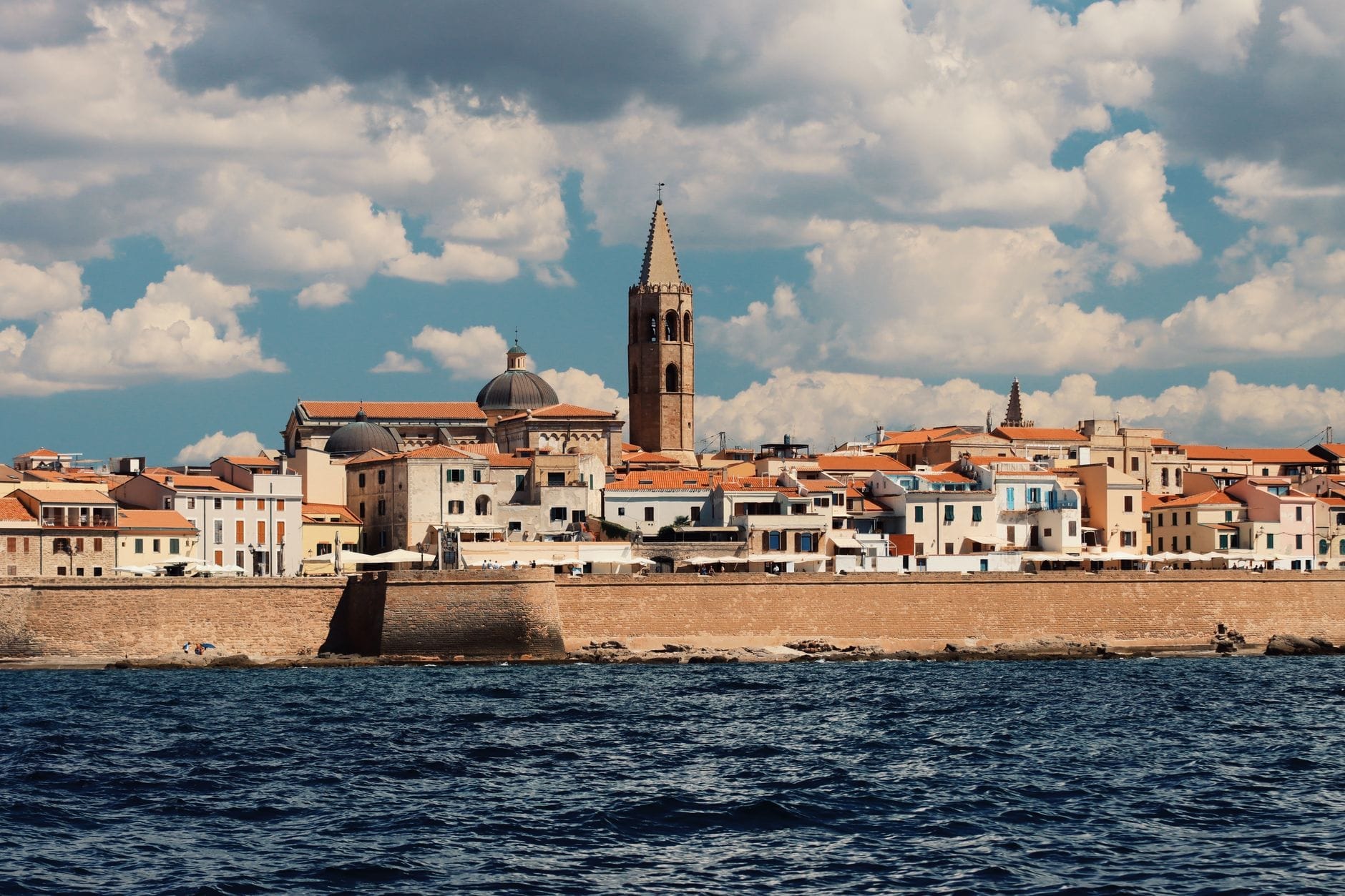
The Bastioni di Alghero are a continuous promenade along the medieval and 16th-century fortifications that frame the old city on its seaward side. Free to walk at any hour, they offer some of the most compelling views in northwest Sardinia, from the coral-blue water below the walls to the distant outline of Capo Caccia across the gulf.
Quick Facts
- Location
- Historic Centre (Centro Storico), Alghero, northwest Sardinia
- Getting There
- Walk from Piazza Sulis or Via XX Settembre in the old town. Alghero–Fertilia Airport (AHO) is about 8–10 km northwest; local ARST buses and taxis connect to the centre.
- Time Needed
- 45–90 minutes for the full promenade; longer if you stop at cafes or towers
- Cost
- Free – open urban promenade, no ticket required
- Best for
- Sunset walks, photography, history, slow evenings with sea views
- Official website
- www.sardegnaturismo.it/en/explore/walls-and-bastions-alghero
What the Bastioni di Alghero Actually Are
The Mura e Bastioni di Alghero, the walls and bastions of Alghero, are a largely intact defensive circuit that once sealed the medieval city from the sea. What survives today is the seaward face of that system: a broad stone promenade raised above the water, punctuated by towers, and open to anyone who wants to walk it. There is no gate, no ticket booth, and no official opening time. You simply step onto the walkway from one of several access points in the old town and follow it around the promontory.
The fortifications are not a ruin in any museum sense. Local residents use them daily as a walking route, a place to sit and read in the late afternoon, or a spot to meet friends before dinner. That lived-in quality is part of what makes the bastions worth your time: they are a working piece of the city, not a cordoned exhibit.
💡 Local tip
Access the bastions most directly from Piazza Sulis or by walking down Via Maiorca from the cathedral piazza (Piazza Duomo) toward the water. The walls are visible from multiple points inside the old town, so orientation is straightforward once you are in the historic centre.
A City Built in Layers: the Historical Context
Alghero was founded by the Genoese Doria family between 1102 and 1112, making it one of the earlier planned medieval settlements in Sardinia. The city's original grid plan, clearly Genoese in its geometry, included a fortified perimeter whose later defensive system counted eight urban towers and eleven coastal towers. By the late 13th century the town had expanded considerably. Then, in the 16th century, the seaward walls were substantially rebuilt and reinforced in response to the threat of Ottoman naval raids that were hitting ports across the western Mediterranean at the time.
The surviving system you walk today largely reflects that 16th-century reconstruction. Eight city towers and eleven coastal towers are documented as part of the defensive system, along with the continuous wall walk. The towers are not identical: some are rounded, some polygonal, and their different profiles reflect incremental building campaigns rather than a single master plan. Alghero passed from Doria to Aragonese control in 1353, and the city's Catalan identity, still audible in local place names and even in a version of the Catalan language still spoken by some older residents, is a direct result of the Crown of Aragon's resettlement policy. Walking the bastions, you are tracing the outline of a city that was deliberately refounded as a Catalan colonial outpost on a Sardinian coast.
For a deeper understanding of Alghero's layered identity, the historic centre of Alghero rewards exploration beyond the walls themselves, with Catalan Gothic architecture concentrated around the cathedral and the narrow lanes behind the waterfront.
Tickets & tours
Hand-picked options from our booking partner. Prices are indicative; availability and final rates are confirmed when you complete your booking.
Boat excursion and snorkeling in Porto Conte marine area in Alghero
From 90 €Instant confirmationFree cancellationAlghero Porto Conte Park Eco-Museum Tickets
From 15 €Instant confirmationFree cancellationCooking class of traditional recipes with a full meal in Alghero
From 107 €Instant confirmationFree cancellationAuthentic Italian Pasta-Making Experience in Alghero
From 135 €Instant confirmationFree cancellation
The Walk Itself: What You See and Feel
The promenade follows the outer edge of the old city, with the sea directly below the wall on one side and the rooftops and church towers of the centro storico visible on the other. The stone underfoot is uneven in places, the kind of weathered limestone that feels warm under evening sun and slightly damp after overnight rain. The wall is wide enough for two people to pass comfortably, and at several points it widens into small terrace areas where benches face the water.
Looking out from the bastions, the Gulf of Alghero opens up to the south and west. On clear days, the limestone headland of Capo Caccia is sharply defined across the water, its vertical cliffs dropping into the sea. Below the walls, the water is shallow enough in places to show its colour clearly: a pale turquoise over sand that shifts to deeper blue further out. Fishing boats move in and out of the harbour at the northern end of the promenade, and in summer the water directly beneath the walls fills with swimmers who have climbed down the rocky ledges.
Capo Caccia, visible from the bastions, is worth a dedicated half-day visit. The headland shelters the Grotte di Nettuno, one of Sardinia's most impressive sea caves, accessible by boat from Alghero port or by a long staircase from the clifftop.
ℹ️ Good to know
The walk from one end of the seaward bastions to the other takes roughly 20 to 30 minutes at a relaxed pace. Most visitors make it a loop by walking out along the walls and returning through the old town lanes, which adds another 15 to 20 minutes and passes the cathedral, several Catalan Gothic doorways, and the best of the cafes.
Time of Day: How the Experience Changes
The bastions look and feel different depending on when you arrive. In the morning, they are almost empty. The light comes in low from the east, and the sea has a flat, pewter quality before the sun gets high enough to turn it blue. This is when the textures of the stone are most visible: the repair patches, the different courses of masonry from different centuries, the occasional carved detail on a tower corbel. It is the best time for photography of the structure itself.
By midday in summer, the stone reflects considerable heat. The bastions are exposed, and there is very little shade along the full length of the promenade. From late June through August, the midday hours are uncomfortable for walking unless you are already acclimatised to southern Mediterranean summer temperatures, which regularly exceed 30 degrees Celsius and can approach 38 degrees inland. A hat, sunscreen, and water are not optional in that season.
The late afternoon and evening hours are when the bastions make the most sense. From about two hours before sunset, the light turns amber and then orange over the gulf, and the Capo Caccia headland becomes a silhouette. This is when the promenade fills with people: couples, families, groups of teenagers, tourists with cameras, and older residents doing their customary passeggiata. The atmosphere is easy and social. Bars and restaurants along the edge of the old town behind the walls begin to set out tables. The transition from late afternoon to dusk, when the sky goes through pink and then deep purple over the water, is one of the better free natural spectacles in northwest Sardinia.
💡 Local tip
Check the sunset time for your visit date before you go, and arrive at least 45 minutes early to claim one of the bench positions on the wider terrace sections of the walls. In July and August, these spots fill early.
Practical Walkthrough: Getting There and Getting Around
Alghero's old town is compact and walkable. The bastions are accessible from multiple entry points once you are in the centro storico. The most straightforward approach is to walk down to Piazza Sulis, which opens directly onto the lower section of the waterfront fortifications. Alternatively, walk from the area around the cathedral along Via Maiorca toward the sea; the wall becomes visible within a couple of minutes.
If you are arriving from outside Alghero, the city is served by Alghero–Fertilia Airport (IATA: AHO), located about 8 km northwest of the centre. ARST buses connect the airport to the city; taxi services are also available at the terminal. From Sassari, which is around 35 km away by road, there are regular bus connections into Alghero. The old town has no practical car access for visitors; parking is available on the periphery of the historic centre, from which the bastions are a short walk.
Alghero makes a strong base for day trips into the surrounding area. The Parco Naturale di Porto Conte begins just a few kilometres outside the city and offers coastal walking, birdwatching, and access to the road up to Capo Caccia.
Accessibility along the bastions is limited in places. The main promenade surface is broad and mostly level, but the stone is uneven in sections and some access points involve steps. There are no formal accessibility ramps at all entry points. Anyone with significant mobility difficulties should approach the walls from Piazza Sulis, where the transition from pavement to wall walk is relatively smooth, and assess conditions on arrival.
What the Bastioni Deliver — and What They Do Not
The bastions are not a destination that requires hours of your time or any prior knowledge of defensive architecture to enjoy. They work as a free, scenic walk that happens to pass through seven hundred years of layered history. The views are good, especially at sunset. The setting inside an active, lived-in old town is better than a stand-alone fortress in a field would be.
What the bastions do not provide is an interior experience. There is no entrance into the towers, no archaeological museum on site, and no audio guide. If your primary interest is the medieval and early modern history in detail, you will want to supplement the walk with a visit to local historical resources or approach it already knowing something about the Doria and Aragonese periods. The walk rewards curiosity, but it does not explain itself.
Visitors who are not interested in walking, views, or historical context will find less here than those who are. The bastions are also not a beach, not a shopping street, and not an indoor activity. In heavy rain, the stone becomes slippery and the appeal diminishes sharply. If your Alghero day coincides with a grey, wet afternoon, there are better uses of that time.
Those interested in Sardinia's deeper historical layers might find it worth pairing a visit to the bastions with a broader exploration of the island's fortified and ancient past. The Nuragic sites of Sardinia offer a very different but equally compelling perspective on how successive cultures built and defended their presence on the island.
Photography Notes
For wide shots that include both the wall and the sea, position yourself on one of the projecting tower platforms and shoot along the line of the fortification. The towers give enough elevation to show the curve of the wall and the water simultaneously. For the sunset, shoot facing southwest toward Capo Caccia, which silhouettes cleanly against an orange sky from early October onward when the sun sets further south. In midsummer, the sunset is more directly west and slightly less dramatic against the headland.
The interior side of the walls, looking into the old town, is worth attention in the morning light. The stone facades of the buildings immediately behind the fortification, many with wooden shutters and small balconies with geraniums, frame well against the warm-toned medieval masonry. Avoid the harsh midday light for any detail photography of the stonework; early morning or the hour before sunset gives the best texture and shadow definition.
Insider Tips
- The terrace area near the Torre di Sulis, at the southern corner of the sea walls, is one of the wider platforms and catches the last direct sun in the evening. It is a better spot than the more crowded sections closer to the port.
- Bar and aperitivo prices in the cafes directly behind the bastions are noticeably higher than in cafes one or two streets further into the old town. If you want a drink to watch the sunset, consider buying it a block back and carrying it to the walls, which is entirely normal practice among locals.
- In July and August, the lower rocks at the base of the walls attract local swimmers who descend via fixed metal ladders in a couple of spots. This is not a beach, but it is a genuine local experience, and the water there is clear.
- The towers along the circuit are not uniformly accessible to the public. Some are open at ground level or as part of bar and restaurant spaces; others are simply part of the wall structure. Ask locally about which towers offer elevated views in any given season, as commercial arrangements inside them change.
- Alghero is one of the few places in Sardinia where you may still hear Algherese Catalan spoken by older residents. Near the cathedral and on the bastions in the early evening, it is occasionally audible, a genuine linguistic relic of 14th-century Aragonese colonisation.
Who Is Bastioni di Alghero For?
- Travellers who want a slow evening with good light and a view without paying entrance fees
- Architecture and history enthusiasts interested in medieval and early modern Mediterranean fortifications
- Photographers looking for golden-hour and sunset positions with coastal backdrops
- Those using Alghero as a base who want a low-effort, high-reward experience after a day of driving or beach-going
- Couples looking for an atmospheric evening walk with aperitivo options immediately adjacent
Nearby Attractions
Other things to see while in Alghero:
- Capo Caccia
Capo Caccia is a towering limestone promontory on Sardinia's northwestern coast, forming the western boundary of the Capo Caccia – Isola Piana Marine Protected Area. The clifftop belvederes are free and open to all, while the famous Grotte di Nettuno lie below, reached by a vertiginous staircase or seasonal boat.
- Centro Storico di Alghero
The historic centre of Alghero is one of the Mediterranean's most atmospheric old towns, where Catalan Gothic architecture, honey-coloured ramparts, and a language that isn't quite Italian create a quarter that feels unlike the rest of Sardinia. Entry is free, the streets run to the sea, and it rewards slow exploration at almost any hour.
- Domus de Janas di Anghelu Ruju
Cut into sandstone on a flat plain 6 km from Alghero, the Necropoli di Anghelu Ruju contains 38 prehistoric tombs dating back to around 3200 BC. It is the most extensive hypogean burial site in northern Sardinia and one of the most significant Neolithic monuments in the entire Mediterranean.
- Grotte di Nettuno
Cut into the limestone cliffs of Capo Caccia, the Grotte di Nettuno is one of Sardinia's most dramatic natural attractions. Reach it by descending 654 steps carved into a sheer cliff face, or arrive by boat from Alghero's port. Inside, a guided tour reveals a vast karst cave system built around a saltwater lake and draped in extraordinary stalactite and stalagmite formations.