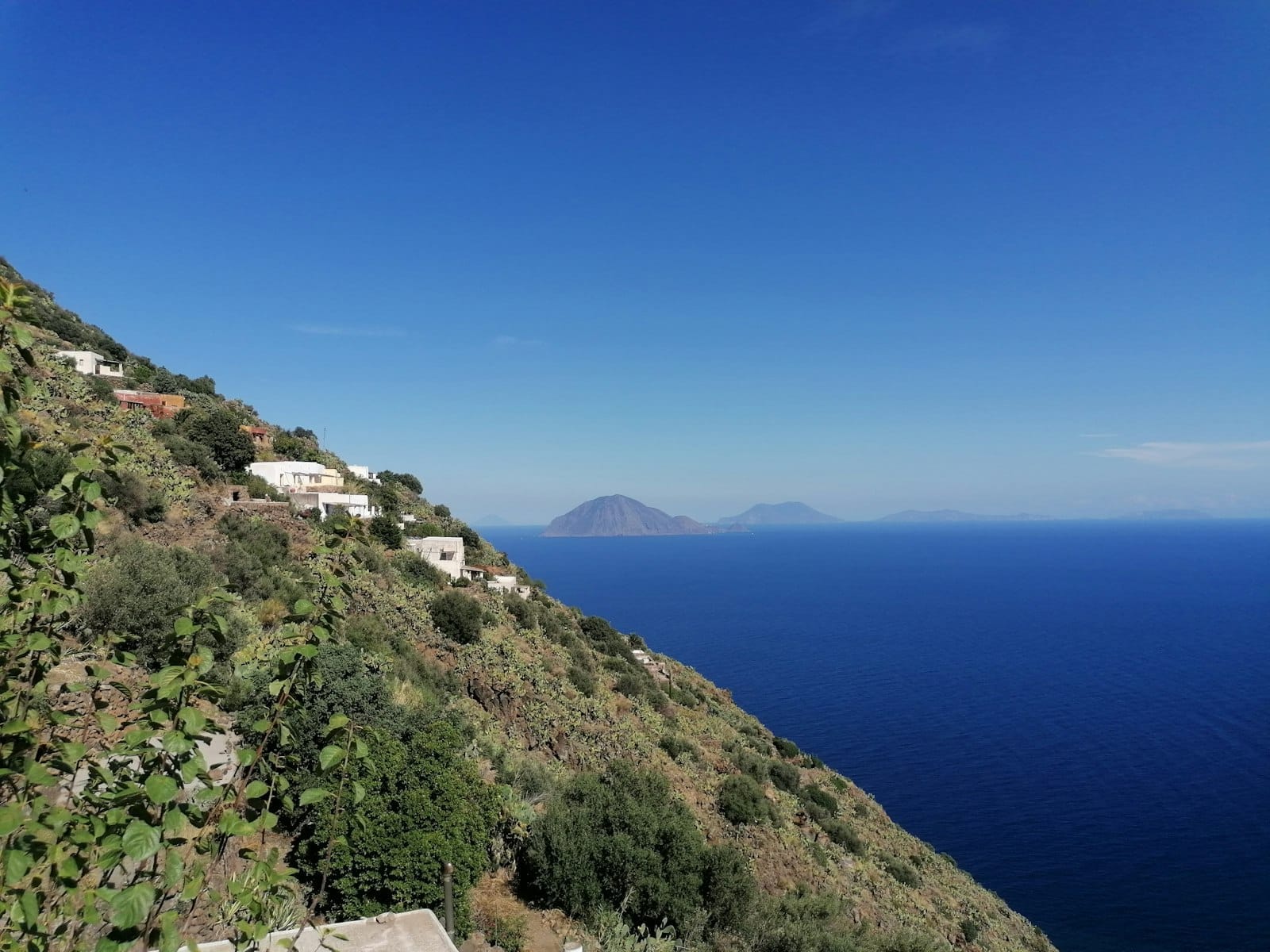
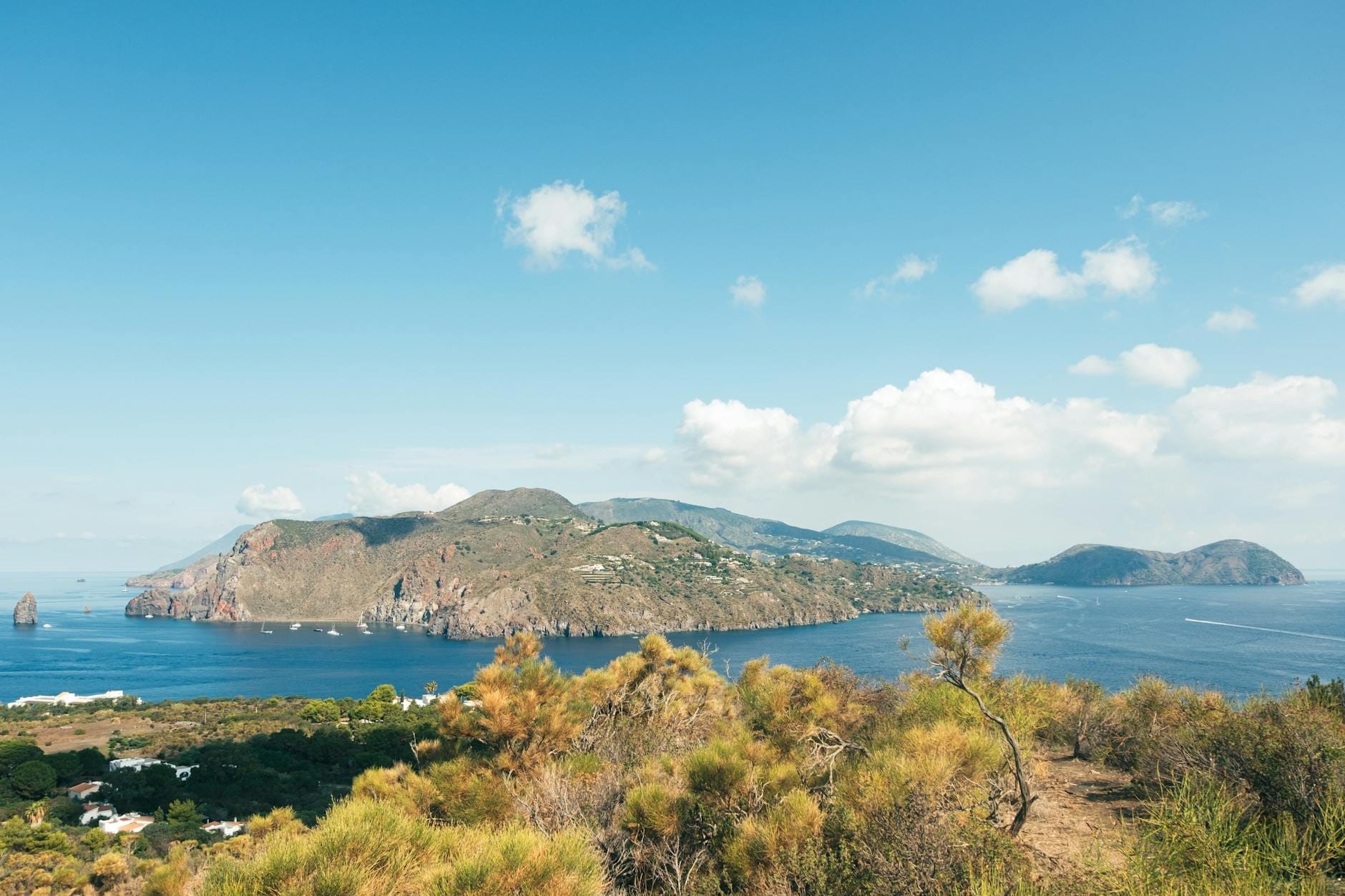
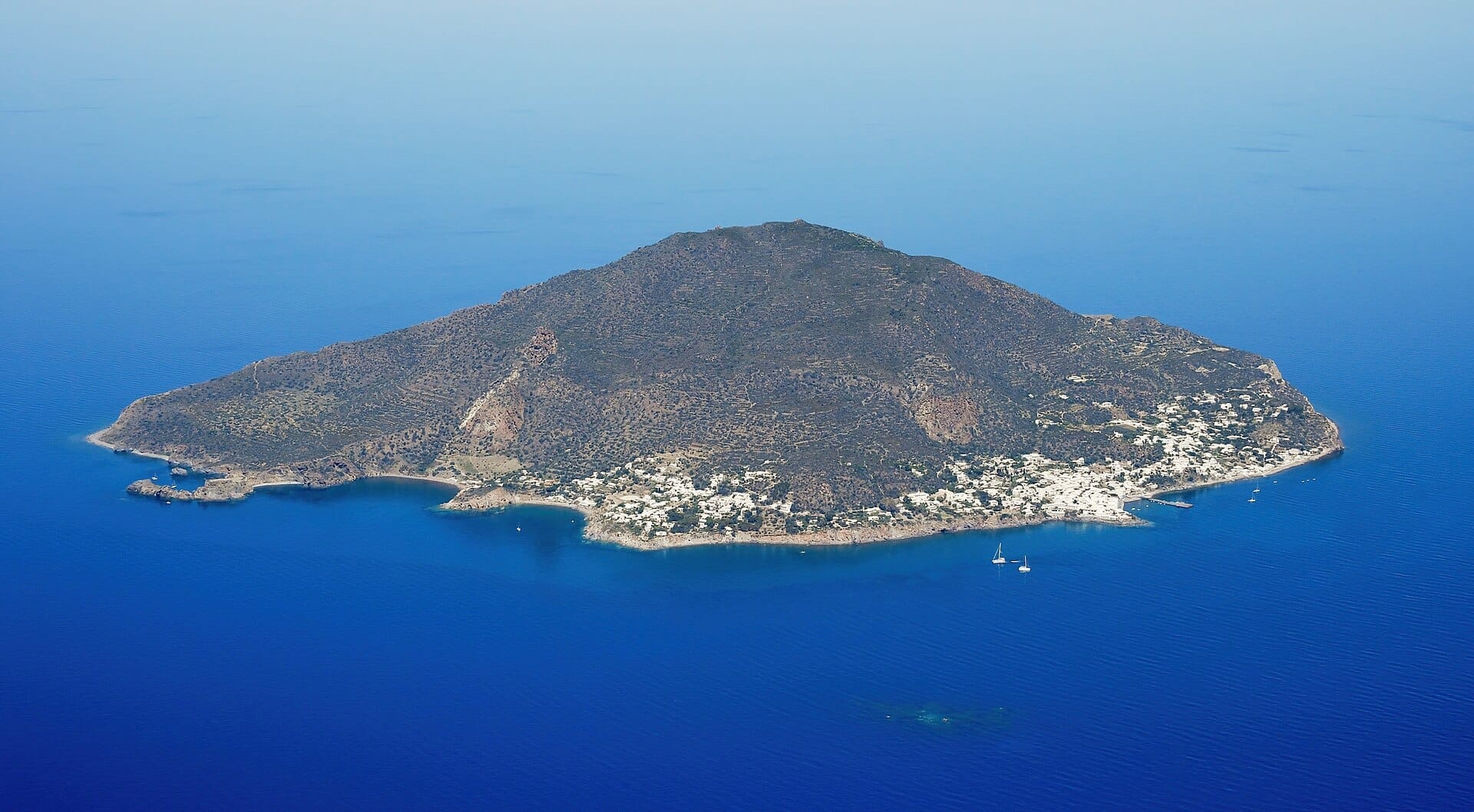
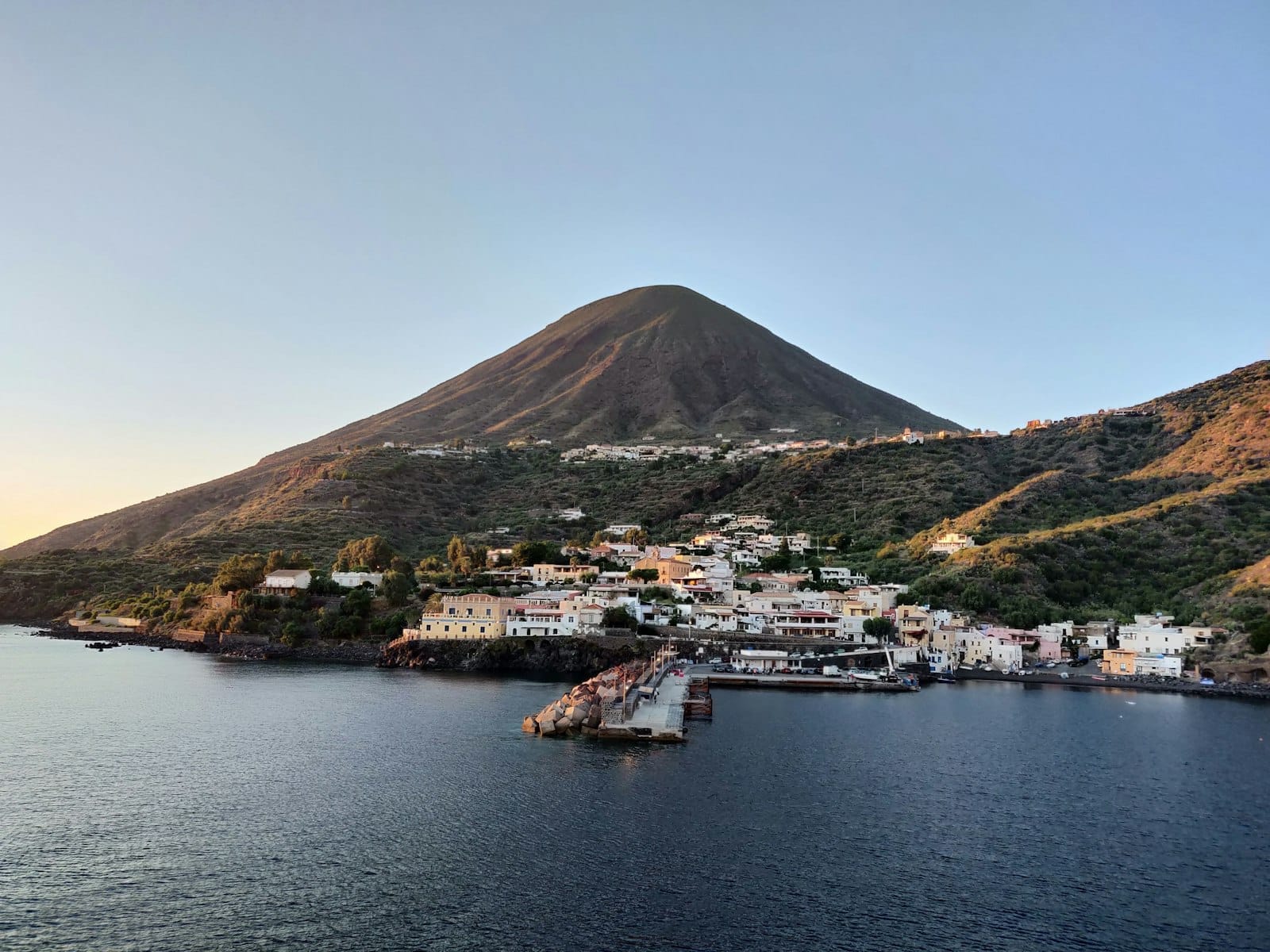
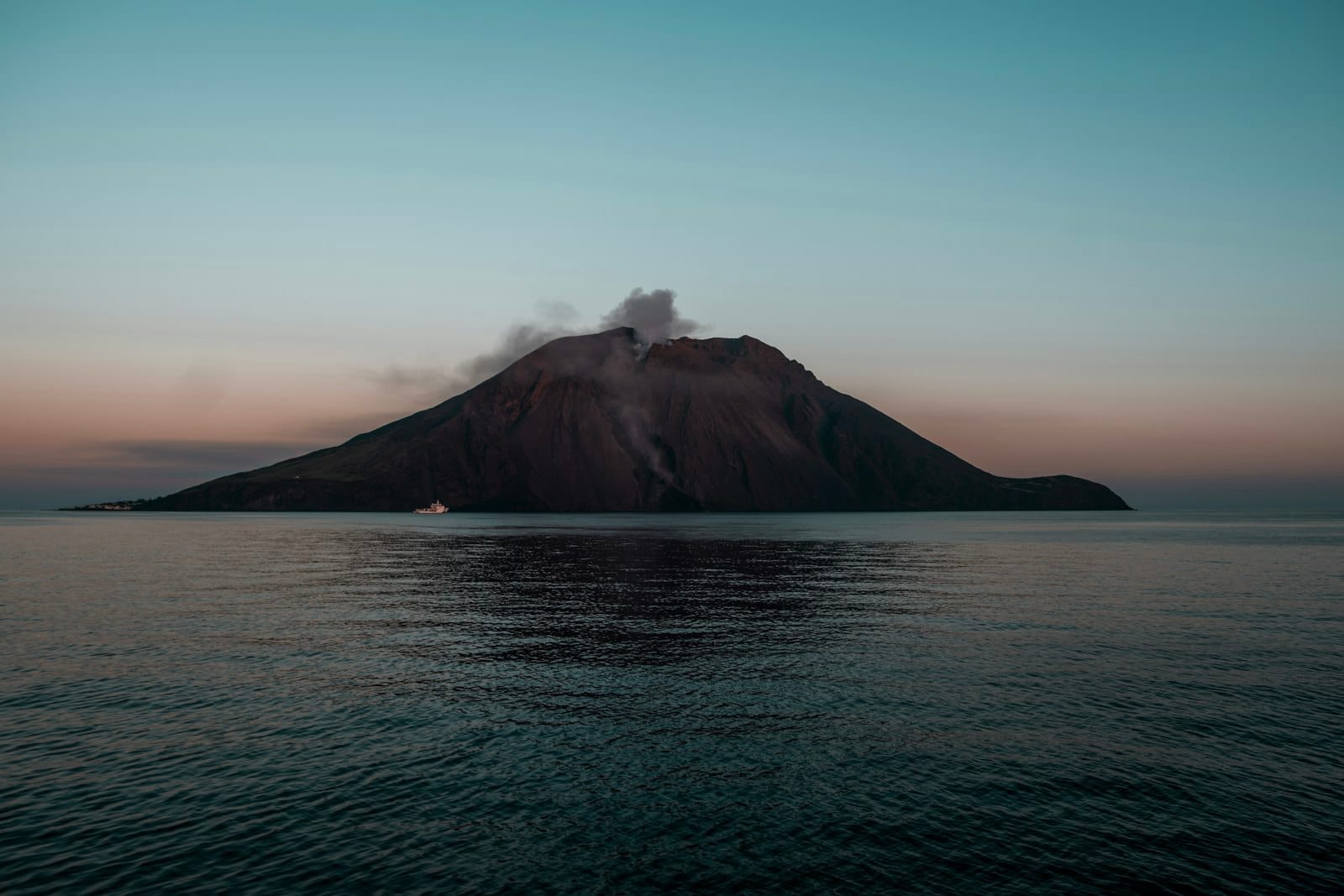
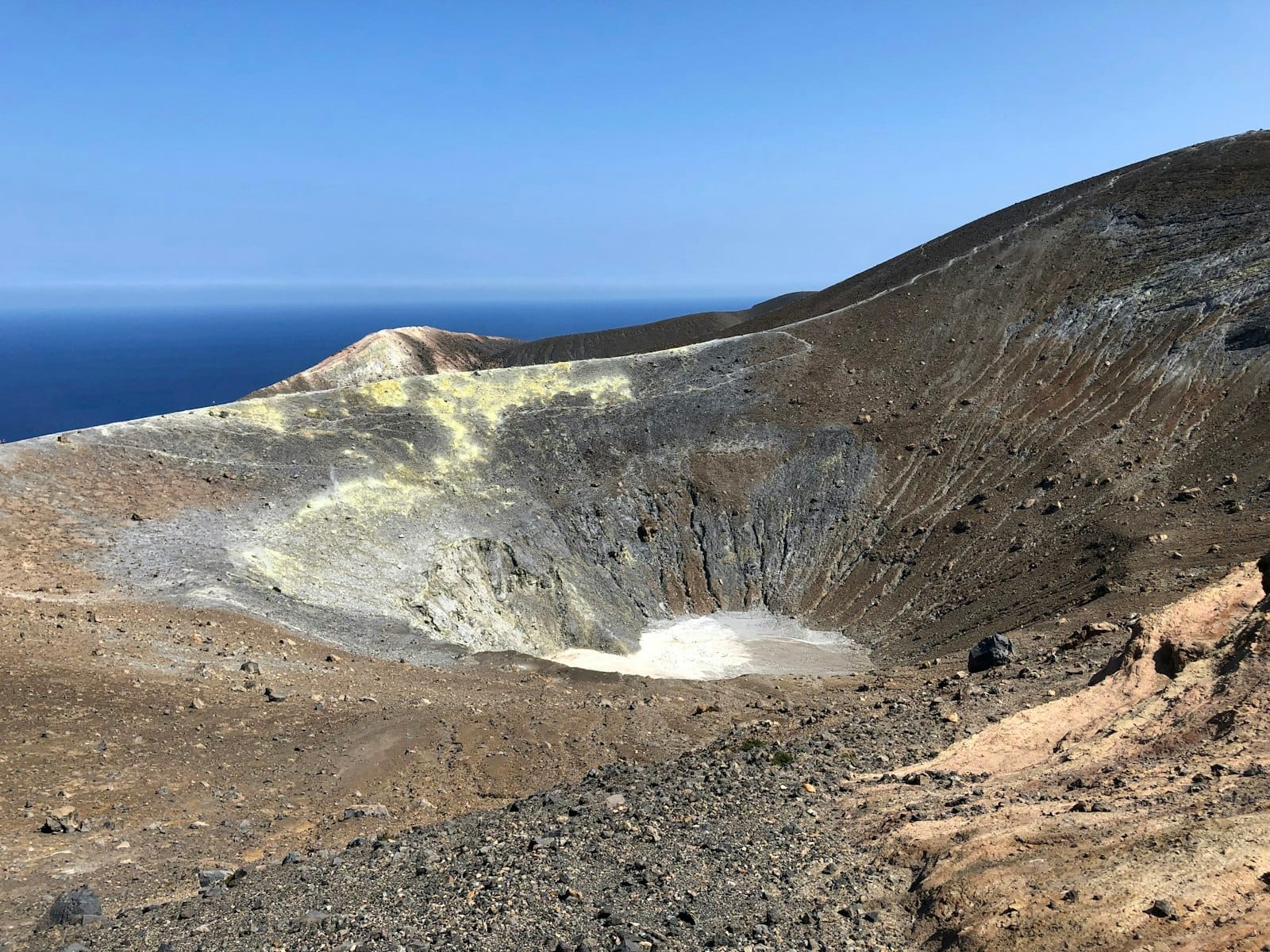
The Aeolian Islands are a UNESCO-listed volcanic archipelago in the Tyrrhenian Sea, about 20 to 50 kilometres north of Sicily. Seven main islands — each with its own character — offer active volcanoes, black-sand beaches, excellent seafood, and a pace of life that feels disconnected from the mainland in the best possible way.
Seven volcanic islands adrift in the Tyrrhenian Sea north of Sicily, the Aeolians operate at their own tempo. Some are social and lively, some barely inhabited, and one has a stratovolcano that erupts almost every hour of the day. Together they form one of the Mediterranean's most compelling island groups, inscribed as a UNESCO World Heritage Site for their outstanding volcanic geology.
Orientation: Seven Islands, One Archipelago
The Aeolian Islands, known in Italian as the Isole Eolie or Isole Lipari, sit in the Tyrrhenian Sea between about 20 and 50 kilometres north of the Sicilian coastline. The archipelago comprises seven main islands: Lipari, Salina, Vulcano, Stromboli, Panarea, Filicudi, and Alicudi. Each island is administratively part of the Metropolitan City of Messina within the autonomous region of Sicily, Italy.
Lipari is the largest and most populated island and serves as the practical hub of the group. Vulcano lies closest to the Sicilian mainland, just a short ferry hop from Lipari. Salina sits to the northwest of Lipari and is the archipelago's highest point, reaching 962 metres at Monte Fossa delle Felci. Stromboli occupies the northeastern edge of the group, remote and dramatic. Panarea, one of the smallest and most exclusive, sits between Salina and Stromboli. Filicudi and Alicudi trail off to the west, progressively wilder and harder to reach.
For most visitors, the route into the islands begins at Milazzo on Sicily's north coast, roughly 40 kilometres west of Messina. Ferries and hydrofoils depart from Milazzo's port throughout the day. Messina also has connections, and in summer additional services run from Naples, Palermo, and Reggio di Calabria on the Italian mainland. Most travellers flying into Sicily route through Catania, then travel by bus or train north to Milazzo. See the full Aeolian Islands travel guide for detailed itinerary planning.
ℹ️ Good to know
The Aeolian Islands were inscribed as a UNESCO World Heritage Site in 2000 for their outstanding volcanic and geomorphological significance. The inscription covers all seven main islands.
Character and Atmosphere: A Different Kind of Island Life
The Aeolians do not feel like a beach resort destination, even though swimming and sunbathing are central to a summer visit. The geology is too prominent, too visible for that. Black and grey lava rock defines the coastlines. Caper plants grow wild along stone walls. Volcanic soil produces some of Italy's most distinctive wines and capers. The landscape is raw in a way that manicured Mediterranean resorts never are.
Mornings in Lipari Town start with espresso at a café on the waterfront, the harbour already alive with ferries arriving from the mainland and small fishing boats unloading their catch. The light at this hour is sharp and clear, bouncing off whitewashed walls and the cobalt water of the Marina Corta. By mid-morning the hydrofoils bring day-trippers from the mainland, and the narrow lanes around the citadel grow noticeably busier. Late afternoon, after the day boats leave, the tone softens. Locals reappear in the piazza and the bar terraces fill with a slower, quieter crowd.
Stromboli has an entirely different personality. There are no cars, the lanes are white-painted and narrow, and the dominant sound after dark is not music or conversation but the low rumble of the volcano above the village, punctuated by the occasional crack of an eruption. Panarea is the most fashionable of the seven, drawing a wealthier Italian crowd in July and August, with prices to match. Salina feels agricultural and unhurried: vineyards, capers, and two connected volcanic cones covered in dense green vegetation. Alicudi and Filicudi are for travellers who genuinely want to disconnect: limited accommodation, no motor vehicles on Alicudi, and ferry connections that can feel precarious in shoulder season.
In July and August the islands are busy, accommodation is expensive, and Lipari and Vulcano in particular can feel crowded at their most popular beaches and viewpoints. May, June, and September offer a noticeably better experience: the sea is warm enough for swimming, the boats are less packed, and prices at guesthouses drop significantly. October is quieter still, and some smaller hotels and restaurants begin to close for the winter.
What to See and Do
Each island rewards a different kind of traveller, and the best approach is to avoid rushing through all seven in a week. Spend a few nights on Lipari as a base, make day trips to the closer islands, and consider an overnight stay on Stromboli if the volcano is calling.
Lipari
Lipari Town's citadel, perched on a rocky outcrop between the two main harbours, holds a significant archaeological museum covering the prehistory of the entire archipelago. The Spanish-era walls are walkable and offer good views over both the Marina Lunga and Marina Corta. Beyond the town, the obsidian flows and pumice cliffs at Porticello on the island's northeastern coast are visually striking remnants of ancient volcanic activity. The beach at Canneto, a short bus ride north of town, is one of the more accessible sandy options in the archipelago.
Stromboli
Stromboli's appeal is the volcano itself. The island's stratovolcano erupts from its summit craters almost continuously, and the best viewing point is the Sciara del Fuoco, a lava channel on the northwestern flank where glowing material slides into the sea after eruptions. Guided hikes to the summit area (about 900 metres) are organized from the village of San Vincenzo and offer the most dramatic close-up view of active eruptions. This hike is not a casual stroll: it takes roughly three hours each way, requires proper footwear and equipment, and must be done with a licensed guide. Read more about planning the ascent in the Stromboli volcano guide.
Vulcano
Vulcano is close enough to Lipari (about 10–20 minutes by hydrofoil, depending on service) to visit as a half-day trip. The Gran Cratere, the main caldera, can be hiked in about an hour from the Porto di Levante, with views over the entire archipelago on clear days. The island is also known for its fanghi, thermal mud baths near the port where sulphurous water wells up into a shallow pool. It is a novelty, and worth knowing that the smell of sulphur is strong and will linger on clothing. For context on Sicily's broader volcanic geography, the Vulcano island page has further details.
Salina, Panarea, and the Outer Islands
Salina is the green island of the group, its twin volcanic peaks covered in vineyards producing the celebrated Malvasia delle Lipari DOC wine. The villages of Santa Marina, Malfa, and Leni each have their own character. Panarea's prehistoric Bronze Age village at Capo Milazzese is one of the archipelago's quieter archaeological sites, set on a promontory above crystal-clear water. For those considering travel to the outer islands, see Salina island and Panarea island for island-specific detail.
Stromboli: Guided summit hike, Sciara del Fuoco viewing by boat at night, village walks
Vulcano: Gran Cratere hike, thermal mud baths, snorkelling at Gelso
Salina: Malvasia wine tasting, Monte Fossa delle Felci hiking trail, Pollara bay
Panarea: Bronze Age village at Capo Milazzese, boat tours to surrounding stacks
Filicudi and Alicudi: Complete quiet, prehistoric village ruins on Filicudi, donkey paths on Alicudi
Eating and Drinking
Aeolian cuisine is a subset of Sicilian cooking, but with its own emphases shaped by what grows and is caught on the islands. Capers from Salina and Filicudi are genuinely different from mainland varieties: smaller, more intensely flavoured, preserved in salt rather than brine. They appear in almost everything, from pasta sauces to salads. Swordfish, tuna, and whatever is landed that morning drive the restaurant menus. The islands are also part of Sicily's broader food culture — see the Sicily food guide for deeper context on regional cuisine.
The signature pasta dish is spaghetti alla eoliana, made with capers, olives, tomatoes, and sometimes anchovies. Pesce spada (swordfish) is typically grilled, baked with capers and olives, or rolled and stuffed in the style known as involtini. Fresh ricotta and granita appear at breakfast alongside brioche at almost every bar. Malvasia delle Lipari, the sweet amber dessert wine made from partially dried Malvasia grapes on Salina, is the drink to try at the end of a meal.
Lipari Town has the widest choice of restaurants and bars, ranging from unpretentious trattorie near the Marina Corta to smarter terrace restaurants with sea views. Panarea commands the highest prices in the archipelago during summer: a dinner for two at a mid-range restaurant there can cost significantly more than the same meal on Lipari. Salina's village restaurants tend to offer the best balance of quality and price, and the setting in the green volcanic interior adds to the experience. On Stromboli, restaurant choice is limited but adequate; the handful of places in San Vincenzo village tend to fill up in the evenings, so arrive early or reserve.
💡 Local tip
If you are visiting Salina, seek out a glass of Malvasia delle Lipari at a local wine shop or enoteca. The DOC designation protects a specific style of naturally sweet wine that is genuinely rare outside the islands.
Getting There and Around
There are no airports in the Aeolian Islands. All access is by sea, and the main gateway port on the Sicilian mainland is Milazzo, located on the northern coast of Sicily about 40 kilometres west of Messina. Ferry and hydrofoil services depart from Milazzo's Porto di Milazzo throughout the day, with frequency increasing significantly in the summer months. The journey from Milazzo to Vulcano takes approximately 30–40 minutes by hydrofoil; Lipari is about 10–15 minutes further (around 45 minutes total from Milazzo). Car ferries take longer — roughly 1.5–2 hours to Vulcano.
To reach Milazzo by public transport from Catania, the most practical route is train from Catania Centrale to Milazzo, with a connection at Messina if required, followed by a short taxi or bus ride from Milazzo train station to the ferry port. Driving to Milazzo and leaving a car in a paid parking area near the port is a common option for travellers with their own vehicle, since cars are not permitted or are impractical on several of the smaller islands. The ferry crossing itself carries cars to Lipari and Vulcano, but parking in island towns is extremely limited and rarely worth the cost and complexity.
Between islands, hydrofoils and ferries connect all seven on a schedule that is published seasonally by the main operators, Siremar and Liberty Lines. Hydrofoils are faster but more susceptible to cancellation in rough weather. In October through April, service frequency drops and some inter-island routes run only a few times per week. Anyone planning to visit Alicudi or Filicudi outside peak season should check schedules carefully before committing, since a missed connection can mean an unplanned extra night.
Within the larger islands, Lipari has a local bus service that connects the main town with outlying beaches and villages. Scooter and bicycle rental is available on Lipari, Salina, and Vulcano. On Stromboli and Panarea, walking is the primary mode of transport. On Alicudi, there are no motor vehicles at all: mules and footpaths are the only options beyond the waterfront.
⚠️ What to skip
Ferry and hydrofoil schedules in the Aeolians are highly seasonal and subject to weather cancellations, especially in autumn and winter. Always verify current timetables through the official operator websites before booking onward transport or accommodation on the outer islands.
Where to Stay
Lipari Town is the most logical base for a first visit: it has the widest range of accommodation, the best ferry connections to other islands, and the most complete selection of restaurants and shops. Options run from small family-run guesthouses and B&Bs in the lanes near the citadel to larger hotels with pool terraces on the slopes above town. Booking well in advance is essential for July and August, when even modest guesthouses fill months ahead.
Salina suits travellers who want a greener, quieter setting with more walking opportunities and a genuine agricultural atmosphere. The three main villages, Santa Marina, Malfa, and Leni, each have accommodation ranging from agriturismo farm stays to boutique hotels. Salina is also a good choice for families and for anyone who finds the volcanic drama of Stromboli too intense.
Staying on Stromboli overnight is worth doing at least once if the volcano is your main reason for visiting: the night hike to the summit and the experience of falling asleep with the volcano erupting above the village is something that day-trippers miss entirely. Accommodation is limited to small guesthouses and a couple of simple hotels, all within walking distance of the village centre. Panarea has some of the most expensive boutique hotels in the entire Sicilian region, particularly in high summer, and is best approached as a day trip unless budget is genuinely not a concern.
For broader accommodation planning across Sicily, including how the Aeolians fit into a longer itinerary, see the guide on where to stay in Sicily.
Practical Considerations and Safety
The Aeolian Islands are part of Italy and use the euro. Italian is the official language, though English is spoken in most tourist-facing businesses across the islands in the summer season. The islands observe Central European Time (UTC+1 in winter, UTC+2 in summer). Emergency services can be reached on 112, the standard European emergency number.
Volcanic activity is the primary safety consideration unique to this archipelago. Stromboli erupts regularly from its summit craters, and the area around the Sciara del Fuoco is an exclusion zone. Unguided hikes above a certain elevation on Stromboli are prohibited; fines apply. On Vulcano, fumarolic activity at the crater rim can intensify without warning, and gas concentrations can be hazardous for people with respiratory conditions. Check current access restrictions with local guides or the Istituto Nazionale di Geofisica e Vulcanologia before planning a summit hike. For a broader overview of volcanic travel in Sicily, the Sicily volcano guide covers precautions in detail.
Medical facilities are limited across most of the islands. Lipari has a small hospital, but serious medical emergencies typically require helicopter transfer to the Sicilian mainland. Travel insurance that covers helicopter evacuation is worth considering for anyone planning to hike active volcanic terrain. Tap water is generally safe to drink in the main towns, though many visitors prefer bottled water. In summer, the heat combined with exposed volcanic terrain means dehydration is a genuine risk on longer hikes.
For general travel safety guidance across Sicily and Italy, the Sicily safety guide provides useful context. Visitors planning a broader Sicilian itinerary that includes the islands should consult the Sicily island hopping guide for logistics on combining the Aeolians with other island groups such as the Egadi Islands.
💡 Local tip
The best time to visit the Aeolian Islands for a balance of good weather, manageable crowds, and reliable ferry connections is late May through June or the second half of September. August is peak season: hot, expensive, and crowded on the main islands.
TL;DR
The Aeolian Islands are a UNESCO-listed volcanic archipelago north of Sicily, comprising seven distinct islands accessible only by ferry or hydrofoil from Milazzo or Messina.
Each island has a different character: Lipari is the practical hub with the best connections, Stromboli is for volcano-focused travellers, Salina is green and relatively tranquil, and Panarea is expensive and fashionable.
The best base for a first visit is Lipari Town, which offers the widest range of accommodation and the most ferry options; add at least one overnight on Stromboli if the summit hike is on your list.
Visit in late May, June, or September to avoid peak-season crowds and high prices while still having full ferry connections and warm swimming conditions.
Volcanic activity on Stromboli and Vulcano requires attention to current access restrictions; guided hikes are mandatory above certain elevations on Stromboli and are the safest option regardless.
Seven volcanic islands, one UNESCO designation, and more logistical decisions than most travelers expect. This guide covers every practical detail you need to plan a trip to the Aeolian Islands, from choosing which islands to visit to navigating seasonal ferry schedules.
The Arab-Norman UNESCO trail covers nine extraordinary monuments across Palermo, Monreale, and Cefalù, inscribed in 2015 for their remarkable fusion of Western, Arab, and Byzantine architecture. This guide covers every site, practical logistics, and the historical context that makes this one of the most intellectually rewarding itineraries in the Mediterranean.
Sicily's Val di Noto is one of Europe's most remarkable architectural achievements: eight towns rebuilt in coordinated Late Baroque style after a catastrophic 1693 earthquake, now a single UNESCO World Heritage Site. This guide covers all eight towns, how to get between them, what to prioritise, and when to go.
Sicily's coastline stretches over 1,000 km across the Tyrrhenian, Ionian, and Mediterranean seas, producing an extraordinary range of beaches. This guide covers the finest sandy bays, volcanic coves, nature reserves, and island escapes the island has to offer.
Sicily was once the heart of Magna Graecia, and the ruins left behind are among the finest ancient Greek monuments anywhere in the world. This guide covers the essential sites, from vast temple complexes to forgotten quarries, with practical advice on what to see and when to go.
Sicily rewards visitors year-round, but timing your trip correctly makes a significant difference. This guide breaks down every season by temperature, crowds, prices, and what's actually worth doing, so you can plan with confidence.
Catania sits at the centre of eastern Sicily, putting some of the island's greatest attractions within easy reach. This guide covers the best day trips from Catania, from the volcanic trails of Etna to the Baroque jewels of the southeast and the ancient ruins of Siracusa.
Palermo sits at the centre of western Sicily, putting an extraordinary range of landscapes, ancient sites, and coastal escapes within a few hours. This guide covers the best day trips from Palermo, from the world's greatest medieval mosaics at Monreale to the Greek temples of Agrigento and the untouched coves of the Zingaro Nature Reserve.
Sicily is large, geographically varied, and not always easy to navigate without the right plan. This guide covers every transport option available, from renting a car to catching intercity buses, so you can move around the island confidently and without wasted time.
Sicily rewards those who look beyond Taormina and Palermo's grand monuments. This guide covers 20 lesser-known attractions across the island, from prehistoric cliff tombs and abandoned earthquake towns to wild coastal reserves and ancient quarries frozen in time.
Sicily is Italy's largest island and the Mediterranean's most historically layered destination. This guide cuts through the hype to give you a clear-eyed look at what the island genuinely offers, what it costs, when to go, and what tends to disappoint — so you can make an informed decision.
Sicily rewards the discerning traveler with a depth that few Mediterranean islands can match. This guide covers the finest luxury hotels, bespoke experiences, and practical logistics for planning a high-end trip to the largest island in the Mediterranean.
Seven days in Sicily is enough to cover the island's greatest hits — Greek temples, baroque city centres, volcanic landscapes, and some of the best street food in Italy. This guide maps out a logical east-to-west route with realistic transport times, seasonal advice, and honest notes on what to skip.
Sicily has four main airports, and choosing the right one can save hours of overland travel. This guide covers Palermo (PMO), Catania (CTA), Trapani (TPS), and Comiso (CIY) in detail, including airport-to-city transfers, route availability, and which gateway suits each part of the island.
Sicily rewards self-drive travel more than almost any other Mediterranean destination. This guide covers everything you need to plan a confident road trip: the best routes, realistic driving times, car rental tips, ZTL zone warnings, seasonal advice, and the stops that genuinely justify the detour.
Sicilian food is not Italian food with a suntan. It is a centuries-old fusion of Greek, Arab, Spanish, and Norman influences, built around seafood, citrus, almonds, ricotta, and durum wheat. This guide covers every dish worth eating, where to find the best versions, and the food customs that will shape every meal you have on the island.
Francis Ford Coppola brought the Corleone saga to life across the hillside villages and historic streets of Sicily. This guide covers every key filming location from all three films, how to reach them, what to expect on the ground, and how to avoid the most common tourist mistakes.
Sicily rewards couples with baroque towns, volcanic landscapes, secluded beaches, and some of the most atmospheric historic centers in the Mediterranean. This guide cuts through the generic advice to tell you exactly where to go, when to go, and what actually makes Sicily special for two.
October is one of the smartest months to visit Sicily. Temperatures ease off from the summer heat, the tourist crush fades, and the island's food and festival calendar comes alive. Here's everything you need to plan your trip well.
Summer in Sicily runs from June through September and brings hot weather, packed beaches, vibrant festivals, and peak travel prices. This guide covers everything you need to know: when to go, what to expect from the heat and crowds, which beaches and islands are worth it, and how to plan smarter than most visitors do.
Sicily is far more than a single island. From the volcanic Aeolian archipelago in the Tyrrhenian Sea to the crystal-clear waters of the Egadi Islands off Trapani, this guide covers every ferry route, island, cost, and logistical detail you need to plan a serious island-hopping trip from Sicily.
Sicily is one of the most rewarding destinations in the Mediterranean, and it doesn't have to cost a fortune. This guide breaks down real daily costs, the cheapest times to visit, where to eat well for under €10, and how to see the island's best sights without draining your account.
The Opera dei Pupi is one of Sicily's most distinctive cultural exports — a UNESCO-recognised marionette tradition rooted in medieval chivalric epics, performed by family troupes across the island. This guide covers the history, the two rival schools, where to see performances in Palermo, Catania, and Siracusa, and how to get the most out of attending a show.
Sicily is one of southern Europe's most rewarding destinations, and it is genuinely safe for tourists. This guide cuts through the stereotypes, explains what the real risks are, identifies the scams that do happen, and gives you practical tools to visit with confidence.
Sicily produces some of Italy's most distinctive street food, rooted in centuries of Arab, Norman, and Spanish influence. This guide breaks down the essential dishes by city, the markets where locals actually eat them, what to pay, and what to skip.
Sicily sits on one of the most volcanically active zones in Europe. This guide breaks down what to expect from Etna, Stromboli, and Vulcano — three very different volcanic experiences — covering access, trails, safety, and the best time to visit each one.
Both Sicily and Sardinia are autonomous regions of Italy with distinct identities, landscapes, and travel experiences. This guide breaks down the real differences in culture, beaches, food, costs, and logistics so you can choose the right island for your trip.
Sicily is Italy's largest wine region by vineyard area, with 23 DOCs, one DOCG, and a lineup of native grapes that rival anywhere in Europe. This guide breaks down the key appellations, the grapes behind them, and exactly how to plan a tasting trip across the island.
Sicily delivers an extraordinary range of family experiences, from volcanic landscapes and ancient Greek ruins to puppet theatre and sweeping beaches. This guide breaks down the best kid-friendly activities, practical logistics, seasonal timing, and practical advice to help families plan a smooth, memorable trip.
Sicily rewards travelers with an extraordinary range of experiences: ancient Greek ruins, active volcanoes, UNESCO Baroque towns, Norman cathedrals, and coastline that stretches nearly 1,000 km. This guide covers the best things to do in Sicily across every corner of the island, with practical advice on timing, costs, and how to avoid the common pitfalls.
Sicily rewards travelers who give it time. This complete 14-day itinerary covers the island's east coast highlights, Baroque south, ancient Greek south, and the layered history of the west, with practical routing advice, seasonal tips, and practical guidance on trade-offs.
Sicily is the Mediterranean's largest island, and picking the right base makes or breaks your trip. This guide covers the best towns to stay in across every corner of the island, from the baroque southeast to the volcanic northeast, with practical advice on prices, transport, and seasonal trade-offs.