Panarea Island: The Aeolian Archipelago's Most Exclusive and Intimate Escape
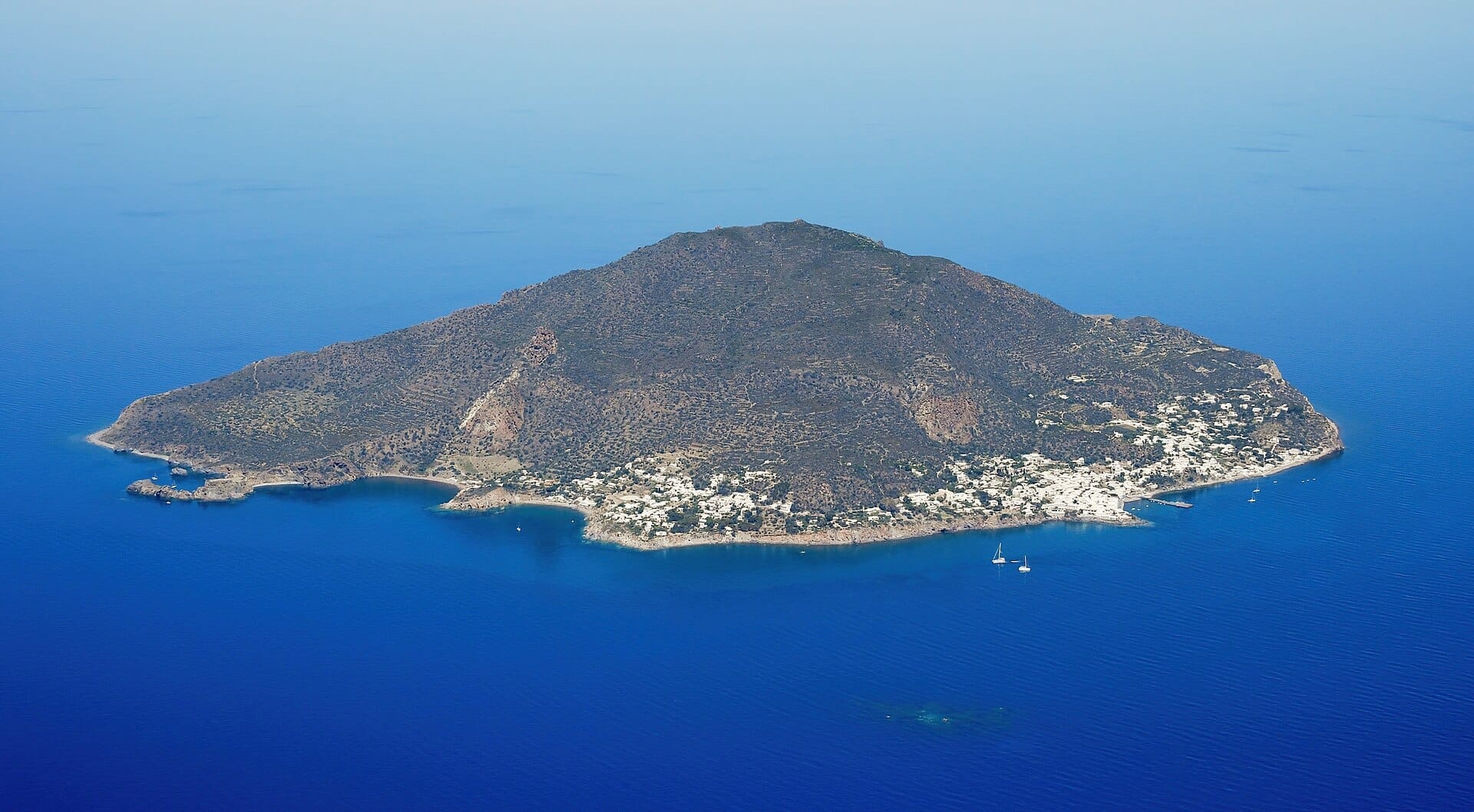
Panarea is the smallest of the seven inhabited Aeolian Islands, a car-free volcanic outcrop in the Tyrrhenian Sea with a surface area of just 3.4 km². part of a UNESCO World Heritage Site for its geological significance, it draws travelers who want crystalline water, dramatic terrain, and an atmosphere that feels genuinely removed from the mainland. It is also, by Aeolian standards, one of the priciest places to stay in Sicily.
Quick Facts
- Location
- Aeolian Islands, Città Metropolitana di Messina, Sicily, Italy
- Getting There
- Liberty Lines hydrofoil from Milazzo (approx. 2h 15min). Fly to Catania (CTA) or Palermo (PMO), then drive or bus to Milazzo.
- Time Needed
- 1 full day minimum; 2–3 nights to explore properly
- Cost
- No island entry fee. Hydrofoil from Milazzo typically from about €18 one way (verify before booking). Accommodation and dining skew expensive.
- Best for
- Couples, slow travelers, snorkelers, those wanting volcanic scenery without crowds
- Official website
- www.visitsicily.info/en/panarea
What Panarea Actually Is
Panarea Island sits in the northern Tyrrhenian Sea as part of the Aeolian archipelago, an island chain born from volcanic activity and inscribed as a UNESCO World Heritage Site in 2000 as part of the Aeolian Islands. With a surface area of just 3.4 km² and a year-round population of around 280 people, it is the smallest inhabited island in the group. Its highest point, Punta del Corvo, rises 421 meters above sea level, giving the island a silhouette that is instantly recognizable from neighboring islands.
What makes Panarea distinct within the Aeolians is not scale but character. It occupies a specific niche: upscale, unhurried, and almost entirely car-free. Visitors who arrive expecting a working fishing village find something more curated. The port area of San Pietro, the island's main settlement, has whitewashed buildings, bougainvillea draped over stone terraces, and a cafe culture that runs from mid-morning espresso through late-night aperitivo. This is not a place to rush.
Administratively, Panarea is a frazione of the comune of Lipari, which governs most of the Aeolian Islands. If you are planning a broader island-hopping trip, see our guide to the Lipari Island and the Aeolian Islands guide for context on how Panarea fits into the wider archipelago.
Getting to Panarea: The Practical Reality
There is no airport on Panarea. The only way to arrive is by sea. Milazzo, a port town on the northeast coast of Sicily, is the primary gateway. From Milazzo, Liberty Lines operates hydrofoil services to Panarea with a journey time of approximately 1 hour and 30 minutes to 2 hours and 30 minutes. One-way tickets typically start around €18–€22 per person, though prices vary by season and should be verified directly with the operator before booking.
To reach Milazzo, most travelers fly into Catania Fontanarossa Airport (IATA: CTA) or Palermo Falcone Borsellino Airport (IATA: PMO) and then make their way by road. Catania is generally the more convenient option for Milazzo, depending on connections. From Catania, Milazzo is roughly 150 km by road. Bus services from both airports to Milazzo exist but require transfers; renting a car gives more flexibility, especially if you plan to spend time in Sicily before or after the island portion of your trip.
⚠️ What to skip
Ferry and hydrofoil schedules to Panarea are significantly reduced outside the summer season (roughly October through April) and are subject to cancellation in poor weather. If you are visiting in shoulder or low season, build flexibility into your itinerary. Being stranded on Panarea is not the worst fate, but missing an onward connection can be genuinely disruptive.
Connections also exist from Lipari, Messina, Reggio Calabria, and, on some seasonal routes, Naples. Hydrofoils are faster but do not run in rough sea conditions. Slower ferries are more weather-resilient but add travel time considerably. If you are island-hopping across the Aeolians, Panarea typically slots in after Lipari or Salina, which are both larger and easier to use as a base.
Tickets & tours
Hand-picked options from our booking partner. Prices are indicative; availability and final rates are confirmed when you complete your booking.
Panarea and Stromboli mini-cruise from Taormina
From 100 €Instant confirmationFree cancellationFull-Day Panarea and Stromboli Boat Tour from Taormina
From 105 €Instant confirmationFree cancellationPanarea and Stromboli day tour from Cefalu
From 95 €Instant confirmationFree cancellationCruise to Panarea and Stromboli by night from Lipari
From 57 €Instant confirmationFree cancellation
Moving Around the Island
Non-residents cannot bring cars to Panarea, and in practice this restriction defines the entire feel of the island. The main village and port area are compact enough to cover on foot in under 20 minutes. Beyond the village, you move by walking trails or, for short transfers around San Pietro, by electric golf-cart taxis.
The island's volcanic terrain means that walking paths can be steep and uneven. Comfortable closed-toe shoes are strongly recommended for anything beyond the port area. Flip-flops are fine for the beach but will cause problems on the inland trails. Trails lead up toward Punta del Corvo and to the Bronze Age village site above Cala Junco on the southeastern side of the island. The views from the upper paths over the surrounding sea and the islets of Basiluzzo, Dattilo, and Lisca Bianca are the kind that take genuine effort to reach and feel proportionally rewarding.
💡 Local tip
Start any uphill walk in the early morning, before 9am in summer. The volcanic rock retains heat and exposed sections of trail become uncomfortable by mid-morning in July and August. Carry more water than you think you need.
The Water Around Panarea
Panarea's underwater topography is among the most interesting in the Aeolians. Shallow volcanic vents near the islets off the eastern coast release gases into the sea, creating conditions that experienced snorkelers and divers find genuinely unusual. The water clarity around the island is often excellent. Cala Junco, a cove on the southeastern edge reachable by a trail or by boat, offers calm, clear water in a sheltered setting. It is the most photographed spot on the island, and deservedly so.
There are no large sandy beaches on Panarea. The swimming areas are mostly rocky coves or small patches of coarse volcanic sand. This self-selects the visitor type: people who come for a beach holiday in the traditional sense often find it less satisfying than those who come for the snorkeling, the boat trips around the offshore islets, or simply the quality of the water itself. Water shoes are useful, both for protecting your feet and for moving over the rocky entries into the sea.
If traditional sandy beaches are a priority, the Aeolian Islands overall are not the strongest choice; you may want to compare with options covered in our best beaches in Sicily guide before committing to Panarea as your base.
Panarea by Time of Day
The rhythm of the island is notably different from the mainland. Mornings are quiet in a way that feels deliberate. The port at San Pietro sees the day's first hydrofoil typically before 9am, and there is a brief flurry of arrival activity followed by a return to stillness. Cafes open, the smell of espresso and pastry drifts through the narrow lanes, and the light on the whitewashed walls is at its most photogenic before 10am, when the sun is still low enough to create shadow and depth.
From mid-morning through early afternoon in summer, the port fills with day visitors arriving from Lipari, Salina, or other islands. The bars and waterfront restaurants get noticeably busier. If you are staying overnight, this window from roughly 11am to 4pm is a good time to be at Cala Junco or on a boat trip, away from the port area.
Late afternoon is when Panarea comes fully into its own. Day visitors depart, the light shifts to a warm amber, and the terraces of the hillside restaurants and hotels catch the last sun before it drops behind the western hills. Aperitivo hour along the port is unhurried and genuinely pleasant. The night is dark here in a way that feels unfamiliar to anyone accustomed to mainland or large-city light pollution. On a clear night, the stars are remarkable.
Historical Context: Bronze Age to UNESCO
Panarea was inhabited in the Bronze Age, and the evidence is still physically present on the island. Above Cala Junco, the remains of a Bronze Age village dating to around 1400–1300 BCE have been partially excavated and are accessible to visitors. The site includes the foundations of oval huts and has yielded ceramics that are now held in museums across the Aeolians, most significantly in Lipari. The location of the village, on a promontory with sea views in multiple directions, suggests its importance as a lookout and trading point in the prehistoric Tyrrhenian world.
The Aeolian Islands' inscription as a UNESCO World Heritage Site in 2000 recognized their value as a textbook example of volcanic island formation and ongoing geological processes. Panarea's offshore islets, particularly Lisca Bianca and Basiluzzo, are part of this volcanic system, and the submarine fumaroles near these islets are an active expression of the same forces that built the archipelago. This is not a dormant geological story; it is one that continues to unfold under the water.
For those interested in volcanic landscapes across Sicily and the Aeolians, our Sicily volcano guide provides broader context on the geological forces shaping this region, including Stromboli volcano, visible on clear nights from Panarea's upper trails.
Cost and Honest Caveats
Panarea has a reputation for being one of the most expensive of the Aeolian Islands, and that reputation is accurate. Accommodation options range from modest rooms to boutique hotels with terraces overlooking the sea, but there is almost nothing in the budget category. Dining out is similarly priced at a level that reflects the cost of shipping everything to a small island with limited resources. If you are traveling on a tight budget, Lipari or Salina offer more variety in accommodation and dining at multiple price points.
That said, the island itself costs nothing to enter. There are no admission fees, no tourist taxes paid at a gate, and no pressure to spend money beyond your accommodation and meals. You can walk the trails, swim at the coves, and watch the sunset from a public viewpoint without spending anything beyond what brought you there. The expense is in the staying, not the visiting.
ℹ️ Good to know
Panarea works well as a day trip from Lipari or Salina if budget is a concern. Arrive on the first morning hydrofoil, walk to Cala Junco, spend the afternoon at the water, and return on the late-afternoon service. This way you experience the island without paying island accommodation prices.
Travelers managing costs across the region may find useful strategies in our Sicily on a budget guide, which covers options across the main islands and the Aeolian archipelago.
Insider Tips
- The trail to Cala Junco from San Pietro takes about 25–30 minutes on foot. Go before 9am or after 5pm in July and August to avoid the midday heat and the bulk of day-trippers who arrive by boat.
- Book the last hydrofoil back to Milazzo rather than the second-to-last if you are on a day visit. This gives you the late-afternoon light for photos and the genuine pleasure of the port quieting down after day visitors leave.
- The islets east of Panarea (Basiluzzo, Lisca Bianca, Dattilo) are best experienced by renting a small boat from the port. Several operators offer half-day rentals; the submarine fumaroles near Lisca Bianca are visible in calm conditions with basic snorkeling gear.
- Panarea can feel crowded in July and August despite its small size, particularly between 11am and 4pm when day visitors from other islands are present. Visiting in June or September gives you the same weather and water conditions with noticeably fewer people.
- The upper trails near Punta del Corvo offer a direct line of sight to Stromboli, around 22 km to the northwest. On clear evenings, you can sometimes see the glow of Stromboli's eruptions from this vantage point after dark.
Who Is Panarea For?
- Couples and honeymooners looking for a small-scale, romantic island setting without the crowds of larger destinations
- Snorkelers and divers interested in volcanic underwater topography, including active submarine fumaroles
- Slow travelers who want to walk trails, swim, and read on a terrace rather than tick attractions off a list
- Day-trippers based on Lipari or Salina who want a single focused excursion to a distinctive island
- Photographers drawn to whitewashed architecture, volcanic sea stacks, and exceptional evening light
Nearby Attractions
Other things to see while in Aeolian Islands:
- Lipari
Lipari is the largest and most accessible of Sicily's Aeolian Islands, a UNESCO World Heritage volcanic archipelago in the Tyrrhenian Sea. From its towering citadel and world-class archaeological museum to obsidian-streaked cliffs and crystalline coves, Lipari rewards travelers who want more than a beach stopover.
- Salina
Salina is the second-largest of the Aeolian Islands, shaped by twin extinct volcanoes and unusually lush vegetation compared to its neighbours. It produces the archipelago's finest Malvasia dessert wine, grows some of Sicily's best capers, and attracts visitors who want genuine island life over day-trip crowds.
- Stromboli
Stromboli is one of the world's most persistently active volcanoes, erupting small bursts of lava and ash typically every 20–30 minutes around the clock. Part of the Aeolian Islands UNESCO World Heritage Site, it draws travelers willing to reach a genuinely remote place in exchange for an experience that is difficult to match anywhere in Europe.
- Vulcano
Vulcano is the southernmost of Sicily's Aeolian Islands and the one that delivers the archipelago's volcanic drama most directly. From the rim of the Gran Cratere to the sulphurous mud baths at Porto di Levante, this compact island packs an intense sensory experience into a small footprint. It rewards a full day, and for those who stay overnight, it reveals a quieter, more elemental side after the day-trippers leave.