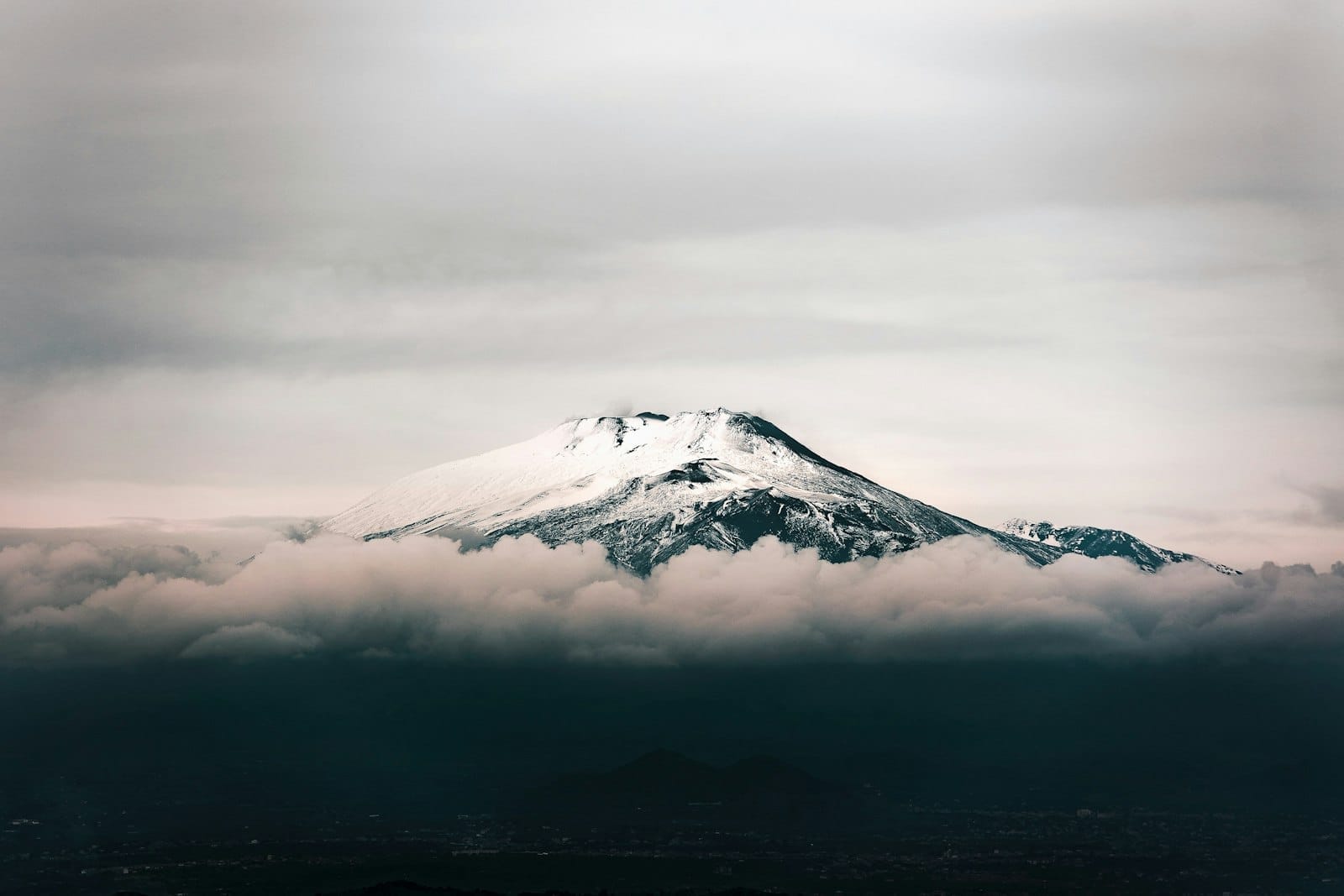
Mount Etna dominates eastern Sicily from every angle, rising to around 3,403 metres above the Catania plain as Europe's largest and most active volcano. Spread across 17 municipalities in the province of Catania, it is at once a UNESCO World Heritage Site, an agricultural landscape of extraordinary richness, and one of the most dramatic natural environments in the Mediterranean.
Mount Etna is not a neighbourhood in any conventional sense: it is a living volcano that shapes the identity of an entire region. Snow-capped in winter, smoking year-round, and surrounded by towns that have been burying their streets in lava and rebuilding for centuries, Etna demands a different kind of travel planning than anywhere else in Sicily.
Orientation: Understanding the Etna Zone
Mount Etna sits in the eastern corner of Sicily, in the province of Catania, with its summit craters reaching approximately 3,403 metres above sea level. That figure shifts slightly after every significant eruption, a reminder that this is a landscape actively rewriting itself. The volcano's slopes extend across 17 municipalities, from Catania on the southeastern foot to Randazzo in the north and Bronte in the west, each town occupying a different character of terrain.
The easiest mental map is to think of Etna as a clock face. Catania sits at roughly six o'clock, giving access to the southern and southeastern slopes via the town of Nicolosi. Linguaglossa and Piedimonte Etneo serve the northeastern flank, around ten o'clock. Randazzo anchors the northern approach, and Bronte, famous for its pistachios, sits at roughly nine o'clock on the western side. Each access point leads to different terrain, different altitudes, and a noticeably different microclimate.
The UNESCO-inscribed property covers the volcano and its surrounding slopes as a single entity rather than any individual town district. What this means practically is that the Etna experience is distributed: you sleep in one of the gateway towns, drive or take a cable car or bus up to the crater zones, and descend the same day. The summit area itself has no permanent residents.
ℹ️ Good to know
The summit craters are not a fixed destination. The altitude, access routes, and permitted approach zones change depending on volcanic activity. Always check current conditions with the Etna visitor authorities or your guide operator before planning summit access.
Character and Atmosphere: What Etna Actually Feels Like
Nothing fully prepares you for the scale of the landscape. Standing at the lower cable car station on the southern side, looking up toward the summit craters with plumes of gas catching the light, the mountain reads as something geological and indifferent in a way that the neat streets of Catania below do not. The lava fields at mid-altitude are completely silent in the mornings: no birdsong, no wind, just the crunch of hardened basalt underfoot and the smell of sulfur drifting down from above.
Lower on the slopes, between roughly 700 and 1,200 metres, the character changes entirely. This is where the volcanic soil produces some of the best agricultural land in Sicily. Vineyards producing Nerello Mascalese, pistachio groves around Bronte, citrus orchards near Zafferana Etnea, and chestnut forests that turn amber in October all sit within a short drive of each other. In spring, almond blossom competes with the lingering snow on the higher reaches, and the contrast is genuinely striking.
By mid-morning in summer, tour groups from Catania and Taormina begin arriving at the main southern access point near Rifugio Sapienza, the main mountain refuge on the southern slope at around 1,900 metres. By early afternoon this area is crowded. The northern slope, accessed through Linguaglossa or Piano Provenzana, tends to be quieter on any given day, and the terrain there has a rawer quality, with extensive lava flows from the 2002 eruption still visible and largely uncolonized by vegetation.
After dark, the mountain shows a different face entirely. When Etna is in an active phase, the glow from the summit craters is visible from Catania and from as far as the Aeolian Islands on clear nights. The towns on the slopes, particularly Zafferana Etnea and Nicolosi, are quiet by nine in the evening, oriented toward early rising, agricultural rhythms, and the kind of calm that comes from living at altitude.
What to See and Do
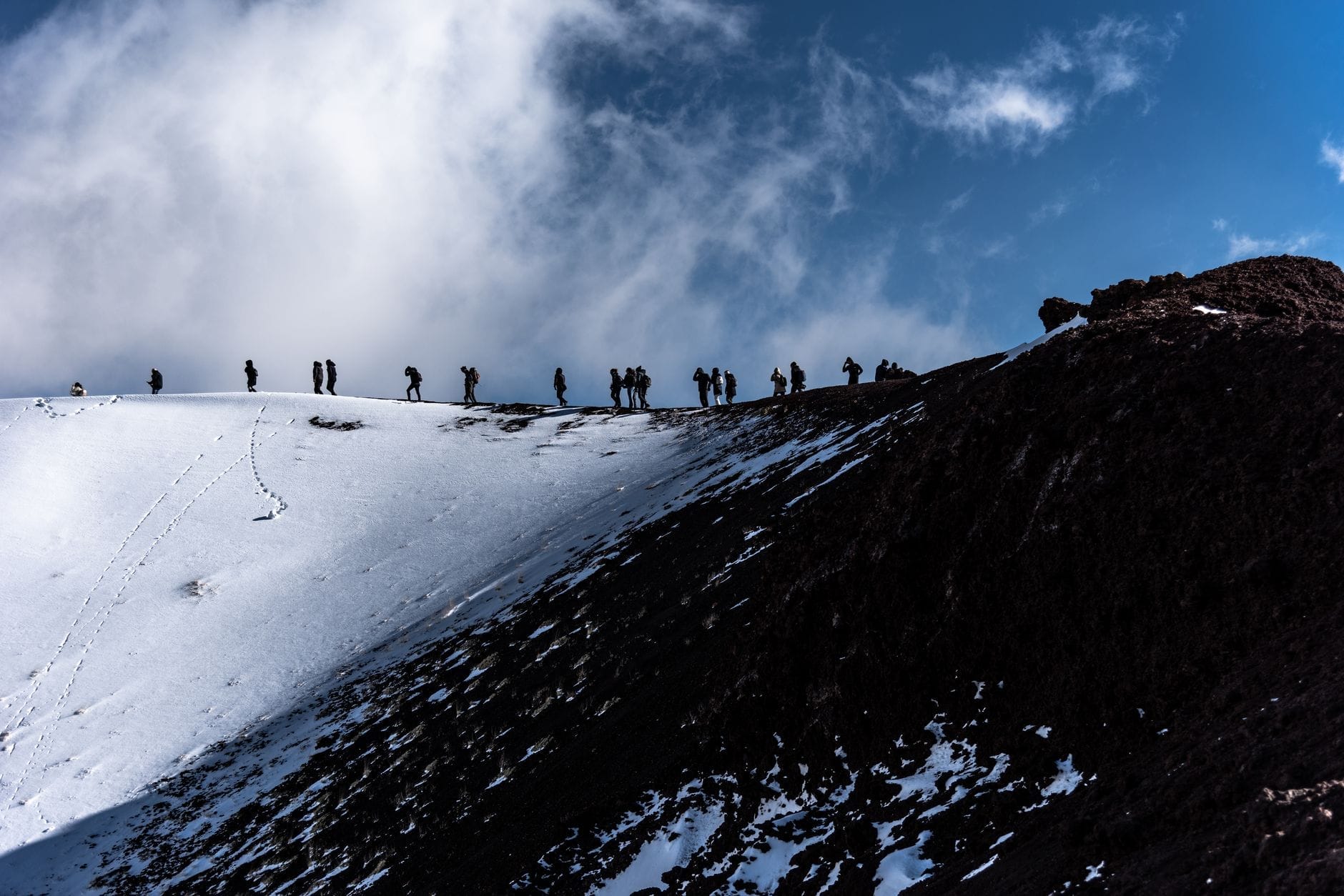
The most direct way to experience the upper volcano is via the cable car and 4x4 minibus combination that runs from Rifugio Sapienza on the southern slope. This route takes visitors to around 2,900 metres, where guided walks approach the summit craters. The Southeast Crater and Bocca Nuova Crater are the two most frequently active vents, and the approach zones vary depending on current eruption status. Detailed information on Etna volcano trails covers the main hiking routes for different fitness levels and seasons.
Independent hiking is possible on the lower and mid-altitude slopes without a guide. The network of marked trails covers a wide range of terrain: old lava tubes, forested paths through the Etna Regional Park, panoramic ridges, and historic crater cones from past eruptions. The Etna Regional Park (Parco dell'Etna) administers much of the protected land on the slopes and provides maps and trail information at its offices in Nicolosi.
Southern approach: Cable car from Rifugio Sapienza (around 1,900m) to approx 2,500m, then 4x4 minibuses to higher zones; guided summit walks available
Northern approach: Piano Provenzana near Linguaglossa, with trails through the dramatic 2002 lava field
Circumetnea railway: A narrow-gauge railway loops around the base of the volcano, connecting Catania to Riposto via Randazzo and Bronte; more scenic journey than practical transport
Etna wine tours: Several estates on the eastern and northern slopes offer tastings of volcanic-soil wines, particularly Nerello Mascalese reds and Carricante whites
Bronte pistachio groves: Best visited in September during harvest, with several farms offering tours and direct sales
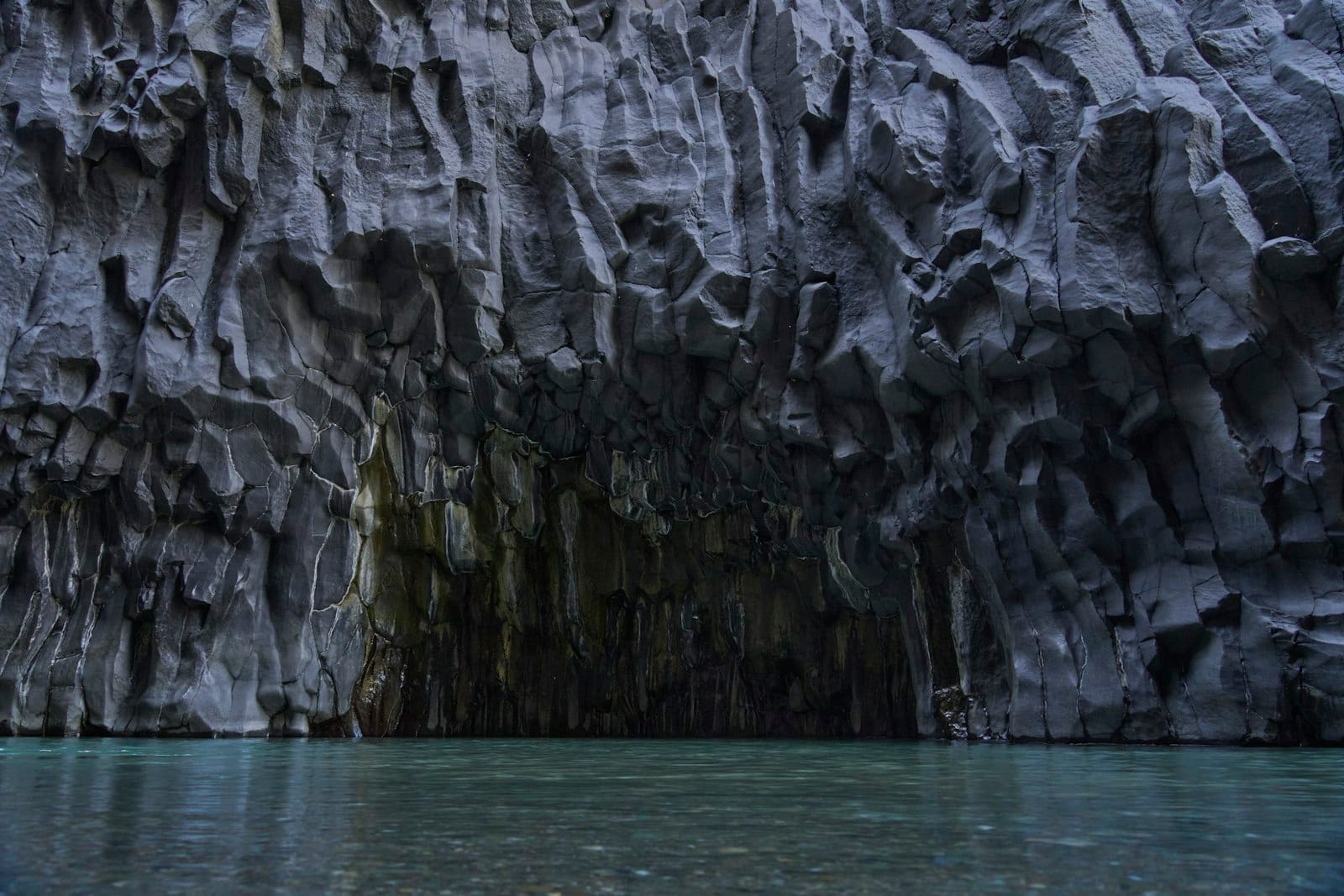
Lava tube caves: Some guided tours enter accessible lava tubes in the mid-altitude zone
Etna fits naturally into a wider eastern Sicily itinerary. The volcano is less than an hour from Taormina and around 30 minutes from central Catania by car, which makes it workable as a day trip from either base. If you plan to spend more time on the slopes, staying overnight in one of the gateway towns changes the experience significantly: you get the mountain at quieter hours, which is when it is most worth having.
⚠️ What to skip
Volcanic activity on Etna can escalate rapidly. In August 2023, activity at the summit craters prompted authorities to raise the Aviation Color Code to its highest level. Access to crater zones is restricted during active phases. Check the Italian Civil Protection Department (Protezione Civile) and the National Institute of Geophysics and Volcanology (INGV) for current status before visiting.
Eating and Drinking on the Slopes
The towns ringing Etna's lower slopes produce ingredients that appear across Sicilian cooking at their best: pistachios, honey, citrus, mushrooms, game, and extraordinary wine. This is worth understanding before you eat anywhere near the mountain, because the quality of what is grown here is genuinely high. For broader context on what and how to eat in Sicily, the Sicily food guide covers regional specialties in depth.
Zafferana Etnea, on the eastern slope at around 600 metres, has a small but good local restaurant scene focused on traditional Sicilian dishes made with local produce. The town is particularly known for its honey production, and you will find honey-based products in the local shops and markets. It also hosts an autumn honey festival each October that draws visitors from across the island.
Bronte, on the western slope, is where Sicilian pistachio culture is most concentrated. The town's pistachios, identifiable by their intense green colour and complex flavour, end up in pasta sauces, pesto, pastries, and gelato across the island. In Bronte itself, several bars and pasticcerie sell pistachio products at source: pistachio granita in the morning with a brioche is the standard local breakfast and one of the more memorable things you can eat on a visit to Etna.
Etna's wines deserve particular attention. The volcanic soil at altitude produces wines with a freshness and mineral character that differs markedly from lower-altitude Sicilian viticulture. A number of estates on the northeastern slope around Milo, Passopisaro, and Solicchiata have developed serious reputations over the past two decades. Some offer cellar visits and tastings by appointment. Pairing an afternoon at an Etna winery with the general Sicily wine guide gives useful context for understanding what makes this appellation distinct.
At altitude, the options narrow considerably. Rifugio Sapienza has a bar and a restaurant serving straightforward mountain food, adequate for warming up after a morning on the crater trails but not a culinary destination. The 4x4 transfer zones and higher elevations have no facilities beyond what guides carry. Plan accordingly and eat well in the gateway towns before or after the mountain.
Getting There and Around
Catania is the gateway city for most Etna visits. Catania-Fontanarossa Airport (IATA: CTA) sits around 4-5 kilometres south of the city centre and receives direct flights from across Europe. From the airport, the ALIBUS shuttle connects to the city centre and the central train station. Hiring a car at the airport is the most practical option for anyone planning to explore the volcano's different sides, since public transport to the higher slopes is limited.
From Catania, the southern slope access point near Nicolosi is approximately 18-20 kilometres by road, and Rifugio Sapienza is around a further 17 kilometres uphill. Without a car, AST buses run from Catania to Nicolosi, and some seasonal bus services continue up to Rifugio Sapienza on the southern side. Check current schedules with AST (Azienda Siciliana Trasporti) before relying on these routes.
The Ferrovia Circumetnea (FCE) is a narrow-gauge railway that loops around the base of the volcano, starting at Catania's Borgo station and ending at Riposto on the coast, passing through Adrano, Bronte, Randazzo, and Linguaglossa along the way. The journey takes most of a day and the views across the lower slopes are consistently good. This is not a route designed for getting up the mountain efficiently but it is one of the more enjoyable ways to understand the geography of the entire Etna zone.
💡 Local tip
A hire car is strongly recommended for visiting multiple sides of the mountain. The circumferential SP92 and connecting provincial roads allow you to move from Nicolosi to Linguaglossa to Randazzo in a single day, experiencing dramatically different landscapes as you go. Without a car, you are largely limited to the southern approach.
For visitors arriving in Catania and using it as a base, the city also offers good access to other parts of eastern Sicily. The day trips from Catania guide outlines how Etna fits alongside other destinations like Taormina, Siracusa, and the Alcantara Gorge in a multi-day itinerary.
Where to Stay
Most visitors to Etna stay either in Catania or Taormina and visit the volcano as a day excursion. Both work perfectly well as bases, particularly if you are also planning to see other parts of eastern Sicily. The trade-off is that you lose the early morning hours on the mountain, when the crater zones are quietest and the light on the lava fields is most striking.
Staying on the slopes themselves is a genuinely different experience. Nicolosi, at around 700 metres on the southern side, has the widest choice of accommodation including a handful of small hotels and agriturismi. It functions as the main service town for the southern approach and has a modest but functional range of restaurants and shops. Zafferana Etnea on the eastern slope is a more atmospheric choice, a proper hill town with a good piazza, pleasant walking, and an easier pace than anything you will find in Catania.
For wine-focused visitors or those wanting a quieter, more rural experience, the agriturismi and small wine estates on the northeastern slope around Milo and Linguaglossa offer accommodation within the vineyards. These are typically small-scale operations with limited rooms, so booking well in advance is essential, particularly in the September harvest period and during summer.
Randazzo, on the northern slope at around 750 metres, is the largest town in the Etna interior and has strong medieval architecture built from the local black lava stone. It sees far fewer visitors than the southern access towns and has a genuinely local character. If you want to experience Etna as the communities living around it do rather than as a tourist attraction, Randazzo is the most instructive base. More general guidance on choosing where to sleep across the island is available in the where to stay in Sicily guide.
Safety and Practical Considerations
Etna is the most active volcano in Europe and behaves accordingly. Eruptions are frequent and can range from minor ash emissions to significant lava flows and explosive crater activity. The key practical point for visitors is that access zones to the summit area change without much notice during active phases, and the difference between a clear day on the crater rim and a closed route can be a matter of hours.
For summit visits, going with a licensed guide is strongly recommended rather than required at lower altitudes, but the trails above the cable car upper station are a genuine maze of lava flows and poorly marked paths. Visibility can drop rapidly in cloud or ash, and the terrain is unforgiving. Guides know current conditions and the routes that are actually open on any given day.
Temperature drops sharply with altitude. At the summit craters in summer, air temperatures can be 15-20 degrees Celsius cooler than in Catania below, and wind makes the effective temperature lower still. In winter, the upper slopes are covered in snow and professional equipment is required for summit approaches. Even in June and September, a proper jacket, sun protection, and sturdy footwear are essential above 2,000 metres.
⚠️ What to skip
Do not approach active lava flows or enter restricted zones, even if the path appears open. Monitor real-time activity reports from the INGV (Istituto Nazionale di Geofisica e Vulcanologia) at ingv.it. The Aviation Color Code system provides a quick read on current eruption intensity: Red means significant activity that may affect access and flight paths.
For general travel safety guidance covering all of Sicily, the Sicily safety guide is a useful reference alongside the volcano-specific information from INGV and Protezione Civile.
TL;DR
Mount Etna covers 17 municipalities in the province of Catania and is best understood as a landscape to explore rather than a single destination to tick off.
The southern approach via Nicolosi and Rifugio Sapienza is the most accessible but also the most crowded; the northern slope through Linguaglossa offers a quieter and more dramatic alternative.
A hire car is essential for anyone wanting to explore more than one side of the volcano; public transport links are limited above the gateway towns.
Volcanic activity can restrict access zones with very little notice; always check current conditions with INGV before planning summit visits.
Best suited to travellers interested in volcanic landscapes, hiking, Etna wine and local agriculture, or anyone wanting to understand why this mountain defines the identity of eastern Sicily. Not the right base for those focused on beaches, baroque architecture, or urban culture.
Seven volcanic islands, one UNESCO designation, and more logistical decisions than most travelers expect. This guide covers every practical detail you need to plan a trip to the Aeolian Islands, from choosing which islands to visit to navigating seasonal ferry schedules.
The Arab-Norman UNESCO trail covers nine extraordinary monuments across Palermo, Monreale, and Cefalù, inscribed in 2015 for their remarkable fusion of Western, Arab, and Byzantine architecture. This guide covers every site, practical logistics, and the historical context that makes this one of the most intellectually rewarding itineraries in the Mediterranean.
Sicily's Val di Noto is one of Europe's most remarkable architectural achievements: eight towns rebuilt in coordinated Late Baroque style after a catastrophic 1693 earthquake, now a single UNESCO World Heritage Site. This guide covers all eight towns, how to get between them, what to prioritise, and when to go.
Sicily's coastline stretches over 1,000 km across the Tyrrhenian, Ionian, and Mediterranean seas, producing an extraordinary range of beaches. This guide covers the finest sandy bays, volcanic coves, nature reserves, and island escapes the island has to offer.
Sicily was once the heart of Magna Graecia, and the ruins left behind are among the finest ancient Greek monuments anywhere in the world. This guide covers the essential sites, from vast temple complexes to forgotten quarries, with practical advice on what to see and when to go.
Sicily rewards visitors year-round, but timing your trip correctly makes a significant difference. This guide breaks down every season by temperature, crowds, prices, and what's actually worth doing, so you can plan with confidence.
Catania sits at the centre of eastern Sicily, putting some of the island's greatest attractions within easy reach. This guide covers the best day trips from Catania, from the volcanic trails of Etna to the Baroque jewels of the southeast and the ancient ruins of Siracusa.
Palermo sits at the centre of western Sicily, putting an extraordinary range of landscapes, ancient sites, and coastal escapes within a few hours. This guide covers the best day trips from Palermo, from the world's greatest medieval mosaics at Monreale to the Greek temples of Agrigento and the untouched coves of the Zingaro Nature Reserve.
Sicily is large, geographically varied, and not always easy to navigate without the right plan. This guide covers every transport option available, from renting a car to catching intercity buses, so you can move around the island confidently and without wasted time.
Sicily rewards those who look beyond Taormina and Palermo's grand monuments. This guide covers 20 lesser-known attractions across the island, from prehistoric cliff tombs and abandoned earthquake towns to wild coastal reserves and ancient quarries frozen in time.
Sicily is Italy's largest island and the Mediterranean's most historically layered destination. This guide cuts through the hype to give you a clear-eyed look at what the island genuinely offers, what it costs, when to go, and what tends to disappoint — so you can make an informed decision.
Sicily rewards the discerning traveler with a depth that few Mediterranean islands can match. This guide covers the finest luxury hotels, bespoke experiences, and practical logistics for planning a high-end trip to the largest island in the Mediterranean.
Seven days in Sicily is enough to cover the island's greatest hits — Greek temples, baroque city centres, volcanic landscapes, and some of the best street food in Italy. This guide maps out a logical east-to-west route with realistic transport times, seasonal advice, and honest notes on what to skip.
Sicily has four main airports, and choosing the right one can save hours of overland travel. This guide covers Palermo (PMO), Catania (CTA), Trapani (TPS), and Comiso (CIY) in detail, including airport-to-city transfers, route availability, and which gateway suits each part of the island.
Sicily rewards self-drive travel more than almost any other Mediterranean destination. This guide covers everything you need to plan a confident road trip: the best routes, realistic driving times, car rental tips, ZTL zone warnings, seasonal advice, and the stops that genuinely justify the detour.
Sicilian food is not Italian food with a suntan. It is a centuries-old fusion of Greek, Arab, Spanish, and Norman influences, built around seafood, citrus, almonds, ricotta, and durum wheat. This guide covers every dish worth eating, where to find the best versions, and the food customs that will shape every meal you have on the island.
Francis Ford Coppola brought the Corleone saga to life across the hillside villages and historic streets of Sicily. This guide covers every key filming location from all three films, how to reach them, what to expect on the ground, and how to avoid the most common tourist mistakes.
Sicily rewards couples with baroque towns, volcanic landscapes, secluded beaches, and some of the most atmospheric historic centers in the Mediterranean. This guide cuts through the generic advice to tell you exactly where to go, when to go, and what actually makes Sicily special for two.
October is one of the smartest months to visit Sicily. Temperatures ease off from the summer heat, the tourist crush fades, and the island's food and festival calendar comes alive. Here's everything you need to plan your trip well.
Summer in Sicily runs from June through September and brings hot weather, packed beaches, vibrant festivals, and peak travel prices. This guide covers everything you need to know: when to go, what to expect from the heat and crowds, which beaches and islands are worth it, and how to plan smarter than most visitors do.
Sicily is far more than a single island. From the volcanic Aeolian archipelago in the Tyrrhenian Sea to the crystal-clear waters of the Egadi Islands off Trapani, this guide covers every ferry route, island, cost, and logistical detail you need to plan a serious island-hopping trip from Sicily.
Sicily is one of the most rewarding destinations in the Mediterranean, and it doesn't have to cost a fortune. This guide breaks down real daily costs, the cheapest times to visit, where to eat well for under €10, and how to see the island's best sights without draining your account.
The Opera dei Pupi is one of Sicily's most distinctive cultural exports — a UNESCO-recognised marionette tradition rooted in medieval chivalric epics, performed by family troupes across the island. This guide covers the history, the two rival schools, where to see performances in Palermo, Catania, and Siracusa, and how to get the most out of attending a show.
Sicily is one of southern Europe's most rewarding destinations, and it is genuinely safe for tourists. This guide cuts through the stereotypes, explains what the real risks are, identifies the scams that do happen, and gives you practical tools to visit with confidence.
Sicily produces some of Italy's most distinctive street food, rooted in centuries of Arab, Norman, and Spanish influence. This guide breaks down the essential dishes by city, the markets where locals actually eat them, what to pay, and what to skip.
Sicily sits on one of the most volcanically active zones in Europe. This guide breaks down what to expect from Etna, Stromboli, and Vulcano — three very different volcanic experiences — covering access, trails, safety, and the best time to visit each one.
Both Sicily and Sardinia are autonomous regions of Italy with distinct identities, landscapes, and travel experiences. This guide breaks down the real differences in culture, beaches, food, costs, and logistics so you can choose the right island for your trip.
Sicily is Italy's largest wine region by vineyard area, with 23 DOCs, one DOCG, and a lineup of native grapes that rival anywhere in Europe. This guide breaks down the key appellations, the grapes behind them, and exactly how to plan a tasting trip across the island.
Sicily delivers an extraordinary range of family experiences, from volcanic landscapes and ancient Greek ruins to puppet theatre and sweeping beaches. This guide breaks down the best kid-friendly activities, practical logistics, seasonal timing, and practical advice to help families plan a smooth, memorable trip.
Sicily rewards travelers with an extraordinary range of experiences: ancient Greek ruins, active volcanoes, UNESCO Baroque towns, Norman cathedrals, and coastline that stretches nearly 1,000 km. This guide covers the best things to do in Sicily across every corner of the island, with practical advice on timing, costs, and how to avoid the common pitfalls.
Sicily rewards travelers who give it time. This complete 14-day itinerary covers the island's east coast highlights, Baroque south, ancient Greek south, and the layered history of the west, with practical routing advice, seasonal tips, and practical guidance on trade-offs.
Sicily is the Mediterranean's largest island, and picking the right base makes or breaks your trip. This guide covers the best towns to stay in across every corner of the island, from the baroque southeast to the volcanic northeast, with practical advice on prices, transport, and seasonal trade-offs.