Alcantara Gorge: Sicily's Basalt Canyon Carved by Etna
The Alcantara Gorge (Gole dell'Alcantara) is a dramatic basalt canyon near Mount Etna, where the Alcantara River has cut through ancient lava flows to create walls up to around 25 metres high. It is one of Sicily's most striking geological sites, open seasonally between April and early November.
Quick Facts
- Location
- SS185, Motta Camastra, Province of Messina, Sicily — between Castiglione di Sicilia and Motta Camastra, roughly 20 km inland from Taormina
- Getting There
- By car from Catania via A18 (exit Giardini Naxos), then SS185 inland. Summer Interbus service from Taormina (several daily in high season, tickets around a few euros). No direct train.
- Time Needed
- 2 to 3 hours for the gorge floor and surrounding trails; half a day if combining with the botanical path above
- Cost
- Municipal stairs: €2. Private Parco Fluviale lift: €8. Overlook botanical trail: free. Prices subject to change — verify at entrance.
- Best for
- Geology enthusiasts, photographers, families with older children, Etna day-trippers seeking a contrast to volcanic terrain
- Official website
- www.parcoalcantara.it
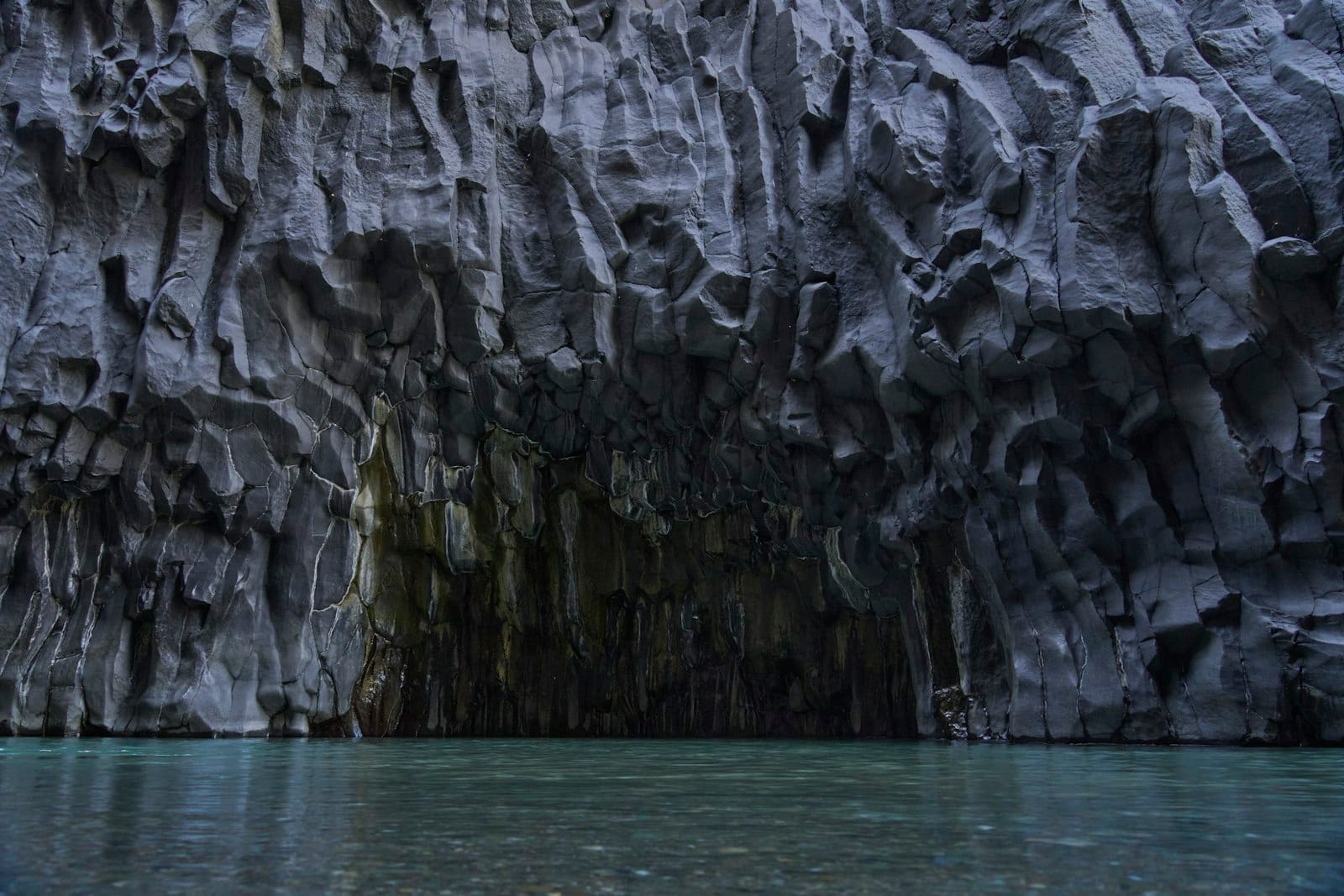
What Is Alcantara Gorge?
The Alcantara Gorge, known in Italian as the Gole dell'Alcantara, is a basalt canyon carved over millennia by the Alcantara River as it cuts through solidified lava flows originating from Mount Etna. The eruptions responsible for the lava that forms the gorge walls are commonly dated to several thousand years ago, though precise ages in popular sources vary and are not firmly established. Over time, the river eroded a narrow, winding channel through the rock, producing the columnar basalt formations visible today. The walls in the main tourist section reach approximately 25 metres in height, and at the canyon's tightest points the gap between them is as narrow as two metres.
The Alcantara River itself travels roughly 50 kilometres from the Nebrodi Mountains to the Ionian Sea near Giardini Naxos, but the gorge section near Motta Camastra is where the landscape becomes most dramatic. The combination of dark, geometric basalt columns, clear cold water, and the narrow corridor of sky overhead makes this one of the most visually distinctive natural sites in Sicily.
For context on the volcanic geology that created the gorge, the Mount Etna trails offer a complementary perspective on the same lava fields from above. The gorge and the volcano form a logical pairing for anyone spending more than a day in the Mount Etna area.
Two Ways Down: Public Stairs vs. Private Lift
There are two separate access points to the gorge floor, and understanding the difference is important before you arrive. The municipal entrance uses a long, steep stone staircase descending to the riverbed. The fee here is €2. It is the more popular choice among travellers who want to minimise costs, but the descent is not trivial: the steps are uneven in places, the walls are damp, and the return climb back up can be tiring in summer heat. Footwear with grip is essential.
The private Parco Fluviale dell'Alcantara entrance charges €8 and offers a lift, giving access to the river without navigating the staircase. This is a more practical option for visitors with limited mobility, families with young children, or anyone who prefers a more managed experience. The private park also includes services such as wetsuit rental for wading into the river, which is worth knowing in advance if you plan to go further into the water.
💡 Local tip
If you plan to wade into the river, water temperatures stay cold even in summer. Waterproof shoes or sandals with straps are strongly recommended. Wetsuits can be rented at the Parco Fluviale entrance if you want to go deeper into the canyon.
A third option exists for visitors who cannot or do not want to go down to the river at all: a free municipal access point at the top of the gorge connects to a botanical trail that runs along the canyon rim. From here you can look down into the gorge without descending. The views are good, though you lose the immersive sense of scale that comes from standing on the riverbed between the basalt walls.
Tickets & tours
Hand-picked options from our booking partner. Prices are indicative; availability and final rates are confirmed when you complete your booking.
Mount Etna and Alcantara Gorges guided tour from Taormina
From 100 €Instant confirmationFree cancellationQuad bike excursion to the Alcantara Gorges
From 75 €Instant confirmationFree cancellationFull-Day Mount Etna Excursion to 2900 mt and Alcantara Gorges
From 105 €Instant confirmationFree cancellationFull-Day Mount Etna Excursion to 1900 mt and Alcantara Gorges
From 55 €Instant confirmationFree cancellation
Opening Hours and When to Visit
The gorge is open seasonally. The Alcantara River Park (municipal access) operates as follows in 2026: April to May, 08:30 to 18:30; June to September, 08:30 to 19:00; October, 09:00 to 17:00. The site generally closes from early November through to the week before Easter. Hours for the private park entrance may differ slightly. Always verify current hours before travelling, as seasonal schedules shift annually.
The single most useful timing advice for Alcantara Gorge is to arrive early in the morning. By late morning in July and August, the access paths fill with visitors from Taormina and Catania on day trips. The canyon is narrow enough that large groups make photography and quiet contemplation difficult. Arriving at opening time, particularly on weekdays, gives you the best chance of having the lower gorge to yourself for at least the first hour.
September and early October offer a strong compromise: the summer crowds thin considerably, the water is still accessible, afternoon light reaches into the canyon at a lower angle, and the surrounding countryside takes on a warm tone. If you are planning a broader trip, the Sicily in October guide has useful context on conditions across the island during this period.
⚠️ What to skip
The gorge can flood when river levels rise, particularly after rain or during spring snowmelt from Etna. Access to the riverbed may be restricted or closed during high water periods. Check local conditions if visiting in spring or after significant rainfall.
The Experience at River Level
Standing on the riverbed inside the Alcantara Gorge, the first thing most visitors notice is the cold. The water running over the smooth basalt stones is clear and noticeably chilled even in August, fed from higher elevations and channelled through rock that blocks direct sunlight for much of the day. The second thing is the sound: the river generates a constant low rush that absorbs most external noise, and the canyon walls create a faint echo that makes conversation feel strangely close.
The basalt columns are the visual centrepiece. They form in regular hexagonal or pentagonal patterns, stacking vertically like compressed pipes and creating a surface texture that looks almost manufactured. In wet conditions the rock is nearly black; in direct sunlight it shifts toward dark grey with faint silver tones where the stone has been worn smooth by the river. Mosses and ferns cling to the shaded sections of wall where moisture collects, adding a narrow band of green against the dark stone.
Wading into the canyon is possible, and many visitors do it. The riverbed is uneven underfoot and the current is not aggressive in summer, but the water rises to waist height in some sections. The further into the canyon you go, the narrower the walls become and the more the light diminishes. Most casual visitors stop within the first 50 to 100 metres of the main accessible section. Those with wetsuits and confidence can explore further, though organised guided canyon activities are available if you want to go deeper with proper equipment.
Getting There and Practical Logistics
The gorge sits along the SS185 state road at Motta Camastra, Province of Messina. By car from Catania, take the A18 motorway in the direction of Messina and exit at Giardini Naxos, then follow the SS185 inland toward Francavilla di Sicilia and Motta Camastra. Total driving time from Catania is roughly 50 to 60 minutes depending on traffic. From Taormina, the drive is shorter, approximately 20 kilometres along the same SS185, taking around 30 minutes.
Parking is available near both entrances, though the spaces closest to the access points fill quickly on summer mornings. The SS185 road through the Alcantara valley is one of the more scenic inland drives in eastern Sicily. It connects naturally with Giardini Naxos on the coast and forms part of a logical route between the coast and the Etna foothills.
Without a car, the most practical option is the seasonal Interbus service from Taormina, which runs approximately three times daily in summer with a single ticket around €3. This is a workable option if your schedule is flexible, but check the return departure times carefully before you go down to the river, as missed buses in this area leave you with limited alternatives.
ℹ️ Good to know
The gorge is located in the Province of Messina, not the Province of Catania, even though Catania is the most common starting point for visits. This occasionally causes confusion with navigation apps — search for Motta Camastra or use the SS185 address directly.
Photography at Alcantara Gorge
The gorge presents a genuine photographic challenge. The interior of the canyon receives limited direct sunlight, meaning contrast between the dark wet rock and the bright sky above is extreme during midday. Early morning visits produce softer light that penetrates further into the canyon. A wide-angle lens emphasises the height and compression of the walls effectively. If you are shooting on a smartphone, HDR mode handles the exposure variation better than standard mode.
The most compelling compositions are typically found at the junction where the narrow gorge widens slightly and the basalt columns are most clearly structured. Looking upward from river level with the water in the foreground captures the scale in a way that overhead shots cannot. Waterproof protection for camera equipment is sensible if you plan to wade, as spray from the river reaches further than expected when the water level is higher.
Combining Alcantara Gorge with Other Nearby Stops
The gorge works well as part of a broader day out from Taormina or Catania. The Greek Theatre in Taormina is roughly 30 minutes away by car and makes a logical pairing: ancient human engineering set against equally dramatic natural geology. The town of Castiglione di Sicilia, just a few kilometres up the valley, is a quiet hilltop settlement worth a brief stop for coffee and a view over the Alcantara valley before or after the gorge.
For those with a full day available, the gorge can be the lower bookend to a morning on Etna. The day trips from Catania guide outlines several routes that include both Etna and the Alcantara valley in a single itinerary.
Honest Assessment: Expectations vs. Reality
Alcantara Gorge is genuinely worth the journey, but it is also a short visit. The accessible section of the gorge floor covers a few hundred metres, and most visitors reach the natural stopping point within an hour of descending. If you are travelling specifically to wade through the canyon for an extended period, it is worth looking into organised guided excursions that allow access to sections beyond the standard tourist entry zone.
In high summer, the site can feel crowded and slightly theme-park-like near the private park entrance, where sun loungers, snack bars, and wetsuit rental stations create an atmosphere that contrasts with the raw geology. This is not a flaw exactly, but it is a different experience from arriving at dawn with few other people present. Visitors who find commercialised natural attractions frustrating should plan accordingly: an early start or a shoulder-season visit resolves much of this.
Those expecting a multi-hour hiking experience may be underwhelmed if they only explore the main gorge floor. The botanical trail above the gorge rim and the broader Alcantara valley have more to offer, but they require separate time and some advance research to appreciate fully. For visitors primarily interested in the basalt canyon, two to three hours is typically sufficient.
Insider Tips
- Arrive at opening time on a weekday in July or August. The canyon fills surprisingly fast once tour buses from Taormina begin arriving mid-morning. An 8:30 arrival gives you the lower gorge in near-silence.
- The municipal staircase entrance saves money but demands physical effort on the way back up. If the heat or the climb is a concern, the private park lift is worth the extra few euros.
- Water shoes or old trainers are more practical than sandals for the riverbed. The rocks underfoot are slippery and uneven, and standard flip-flops will come loose in the current.
- The free botanical trail along the canyon rim is rarely mentioned in visitor guides but offers elevated views along the gorge length and a quiet walk if the riverbed is too crowded or the water level is high.
- If you are driving, the SS185 through the Alcantara valley is worth treating as an attraction in its own right. The road passes through citrus groves, vineyard terraces, and small lava-stone villages that reward a slow pace rather than a direct dash to the gorge.
Who Is Alcantara Gorge For?
- Geology and nature enthusiasts who want to see the physical results of Etna's ancient eruptions up close
- Photographers looking for dramatic natural contrast and unusual textures in a compact setting
- Families with children aged eight and above who are comfortable on uneven terrain and cold water
- Taormina or Catania visitors with a half-day free and access to a car or willing to take the summer bus
- Travellers combining a Mount Etna excursion with something lower in altitude and cooler in temperature
Nearby Attractions
Other things to see while in Mount Etna:
- Etna Volcano Trails & Summit
Mount Etna dominates the eastern Sicilian skyline at about 3,357 metres and earns its UNESCO World Heritage status through sheer geological drama. Whether you ride the cable car to 2,500 metres or push on to the summit craters with a licensed guide, the scale, silence, and sulfurous air are unlike anything else in Italy.