Marzamemi: Sicily's Most Atmospheric Fishing Village
Marzamemi is a hamlet of a few hundred residents on Sicily's southeastern tip, built around a thousand-year-old tuna fishery. Its 18th-century baroque square, clear Ionian waters, and unhurried pace make it one of the most rewarding small stops in the province of Syracuse.
Quick Facts
- Location
- Hamlet of Pachino, Province of Syracuse, southeastern Sicily — approx. 4 km from Pachino town center
- Getting There
- Best reached by car. Regional buses connect Pachino to Noto and Syracuse; local buses or taxis cover the final stretch to Marzamemi. Nearest airport: Comiso (CIY), approx. 60 km
- Time Needed
- 2–4 hours for the village and waterfront; half a day if you add a swim or a long lunch
- Cost
- Free to enter the village and public spaces. Individual restaurants, bars, and event venues charge their own rates
- Best for
- Seafood lovers, photographers, slow-travel enthusiasts, couples
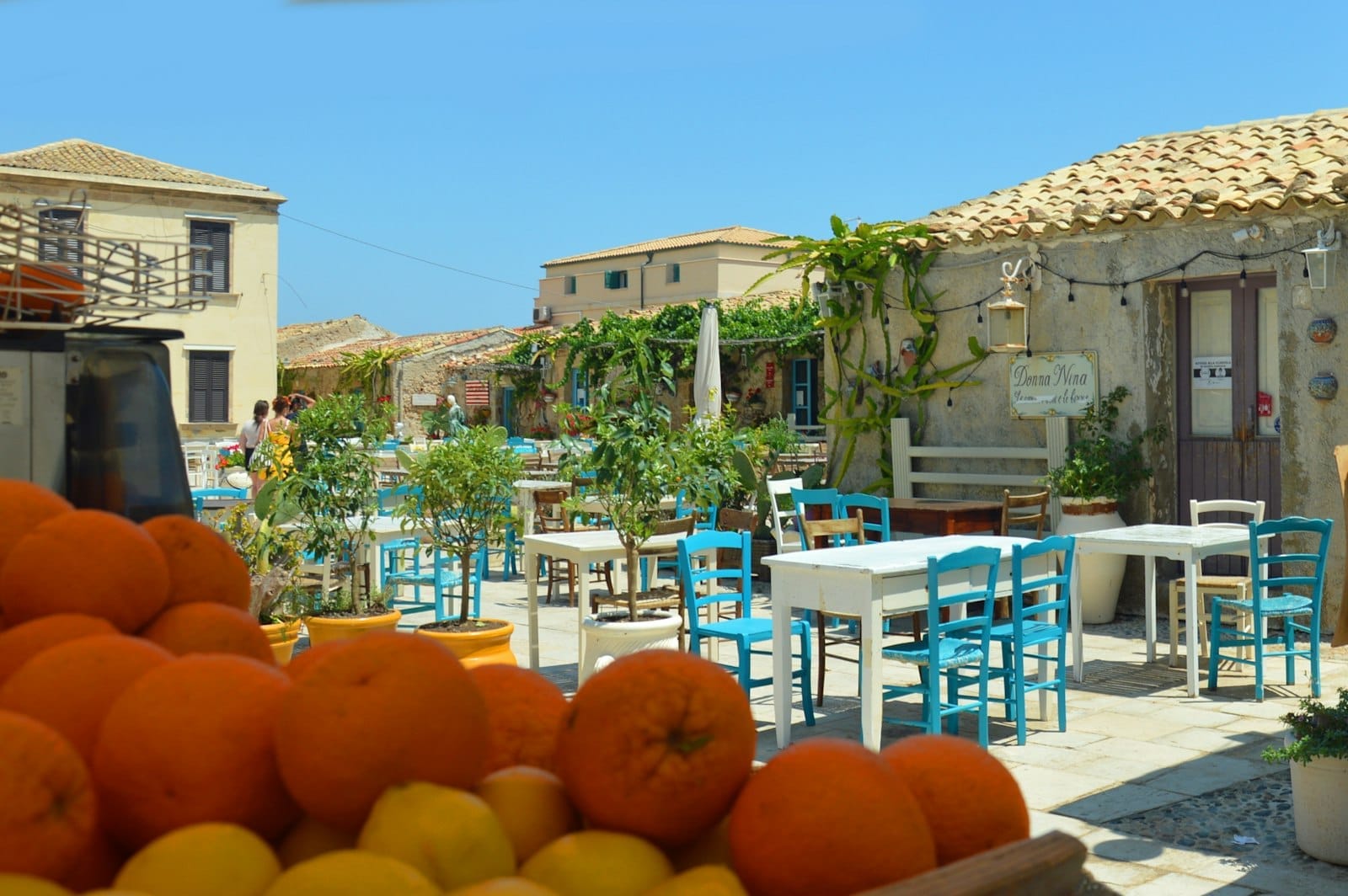
What Marzamemi Actually Is
Marzamemi is a frazione — an administrative hamlet — of the town of Pachino, sitting at the very southeastern corner of Sicily on the Ionian coast. With a registered population of 367 people, it is not a destination that announces itself with grand monuments or ticketed museums. What it offers instead is a coherent, almost cinematic sense of place: a low-slung fishing village built in pale stone around a baroque square, with the smell of the sea present everywhere and fishing boats bobbing a short walk from where you eat lunch.
The name Marzamemi derives from Arabic, a linguistic trace of the settlement's origins around the year 1000 when Arab populations established a tuna fishery — a tonnara — at this sheltered coastal point. That fishery defined the village's economy and physical layout for almost a thousand years. The warehouses, salting facilities, and workers' quarters that grew up around it remain largely intact, giving Marzamemi a material depth that most beach towns of its size simply do not have.
ℹ️ Good to know
The village, its square, and the seafront are all public spaces with no admission charge and no set opening hours. You can arrive at any time. The experience changes considerably depending on the season and time of day — see the section below on timing your visit.
The Historic Core: Piazza Regina Margherita and the Tonnara
The heart of Marzamemi is Piazza Regina Margherita, a broad, stone-paved square that opens directly onto the harbor. It is one of the most genuinely photogenic public spaces in southeastern Sicily, not because it is grand but because it is proportionate and consistent: low baroque buildings on three sides, the sea on the fourth, and nothing to break the visual logic. The Church of San Francesco di Paola stands at one end, constructed in the 18th century when the noble Villadorata family expanded the tonnara and formalized the village around it. The church's facade is modest by baroque Sicilian standards, which makes it feel like it belongs to the fishermen rather than to the aristocracy.
The tonnara complex itself — the former tuna processing and storage buildings — occupies a large portion of the village's built fabric. Industrial tuna fishing of this kind, using the traditional mattanza method (a large-scale net trap system), has largely ceased throughout Sicily. At Marzamemi the old buildings have found new uses as restaurants, event spaces, and sometimes exhibition venues. The stone walls, rusted ironwork, and enormous vaulted interiors make clear that this was industrial infrastructure at a serious scale. Walking through the parts that are accessible gives a grounded sense of what the village's economy once rested on.
For broader context on the baroque towns of this part of Sicily, the nearby city of Ortigia in Syracuse and the hilltop architecture of Ragusa Ibla offer a richer and more fully elaborated version of the regional style — though neither has Marzamemi's specific combination of working harbor and baroque square in a single compact space.
Tickets & tours
Hand-picked options from our booking partner. Prices are indicative; availability and final rates are confirmed when you complete your booking.
Private tour of Noto and Marzamemi in a vintage car
From 465 €Instant confirmationFree cancellationEtna South Upper Craters Guided Excursion from Taormina
From 42 €Instant confirmationFree cancellationTaormina private tour with an expert guide
From 42 €Instant confirmationFree cancellationIsola Bella boat tour and snorkeling
From 55 €Instant confirmationFree cancellation
How the Village Changes by Time of Day
In the early morning, Marzamemi is almost entirely quiet. The square is empty of tourists, the light is low and sharp, and the only activity is around the boats and the few permanent residents starting their day. This is by far the best time for photography: the stone takes on a warm amber tone, shadows are long and defined, and you can compose images of the harbor and square without crowds or parked vehicles interrupting the frame.
By mid-morning in summer, the village begins to fill. Day-trippers arrive from Noto, Syracuse, and from the coastal campsites and holiday apartments nearby. The square's café terraces fill up, and parking along the approach roads becomes difficult. By midday in July and August, Marzamemi is genuinely crowded — the narrow lanes are slow with pedestrians, tables spill out across the piazza, and the waterfront is lined with people. This is not necessarily unpleasant, but it is a different experience from the quiet morning village.
Late afternoon and early evening bring a shift again. The midday heat eases, day-trippers begin to leave, and the light on the water becomes exceptional. The early evening passeggiata — the slow social walk that is a fixture of Sicilian daily life — fills the square with local families and the remaining visitors in a way that feels organic rather than performative. If you can stay for dinner, the square at night, lit by the restaurant lanterns and the church facade, is the village at its most evocative.
💡 Local tip
Arrive before 9am for photography and quiet. If you are visiting in July or August and can only come during the day, aim for late afternoon rather than midday. In shoulder season (May, June, September, October), the timing matters much less.
The Underwater History: A Byzantine Shipwreck
In 1959, divers found a Byzantine merchant vessel in the waters near Marzamemi. The ship, dated to the 6th century during the reign of Emperor Justinian I, was carrying a prefabricated church: column capitals, marble slabs, and architectural elements that had been prepared somewhere in the eastern Mediterranean and were in transit, presumably to be assembled at a site in the western Mediterranean or North Africa. The cargo was never delivered. The wreck is one of the more unusual archaeological finds in Sicilian waters and gives Marzamemi a layer of historical significance that its modest size does not immediately suggest.
This find is documented and referenced in regional archaeological literature. Visitors interested in the broader archaeological landscape of this part of Sicily should note that the Neapolis Archaeological Park in Syracuse and the Pantalica Necropolis are both within reasonable driving distance and represent far larger archaeological sites.
Food and the Seafood Question
Marzamemi has a genuine claim to serious seafood eating. The village's restaurant scene is concentrated around the piazza and the waterfront, and the menus are almost entirely fish-focused. Tuna features prominently — this is still tuna country, even if the mattanza is no longer practiced — along with sea urchin, swordfish, cuttlefish, and whatever was brought in that morning. The quality ceiling is high, but so is the tourist premium in peak season. Prices at the piazza-facing tables are noticeably higher than at less scenic spots slightly off the main square.
The best eating strategy is to look at what is on the table next to you before you order. The menus often list more than the kitchen can reasonably execute well; the shorter the menu and the more fish-focused, the better the odds. Pasta with sea urchin (ricci di mare) is worth ordering when the season is right. In summer the restaurants are busy and reservations at the more popular spots are advisable for dinner.
If food is a central part of your Sicily trip, the Sicily food guide gives context on the regional traditions that inform what you will find on plates here, including the specific role of tuna in southeastern Sicilian cooking.
The Water and the Beaches Nearby
The water immediately around the village harbor is clear but is a working small-boat harbor rather than a swimming beach. The actual swimming is done at the stretches of coast on either side of the village: sandy beaches with shallow, clean water in a range of blues that is characteristic of this part of Sicily's coastline. The beaches closest to the village are accessible on foot; more secluded options require a short drive along the coast road.
The sea at this tip of Sicily is notably calm compared to the northern and western coasts. The Ionian here is protected by the cape, and in summer the water is warm enough for extended swimming well into October. If you are combining the village visit with a beach afternoon, bring what you need: there are no large beach facilities directly adjacent to the village, though vendors and small kiosks operate in summer.
⚠️ What to skip
In July and August, parking near the village is genuinely difficult. Arrive before 9am or after 6pm to avoid the worst of it, or use the parking areas further back and walk the short distance in.
Practical Information for Getting There
Marzamemi is located approximately 3–4 km from Pachino along a flat provincial road. The nearest larger towns are Noto (around 23–30 km to the northwest) and Syracuse, which is roughly 55 km further north. The nearest commercial airport is Comiso (IATA: CIY), approximately 60 km away, which serves the Ragusa area of southeastern Sicily. Catania's Fontanarossa airport (IATA: CTA) is larger and has more connections but is further away.
A rental car is the practical choice for visiting Marzamemi. The village is on the southeastern tip of Sicily in an area where public transport links are limited and irregular. Regional buses connect Pachino with Noto and Syracuse, and from Pachino the village is reachable by local bus or taxi — but timetables are infrequent and must be checked locally before relying on them. For a traveler planning a road trip through this part of the island, Marzamemi pairs logically with Noto, the Vendicari nature reserve, and the baroque towns further inland.
For broader trip planning in this region, the Vendicari Nature Reserve is only a short drive up the coast and makes for an excellent half-day complement to a Marzamemi visit. The reserve's lagoons, wetlands, and archaeological tower offer a completely different experience from the village, and the two together fill a full day without overlap.
Who Will Not Enjoy This Place
Marzamemi is a very small village. If you arrive expecting a full day of activities, ticketed attractions, or organized entertainment, you will exhaust its obvious offerings in under two hours. The village has no museum to anchor a visit, no guided tour infrastructure, and in low season several of the restaurants and bars may be closed entirely. Travelers who need structured itineraries or who find 'just sitting in a beautiful square' an insufficient use of time will be better served by nearby Noto or Syracuse.
Mobility accessibility is also worth considering honestly. The historic center is flat and at sea level, which is genuinely helpful. However, the stone paving is uneven in places, the lanes are narrow, and there is no formally published accessibility information for the village. Visitors with reduced mobility should plan accordingly and may find some parts of the waterfront walkable while others are more challenging.
Insider Tips
- The piazza looks completely different in the early morning with no crowds and low-angle light. If you are driving in from Noto or Syracuse, leaving by 7:30am means you arrive before the day-trippers and have the square essentially to yourself for photographs.
- The restaurants directly on Piazza Regina Margherita charge a visible premium for the view. Walk one or two streets back and you will find smaller, less decorated places serving the same fish at noticeably lower prices — and often with a more local clientele.
- Ask at the harbor if any of the fishermen's boats are still going out. In season it is occasionally possible to arrange very informal early-morning trips, though nothing is organized officially. This is a matter of conversation rather than a bookable service.
- The Tonnara di Marzamemi buildings are used for events, especially in summer. Check locally before your visit — if anything is scheduled during your stay, it is worth attending. The vaulted interiors of the old tuna processing buildings are remarkable spaces.
- If you have a car, drive the coast road north toward Vendicari in the late afternoon. The light on the water and the salt flats along that stretch is exceptional, and the road is quiet enough to stop wherever you want.
Who Is Marzamemi For?
- Food travelers who want to eat fresh tuna and sea urchin in an authentic small-village setting rather than a tourist resort
- Photographers looking for a baroque harbor square with minimal visual clutter and extraordinary morning light
- Slow travelers building a southeastern Sicily road trip through Noto, the baroque towns, and the Ionian coast
- Couples looking for an unhurried evening dinner with the sea close by and a proper Sicilian passeggiata afterward
- Anyone visiting the Vendicari Nature Reserve who wants to anchor the day with a meal and a wander through a working fishing village
Nearby Attractions
Other things to see while in Ragusa & the Baroque Southeast:
- Cathedral of San Giorgio, Ragusa
Rising above Piazza Duomo at the heart of Ragusa Ibla, the Cathedral of San Giorgio is the defining landmark of Sicily's UNESCO-listed baroque southeast. Designed by Rosario Gagliardi and consecrated in 1775, its three-tiered façade and dome are as striking in afternoon light as they are at dusk. This guide covers what to expect, when to go, and how to get the most from a visit.
- Modica & Its Chocolate
Modica, a steep baroque hill town in southeastern Sicily, is the undisputed home of Cioccolato di Modica IGP, a cold-processed chocolate with roots in Aztec tradition, brought to Sicily by the Spanish in the 16th century. Exploring this town means walking ancient stairways lined with chocolatiers, breathing in cocoa-scented air, and tasting something that genuinely has no modern equivalent.
- Noto Cathedral
Standing at the top of a broad ceremonial staircase above Piazza Municipio, Noto Cathedral is the architectural centerpiece of one of Sicily's most beautifully preserved baroque towns. Built after the catastrophic 1693 earthquake, restored after a dramatic dome collapse in 1996, it is a UNESCO World Heritage landmark and a functioning place of worship that rewards both the devout and the architecturally curious.
- Ragusa Ibla
Ragusa Ibla is the ancient lower town of Ragusa, rebuilt in sweeping Baroque style after the catastrophic 1693 earthquake and now a UNESCO World Heritage Site. Its maze of honey-colored churches, palazzi, and stone stairways descends into the Hyblaean Hills with no admission fee and no fixed closing time. It rewards slow walkers who arrive early or linger past sunset.