Favignana Island: Sicily's Best-Kept Coastal Escape (That Everyone Is Starting to Discover)
Favignana, the largest of the Aegadian Islands off western Sicily, is a compact limestone island with crystalline coves, a dramatic tuna-fishing heritage, and terrain flat enough to circle by bicycle in a day. Getting there takes around 30–40 minutes from Trapani by hydrofoil, and there is no entrance fee to the island itself.
Quick Facts
- Location
- Aegadian Islands, ~18 km west of Trapani, western Sicily
- Getting There
- Hydrofoil (Liberty Lines) from Trapani port: ~30–40 min. Car ferry (Siremar) also available from Trapani.
- Time Needed
- Full day minimum; overnight or 2 nights recommended in summer
- Cost
- No island entrance fee. Ferry/hydrofoil fares apply. Bike rental ~€10/day, e-bike ~€20/day (verify locally).
- Best for
- Beach lovers, cyclists, snorkelers, history seekers, couples
- Official website
- www.westofsicily.com/en/see-nature/favignana
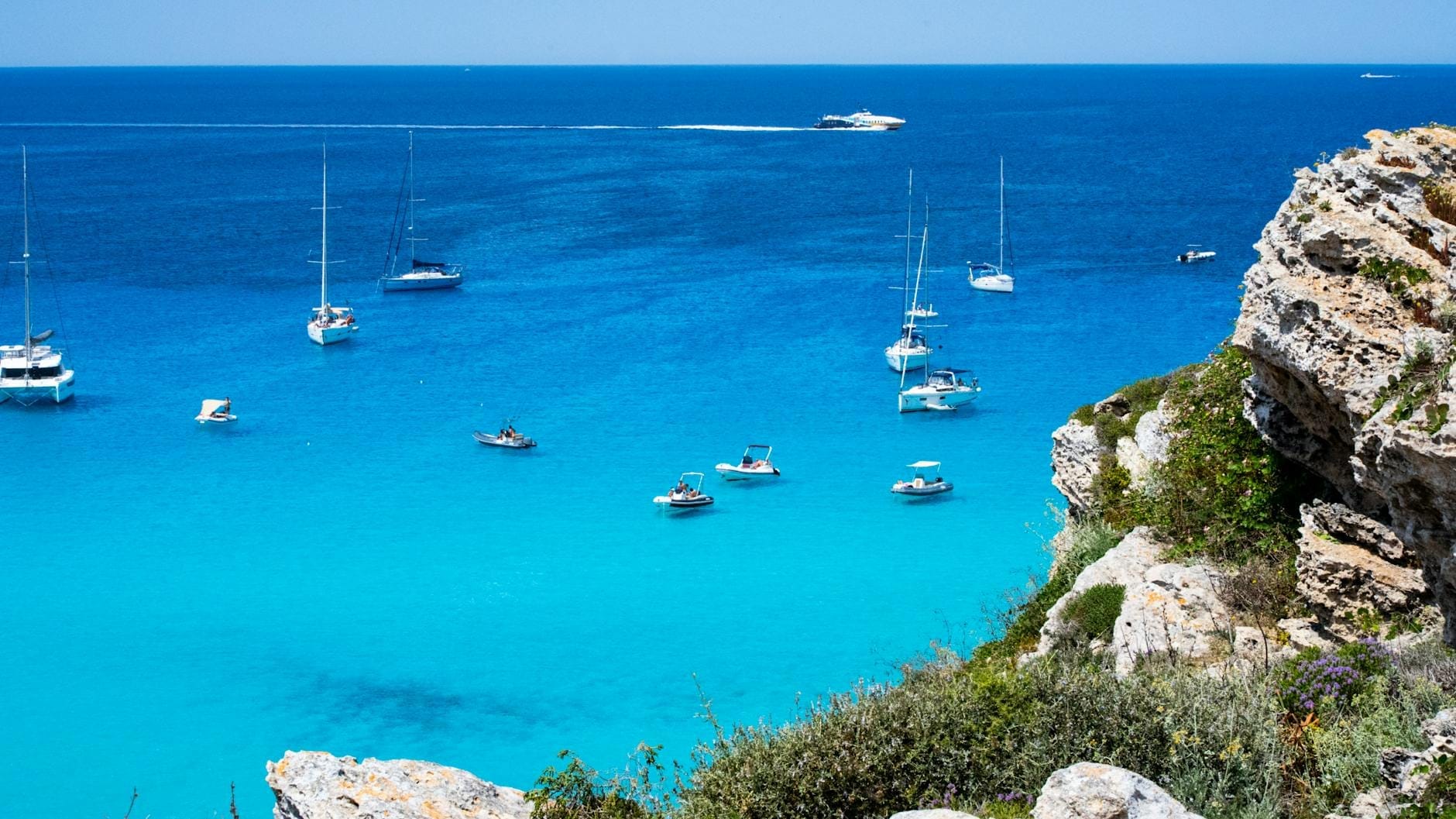
What Favignana Actually Is
Favignana is the largest of the Aegadian Islands (Isole Egadi), an archipelago administered by the Comune di Favignana, which also includes Marettimo and Levanzo. The island covers almost 20 square kilometres, traces roughly 33 kilometres of coastline, and sits about 18 kilometres off the western coast of Sicily between Trapani and Marsala. In antiquity it was known as Aegusa, meaning 'goat island', a name given by Greek and Phoenician settlers who recognised its value as a waypoint in the central Mediterranean.
What draws visitors today is a particular combination: water that shifts from turquoise in the shallows to deep green further out, coves carved into ancient limestone quarries, and a small port town that still feels like it belongs to the people who live there rather than to tourism infrastructure. That balance is genuine, but it is shifting. In July and August, ferries from Trapani arrive packed, the main road out to Cala Rossa fills with mopeds, and the best spots are claimed by 10 a.m. Visit in May, June, or September and the island rewards you with the same scenery at a fraction of the pressure.
💡 Local tip
The hydrofoil from Trapani takes approximately 30–40 minutes and is the fastest crossing. The car ferry is slower but allows you to bring a vehicle, which is largely unnecessary given the island's compact, flat terrain. In peak summer, car access is restricted, and bikes or e-bikes handle the entire island comfortably.
Getting to Favignana: The Trapani Connection
Favignana is accessible only by sea. Liberty Lines operates hydrofoil services from Trapani's port year-round, with more frequent departures added throughout summer. The crossing takes around 30–40 minutes. Siremar runs a slower car ferry on the same route. From Trapani, the port is walkable from the town centre, so once you arrive in Trapani, reaching the ferry terminal is straightforward on foot or by a short taxi ride.
Travelling from Palermo, the standard approach is to take a bus or arrange a transfer along the A29 highway, a journey of roughly 110 kilometres, before connecting to the hydrofoil. From Catania the journey is longer and typically involves a cross-island transfer. If you are planning a day trip, start early: the first hydrofoils leave Trapani in the morning, and arriving on the island before 9 a.m. gives you the pick of the beaches before the crowds land.
Favignana makes an excellent addition to a western Sicily itinerary. The salt pans of Trapani and the archaeological site at Marsala are within easy reach of the same ferry port, so combining them on a multi-day western circuit is practical. See our day trips from Palermo guide for suggested logistics.
Tickets & tours
Hand-picked options from our booking partner. Prices are indicative; availability and final rates are confirmed when you complete your booking.
Tour to Favignana and Levanzo with lunch and snorkeling
From 120 €Instant confirmationFree cancellationShuttle Tour of Favignana and Levanzo Islands from Trapani
From 35 €Instant confirmationFree cancellationFavignana and Levanzo Boat Trip with Stops from Trapani
From 43 €Instant confirmationFree cancellationMini-Cruise to Favignana and Levanzo from Trapani
From 55 €Instant confirmationFree cancellation
The Landscape: Limestone, Water, and Light
Favignana is built from a pale golden limestone called tufa. For centuries, this stone was quarried and exported across Sicily and into North Africa, used in construction from ancient times through the modern era. The quarrying left behind extraordinary carved hollows across the island, many of which have since filled partially with seawater or become enclosed coves. At Cala Rossa, the most photographed spot on the island, sheer amber walls drop straight to water of an improbable green-blue colour. It feels less like a beach and more like a roofless room. The stone is worn smooth by decades of visitor hands and algae at the waterline; the smell is salt and warm rock.
Lido Burrone on the southern side is the island's longest beach, with a sandy bottom and gentler access suitable for families and less confident swimmers. The northern coastline is rougher: rocky shelves and small inlets that require scrambling but tend to stay quieter through the day. Cala Azzurra, toward the eastern tip, offers a mix of sand and shallower water that catches the morning light particularly well, making it the best option for early swimmers and photographers who want colour in their images without fighting afternoon crowds.
The island is almost entirely flat, which is why bicycles are the default mode of transport for most visitors. A circuit of the main coastal road takes roughly two hours at a relaxed pace. E-bikes expand that range comfortably and are especially useful in summer when the heat builds by midday. Rentals are available directly at the port and in the village. There is no need to book a moped or car for a standard day visit; in fact, during the peak weeks of July and August, private car access is restricted.
⚠️ What to skip
Terrain at several coves, including Cala Rossa, involves uneven quarried rock and steps. There is no standardised accessibility infrastructure on the island, and no formal accessibility assessments have been published for beaches or historic buildings. Visitors with limited mobility should research individual spots carefully before committing to the ferry.
The Tuna History: More Than a Museum Detail
To understand Favignana, you need to understand tuna. For much of the 19th and early 20th centuries, the island was one of the most productive tuna fishing sites in the entire Mediterranean. The Florio family, Palermo's great industrial dynasty, established the Stabilimento Florio here in the 1850s, turning Favignana into a large-scale canning operation that processed bluefin tuna caught using an ancient net-and-trap system called the mattanza. At its peak, the factory employed a significant portion of the island's population and exported canned tuna across Europe.
The mattanza was a ritualised collective hunt with specific roles, songs, and a designated leader called the Rais. The bluefin would be herded through a series of nets into a final chamber, the camera della morte, and killed. The last mattanza on Favignana took place in 2007, brought to an end by collapsing bluefin tuna stocks. The Stabilimento Florio building, a handsome piece of 19th-century industrial architecture near the port, has since been converted into the Museo del Tonno (Tuna Museum), where the equipment, photographs, and documentation of the mattanza are preserved. It is worth an hour of your time, particularly on a hot afternoon when you want to step out of the sun.
Time of Day: How the Island Changes
Early morning on Favignana is the version most visitors never see. The port smells of diesel and salt water; a few fishing boats are still active; the cafes in the piazza are opening and the espresso is unhurried. By 9 a.m., the first hydrofoil deposits its passengers and the rhythm changes. The road to Cala Rossa gains traffic from cyclists and mopeds within minutes of arrival. If you are staying overnight, or if you take the very first crossing from Trapani, the pre-9 a.m. window at any of the coves is genuinely different: quieter, cooler, and with light that hits the tufa walls at a low angle and turns them amber.
Between noon and 3 p.m. in summer, the best approach is to find your spot and stay in it, or retreat to the village for lunch. The heat is significant and the most popular coves become crowded. The afternoon light from around 4 p.m. onward shifts to warm gold, and the water temperature peaks around this time. Day-trip visitors begin heading back to the port from about 4:30 p.m., which creates a second window of relative quiet at the beaches in the early evening, especially on the northern side of the island.
Those who stay overnight experience a third version entirely: the island after dark is almost silent. There are a handful of restaurants in the village and a bar or two with tables outside, but Favignana does not have a nightlife scene. The quiet is its own draw. The smell of wild herbs, the sound of the sea, and remarkably clear skies for stargazing make an overnight stay worthwhile for any visitor who has the option.
What to Bring and Practical Details
Water shoes are strongly recommended. Most of the better swimming spots involve rocky entry points, and the limestone shelf around Cala Rossa in particular is uneven and can be sharp. A snorkel is worth packing: the water clarity around the island is consistently good, particularly on the northern and eastern sides, and posidonia meadows close to shore shelter sea life worth looking at.
Sun protection is non-negotiable from May through September. The flat terrain and open water provide almost no natural shade outside the village, and the limestone reflects heat. A hat, high-factor sunscreen, and a light long-sleeved layer for midday are sensible. Fresh water is available in the village but not at most of the remote coves, so carry more than you think you need.
Photography works best in the first two hours after sunrise and the last 90 minutes before sunset. The Cala Rossa walls photograph best in morning light. For context on planning your western Sicily trip around weather windows, see the best time to visit Sicily guide.
ℹ️ Good to know
Favignana has ATMs and basic shops in the village, but supply is limited. Bring cash in case of queues or technical issues. Food options improve in summer when seasonal restaurants open, but choice outside the main village remains limited. Packing lunch for a full beach day is practical and common.
Insider Tips
- Book your return hydrofoil ticket before you leave Trapani in the morning. In peak summer, return sailings fill up, and being stranded for an extra crossing is a real possibility if you leave it until the afternoon.
- The northern coastline near Punta Marsala receives far fewer visitors than Cala Rossa and the southern beaches. The swimming is rocky but the water is clear and you will have company only from the occasional local.
- Bike rental shops near the port fill up quickly on summer mornings. If you arrive on the first or second hydrofoil, go directly to the rental stands before heading anywhere else.
- The village piazza has a small covered market in the morning where local produce, including preserved tuna products, is sold. Tinned tuna from Favignana, if you can still find the traditionally processed variety, makes a good and compact souvenir.
- If you are combining Favignana with Levanzo or Marettimo, Liberty Lines operates hydrofoils across the Aegadian archipelago and offers fares that allow travel between Favignana, Levanzo, and Marettimo; check current options when booking. Marettimo in particular rewards an extra day for walkers and divers.
Who Is Favignana For?
- Cyclists and walkers who want a full-day coastal circuit without significant elevation
- Snorkelers and swimmers seeking water clarity without a long-haul journey
- Couples looking for a quiet overnight on an island with minimal tourist infrastructure
- History and architecture enthusiasts interested in 19th-century industrial heritage
- Visitors based in Trapani or western Sicily wanting a half-day or full-day sea excursion
Nearby Attractions
Other things to see while in Trapani & the West:
- Cave di Cusa
Cave di Cusa is a 2-km stretch of open-air ancient quarry in western Sicily where Greek stonemasons abandoned their work mid-cut in 409 BC, leaving colossal column drums embedded in calcarenite rock. Part of the Selinunte Archaeological Park, it is one of the most atmospheric and least crowded ancient sites in Italy.
- Cretto di Burri
The Grande Cretto di Gibellina is one of the largest land art works on Earth: 85,000 square metres of white concrete encasing the ruins of a town destroyed by the 1968 Belice earthquake. Created by Alberto Burri, it is simultaneously a tomb, a monument, and a walk through absence. Entry is free and the site is open-air, but reaching it requires a car.
- Marettimo
The westernmost of Sicily's Egadi Islands, Marettimo is a car-free island of limestone peaks, sea caves, and water so clear it borders on unreal. Reached only by hydrofoil or ferry from Trapani, it rewards travelers willing to swap convenience for one of Italy's most genuinely uncommercialised island experiences.
- Marsala
Marsala sits at the westernmost tip of Sicily on the cape of Capo Boeo, where Carthaginian history, Arab influence, and Italian unification converge in one walkable town. Beyond the famous wine, visitors find Roman mosaics, a Punic warship, salt pans glowing at sunset, and a piazza life that moves at its own unhurried pace.