Marettimo Island: Sicily's Most Unspoiled Corner of the Mediterranean
The westernmost of Sicily's Egadi Islands, Marettimo is a car-free island of limestone peaks, sea caves, and water so clear it borders on unreal. Reached only by hydrofoil or ferry from Trapani, it rewards travelers willing to swap convenience for one of Italy's most genuinely uncommercialised island experiences.
Quick Facts
- Location
- Isola di Marettimo, Egadi Islands, Province of Trapani, Sicily, Italy
- Getting There
- Hydrofoil from Trapani (approx. 1 hr). No roads, no cars on the island.
- Time Needed
- One full day minimum; 2–3 nights to explore properly
- Cost
- Island access is free. Budget for ferry/hydrofoil tickets and optional boat tours (prices vary by operator and season).
- Best for
- Snorkeling, hiking, sea cave exploration, slow travel, and anyone escaping the summer tourist trail
- Official website
- www.westofsicily.com/en/see-nature/marettimo
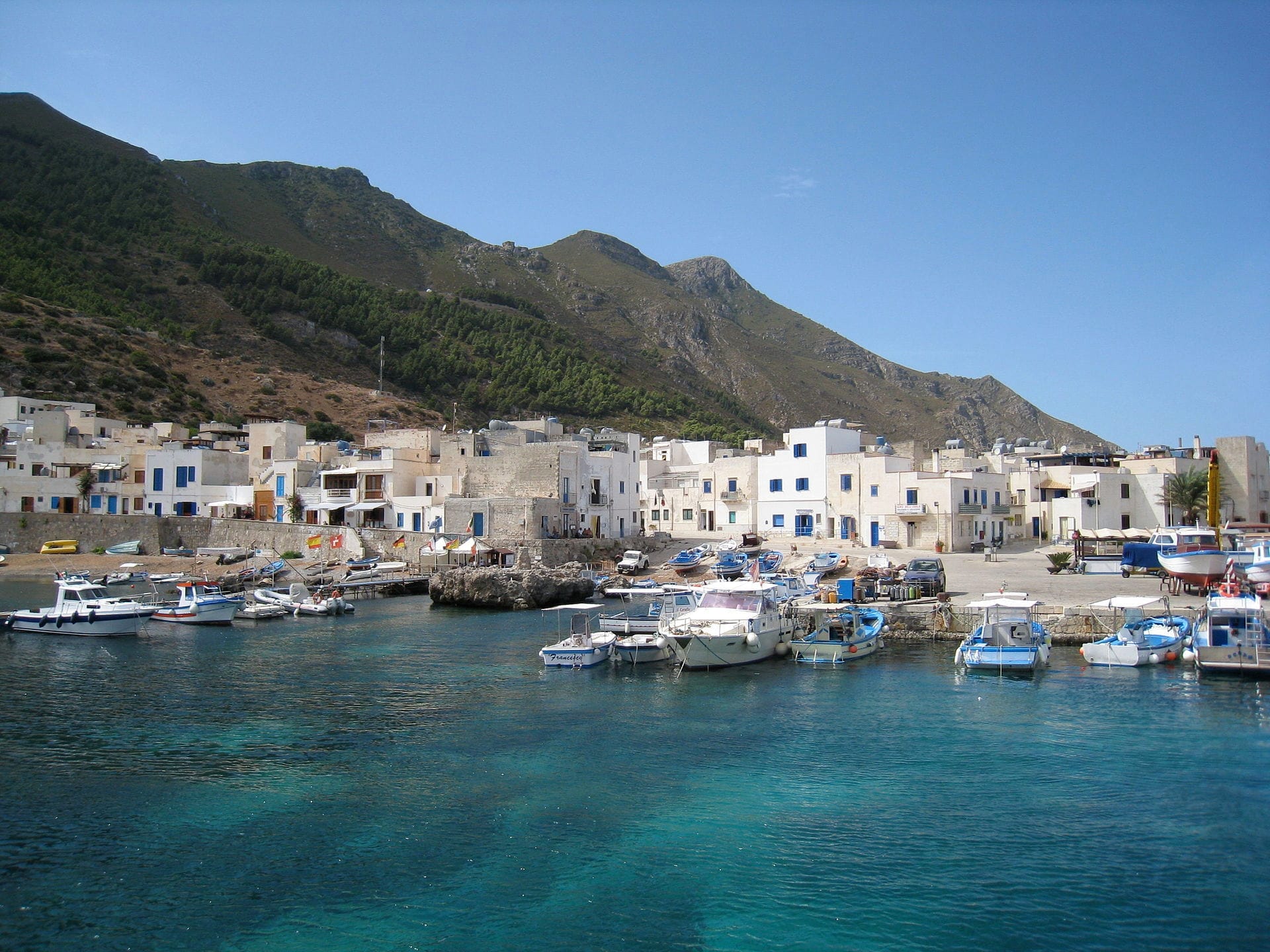
What Marettimo Actually Is
Isola di Marettimo is the westernmost of the three main Egadi Islands off Sicily's west coast, sitting roughly 35 kilometres from Trapani across open Mediterranean water. It is small, measuring about 7.5 kilometres long and 2.3 kilometres wide, yet it packs in dramatic limestone terrain, a scattering of sea caves, one medieval castle perched on a coastal promontory, and water that shifts from cobalt blue to pale green in shallow coves.
Crucially, there are almost no paved roads for cars and motor vehicles are generally prohibited except for a few authorised vehicles. The village is compact: a small port, a church square, a cluster of restaurants, and a handful of accommodation options. Beyond those few hundred metres of settlement, the island is essentially wild. That is not a selling line. It is a practical description that should shape your expectations before you board the hydrofoil.
Marettimo is administered as part of the Comune di Favignana, which also covers Favignana, the most popular of the Egadi Islands. If you want beach clubs, gelato shops, and organised leisure, Favignana is the easier choice. Marettimo is for those who want the opposite.
ℹ️ Good to know
The island has no ATM. Bring cash in euros. Some restaurants and accommodation accept cards, but do not rely on it, especially in low season.
A Place With Real History
The ancient Greeks called it Hierà Nèsos (Sacred Island). The historian Polybius, writing in the second century BCE, named it in his account of the First Punic War. On 10 March 241 BCE, the waters off the Aegadian Islands were the site of the Battle of the Egadi Islands, in which the Roman fleet decisively defeated Carthage, effectively ending the war and beginning Rome's domination of the western Mediterranean. It was one of the largest naval engagements of antiquity.
On the island itself, the most visible historical remnants are the Roman Houses near the village, the ruins of an early Christian chapel above them, and the Castle of Punta Troia, built on a sea-facing headland on foundations dating back to the Norman period and later rebuilt and expanded by the Spanish in the 17th century. The castle is reached via a footpath of roughly 45 minutes from the village and is visible from the water long before you land. Seasonal guided access to the castle interior is available through local operators; confirm schedules on arrival or in advance, as hours are not fixed year-round.
The broader context of Sicily's layered history, from Phoenician and Greek colonisation through Arab and Norman rule, is explored in detail in the Arab-Norman Sicily guide. Marettimo fits into that history quietly, without formal museums or interpretive panels. The ruins are simply there, among the scrub and limestone.
Tickets & tours
Hand-picked options from our booking partner. Prices are indicative; availability and final rates are confirmed when you complete your booking.
Full-day tour to Marettimo island from Trapani
From 112 €Instant confirmationFree cancellationEtna South Upper Craters Guided Excursion from Taormina
From 42 €Instant confirmationFree cancellationTaormina private tour with an expert guide
From 42 €Instant confirmationFree cancellationIsola Bella boat tour and snorkeling
From 55 €Instant confirmationFree cancellation
The Sea: Caves, Snorkeling, and Boat Excursions
Most visitors come primarily for the water, and the water justifies the journey. The island's coastline is broken by dozens of sea caves carved into the limestone cliffs, accessible only by boat. Local operators in the village port run half-day and full-day cave tours, circling the island and stopping at swimming spots that are otherwise unreachable on foot. In the morning, before wind picks up from the southwest, the light inside the caves refracts through the water into shifting blues and whites.
For snorkelers and divers, the seabed around Marettimo is rocky and clear, with posidonia meadows that support fish populations noticeably larger and less skittish than in the more frequently visited bays of the Sicilian coast. Dive centres operate seasonally from the village. Book boat excursions early in the morning if you are visiting in July or August, as departures do fill on the busiest days.
💡 Local tip
Photography tip: the best light for cave interiors and turquoise water shots is between 9am and 11am, before the sun is directly overhead and loses its angle. A waterproof phone case or small underwater camera is worth bringing.
The coves immediately walkable from the village, such as Cala Bianca, are swimmable without a boat but tend to fill up in the peak summer weeks with day-trippers arriving on the morning hydrofoil. They clear out again by mid-afternoon, once visitors start heading back to catch the return crossing.
Hiking: What the Paths Are Like
The island has a network of ancient mule tracks connecting the village to the castle, the Roman ruins, and several ridge-top viewpoints. Not all of these paths are manicured or waymarked to the standard you might find in the Alps. They are rocky limestone tracks, often narrow, exposed to sun, and with little shade for long stretches. Good walking shoes are essential. Sandals are not suitable for anything beyond the village.
The path up to Punta Troia castle is the most commonly walked route and takes around 45 minutes at a moderate pace from the village edge. The reward is a near-complete view of the island's northern coastline and, on clear days, the faint outline of the Sicilian mainland to the east. Start this hike no later than 8am in summer. By 10am the path receives full sun and the heat becomes a serious consideration.
More demanding routes cross the interior to the island's highest points, offering wide views across to the Sicilian coast and, on clear days, toward Tunisia. These longer hikes are better suited to experienced walkers comfortable with route-finding on unmarked terrain. Carry at least 1.5 litres of water per person. There are no water sources or refreshment points on the trails.
⚠️ What to skip
The hiking paths are steep and rough. Visitors with reduced mobility will find most trails inaccessible beyond the flat area around the village. The village itself, the port, and the nearest coves are manageable on foot.
How the Island Feels at Different Times of Day
Early morning on Marettimo has a specific quality that is hard to replicate elsewhere in Sicily. Before the first hydrofoil commonly used by day-trippers arrives from Trapani in the mid-morning, the village is just a few residents, cats, and the smell of salt air. The port is quiet enough that you can hear the water against the boats. Bars open early and serve coffee to fishermen and overnight guests.
By mid-morning, especially from June through September, day-trippers arrive in waves and the village becomes noticeably livelier: the small restaurants start setting out chairs, the boat tour operators fill their vessels, and the nearest swimming coves start to fill. The atmosphere remains mild compared to more organised tourist destinations, but the relative peace of early morning is gone.
Late afternoon, from around 4pm, the day-trip crowd boards the return crossings and the island settles again. Evenings are genuinely quiet. Dinner is eaten late, in the Italian fashion, with restaurants serving from around 7:30pm. The night sky is notably dark for a Mediterranean island with this proximity to the Sicilian coast, and the absence of traffic noise is immediately apparent to anyone arriving from any major city.
Getting to Marettimo: Practical Details
The only way to reach Marettimo is by sea. Hydrofoils and ferries depart from Trapani and, at certain times of year, from Marsala. The hydrofoil from Trapani takes about one hour, while conventional ferries and some routes can take up to about 90 minutes. In high season, crossings are more frequent and should be booked in advance. In winter, services are significantly reduced and weather-dependent, and the island can be cut off for a day or two when sea conditions are poor.
To reach Trapani from Palermo by car takes roughly 1.5 hours. Trapani is also served by its own airport, Trapani-Birgi (IATA: TPS), with seasonal routes from several Italian and European cities. For planning transport across western Sicily, the guide to getting around Sicily covers the main options in detail.
Once on the island, movement is by foot, bicycle, or small boat. This is not a limitation to tolerate; it is fundamental to the character of the place. The town of Trapani itself is worth a half-day visit before or after your crossing, particularly for its historic centre and the nearby salt pans.
When to Visit
Late May, June, and September are the strongest months for a visit. The sea is generally warm enough to swim, the ferry services are running frequently, the hiking paths are manageable in the morning heat, and the island has not yet reached the compression of July and August. October can be excellent for hiking and cave tours, though sea conditions become less predictable.
July and August bring the largest crowds of day-trippers and the hottest temperatures on the exposed paths. If you are visiting then, staying overnight separates you from the day-trip experience. Winter months are possible for the right traveler: the island is inhabited year-round, some accommodation and restaurants stay open, and the landscape is green and empty. But ferry connections become irregular and some services close entirely. The best time to visit Sicily guide provides more detail on seasonal trade-offs across the island.
💡 Local tip
If you are visiting only for the day, take the earliest possible hydrofoil from Trapani. This gives you the morning calm, the best light for swimming and photography, and enough time to hike to the castle before the midday heat. Book a return crossing in advance in peak season.
Insider Tips
- Book your return ferry or hydrofoil before you arrive on the island, not after. In high summer, afternoon departures can sell out and being stranded for an extra night, while appealing in theory, may not suit your schedule or budget.
- The village has a small alimentari (grocery shop) where you can pick up picnic supplies: local tuna in oil, olives, bread, and fruit. Stock up before heading out on any half-day hike, as there are no refreshment points on the trails.
- Arriving the evening before you plan to explore gives you the quiet early morning that day-trippers never experience. Some small guesthouses and rental apartments are available; book these well in advance for July and August.
- Local fishermen sell freshly caught tuna directly at the port in season. The waters around the Egadi Islands were historically the site of one of the Mediterranean's most important tuna migrations, and the fish served in the village's restaurants reflects this directly.
- If a boat excursion to the caves is your priority, speak to operators the evening before and confirm weather conditions and departure times. Calmer conditions are almost always found in the morning, and operators will often advise honestly if the sea is too choppy for the cave entry points.
Who Is Marettimo For?
- Snorkelers and divers who want genuinely clear water without crowds
- Hikers seeking quiet trails with dramatic coastal views and minimal tourist infrastructure
- Slow travelers who want to stay two or three nights and experience an Italian island on its own terms
- Photographers looking for early-morning light on sea caves and limestone cliffs
- Anyone who has found Favignana or the Aeolian Islands too commercialised and wants something quieter
Nearby Attractions
Other things to see while in Trapani & the West:
- Cave di Cusa
Cave di Cusa is a 2-km stretch of open-air ancient quarry in western Sicily where Greek stonemasons abandoned their work mid-cut in 409 BC, leaving colossal column drums embedded in calcarenite rock. Part of the Selinunte Archaeological Park, it is one of the most atmospheric and least crowded ancient sites in Italy.
- Cretto di Burri
The Grande Cretto di Gibellina is one of the largest land art works on Earth: 85,000 square metres of white concrete encasing the ruins of a town destroyed by the 1968 Belice earthquake. Created by Alberto Burri, it is simultaneously a tomb, a monument, and a walk through absence. Entry is free and the site is open-air, but reaching it requires a car.
- Favignana
Favignana, the largest of the Aegadian Islands off western Sicily, is a compact limestone island with crystalline coves, a dramatic tuna-fishing heritage, and terrain flat enough to circle by bicycle in a day. Getting there takes around 30–40 minutes from Trapani by hydrofoil, and there is no entrance fee to the island itself.
- Marsala
Marsala sits at the westernmost tip of Sicily on the cape of Capo Boeo, where Carthaginian history, Arab influence, and Italian unification converge in one walkable town. Beyond the famous wine, visitors find Roman mosaics, a Punic warship, salt pans glowing at sunset, and a piazza life that moves at its own unhurried pace.