La Rocca di Cefalù: The Ancient Clifftop That Defines the Town
Rising roughly 270 metres directly above Cefalù's historic rooftops, La Rocca di Cefalù is a limestone promontory layered with nearly three millennia of history. The trail climbs past a megalithic Greek temple and medieval castle ruins to deliver some of the most complete coastal panoramas in northern Sicily.
Quick Facts
- Location
- Access via Salita Saraceni / Piazza Garibaldi, 90015 Cefalù (PA), Italy
- Getting There
- 10–15 minute walk from Cefalù train station; follow Corso Ruggero to Via Saraceni for the ticket office and trailhead
- Time Needed
- 1.5 to 3 hours depending on pace and how long you linger at the top
- Cost
- €5 standard; €2.50 reduced (ages 6–14, 65+, teachers); free for Cefalù residents. Tickets currently sold on site only.
- Best for
- Hikers, history enthusiasts, photographers, and anyone who wants Cefalù beyond the beach
- Official website
- comune.cefalu.pa.it/vivere-il-comune/luoghi/rocca-di-cefalu
What La Rocca di Cefalù Actually Is
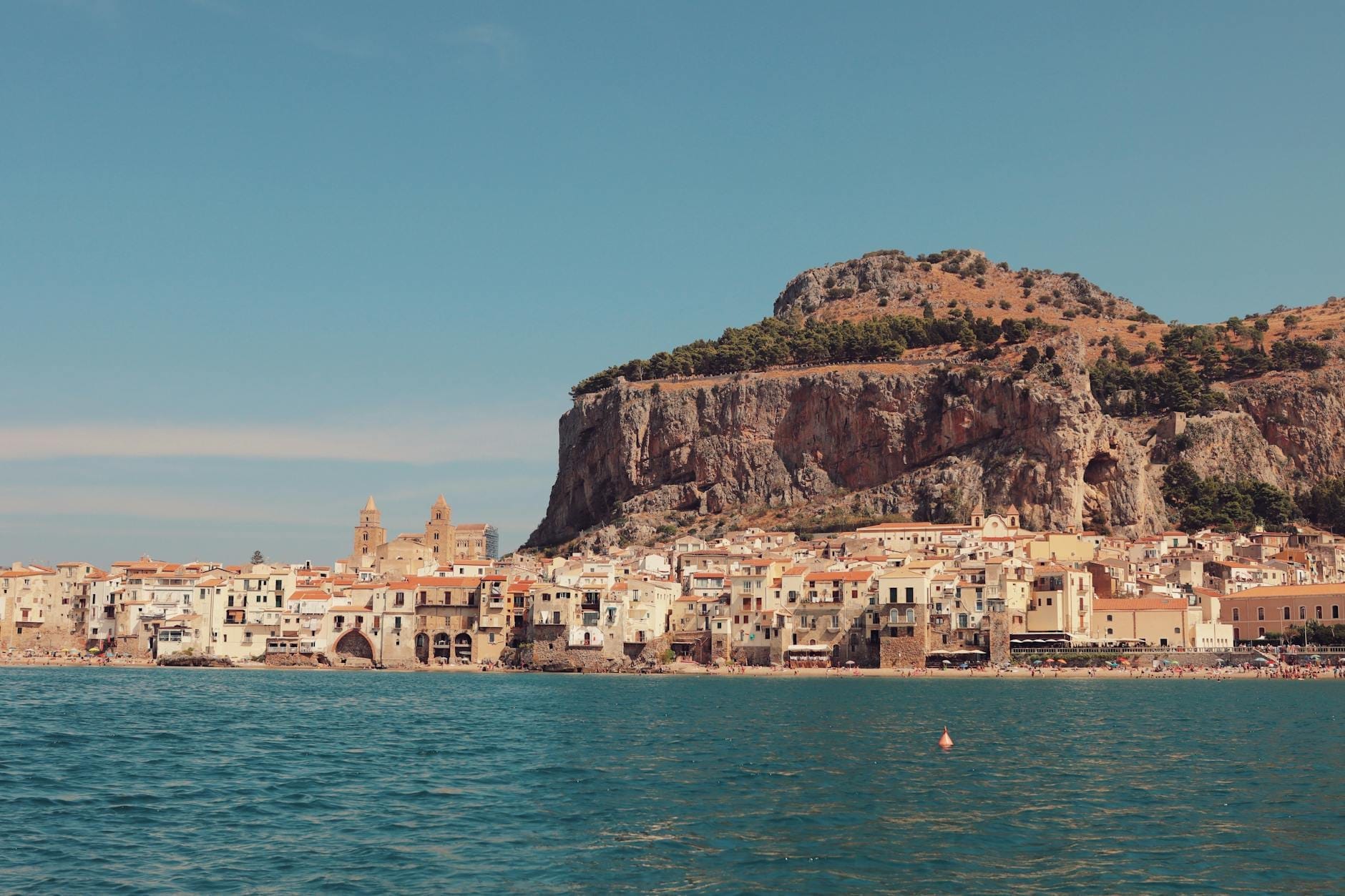
La Rocca di Cefalù is not simply a hill with a view. It is a roughly 270-metre limestone cliff that erupts almost vertically from the back of the old town, creating one of the most dramatic natural backdrops of any coastal settlement in Sicily. The rock defines the town's skyline so completely that Cefalù is almost unrecognisable from photographs taken without it. From below, you see a monolithic wall of pale stone with the medieval cathedral tucked at its base; from above, you see a full sweep of the Tyrrhenian coast curving east and west, the terracotta rooflines directly below, and on a clear day the Aeolian Islands on the horizon.
The cliff itself is both a geological and archaeological record. The limestone was formed over millions of years, but humans have been shaping it since at least the 9th–6th centuries BC. The trail to the summit passes through three distinct historical layers: ancient megalithic construction, medieval military architecture, and the town walls completed in the 15th century. What you are walking is not a nature hike with ruins attached; the ruins are the point, and the views are the reward for reaching them.
ℹ️ Good to know
Opening hours are seasonal. Summer (daylight-saving time): 08:00–19:00, last entry 17:00. Winter (standard time): 08:00–17:00, last entry 15:00. The site is generally open daily year-round, with seasonal variations possible. Verify current hours at the Comune di Cefalù website before visiting.
The Climb: What the Trail Is Like
The trail begins at the ticket office near Piazza Garibaldi, reached by following Via Saraceni from the historic centre on Corso Ruggero. The approach is short but the gradient is immediate: you begin climbing stone steps almost from the first minute. The path is well-worn but uneven, with sections of exposed rock, narrow passages cut into the cliff face, and several stretches where you are using your hands on the stone for balance rather than grip. It is not technical climbing, but it is not a gentle stroll either.
The surface underfoot shifts between compacted earth, cut stone steps, and bare limestone, so footwear matters considerably. Sandals are a risk; trainers with decent grip are a minimum; hiking shoes are ideal. The path is largely open to the sky, which in July and August means direct sun for most of the ascent. The rock absorbs and radiates heat, and by midday the cliff face acts as a reflector. Carrying at least half a litre of water per person is not overcautious; it is practical.
⚠️ What to skip
La Rocca is not wheelchair-accessible and is not suitable for visitors with significant mobility limitations. The path involves sustained steep climbing and uneven surfaces throughout. Local guidance strongly advises against the climb during the midday hours of July and August due to heat and sun exposure.
The ascent takes roughly 30 to 45 minutes at a steady pace. Coming down takes slightly less time but demands more attention to footing, particularly on the polished stone sections where loose gravel accumulates.
Tickets & tours
Hand-picked options from our booking partner. Prices are indicative; availability and final rates are confirmed when you complete your booking.
Palermo and Cefalu guided tour from Taormina
From 75 €Instant confirmationFree cancellationMount Etna to 1900 mt and Taormina Full-Day Tour from Cefalu
From 65 €Instant confirmationFree cancellationAgrigento and Scala dei Turchi Tour from Cefalu
From 65 €Instant confirmationFree cancellationWine Tasting and Castelbuono Tour from Cefalu
From 55 €Instant confirmationFree cancellation
The Temple of Diana: Three Thousand Years on the Rock
About halfway up the trail, you reach the most surprising structure on the Rocca: a megalithic temple dated to around the 9th–6th centuries BC, traditionally identified as the Temple of Diana. The attribution to Diana is a later Roman-era association; the structure itself is widely considered to originate in a pre- or proto-Greek phase of settlement on Sicily. What you see is a rectangular enclosure built from enormous limestone blocks fitted without mortar, a technique characteristic of pre-Greek megalithic construction across the central Mediterranean.
The walls still stand to a considerable height in places, and the quality of the stonework is remarkable given its age. The doorways retain their lintels, and the interior space, though open to the sky, gives a clear sense of original enclosure. A spring inside the structure provided fresh water, which explains why this specific point on the cliff became a sacred site: water sources at elevation had obvious strategic and ritual significance in ancient settlements.
The temple sits within the wider archaeological landscape of Cefalù, a town whose recorded history stretches back to Phoenician and Sikel occupation long before the Norman period that most visitors associate with the cathedral. The Rocca is believed to have hosted the earliest fortified settlement above the later medieval town, with habitation focused on the rock before expansion at its base. The medieval town grew downhill only as the defensive advantages of the cliff became less critical.
The Castle Ruins and the Summit
Continuing above the Temple of Diana, the path climbs to the remnants of the medieval castle. The castle dates broadly between the 11th and 13th centuries, with structures from the Norman and subsequent Swabian periods when Cefalù was an important coastal town with a cathedral commissioned by King Roger II. The fortifications were eventually abandoned as the town's defensive needs shifted, and centuries of exposure have reduced the upper structures to their foundations and lower walls. What remains is enough to understand the layout: a perimeter following the natural contours of the cliff, with the sheer drops on three sides doing much of the defensive work.
At the summit, the sense of exposure is considerable. The cliff falls away steeply on the seaward side, and the wind that is often absent in the town below arrives with some force up here. On calm mornings, the silence is striking: you are perhaps 270 metres above a tourist town, but the acoustic separation is almost complete. The only consistent sounds are wind and the occasional distant boat. In summer, you will share the summit with other visitors, but the space is large enough that it never feels crowded.
The panorama from the top covers the full arc of the Tyrrhenian coast: the sandy beach of Cefalù directly below, the promontory curving east toward the Madonie mountains, and on the clearest winter days, the faint outlines of the Aeolian island of Lipari on the northeastern horizon. The cathedral, which appears so large from street level, is reduced to a small rectangle of pale stone in the grid of terracotta roofs below.
How the Experience Changes by Time of Day
Early morning, from opening at 08:00 until roughly 09:30, is consistently the best window for this climb. The stone is cool, the light is low and directional across the cliff face, and you are very likely to have the upper sections largely to yourself. The town below is waking up: fishing boats are returning, the smell of coffee drifts from the bars on Corso Ruggero, and the cathedral is lit with warm horizontal light that makes it look extraordinary from above.
By 10:30 to 11:00, particularly in July and August, the rock begins to warm considerably and the trail starts to fill. Midday should be avoided in high summer not only because of heat but because the overhead light eliminates the shadows and texture that make the clifftop and ruins photogenic. The flat white glare of a Sicilian July noon is the worst possible light for photography and the hardest condition for comfortable climbing.
Late afternoon in the shoulder seasons, around 16:00 to 17:00 in April, May, September, and October, offers a genuinely beautiful light and significantly fewer visitors than the morning peak. The sun begins to drop toward the western coast, the limestone turns from white to a warm amber, and the town below settles into long shadows. In winter, the typical last entry at 15:00 means afternoon visits are compressed, but the clarity of the air in November and December makes the Aeolian Islands visible far more reliably than in summer haze.
💡 Local tip
Photography tip: Shoot toward the cathedral and seafront from the trail mid-ascent, not just from the summit. The angle that shows the cathedral's scale relative to the town is actually better from about two-thirds of the way up, where you are high enough to see the full layout but close enough that the building fills the frame.
Practical Logistics
Cefalù is served by regular Trenitalia trains from Palermo (roughly 50 to 60 minutes, depending on service type) and from Messina. The train station is a 10-minute walk from the Rocca trailhead, making it a straightforward day trip from Palermo without needing a car. From the station, walk along Corso Ruggero into the historic centre and follow signs or ask locally for Via Saraceni.
Ticket purchase is on site only, at the entrance office near the base of the trail. There is no advance online booking system for the Rocca itself, so arrival shortly after opening during peak summer weeks is advisable. After the climb, the rest of Cefalù's Norman cathedral and the old town are within a few minutes' walk, making a half-day combination natural and easy.
The ticket office accepts cash; it is worth carrying euros. There are no facilities on the trail or at the summit, so use the public toilets near the base before starting. The descent returns via the same path, not a loop, so the exit is exactly where you entered.
Who Should Skip This
Anyone with knee or hip problems that worsen on sustained downhill gradients should think carefully before committing to this climb. The descent requires more controlled effort than the ascent and is harder on joints. Visitors travelling with children under roughly seven or eight years old will find the uneven steps and exposed ledges near the top genuinely challenging to manage safely. Very young children should not attempt the upper sections.
If your primary interest is Cefalù's beach and the cathedral interior, the Rocca can reasonably be skipped without missing the town's essential character. The cathedral is one of the finest examples of Arab-Norman architecture in Sicily and stands entirely on its own merits as a destination. The Rocca adds historical depth and a physical challenge, but it is not the only way to understand Cefalù.
Insider Tips
- The ticket office staff can sometimes point you to a secondary viewpoint partway up that most visitors walk past without stopping. It frames the cathedral directly below in a cleaner composition than the summit.
- In late April and May, wild capers grow from the rock face along the trail, their pale flowers visible against the grey-white limestone. It is a small detail but it makes the climb feel genuinely Sicilian rather than simply athletic.
- If you visit on a weekday morning in spring or autumn, the Rocca is quiet enough that you can sit at the castle ruins for twenty minutes without seeing another person. That kind of solitude is rare at any view point in Sicily's coastal towns.
- Bring a light layer even in summer. The summit wind is consistent and can feel cold relative to the heat of the climb, particularly if you sit still for any length of time at the top.
- The last 30 minutes before the last entry time are actually a reasonable window in summer: the worst of the day's heat has passed, many visitors are already descending, and the angle of the light is improving. Just confirm last entry times on arrival as seasonal changes apply.
Who Is La Rocca di Cefalù For?
- Hikers and active travellers who want physical engagement alongside sightseeing
- History and archaeology enthusiasts drawn to the combination of Bronze Age temple and medieval fortifications
- Photographers seeking the definitive elevated view of Cefalù's cathedral and coastline
- Visitors doing a day trip from Palermo who want more than the beach and the cathedral interior
- Travellers curious about Sicily's pre-Greek and Norman history in a single accessible site
Nearby Attractions
Other things to see while in Cefalù:
- Cefalù Cathedral
Founded by King Roger II in 1131, the Duomo di Cefalù is a UNESCO World Heritage Site combining Norman architecture, Islamic-influenced woodwork, and one of the finest Byzantine mosaics in the Mediterranean. Free to enter the nave, with paid itineraries to the towers, rooftops, and treasury.