Zisa Castle (Palazzo della Zisa): Palermo's Remarkable Arab-Norman Palace
Begun around 1165 under the Norman kings of Sicily and completed later in the 12th century, Zisa Castle is one of the finest examples of Arab-Norman architecture in the Mediterranean. This UNESCO-listed palace sits in western Palermo and houses a museum of Islamic art that most visitors to the city never find.
Quick Facts
- Location
- Piazza Zisa, 90138 Palermo, Sicily, Italy
- Getting There
- Bus 101 to Piazza Politeama, then bus 106 to Piazza del Principe di Camporeale; nearest train station is Orleans/Palazzo Reale
- Time Needed
- 1 to 1.5 hours
- Cost
- Admission fee applies; check current pricing with CoopCulture before visiting
- Best for
- History lovers, architecture enthusiasts, Islamic art, UNESCO site collectors
- Official website
- www.coopculture.it/en/poi/zisa-palace
What Is Zisa Castle, and Why Does It Matter?
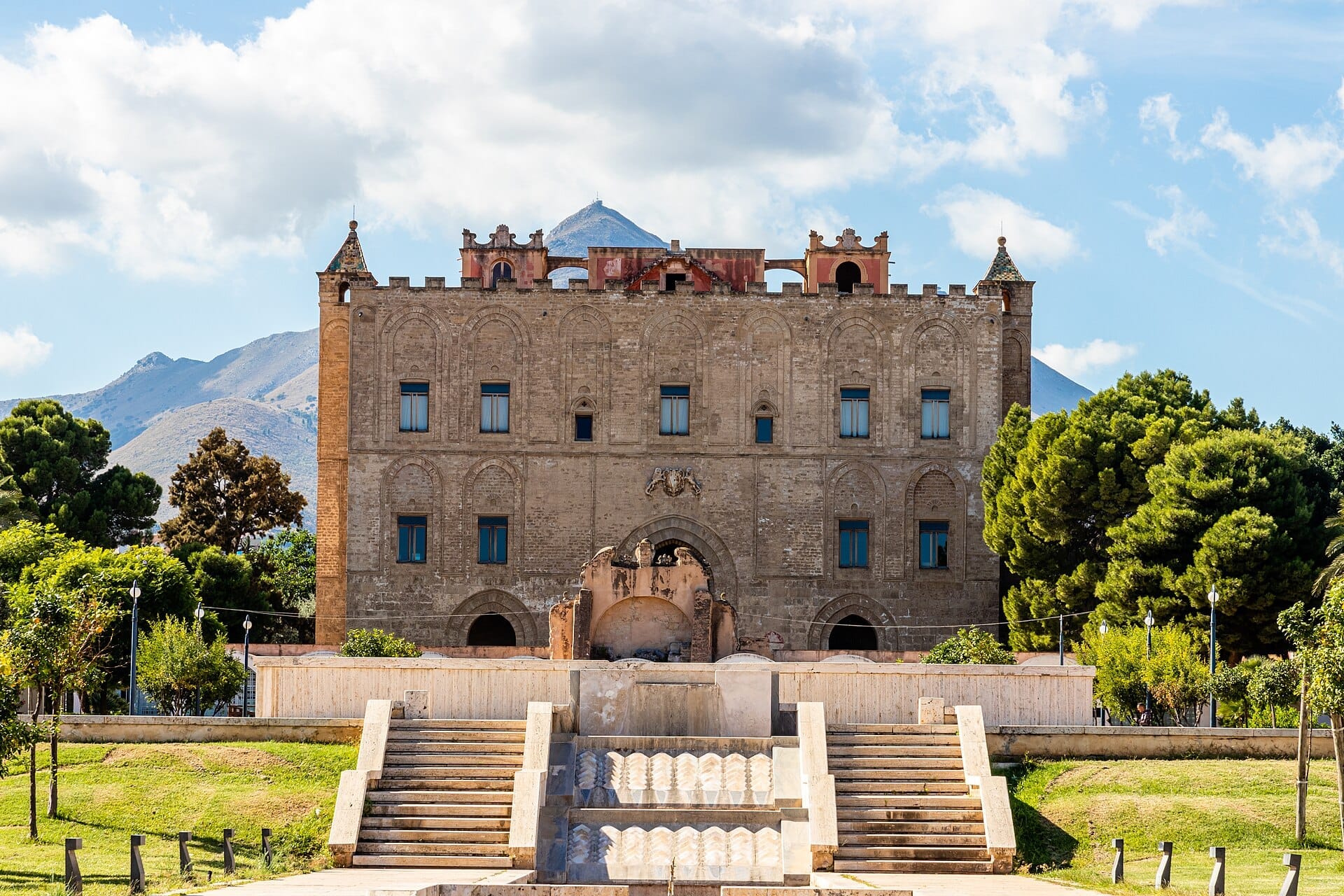
The Palazzo della Zisa, known in English as Zisa Castle, is a 12th-century royal palace built on the orders of the Norman King William I and completed under William II, with construction generally dated as beginning around 1165 and finishing in 1189. It stands in the western part of Palermo, well outside the historic city centre, and for that reason many visitors on short itineraries miss it entirely. That is a genuine oversight.
The palace is one of the best-preserved examples of Arab-Norman architecture anywhere in the world, and it forms part of the UNESCO World Heritage Site known as Arab-Norman Palermo and the Cathedrals of Cefalù and Monreale, inscribed in 2015. Unlike the Palatine Chapel or Monreale Cathedral, which draw large crowds daily, Zisa receives a fraction of that footfall, which makes the experience of visiting it noticeably quieter and more considered.
The name itself tells you something important. Zisa derives from the Arabic al-Aziz, meaning splendid or glorious. The Norman kings of 12th-century Sicily did not simply commission a building in an Arabic style as a decorative gesture. They employed Muslim craftsmen, architects, and scholars as part of a genuine multicultural court that was, for its era, extraordinarily sophisticated. The result is a building that is neither purely Islamic nor purely European, but something that could only have been made in Norman Sicily.
ℹ️ Good to know
Zisa Castle is closed on Mondays. From Tuesday to Saturday it is generally open from 09:00 to 19:00, and on Sundays and public holidays from 09:00 to 13:30, with last admission 30 minutes before closing. Restoration works occasionally limit access to parts of the building, so checking ahead with CoopCulture before your visit is advisable.
The Architecture: What You Are Actually Looking At
From the outside, the Zisa appears deceptively plain. The rectangular three-storey facade, built in golden limestone, has a sober, almost fortress-like quality that does not immediately prepare you for what is inside. The exterior does carry decorative blind arches along its upper registers, but the building's power is restrained from the street.
Step through the entrance and the contrast is immediate. The ground-floor hall, sometimes called the Fountain Room, is the architectural centrepiece of the entire palace. A muqarnas ceiling, the honeycomb stalactite vaulting associated with Islamic architecture, covers the upper portion of the room. Water once flowed through a channel cut into the marble floor, running from a fountain niche at one end through the hall and outward into a fish pond in the garden beyond. The entire system was designed to cool the interior through evaporation, an elegant solution to Palermo's fierce summer heat that predates modern air conditioning by eight centuries.
The mosaic panels flanking the fountain niche show archers hunting birds among palm trees, rendered in a style that fuses Byzantine tesserae technique with Arabic iconographic themes. These mosaics are among the finest surviving examples of Norman-Sicilian decorative art outside of Monreale and the Palatine Chapel. Look closely at the craftsmanship along the border edges and you will notice that individual tesserae are set at slightly different angles to catch and redirect light, a technique that makes the surface seem to shift as you move.
💡 Local tip
Photography inside the Fountain Room is allowed without flash. The afternoon light that enters from the upper windows, roughly between 14:00 and 16:00, gives the mosaics the kind of warm, directional illumination that photographs well without distortion.
Tickets & tours
Hand-picked options from our booking partner. Prices are indicative; availability and final rates are confirmed when you complete your booking.
Candlelit dinner in the medieval castle of Sciacca
From 810 €Instant confirmationFree cancellationEtna South Upper Craters Guided Excursion from Taormina
From 42 €Instant confirmationFree cancellationTaormina private tour with an expert guide
From 42 €Instant confirmationFree cancellationIsola Bella boat tour and snorkeling
From 55 €Instant confirmationFree cancellation
The Museum of Islamic Art Inside
The upper floors of the Zisa house the Museum of Islamic Art, a collection that receives very little attention in mainstream travel coverage of Palermo but is genuinely worth your time. The exhibits include carved wooden panels, bronze objects, ceramics, and textiles from across the Islamic world, spanning several centuries and a wide geographic range. The collection provides useful context for understanding how deeply Arabic culture shaped Sicily during and after the Norman period.
The presentation is relatively traditional in format, with cases and wall labels rather than immersive installations, so if you come expecting a high-tech museum experience you may find it understated. What it offers instead is close access to objects of real quality in a setting that is itself a primary historical artefact. Standing in a Norman palace built by Muslim craftsmen and looking at medieval Islamic objects through a single room's window onto Palermo's western neighbourhoods is a specific and unrepeatable kind of encounter with the past.
Visitors interested in a deeper understanding of Norman Sicily's layered identity before arriving might find it useful to read through the context offered in a guide to Arab-Norman Sicily, which covers how this architectural tradition spread across Palermo and beyond.
How the Visit Feels at Different Times of Day
Arriving when the castle opens at 09:00 on a weekday is the most comfortable option. At that hour the surrounding piazza is quiet, the light on the limestone facade is cool and clear, and the interior rooms feel calm. The Fountain Room in particular has a morning stillness that lets you hear the absence of the water that once flowed through it, which sounds like nothing, but somehow registers.
By late morning, small tour groups begin arriving, usually as part of itineraries that also include the Norman Palace and Palatine Chapel nearby. These groups tend to move through fairly quickly, so even during busier periods the crowd rarely feels dense. The castle is not large, and the flow of visitors disperses naturally across the different floors and the museum rooms.
Sunday morning visits, while operating on the shorter 09:00 to 13:30 schedule, can attract local families alongside tourists. The garden area around the building is pleasant in the morning shade, and in spring the surrounding neighbourhood has a lived-in quality that gives the visit a less touristic texture than you get at the city's more central sites.
⚠️ What to skip
The castle has limited accessibility for wheelchair users, according to current operator information. Restoration works are ongoing at certain phases, and parts of the building may be closed on a given day without prior notice. Contacting CoopCulture before your visit, especially if you have mobility considerations or are travelling a significant distance specifically for this site, is strongly recommended.
Getting There and What to Expect Around the Site
Zisa Castle sits in a residential neighbourhood in western Palermo, roughly two kilometres from the Norman Palace. The area around Piazza Zisa is an ordinary working-class district, not a polished tourist corridor. The streets nearby have local shops, parked scooters, and schoolchildren in the mornings. This is worth knowing in advance because some visitors, expecting the kind of manicured approach you get at major tourist monuments, find the neighbourhood surprising. It is in fact one of the more interesting aspects of visiting: the palace rises out of everyday Palermo with no buffer zone around it.
By bus from the city centre, take line 101 to Piazza Politeama, then change to line 106 to reach Piazza del Principe di Camporeale, from which Zisa is a short walk. The nearest train station is Orleans/Palazzo Reale. Taxis and ride-hailing services will get you there comfortably from anywhere in central Palermo in under fifteen minutes. There is no dedicated car park immediately adjacent; street parking exists in the surrounding streets but follows Palermo's general informal norms.
If you are planning to combine Zisa with other major sites on the same day, the Norman Palace and Palatine Chapel are the natural companions, as they form part of the same UNESCO cluster and are both under two kilometres away. The Monreale Cathedral, another UNESCO Arab-Norman site, requires a separate half-day trip but rewards the effort considerably.
Honest Assessment: Strengths, Limitations, and Who Should Skip It
Zisa Castle is not a destination that delivers immediate spectacle. The exterior is handsome but modest, the museum is solid rather than dazzling, and the overall visit is quiet and reflective rather than dramatic. Visitors who move through historic sites quickly and measure value by volume of things seen may find it underwhelming compared to the more elaborate interiors of the Palatine Chapel.
For visitors who are genuinely curious about how Norman Sicily synthesised Islamic, Byzantine, and European traditions into something entirely its own, the Zisa is one of the most coherent and legible arguments for that thesis that Palermo offers. The Fountain Room alone, with its muqarnas ceiling and cooling water system, is an architectural idea you will not encounter in the same form anywhere else in Europe. That specificity is its value.
Travellers on very short trips to Palermo who can only visit two or three major sites should probably prioritise the Palatine Chapel and the Monreale Cloister. Those with two or more days, or those with a particular interest in Islamic art and architecture, should put Zisa near the top of their list. It is also a useful counterpoint to the city's more overtly Baroque streets and squares, offering a reminder that Palermo's identity runs several centuries deeper than the 17th-century urban fabric most visitors first encounter.
For broader context on how to organise your time in the city, a Palermo day-trip planning guide can help you decide how to balance sites within the city against excursions to places like Monreale or Cefalù.
Insider Tips
- The Fountain Room is dramatically cooler than the outdoor temperature on hot days, a feature that was intentional in the original 12th-century design. If you visit in July or August, this is not a minor detail.
- Arrive within the first thirty minutes of opening on a Tuesday or Wednesday for the best chance of having the Fountain Room largely to yourself, which allows you to hear the acoustics of the space without background noise.
- Look at the mosaic panels flanking the fountain niche from multiple distances. Details that appear abstract from across the room resolve into specific hunting scenes at close range.
- The neighbourhood around Piazza Zisa has several small bars and a few local trattorie that are entirely untouched by tourist pricing. Having a coffee or a light lunch nearby before or after the visit adds to the experience without adding to the cost.
- Restoration works at Zisa are ongoing at varying intensity. If your trip depends on seeing specific rooms, send a message to CoopCulture's contact form a week or two before arrival to confirm current access.
Who Is Zisa Castle For?
- Architecture enthusiasts interested in Islamic and Norman building traditions
- UNESCO World Heritage site visitors completing the Arab-Norman Palermo circuit
- Travellers who want a genuinely quiet, uncrowded museum experience in central Palermo
- Anyone with a specific interest in Islamic art and its Mediterranean cross-cultural context
- History-focused visitors who want to understand the depth of Palermo's multicultural medieval past
Nearby Attractions
Other things to see while in Palermo:
- Ballarò Market
Stretching through the Albergheria district from Piazza Ballarò to Corso Tukory, the Mercato di Ballarò is Palermo's oldest continuously operating street market, with roots tracing back over a thousand years to Arab rule. It is free to enter, open daily, and unlike anything else in Sicily for raw atmosphere, local produce, and street food.
- Catacombs of the Capuchins
Below a quiet convent on the western edge of Palermo's historic centre, the Catacombs of the Capuchins hold one of the most extraordinary collections of preserved human remains anywhere in the world. Around 2,000 mummified bodies and skeletons line stone corridors carved from tuff rock, dressed in period clothing and arranged by profession, gender, and social status. It is an intimate, unsettling, and genuinely thought-provoking encounter with how a Mediterranean culture once confronted death.
- Church of the Martorana
Built in 1143 by a Norman admiral and decorated by craftsmen from Constantinople, the Church of the Martorana contains some of the most important Byzantine mosaics in the western Mediterranean. It sits on Piazza Bellini in Palermo's historic center, part of a UNESCO World Heritage site, and rewards visitors who arrive early and look up.
- La Kalsa
La Kalsa is Palermo's oldest neighborhood, founded by Arab rulers in the 9th century as the city's administrative heart. Today it is a layered district of crumbling palazzi, Baroque churches, art-filled piazzas, and some of Palermo's most atmospheric street life. Free to explore and walkable in half a day, it rewards those who slow down.