Agrigento sits on a ridge above Sicily's southern coast, its medieval streets looking down over one of the ancient world's most remarkable archaeological landscapes. The city pairs a quiet, workaday historic centre with the extraordinary Valley of the Temples just a few kilometres below, making it one of Sicily's most rewarding stops for travellers who take the time to explore both levels.
Agrigento is two cities in one: a lived-in hilltop town of limestone churches and narrow lanes, and the ancient Greek city of Akragas spread across the ridge below, where temples built 2,500 years ago still stand against the Sicilian sky. Few places in the Mediterranean put classical antiquity and everyday Italian life in such direct conversation.
Orientation
Agrigento sits roughly in the middle of Sicily's southern coast, about 4 kilometres inland from the Mediterranean and around 120 kilometres south of Palermo. The city proper occupies a long, narrow ridge at roughly 230–250 metres elevation, which gives it sweeping views south toward the sea and north toward the rolling interior. The modern city has expanded downhill over the decades, but the part most visitors care about is the historic centre at the top, running east to west along Via Atenea.
The eastern anchor of the old town is Piazzale Aldo Moro, where the main roads from Palermo and the coast converge. From here, Via Atenea stretches westward for roughly 700 metres through the heart of the historic centre, lined with baroque churches, 19th-century civic buildings, and local shops. The railway station, Agrigento Centrale, sits at Piazzale Rosselli near the eastern edge of the city, a short uphill walk or quick taxi ride from Via Atenea.
The Valley of the Temples occupies the lower ridge to the south of the modern city, connected by a road that descends from the historic centre through a landscape of almond and olive trees. The archaeological park entrance is about 3 kilometres from the city centre on foot or a short bus or taxi ride. Between the old town and the temples, the Regional Archaeological Museum (Museo Archeologico Regionale Pietro Griffo) provides essential context for both sites.
Agrigento is often treated as a day trip from Palermo or from the coast, but staying overnight changes the experience significantly. The city settles into a different rhythm once the tour buses leave the Valle dei Templi in the late afternoon. If you are building a route across Sicily, Agrigento fits naturally between Palermo to the north and Ragusa Ibla or Siracusa to the east along the SS115 coastal road.
Character & Atmosphere
Agrigento is not a polished tourist destination in the way that Taormina or Cefalù are. It is a working southern Sicilian city that happens to sit above one of the world's great ancient sites. That contrast is part of its appeal. The streets of the historic centre are narrow and slightly worn, the churches are occasionally shuttered, and the bars are used by locals for their morning espresso rather than staged for photographs. There is an authenticity here that is harder to find in Sicily's more visited towns.
In the early morning, Via Atenea belongs to residents. Small grocers open their shutters, school children move in clusters toward the upper part of the hill, and the smell of fresh pastries drifts from the bars near Piazza Pirandello. The light at this hour is soft and the city feels unhurried. By mid-morning, visitors begin to arrive for the temples, and the area around the archaeological park fills up quickly with tour groups, but the historic centre itself stays relatively quiet.
Afternoons in Agrigento, especially in summer, slow to a near standstill between roughly 1pm and 4pm. This is not a flaw, it is the pattern of the south. The streets empty, the shutters close, and the heat is real. The archaeological park stays open through the afternoon heat, but walking the exposed ridge in July or August midday is genuinely uncomfortable. The temples in the late afternoon, when the tour buses have gone and the light turns golden, are something else entirely.
After dark, the action concentrates in the bars and restaurants along and just off Via Atenea and around Piazza Pirandello. The city has a young population thanks to its university, and the evenings in the centre have a social energy that the daytime does not always suggest. The streets are safe and well-used at night in the centre, though the steep lanes on the edges of the old town are best navigated with some awareness of your footing on uneven paving.
💡 Local tip
Visit the Valley of the Temples in the late afternoon, ideally arriving around 4pm in summer. The light is dramatically better for photography, the heat is manageable, and the site thins out as group tours depart. Some sections of the park are also open for evening visits in summer, which is one of the finest experiences the site offers.
What to See & Do
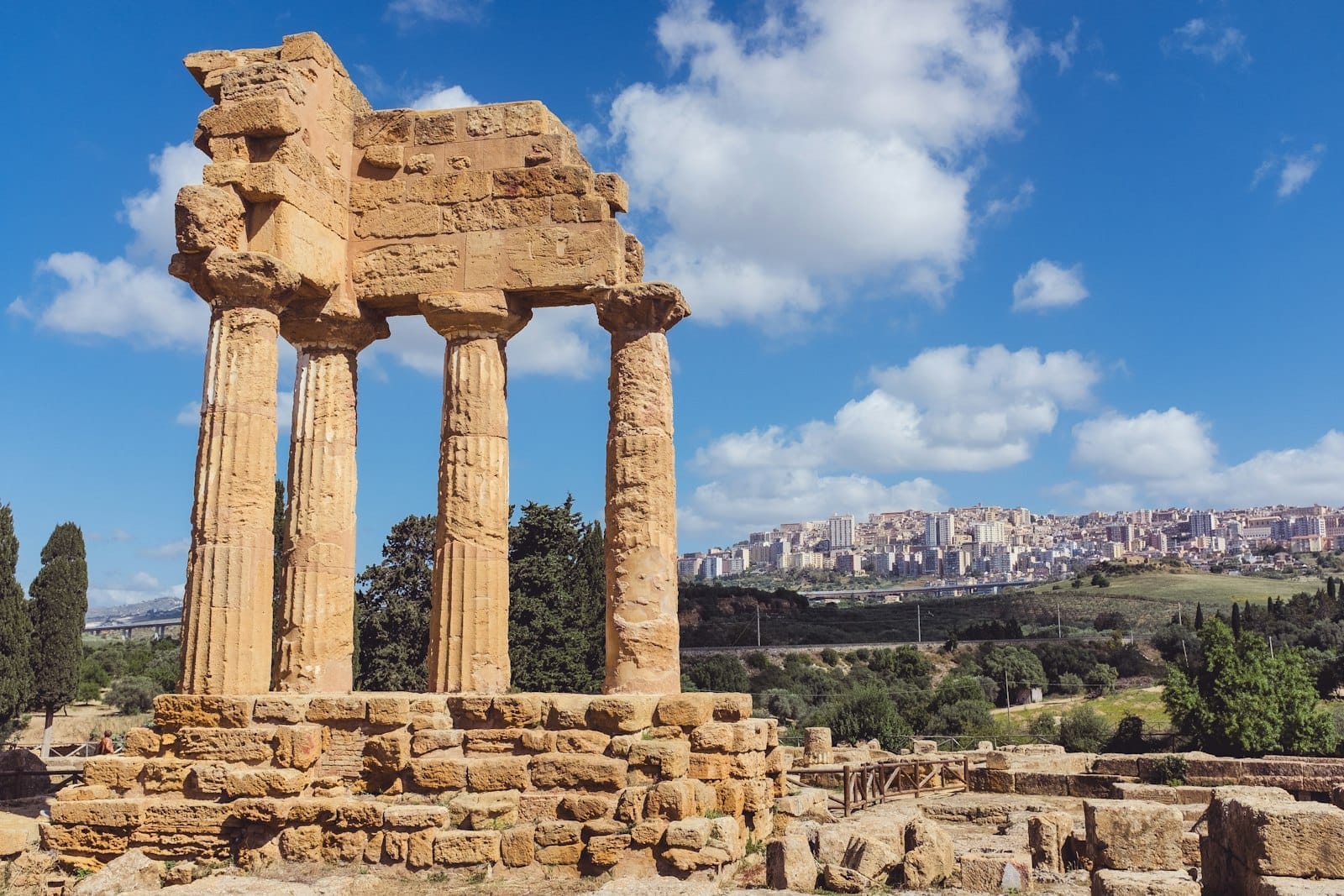
The Valley of the Temples is the reason most people come to Agrigento, and it earns its UNESCO World Heritage status without question. The archaeological park stretches along a ridge south of the modern city and contains the remains of the ancient city of Akragas, founded by Greek colonists around 580–581 BCE. At its height in the 5th century BCE, Akragas was one of the largest cities in the Greek world, with some ancient sources claiming a population as high as 200,000.
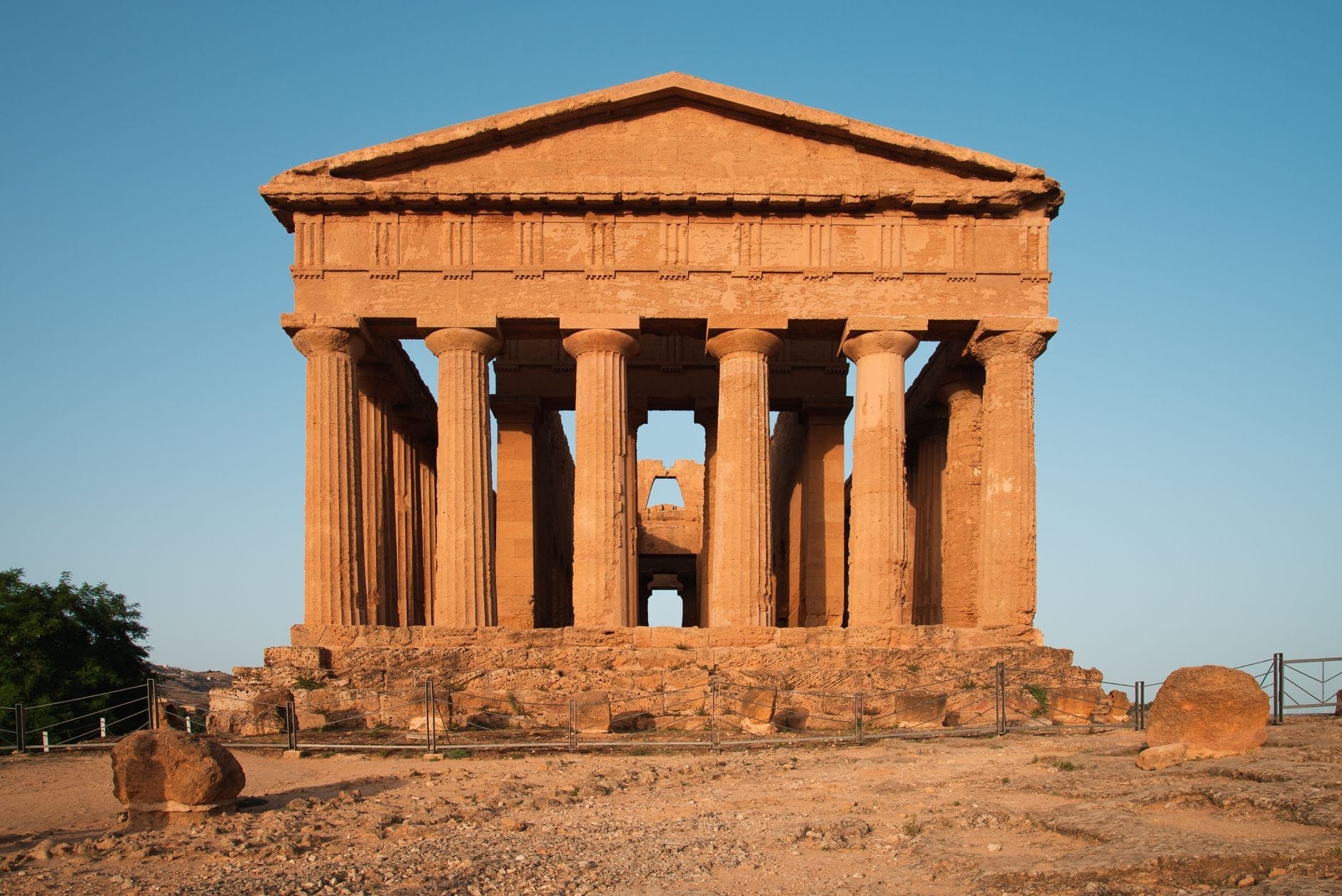
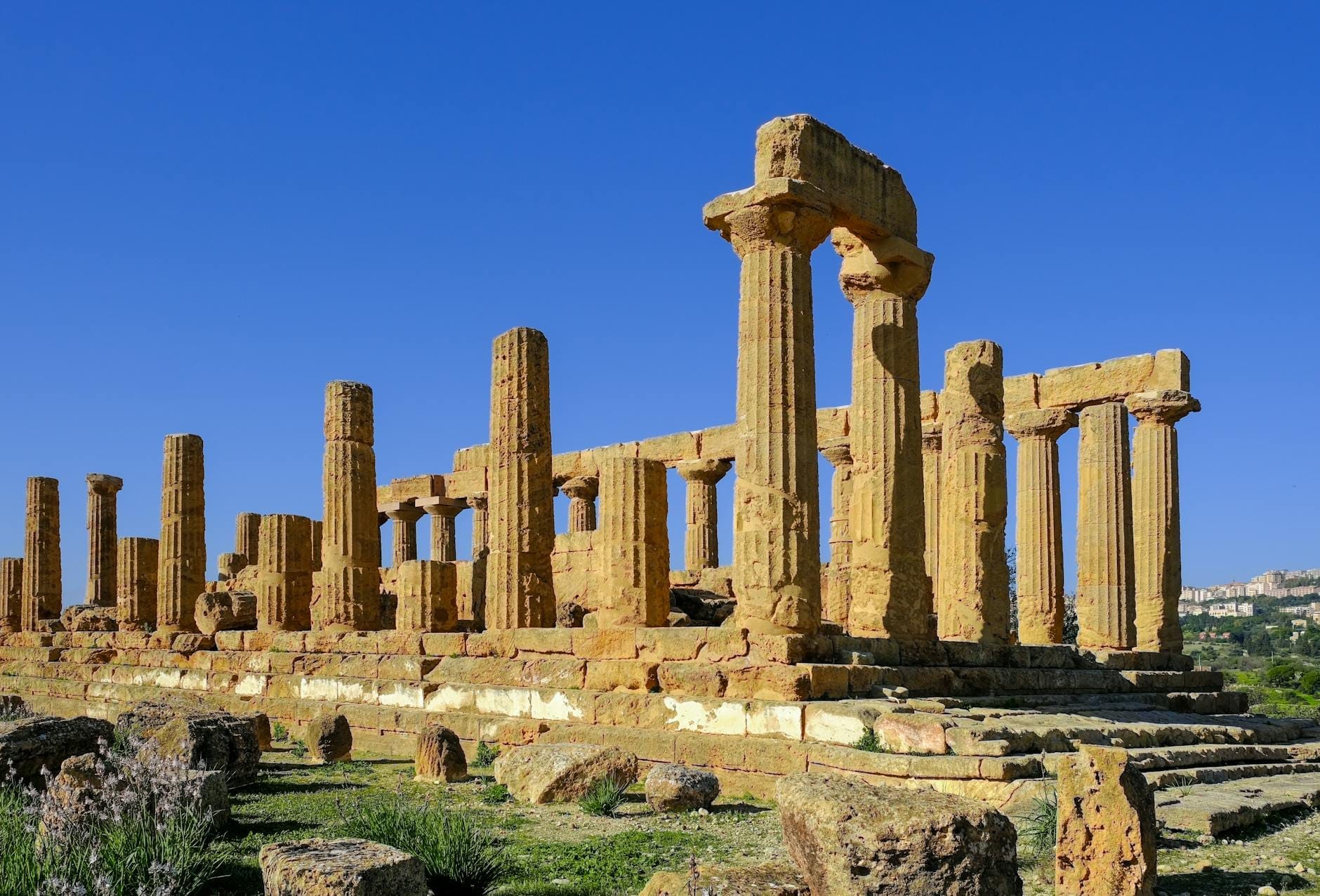
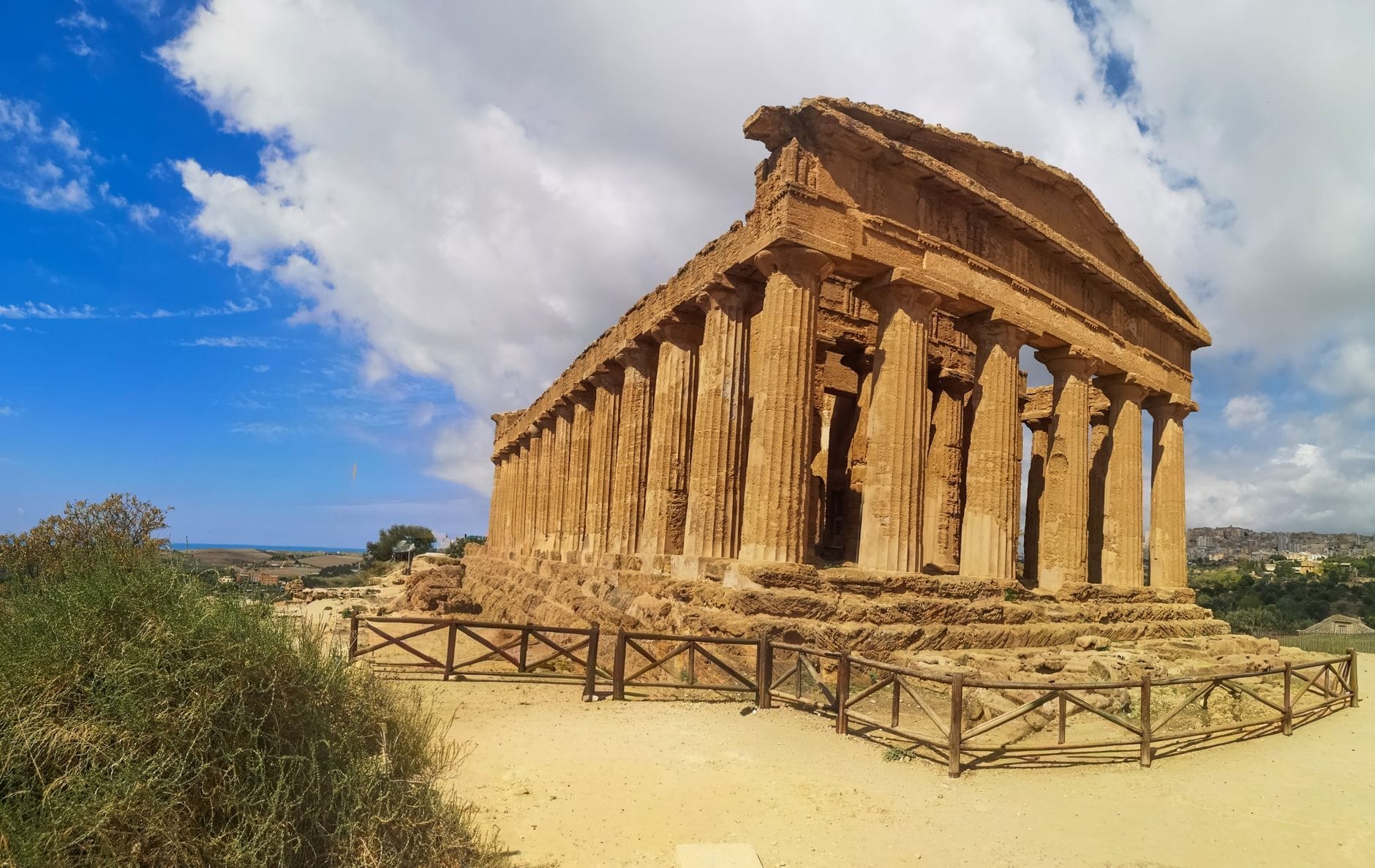
Within the park, the Temple of Concordia is the centrepiece: a Doric temple from around 440 BCE that survives almost complete, with most of its original 34 columns still standing. Its preservation is partly explained by its conversion into a Christian church in the 6th century CE. To the east on the same ridge stands the Temple of Juno, more ruined but dramatically positioned on the highest point of the ridge with open views across the valley to the sea. Between the two, the Sacred Way path connects the monuments through a landscape of ancient tombs, Byzantine cave dwellings, and wild vegetation.
The Regional Archaeological Museum, housed in a former convent building between the modern city and the archaeological park, is not optional if you want to understand what you are looking at. The telamon, a massive reconstructed male figure from the Temple of Olympian Zeus, gives a sense of the scale of the largest temple in the ancient Greek world, which was never completed. The museum's ceramics, coins, and sculpture collection covers the full arc of Akragas from its founding through Roman occupation.
In the historic centre itself, the Cathedral of San Gerlando crowns the highest point of the ridge and has been expanded and modified across several centuries, reflecting Agrigento's Norman, medieval, and baroque layers. Piazza Pirandello is named after the playwright Luigi Pirandello, who was born in the countryside near Agrigento and is one of the city's claims to literary significance. The piazza itself functions as the social centre of the upper town. For the atmospheric pleasure of the historic centre, simply walking Via Atenea from Piazzale Aldo Moro westward and exploring the lanes that drop off either side is worthwhile on its own terms.
Valley of the Temples archaeological park, including the Temple of Concordia and Temple of Juno
Regional Archaeological Museum (Museo Pietro Griffo) between the city and the park
Cathedral of San Gerlando and the views from the hilltop above Via Atenea
Piazza Pirandello and the passeggiata along Via Atenea in the early evening
The Garden of Kolymbetra, an ancient water garden inside the archaeological park maintained by the FAI (Italian National Trust)
ℹ️ Good to know
The Valley of the Temples and the Regional Archaeological Museum can be visited on a combined ticket. Opening hours and admission prices are updated regularly by the park authority, so check the official Valle dei Templi website before your visit.
Eating & Drinking
Agrigento's food scene reflects the patterns of the Sicilian south: straightforward, ingredient-driven cooking, strong on seafood from the nearby coast, and grounded in the agricultural produce of the interior. This is not a city with a competitive restaurant culture targeting food tourists, which is either a drawback or a relief depending on your perspective. The Sicilian food traditions on display here are the unglamorous, daily kind: pasta with local vegetables, grilled fish, ricotta-based desserts, and excellent bread.
The bars along Via Atenea and around Piazza Pirandello are the social infrastructure of the historic centre. Morning coffee is a standing affair at the bar, and the granita, a semi-frozen flavoured ice served with a brioche, is the canonical Sicilian breakfast. Almond granita, made from Agrigento province's notable almond production, is the local specialty and noticeably better here than in versions served further north.
Restaurants are concentrated along Via Atenea and in the streets running off Piazza Pirandello. The area near the archaeological park entrance also has a cluster of restaurants that serve tour groups at lunch, with corresponding pricing and quality variations. For better value and more local atmosphere, eating in the historic centre rather than near the temples is the consistent recommendation. Lunch is the main meal of the day for local restaurants, and many smaller places do not reopen for dinner or keep limited evening hours.
Agrigento province is part of Sicily's wine-producing territory, and local bottles from the area around Menfi and the Platani river valley are worth trying alongside food. For broader context on what to drink across the island, the Sicily wine guide covers the island's key wine regions and grape varieties. Street food options in the historic centre are limited compared to Palermo, but arancini, sfincione, and fresh-baked goods from the local bakeries are easy to find.
💡 Local tip
The almond is to Agrigento what the pistachio is to Bronte. The surrounding province produces a highly regarded variety of almond used in confectionery, marzipan, and the local almond granita. Look for products labelled with the Agrigento or Ribera area origin in any pasticceria in the historic centre.
Getting There & Around
Agrigento has no commercial airport. The closest airports are Palermo Falcone Borsellino (PMO), roughly 120 kilometres to the north, and Catania Fontanarossa (CTA), around 165–180 kilometres to the east. Both are reachable from Agrigento by a combination of train or bus connections, and either airport works depending on your wider Sicily itinerary.
By train, Agrigento Centrale connects to Palermo via the regional Trenitalia service, with a journey time of roughly two hours to two and a half hours on a route that crosses the Sicilian interior through some genuinely dramatic scenery. The line is single-track and not fast, but it is reliable and scenic. There are no direct trains to Catania or Siracusa; those routes require a change at Caltanissetta or other junctions and are time-consuming. For eastern Sicily, the bus or a rental car is more practical. For full guidance on moving between cities, the getting around Sicily guide covers all the options clearly.
Intercity buses, operated by companies including SAL and Cuffaro, connect Agrigento with Palermo, Catania, and other Sicilian cities. Bus services generally depart from the area around Piazzale Rosselli near the railway station. Journey times are comparable to the train on the Palermo route but buses sometimes offer more flexible timing. For the Valley of the Temples, local TUA buses run between the city centre, the archaeological park entrance, and the coastal town of Porto Empedocle.
Within Agrigento, the historic centre is compact enough to cover entirely on foot once you are there, though the steep terrain is worth noting, particularly on the northern side of the ridge. The ZTL restricted traffic zone covers most of the old town around Via Atenea, so if you are driving, parking outside the zone at one of the lots near Piazzale Aldo Moro or Viale della Vittoria and walking in is the standard approach. Taxis are available at the station and around the main piazzas, and are the most convenient option for the 3-kilometre trip down to the Valley of the Temples if you are not walking.
⚠️ What to skip
Drivers should check the current ZTL zone rules before entering the historic centre. The restricted traffic zone around Via Atenea and the old town operates at defined hours with camera enforcement, and fines are sent to the vehicle's registered address. Parking outside the zone and walking in takes about 10 minutes and avoids any complications.
Where to Stay
Accommodation in Agrigento divides broadly between the historic centre on the ridge and the area closer to the Valley of the Temples below. Staying in the historic centre puts you within walking distance of the evening passeggiata, the bars and restaurants along Via Atenea, and the authentic daily life of the city. The trade-off is that the steep streets and ZTL zone can be awkward if you have a car and luggage.
Hotels and B&Bs near the Valle dei Templi are more accessible by car and convenient if your primary goal is the archaeological park, but the immediate surroundings are quieter and less interesting in the evenings. There are also options in the coastal town of Porto Empedocle and at the beach area of San Leone, though both require transport for reaching the city and temples. For help choosing where in Sicily to base yourself more broadly, the where to stay in Sicily guide provides a useful overview across the island's main destinations.
Agrigento is not a luxury hotel destination. The accommodation stock is mostly small hotels, B&Bs, and apartment rentals, with a handful of agriturismi in the surrounding countryside. For travellers on a tighter budget, it is one of the more affordable bases on the island, with rooms in the historic centre available at rates noticeably lower than Palermo or Taormina. The quieter pace and lower prices make it particularly suited to travellers who want time with the archaeology rather than a social scene.
Day Trips and Wider Context
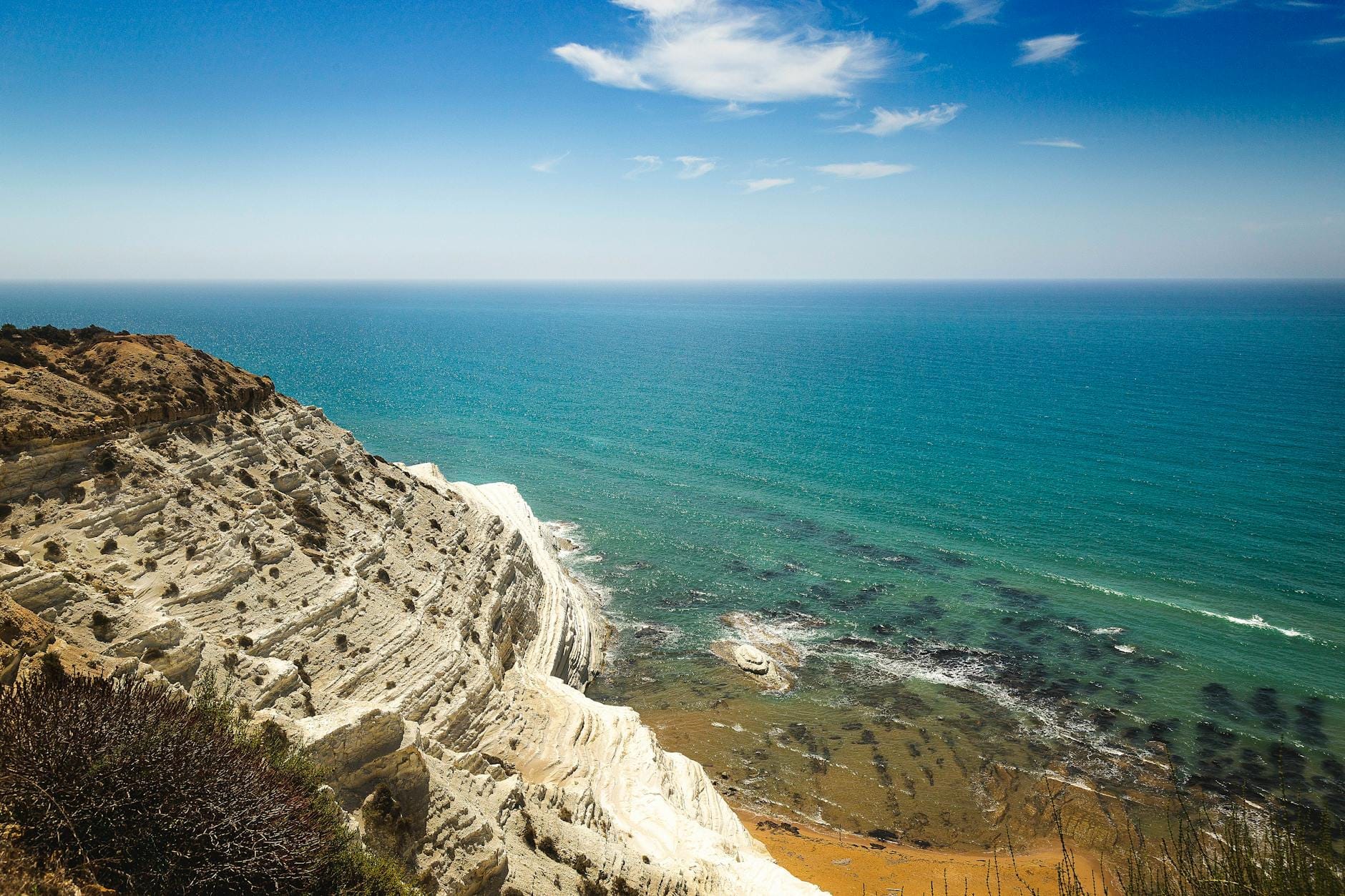
Agrigento's position on the southern coast makes it a reasonable base for exploring several other sites in the area. The Scala dei Turchi, a striking white marl cliff formation west of Agrigento near Realmonte, is one of Sicily's most photographed natural features and about 25 kilometres from the city. The beach at San Leone is the closest swimming option to the city, around 7 kilometres south.
Further west along the SS115, Selinunte is another major Greek archaeological site roughly 80 kilometres from Agrigento, worth combining if you are making a western Sicily circuit. Eastward, the drive to Ragusa Ibla takes around 90 minutes through the agricultural interior and makes a natural next stop on a route across the south of the island. For a broader framework for the region's ancient sites, the best Greek ruins in Sicily guide puts the Valley of the Temples in its full island-wide context.
TL;DR
Agrigento is the base for visiting the Valley of the Temples, one of the best-preserved collections of ancient Greek architecture anywhere in the world, and arguably the single most important archaeological site in Sicily.
The historic centre along Via Atenea is a genuine, unpretentious southern Sicilian town with good bars, affordable restaurants, and a local atmosphere that does not cater primarily to visitors.
Getting here requires a commitment: no nearby airport, slow rail connections, and limited intercity bus options mean Agrigento works best for travellers with a car or those willing to accept longer journey times.
The best time to visit is spring (April to June) or autumn (September to October): the heat at the exposed archaeological park in July and August is significant, and the light in shoulder season is better for both photography and comfort.
Best suited to travellers with an interest in ancient history, those building a southern Sicily itinerary, and anyone who wants authentic Sicilian city life without the polish and prices of the north coast resorts.
Seven volcanic islands, one UNESCO designation, and more logistical decisions than most travelers expect. This guide covers every practical detail you need to plan a trip to the Aeolian Islands, from choosing which islands to visit to navigating seasonal ferry schedules.
The Arab-Norman UNESCO trail covers nine extraordinary monuments across Palermo, Monreale, and Cefalù, inscribed in 2015 for their remarkable fusion of Western, Arab, and Byzantine architecture. This guide covers every site, practical logistics, and the historical context that makes this one of the most intellectually rewarding itineraries in the Mediterranean.
Sicily's Val di Noto is one of Europe's most remarkable architectural achievements: eight towns rebuilt in coordinated Late Baroque style after a catastrophic 1693 earthquake, now a single UNESCO World Heritage Site. This guide covers all eight towns, how to get between them, what to prioritise, and when to go.
Sicily's coastline stretches over 1,000 km across the Tyrrhenian, Ionian, and Mediterranean seas, producing an extraordinary range of beaches. This guide covers the finest sandy bays, volcanic coves, nature reserves, and island escapes the island has to offer.
Sicily was once the heart of Magna Graecia, and the ruins left behind are among the finest ancient Greek monuments anywhere in the world. This guide covers the essential sites, from vast temple complexes to forgotten quarries, with practical advice on what to see and when to go.
Sicily rewards visitors year-round, but timing your trip correctly makes a significant difference. This guide breaks down every season by temperature, crowds, prices, and what's actually worth doing, so you can plan with confidence.
Catania sits at the centre of eastern Sicily, putting some of the island's greatest attractions within easy reach. This guide covers the best day trips from Catania, from the volcanic trails of Etna to the Baroque jewels of the southeast and the ancient ruins of Siracusa.
Palermo sits at the centre of western Sicily, putting an extraordinary range of landscapes, ancient sites, and coastal escapes within a few hours. This guide covers the best day trips from Palermo, from the world's greatest medieval mosaics at Monreale to the Greek temples of Agrigento and the untouched coves of the Zingaro Nature Reserve.
Sicily is large, geographically varied, and not always easy to navigate without the right plan. This guide covers every transport option available, from renting a car to catching intercity buses, so you can move around the island confidently and without wasted time.
Sicily rewards those who look beyond Taormina and Palermo's grand monuments. This guide covers 20 lesser-known attractions across the island, from prehistoric cliff tombs and abandoned earthquake towns to wild coastal reserves and ancient quarries frozen in time.
Sicily is Italy's largest island and the Mediterranean's most historically layered destination. This guide cuts through the hype to give you a clear-eyed look at what the island genuinely offers, what it costs, when to go, and what tends to disappoint — so you can make an informed decision.
Sicily rewards the discerning traveler with a depth that few Mediterranean islands can match. This guide covers the finest luxury hotels, bespoke experiences, and practical logistics for planning a high-end trip to the largest island in the Mediterranean.
Seven days in Sicily is enough to cover the island's greatest hits — Greek temples, baroque city centres, volcanic landscapes, and some of the best street food in Italy. This guide maps out a logical east-to-west route with realistic transport times, seasonal advice, and honest notes on what to skip.
Sicily has four main airports, and choosing the right one can save hours of overland travel. This guide covers Palermo (PMO), Catania (CTA), Trapani (TPS), and Comiso (CIY) in detail, including airport-to-city transfers, route availability, and which gateway suits each part of the island.
Sicily rewards self-drive travel more than almost any other Mediterranean destination. This guide covers everything you need to plan a confident road trip: the best routes, realistic driving times, car rental tips, ZTL zone warnings, seasonal advice, and the stops that genuinely justify the detour.
Sicilian food is not Italian food with a suntan. It is a centuries-old fusion of Greek, Arab, Spanish, and Norman influences, built around seafood, citrus, almonds, ricotta, and durum wheat. This guide covers every dish worth eating, where to find the best versions, and the food customs that will shape every meal you have on the island.
Francis Ford Coppola brought the Corleone saga to life across the hillside villages and historic streets of Sicily. This guide covers every key filming location from all three films, how to reach them, what to expect on the ground, and how to avoid the most common tourist mistakes.
Sicily rewards couples with baroque towns, volcanic landscapes, secluded beaches, and some of the most atmospheric historic centers in the Mediterranean. This guide cuts through the generic advice to tell you exactly where to go, when to go, and what actually makes Sicily special for two.
October is one of the smartest months to visit Sicily. Temperatures ease off from the summer heat, the tourist crush fades, and the island's food and festival calendar comes alive. Here's everything you need to plan your trip well.
Summer in Sicily runs from June through September and brings hot weather, packed beaches, vibrant festivals, and peak travel prices. This guide covers everything you need to know: when to go, what to expect from the heat and crowds, which beaches and islands are worth it, and how to plan smarter than most visitors do.
Sicily is far more than a single island. From the volcanic Aeolian archipelago in the Tyrrhenian Sea to the crystal-clear waters of the Egadi Islands off Trapani, this guide covers every ferry route, island, cost, and logistical detail you need to plan a serious island-hopping trip from Sicily.
Sicily is one of the most rewarding destinations in the Mediterranean, and it doesn't have to cost a fortune. This guide breaks down real daily costs, the cheapest times to visit, where to eat well for under €10, and how to see the island's best sights without draining your account.
The Opera dei Pupi is one of Sicily's most distinctive cultural exports — a UNESCO-recognised marionette tradition rooted in medieval chivalric epics, performed by family troupes across the island. This guide covers the history, the two rival schools, where to see performances in Palermo, Catania, and Siracusa, and how to get the most out of attending a show.
Sicily is one of southern Europe's most rewarding destinations, and it is genuinely safe for tourists. This guide cuts through the stereotypes, explains what the real risks are, identifies the scams that do happen, and gives you practical tools to visit with confidence.
Sicily produces some of Italy's most distinctive street food, rooted in centuries of Arab, Norman, and Spanish influence. This guide breaks down the essential dishes by city, the markets where locals actually eat them, what to pay, and what to skip.
Sicily sits on one of the most volcanically active zones in Europe. This guide breaks down what to expect from Etna, Stromboli, and Vulcano — three very different volcanic experiences — covering access, trails, safety, and the best time to visit each one.
Both Sicily and Sardinia are autonomous regions of Italy with distinct identities, landscapes, and travel experiences. This guide breaks down the real differences in culture, beaches, food, costs, and logistics so you can choose the right island for your trip.
Sicily is Italy's largest wine region by vineyard area, with 23 DOCs, one DOCG, and a lineup of native grapes that rival anywhere in Europe. This guide breaks down the key appellations, the grapes behind them, and exactly how to plan a tasting trip across the island.
Sicily delivers an extraordinary range of family experiences, from volcanic landscapes and ancient Greek ruins to puppet theatre and sweeping beaches. This guide breaks down the best kid-friendly activities, practical logistics, seasonal timing, and practical advice to help families plan a smooth, memorable trip.
Sicily rewards travelers with an extraordinary range of experiences: ancient Greek ruins, active volcanoes, UNESCO Baroque towns, Norman cathedrals, and coastline that stretches nearly 1,000 km. This guide covers the best things to do in Sicily across every corner of the island, with practical advice on timing, costs, and how to avoid the common pitfalls.
Sicily rewards travelers who give it time. This complete 14-day itinerary covers the island's east coast highlights, Baroque south, ancient Greek south, and the layered history of the west, with practical routing advice, seasonal tips, and practical guidance on trade-offs.
Sicily is the Mediterranean's largest island, and picking the right base makes or breaks your trip. This guide covers the best towns to stay in across every corner of the island, from the baroque southeast to the volcanic northeast, with practical advice on prices, transport, and seasonal trade-offs.