Qingyang District sits at the geographic and cultural center of Chengdu, holding an extraordinary concentration of the city's most significant heritage sites. From the ancient Taoist complex of Qingyang Palace to the literary pilgrimage site of Du Fu Thatched Cottage and the elegant pedestrian lanes of Kuanzhai Alley, this is where Chengdu's past is most legibly written into the streets.
Qingyang District is Chengdu's cultural core, a roughly 66 km² central district where Taoist temples, Tang Dynasty poetry sites, major museums, and one of the city's most beloved public parks exist within easy walking distance of one another. It is less commercially frenetic than neighboring Jinjiang District to the east, and that relative calm is precisely what gives it its character.
Orientation: Finding Your Bearings in Qingyang
Qingyang District occupies the central-western quadrant of Chengdu's urban core, covering approximately 66 km² and divided into 12 subdistricts. Its eastern boundary runs roughly along Renmin Middle Road, placing it immediately west of Tianfu Square and the commercial heart of Jinjiang District. To the north, it abuts Jinniu District; to the south and southwest, it transitions toward Wuhou District.
The district's internal geography is organized around several major arteries. Qingyang Avenue runs east-west through the middle of the district, connecting the Qingyang Palace area with the inner ring road. Caotang Road leads southwest toward Du Fu Thatched Cottage and the Huanhua Creek wetland corridor. Xihuamen Street and the northern stretch of Renmin Middle Road define the district's eastern edge, where it meets the axis running down through Tianfu Square. For first-time visitors, the simplest mental anchor is this: Qingyang holds most of what lies west of Tianfu Square and south of the Jinniu commercial belt.
Qingyang is not a single walkable village — it is a full urban district, and its attractions are spread across a zone that takes around 40 minutes to cross on foot from east to west. The practical approach is to use the metro as your connector and then walk within clusters. The eastern cluster around Kuanzhai Alley and Wenshu Monastery, the central axis near Qingyang Palace and People's Park, and the southwestern pocket around Du Fu Thatched Cottage each reward an hour or two on foot.
ℹ️ Good to know
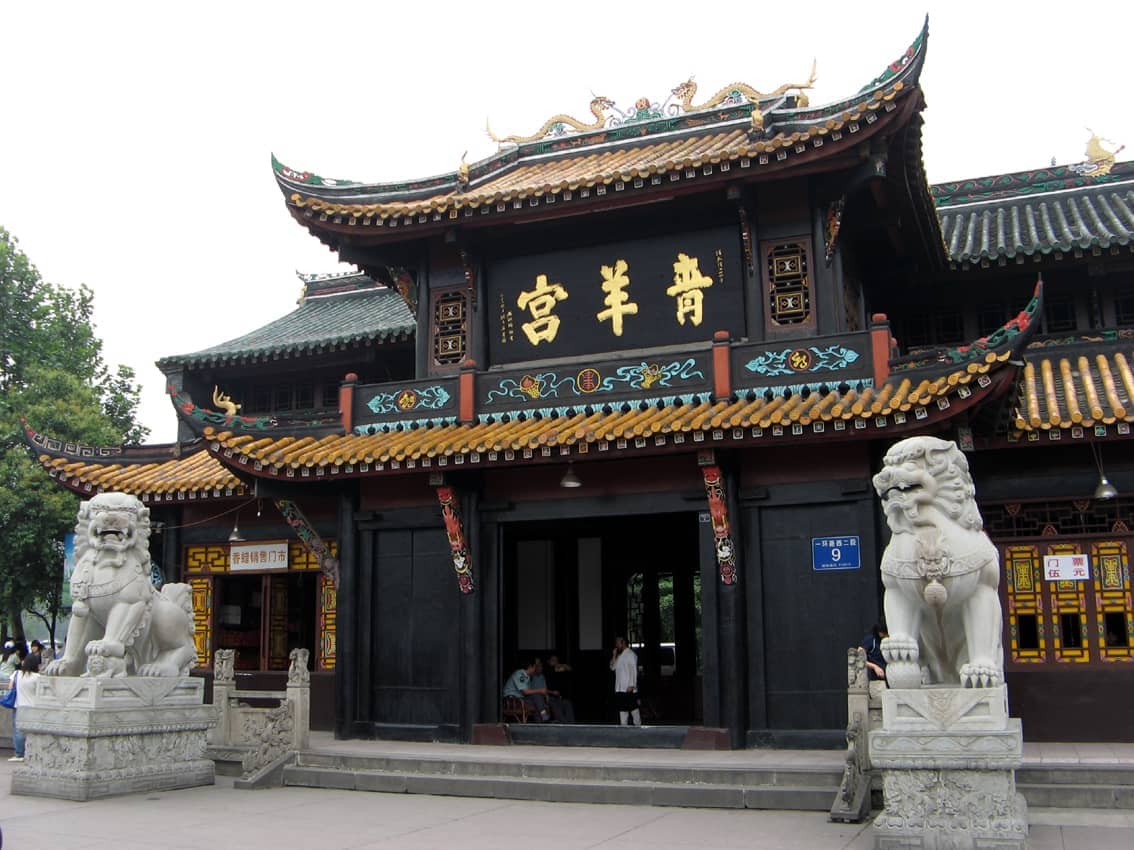
Qingyang District is named after Qingyang Palace (青羊宫, Qīngyáng Gōng), one of Chengdu's oldest Taoist complexes. The name translates loosely as 'Green Ram Palace,' referring to the famous bronze ram statues housed within the temple.
Character and Atmosphere: What Qingyang Actually Feels Like
Early mornings in Qingyang are when the district is most honestly itself. By 7am, the paths around People's Park are filled with retirees doing slow-motion tai chi near the lake edge, couples walking toy-sized dogs, and older men gathering around mahjong tables under the willows. The morning light filters through camphor trees, and the air smells of damp stone and incense drifting from the direction of Qingyang Palace. There is a particular unhurried quality to this time of day here that is harder to find in the commercial districts to the east.
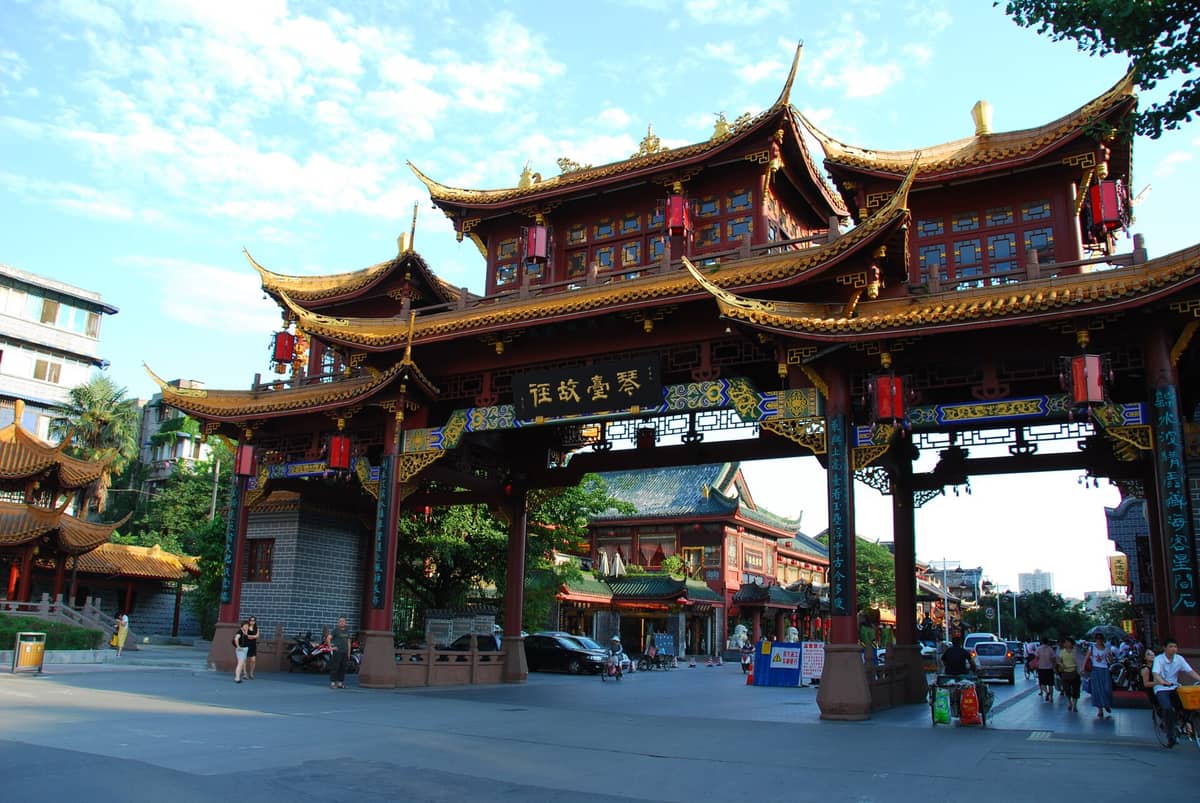
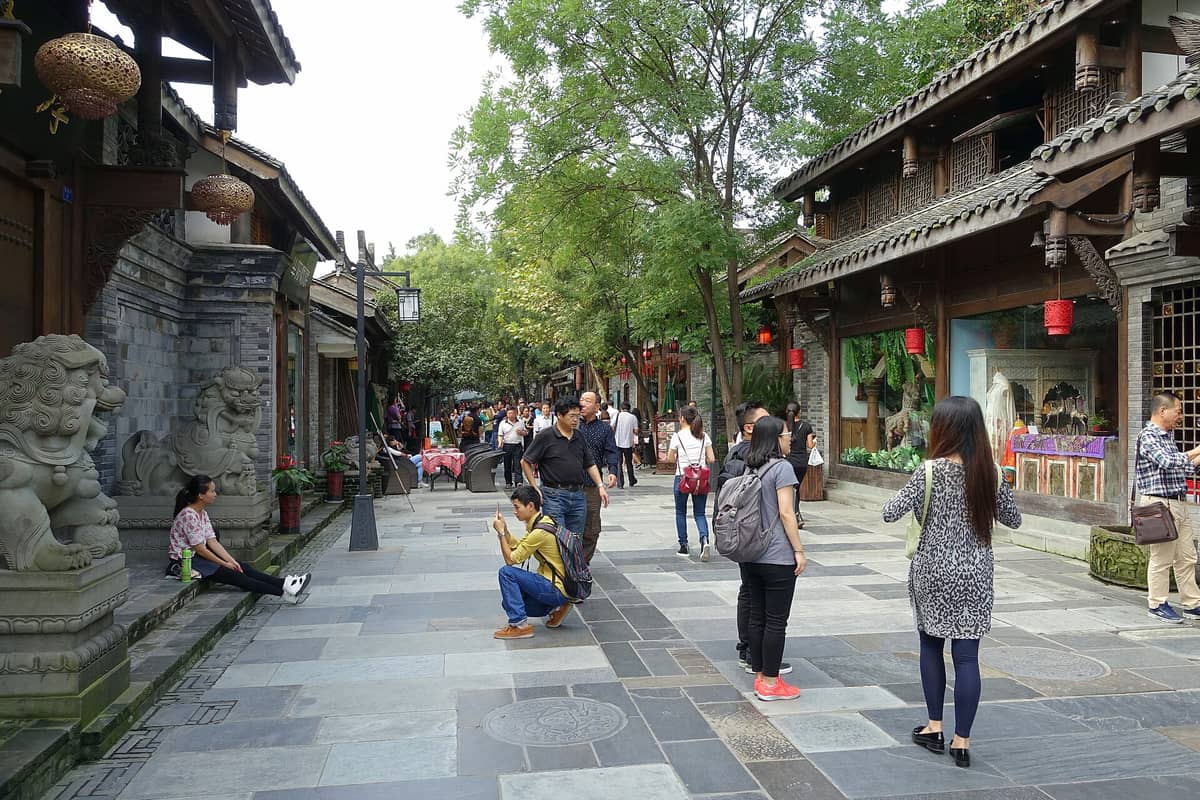
By mid-morning, the tourist sites begin to fill. Kuanzhai Alley, the district's most photographed pedestrian lane complex, shifts from a relatively quiet morning stroll into something considerably more crowded by 11am on weekends. The lanes themselves are genuinely attractive: grey-brick courtyard architecture from the Qing Dynasty, narrow enough that the buildings create a corridor of shade, with small shops and tea houses set into the ground floors. The crowds are real, though, and the commercial layer has grown thick over the years. If you are visiting for the architecture, go before 9:30am.
The streets around Du Fu Thatched Cottage to the southwest feel different again: quieter, greener, with the Huanhua Creek running alongside Caotang Road under old trees. This corner of Qingyang has a scholarly, slightly melancholy atmosphere that suits the memorial to the Tang Dynasty poet Du Fu, who lived here during a period of political exile. Even on weekdays, this part of the district draws a more contemplative visitor than the Kuanzhai Alley crowd.
After dark, Qingyang is calmer than Jinjiang District or the Wuhou nightlife belt around Jinli. The area around Kuanzhai Alley keeps going until around 10pm, with lanterns lit and bars and teahouses still open, but it does not have the late-night intensity of some other parts of Chengdu. For visitors who prefer not to stay next to a major nightlife strip, this is actually an advantage.
What to See and Do in Qingyang District
The district's headline attraction for many visitors is Kuanzhai Alley, a restored complex of three parallel historic lanes: Kuan (Wide) Alley, Zhai (Narrow) Alley, and Jing (Well) Alley. The architecture is genuine Qing Dynasty courtyard housing, though the tenant mix has shifted heavily toward tourism-facing businesses. It is still worth a morning visit for the spatial quality of the lanes and the well-preserved gate structures, even if the souvenir density can feel overwhelming.
A short walk north of Kuanzhai Alley, Wenshu Monastery is one of Chengdu's most active Buddhist temples and arguably the most atmospheric religious site in the central city. The monastery complex dates to the Tang Dynasty and has been continuously in use. The vegetarian restaurant inside the monastery grounds is a practical lunch option as much as a cultural experience. The surrounding streets have developed into a tea-house and snack-food strip that is considerably less packaged than Kuanzhai Alley.
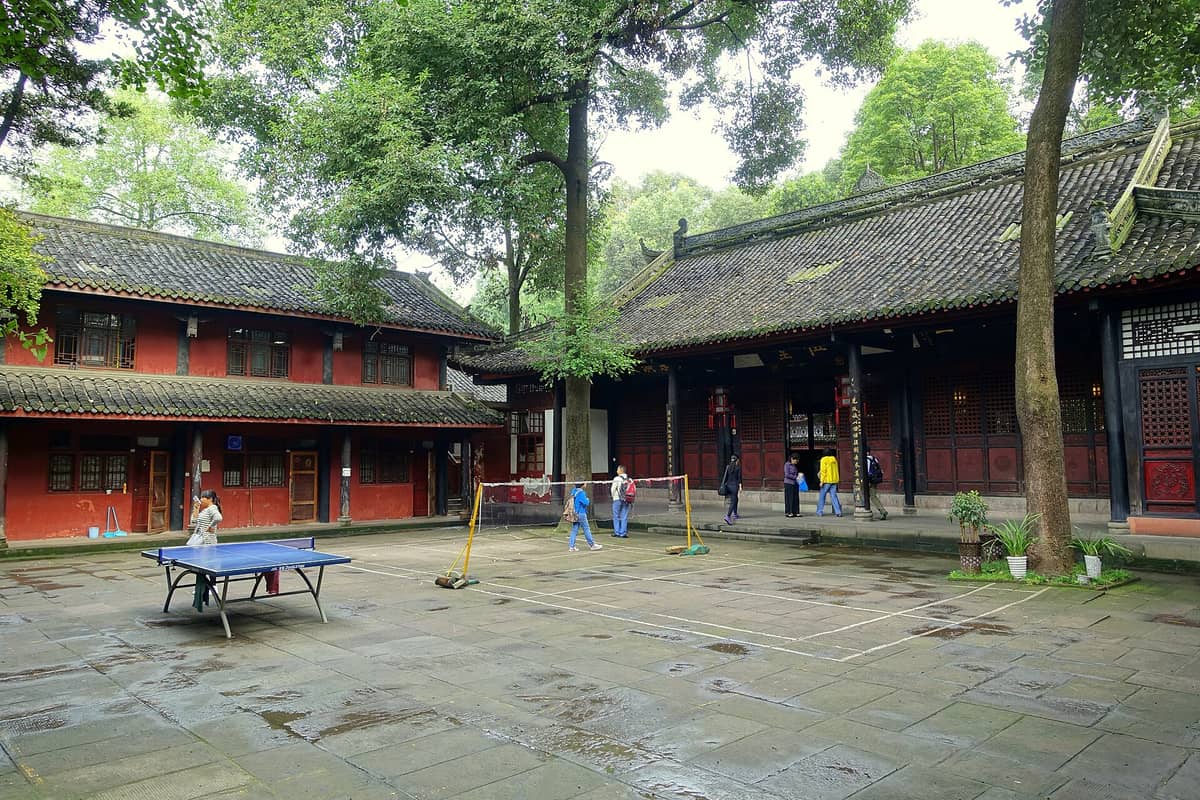
Qingyang Palace is one of the oldest Taoist temples in southwest China, with origins traced back to the Tang Dynasty.. It sits adjacent to the grounds of Huanhua Creek Park, and the two are commonly visited together. The main hall complex contains the famous twin bronze rams — one with features of all 12 zodiac animals — and the atmosphere on ordinary weekdays is genuinely devotional rather than performative.
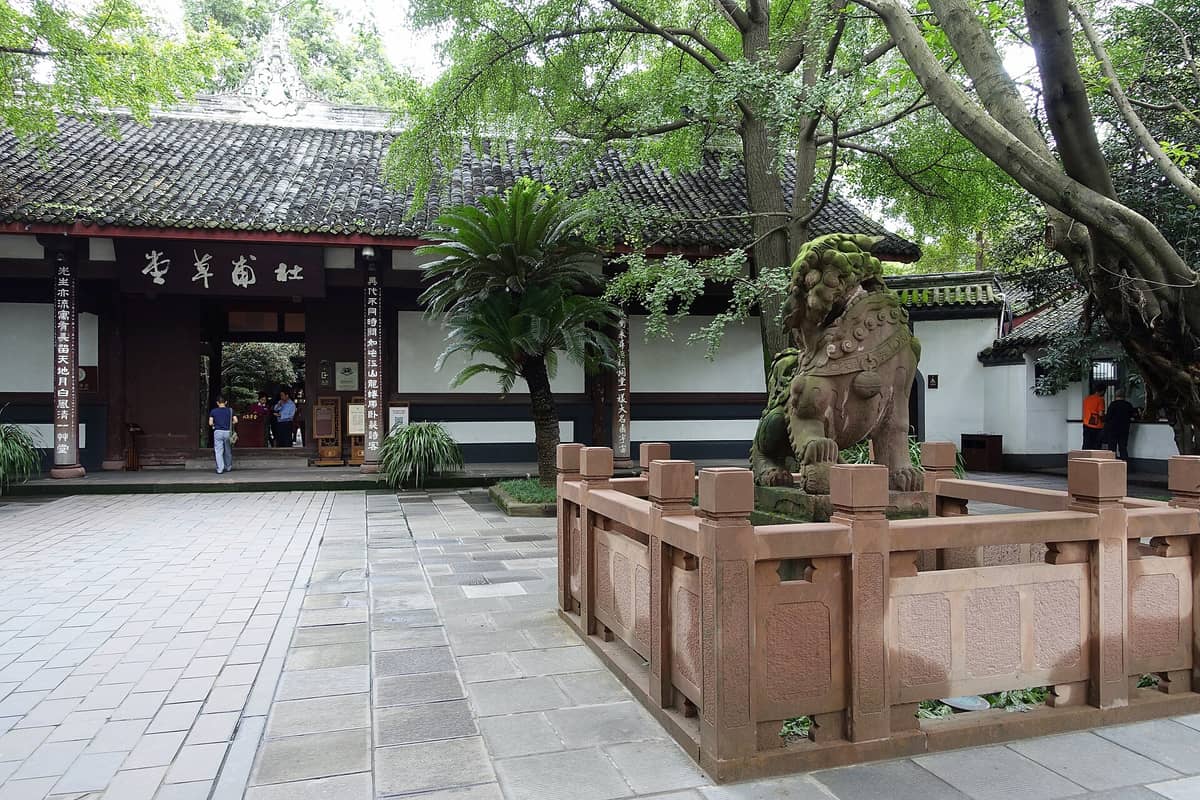
Du Fu Thatched Cottage is the reconstructed residence where the Tang Dynasty poet Du Fu lived for roughly four years in the 8th century. The gardens are extensive and thoughtfully maintained, and the site works well even for visitors with no prior knowledge of classical Chinese poetry, because the spatial experience — traditional pavilions in a mature garden beside a creek — is genuinely pleasant. It is also considerably less crowded than the headline temple sites.
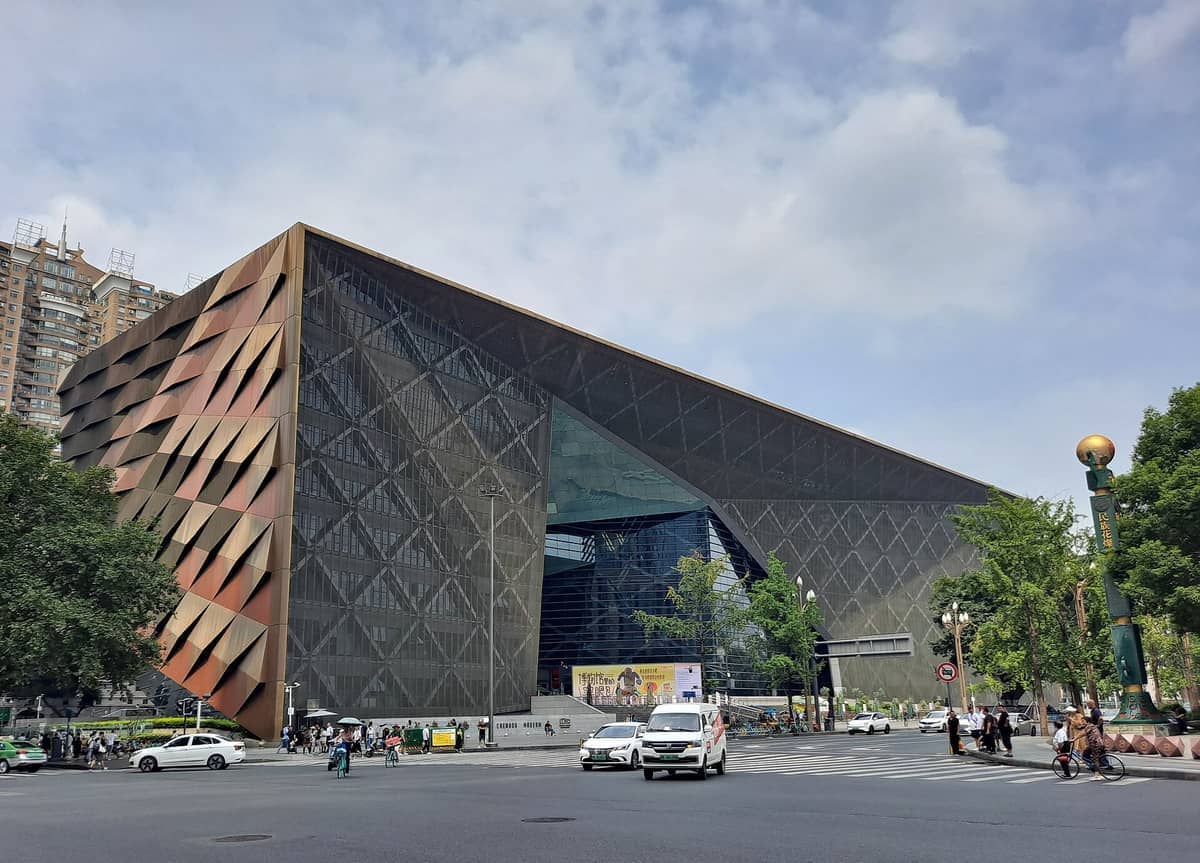
Chengdu Museum: A large, well-curated city history museum near Tianfu Square, covering Chengdu from the Sanxingdui era through to the modern period
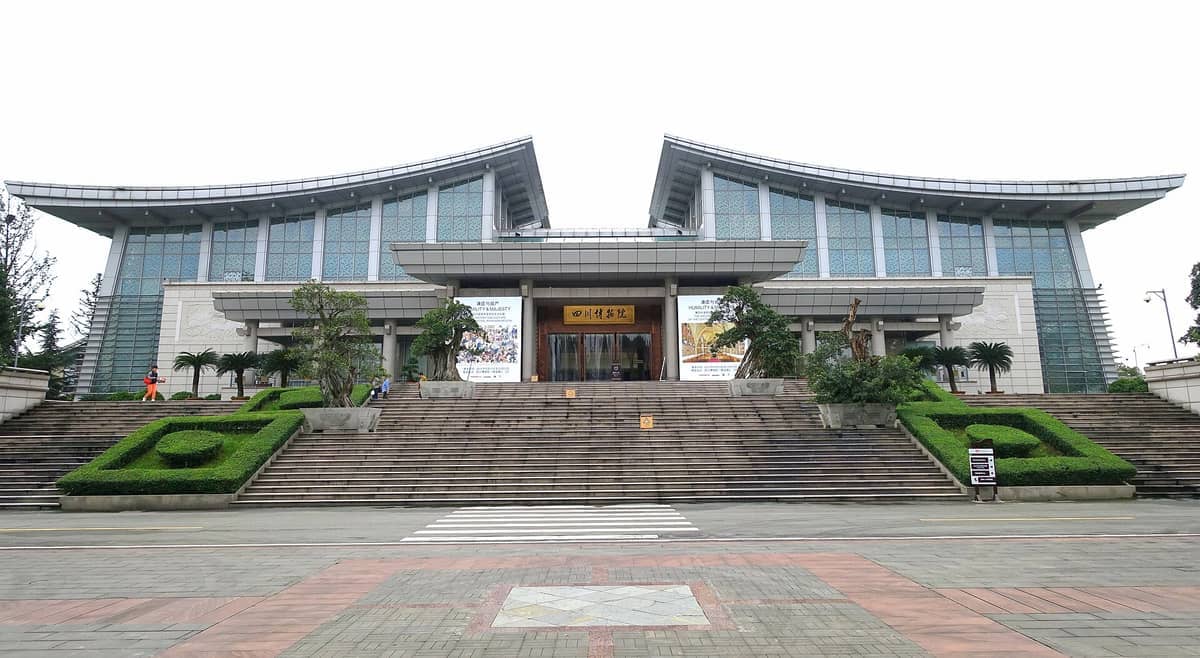
Sichuan Provincial Museum: One of China's significant provincial museums, with strong collections in bronzeware, ceramics, Tibetan art, and Han Dynasty artifacts
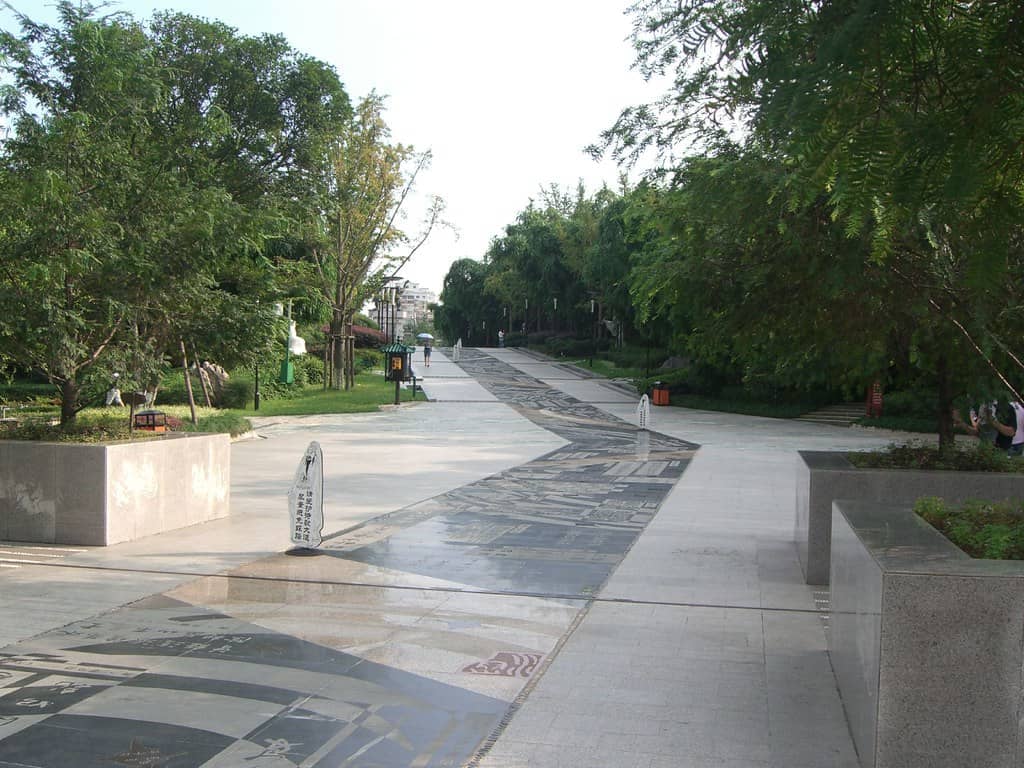
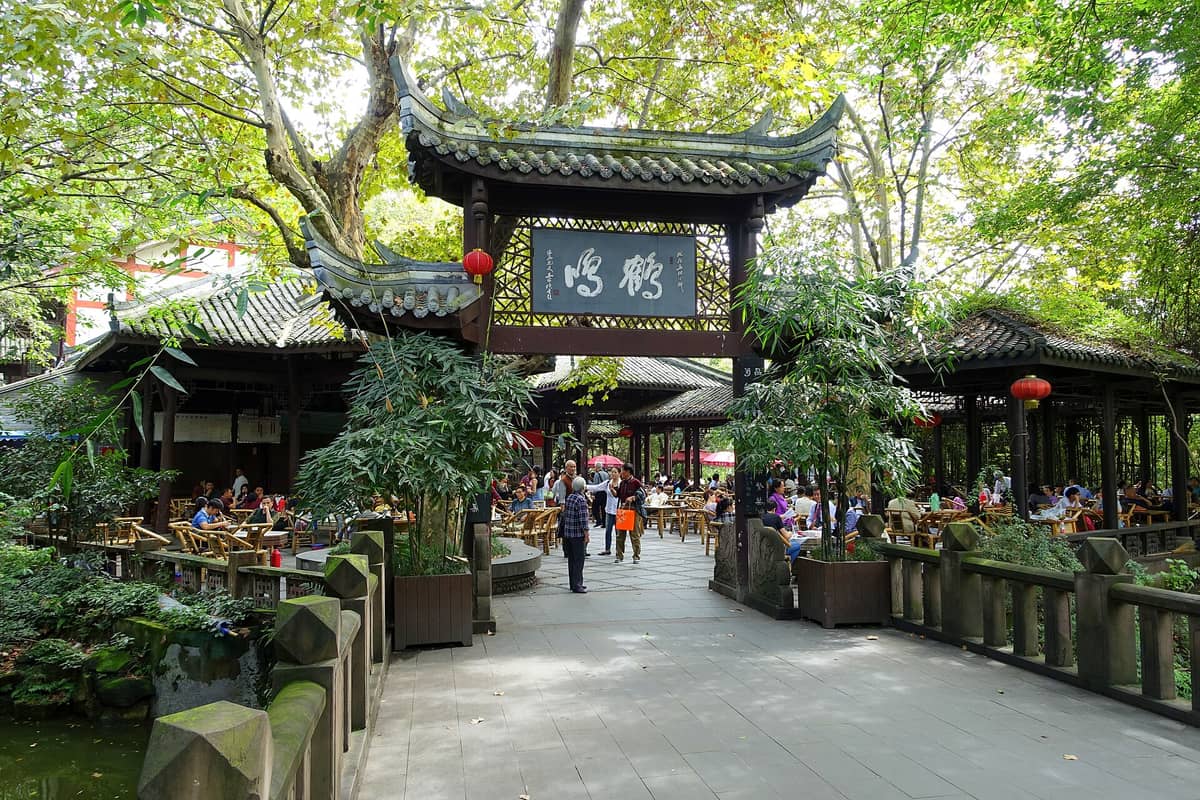
People's Park: The central green lung of Qingyang, with a lake, pavilions, a memorable tea-house terrace, and a monument to the railway protection movement of 1911
Huanhua Creek Park (Huanhuaxi Park): A large riverside park running along the creek near Du Fu Thatched Cottage, popular with local families on weekend mornings
💡 Local tip
People's Park on a weekend afternoon hosts one of Chengdu's most distinctive local scenes: the 'blind date corner,' where parents post printed profiles of their adult children seeking marriage partners on trees and fences. It is entirely open to respectful observation and is a genuine slice of contemporary urban Chinese social life.
Eating and Drinking in Qingyang
Qingyang's food scene rewards walking away from the main tourist lanes. The streets immediately surrounding Kuanzhai Alley have predictable tourist pricing and average quality. A better approach is to follow the locals to the streets around Wenshu Monastery, where you will find a dense concentration of Sichuanese snack stalls, noodle shops, and tea houses with genuine character. This area is a good starting point for anyone following a Chengdu street food guide.
Chengdu's tea culture is particularly well expressed in Qingyang. People's Park contains one of the city's most famous open-air tea houses, where hundreds of bamboo chairs are arranged around a central lawn and the going rate for a cup of gaiwan tea is low enough that locals spend entire afternoons there. For a more comprehensive look at this tradition, the district is a good anchor point for anyone exploring the Chengdu tea house scene.
For hot pot, Qingyang has no shortage of options, from small neighborhood restaurants on the side streets off Qingyang Avenue to larger established chains. The dish originated in the Sichuan-Chongqing region and Chengdu's version tends to use a richer, more fragrant base than Chongqing's. Anyone planning to eat hot pot seriously should consult a dedicated Chengdu hot pot guide before choosing a restaurant, as quality and style vary considerably.
Wenshu Monastery vegetarian restaurant: A genuinely good canteen-style meal inside the monastery compound, inexpensive and atmospheric
Kuanzhai Alley interior restaurants: Expensive relative to the rest of the city, but the courtyard settings can be pleasant for a slow lunch
Street food near Wenshu: Dan dan noodles, zhong dumplings, rabbit head, and various cold-tossed vegetable dishes at ordinary local prices
People's Park tea house: Low prices, high atmosphere, a quintessential Chengdu afternoon experience
Getting There and Around Qingyang District
Qingyang District is well served by Chengdu Metro, with Lines 1, 2, 4, 5, 7, and 9 all passing through or touching the district. For practical trip planning, the most useful stops are: People's Park station on Line 2 for the park, the tea house culture, and as a staging point for Kuanzhai Alley (approximately 15 minutes on foot heading northwest); Kuanzhai Alley station on Line 4, which deposits you within easy walking distance of the lane complex itself; and Qingyang Palace station on Line 5, the most direct approach to Qingyang Palace..
For Du Fu Thatched Cottage and the Huanhua Creek area, Caotang North Road station on Line 4 is the nearest metro stop. The walk from there to the cottage entrance takes roughly 10 minutes. More than 160 municipal bus routes serve the district, which gives good connectivity to areas not directly on a metro line. For broader transit context across the city, see the guide to getting around Chengdu.
Within the district, the best way to move between the main cultural clusters is a combination of metro and walking. The gap between Kuanzhai Alley and Qingyang Palace is about 25 minutes on foot through ordinary residential streets, which is manageable in mild weather. In summer heat or rain, take Line 4 one stop and walk from there. Didi ride-hailing is available throughout the district and is the most practical option for the Du Fu Thatched Cottage area after 8pm when foot traffic thins.
⚠️ What to skip
Qingyang Avenue and Renmin Middle Road are both very wide arterial roads with heavy traffic. Pedestrian crossings are at designated points only, and jaywalking across these roads is genuinely dangerous. Use underpasses or signaled crossings, particularly around the Tianfu Square western exits.
Where to Stay in Qingyang District
Qingyang is a practical base for visitors prioritizing cultural sightseeing over nightlife or shopping. The area around Kuanzhai Alley has the densest concentration of accommodation options, ranging from international chain hotels on the main roads to boutique guesthouses in converted courtyard buildings within the lanes themselves. These smaller properties fill quickly on weekends and national holidays, so booking ahead is necessary. For a broader comparison of where to base yourself across the city, see the where to stay in Chengdu guide.
Staying within or adjacent to Kuanzhai Alley gives you immediate access to the historic lane complex before the crowds arrive, which is one of the best arguments for basing yourself here rather than in Jinjiang District. The tradeoff is that the area is quieter at night and further from the main shopping and dining concentration around Chunxi Road, which is about 25 minutes on foot or two metro stops to the east.
The People's Park neighborhood is another solid base: central, connected, relatively quiet at night, and within walking distance of both the park and the Wenshu Monastery food strip. It suits travelers who want to feel embedded in ordinary Chengdu urban life rather than in a tourist precinct. Budget accommodation in this area is more readily available than in the Kuanzhai Alley zone.
💡 Local tip
If you are planning a full Chengdu itinerary that includes the Chengdu Panda Base, note that it sits in Chenghua District to the northeast. From Qingyang, the journey takes about 40-50 minutes by metro and on-site transport. It is entirely doable as a morning excursion before returning to the district for afternoon sightseeing.
Honest Assessment: Is Qingyang Right for You?
Qingyang District is not the most immediately exciting part of Chengdu for visitors chasing nightlife, modern architecture, or high-end shopping. Those experiences are better found in Jinjiang District around Taikoo Li Chengdu and Chunxi Road, or in Wuhou around the Jinli strip. What Qingyang offers instead is depth: a concentration of genuine heritage sites, parks, and cultural institutions that rewards a slow approach.
The Kuanzhai Alley complex has become noticeably touristy, and visitors who have already seen similar restored historic lanes elsewhere in China may find it feels familiar. The better argument for Qingyang is the combination of sites that do not get enough attention: the Sichuan Provincial Museum, the Wenshu Monastery food streets, the morning atmosphere at People's Park, and the quiet garden of Du Fu Thatched Cottage. These are the parts of the district that make it worth more than a single afternoon. For a broader sense of how this district fits into a first visit to the city, the Chengdu first-timer guide covers the full picture.
TL;DR
Qingyang is Chengdu's primary cultural district: Qingyang Palace, Du Fu Thatched Cottage, Kuanzhai Alley, Wenshu Monastery, People's Park, and two major museums all sit within its boundaries.
Best for travelers who prioritize heritage sightseeing, parks, and the local daily-life atmosphere over nightlife or high-end shopping.
Kuanzhai Alley is genuinely worth visiting but arrives crowded by mid-morning on weekends; go early or on a weekday for the best experience.
The metro network (Lines 1, 2, 4, 5, 7, 9) makes the district easy to navigate, and multiple clusters reward walking once you are in each zone.
Not the right base if you want to be in the middle of Chengdu's nightlife or step-out shopping; for that, Jinjiang District to the east is a better fit.
Three days is enough time to cover Chengdu's essential experiences without rushing. This itinerary balances the panda base, historic streets, Sichuan cuisine, cultural landmarks, and a day trip option, with practical notes on logistics, timing, and what to skip.
Chengdu's museum scene spans 4,500 years of Sichuan history, from mysterious Bronze Age civilizations to Tang Dynasty poets and dinosaur fossils. This guide covers the standout institutions, what to expect inside each one, and how to plan your visits efficiently.
Chengdu's temple scene spans 1,400 years of Buddhist and Taoist history, from incense-filled city monasteries to sacred peaks rising above the clouds. This guide covers the best temples in Chengdu and beyond, with honest advice on what to expect at each one.
Chengdu rewards visitors year-round, but the timing of your trip makes a real difference. This guide breaks down every season by weather, crowd levels, panda activity, and practical logistics so you can choose the window that actually suits your plans.
Chengdu is surrounded by ancient towns that most visitors completely overlook. This guide covers the five best options — Huanglongxi, Luodai, Jiezi, Anren, and Pingle — with real transport details, honest assessments, and seasonal advice to help you choose the right one for your trip.
Chinese New Year transforms Chengdu into one of China's most atmospheric festival cities, with temple fairs, lantern displays, and Sichuan folk performances across the city. But the season also brings peak crowds, tight transport, and some genuine planning challenges. This guide tells you exactly what to expect and how to prepare.
Chengdu is the capital of Sichuan Province, home to 21 million people, giant pandas, and some of the most distinctive food in China. This guide covers the practical details that actually matter for a first visit: which airport you land at, when to go, what to eat, where to stay, and how to get around without confusion.
Chengdu has a slower, more sensory side that makes it genuinely rewarding for couples. This guide covers the most romantic experiences in the city — from dawn panda visits and teahouse afternoons to Sichuan opera nights and scenic day trips — with a clear take on what's worth your time.
Hot pot is not just a meal in Chengdu — it is the social ritual that defines the city's food culture. This guide covers the best restaurants for Sichuan hot pot, exactly how to order, what to expect on the bill, and how to handle the heat without ruining your evening.
Chengdu's after-dark scene runs deeper than the typical tourist circuit. This guide breaks down the city's main nightlife districts, what each one actually offers, realistic price ranges, and how to get around after the metro stops running.
Chengdu is one of China's most rewarding cities for budget travelers. From free parks and temples to street food that costs less than a coffee back home, here's how to experience the best of Chengdu without overspending.
Chengdu is the world's foremost destination for seeing giant pandas in a conservation setting. This guide covers the Chengdu Research Base of Giant Panda Breeding in detail, how to book tickets, the best time to arrive, how to get there, and what the experience is actually like — including what most visitors get wrong.
Chengdu rewards those who step outside. This guide covers the city's best parks, gardens, riverside walks, and natural escapes, from the teahouse-dotted paths of People's Park to the forested peaks of Mount Qingcheng, an hour from the city center.
Chengdu is one of China's safest major cities for visitors, but that doesn't mean you can skip due diligence. From airport taxi scams to tea house traps, here's everything you need to stay safe, avoid getting ripped off, and travel with confidence.
Chengdu is one of southwestern China's best cities for shopping, whether you're after luxury brands, handmade Shu brocade, panda merchandise, or bulk spices for your hotpot. This guide covers the top malls, local markets, souvenir picks, and practical advice to help you spend wisely.
Chengdu is a UNESCO Creative City of Gastronomy and one of the most rewarding cities in Asia for eating on foot. This guide covers the essential Sichuan dishes, the best street food districts, practical navigation tips, and honest notes on what lives up to the hype.
Tea houses are central to daily life in Chengdu in a way that few cities can claim. This guide covers the history, etiquette, best venues, what things cost, and exactly what to expect when you sit down for tea in one of China's most relaxed cities.
The Chengdu to Chongqing route is one of southwestern China's most popular day trips or short breaks. This guide covers every transport option, station logistics, fare breakdowns, and how to make the most of your time in both cities.
Two of southwestern China's most compelling cities, separated by roughly 300 km and connected by high-speed rail. This guide breaks down what each city does best, who each suits, and whether you should bother visiting both.
Chengdu's historic core is genuinely walkable, but only if you know which clusters of sights sit close together and which require transport. This guide maps out three practical self-guided walking routes, breaks down entry costs, and flags the common mistakes that turn a pleasant city walk into an exhausting detour.
Chengdu is one of China's most family-friendly cities, pairing iconic wildlife encounters with hands-on cultural experiences, open parks, and food kids actually enjoy. This guide covers the top activities for families, practical logistics, and practical notes on what works best with children in tow.
Chengdu sits at the center of one of China's richest regions for day-trip travel. Within two hours by rail or road, you can stand before a 71-meter Tang Dynasty Buddha, hike Taoist mountain trails, and explore a 2,300-year-old irrigation system still in use today. This guide covers the best day trips from Chengdu, organized by theme.
Chengdu has two airports, an expanding metro network, and a ride-hailing app that works well once you set it up. This guide covers every transport option with real fares, practical route advice, and honest warnings about what to avoid.
Chengdu is the capital of Sichuan Province and home to giant pandas, world-class spicy food, ancient heritage, and one of China's most livable urban cultures. This guide cuts through the hype to tell you exactly what to expect, what to skip, and whether Chengdu deserves a spot on your itinerary.
Sichuan Opera is one of Chengdu's most distinctive cultural experiences, but knowing where to go, what to expect, and how to book makes a real difference. This guide covers the top venues, ticket tiers, the truth about face-changing, and practical logistics to help you plan a show worth attending.
Chengdu is one of China's most rewarding cities to explore, with a lineup that runs from giant panda encounters and 2,300-year-old irrigation systems to fiery hot pot dinners and late-night tea houses. This guide covers the best things to do in Chengdu with specific advice on timing, tickets, transport, and what to skip.
Chengdu is one of China's great eating cities, and Sichuan cuisine is far more complex than its reputation for chili heat suggests. This guide covers the essential dishes, street snacks, hot pot etiquette, price ranges, and where to actually find the best food across the city.
Choosing where to stay in Chengdu is straightforward once you understand the city's layout and metro network. This guide breaks down the top neighbourhoods by location, price range, and what kind of trip they suit best, so you can book with confidence.