Chengdu Safety Tips & Scams to Avoid: A Practical Guide for Travelers
Chengdu is one of China's safest major cities for visitors, but that doesn't mean you can skip due diligence. From airport taxi scams to tea house traps, here's everything you need to stay safe, avoid getting ripped off, and travel with confidence.
Plan and book this trip
Tools from our partner Travelpayouts help you compare flights and hotels. If you book through them, we may earn a commission at no extra cost to you.
Flights
Hotels map
TL;DR
- Chengdu is generally very safe for tourists, with low violent crime rates, but petty scams targeting foreigners do exist around major attractions.
- The biggest risks are transport-related: unlicensed taxis, airport touts, and ride-hailing payment confusion. Use metered cabs or app-based transport to avoid overcharges.
- Tea house invitations from strangers near Wenshu Monastery and Kuanzhai Alley are a well-documented tourist trap — always confirm prices before sitting down.
- Emergency numbers: Police 110, Ambulance 120, Fire 119. Keep your passport and hotel address accessible at all times.
- Chengdu has two airports: Tianfu (TFU) and Shuangliu (CTU). Confirm your airport code before booking transport, and check the first-timer guide for arrival logistics.
How Safe Is Chengdu for Tourists?

By the standards of a Chinese megacity with over 21 million residents, Chengdu has a low rate of violent crime against tourists. Pickpocketing, physical assault, and street crime are genuinely uncommon compared to major cities in Europe or the Americas. Most visitors complete their trips without any incident more serious than paying slightly too much for a souvenir.
That said, Chengdu is not risk-free. Scams targeting tourists are concentrated around high-footfall areas: Jinli Ancient Street, Kuanzhai Alley, Wenshu Monastery, the area around Chunxi Road, and popular panda-related transport routes. The tactics are rarely aggressive, but they are effective precisely because they seem friendly and low-pressure.
The honest picture: the risks in Chengdu are overwhelmingly financial rather than physical. You're unlikely to be robbed, but you might overpay for tea, get taken to the wrong destination in a private car, or buy counterfeit tickets. This guide covers the specific scenarios worth knowing about. For broader orientation, the Chengdu first-timer guide covers arrival logistics, neighborhoods, and transport in more detail.
ℹ️ Good to know
Emergency numbers in mainland China: Police 110, Ambulance 120, Fire 119. Save these in your phone before you arrive. Foreign visitors may struggle to communicate in an emergency — keep your hotel's name and address in Chinese characters saved on your phone, either as a screenshot or in a notes app.
Transport Scams: The Most Common Risk at Airports and Stations
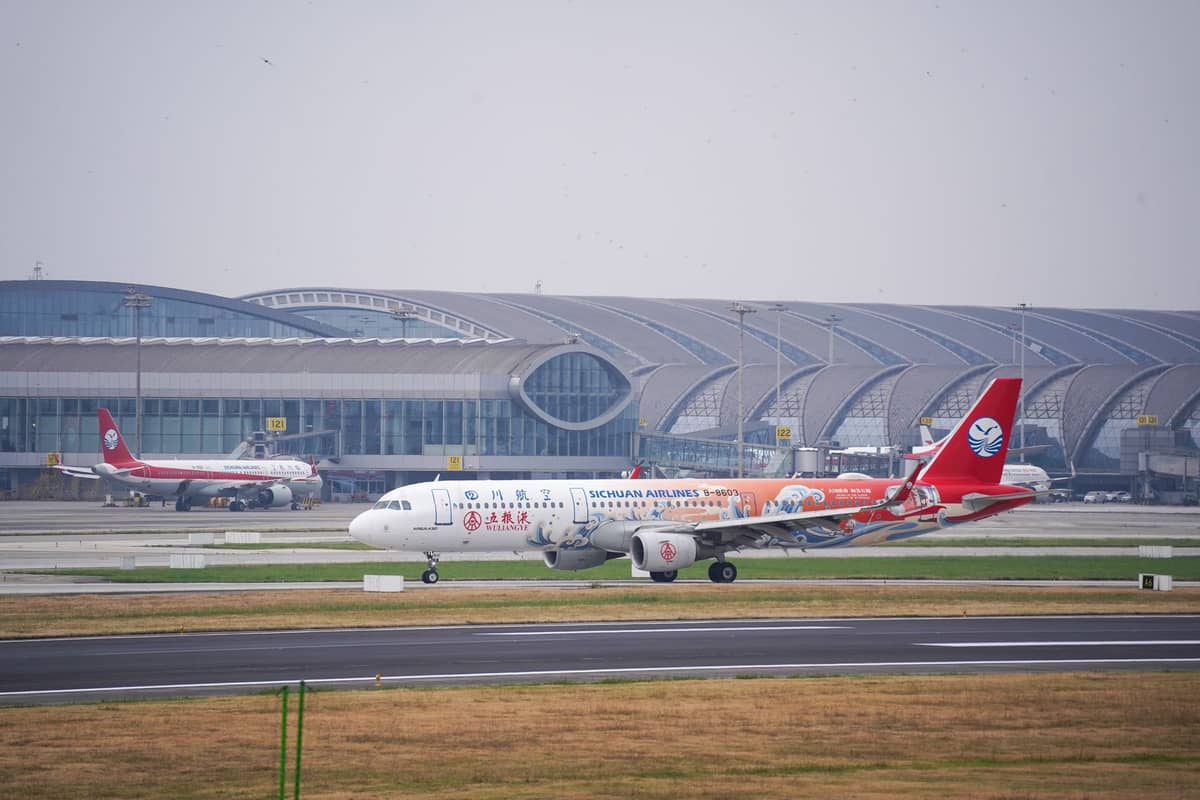
Transport scams are by far the most commonly reported issue for foreign visitors in Chengdu, and they follow predictable patterns. At both Tianfu International Airport (TFU) and Shuangliu International Airport (CTU), unlicensed drivers approach arriving passengers in the arrivals hall or outside exit doors, offering rides to the city. These are not official taxis. Prices quoted are typically two to four times the legitimate metered or metro fare, and refusals can be met with pressure or confusion tactics.
The solution is straightforward: use the metro or join the official taxi queue. Shuangliu Airport (CTU) is connected to the city via Metro Lines 10 and 19. Tianfu Airport (TFU) is connected via Metro Line 18, with operating hours and fares varying by station and service; verify current fares and hours on station displays, as these can change. For official taxis, use the designated taxi ranks outside the arrivals level, where vehicles are metered and drivers are licensed.
At Chengdu East Railway Station and other major rail hubs, the same dynamic applies. Touts approach travelers offering 'private car' services at fixed rates. Even if the price sounds reasonable, these vehicles are uninsured, unregulated, and the driver may take a longer route or apply surprise surcharges on arrival. Use Didi (China's dominant ride-hailing app) from inside the station, or take the metro.
⚠️ What to skip
Chengdu has two airports: Tianfu International (TFU, approximately 51 km from the city center) and Shuangliu International (CTU, closer to the urban core). Confusing them is a real problem — double-check your flight's airport code before booking transport or telling a driver your destination. The metro lines serving each airport are different.
- Use app-based rides or metered taxis only Didi Chuxing is the standard ride-hailing platform in Chengdu. Set up your account and payment method before arriving — foreign credit cards can be linked, though some users need WeChat Pay or Alipay as backup.
- Never accept unsolicited transport offers Drivers who approach you inside airports or stations are operating outside the official system. Walk past them and proceed to the official taxi rank or metro entrance.
- Confirm the destination before getting in If using an official taxi, show the driver your destination in Chinese characters. Most licensed Chengdu drivers speak little to no English.
- Verify airport metro hours on the day Metro Line 18 from Tianfu Airport and Lines 10/19 from Shuangliu are reliable options, but late-night arrivals may fall outside operating windows. Check the Chengdu Metro app or station displays for same-day schedules.
The Tea House Trap and Friendship Scams
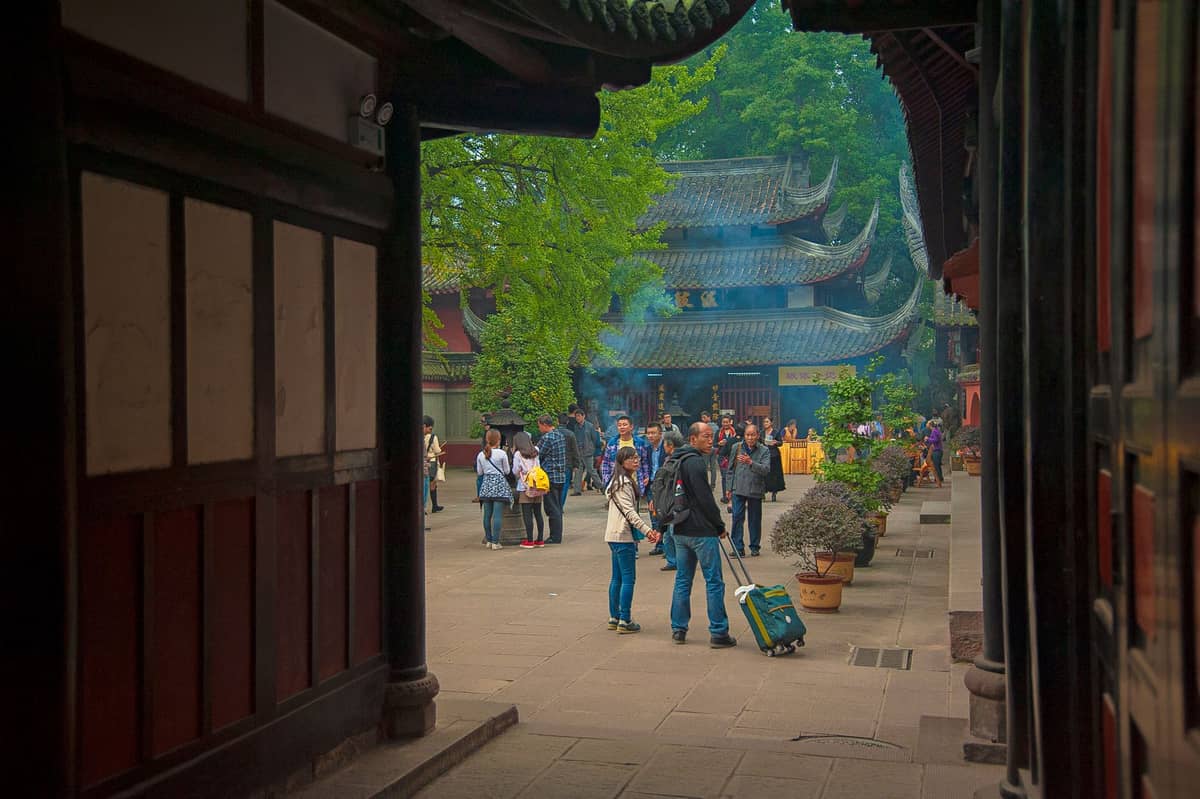
This is Chengdu's most notorious tourist scam, and it has been running in various forms for years near Wenshu Monastery, around Kuanzhai Alley, and occasionally near Renmin Park. The setup is consistent: a friendly local (often claiming to be a student practicing English, or a young couple) strikes up a conversation, shows genuine interest in where you're from, and suggests a nearby tea house or local restaurant 'you must try.' The tea house charges ¥200 to ¥800 per person for a basic tea service, and the bill arrives without any prior indication of the cost.
The scam works because the social pressure is real. You've had a pleasant conversation, you've been led somewhere, and walking out feels awkward. Some visitors end up paying simply to avoid a scene. A few tea houses have security staff who make the situation more confrontational. The fix is simple: Chengdu's genuine tea culture is excellent and worth exploring, but do it on your own terms at established venues with clearly posted prices. The tea houses around Renmin Park and inside Wenshu Monastery's grounds are legitimate, popular with locals, and reasonably priced.
💡 Local tip
If someone approaches you near Kuanzhai Alley or Wenshu Monastery wanting to practice English or show you 'a local place,' that's your cue to politely decline and keep walking. Chengdu locals are genuinely friendly, which makes this scam effective — the distinction is that real locals don't need to redirect your day.
For a genuine tea house experience without the risk, Chengdu's tea house culture is best explored at places like the tea garden inside Renmin Park or at courtyard venues near Wenshu Monastery where prices are posted clearly and the clientele is mostly local.
Payments, Ticketing, and Digital Wallet Pitfalls
China's payment ecosystem is largely cashless, built around Alipay and WeChat Pay. Foreign visitors without one of these apps may find that some street food stalls, local shops, and smaller restaurants don't accept international cards or cash readily. This isn't a scam, but it creates practical friction. Before arriving, set up either Alipay or WeChat Pay with a foreign credit or debit card — both platforms have improved their international card support significantly in recent years, though the process requires verification. Carry some Chinese yuan (CNY/RMB) as a backup for situations where apps aren't accepted.
For attractions, buy tickets through official channels. The Chengdu Research Base of Giant Panda Breeding (commonly called Panda Base) has had unofficial ticket sellers operating near its entrance offering 'discounted' or 'skip-the-line' passes. These are either counterfeit or obtained through resale at marked-up prices. Book through the official Panda Base website or at the official ticket window. The same principle applies at Sanxingdui Museum, Wuhou Shrine, and other major paid attractions.
For rail travel, use China Railway's official platform 12306 or Trip.com, which supports foreign passport bookings. Third-party ticket sellers outside railway stations charge commission and occasionally sell for the wrong date or class. If you're planning multiple train journeys, getting set up on 12306 before you leave is worthwhile. The guide to getting around Chengdu covers metro, rail, and ride-hailing in more detail.
- Set up Alipay or WeChat Pay with a foreign card before arriving — don't rely solely on international credit cards.
- Carry ¥300-500 in cash for emergencies, smaller vendors, and situations where apps fail.
- Book attraction tickets through official websites or on-site ticket offices only.
- Rail tickets: use China Railway's 12306 platform or Trip.com for foreign-passport bookings.
- ATMs at major Chinese banks (Bank of China, ICBC, China Construction Bank) generally accept foreign cards; smaller or convenience-store ATMs may not.
Health, Environmental, and General Safety Considerations
Tap water in Chengdu is treated but not recommended for direct consumption without boiling or filtering. Use bottled or hotel-filtered water for drinking. This is standard practice across mainland China and not specific to Chengdu.
Air quality in Chengdu can vary significantly by season. The Sichuan Basin's geography traps pollutants, and hazy days are common in winter and during still weather. If you have respiratory sensitivities, check real-time AQI data through apps like AirVisual before planning outdoor activities or visiting mountain destinations like Mount Qingcheng or Dujiangyan.
Chengdu's rainy season runs from June through September, which means slippery pavement, flooding in lower areas, and reduced visibility on mountain roads. Allow extra travel time during heavy rain. If you're planning day trips to mountain areas, the weather can shift rapidly: check official Chinese Meteorological Administration alerts before heading to Mount Qingcheng or Dujiangyan, as paths can close on short notice.
Sichuan food is genuinely spicy in a way that catches many visitors off guard. Mala (numbing and hot) seasoning uses both dried chilies and Sichuan peppercorns, and the heat is cumulative. This isn't a safety risk in a serious sense, but stomach issues from unaccustomed spice levels are common. Start with milder dishes if you're not used to heat, and be specific when ordering about spice tolerance. Many restaurants do adjust for visitors.
✨ Pro tip
Download a translation app with offline Chinese support before you arrive. Google Translate's camera function works well for menus, signs, and medication labels, and it functions offline with the Chinese language pack downloaded in advance. This one step resolves a large proportion of the communication friction travelers report in Chengdu.
Cultural Etiquette and Things That Could Get You in Trouble
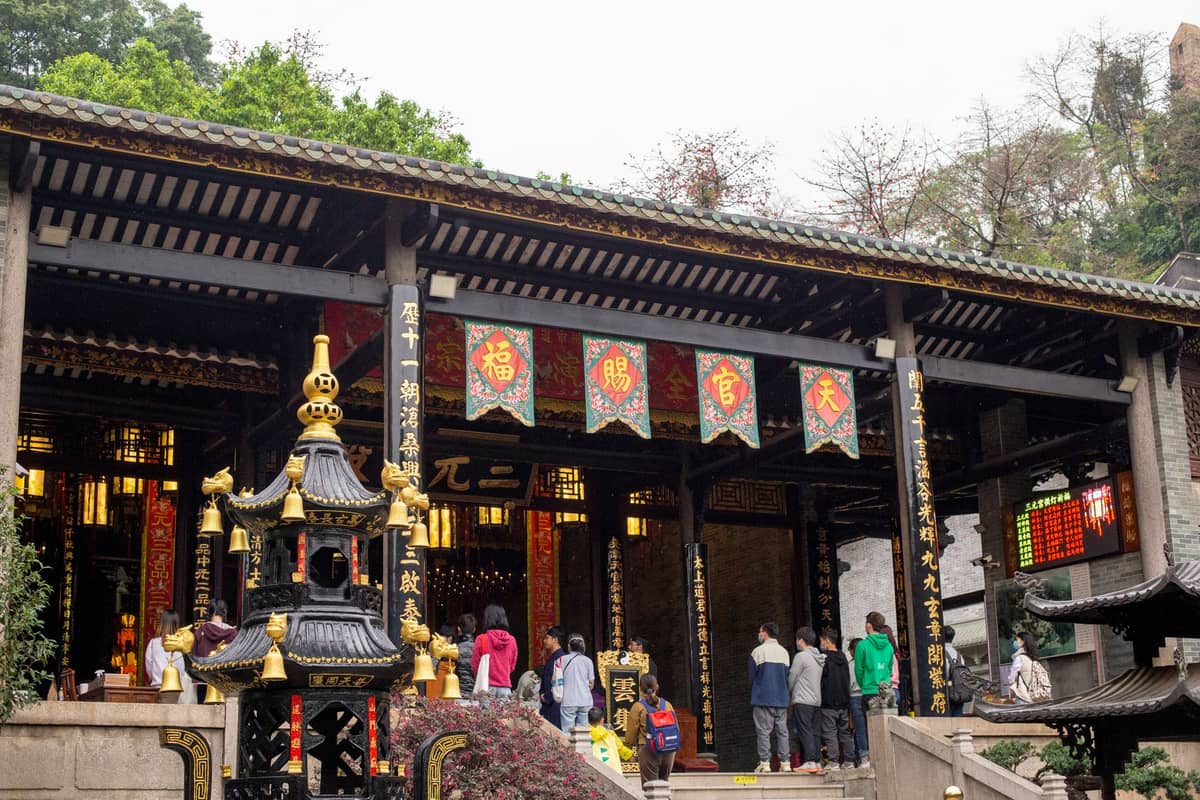
Chengdu is culturally relaxed by Chinese standards — it has a reputation for being laid-back, social, and welcoming to outsiders. That said, a few points of etiquette matter. At Buddhist temples including Wenshu Monastery and Qingyang Palace, dress modestly: covered shoulders and knees are appropriate, and hats should be removed inside halls. Photography of worshippers actively praying is not appropriate and is sometimes explicitly prohibited by posted signs.
China's internet restrictions mean that Google, WhatsApp, Instagram, Facebook, and many Western news sites are inaccessible without a VPN. Set up a reliable VPN on your devices before entering China, since the App Store and Google Play are not accessible within the country. This doesn't carry legal risk for tourists as individual users, but it's a practical issue that affects navigation, communication, and payments if you haven't prepared.
Tipping is not customary in mainland China and is not expected at restaurants, taxis, or tea houses. Some international hotels may add a service charge, and private tour guides may appreciate a gratuity, but it is never obligatory. For more on navigating Chengdu's food and drink culture without mishaps, the Chengdu hot pot guide and the street food guide cover ordering, pricing, and what to expect at local venues.
FAQ
Is Chengdu safe for solo female travelers?
Yes, Chengdu is considered one of the safer Chinese cities for solo female travelers. Violent crime against tourists is rare, and harassment on the street is uncommon compared to many international destinations. The standard precautions apply: stay aware of your surroundings at night, use app-based transport rather than unlicensed cabs, and avoid isolated areas late at night. Popular districts like Jinjiang, Wuhou, and Qingyang are well-lit and busy most evenings.
What should I do if I get sick in Chengdu?
For medical emergencies, call 120 for an ambulance. Chengdu has several hospitals with international patient departments, including West China Hospital (Huaxi Hospital), which is one of the largest in Asia. Travel insurance that covers medical evacuation is strongly recommended. For minor illness, hotel staff can typically recommend nearby clinics. Carry your passport at all times, as it's required for hospital registration.
How do I avoid overcharging in Chengdu's taxis?
Official licensed taxis in Chengdu use meters, so ensure the driver starts the meter when you get in. If a driver refuses to use the meter or quotes a flat rate, get out and use a different cab or Didi. Didi shows the fare estimate before you confirm the ride, which removes pricing ambiguity entirely. At airports and train stations, always use the official taxi queue rather than accepting offers from drivers who approach you.
Do I need a VPN in Chengdu?
If you use Google Maps for navigation, WhatsApp or Signal for communication, or Instagram and Gmail for daily use, yes — these are blocked in mainland China. Set up a VPN on your devices before you enter China, since downloading VPN apps from inside China is difficult. Apple's App Store restricts VPN apps in the China region. Using a VPN in China carries minimal practical risk for tourists, but download and configure it before you arrive.
Are there any neighborhoods in Chengdu I should avoid?
There are no neighborhoods in Chengdu's urban core that are particularly dangerous for tourists by international standards. The areas around major railway stations can be chaotic with touts and unlicensed transport operators, so stay alert there. The city's tourist areas are generally well-policed and safe in the evenings. The main risks in Chengdu are financial (scams) rather than physical, and they are concentrated around tourist-heavy attractions rather than residential neighborhoods.