Chengdu Tea House Culture: A Complete Guide
Tea houses are central to daily life in Chengdu in a way that few cities can claim. This guide covers the history, etiquette, best venues, what things cost, and exactly what to expect when you sit down for tea in one of China's most relaxed cities.
Plan and book this trip
Tools from our partner Travelpayouts help you compare flights and hotels. If you book through them, we may earn a commission at no extra cost to you.
Flights
Hotels map
TL;DR
- Heming Tea House inside People's Park is the most accessible tea house for first-timers: walk in, pick a tea (around ¥20–40), sit back.
- Tea at a Chengdu tea house is not a formal ceremony — it is a social ritual built around conversation, card games, and long afternoons.
- Hot-water refills are typically included; ear cleaning, snacks, and massage are optional extras that cost more.
- Spring and autumn are the best seasons to visit; outdoor tea garden seating is most pleasant from March through May and September through November. See the best time to visit Chengdu for full seasonal context.
- Verify opening hours before you go — published times vary by source and can shift around public holidays.
Why Tea Houses Matter in Chengdu
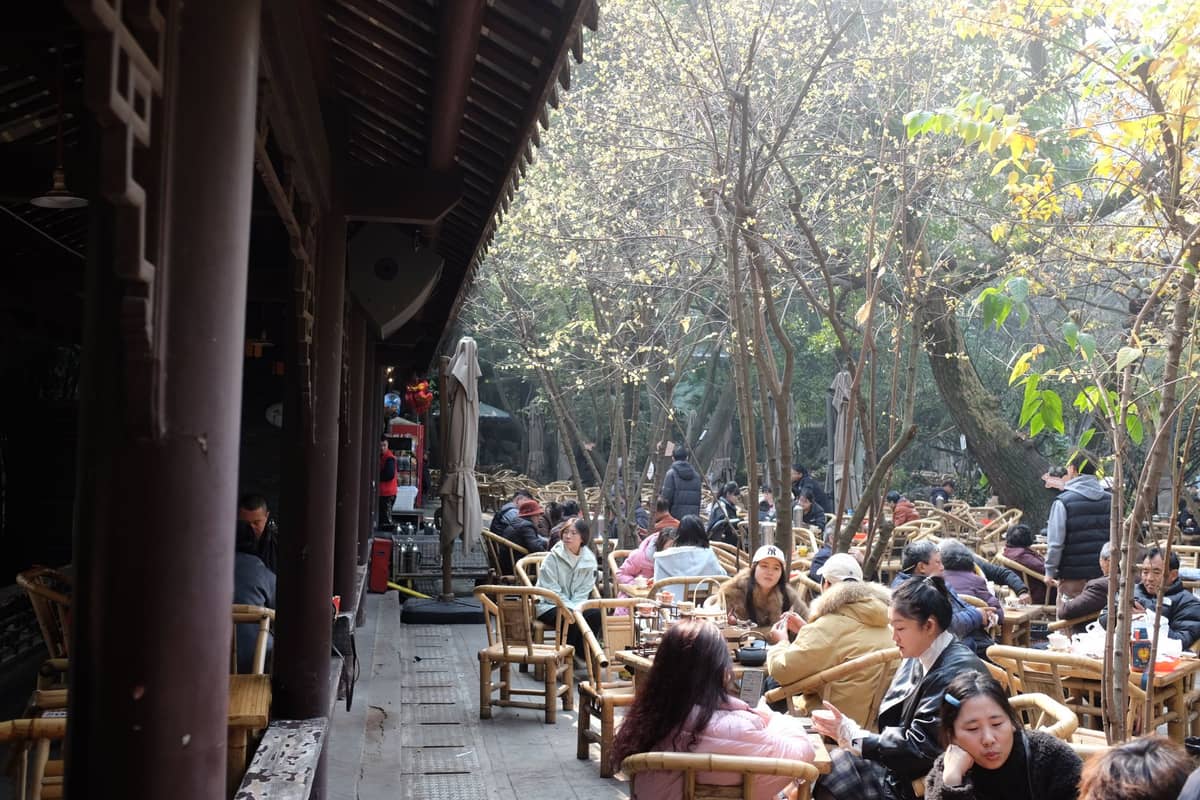
Chengdu tea house culture (茶馆文化, cháguǎn wénhuà) is not a tourist attraction that happens to exist in a real city. It is the other way around: the tea house is an institution that tourists are allowed to observe and participate in. For locals, tea houses function as living rooms, offices, negotiation venues, and social clubs rolled into one. Mahjong tiles clack, newspapers circulate, and deals are struck over cups of jasmine tea. The pace is deliberately slow.
This culture has deep roots in Chengdu's geography and temperament. Sichuan's fertile basin, historically nicknamed 'Land of Abundance' (天府之国), produced enough surplus that leisure became a cultural value rather than a luxury. Tea houses in their current form have been woven into Chengdu life since at least the Qing Dynasty, and they survived the 20th century's upheavals largely intact. Today, Chengdu is widely acknowledged as having more tea houses per capita than almost any other city in China.
ℹ️ Good to know
Chengdu tea house visits are not fixed-duration tea ceremonies. You buy a serving of tea, you occupy the seat, and you can stay for hours. Refills are typically included in the original price. There is no pressure to order more or leave quickly.
The Best Tea House in Chengdu: Heming Tea House
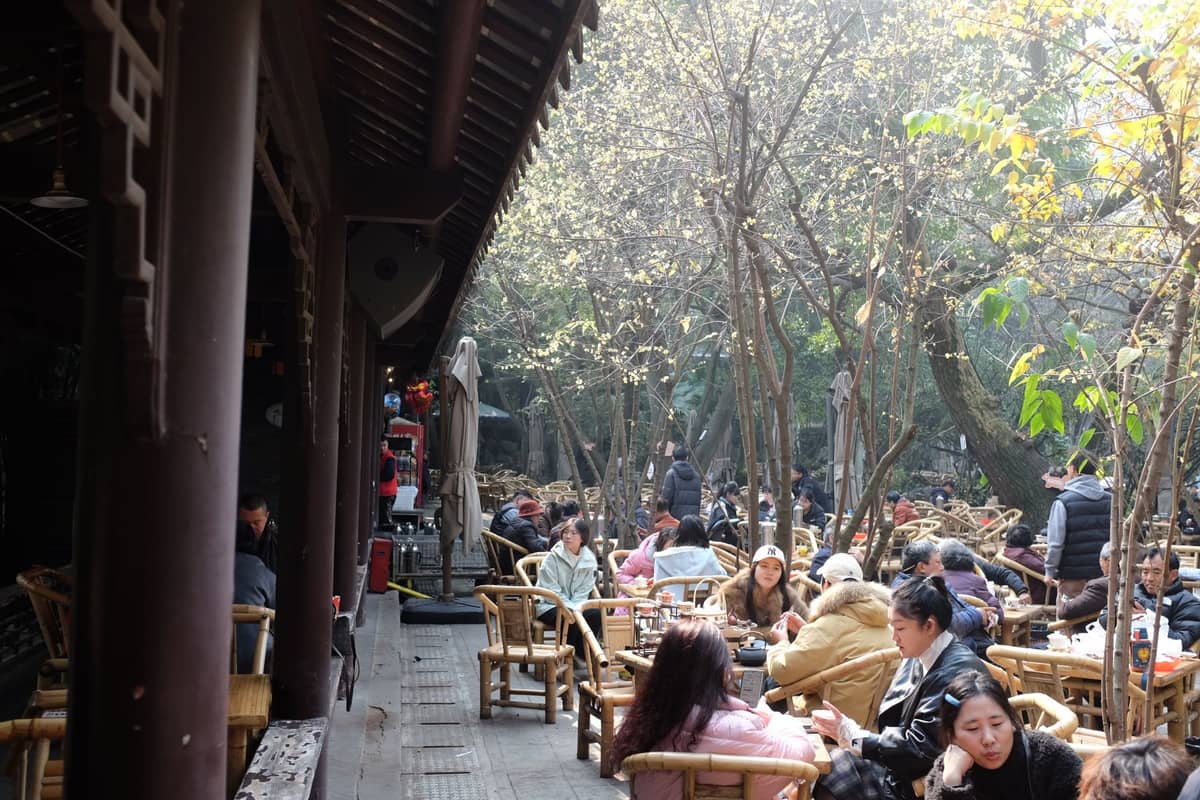
Heming Tea House (鹤鸣茶社, Hèmíng Cháshè) is the most iconic and practical starting point for understanding Chengdu's tea culture. Located inside People's Park (Renmin Gongyuan) at 12 Shaocheng Road, Qingyang District, it sits in an open pavilion setting surrounded by trees, elderly locals playing chess, and the gentle noise of the park. The nearest metro stop is People's Park Station on Line 2 (Exit B). People's Park itself has no admission fee; verify the park's current opening hours before visiting.
Tea at Heming is priced accessibly. Commonly reported prices run around ¥20–40 per person depending on the variety: Tieguanyin (铁观音), a semi-oxidized oolong, is listed at approximately ¥23, and Biluochun (碧螺春), a delicate green tea from Jiangsu, around ¥25. Published opening hours vary between sources, including 08:00–22:00 and 09:30–21:30. Confirm before arriving, especially around major Chinese public holidays when schedules shift.
- Walk-in only Heming does not operate on a reservation system. Arrive, find an available table or bamboo chair, and a server will come to you.
- What your ¥20–40 gets you A clay or porcelain gaiwan or teapot with your chosen tea, plus free hot-water refills throughout your stay.
- Optional extras Ear-cleaning (采耳, cǎi ěr) by roving practitioners, snacks, and sometimes massages are available for additional fees. None are obligatory.
- Best time to arrive Mornings (before 10:00) attract retired locals and are the most authentic. Afternoons are busier and more social. Weekends fill up faster.
💡 Local tip
Heming is an outdoor venue. Chengdu's summers (June–August) are warm and humid, with average highs around 28–31°C. If you visit in summer, aim for a shaded pavilion seat and go earlier in the day. In winter (December–February), temperatures can drop to around 6°C, so layering is sensible for outdoor sitting.
What to Order and How to Drink It
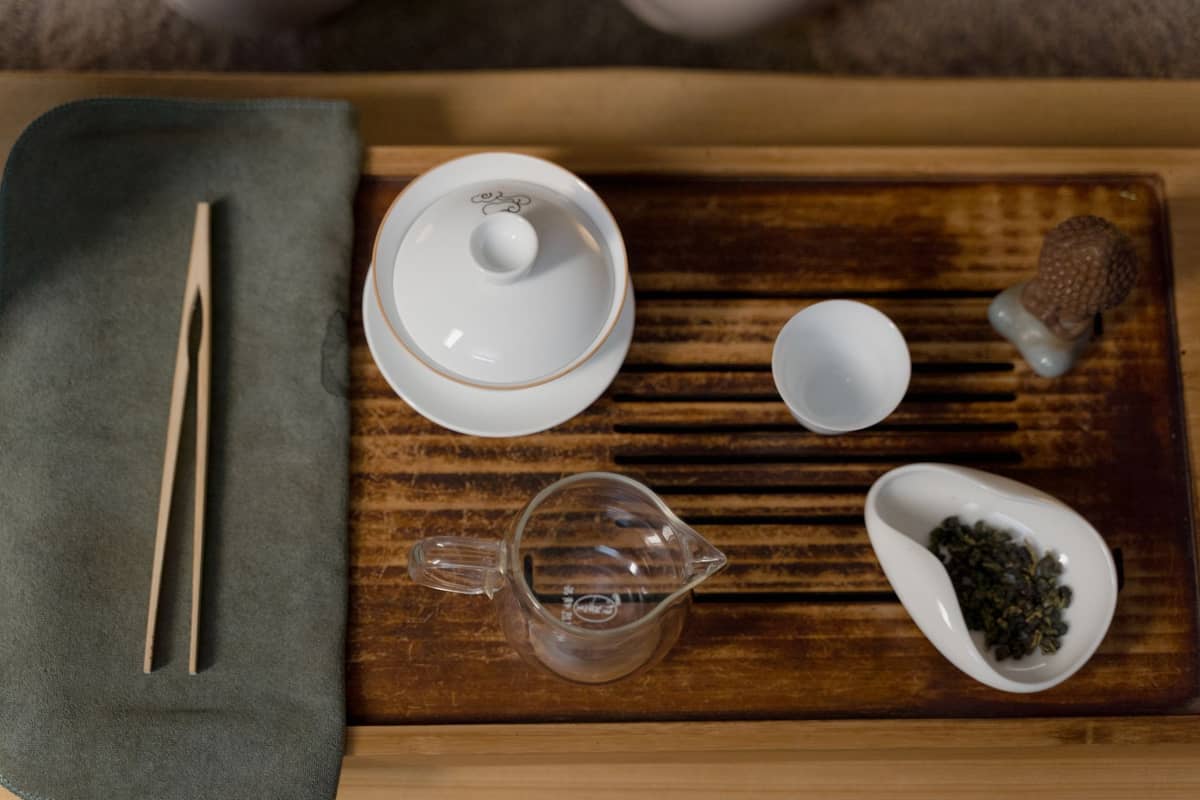
The dominant tea style in Chengdu tea houses is gaiwan tea (盖碗茶, gàiwǎn chá). A gaiwan is a lidded bowl without a handle: the saucer catches spills, the bowl holds the tea, and the lid is used to gently push aside the floating leaves before sipping. Using a gaiwan correctly is simple once you understand the mechanism — tilt the lid slightly toward you and sip from the gap. Do not remove the lid and place it upside down on the table; this signals to the server that you want a refill.
Common teas served in Chengdu tea houses include jasmine tea (茉莉花茶, mòlì huāchá), which is the most traditional choice in this region, along with green teas like Longjing (龙井) and Biluochun, and various oolongs. Pu-erh (普洱) is sometimes available for those who prefer an aged, earthy profile. If you are unsure, ask the server for jasmine — it is the standard Chengdu tea-house choice and pairs well with the park environment. For a broader understanding of Sichuan food and drink culture, the Chengdu food guide provides useful context.
- Jasmine tea (茉莉花茶): The classic Chengdu choice. Aromatic, light, and endlessly refillable.
- Biluochun (碧螺春): A delicate green tea with a slightly fruity note. Better in the morning.
- Tieguanyin (铁观音): A roasted oolong with a fuller body. Good for longer sittings.
- Pu-erh (普洱): Earthy and aged. An acquired taste but widely available and popular with older regulars.
- Chrysanthemum (菊花茶, júhuā chá): Often blended with other teas. Considered cooling in traditional Chinese medicine.
Tea House Etiquette: What Locals Actually Do
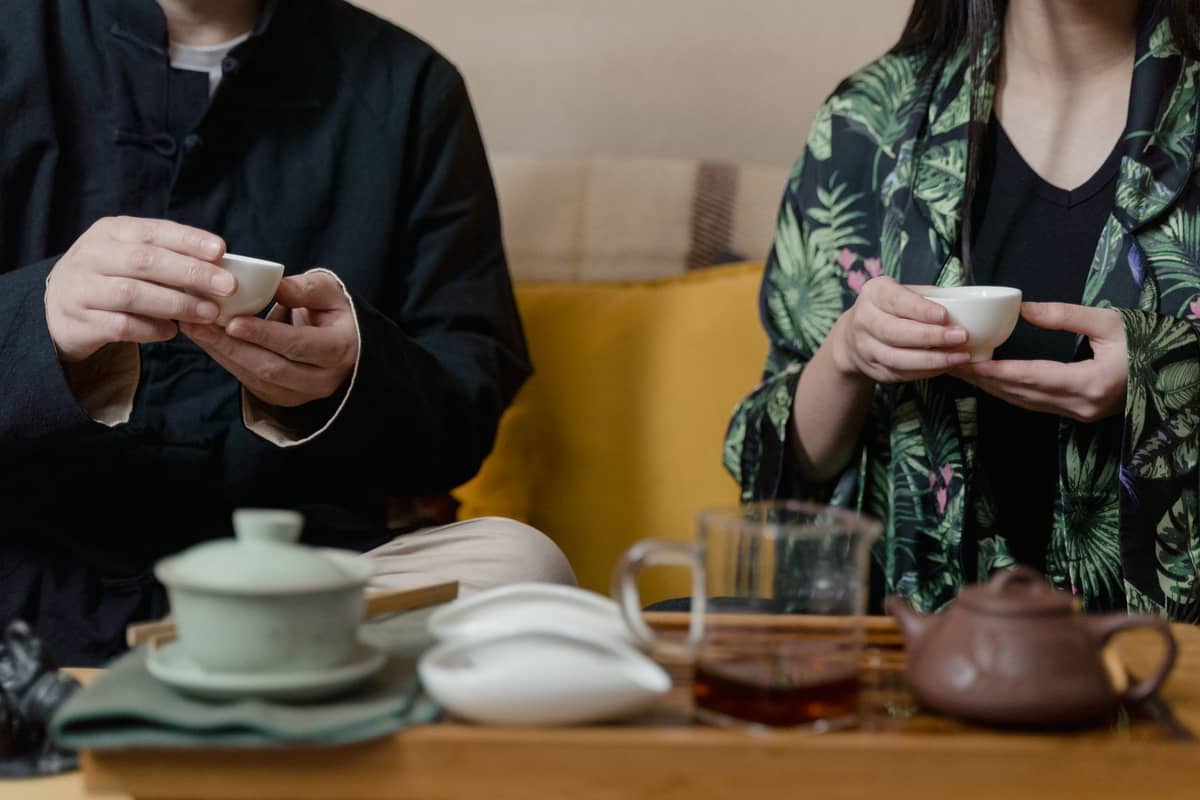
The rules are loose, but knowing them prevents minor embarrassment. When a server fills your gaiwan, it is common to tap two fingers lightly on the table as a gesture of thanks, a custom with roots in Qing Dynasty court etiquette. You do not need to do this, but locals will find it charming if you do. Similarly, speaking quietly is the norm in the mornings when elderly regulars are settled in; afternoons get noisier as mahjong games pick up pace.
Bringing your own food into a tea house is generally accepted, and many regulars bring breakfast or snacks from nearby stalls. The tea house is not primarily a food venue. If you want proper Sichuan snacks, vendors often circulate or small menus exist, but the food is secondary. Tipping is not customary in mainland China, including at Chengdu tea houses.
⚠️ What to skip
Ear-cleaning practitioners (采耳师) will sometimes approach you proactively in tea house settings. Prices should be agreed before any service begins. If you are not interested, a polite shake of the head is sufficient and they will move on without issue. This is a legitimate local service, not a scam, but agreeing to it without discussing cost first can lead to awkward price negotiations after the fact.
Beyond Heming: Other Tea House Experiences in Chengdu
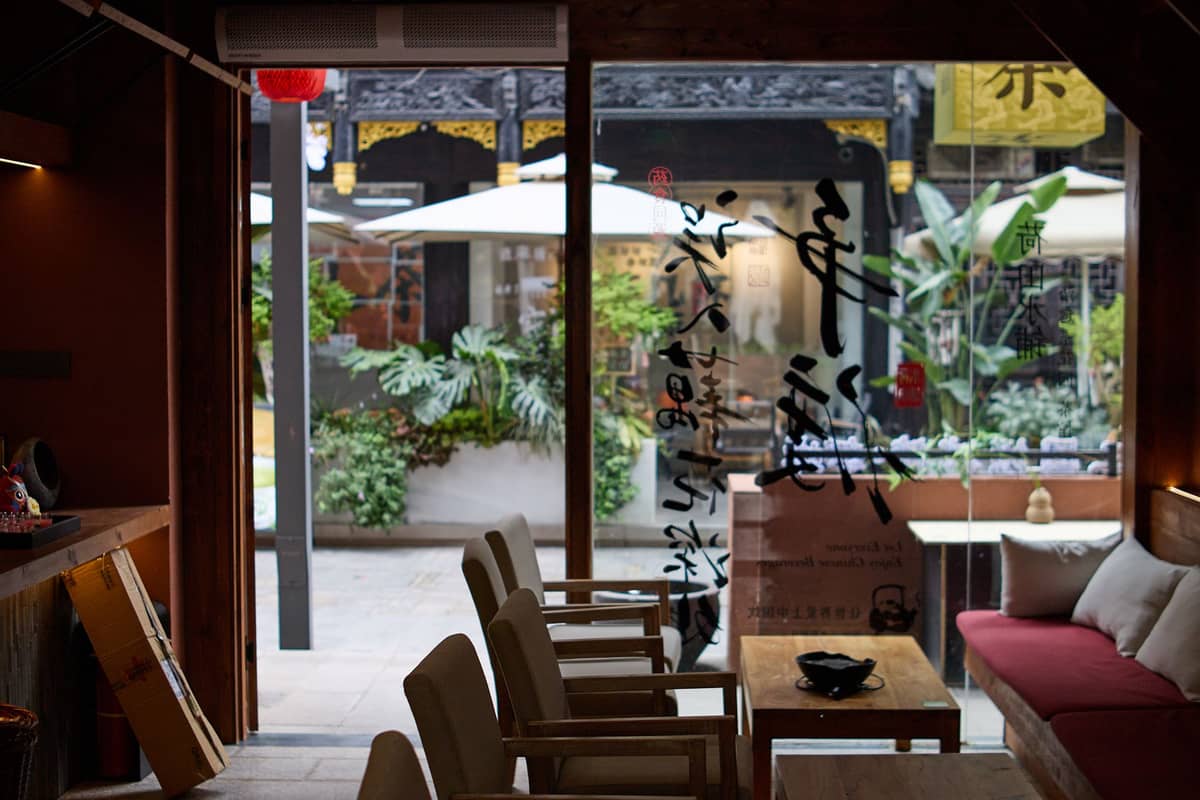
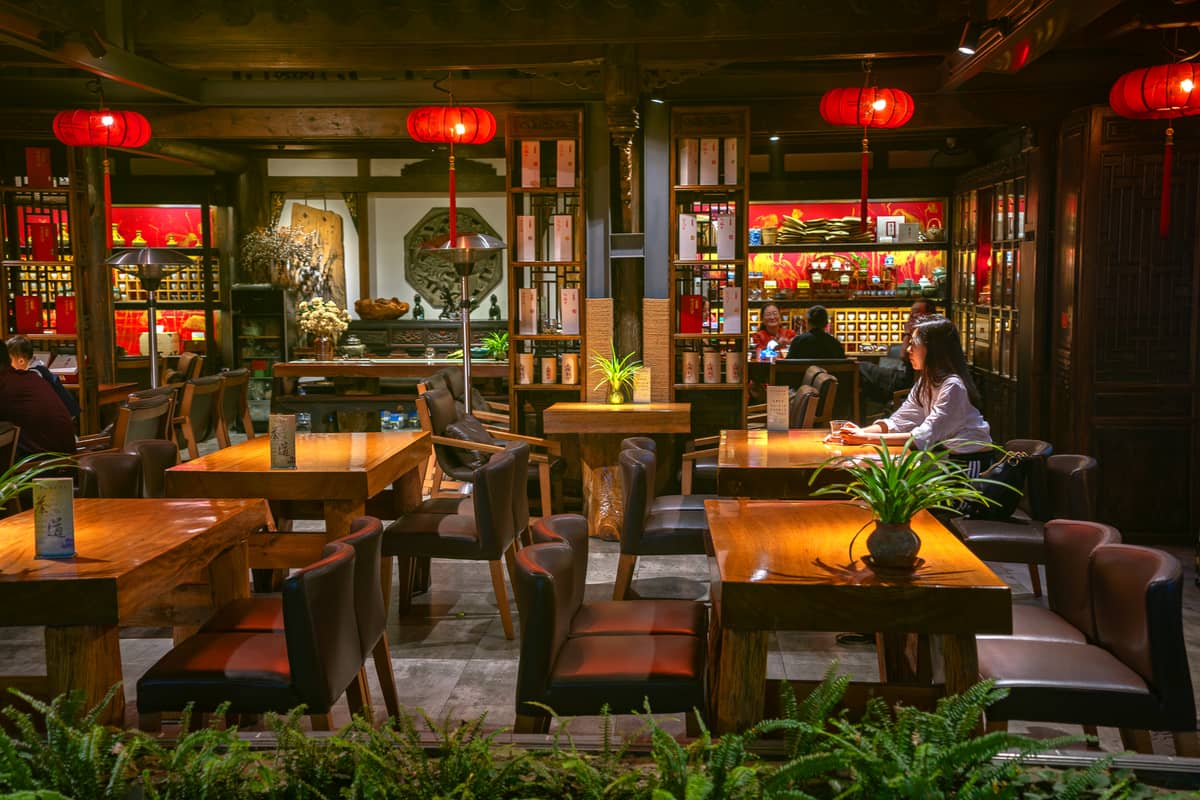
Heming is the most accessible option, but Chengdu's tea house scene extends well beyond one venue. Tea houses in the Kuanzhai Alley area tend toward a more polished, tourist-facing aesthetic: renovated Qing-style architecture, higher prices, and a stronger emphasis on Instagram presentation over authentic local ritual. They are not bad experiences, but they are different in character.
The area around Wenshu Monastery in Jinjiang District supports several tea gardens with a quieter, more contemplative atmosphere, often patronized by people who have just visited the monastery. These venues tend to be less crowded than Heming on weekends and offer a different urban energy, more secluded and shaded.
For those interested in pairing tea culture with historic architecture, the ancient towns near Chengdu offer outdoor tea garden settings with a different backdrop entirely. The Chengdu ancient towns guide covers Huanglongxi and Luodai, both of which have tea house traditions embedded in their old-street layouts.
- Heming Tea House, People's Park Best overall. Authentic local crowd, outdoor setting, easy metro access, reasonable prices. Minor drawback: can be crowded on weekend afternoons.
- Wenshu Monastery area tea gardens Quieter and more contemplative. Better for those who want to avoid tourist density. Slightly harder to find without local knowledge.
- Kuanzhai Alley tea houses More polished presentation, higher prices. Good for those who want a comfortable, English-friendly environment. Less authentic in terms of local participation.
- Ancient town tea houses (Huanglongxi, Luodai) Best combined with a day trip. River or courtyard settings. Prices and availability vary by venue.
Practical Tips for Visiting Chengdu Tea Houses
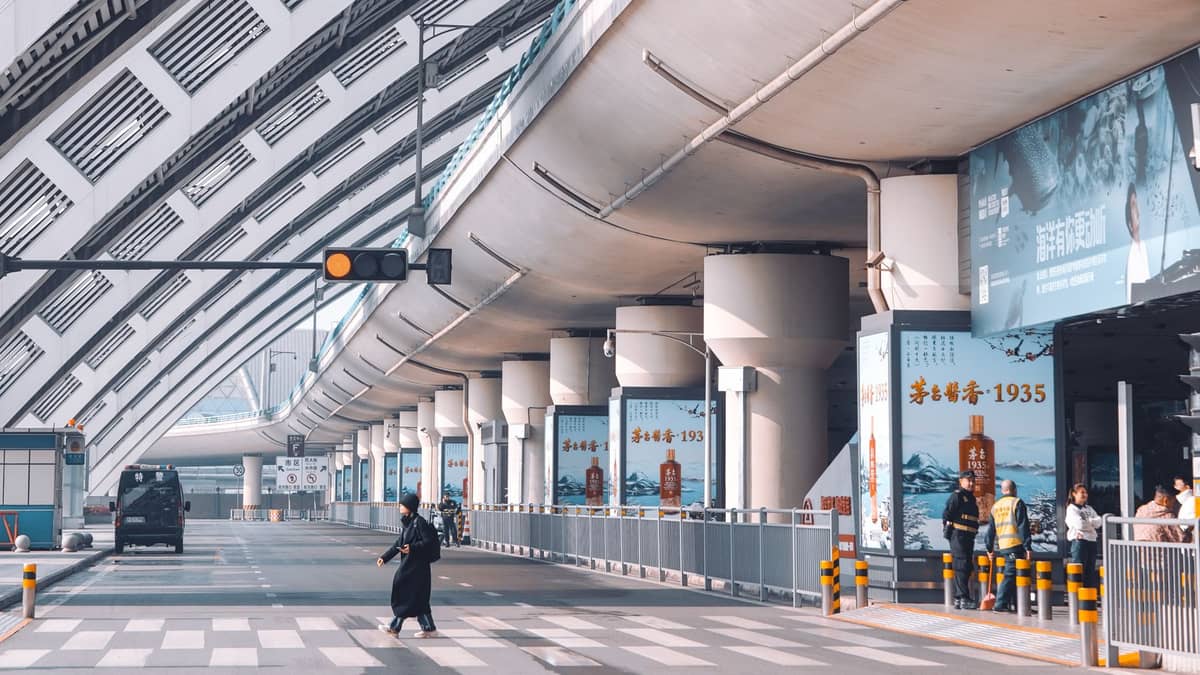
Getting to Heming and other central tea houses is straightforward on the Chengdu Metro. The People's Park Station on Line 2 puts you at the park entrance in under five minutes on foot. For tea houses near Wenshu Monastery, Line 1 at Wenshu Monastery Station is the direct option.
Payment in Chengdu is overwhelmingly cashless, with WeChat Pay (微信支付) and Alipay (支付宝) the dominant methods. Cash (Chinese yuan / RMB) is accepted everywhere but increasingly less convenient. Foreign visitors without a linked Chinese payment app may want to carry small notes. Prices at Heming are low enough that having ¥100 in cash is more than sufficient for a tea session plus optional snacks.
If you are building a broader itinerary, a morning tea house session pairs naturally with a walk through People's Park, followed by lunch in the Wuhou or Jinjiang district areas. The 3 days in Chengdu itinerary includes tea house time as part of a Day 1 structure that balances culture, food, and sightseeing without overloading the schedule.
Tea culture in Chengdu often intersects with Sichuan opera culture: several venues, particularly around the Wuhou area, host afternoon or evening Sichuan opera performances that can be combined with tea in the same sitting. The Sichuan opera guide explains what to expect, how to book, and which venues offer the most credible performances.
FAQ
Do I need to book a tea house in Chengdu in advance?
No. Major tea houses like Heming Tea House operate on a walk-in basis. Arrive, find a seat, and a server will come to you. The only situation where booking might be relevant is if a tea house doubles as a Sichuan opera venue and requires a ticket, but tea house seating itself is not reservation-based.
How much does tea cost at a Chengdu tea house?
At Heming Tea House, expect to pay roughly ¥20–40 per person depending on the tea variety. This typically includes the tea and free hot-water refills for the duration of your visit. More tourist-oriented tea houses in Kuanzhai Alley or hotel settings may charge significantly more.
How long can I stay at a Chengdu tea house?
As long as you like. There is no time limit. Locals routinely spend two to four hours over a single pot of tea. The model is built around lingering. You are not expected to order additional drinks or food to keep your seat.
Is the ear-cleaning service at Heming Tea House safe?
Ear cleaning (采耳) is a traditional service practiced widely in Chengdu tea houses and is generally considered safe when performed by experienced practitioners. However, hygiene standards vary. If you choose to try it, confirm the price before the service begins, and use your judgment about the cleanliness of the tools being used.
What is the best time of year to visit a Chengdu tea house?
Spring (March to May) and autumn (September to November) offer the most comfortable outdoor tea house experience, with temperatures roughly between 14–25°C in spring and 16–28°C in autumn. Summer is warm and humid but tea houses still operate; outdoor seating in shaded pavilions remains functional. Winter is cooler (around 6–12°C) and some outdoor pavilions add heaters or shift toward indoor areas.