What to Eat in Chengdu: The Complete Sichuan Food Guide
Chengdu is one of China's great eating cities, and Sichuan cuisine is far more complex than its reputation for chili heat suggests. This guide covers the essential dishes, street snacks, hot pot etiquette, price ranges, and where to actually find the best food across the city.
Plan and book this trip
Tools from our partner Travelpayouts help you compare flights and hotels. If you book through them, we may earn a commission at no extra cost to you.
Flights
Hotels map
TL;DR
- Sichuan cuisine is defined by málà (numbing-spicy), not just chili heat. Many dishes are mild, sweet, or savory without significant spice.
- Street food and noodle shops run ¥5–30 per dish. A casual shared hot pot meal costs roughly ¥80–120 per person, excluding soup base and add-ons.
- Core dishes to try: mapo tofu, dandan noodles, Zhong dumplings, twice-cooked pork, kung pao chicken, and sweet-water noodles.
- For a deeper dive into Chengdu's snacking culture, the Chengdu street food guide covers the best spots by neighborhood.
- Hot pot is the social centerpiece of Chengdu dining. Read the full Chengdu hot pot guide before your first session.
Understanding Sichuan Cuisine Before You Order
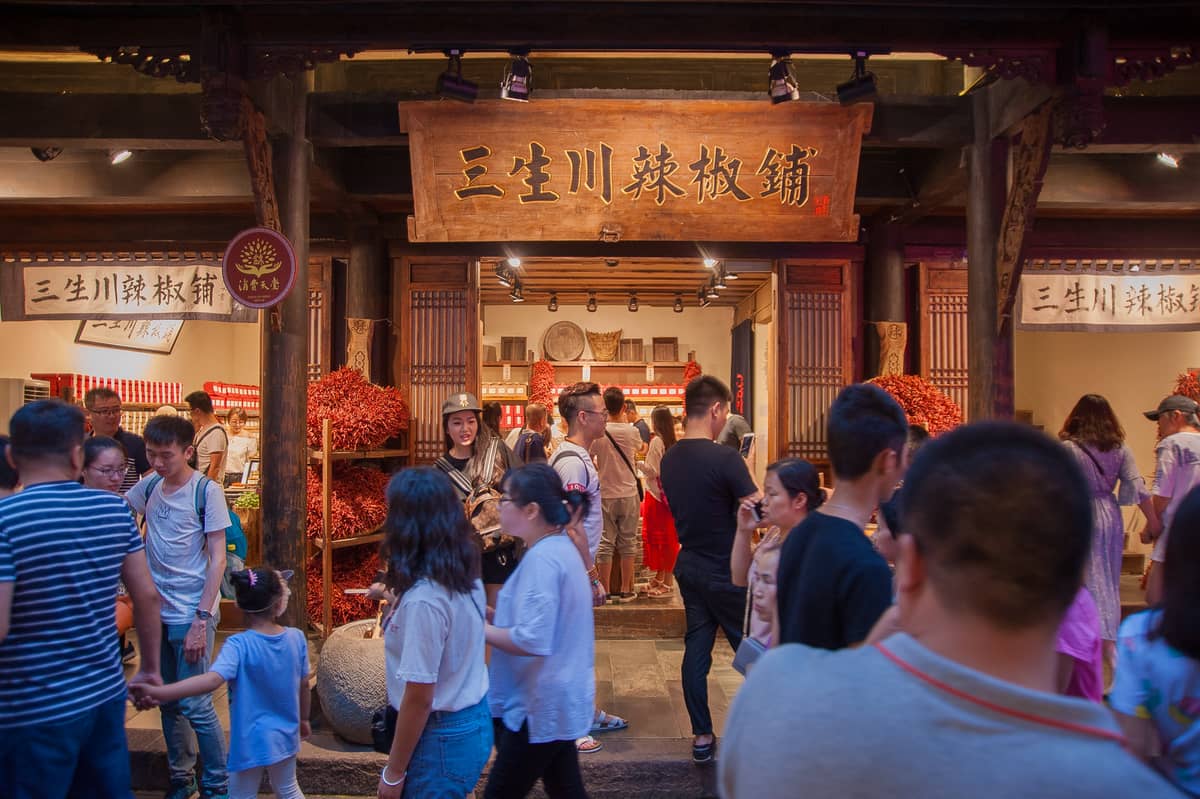
The single biggest misconception about Sichuan cuisine is that every dish is aggressively spicy. The defining flavor profile is málà, a compound sensation that combines chili heat with the mouth-numbing, citrusy tingle of Sichuan pepper (花椒, huājiāo). These are two distinct sensations working together, and the balance varies enormously between dishes and restaurants. Mapo tofu leans into full málà intensity. Kung pao chicken is primarily sweet-sour with a toasted-chili aroma. Twice-cooked pork sits toward the savory, lightly spiced end of the spectrum. Knowing this prevents the mistake of either avoiding everything out of heat fear or expecting every bite to numb your face.
Sichuan pepper deserves special attention because it behaves differently from any other spice most visitors have encountered. It does not burn. Instead, it creates a tingling, almost electric numbness on the tongue and lips that amplifies all other flavors. The effect is addictive for some and disorienting for others. High-quality huājiāo, freshly ground or used in fragrant oil, has a bright, citrusy aroma before the numbness sets in. If you find yourself scraping it off dishes at first, try a small quantity deliberately to appreciate it on its own terms.
ℹ️ Good to know
Chengdu was designated a UNESCO Creative City of Gastronomy in 2010, the second city worldwide and the first in Asia to receive this designation. The city's food culture is not just a tourist attraction — it shapes daily life, from morning noodle shops open before 7am to late-night chuānchuān stalls that run past midnight.
The Essential Dishes Every Visitor Should Try
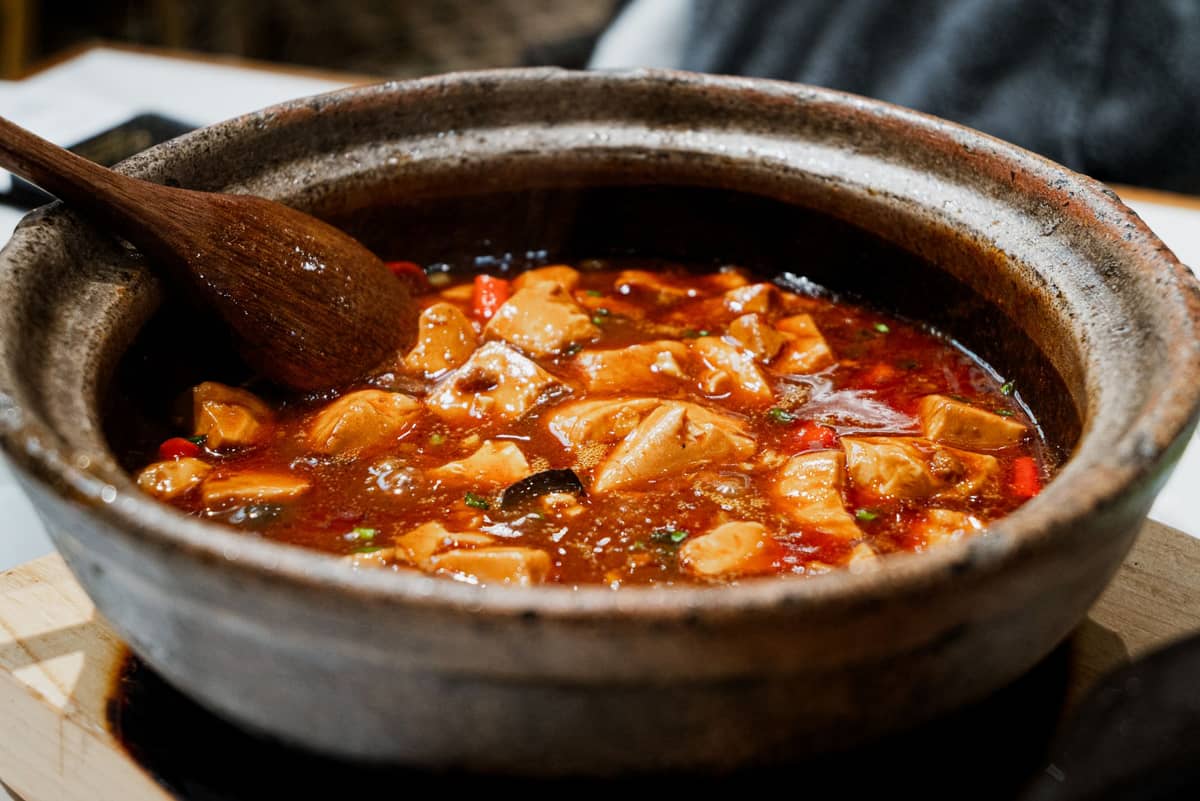
Mapo tofu (麻婆豆腐, mápó dòufu) is arguably Chengdu's most famous export. Silken tofu is simmered in a sauce of fermented black beans, doubanjiang (spicy fermented broad-bean paste), minced meat, and Sichuan pepper oil. The texture should be trembling-soft, the sauce a deep brick-red, and the finish genuinely numbing. Cheap versions use too little pepper oil and too much cornstarch. A good bowl costs ¥18–35 at a local restaurant. It comes with rice — ordering it without rice is acceptable but misses how the dish is meant to be eaten.
Dandan noodles (担担面, dàndān miàn) are frequently misrepresented outside China as a broth-heavy soup noodle. In Chengdu, the authentic version is nearly dry: thin wheat noodles topped with a small amount of sesame paste, preserved vegetables (yacai), minced pork, and chili oil, with just enough liquid to coat the strands when mixed. You toss everything together before eating. Sweet-water noodles (甜水面, tián shuǐ miàn) are a close relative — thicker, chewier noodles dressed in sweetened soy sauce and chili oil. Both cost ¥8–15 at street-level shops and are better as a breakfast or snack than a main meal.
Zhong dumplings (钟水饺, zhōng shuǐjiǎo) are Chengdu's signature dumpling style. Thin-skinned pork dumplings are served in sweetened soy sauce and red chili oil, with no vinegar. The sweetness is intentional and distinctive, setting them apart from northern-style dumplings. A portion of around eight to ten dumplings runs ¥12–20. Look for shops with "钟水饺" signage or ask locals for the nearest branch of the original Zhong Dumpling brand, which has operated in Chengdu for over a century.
- Twice-cooked pork (回锅肉, huí guō ròu) Pork belly is boiled, sliced, then stir-fried with leeks and doubanjiang. Moderately spiced, deeply savory. A staple of Sichuan home cooking and one of the most ordered dishes at local restaurants. Costs ¥30–55 as a shared dish.
- Kung pao chicken (宫保鸡丁, gōng bǎo jī dīng) Diced chicken wok-fried with peanuts, dried chilies, and Sichuan pepper in a sweet-sour-savory sauce. The chilies provide aroma rather than intense heat. One of the most globally adapted Sichuan dishes, but the Chengdu original has noticeably more nuance than international versions.
- Fuqi feipian (夫妻肺片, fūqī fèipiàn) Thinly sliced beef and offal dressed in chili oil, Sichuan pepper, sesame, and peanuts. Served cold. The name translates roughly as 'husband and wife offal slices.' This dish is worth trying even if you are skeptical of offal — the dressing dominates and the texture is tender.
- Fish-fragrant eggplant (鱼香茄子, yúxiāng qiézi) Contains no fish. The sauce mimics the sweet-sour-spicy flavor profile used in classic Sichuan fish preparations, built from vinegar, sugar, doubanjiang, ginger, and garlic. One of the better introductory dishes for visitors nervous about heat.
- Chuānchuān (串串香) Skewered ingredients — from lotus root and tofu to offal and beef — simmered in a shared spicy broth and eaten off bamboo sticks. A casual, social format similar to hot pot but faster and cheaper, typically ¥50–80 per person.
Chengdu Hot Pot: What You Need to Know Before You Go
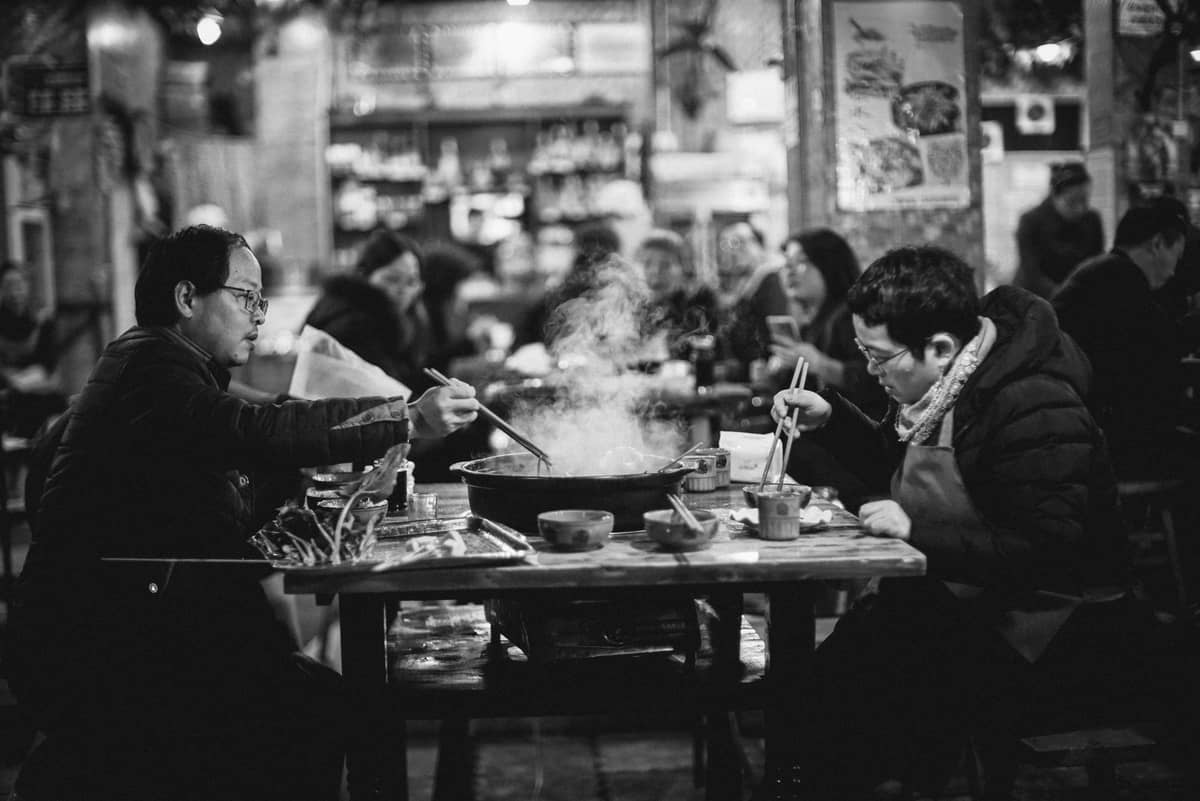
Hot pot is not a dish — it is an event. A pot of boiling broth is set into a table burner, and diners cook raw ingredients to their own timing in the communal liquid. Chengdu hot pot typically uses a tallow-based broth loaded with dried chilies, doubanjiang, and Sichuan pepper. The numbing heat builds progressively over the course of a meal. Most locals dip cooked morsels into a small bowl of sesame oil and garlic before eating, which moderates the intensity and adds richness.
Budget carefully before booking. The per-person price you see advertised often covers only the ingredients you select. The soup base itself is frequently priced separately at ¥48–128 depending on the restaurant and broth type. Dipping-sauce ingredients, tea, and packaged tableware (chopsticks, cups) may each carry small additional charges. A full hot pot meal for two at a mid-range Chengdu restaurant realistically costs ¥160–240 before drinks. At premium chains the total can reach ¥300–500 for two.
⚠️ What to skip
At many Chengdu hot pot restaurants, packaged tableware sets (碗筷套装) are placed on the table automatically and added to your bill at ¥2–10 per person. You can refuse them and request free reusable utensils instead — just say '不要收费餐具' (bú yào shōufèi cānjù). This is a legitimate service, not a scam, but it catches first-timers off guard.
The dual-compartment ('yin-yang') pot splits a spicy broth and a mild broth in the same vessel, useful if your group has mixed spice tolerances. For a thorough breakdown of chains, neighborhoods, and ordering strategy, see the Chengdu hot pot guide. For context on where hot pot fits within the broader Chengdu dining culture, the Chengdu first-timer guide provides useful framing.
Street Snacks, Noodle Shops, and Breakfast Culture
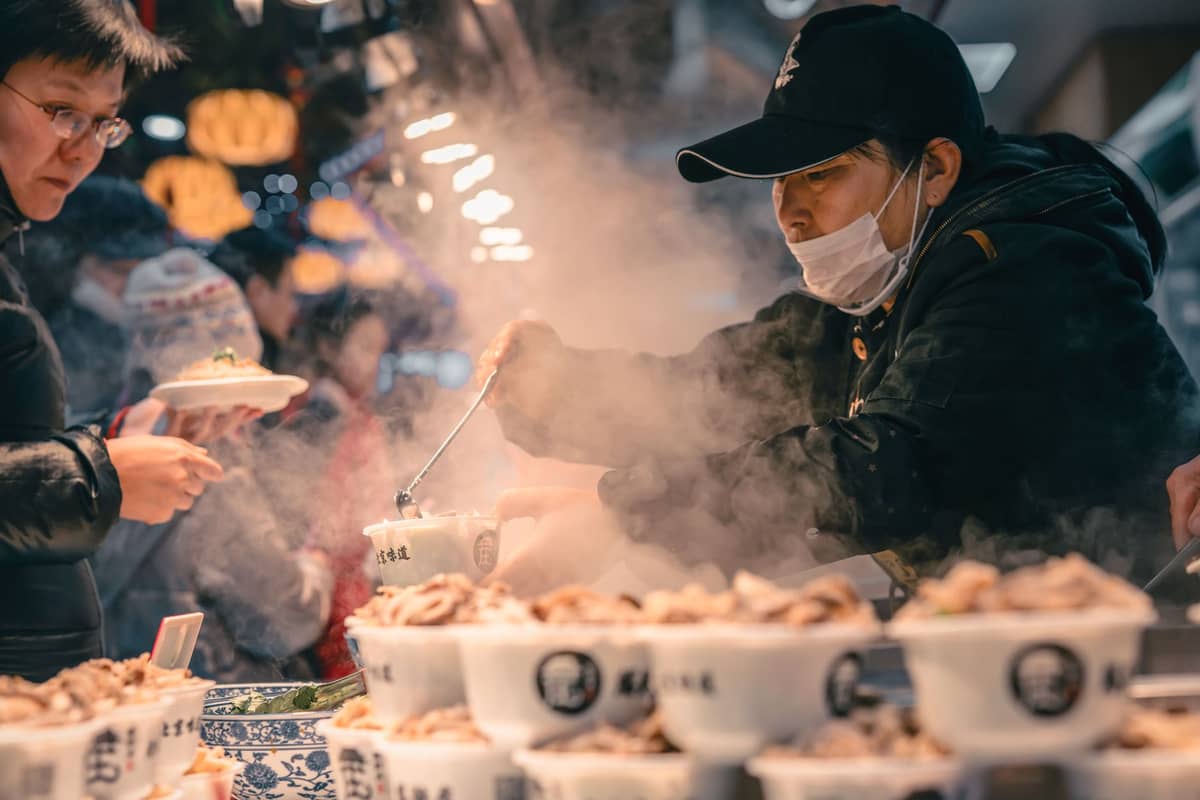
Chengdu's breakfast culture is worth rearranging your morning for. Unlike cities where breakfast is an afterthought, Chengdu locals treat the first meal of the day as a serious ritual. Noodle shops open by 6:30–7am and frequently sell out of the best preparations by 9am. Alongside dandan noodles and sweet-water noodles, common morning options include huntun (wontons in clear or chili broth), scallion oil noodles, and douhua (silken tofu in light syrup or savory broth, depending on the vendor).
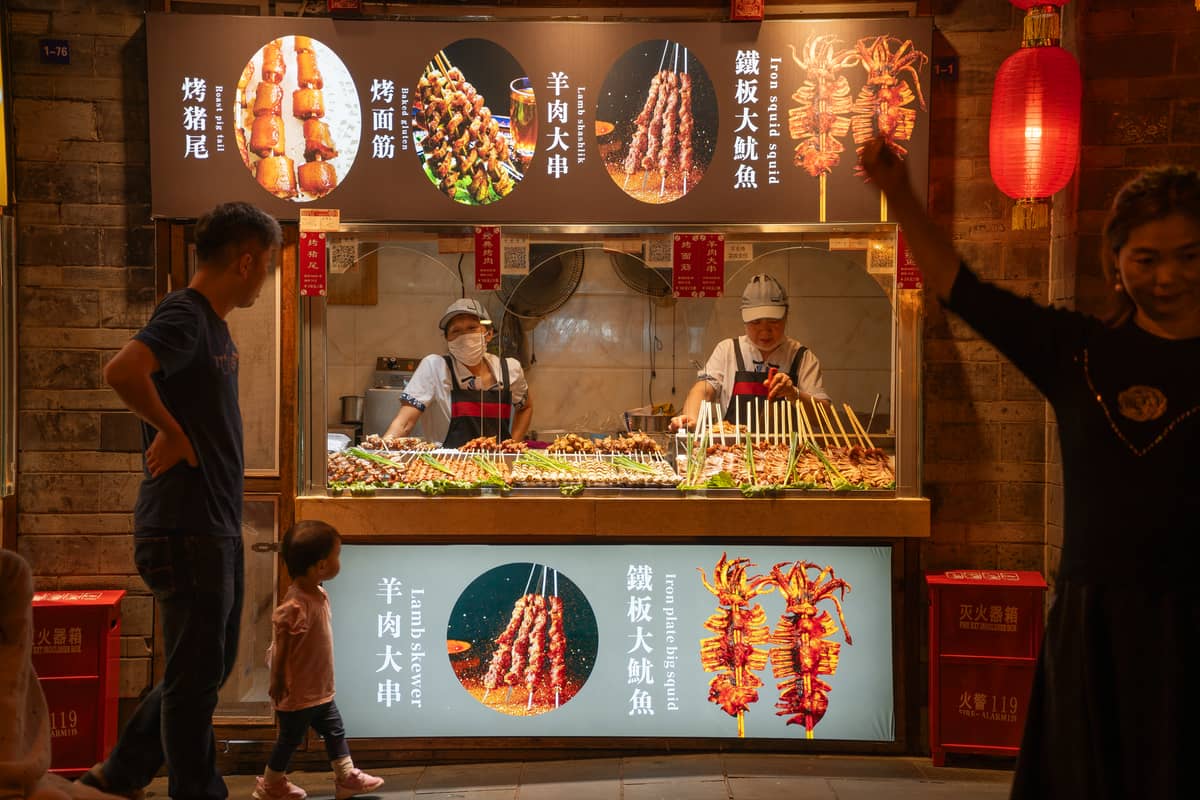
Street-level snacks cost ¥5–15 across most of the city. Longchao shou (龙抄手), large pork wontons in bone broth, is a Chengdu specialty distinct from Shanghai or Cantonese wontons. Leaf-wrapped sticky rice (叶儿粑, yé ér bā) is a seasonal snack with a glutinous rice exterior and sweet or savory filling. In spring, local ingredients like fresh bamboo shoots and chive blossoms appear in dishes that are unavailable the rest of the year. Eating seasonally in Chengdu is genuinely worthwhile, not just a marketing pitch.
The area around Jinli Ancient Street and Kuanzhai Alley offers street snacks but at tourist-facing prices that are roughly 30–50% higher than equivalent shops in residential neighborhoods. Both areas are worth visiting for atmosphere, but neither represents Chengdu's best food value. The snacks are real; the pricing is adjusted for foot traffic.
💡 Local tip
For the densest concentration of local noodle shops and breakfast spots with minimal tourist markup, explore the streets within a 10-minute walk of Wenshu Monastery (文殊院) in the early morning. The neighborhood runs on local rhythms — most stalls close or shift to lunch menus by 10am.
Price Ranges and Where to Eat on Any Budget
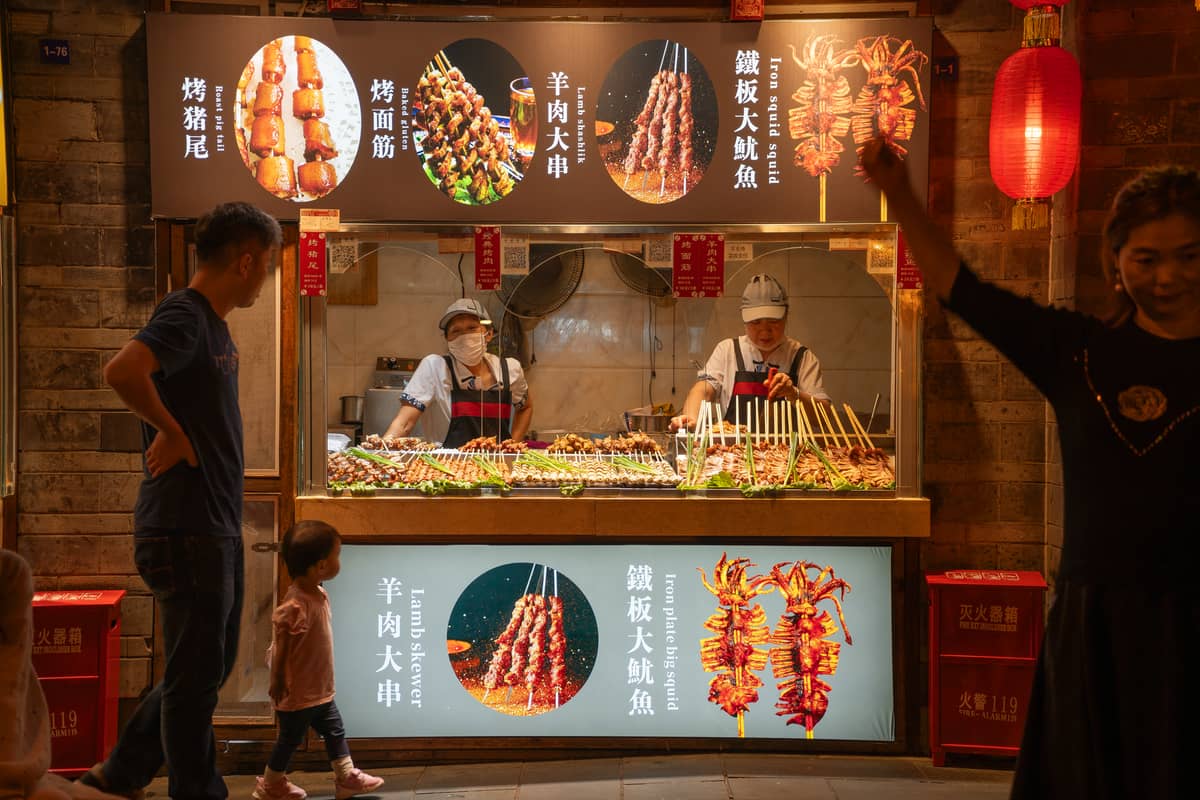
Chengdu is genuinely affordable at street level. The pricing tiers below reflect indicative mid-2020s ranges in CNY and will fluctuate with seasons, location, and restaurant format. Prices in tourist corridors like Chunxi Road run higher than equivalent food in residential districts.
- ¥5–30 per dish: Street stalls and noodle shops Covers dandan noodles, Zhong dumplings, sweet-water noodles, wontons, douhua, and most breakfast items. This tier feeds you well for ¥15–25 per meal if you stick to two or three items.
- ¥40–80 per person: Local restaurants with shared dishes A table of two or three sharing four to five dishes with rice. This covers mapo tofu, twice-cooked pork, kung pao chicken, and a vegetable dish with rice and a cold beer or tea. The everyday dining format for most Chengdu residents.
- ¥50–80 per person: Chuānchuān Skewer pricing varies by ingredient type. Budget ¥1–5 per skewer depending on the item, plus a base charge for broth at some venues. Budget conservatively until you know your pace.
- ¥80–120 per person: Mid-range hot pot Covers ingredients and a standard broth base. Exclude drinks, dipping sauce extras, and packaged tableware. Total bill for two typically lands at ¥160–240.
- ¥150–500+ per person: Upscale and tasting-menu restaurants Michelin-listed and hotel dining rooms fall here. Shang Palace at Shangri-La Chengdu serves lunch 11:30am–2pm and dinner 5:30–10pm. Reservations are strongly advised; call or contact directly rather than assuming third-party booking works.
If your priority is eating well without spending much, the Chengdu on a budget guide maps out a practical daily food strategy. For shopping for Sichuan ingredients and spices to bring home, the Chengdu shopping guide covers the best markets and specialty food stores.
Practical Tips for Eating Well in Chengdu
Menus in local restaurants are almost entirely in Chinese, with photos sometimes available but not guaranteed. Google Translate's camera function works reasonably well on printed menus for standard dishes, though handwritten specials on wall boards are harder to parse. Learning the characters for a handful of key ingredients — doubanjiang (豆瓣酱), tofu (豆腐), pork (猪肉), chicken (鸡肉), beef (牛肉) — makes ordering faster and more accurate. Vegetarians face genuine challenges in Chengdu: many dishes that appear plant-based contain lard in the cooking oil or pork in the broth. Ask specifically '不放肉,不放猪油' (no meat, no lard) for the clearest communication.
Tipping is not customary anywhere in Chengdu's food scene, from street stalls to hotel restaurants. Payment is almost universally handled through WeChat Pay or Alipay QR codes, with cash accepted at traditional markets and older establishments. Foreign visitors without a Chinese payment account should ensure their hotel or tour contact can assist with QR payment setup, or carry enough cash for smaller purchases. Credit cards are accepted at upscale hotel restaurants and some international-facing establishments, but not at most local restaurants.
✨ Pro tip
The best way to find a reliable local restaurant in any Chengdu neighborhood is to look for one with a queue of locals at meal times (11:30am–1pm and 6–8pm). A full house with a short wait is a far better indicator of quality than English-language signage, English menus, or proximity to tourist attractions.
For a broader introduction to how food fits into a Chengdu itinerary, the 3 days in Chengdu itinerary builds meals into the day structure. If you are combining food with the city's tea-house culture, the Chengdu tea house guide is a natural complement to this one.
FAQ
What is the most famous food in Chengdu?
Mapo tofu and hot pot are the two dishes most closely associated with Chengdu internationally. Locally, dandan noodles, Zhong dumplings, and twice-cooked pork are equally central to the city's food identity. Mapo tofu, invented in Chengdu in the Qing dynasty, is the dish most food writers point to as the defining expression of Sichuan cuisine.
Is all Sichuan food very spicy?
No. Sichuan cuisine has eight recognized flavor profiles, of which málà (numbing-spicy) is the most famous but not the only one. Dishes like kung pao chicken are primarily sweet-sour with mild heat. Fish-fragrant eggplant has no fish and moderate spice. Twice-cooked pork is savory with controlled heat. Visitors with low spice tolerance can eat very well in Chengdu by choosing carefully and asking restaurants to reduce chili (少辣, shǎo là) or prepare a dish without chili (不要辣, bú yào là).
How much does food cost in Chengdu?
Street snacks and noodle dishes run ¥5–30. A sit-down shared meal at a local restaurant costs around ¥40–80 per person. Hot pot runs ¥80–120 per person for mid-range venues, excluding soup base and drinks. Upscale hotel and Michelin-listed restaurants charge ¥150–500+ per person. These are indicative ranges and will vary by location, season, and the specific restaurant.
Where is the best place to eat street food in Chengdu?
For authentic, local-priced street food, residential neighborhoods around Wenshu Monastery and the streets near Yulin are better than tourist corridors. Jinli Ancient Street and Kuanzhai Alley have real Chengdu snacks but charge a premium for the atmosphere. Early morning (7–9am) is when street food culture is at its most active across the city.
Is Chengdu food the same as Sichuan food?
Chengdu is the capital of Sichuan Province and the origin of most internationally recognized Sichuan dishes, so the two terms are closely linked but not identical. Other Sichuan cities like Chongqing have their own distinct hot pot styles and regional variations. When most people say 'Sichuan food,' they are typically referring to the Chengdu-based culinary tradition, which is what you will find across the city.