Shopping in Chengdu: Best Malls, Markets & Souvenirs
Chengdu is one of southwestern China's best cities for shopping, whether you're after luxury brands, handmade Shu brocade, panda merchandise, or bulk spices for your hotpot. This guide covers the top malls, local markets, souvenir picks, and practical advice to help you spend wisely.
Plan and book this trip
Tools from our partner Travelpayouts help you compare flights and hotels. If you book through them, we may earn a commission at no extra cost to you.
Flights
Hotels map
TL;DR
- The Chunxi Road area, anchored by Taikoo Li Chengdu and Chengdu IFS, is the city's retail core — accessible via Metro Lines 2 and 3.
- SKP Chengdu (Tianfu North Avenue) targets luxury shoppers; IFS suits mid-to-high-range brands and carries the famous giant panda sculpture on its exterior.
- For local souvenirs, Jinli Ancient Street and Kuanzhai Alley are convenient but priced accordingly — expect to pay tourist premiums.
- Serious souvenir hunters should visit Songxianqiao for art supplies and calligraphy goods, and Da Xinan Tea City for tea and teaware.
- Hehuachi is a large wholesale-oriented commercial district, not a single compact souvenir market — confirm whether vendors sell individual items before heading there.
The Chunxi Road Retail District: Where Most Visitors Start
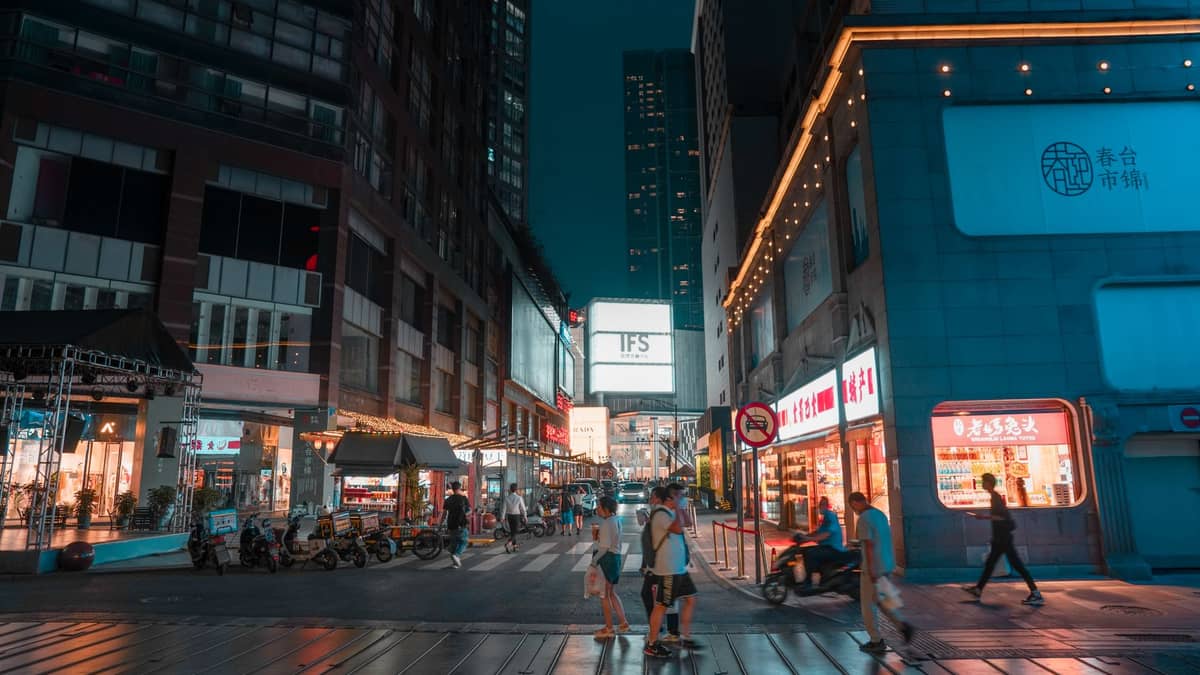
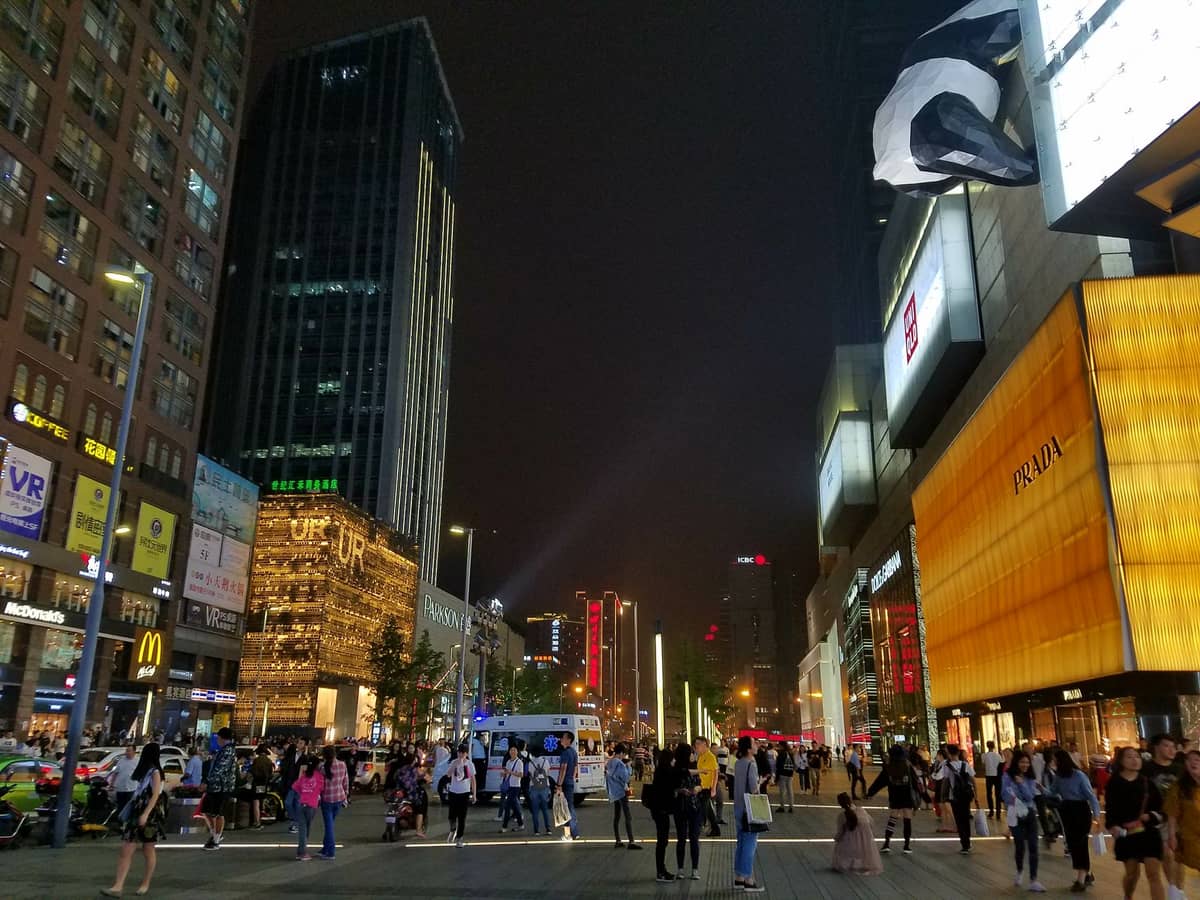
Chunxi Road (春熙路) is Chengdu's most visited commercial corridor, served directly by Chunxi Road Station on Metro Lines 2 and 3. Within a few hundred metres you have Chengdu IFS (No. 1 Hongxing Road, Jinjiang District; open 10:00–22:00), Taikoo Li Chengdu (No. 8 Middle Shamao Street, Jinjiang District), and a dense cluster of mid-range chain stores, street food stalls, and the occasional independent boutique.
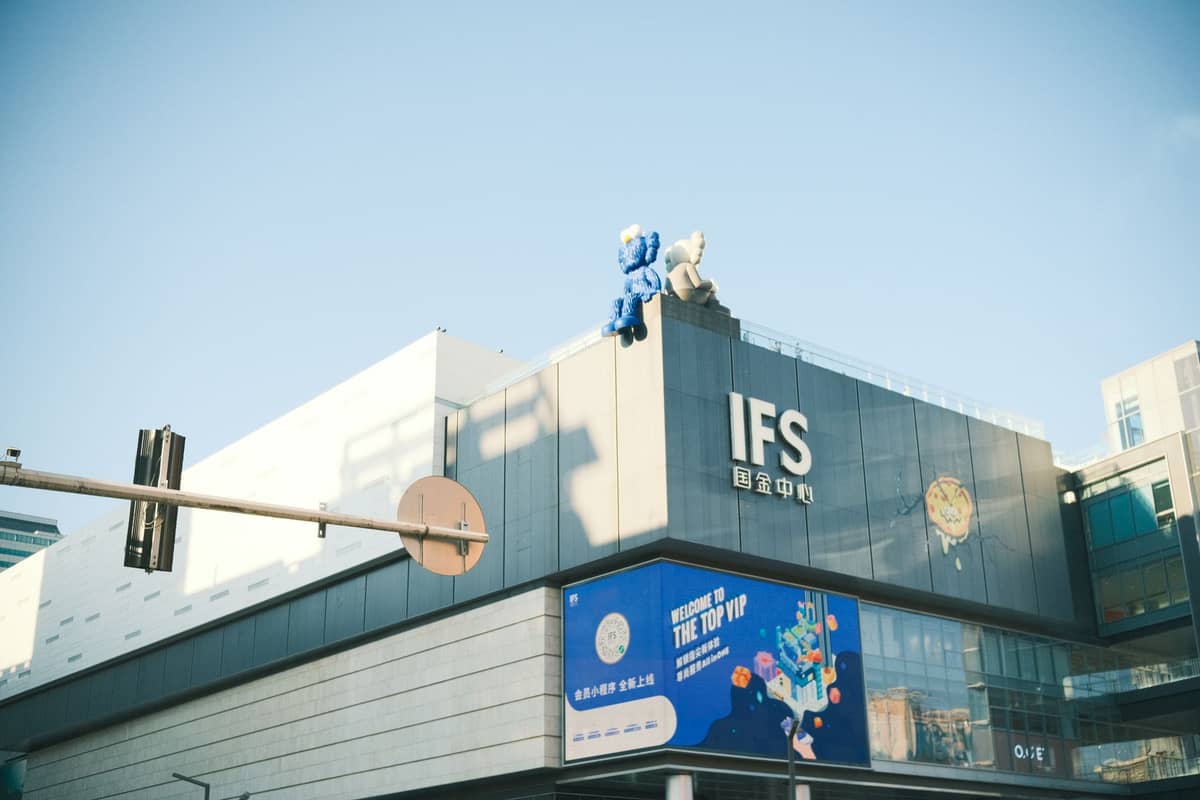
IFS is a conventional vertical mall format: international fast fashion on lower floors, cosmetics and accessories in the middle, restaurants at the top. Its roof-level giant panda sculpture has become one of the most photographed spots in the city, so expect crowds on weekends. Taikoo Li, developed by Swire Properties, takes a very different approach: low-rise, open-air lanes built around the historic Daci Temple. The architectural contrast works well, and it draws a noticeably younger, more style-conscious crowd than IFS. Neither mall is cheap, but both are good for spending a couple of hours even if you are not buying.
💡 Local tip
Chunxi Road is busiest on Saturday and Sunday afternoons from around 14:00 onward. If you want to browse without heavy crowds, arrive before noon on a weekday. The area also fills up during the Golden Week holidays in early October and early May, when queues form even outside clothing stores.
Luxury and Upscale Shopping: SKP and Beyond
For high-end retail, SKP Chengdu is the destination most locals point to. Located at No. 2001 Tianfu North Avenue in the Gaoxin (High-Tech) District, it is open 10:30–22:30 and carries the full range of major European luxury houses. It is a serious department store in the Beijing SKP mould, rather than a lifestyle mall, so the experience is more transactional. Worth visiting if luxury shopping is a priority, but it requires a separate trip from the Chunxi Road area.
Tianfu New Area and the wider Gaoxin District have seen significant retail development over the past decade, and there are several other premium commercial projects in that part of the city. If you are basing yourself in the south or want to pair shopping with a visit to the New Century Global Center, which contains its own retail and entertainment complex, this corridor makes sense. For visitors staying centrally, however, SKP is a deliberate detour rather than a casual stop.
Local Markets Worth Seeking Out
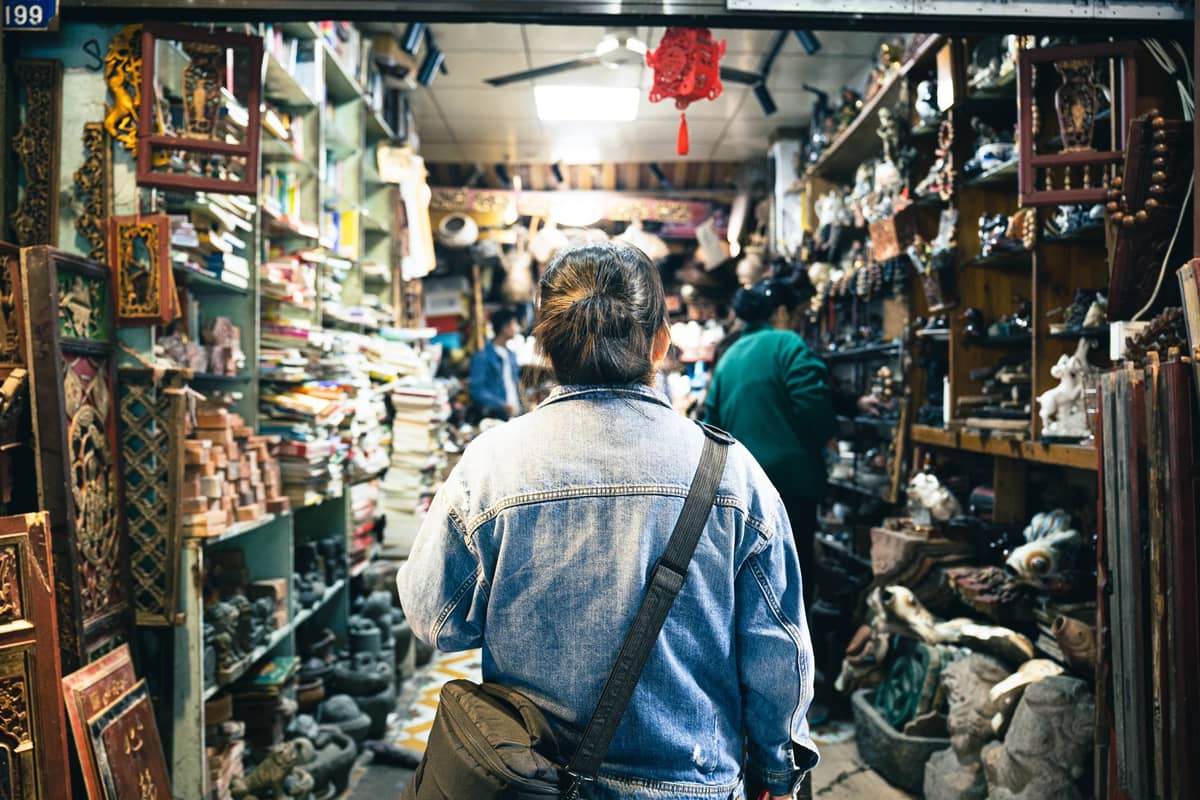
Chengdu's market scene rewards some advance planning. The three most useful for visitors with specific interests are Songxianqiao Antique Market, Da Xinan Tea City, and the Hehuachi wholesale district.
- Songxianqiao Antique and Art Market The go-to destination for art prints, calligraphy supplies, ink stones, traditional paintings, antique coins, and Buddhist decorative items. Quality varies enormously between stalls. Bargaining is standard practice here — opening prices can be two to three times what a vendor will accept. Located near Qingyang Palace in the western part of the central city.
- Da Xinan Tea City (大西南茶城) A multi-building wholesale and retail complex dedicated to tea and teaware. You can find everything from everyday Sichuan jasmine tea (roughly ¥60–180 per 500 g for standard grades) to aged pu-erh cakes and high-quality Yixing clay teapots. Vendors here are generally more knowledgeable than those selling tea in tourist spots, and prices reflect wholesale origins. Bring cash.
- Hehuachi Commercial District Often described online as a 'flower and bird market' or a single souvenir market, Hehuachi is actually a sprawling wholesale-oriented district spread across multiple streets and buildings. You can find plants, pets, seasonal decorations, craft supplies, and general merchandise, but many stalls operate on minimum-order quantities. Worth visiting if you know what you are looking for; disappointing if you arrive expecting a curated craft bazaar.
⚠️ What to skip
Hehuachi is not a compact tourist market. It is a large wholesale district where individual stall vendors may decline to sell single items. Confirm with sellers whether they accept retail quantities before spending time browsing. It is best visited by those with specific wholesale interests rather than casual souvenir shoppers.
Souvenir Shopping: What to Buy and What to Skip
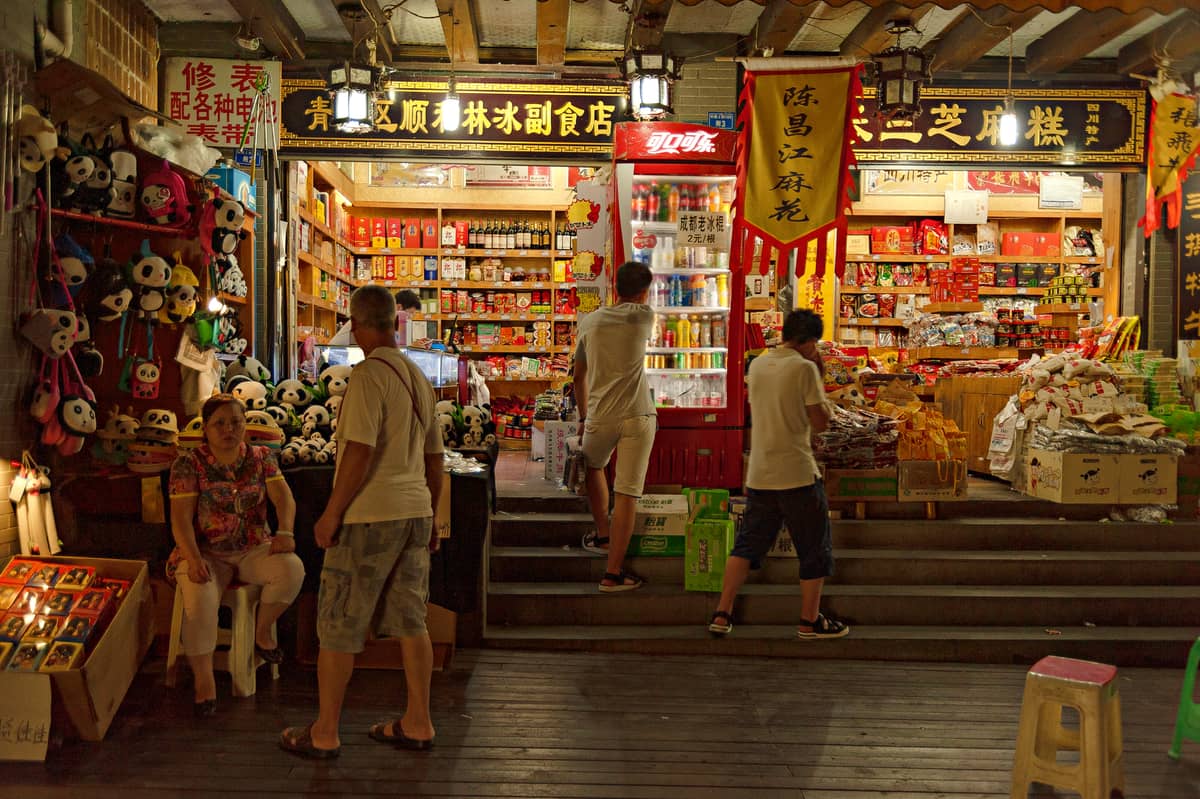
Chengdu's best souvenirs are tied directly to the city's cultural identity: giant panda merchandise, Sichuan spices and hotpot bases, jasmine tea, Shu brocade textiles, and lacquerware. The easiest place to buy all of these is Jinli Ancient Street near Wuhou Shrine, or Kuanzhai Alley in the northwest of the central city. Both are heavily visited, well-curated for tourists, and priced accordingly.
Panda plush toys are the single most popular souvenir and are sold everywhere from airport kiosks to museum gift shops. Retail prices typically run ¥25–150 depending on size and brand, with officially licensed products from the Chengdu Research Base of Giant Panda Breeding at the higher end. The airport and IFS both stock a reasonable range. Packaged hotpot spice bases cost roughly ¥15–45 for a standard portion — supermarkets like Walmart and Carrefour, both of which have central Chengdu branches, often carry familiar brands at lower prices than tourist-area shops.
Shu brocade (蜀锦, Shǔ Jǐn) is the premium textile souvenir with the strongest claim to genuine local heritage. Produced in Chengdu for over 2,000 years, it is one of China's four classical brocade traditions. Scarves and small decorative pieces start around ¥350–1,000+, with the price driven mainly by the complexity of the weave and the proportion of silk in the fabric. Synthetic imitations are common in tourist markets; the Shu Brocade and Embroidery Museum in Qingyang District sells certified pieces if authenticity matters to you.
- Panda plush toys: ¥25–150, widely available; licensed versions from the Panda Base gift shop are the safest bet for quality.
- Packaged hotpot spice base: ¥15–45; buy from supermarkets for the best price-to-quality ratio.
- Jasmine tea (everyday grade): ¥60–180 per 500 g; Da Xinan Tea City offers the best selection.
- Shu brocade silk scarves: ¥350–1,000+; verify authenticity before purchasing at tourist markets.
- Lacquerware: prices vary widely by size and craftsmanship; Jinli and specialist craft stores carry the most consistent quality.
- Sichuan pepper (花椒, huājiāo): light, fragrant, and impossible to replicate at home — a practical and affordable gift at under ¥30 for a good-sized bag from any wet market.
✨ Pro tip
For food souvenirs like hotpot bases, chili oils, and Sichuan peppercorns, skip the tourist-area packaging and head to a standard Chinese supermarket. RT-Mart, Walmart, and local chains like Hongqi Supermarket all stock well-known brands at regular retail prices. You will pay roughly half what the same products cost in Jinli or Kuanzhai Alley, and the selection is broader.
Shopping Near Cultural Attractions
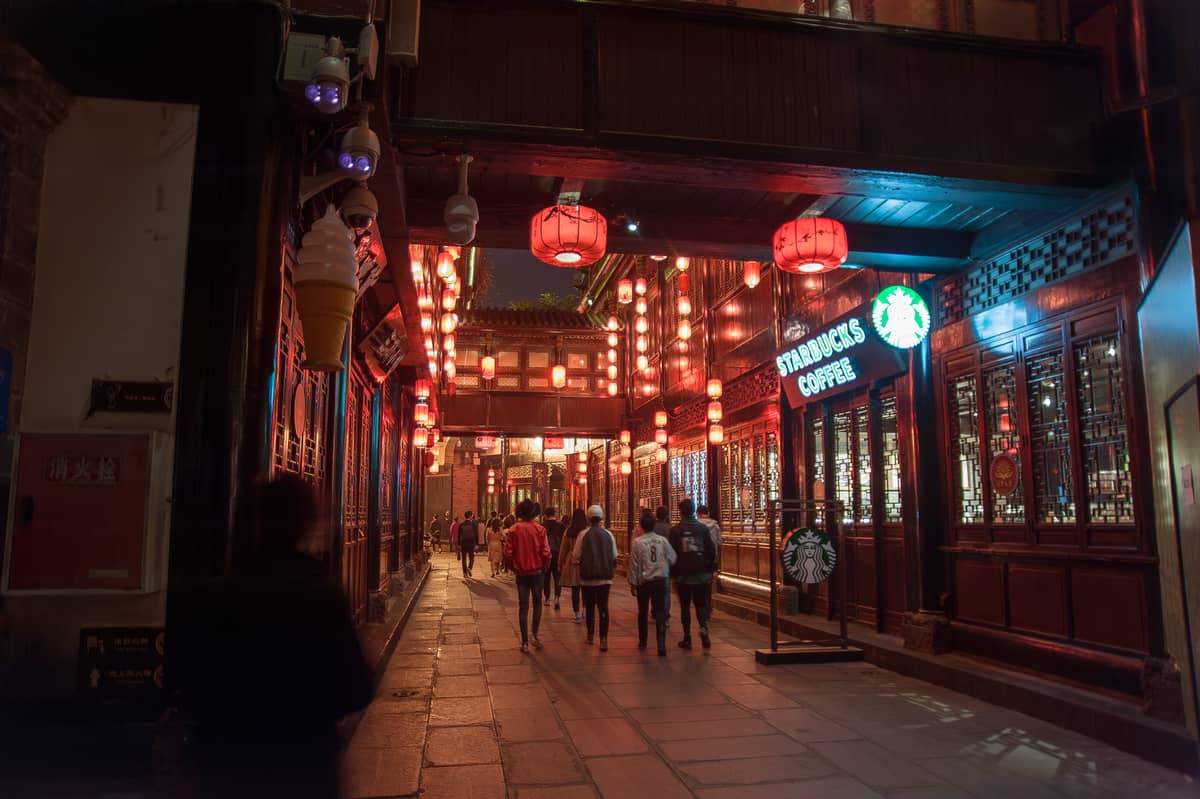
If your itinerary includes major heritage sites, factor in the shopping that comes with them. The Wuhou Shrine complex feeds directly into Jinli Ancient Street, which is a genuinely atmospheric place to shop for local crafts, even if the prices have crept upward over the years. Kuanzhai Alley (Wide and Narrow Alleys) is better for snacking and people-watching than serious souvenir buying, but it does have a handful of quality craft and tea shops among the restaurants.
The Sanxingdui Museum in Guanghan, about 40 km north of central Chengdu, has an excellent gift shop with high-quality reproductions of the museum's extraordinary Bronze Age masks and figures. These make genuinely distinctive souvenirs that you will not find in city-centre tourist markets. If you are making the trip out to Sanxingdui — and it is well worth it — budget time for the shop.
Practical Shopping Logistics in Chengdu
Payment in Chengdu's major malls is straightforward: Visa and Mastercard are accepted at IFS, Taikoo Li, and SKP, though Alipay and WeChat Pay dominate among local shoppers. In markets and smaller shops, cash (renminbi, CNY) is often the only option. ATMs are available throughout the central districts, and most bank-affiliated machines accept international cards. It is worth carrying a few hundred yuan in small bills when visiting markets.
Getting around the main shopping areas is easy on the metro. Chunxi Road Station (Lines 2 and 3) covers IFS, Taikoo Li, and the Chunxi Road strip. For Wuhou Shrine and Jinli, take Line 3 to Gaosheng Bridge Station or Line 3 to Sichuan University Station. Kuanzhai Alley is a short walk from Kuanzhaixiangzi Alleys Station on Line 4.. Taxis and Didi ride-hailing are reliable alternatives, though note that foreign visitors may need to resolve payment compatibility with Didi before arrival. Check the getting around Chengdu guide for full transport details.
Opening hours for Chengdu's main malls are consistent year-round (IFS: 10:00–22:00; SKP: 10:30–22:30), but individual market stalls and smaller shops, particularly in historic districts, can close without notice on public holidays or during bad weather. The Golden Week periods in early May and early October bring the heaviest crowds across all retail areas. If you are visiting during these periods, the malls are a more reliable option than markets, which can be chaotic or partially closed.
ℹ️ Good to know
Tipping is not customary in mainland China, including in shops and markets. In luxury malls, a brief nod or verbal thank-you to sales staff is appropriate. In markets, polite bargaining is acceptable and expected at most stalls selling crafts, antiques, and unbranded goods — but pushing aggressively below a fair price is considered poor form.
FAQ
Where is the best place to buy panda souvenirs in Chengdu?
The gift shop at the Chengdu Research Base of Giant Panda Breeding stocks officially licensed merchandise, which is the safest option for quality and authenticity. For convenience, IFS and Taikoo Li both carry a solid range of panda goods. Avoid the cheapest stalls in tourist markets — unbranded plush toys vary wildly in quality.
Can I bargain at markets in Chengdu?
Bargaining is standard at Songxianqiao Antique Market, Hehuachi, and smaller independent stalls in historic districts like Jinli. It is not appropriate in malls, chain stores, or government-operated museum shops. A reasonable opening counter-offer is typically 50–70% of the asking price at antique and craft markets.
Do shops in Chengdu accept credit cards?
Major malls including IFS, Taikoo Li, and SKP accept Visa and Mastercard. Most markets and smaller shops are cash-only or accept Alipay and WeChat Pay only. Carry renminbi (CNY) in cash if you plan to visit markets, and use ATMs rather than currency exchange counters for better rates.
What are the most unique things to buy in Chengdu that you cannot get elsewhere?
Shu brocade textiles, locally produced Sichuan peppercorns, and Sanxingdui Museum reproductions are the most distinctive options. High-grade Sichuan jasmine tea sourced from Da Xinan Tea City is another, as are locally made lacquerware pieces from quality craft shops in Jinli or Kuanzhai Alley.
Is Chunxi Road worth visiting just for shopping?
Yes, if you want a concentrated mix of international brands, local food options, and people-watching. IFS and Taikoo Li are both well-maintained and easy to navigate. That said, Chunxi Road will not offer anything that cannot be found in other major Chinese cities — its value is convenience and atmosphere rather than uniqueness.