Taikoo Li Chengdu: Where a 1,600-Year-Old Temple Meets Chengdu's Most Stylish Precinct
Taikoo Li Chengdu is an open-air mixed-use development in Jinjiang District that wraps around the ancient Daci Temple. Spanning roughly 114,000 square metres of retail space, it brings together international flagship stores, local designer boutiques, and some of Chengdu's most sought-after restaurants across a low-rise, lane-style layout that genuinely rewards slow walking.
Quick Facts
- Location
- No. 8 Middle Shamao Street, Jinjiang District, Chengdu
- Getting There
- Chunxi Road Station, Metro Lines 2 and 3 (direct access)
- Time Needed
- 2 to 4 hours for casual browsing; a full evening if dining
- Cost
- Free entry to the precinct; shopping and dining charged separately
- Best for
- Architecture lovers, food explorers, evening strollers, design shoppers
- Official website
- www.taikooli-chengdu.com/en
What Taikoo Li Chengdu Actually Is
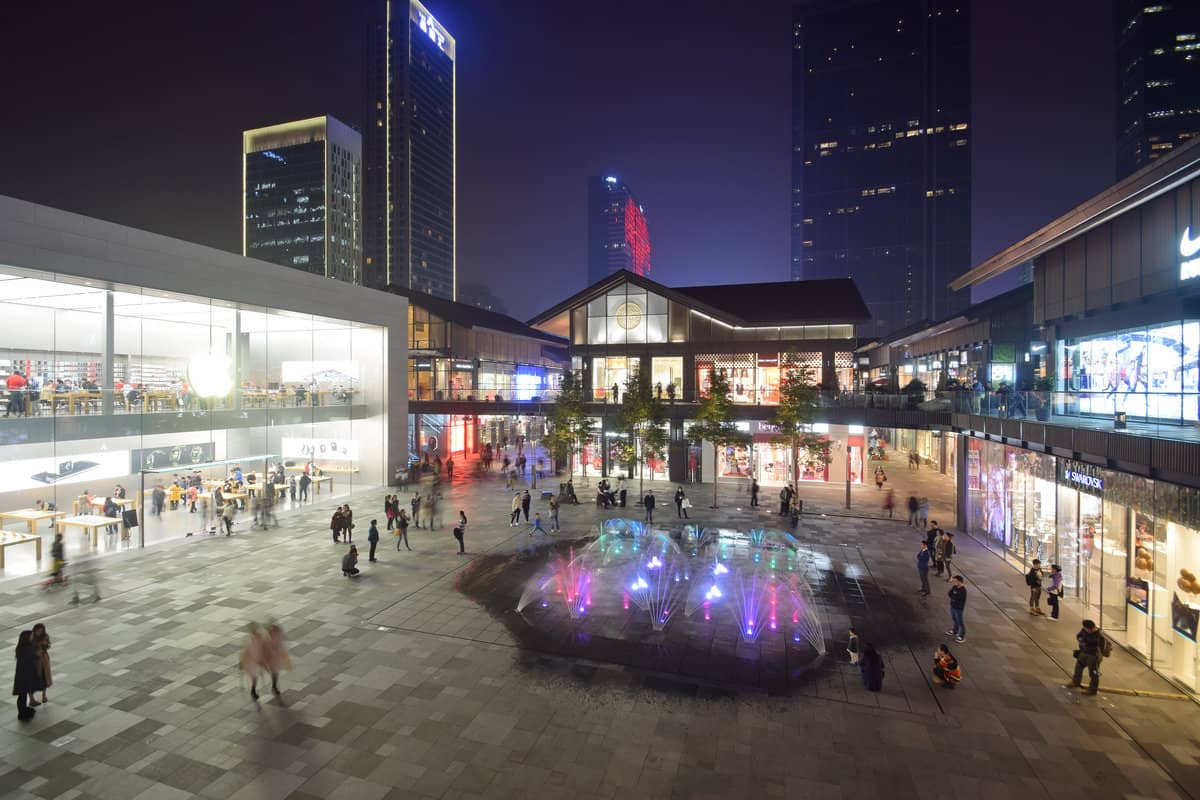
Taikoo Li Chengdu (成都太古里) opened in April 2015 as a project developed by Swire Properties. It is an open-air, lane-based retail and dining precinct in the heart of Jinjiang District, built around and directly adjacent to the Daci Temple, a Buddhist complex with roots dating back approximately 1,600 years. The development has approximately 114,000 square metres of retail space.
Unlike a conventional shopping mall, Taikoo Li does not have a single roof over it. The architecture is deliberately low-rise, spreading across a network of pedestrian lanes that connect open courtyards, covered walkways, and the preserved temple grounds. The design draws on traditional Chengdu courtyard architecture, using dark timber screens, grey stone paving, and sloped tiled rooflines as recurring elements. Walking through it feels more like moving through a densely packed neighborhood than navigating a department store.
💡 Local tip
Retail stores generally open at 10:00 and close at 22:00. Restaurants often stay open later. If you want to see the precinct without the shopping crowds, arrive just after opening on a weekday morning.
The Daci Temple at Its Core
The presence of Daci Temple is not cosmetic. The temple complex sits within the development and operates as an active Buddhist site, distinct from the commercial lanes surrounding it. Its founding is associated with the Tang dynasty, making it one of the oldest continuously active religious sites in central Chengdu. Historically, the temple hosted an outdoor market known as the Daci Temple Fair, which was a significant commercial and cultural gathering point for the city.
Swire Properties incorporated rather than displaced the temple when designing Taikoo Li, which gives the precinct a layer of historical credibility that most commercial developments in China lack. Visitors who treat the temple as simply a backdrop are missing the point. Spend at least 20 minutes inside; the contrast between the incense smoke and the espresso bars thirty metres away is one of Chengdu's more unusual juxtapositions. For context on other significant temples in the city, the guide to Chengdu's best temples covers Daci alongside other major sites.
Tickets & tours
Hand-picked options from our booking partner. Prices are indicative; availability and final rates are confirmed when you complete your booking.
Panda Base and city highlights private day tour in Chengdu
From 302 €Instant confirmationFree cancellationChengdu to Yibin private tour with Wuliangye Liquor Museum visit
From 300 €Instant confirmationChengdu private evening tour with hot pot dinner
From 247 €Instant confirmationFree cancellationGiant Buddha and Huanglongxi Old Town private day tour from Chengdu
From 368 €Instant confirmationFree cancellation
How the Precinct Changes Through the Day
The morning hours, roughly 10:00 to noon, belong largely to the service workers setting up, delivery crews moving through side lanes, and a trickle of early visitors. The stone-paved lanes are at their quietest, the light falls cleanly across the tiled rooflines, and you can walk the full length of the precinct without navigating a crowd. This is the most practical time for photography.
By early afternoon the foot traffic builds noticeably, especially on weekends and public holidays. The central courtyards become staging areas for groups taking photographs, and the restaurant queues begin to form at the more popular spots. Weekend afternoons in the Slow Lane and Fast Lane sections can become genuinely congested in the main passages, though the side courtyards stay comparatively calm.
The precinct reaches its most atmospheric point in the two hours around dusk. Warm lighting activates across the lane architecture, the temple is lit from below, and the mix of local families, young professionals, and tourists creates a density that feels like the city showing itself off. If you are visiting Taikoo Li once, evening is the version worth seeing. Bring a jacket in autumn and winter because the open-air design means you feel the temperature drop directly.
⚠️ What to skip
On Golden Week holidays (National Day in early October and Chinese New Year) the main lanes become extremely crowded. If you are visiting during these periods, plan for a shorter visit and arrive early in the day.
Shopping and Dining: What to Expect
The tenant mix leans toward international flagship stores, mid-to-premium Chinese brands, and a smaller number of independent local retailers. You will find familiar luxury and contemporary fashion labels alongside Chinese sportswear brands, jewellery boutiques, and specialty bookstores. The precinct's position adjacent to Chunxi Road, Chengdu's principal pedestrian shopping street, means the two areas function as a combined retail corridor. Taikoo Li handles the design-conscious, slower-paced end of that corridor.
Food is where many visitors spend most of their money. The precinct includes outlets ranging from rooftop restaurants to ground-floor casual spots to international coffee chains. Chengdu's food culture is present throughout, including Sichuan-forward restaurants and teahouse-style settings. For a broader picture of what to eat in the city, the Chengdu hot pot guide is a useful starting point before you plan a dinner here.
Wait times at popular restaurants on weekend evenings can run from 30 minutes to over an hour. Most venues use a digital queuing system, which means you can add your name and walk the precinct while waiting. If you have a specific restaurant in mind, check whether it accepts reservations.
Architecture and Layout: Navigating the Lanes
Taikoo Li is loosely divided into two zones described internally as the Fast Lane and the Slow Lane. The Fast Lane, anchored by a higher concentration of flagship stores, moves at a more commercial pace. The Slow Lane is the quieter, more residential-scale section, with narrower passages, courtyard seating, and a larger proportion of food and lifestyle outlets.
The architecture firm behind the project incorporated traditional Sichuan residential elements: overhanging eaves, exposed timber framing, perforated screens, and a ground-level scale that keeps buildings to three or four storeys at most. The effect is a precinct that reads as distinctly local even when the tenants are international. Grey stone at foot level, dark timber at eye level, and tiled rooflines against the sky are the consistent visual vocabulary throughout.
This design approach makes Taikoo Li one of the more photographed contemporary architectural environments in Chengdu. If architecture is a particular interest, it sits naturally alongside a visit to Chunxi Road, directly adjacent, and is worth comparing with the more historical lane format at Kuanzhai Alley on the other side of the city centre.
Getting There and Getting Around
Chunxi Road Station, served by Metro Lines 2 and 3, provides direct access to Taikoo Li. This is the most practical option for most visitors. The station's exit system connects pedestrians into the precinct and onto Chunxi Road, making the transition from underground transit to street level straightforward. Bus stops on Shamao Street and near Dongmen Bridge serve the perimeter if you are coming from a nearby point on an above-ground route.
Taxis and ride-hailing via Didi can reach the precinct, but the surrounding streets are frequently congested in the afternoon and evening. Driving in and trying to park is not recommended during peak hours. For general guidance on navigating Chengdu's transit network, the guide to getting around Chengdu covers metro, bus, and ride-hailing in practical detail.
The precinct itself is fully pedestrian and low-rise. Paved lanes connect all sections at ground level. The official site lists customer service centres, but specific accessibility details including accessible routes and mobility-device services are not comprehensively published; if this matters to your visit, contact the centre directly before arriving.
Who Should Temper Their Expectations
If you are visiting Chengdu primarily for heritage depth, Taikoo Li is not where you will find it. The Daci Temple is genuinely old and genuinely active, but it is encircled by commercial activity. Visitors who find that combination uncomfortable will be more at ease at the city's standalone temple and heritage sites. Similarly, if your goal is traditional street food in an unpolished environment, the lanes around Chunxi Road and further afield in the city offer that more authentically and at lower prices.
It is also not a bargain destination. The premium positioning of most tenants reflects the premium positioning of the development. Budget-focused travelers will find more value per hour elsewhere, though the free entry and the ability to walk through without spending anything means Taikoo Li works as part of a broader afternoon itinerary without committing your wallet.
Insider Tips
- The rooftop levels of several buildings in the precinct offer sightlines across the tiled rooflines toward the Daci Temple pagoda. They are not well-marked; look for staircase access at the edges of the larger retail blocks.
- The side courtyards off the main Slow Lane passage, especially on weekday mornings, function almost as quiet outdoor seating areas. Local office workers use them for coffee breaks. Finding one with an empty bench is easier than it looks on a map.
- If you are visiting in winter, the heated indoor sections of the precinct are largely confined to individual stores. The lanes themselves are open-air and can be cold after dark from November through February. A light down jacket is more useful here than it might seem for a shopping trip.
- The Daci Temple gates have independent opening hours from the retail precinct. Check current hours directly with the temple if visiting primarily for the religious site rather than the shopping.
- Chunxi Road begins immediately adjacent to Taikoo Li's eastern perimeter. Combining both in a single afternoon walk is straightforward and takes advantage of the same metro stop without needing to reroute.
Who Is Taikoo Li Chengdu For?
- Travelers interested in how contemporary Chinese commercial architecture engages with historical religious sites
- Food-focused visitors wanting a varied evening dining destination in central Chengdu
- Shoppers looking for Chinese and international design and fashion brands in a walkable format
- Evening strollers who want atmosphere without committing to a specific program
- First-time Chengdu visitors building a central-district half-day that combines retail, food, and one heritage site
Nearby Attractions
Other things to see while in Jinjiang District:
- Anshun Bridge
Anshun Bridge (安顺廊桥) is a roofed corridor bridge crossing the Jinjiang River in Jinjiang District, rebuilt in 2003 in the style of a Qing dynasty original. Free to walk across at any hour, it draws the most visitors at night when the lantern lighting reflects across the water. This guide covers what you'll actually see, when to go, and how it fits into a broader Jinjiang itinerary.
- IFS Chengdu (International Finance Square)
Chengdu IFS, officially Chengdu International Finance Square, is the city's most prominent luxury retail and dining complex, sitting at the heart of Jinjiang District. The flagship shopping mall spans roughly 210,000 square metres within a development whose overall gross floor area exceeds 760,000 square metres, alongside Grade-A office buildings, a hotel, and residences., it draws shoppers, diners, and architecture enthusiasts in equal measure. Whether you are here for international flagship stores, Sichuan cuisine, or simply the spectacle of urban Chengdu at full volume, IFS delivers.
- Chunxi Road
Chunxi Road Pedestrian Street (春熙路步行街) is the commercial heart of central Chengdu, stretching roughly 1,840 metres through Jinjiang District. Free to enter and open around the clock, it combines flagship department stores, street food stalls, local fashion brands, and one of the city's most photographed squares. Whether you have two hours or a full afternoon, here is exactly what you will find.
- Daci Temple
With major construction during the Tang dynasty in 757 CE, Daci Temple is one of Chengdu's oldest surviving Buddhist institutions. Located steps from Chunxi Road and Taikoo Li in Jinjiang District, it offers free admission, incense-scented courtyards, and a genuine sense of calm that the surrounding commercial district does not.