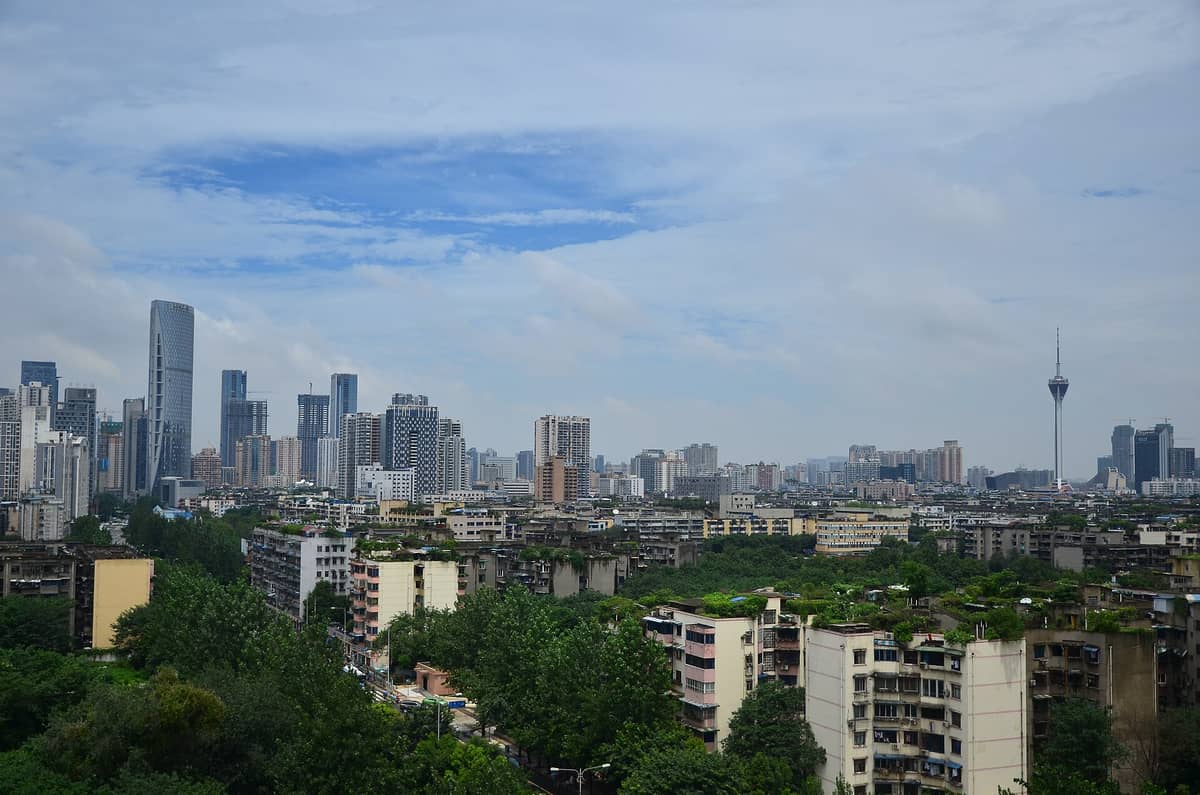
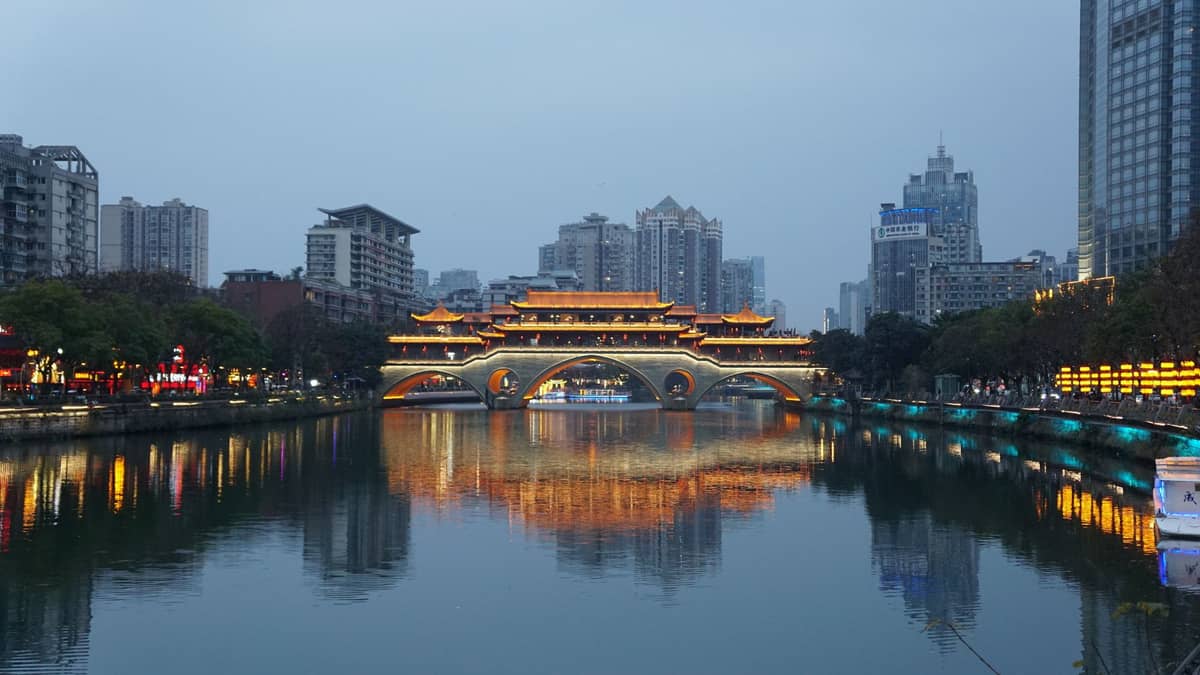
Jinjiang District sits at the heart of Chengdu's urban life, combining the city's main shopping corridors with historic temple courtyards and an exceptional street food scene. It is the natural base for first-time visitors and the area most Chengdu residents point to when describing the city center.
Jinjiang District is where Chengdu's modern consumer culture and its older, slower-paced street life collide in the most productive way possible. Chunxi Road, Taikoo Li, Daci Temple, and Chengdu IFS occupy a compact area that is walkable, metro-connected, and genuinely alive at every hour of the day.
Orientation
Jinjiang District occupies a stretch of central and southeastern Chengdu, and its commercial core is among the most precisely bounded neighborhoods in the city. The main retail and dining precinct around Chunxi Road is enclosed roughly by Beixin Street to the west, Zongfu Road to the north, Hongxing Road to the east, and Dongda, Nanxin, and Zhongxin streets to the south. That rectangle contains most of what visitors come for, and it takes under twenty minutes to walk from one end to the other.
The district extends southeast beyond this commercial core into quieter residential neighborhoods, but most travelers spend the majority of their time in the central zone. To the west, Jinjiang shares a functional boundary with Qingyang District, where Tianfu Square, the major museums, and Renmin South Road begin. Understanding that boundary matters practically: Tianfu Square is close enough to feel like part of the same neighborhood, but it officially sits in Qingyang District. The two are better understood as a continuous city center that spans district lines.
For a wider picture of how Jinjiang fits into the city's geography, the where to stay in Chengdu guide lays out the tradeoffs between districts and helps travelers choose based on their itinerary.
Character & Atmosphere
The personality of Jinjiang District shifts noticeably across the hours, and getting there at different times is worth the effort. In the morning, before the shopping crowds arrive, the streets around Chunxi Road and the lanes behind Taikoo Li have a quieter quality. Small breakfast stalls set up on side streets, older residents walk through the Daci Temple courtyard, and the day's first tea drinkers take their seats at tables spilling out of the older lanes. The scale of the place becomes clearer without the bodies filling every pavement.
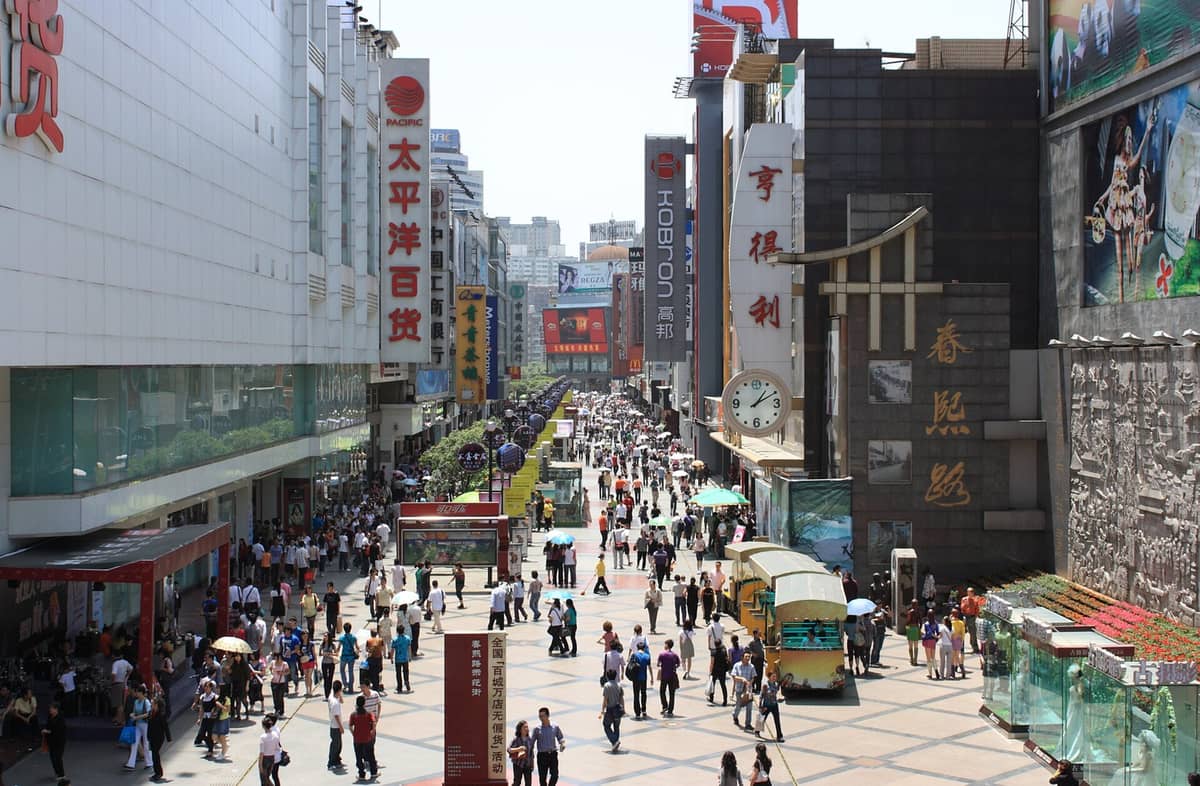
By midday, the character shifts decisively. Chunxi Road becomes one of the most heavily trafficked pedestrian streets in western China, with crowds that compress further on weekends and public holidays. The storefronts range from global luxury labels to mid-range Chinese fashion chains, and the mix is genuinely democratic rather than aspirational. People of every income level use these streets; the luxury towers coexist with street food vendors fifty meters away.
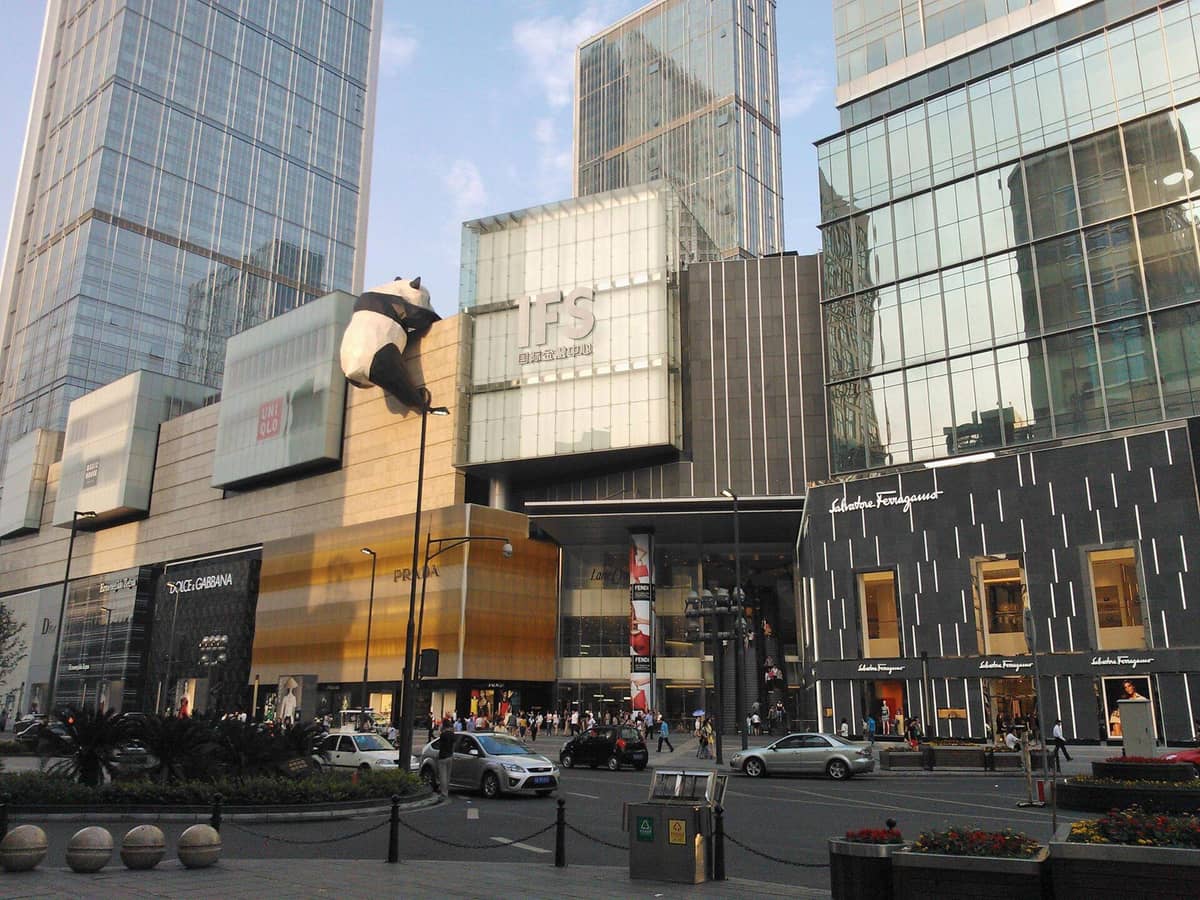
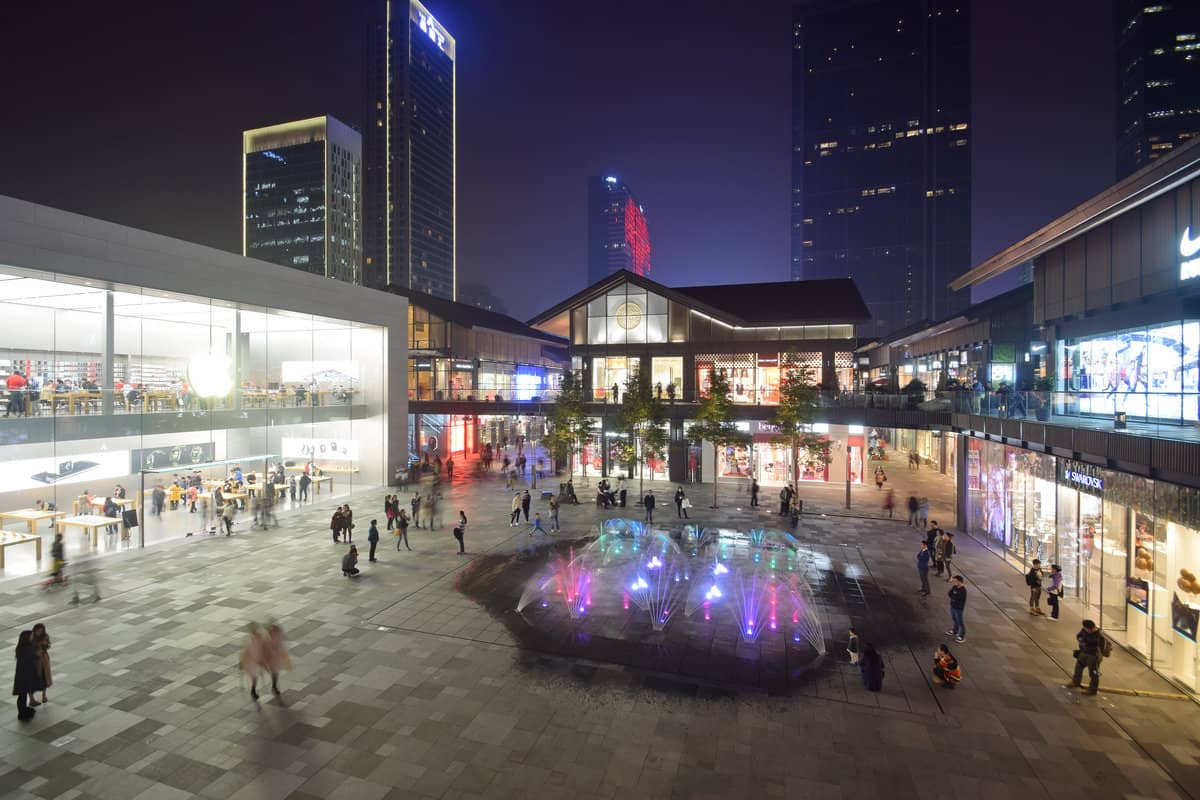
After dark, Jinjiang takes on a third personality. The IFS panda sculpture on the building's exterior becomes a backdrop for photographs well into the night. The bars and restaurants around Taikoo Li fill steadily from around 7 pm. The streets stay active and well-lit until midnight or beyond, and the area is generally considered safe by the standards of any large Chinese city center. Noise is a genuine feature of the evenings here, not a side effect: if you want a quiet night, the areas immediately around Chunxi Road are not the right choice.
⚠️ What to skip
Weekend crowds on Chunxi Road can be genuinely difficult to navigate, especially on Saturday afternoons and during public holidays like Golden Week and Chinese New Year. If you want to take in the architecture and window-shop without friction, a weekday morning visit makes a significant difference.
What to See & Do
The most photographed single object in Jinjiang District is the giant panda sculpture clinging to the exterior facade of Chengdu IFS. The building itself is one of the tallest in the city center, and the panda has become one of Chengdu's most recognizable contemporary images. Inside, the mall spans multiple floors of retail, but the building functions just as well as a landmark and orientation point as it does as a shopping destination.
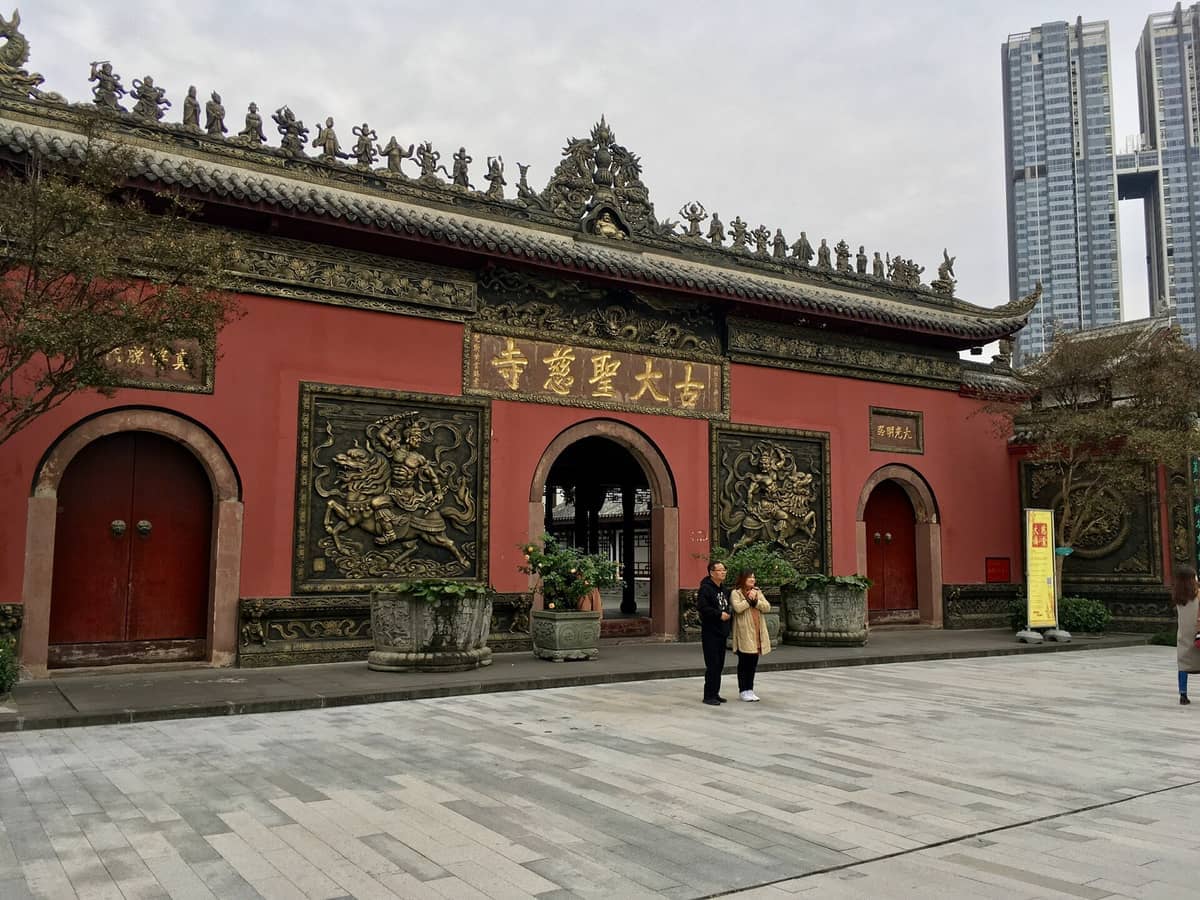
Directly adjacent, Taikoo Li Chengdu takes a different architectural approach: low-rise, courtyard-based retail centered on the preserved Daci Temple complex. The contrast between a Tang Dynasty temple and a contemporary luxury retail development is striking and not as uncomfortable as it sounds on paper. The temple grounds are accessible and quiet relative to the surrounding streets, and the layout encourages slow movement through open-air corridors rather than the enclosed intensity of a conventional mall.
Daci Temple deserves attention beyond its role as a shopping precinct anchor. The site dates to the Tang Dynasty, though the current structures reflect later periods of reconstruction. In the early morning, before retail hours begin, the temple atmosphere is genuinely contemplative. Incense smoke, the sound of prayer, and the relatively small scale of the complex compared to Chengdu's other major religious sites make it feel accessible rather than overwhelming.
Chunxi Road is one of Chengdu's most commercially significant pedestrian streets and worth walking for the urban spectacle alone, independent of whether you plan to shop. The street dates to the Republican era and has been continuously redeveloped, but its position as Chengdu's commercial spine has remained constant. The intersections with adjacent lanes contain the most interesting small-scale retail and food options.
The IFS panda sculpture: best photographed from across the street, especially in the evening when the building is lit
Taikoo Li open-air courtyards: most atmospheric in the evening and on weekday afternoons
Daci Temple: enter from the Taikoo Li side for the most direct access; free to enter the grounds
Chunxi Road pedestrian street: walk the full length north to south for the main retail strip
Side lanes east of Chunxi Road: smaller shops, local food stalls, and a lower-pressure browsing environment
ℹ️ Good to know
Tianfu Square and the Chengdu Museum are a short walk or one metro stop west of Chunxi Road Station. While they fall in Qingyang District administratively, they are practical additions to any Jinjiang itinerary and are within easy walking distance.
Eating & Drinking
The food options within Jinjiang District reflect Chengdu's broader reputation as one of China's most serious eating cities. At street level, the lanes around and behind the main shopping corridors produce some of the city's most accessible Sichuan street food: skewers of spiced meat and vegetables sold from carts, dan dan noodles in small noodle shops, mapo tofu in restaurants that have occupied the same address for decades. The Chengdu street food guide covers specific dishes worth prioritizing on a first visit.
Hot pot is the defining communal eating experience in this city, and Jinjiang District has no shortage of options ranging from basic neighborhood spots to polished restaurant-format operations. The key variable is the oil base: traditional Chengdu hot pot uses a heavy, spiced tallow broth that many visitors find confronting at first and essential after a second visit. For a grounding in how this works, the Chengdu hot pot guide explains the formats, the key decisions, and what to order.
The Taikoo Li complex itself contains several restaurants at the mid-to-high end of the price range, including Chinese regional options beyond Sichuan cuisine. These are useful for travelers who want a reliably comfortable meal in a well-managed environment, though the prices are higher than neighborhood alternatives a few blocks away. The food courts in IFS serve more affordable options in a food-hall format.
Cafes have become a significant part of the Jinjiang street-level experience over the past decade, and the density of independent coffee operations in the lanes around Taikoo Li is notable. These range from micro-roasters in spaces barely large enough for a counter to larger courtyard-based operations with serious drink menus. Tea houses represent the older version of the same social function, and Jinjiang has both.
The bar and nightlife scene around Taikoo Li and the surrounding streets is Chengdu's most visitor-accessible late-night option. For a fuller picture of where nights go in this city, the Chengdu nightlife guide covers the main areas and what to expect from each.
Street food: look for the side lanes east of Chunxi Road for the least tourist-pressured options
Hot pot: dozens of options at all price points; budget around 80-150 CNY per person at a mid-range spot
Taikoo Li restaurants: higher prices, reliable quality, often requires reservations on weekends
IFS food court: affordable, diverse, good for quick meals between sightseeing
Independent cafes: concentrated in the lanes immediately surrounding Taikoo Li
Tea houses: ask locally for options slightly removed from the main commercial strip
Getting There & Around
Chunxi Road Station on Chengdu Metro is the primary access point for Jinjiang District's main commercial area. Lines 2 and 3 both serve this station, making it reachable from the majority of the metro network without a transfer. Exit options from Chunxi Road Station place you directly into the pedestrian shopping zone, within immediate walking distance of IFS and Taikoo Li.
Tianfu Square Station, served by Lines 1 and 2, sits at the western boundary of practical walking range from Chunxi Road. The walk between the two stations along the surface takes around fifteen to twenty minutes and passes through some of the most commercially active streets in Chengdu. It is a reasonable and interesting way to connect the two areas rather than riding one stop underground.
For visitors navigating the metro for the first time, the getting around Chengdu guide explains the full metro network, fare structure, and how to buy tickets or load a transit card.
Ride-hailing via Didi Chuxing is practical for reaching Jinjiang from other parts of the city, though traffic congestion in the city center, particularly around the Chunxi Road area during peak hours, can make journey times unpredictable. Drop-off and pick-up points near the pedestrian zone require some navigation since private vehicles cannot enter the main pedestrian street directly. Bus routes 16, 45, 61, and 64 serve Tianfu Square for those who prefer surface transit.
💡 Local tip
The Chunxi Road Station exits are numbered and positioned around the perimeter of the pedestrian zone. Check the exit number before descending to the platform: Exit A and surrounding exits drop you at different edges of the shopping district, and choosing the right one can save five minutes of unnecessary street navigation.
Where to Stay
Jinjiang District contains some of Chengdu's most well-located accommodation for visitors focused on the city center. Hotels within walking distance of Chunxi Road benefit from immediate access to restaurants, shopping, nightlife, and the metro, without needing to rely on taxis or ride-hailing for basic movement around the city.
The range of accommodation here skews toward mid-range and upper-mid-range options, with some internationally branded hotels in the blocks surrounding Chunxi Road and Taikoo Li. Budget travelers can find more affordable options in the residential streets slightly east or south of the main commercial core, where guesthouses and smaller hotels occupy buildings removed from the premium retail pricing.
The tradeoff for staying in the heart of Jinjiang is noise. The streets directly adjacent to Chunxi Road and Taikoo Li remain active until late at night, and weekend evenings in particular generate sustained ambient noise at street level. Travelers who prioritize quiet over walking convenience may find the slightly removed southern part of the district, or a neighboring district like Wuhou, a better fit.
For a full breakdown of accommodation options across all of Chengdu's districts, including honest comparisons of which areas suit which types of travelers, see the where to stay in Chengdu guide.
Practical Notes & Honest Drawbacks
Jinjiang District is among the most overtly commercial neighborhoods in any Chinese city of this size. That is both its main appeal and its main limitation. The concentration of retail, dining, and nightlife in a compact area makes it efficient for travelers who want to cover a lot of ground quickly, but it also means that the neighborhood's dominant texture is commercial rather than residential or historically layered.
The tourist-facing nature of Chunxi Road and Taikoo Li means that English menus, international payment options, and staff with some English capability are more common here than in most other parts of Chengdu. That accessibility is genuinely useful for first-time visitors to China. It also means the area is priced accordingly: meals, coffee, and goods are not cheap by Chengdu standards, though they remain affordable by the measure of European or North American city centers.
Standard urban precautions apply in crowded areas. The commercial zones attract the volumes of foot traffic that also, in any large city, attract pickpockets operating in compressed spaces. Keep bags secured and be conscious of your immediate surroundings at metro exits and in dense crowd situations. There are no Jinjiang-specific security concerns beyond this general guidance, and the area is heavily policed and well-monitored.
Visitors arriving during major Chinese holidays, particularly Golden Week in October or Chinese New Year, should expect Chunxi Road to be substantially more crowded than normal, with corresponding pressure on restaurants and transit. Planning itineraries with earlier starts or visiting on weekday mornings makes the experience considerably more manageable.
ℹ️ Good to know
Tap water across Chengdu, including Jinjiang District, is treated but not generally recommended for drinking untreated. Use bottled, boiled, or filtered water. Most hotels provide complimentary bottled water or an in-room kettle; street convenience stores stock affordable bottled options.
TL;DR
Jinjiang District is Chengdu's most accessible central neighborhood, combining the main shopping streets, Daci Temple, Taikoo Li, and Chengdu IFS within a compact, walkable area served directly by Metro Lines 2 and 3.
Best suited to first-time visitors to Chengdu, shoppers, food-focused travelers, and anyone who wants to be close to the city's main commercial and nightlife activity without relying on taxis.
The food scene spans from excellent street-level Sichuan options in the side lanes to high-end restaurants inside the shopping complexes, with a strong independent cafe culture in the streets surrounding Taikoo Li.
Weekend crowds on Chunxi Road are genuinely dense; early morning visits and weekday timing produce a significantly calmer experience of the same streets.
Travelers seeking a quieter base, lower prices, or proximity to the Wuhou Shrine and Jinli should consider Wuhou District as an alternative or complementary neighborhood.
Three days is enough time to cover Chengdu's essential experiences without rushing. This itinerary balances the panda base, historic streets, Sichuan cuisine, cultural landmarks, and a day trip option, with practical notes on logistics, timing, and what to skip.
Chengdu's museum scene spans 4,500 years of Sichuan history, from mysterious Bronze Age civilizations to Tang Dynasty poets and dinosaur fossils. This guide covers the standout institutions, what to expect inside each one, and how to plan your visits efficiently.
Chengdu's temple scene spans 1,400 years of Buddhist and Taoist history, from incense-filled city monasteries to sacred peaks rising above the clouds. This guide covers the best temples in Chengdu and beyond, with honest advice on what to expect at each one.
Chengdu rewards visitors year-round, but the timing of your trip makes a real difference. This guide breaks down every season by weather, crowd levels, panda activity, and practical logistics so you can choose the window that actually suits your plans.
Chengdu is surrounded by ancient towns that most visitors completely overlook. This guide covers the five best options — Huanglongxi, Luodai, Jiezi, Anren, and Pingle — with real transport details, honest assessments, and seasonal advice to help you choose the right one for your trip.
Chinese New Year transforms Chengdu into one of China's most atmospheric festival cities, with temple fairs, lantern displays, and Sichuan folk performances across the city. But the season also brings peak crowds, tight transport, and some genuine planning challenges. This guide tells you exactly what to expect and how to prepare.
Chengdu is the capital of Sichuan Province, home to 21 million people, giant pandas, and some of the most distinctive food in China. This guide covers the practical details that actually matter for a first visit: which airport you land at, when to go, what to eat, where to stay, and how to get around without confusion.
Chengdu has a slower, more sensory side that makes it genuinely rewarding for couples. This guide covers the most romantic experiences in the city — from dawn panda visits and teahouse afternoons to Sichuan opera nights and scenic day trips — with a clear take on what's worth your time.
Hot pot is not just a meal in Chengdu — it is the social ritual that defines the city's food culture. This guide covers the best restaurants for Sichuan hot pot, exactly how to order, what to expect on the bill, and how to handle the heat without ruining your evening.
Chengdu's after-dark scene runs deeper than the typical tourist circuit. This guide breaks down the city's main nightlife districts, what each one actually offers, realistic price ranges, and how to get around after the metro stops running.
Chengdu is one of China's most rewarding cities for budget travelers. From free parks and temples to street food that costs less than a coffee back home, here's how to experience the best of Chengdu without overspending.
Chengdu is the world's foremost destination for seeing giant pandas in a conservation setting. This guide covers the Chengdu Research Base of Giant Panda Breeding in detail, how to book tickets, the best time to arrive, how to get there, and what the experience is actually like — including what most visitors get wrong.
Chengdu rewards those who step outside. This guide covers the city's best parks, gardens, riverside walks, and natural escapes, from the teahouse-dotted paths of People's Park to the forested peaks of Mount Qingcheng, an hour from the city center.
Chengdu is one of China's safest major cities for visitors, but that doesn't mean you can skip due diligence. From airport taxi scams to tea house traps, here's everything you need to stay safe, avoid getting ripped off, and travel with confidence.
Chengdu is one of southwestern China's best cities for shopping, whether you're after luxury brands, handmade Shu brocade, panda merchandise, or bulk spices for your hotpot. This guide covers the top malls, local markets, souvenir picks, and practical advice to help you spend wisely.
Chengdu is a UNESCO Creative City of Gastronomy and one of the most rewarding cities in Asia for eating on foot. This guide covers the essential Sichuan dishes, the best street food districts, practical navigation tips, and honest notes on what lives up to the hype.
Tea houses are central to daily life in Chengdu in a way that few cities can claim. This guide covers the history, etiquette, best venues, what things cost, and exactly what to expect when you sit down for tea in one of China's most relaxed cities.
The Chengdu to Chongqing route is one of southwestern China's most popular day trips or short breaks. This guide covers every transport option, station logistics, fare breakdowns, and how to make the most of your time in both cities.
Two of southwestern China's most compelling cities, separated by roughly 300 km and connected by high-speed rail. This guide breaks down what each city does best, who each suits, and whether you should bother visiting both.
Chengdu's historic core is genuinely walkable, but only if you know which clusters of sights sit close together and which require transport. This guide maps out three practical self-guided walking routes, breaks down entry costs, and flags the common mistakes that turn a pleasant city walk into an exhausting detour.
Chengdu is one of China's most family-friendly cities, pairing iconic wildlife encounters with hands-on cultural experiences, open parks, and food kids actually enjoy. This guide covers the top activities for families, practical logistics, and practical notes on what works best with children in tow.
Chengdu sits at the center of one of China's richest regions for day-trip travel. Within two hours by rail or road, you can stand before a 71-meter Tang Dynasty Buddha, hike Taoist mountain trails, and explore a 2,300-year-old irrigation system still in use today. This guide covers the best day trips from Chengdu, organized by theme.
Chengdu has two airports, an expanding metro network, and a ride-hailing app that works well once you set it up. This guide covers every transport option with real fares, practical route advice, and honest warnings about what to avoid.
Chengdu is the capital of Sichuan Province and home to giant pandas, world-class spicy food, ancient heritage, and one of China's most livable urban cultures. This guide cuts through the hype to tell you exactly what to expect, what to skip, and whether Chengdu deserves a spot on your itinerary.
Sichuan Opera is one of Chengdu's most distinctive cultural experiences, but knowing where to go, what to expect, and how to book makes a real difference. This guide covers the top venues, ticket tiers, the truth about face-changing, and practical logistics to help you plan a show worth attending.
Chengdu is one of China's most rewarding cities to explore, with a lineup that runs from giant panda encounters and 2,300-year-old irrigation systems to fiery hot pot dinners and late-night tea houses. This guide covers the best things to do in Chengdu with specific advice on timing, tickets, transport, and what to skip.
Chengdu is one of China's great eating cities, and Sichuan cuisine is far more complex than its reputation for chili heat suggests. This guide covers the essential dishes, street snacks, hot pot etiquette, price ranges, and where to actually find the best food across the city.
Choosing where to stay in Chengdu is straightforward once you understand the city's layout and metro network. This guide breaks down the top neighbourhoods by location, price range, and what kind of trip they suit best, so you can book with confidence.