Romantic Chengdu: The Best Things to Do for Couples
Chengdu has a slower, more sensory side that makes it genuinely rewarding for couples. This guide covers the most romantic experiences in the city — from dawn panda visits and teahouse afternoons to Sichuan opera nights and scenic day trips — with a clear take on what's worth your time.
Plan and book this trip
Tools from our partner Travelpayouts help you compare flights and hotels. If you book through them, we may earn a commission at no extra cost to you.
Flights
Hotels map
TL;DR
- Book the Chengdu Panda Base for the first morning slot (entry from 7:30 a.m., March–October) — pandas are most active early and tickets sell out at CNY 55.
- Kuanzhai Alley and Jinli Ancient Street are both free to enter and are most atmospheric at dusk, when lanterns come on and crowds thin slightly.
- A traditional teahouse afternoon in People's Park costs under CNY 40 per person and is one of the most genuinely local experiences in the city.
- For a day trip, Mount Qingcheng offers forested trails and Taoist temples — far less crowded than Mount Emei and only about 65 km from central Chengdu.
- Spring (March–May) and autumn (September–November) give the most comfortable temperatures for outdoor activities together.
Why Chengdu Works for Couples
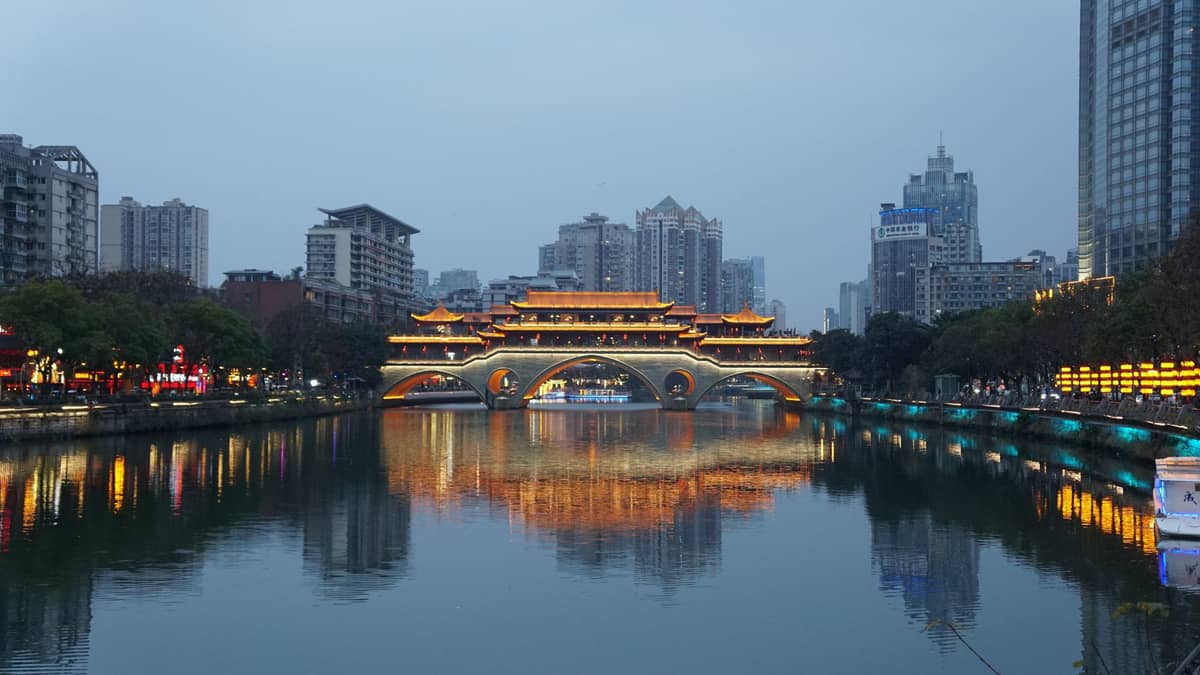
Chengdu is the capital of Sichuan Province, a city of around 21 million people that somehow retains a distinctly unhurried pace by Chinese megacity standards. It has earned a reputation as a place where people eat well, take naps in parks, and linger over tea for hours. That rhythm suits couples perfectly. Unlike cities where romance has to be manufactured at tourist sites, Chengdu offers it incidentally — in a bowl of spicy noodles shared at a street stall, a boat ride on a foggy lake, or a slow walk through the Du Fu Thatched Cottage gardens in late afternoon light.
The city sits at around 485 m elevation on the Chengdu Plain and has a humid subtropical climate. Winters are mild (roughly 6–12°C) and summers warm (up to 31°C), but the most comfortable windows for couples planning outdoor time together are March to May and September to November. Heavy rainfall peaks June through August, so factor that into itinerary planning if you're eyeing rooftop dinners or mountain hikes.
ℹ️ Good to know
Chengdu operates on China Standard Time (UTC+8) and uses the Chinese yuan (CNY/RMB). Tipping is not customary. English is spoken at major hotels and tourist sites but is limited elsewhere — downloading a translation app before arrival is practical, not optional.
The Panda Base: A Morning Neither of You Will Forget

Visiting the Chengdu Research Base of Giant Panda Breeding together is one of those experiences that cuts through cynicism quickly. Adult tickets cost CNY 55 and must be reserved in advance through official channels including the base's WeChat account, Meituan, Trip.com, Douyin, or Tongcheng. Walk-up access is not guaranteed — daily quotas fill up, particularly on weekends and public holidays.
From March through October, the gates open at 7:30 a.m. Arrive at that time. Giant pandas are fed in the early morning and are noticeably more active before 9:00 a.m. By mid-morning, most have retreated into the shade to sleep. The base covers a large forested area, so plan for at least two to three hours. Afternoon entry runs until 5:00 p.m. (park clearance at 6:00 p.m.) during the summer season, and until 4:30 p.m. from November through February.
⚠️ What to skip
Paid 'panda encounter' photo experiences — where visitors once held or stood beside pandas — have been discontinued at responsible facilities due to animal welfare concerns. Be cautious of any third-party operator claiming to offer close-contact experiences. The base itself focuses on conservation breeding, not entertainment.
Ancient Streets, Lanterns, and Evening Walks
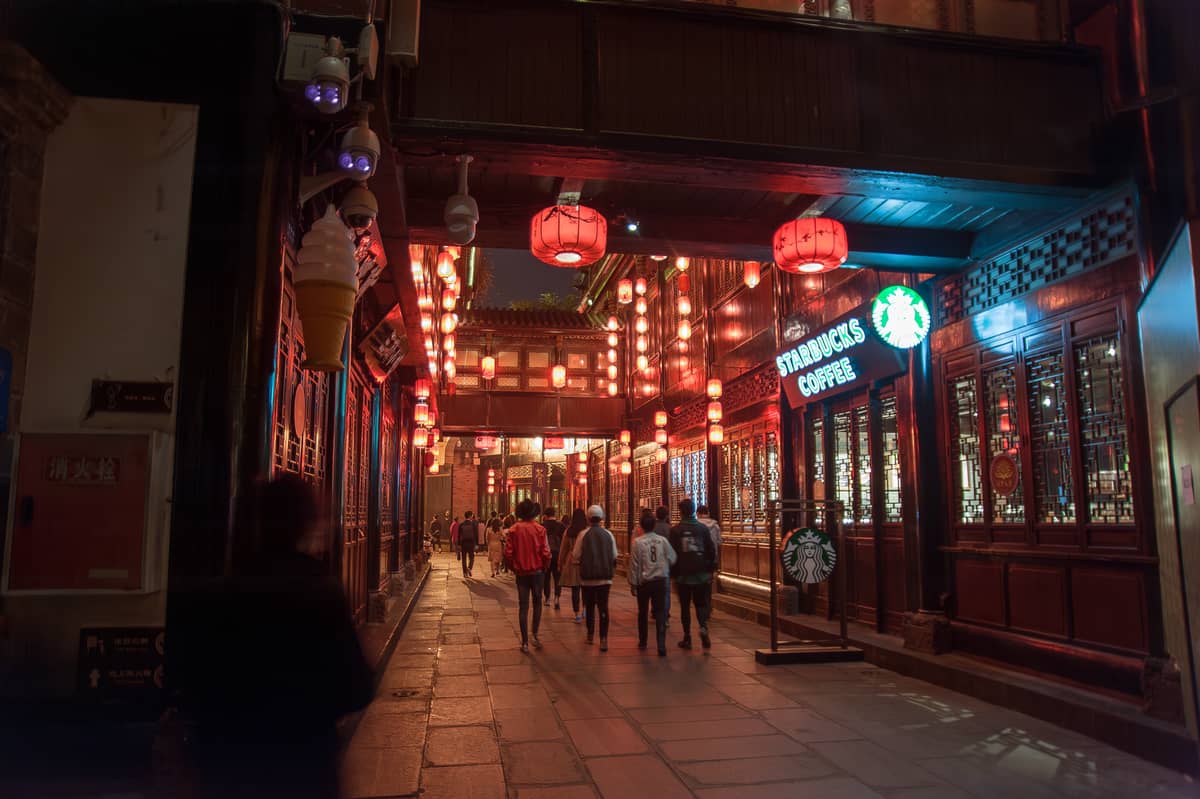
Two streets define romantic evening walks in Chengdu: Kuanzhai Alley (Wide and Narrow Alleys) and Jinli Ancient Street. Both are free to enter. Both have restaurants, craft shops, and street food vendors inside. And both are significantly more photogenic after 6:00 p.m. when lanterns are lit and the harsh midday crowds have partially dispersed.
Kuanzhai Alley, in Qingyang District, is a restored Qing Dynasty neighborhood organized into three parallel lanes. It feels slightly more refined than Jinli, with courtyard bars and teahouses tucked behind wooden gates. Jinli, near Wuhou Shrine in the southwestern part of the city, leans into street food more aggressively — skewered meats, tangyuan (glutinous rice balls), and sugar-painted animals on sticks. Both streets can feel overtouristed on weekends between 7:00 and 9:00 p.m. If you have flexibility, aim for a Tuesday or Wednesday evening.
✨ Pro tip
Combine Jinli with a visit to Wuhou Shrine next door (admission around CNY 50). The shrine complex, dedicated to figures from the Three Kingdoms period, is far quieter than Jinli and has beautiful garden sections that make for a calmer prelude to the street's energy.
Teahouses, Parks, and Slowing Down Together
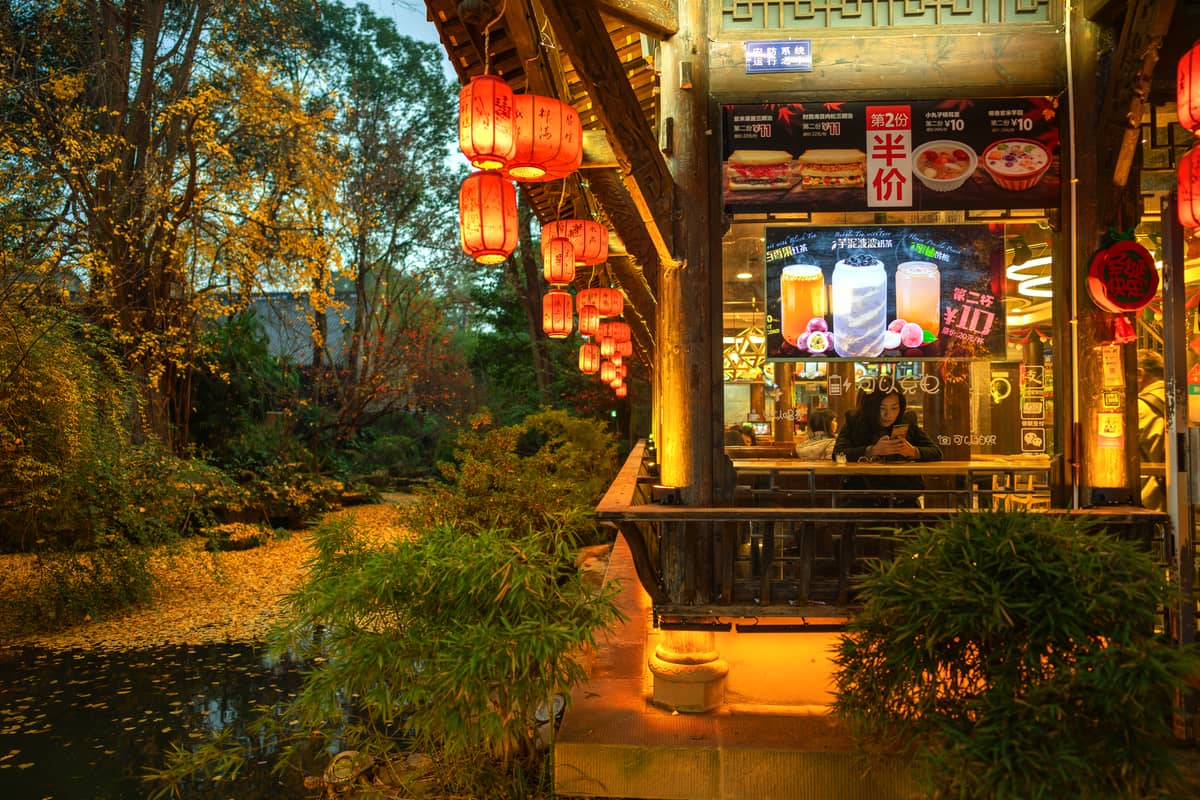
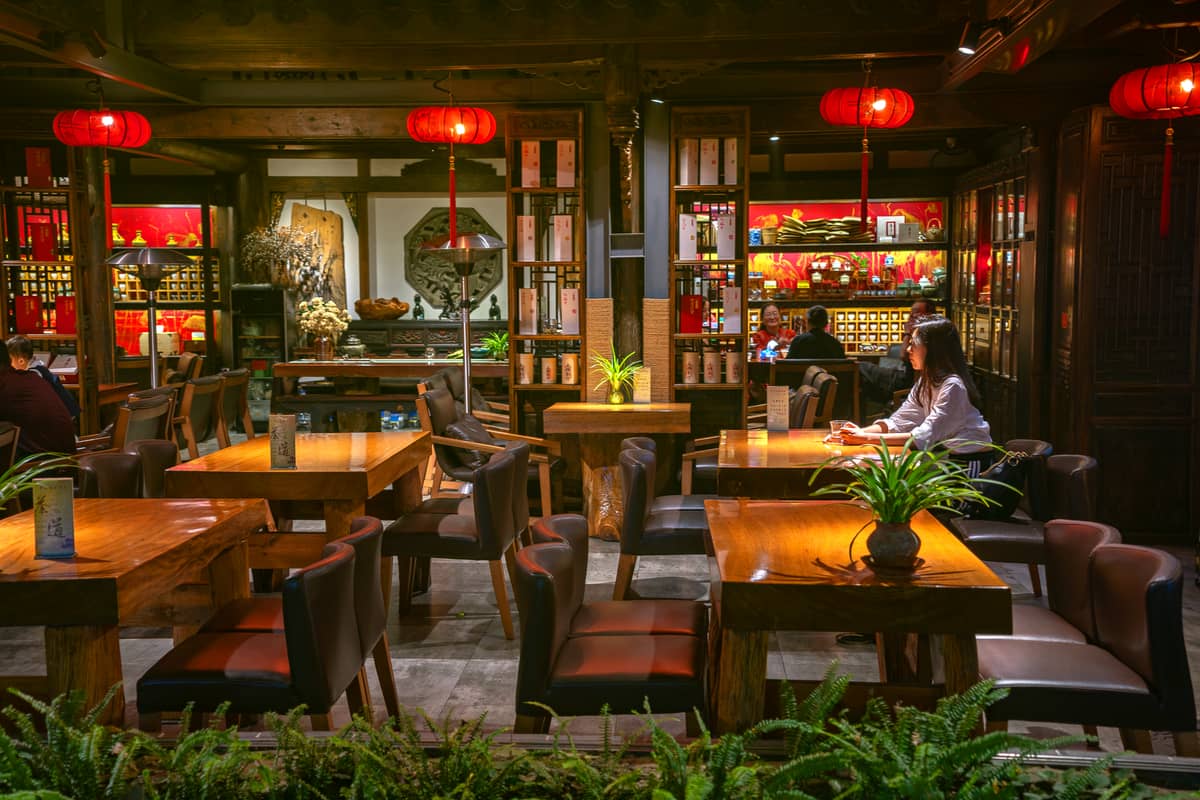
Chengdu's teahouse culture is not a tourist performance — it is how locals actually spend their afternoons. People's Park (Renmin Gongyuan) in Qingyang District has one of the most famous teahouse areas in the city, set alongside a small lake with wooden chairs and bamboo seating. A pot of jasmine or green tea costs roughly CNY 15–30 per person, and there is no time limit on how long you stay.
For something more atmospheric, explore the options around Wenshu Monastery in Qingyang District. The teahouse in the monastery grounds is one of the oldest in the city and operates within a genuinely functioning Buddhist complex. You can wander the incense-filled courtyards, watch monks go about their routines, and then settle into the teahouse for an hour. It costs a little more than the park options but the setting is hard to match.
- People's Park Teahouse The most popular and accessible option. Bamboo chairs beside a lake, ear-cleaning vendors circulating, elderly card players nearby. Authentically local, slightly chaotic, very enjoyable.
- Wenshu Monastery Teahouse Set inside an active Buddhist monastery complex. Quieter, more meditative, and within a short walk of the monastery's vegetarian restaurant.
- Du Fu Thatched Cottage Teahouse The garden complex surrounding the Tang Dynasty poet's reconstructed home has seasonal teahouse seating. Best visited in spring when plum blossoms are in bloom, roughly February to March.
Sichuan Opera and After-Dark Culture
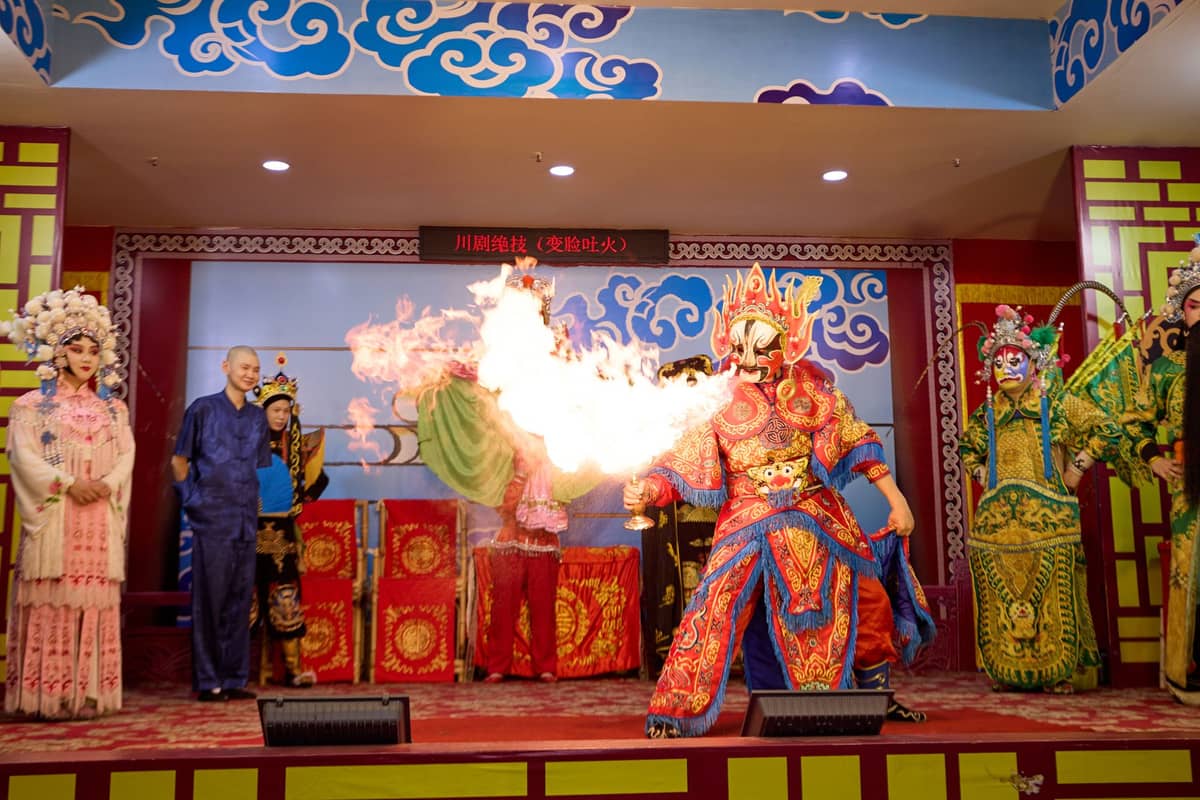
An evening at a Sichuan opera performance is one of the more distinctive things couples can do in Chengdu. The art form is different from Beijing opera — it is faster, louder, and includes spectacular face-changing (bianlian) sequences where performers switch elaborately painted masks in under a second. Most tourist-oriented performances run 90 minutes to two hours and include dinner or snacks. Prices vary widely by venue, from around CNY 100 to CNY 300 per person depending on seating and whether a meal is included.
Shufeng Yayun Teahouse and Jinsha Theatre are among the established venues for accessible performances, though the specific schedule and pricing change seasonally. For a more detailed breakdown of venues and what to expect, the Sichuan opera guide covers the key differences between tourist shows and more traditional performances.
If opera feels too structured, Dongjiao Memory (东郊记忆) in Chenghua District offers a converted industrial-arts complex with live music venues, craft beer bars, and gallery spaces. It draws a younger local crowd and has a more spontaneous energy. The Chengdu nightlife guide covers the full after-dark landscape if you want to explore further.
Day Trips Worth Taking Together
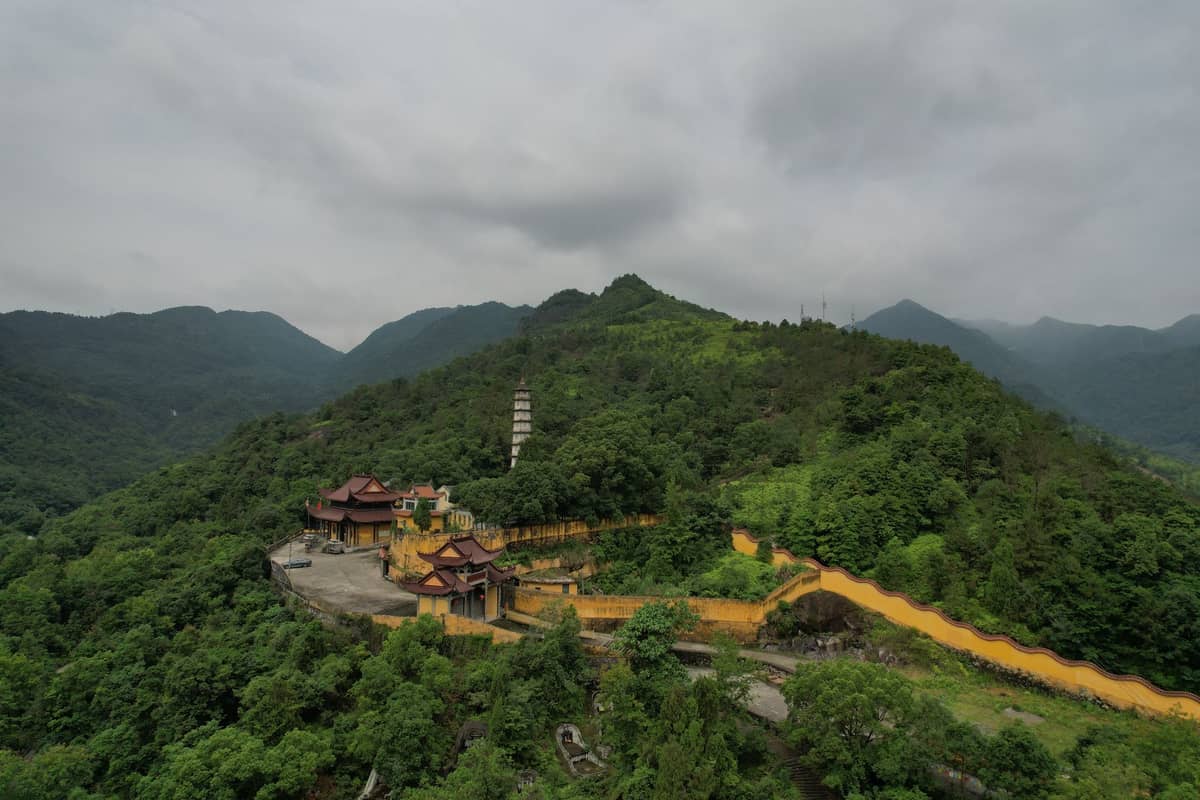
Chengdu's surrounding region rewards a day trip if you have the time. Mount Qingcheng, approximately 68 km northwest of the city, is a UNESCO World Heritage site with forested hiking trails and Taoist temple complexes. It is significantly less crowded than Mount Emei and the trails are well-maintained. The rear mountain section (Qingcheng Houshan) is quieter still and involves some suspension bridges over gorges. Allow a full day. A cable car is available if you prefer not to hike the full ascent.
The Dujiangyan Irrigation System is adjacent to Qingcheng Mountain and easily combined into the same day trip. It is a 2,000-year-old water management system still in active use — the engineering is genuinely impressive and the riverside walk through the complex is leisurely rather than strenuous. Admission is around CNY 80. High-speed rail from Chengdu to Dujiangyan takes roughly 40 minutes from Chengdu North Station.
- Mount Qingcheng: forested hike, Taoist temples, cable car option. About 68 km from Chengdu.
- Dujiangyan Irrigation System: UNESCO site, riverside paths, easily paired with Qingcheng. ~40 min by high-speed rail.
- Huanglongxi Ancient Town: well-preserved Ming and Qing Dynasty street architecture, about 40 km south of Chengdu. Calmer than Kuanzhai and less touristed.
- Leshan Giant Buddha: 71-metre stone Buddha carved into a cliff face at the confluence of three rivers. A half-day from the main viewing platforms. About 130 km from Chengdu.
💡 Local tip
For day trips, check the weather forecast the night before. Chengdu and its surroundings are frequently overcast, and some mountain views require clear days to fully appreciate. The Qingcheng area in particular can be foggy during the rainy season (June–September). That said, light mist through the forest trails is its own kind of atmospheric.
Eating Together: The Romance of Sichuan Food
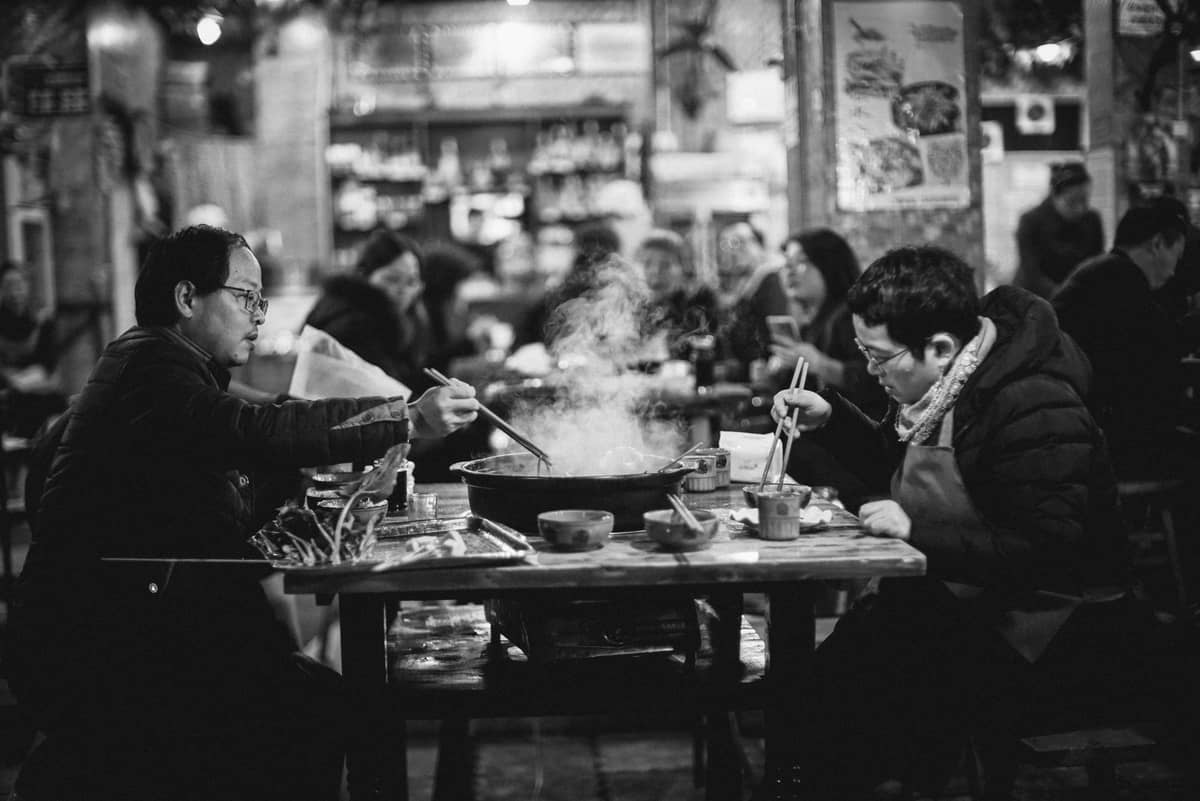
Sharing food in Chengdu is inherently romantic because Sichuan cuisine is designed for communal eating. Hot pot is the archetypal example: a bubbling broth at the center of the table, plates of raw ingredients, and a slow meal that can stretch to two or three hours. The mala (numbing-spicy) flavor profile is intense, and the shared experience of sweating through a good hot pot is oddly bonding. For a practical breakdown of where to go and what to order, the Chengdu hot pot guide covers everything from broth styles to price ranges.
Beyond hot pot, Chengdu's street food scene rewards slow exploration. Dan dan noodles, mapo tofu, and husband-and-wife beef slices (fuqi feipian) are all dishes worth trying together. The Chengdu street food guide maps out the best areas and dishes to look for. For upscale dining, the Taikoo Li complex in Jinjiang District has a strong concentration of restaurants with outdoor seating — useful for evenings when the weather cooperates.
FAQ
What is the most romantic area to stay in Chengdu for couples?
Jinjiang District puts you closest to Chunxi Road, Taikoo Li, and the riverfront areas, which are well-lit and walkable in the evenings. Wuhou District is good if you prioritize proximity to Jinli and Wuhou Shrine. Both districts have a range of hotels from budget to luxury. Avoid staying in Chenghua District unless you have a specific reason — it is less convenient for most romantic itinerary points.
Is Chengdu good for a honeymoon?
Chengdu works well as part of a longer honeymoon itinerary rather than as a standalone honeymoon destination. It lacks beach settings or luxury resort infrastructure, but it offers genuine cultural depth, outstanding food, and experiences — like the Panda Base at dawn or a teahouse afternoon in People's Park — that are genuinely memorable. Pair it with a trip to Jiuzhaigou (seasonal road access required) or a flight to Yunnan for a complete southwestern China honeymoon.
When is the best time of year for a romantic trip to Chengdu?
March to May and September to November offer the most comfortable conditions. Spring brings plum and cherry blossoms to parks like Du Fu Thatched Cottage. Autumn has clear skies more reliably than spring and comfortable temperatures for day trips. Summer (June–August) is hot, humid, and the wettest period, which complicates outdoor plans. Winter is mild but grey and damp, though far less crowded.
Are there any overrated romantic experiences in Chengdu to avoid?
Kuanzhai Alley can feel more like a shopping mall than a historic neighborhood during peak weekend hours — the architecture is largely reconstructed, and the souvenir-to-authenticity ratio is high. It is worth seeing, but manage expectations. Similarly, some tourist-facing Sichuan opera shows are heavily abridged and feel more like variety revues than traditional performances. Research the specific venue before booking.
How do couples get around Chengdu without speaking Mandarin?
The Chengdu Metro is the easiest option — fares start at CNY 2, signage is bilingual, and most central attractions are reachable within a few stops. Didi (China's ride-hailing equivalent of Uber) works across the city but requires a Chinese payment method or pre-setup. Major hotels can arrange taxis and provide destination cards in Chinese characters, which you can show drivers. Download a translation app with offline capability before arrival.