Chengdu Street Food Guide: What to Try and Where to Find It
Chengdu is a UNESCO Creative City of Gastronomy and one of the most rewarding cities in Asia for eating on foot. This guide covers the essential Sichuan dishes, the best street food districts, practical navigation tips, and honest notes on what lives up to the hype.
Plan and book this trip
Tools from our partner Travelpayouts help you compare flights and hotels. If you book through them, we may earn a commission at no extra cost to you.
Flights
Hotels map
TL;DR
- Chengdu is a UNESCO Creative City of Gastronomy, and street food is inseparable from daily life here, not just a tourist attraction.
- The main food districts are Jinli, Kuanzhai Alley, and Wenshu Fang. Each has a different character. See our overview of what to eat in Chengdu for a broader look at Sichuan cuisine.
- Sichuan flavors are genuinely spicy and numbing from Sichuan peppercorn. If you have a low spice tolerance, ask for 'wei la' (slightly spicy) or 'bu la' (not spicy), though results vary by vendor.
- Most street food costs between 5 and 30 CNY per item. Cash and mobile payment (WeChat Pay, Alipay) are standard; some stalls do not accept foreign bank cards.
- Spring (March to May) and autumn (September to November) are the most comfortable seasons for eating and walking outdoors. Check the best time to visit Chengdu for seasonal planning.
Why Chengdu is One of the World's Great Street Food Cities
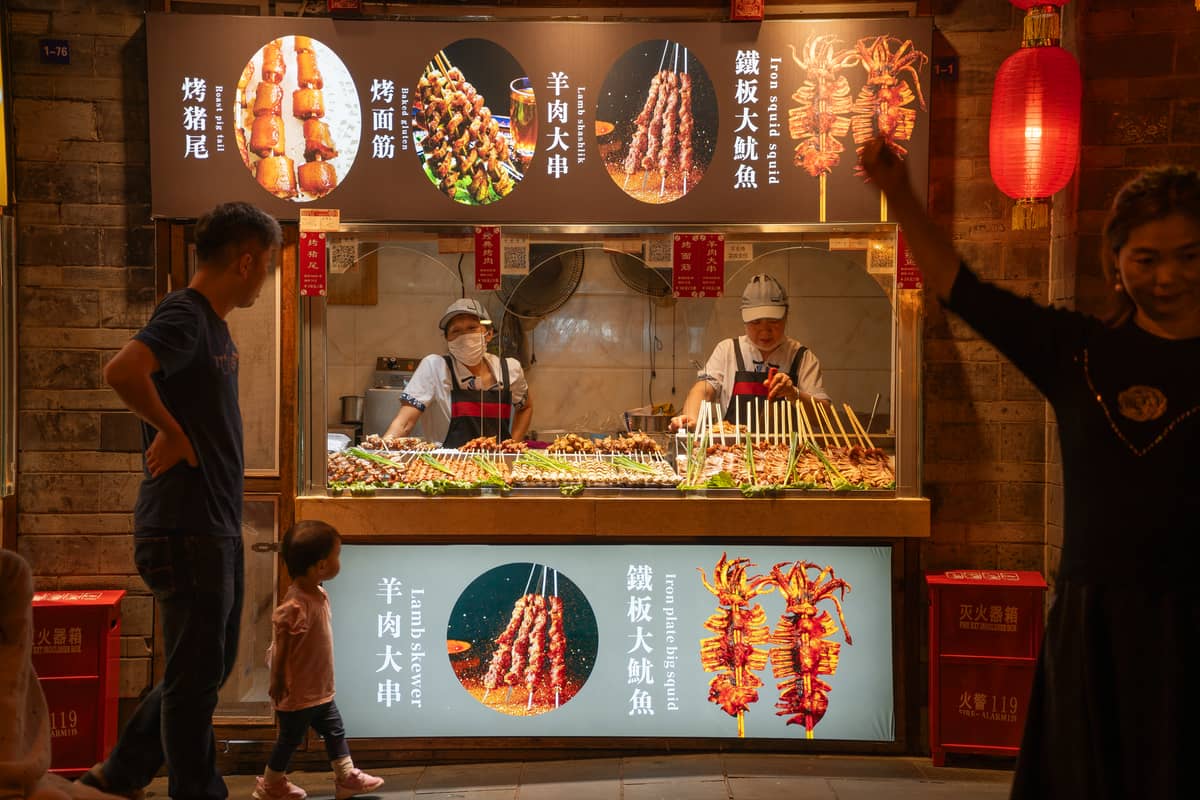
Chengdu earned its designation as a UNESCO Creative City of Gastronomy not through a single famous restaurant but through the sheer density and variety of food woven into everyday life. Sichuan cuisine is one of China's eight major culinary traditions, and in Chengdu it shows up at every price point, from a 5 CNY skewer eaten standing on a side street to a formal hotpot banquet. The street food scene reflects this: it is diverse, technically accomplished, and deeply local.
What separates Chengdu from other food cities is the combination of heat and numbing sensation that defines Sichuan cooking. The key ingredient is the Sichuan peppercorn (huajiao), which creates a tingling, mouth-numbing effect called 'ma' that works alongside the 'la' (spicy heat) of dried and fresh chilies. This combination appears across dozens of different street foods and transforms even simple preparations into something distinct. Understanding it makes the food more enjoyable and helps you order more confidently.
ℹ️ Good to know
Chengdu is the capital of Sichuan Province, with a population of around 21.47 million. It sits on the Chengdu Plain at roughly 500 meters above sea level. The local dialect is Sichuanese, a form of Southwestern Mandarin, but Putonghua (Mandarin) is universally understood. Outside hotels and airports, English signage on food stalls is limited, so a translation app is genuinely useful.
The Essential Chengdu Street Foods to Try
Sichuan cuisine has a long list of dishes with street-food versions worth tracking down. For a full breakdown of flavors, dishes, and what to order in sit-down restaurants, see the guide to Chengdu food and Sichuan cuisine. The items below are specifically suited to eating on the go.
- Dan Dan Noodles (担担面) Thin wheat noodles served with a sauce of sesame paste, chili oil, preserved vegetables, and minced pork. The name comes from the shoulder poles (dan dan) vendors once used to carry their pots through the streets. A bowl typically costs 10 to 20 CNY and is one of the most approachable Sichuan street foods for first-timers.
- Mapo Tofu (麻婆豆腐) Silken tofu in a sauce of fermented black beans, doubanjiang (chili bean paste), ground pork, and a generous dose of Sichuan peppercorn. The 'ma' and 'la' sensation is pronounced. Available as a side dish at many street stalls and cheap restaurants throughout the city.
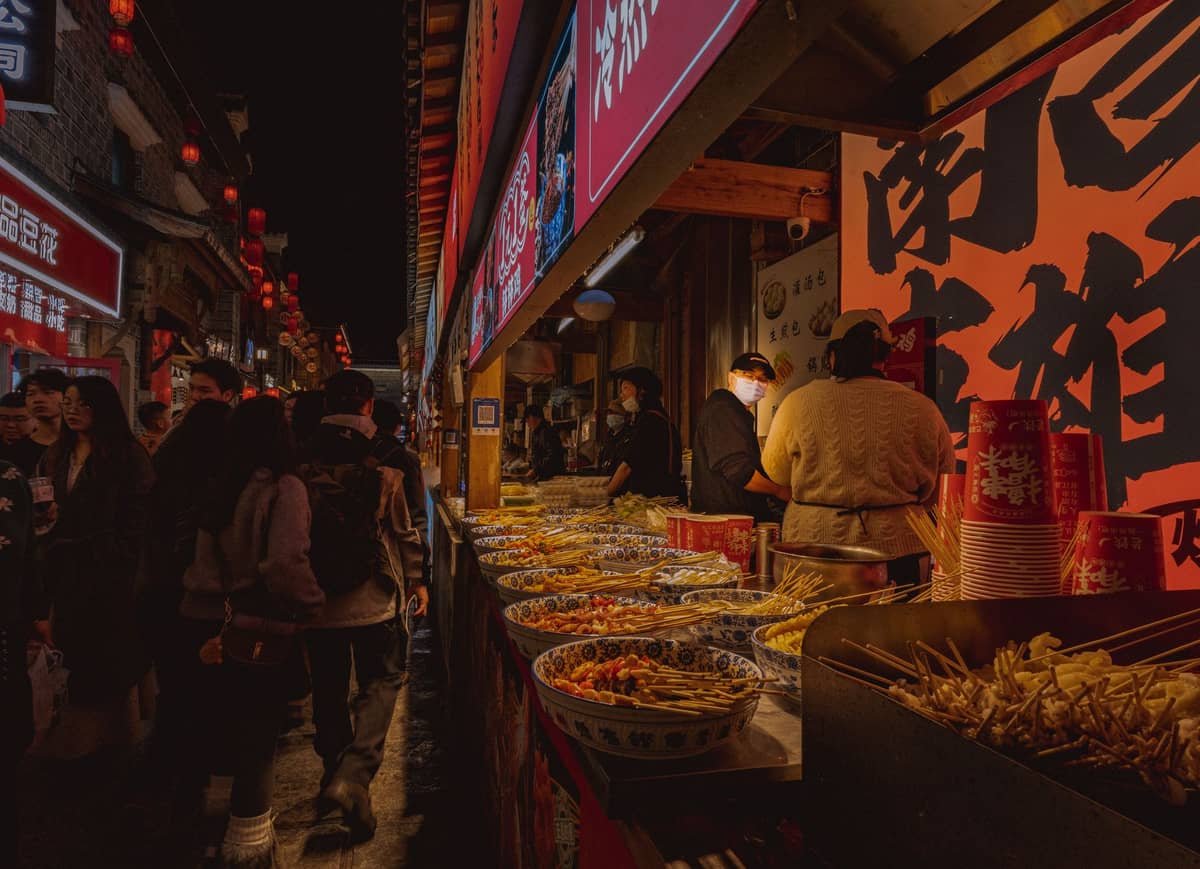
- Chuan Chuan Xiang (串串香) Skewers of meat, offal, vegetables, and tofu cooked or dipped in a communal spiced broth. Similar to hotpot but served on bamboo skewers and priced per stick. This is one of the most popular formats in Chengdu's food districts. Prices vary by ingredient; a full meal typically runs 30 to 80 CNY depending on how many skewers you order.
- Longchaoshou (龙抄手) Chengdu-style wontons filled with minced pork, served in a clear or red-oil broth. The wrappers are thinner than northern Chinese dumplings. Often eaten as a breakfast or light meal.
- Zhong Dumplings (钟水饺) Pork dumplings dressed in a sweet-and-spicy red oil sauce, named after a vendor from the Qing dynasty. They are distinct from northern-style dumplings in both filling and sauce, and are one of Chengdu's most recognizable snacks.
- Rabbit Head (兔头) Braised in a spiced, chili-heavy sauce and eaten by picking meat from the skull. It sounds confronting but is extremely popular locally. It is a Chengdu specialty that you will struggle to find at the same quality elsewhere in China.
- Osmanthus Cake and Sweet Rice Balls Not everything in Chengdu is spicy. Sweet snacks made with glutinous rice, sesame, osmanthus flower, and red bean paste are common in the tourist food districts and provide welcome relief between spicier bites.
⚠️ What to skip
In major tourist areas like Jinli and Kuanzhai Alley, prices are set by individual vendors and can be higher than at neighborhood stalls. There is no centralized pricing. Always check prices before ordering, and be aware that some stalls in tourist districts charge two to three times the neighborhood rate for the same item.
The Best Districts for Street Food in Chengdu
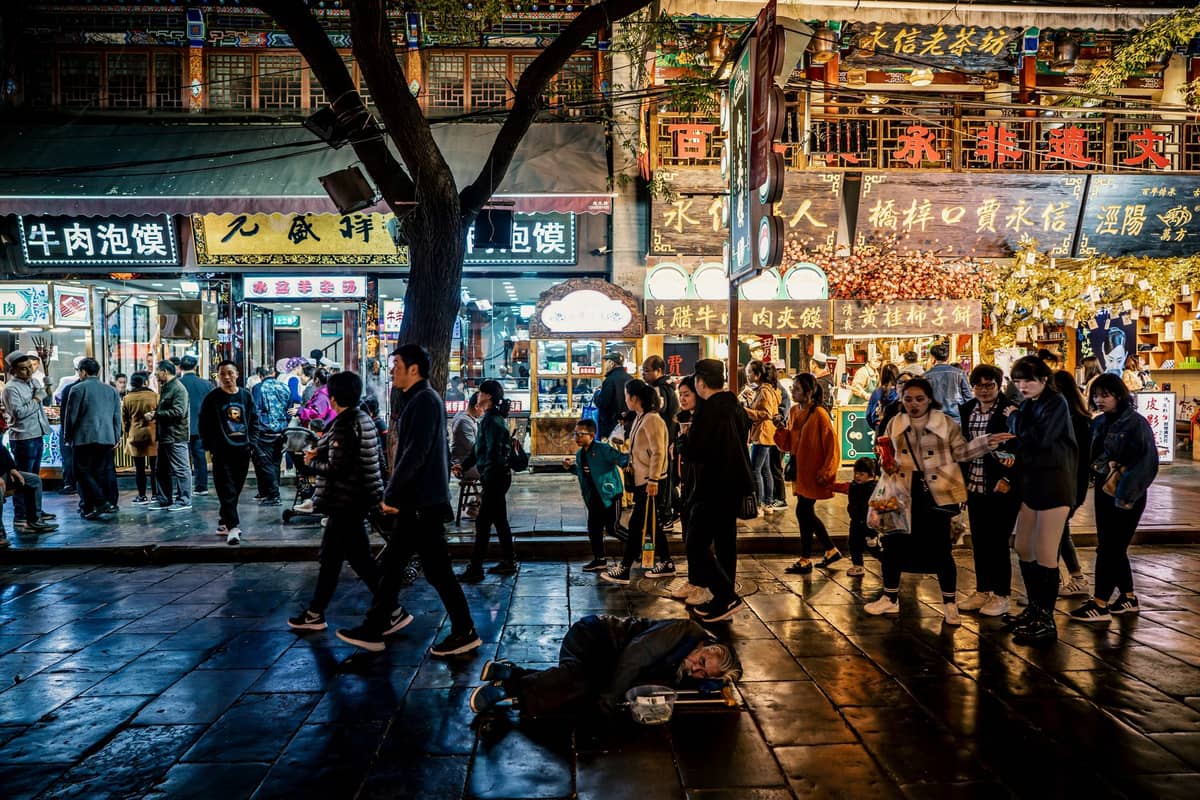
Chengdu's street food is not confined to one area, but certain districts concentrate it enough to be worth a dedicated visit. Several well-known food-and-leisure zones include Jinli, Wenshu Fang, Kuanzhai Alley, and Yi Pin Tian Xia. Each has a different atmosphere and price point. For context on the broader neighborhoods, the Chengdu walking tours guide covers routes through several of these areas.
- Jinli Ancient Street (锦里) A pedestrian lane adjacent to Wuhou Shrine in Wuhou District, free to enter and open year-round. It combines street food stalls, teahouses, souvenir shops, and occasional Sichuan opera performances. The food here ranges from genuinely good to tourist-oriented. Best visited in the evening when lanterns light the lane and the atmosphere is at its peak. Metro Line 3 to Gaoshengqiao is the most direct access point.
- Kuanzhai Alley (宽窄巷子) Three parallel lanes in Qingyang District with preserved Qing-dynasty architecture. The wide lane (Kuan Xiang) has upscale cafes and restaurants; the narrow lane (Zhai Xiang) has more snack stalls and street food vendors; the well lane (Jing Xiang) is quieter. The food quality is reasonable but the prices trend higher than elsewhere. Worth visiting for the architecture as much as the food.
- Wenshu Fang (文殊坊) A heritage commercial area adjacent to Wenshu Monastery in Qingyang District. Less touristically polished than Jinli or Kuanzhai Alley, which makes the food stalls feel more grounded in local eating habits. Good for breakfast and mid-morning snacking.
- Chunxi Road Area (春熙路) The central shopping and dining precinct in Jinjiang District, served by Metro Lines 2 and 3. The surrounding lanes and basement food courts contain some of Chengdu's best value street food options. Less atmospheric than the heritage districts but significantly more local in character.
Beyond the established districts, some of the best street food in Chengdu is found in ordinary residential neighborhoods, morning markets, and the lanes surrounding university campuses. If you want to explore beyond the well-worn tourist circuit, the Chengdu on a budget guide covers how to eat well without paying tourist-area prices.
Chengdu Hotpot: Street Food's Bigger Sibling
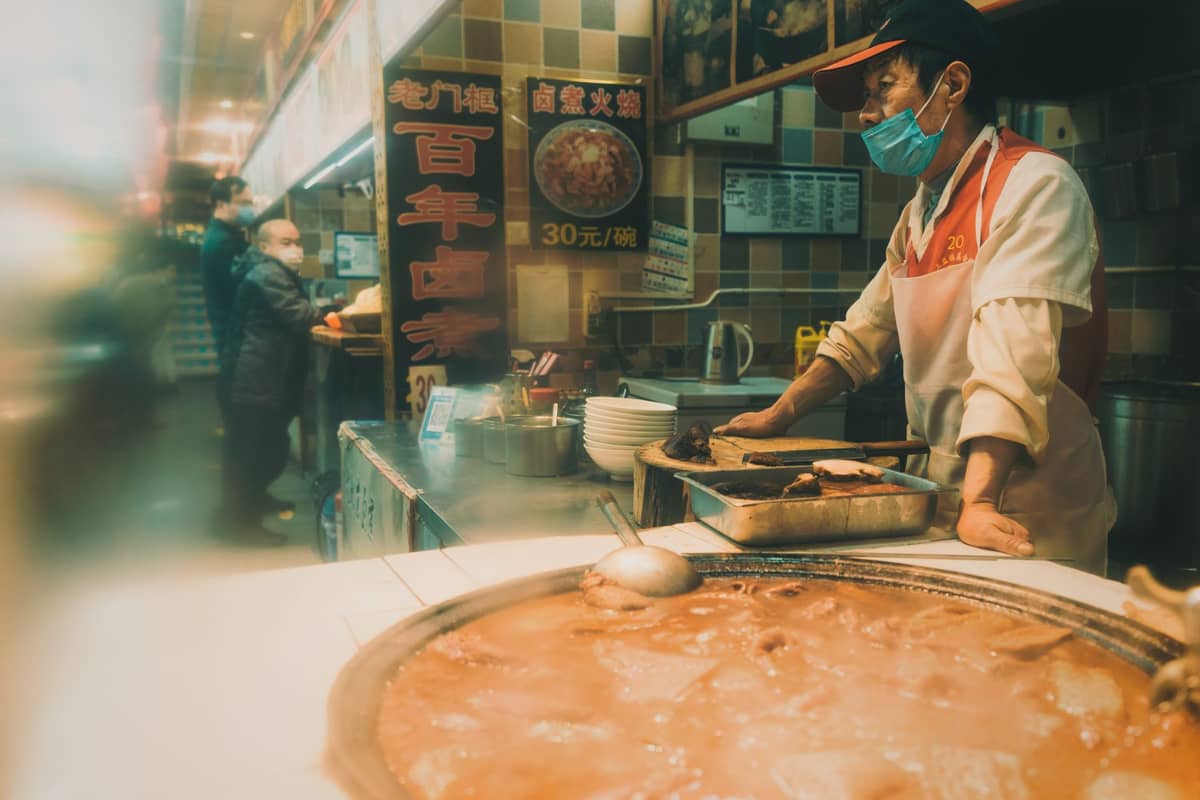
Hotpot occupies a special position in Chengdu's food culture. It is not strictly street food in the same way that a skewer eaten standing up is, but it is ubiquitous, affordable, and deeply embedded in local social life. Chengdu-style hotpot uses a tallow-based broth loaded with dried chilies and Sichuan peppercorns, and it is significantly more intense than the broths found in most other parts of China. The Chengdu hotpot guide covers the best restaurants, what to order, and how to navigate the menu if it is your first time.
Chuan chuan xiang, described in the dishes section above, is the street-food version of hotpot. The key difference is that chuan chuan stalls are open-air, priced per skewer, and designed for casual eating rather than a long seated meal. Both formats are worth experiencing. Budget travelers often prefer chuan chuan for its flexibility: you can spend 30 CNY on a handful of skewers and walk away satisfied.
✨ Pro tip
The best time to hit food districts like Jinli is between 18:00 and 21:00, when evening crowds thin slightly from the dinner peak and stall operators are in full swing. Arriving before 17:30 means some stalls are still setting up. After 22:00, options start closing. Weekday evenings are noticeably less crowded than weekends and Chinese public holidays, when popular streets can become genuinely difficult to navigate.
Practical Tips for Eating Street Food in Chengdu
Payment is the first practical hurdle for foreign visitors. WeChat Pay and Alipay dominate transactions at street stalls. Some stalls accept cash (renminbi, CNY), but carry smaller denominations since vendors may not have change for large bills. Foreign credit cards are rarely accepted at street-food level. Setting up a payment wallet before arrival makes the experience significantly smoother.
Ordering without Mandarin is manageable but takes patience. Most stalls have pictures or samples on display. A translation app with a camera function (pointing your phone at Chinese characters to get instant translations) handles menus that are text-only. Learn a few key phrases: 'zhe ge' (this one), 'duo shao qian' (how much), 'bu tai la' (not too spicy), and 'xie xie' (thank you). Vendors in tourist areas are accustomed to non-Chinese speakers.
- Tap water in Chengdu is treated but not recommended for drinking untreated. Bottled water is cheap and widely available.
- Food hygiene at busy, high-turnover stalls is generally reliable. Avoid stalls where food has been sitting out for extended periods, especially in summer (June to August) when temperatures can reach 31°C.
- Tipping is not customary at street food stalls or in Chinese restaurants generally.
- Chengdu's electricity is 220V/50Hz with Type A, C, and I sockets. Bring a suitable adapter if you need to charge devices while navigating.
- Metro Lines 2 and 3 cover the central food districts. Line 3's Gaoshengqiao stop is best for Jinli and Wuhou Shrine. Chunxi Road is served by both Lines 2 and 3. Metro Lines 2 and 3 cover the central food districts. Line 3's Gaoshengqiao stop is best for Jinli and Wuhou Shrine. Chunxi Road is served by both Lines 2 and 3. Metro generally operates from around 06:00 until between approximately 23:00 and midnight, but verify final train times in the Chengdu Metro app.
For visitors traveling with children, Chengdu's street food districts are walkable and the variety of sweet snacks and milder options means it is not exclusively an adult experience. The Chengdu with kids guide covers family-friendly eating and activities across the city.
Honest Assessment: What Delivers and What Disappoints
Jinli is atmospheric but commercially polished. The food there is real Sichuan street food, and it is generally good, but you are paying partly for the lanterns and the Qing-dynasty backdrop. The same skewers or dan dan noodles cost less two streets away. That is not a reason to skip Jinli, but go in knowing what you are paying for.
Kuanzhai Alley has the most photogenic setting of the three main food districts and the food is decent, but it tilts more toward curated dining experiences and souvenir snacks than raw street eating. For genuine snack culture, Wenshu Fang and the lanes around Chunxi Road deliver more per yuan spent.
Street food in Chengdu is not overrated overall. The quality floor is high because local residents eat here too, and competition between stalls keeps standards up. The risk of a bad meal is lower than in many comparable cities. The main issue for international visitors is not quality but navigation: finding the best stalls requires either local knowledge or a willingness to explore. A guided walking tour of a food district solves both problems for first-timers.
💡 Local tip
Chengdu's food culture extends well beyond street stalls. Teahouses are a core part of the city's social and culinary life, often serving light snacks alongside tea. For a deeper look at this side of Chengdu, the teahouse guide covers the best options and what to expect.
FAQ
What is the most famous street food in Chengdu?
Dan dan noodles and zhong dumplings are the most internationally recognized Chengdu street foods. Locally, chuan chuan xiang (skewers in spiced broth) and rabbit head are equally iconic. Mapo tofu is ubiquitous but usually eaten at a table rather than on the go.
Is Chengdu street food very spicy?
Much of it is, yes. Sichuan cooking uses both chili heat and the numbing sensation of Sichuan peppercorn together. You can ask vendors to reduce spice levels using 'bu tai la' (not too spicy) or 'bu la' (not spicy), but at many stalls the base sauce is pre-made and adjustments are limited. Sweet snacks and some noodle dishes are mild.
Where is the best area for street food in Chengdu?
For atmosphere, Jinli (near Wuhou Shrine) is the most rewarding. For value and local character, the lanes around Chunxi Road and the Wenshu Fang area offer better prices and a more everyday Chengdu experience. Kuanzhai Alley is worth visiting for its architecture but is the most tourist-oriented of the three main districts.
How do I pay for street food in Chengdu?
WeChat Pay and Alipay are the dominant payment methods at street stalls. Many vendors also accept cash (Chinese renminbi, CNY). Foreign credit and debit cards are rarely accepted at street-food level. Setting up a Chinese mobile payment wallet before arrival, or carrying smaller denomination cash, is strongly recommended.
What is the difference between Chengdu street food and Sichuan cuisine generally?
Sichuan cuisine is a broad culinary tradition covering restaurant dishes, home cooking, and preserved foods across the province. Chengdu street food is a subset of that tradition, focused on quick, portable, and affordable preparations made specifically for eating outside or at makeshift tables. Most iconic Chengdu street foods draw on Sichuan flavors, but street stalls simplify and standardize dishes that in formal restaurants have more complex presentations.